IN FOUR YEARS

A couple of weeks ago, I watched a reel from “Toby-the-Neuro-Scientist” about maybe not quite failing his A-levels. He failed to achieve a score that would get him into the University program he wanted. So he worked for a year waiting table and pissed that away on clothes and drinking, but got serious about maths and got into uni, but his first year was “rubbish,” and then tried to be better the second year and was hit by a car. His third year was Covid so he graduated “alone in [his] bedroom.” He took a year off waiting table again and entered a dementia program to graduate the top of his class, researched Parkinson’s disease for two years. Ten years after those disastrous A-levels, he has his PhD from a prestigious university. Who woulda thunk it?

In four years, who might you become? In ten?

Continue reading

SAFETY

The white lacecap hydrangea, above, was near where we entered the south end of massive Forest Park in Portland (more than 5,100 acres). The Rose Garden is within Forest Park and the extensive Japanese Garden, the zoo, second growth and old growth forest trees, and more than 80 miles of trails. A former coastal neighbor has a bronze plaque in the Rose Garden. Sometimes I run up to the roses—a hard uphill route, run loops up and down through the garden past thousands. of roses.

It’s May Day. I hope you find an opportunity to walk near a garden, into a garden, a place a little bit untamed, wild, and a place to find a quiet place to feel safe.

When I was a teenager, I used to sneak out of the house at night. I suppose a lot of teens did that back in the day. Maybe some still do. I didn’t sneak out to be with a boyfriend or any friend. I didn’t go to parties or score drugs. I walked to be alone and think. I went walking in the dark entirely by myself because I was miserable most of my high school years and walking in the dark was a comfort. I’d walk a few miles on the gravel shoulders of suburban roads and go home to bed.

Continue reading

9 LIFE LESSONS

I saw a reel of this and am shamelessly reposting Tim Minchin’s 2013 address to UWA “Nine Life Lessons” from a site that has already done this:

Nine Life Lessons

However, I have had large groups of people listening to what I say for quite a few years now, and it’s given me an inflated sense of self-importance.

So, I will now, at the ripe old age of 37.9, bestow upon you nine life lessons to echo, of course, the nine lessons of carols of the traditional Christmas service, which is also pretty obscure. You might find some of this stuff inspiring.

You will definitely find some of it boring, and you will definitely forget all of it within a week. And be warned, there will be lots of similes and obscure aphorisms which start well but end up making no sense. So listen up, or you’ll get lost like a blind man clapping in a pharmacy trying to echo-locate the contact lens fluid.

Lesson 1: You Don’t Have to Have a Dream

Continue reading

IMPOSTOR

I was already intimate with self-doubt by the time I read about the “impostor syndrome” where people (most often women) believe that they are not all that, the success and admiration—whatever that might be—they enjoy is because they have fooled others into believing in them. Men often over-estimate their appeal, their skill, their accomplishments, and their abilities. Women tend to underestimate themselves.

Yeah, I get that.

My own self-regard tends to fluctuate. It’s low at the moment.

A recent writing workshop raised the common wish to be popular. I don’t recall ever aspiring so high. I wanted to have a “best friend.” Of course I was jealous of kids who were popular—they had so many people to call friends, multiple people who would rather spend time with them. I wanted one.

Briefly, over the summer before 3rd grade I had two friends: Stefanie and Denise. Our mothers made us matching dresses for the first day of school. On that day, I discovered I was in Miss Wara’s room and my friends had been placed together in the other 3rd grade classroom. [I would discover decades later that my sense that Miss Wara disliked me was not entirely my imagination, which I believed at the time. My mother mentioned casually that parents had multiple conferences with her because they recognized the teacher disliked me.] It was a hard year for other reasons. The boy I had a crush on ridiculed me in front of the class and my friend Don punched me in the stomach, though I’d probably done something to deserve that. In 4th grade we began SRA (a timed reading program), which I loved and it was the year my dad began reteaching history to me, which was a good thing. In 5th grade, we were introduced to a brand new (to the US) system of numbers with rods of different lengths. I loved that too, but as I remember it, I wet my pants nearly every day that year. Sixth grade was wonderful. Mr. Finley taught us math and science and the other fifth grade teacher taught us history and English. I learned to do math in base 5, began pre-algebra, and devised an experiment to determine whether white cloud mountain fish could distinguish colors. [Probably not.] In 7th grade at Cordell Hull Junior High School, I had art every day, which was wonderful. The reading teacher needed a note before I was allowed to read The Once and Future King by T.H. White, because the copy I had was a paperback and she assumed all paperbacks were trashy books. I had the highest grades in class, which surprised everyone, including me when it was announced in Homeroom. We read Johnny Tremain, and I wrote the only piece of fiction before the age of 38 in that class. It was about Marie Antoinette struggling to face her coming execution. Denise and I were friends. But in 8th grade, Denise announced that she couldn’t afford to be seen talking to me anymore at school. Toni Burton moved into the district and became and remains a friend. I was part of a clique that year, the only period of my life where I had multiple good friends as a group. [In EdPsych I learned that cliquishness is typical of that age. “They should all be sent to an island until they become 9th graders,” was what the prof told us.]

In high school I mostly lost sight of Toni but was close to Rin. After high school, I drifted away from both of them, but made friends through the School of Art at the University of Washington. Sam Scott and Linda Beaumont in Fire Arts and Pamela Harlow and Kris Williams in the Metals wing. I reconnected with Madora Lawson whom I’d always admired from my Honors World History class in high school. She was doing Interior Design. Gary performed the legal wedding between Madora and Steve the night before the public one. I was a bridesmaid.

In the mean time, beginning the summer before my high school senior year, I met Gary in 1969 and found the one best friend who has lasted throughout all the years since.
KYLENE BEERS

Heroes aren’t my thing—I resist heroics, but I do have a few people I hold in my heart. Sojourner Truth is always the first. Many authors. Many people I’ve never met. And Kylene, who I met and then followed online for thirty years. She was an inspiration to me and many other teachers—the only academic I’ve ever met who gave precedence to actual teaching.

Over the years, I took too many education classes and workshops from people who failed to practice what they were teaching. Kylene Beers continued to teach kids while teaching teachers and serving as editor of an NCTE publication. It can’t have been easy.

Kylene Beers was the real deal. She practised what she preached. All honor to her life. She died yesterday. September 16, 1957 – June 20, 2025

Continue reading

ARE WE DOING ANYTHING IMPORTANT?

This is a repost from my old blog, QUIET MINDS, in May 4, 2014. Issues with attendance have blown up recently, according to friends still in the classroom.

My elementary school friend Ann could not play with me when her father was home because he was a merchant seaman and gone for months at a time. On the day he came home, the family stayed together. I don’t recall Ann skipping school to extend this togetherness. I just recall that she wouldn’t come to my house and I couldn’t come play at her house when he first got home.

While my peers learned the alphabet song in First Grade I was sick at home. Was it in Fourth Grade that I had the flu for a week and missed learning how to count in Spanish? I eventually learned my ABCs, but I’m embarrassed to admit that of all the children at Echo Lake Elementary, I might be the only one who finally learned uno dos tres…  in college. 

I remember how hard it was to catch back up when I’d been absent. In retrospect, I realize I was lucky. My mother made me go to school. I was bullied and teased and sometimes lazy and prone to tonsillitis and chest colds and procrastination, but my mother never allowed me to make a habit of being absent. Too many missed days meant I would have no idea what was going on when I got back to school. A day here or there, a week when I was really sick were allowed, but she ignored my fake illnesses. My mother would look at me as I whined about not feeling well. “Do you have a temperature?” Usually I was shoved off to school.

Continue reading

RESIDENCY, day 6

Today is Wednesday, which is noted at the top of today’s residency schedule, but which I find myself in need of reminding. Wednesday, and the last day, the day of graduation, will be Saturday. Count the days. [3.] I will introduce one more faculty reading, celebrate this 20th anniversary of my MFA program, and then leave after graduation on Saturday. There will be bagpipes!

In the center of this photo is a mature Douglas fir tree. “Mature’ but not first growth, 30+” wide and looming, but not as big as a Douglas fir can become left to itself for another century. Many trees on the Pacific University campus are enormous [watch for the redwood I’ll post tomorrow), but all of these trees are second or third growth or planted trees. Farmed forests in the Pacific NW are logged off every thirty or so years. East of our coastal home, there used to be the stumps of old growth, trees several feet across, a sixteen foot or larger circumference. There is little of that left. Molly Gloss’s novel Wild Life is set in the period when the great old-growth forests were vanishing.
Continue reading

READING ALOUD

The latest research claims that “learning styles” are a myth but that reading aloud to one another is a good thing. I have to wonder sometimes if educational researchers ever consider their own biases?

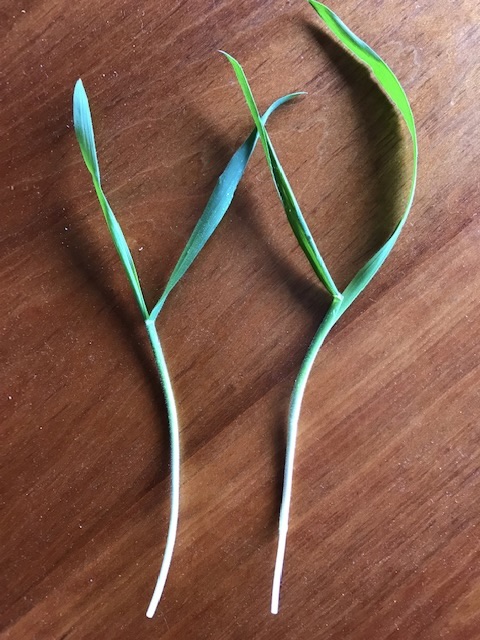
Gary worried, when he brought me these stems, that they were bamboo from our neighbors’ ugly bamboo hedge. I think: No. At least, I hope not. Anyone?

Continue reading