CLOTHES HORSE

fullsizeoutput_10

The “Flamingo” quilt before being cropped and the edges bound. The white showing around the edges is cotton batting; the red showing on the very outside beyond the batting is the backing.) My quilts generally begin with a signature fabric that drives the design. In this case, I was captivated by an Indonesian batik in a Japanese plum-blossom pattern, imported and sewn in the United States. This is one of the pieces that will go into a local show in December 2020. (Assuming they allow me to bring such large works.)

Gary sewed a button on the other day. A few months ago I made repairs to quilts I’d sewn for our older son—quilts that are decades old and have been through the wash too many times. I recall my dad talking about learning to darn socks in the Army. I know, in theory, how to darn socks and I even have a favorite pair of wool socks that need darning. I also have a tweedy charcoal/brown silk noil sweater that I bought at Banana Republic that needs some attention under the right arm where the stitching has come undone. It was originally intended for one of the boys—it’s a man’s sweater—but none of them wanted it. I took it for myself and despite the label that says “dry clean only” have been machine washing it in cold water and hanging to dry for over twenty years. It will take me a few minutes to repair.

Repairs have become rare. Continue reading

BREAK A LEG

IMG_5234

Some of this story is fiction, but it doesn’t matter which parts because that’s not the point.

When you are seventeen, riding a borrowed bicycle, you are stuck by a car and suffer what they used to call a compound fracture. You could search online for what they call that kind of break today.

Continue reading

MEDIA MOB

iu-1.jpeg

My husband and I love films and we have seen a great many of them. We avoid the bad ones, when we are aware they are going to be bad. Lately, “bad” has become such a relative term that even Rotten Tomatoes seems unable to warn us away from films we dislike. We wasted over $30 seeing Knives Out (or Up or In or whatever). The overpriced popcorn and Milk Duds were the best part. I hasten to assure you that everyone else in the theater seemed to love the film. They laughed a great deal more than we did, did not seem to mind Craig’s silly accent or the pathetic attempts at political pandering or the way the main character (vomiting on cue—that was only funny once and not the first time) was used as a cliché victim. The predictable plot twists even seemed to surprise people. Really? If you loved the newest version of Murder on the Orient Express, you will find a familiar scenario here. This is the cartoon version where everyone but the ingenue is despicable. If you thought that mustache on Branagh was ridiculous, well, consider yourself warned.

On the other hand, we had relatively low expectations for The Good Liar, the overall twist was expected, but, you know, Helen Mirren. That one was fun.

In the mean time, the single best film entertainment we’ve enjoyed recently has been on Netflix. Midnight Diner: Tokyo Stories has two seasons (2016 and 2019), just twenty 28-minute episodes, and some are deeply touching and some are spectacular. A couple have been flat out sad, but mostly they are something more subtle. Newsweek declares it “the best show no one is watching.” As we near the end of the second season, we’re dolling them out one at a time to make them last. We never skip the opening sequence . . . and apparently others feel the same way about “Omiede.”

There have been many more shots and films we enjoyed this year. Gary credits me with finding Midnight Diner, and promising is was short and we could turn it off if we didn’t like it. He says it’s on the level with Detectorists, which is his all-time favorite. Its funny and dear to us both.

iu-2.jpeg

Joan Baez sings “Diamonds and Rust.”

BRING BACK OUR MIGHTY DREAM

Let America Be America Again

Langston Hughes  (1902-1967)

Let America be America again.
Let it be the dream it used to be.
Let it be the pioneer on the plain
Seeking a home where he himself is free.

(America never was America to me.)

Let America be the dream the dreamers dreamed—
Let it be that great strong land of love
Where never kings connive nor tyrants scheme
That any man be crushed by one above.

(It never was America to me.)

O, let my land be a land where Liberty
Is crowned with no false patriotic wreath,
But opportunity is real, and life is free,
Equality is in the air we breathe.

(There’s never been equality for me,
Nor freedom in this “homeland of the free.”)

Say, who are you that mumbles in the dark?
And who are you that draws your veil across the stars?

I am the poor white, fooled and pushed apart,
I am the Negro bearing slavery’s scars.
I am the red man driven from the land,
I am the immigrant clutching the hope I seek—
And finding only the same old stupid plan
Of dog eat dog, of mighty crush the weak.

I am the young man, full of strength and hope,
Tangled in that ancient endless chain
Of profit, power, gain, of grab the land!
Of grab the gold! Of grab the ways of satisfying need!
Of work the men! Of take the pay!
Of owning everything for one’s own greed!

I am the farmer, bondsman to the soil.
I am the worker sold to the machine.
I am the Negro, servant to you all.
I am the people, humble, hungry, mean—
Hungry yet today despite the dream.
Beaten yet today—O, Pioneers!
I am the man who never got ahead,
The poorest worker bartered through the years.

Yet I’m the one who dreamt our basic dream
In the Old World while still a serf of kings,
Who dreamt a dream so strong, so brave, so true,
That even yet its mighty daring sings
In every brick and stone, in every furrow turned
That’s made America the land it has become.
O, I’m the man who sailed those early seas
In search of what I meant to be my home—
For I’m the one who left dark Ireland’s shore,
And Poland’s plain, and England’s grassy lea,
And torn from Black Africa’s strand I came
To build a “homeland of the free.”

The free?

Who said the free? Not me?
Surely not me? The millions on relief today?
The millions shot down when we strike?
The millions who have nothing for our pay?
For all the dreams we’ve dreamed
And all the songs we’ve sung
And all the hopes we’ve held
And all the flags we’ve hung,
The millions who have nothing for our pay—
Except the dream that’s almost dead today.

O, let America be America again—
The land that never has been yet—
And yet must be—the land where every man is free.
The land that’s mine—the poor man’s, Indian’s, Negro’s, ME—
Who made America,
Whose sweat and blood, whose faith and pain,
Whose hand at the foundry, whose plow in the rain,
Must bring back our mighty dream again.

Sure, call me any ugly name you choose—
The steel of freedom does not stain.
From those who live like leeches on the people’s lives,
We must take back our land again,
America!

O, yes,
I say it plain,
America never was America to me,
And yet I swear this oath—
America will be!

Out of the rack and ruin of our gangster death,
The rape and rot of graft, and stealth, and lies,
We, the people, must redeem
The land, the mines, the plants, the rivers.
The mountains and the endless plain—
All, all the stretch of these great green states—
And make America again!


[and every woman too . . . originally published in the July 1936 issue of Esquire]


WILD PLACES

fullsizeoutput_1138

When I was in high school the last of my grandparents died. And then in my twenties so had all the step parents—a lot of divorce in my family. My maternal grandfather’s third wife had taken a fancy to me and her second husband was fond of Gary. I’ve written about this before. It’s how we came to live in Oregon and raise a family here.

All of that happened together. We had gone back and forth about having children, but a key was wild spaces. My husband grew up in rural Washington and Arizona. Most of my childhood was in the growing suburbs north of Seattle. There were still cows at the end of the road, goats over the hill, and a small barn with palomino horses just a couple of blocks away. Best of all were the remains of second and third growth Douglas firs. The stumps of massive old growth cut down in the late nineteenth or early twentieth centuries were so old they crumbled rust red—I could dig right into them with my hands. Hidden away were ponds and swampy places. I watched frogs swim underwater and admired the water skippers on top. I tripped over the native blackberry vines, tore bracken from the earth and heaved it as javelins, put foxglove blossoms on my fingertips, and ate the sulphurous yellow blossoms of Oregon grape in the spring and the tart berries later in summer. My mother had no idea where I was most of the time. I brought home pollywogs and splinters. I came home filthy.

Gary had a similarly unrestrained childhood in the desert but also rattlesnakes and scorpions. I wrote my MFA thesis based on his childhood stories. Most of what I wrote was entirely made up, but once in a while, Gary would look up from reading one of my stories: “Did I tell you this? I’m sure I never told you this.”

I got it right.

Having children in the city, even in a house with cedar trees in the front yard and dogwood in the back, and just a few blocks from the zoo . . . that would never do.

Raising children at the beach felt possible. My mother would later declare the move to Oregon as a reason for having children “stupid.” It felt only right to me.

I hope my sons have their own stories of wilderness and sand, wetsuits and wild waves. Jellyfish and sand dollars, castles and glorious sunsets.

Overpopulation worried me even when I was still in grade school. I’m sure I have written about that before too. The world is too crowded these days and all the places I played growing up are paved over, fenced, and tame. Wild places are few and far between today. I just read that the Earth is predicted to have 10 billion people by 2050. That’s four times the population on Earth in the year I was born. Our sons and their wives and our grandchildren will live to see that coming crowded world. I probably will not.

May there be something left of wilderness for my great great grandchildren to enjoy. May they watch water skippers on the surface of ponds, frogs beneath the surface. Forest and water hidden away. May they know monstrous trees and places silent, still, and out of control.

WAIT

IMG_1206

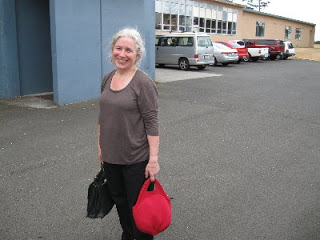
Immediately after my shower. I had run to school (15.3 miles) in August 2011. My husband trailed me & carried my briefcase and lunch. Don’t I look happy? I was.

I loved running. Loved it! I was never very fast, never did better than eight-something miles, never ran a marathon. But I ran the Hood to Coast several times, a bundle of 3ks, the Bridge Crossing, and a slow but official half-marathon in Portland nine years ago (2:17). Ten kilometers was my favorite distance and I aimed for 9-minute miles. I had measured runs of three and four and five and six miles on the beach and highway from my home. I ran at least every other day for years. I used to run the six miles on the beach to my mother’s house in Cannon Beach two or three times a week in summer.

And then I couldn’t do it anymore. I could barely walk for a year. I tried other exercise but biking is unsafe around here and involves a mechanical device, and the pool has too much chlorine. All I have is walking, and I am usually on the sand for over an hour a day without a problem. But I miss running.

That might change. I have decided I might try running again this next year, but to do that I need to weigh less. Wait for weight. When I quit teaching, I was about five pounds over my running weight. I meant to lose eight to fifteen pounds—is this starting to sound familiar?—but instead I have gained fifteen. Now you see it, don’t you?

Weight isn’t a huge issue for me. Well, that’s a lie. I grew up in the twentieth and live in the twenty-first century. I am female. Yeah, weight has been a huge deal all my life. In my teens the doctor was worried when I weighed 121 pounds. My mother tried to put me on a diet. Eventually I lost 7 pounds only because I had my tonsils out when I was fifteen, Ballard Hospital was remodeling, and I was in from Sunday until Friday. They brought me one meal on Tuesday, which I was still too sore to eat and neither the nurses nor I noticed that I was being starved. So I weighed 114 pounds by that Friday and throughout high school. By my senior year of college I weighed 118. Or maybe by then I weighed 121 again. I do not remember.

In my thirties, a friend called me plump when I weighed 130 after my second child. I dieted back to 114, but that did not last.

I began running, a few blocks in April and six miles by August. I am not built like a runner and had absolutely no history as an athlete. But running turned out to be wonderful. I felt strong and capable. I found runner’s high at three and a half miles in a rainstorm and laughed. Thus in my forties, I usually weighed 132 to 142 because of running muscle, lightest by the end of cross country season. (I tried dieting while running but that was pointless.)

During my fifties when I was caring for my mother and running time grew sparse, my weight pushed up. Then grief over my mother’s death took off 40 pounds. People complimented me on my weight loss, which I found ironic.

Like most people, weigh has gone on and then off and then on again with no deliberate effort on my part. I am always impressed by people who maintain a consistent weight throughout their lives. I am not fully in tune with my body. I know it does not want to weigh 114 pounds any more than it liked running more than eight 9-minute miles in a row. Lower weight and longer distance runs were each a struggle. I could do those distance runs, but it was against my body’s better judgement. In 2011 when I ran over 15 miles in bad shoes my body was not happy. My feet up and resigned their commission. I stopped running.

How’s it been without running? Like how a dog with no nose smells. Awful.

So, a new and more reasonable plan. Take a year to go back to my most typical running weight of between 132 and 142, mostly by eating only between 8am and 6pm. Three meals, no snacks, less sugar, more veggies. (Well, we all know that: “Eat food. Not too much. Mostly vegetables.”) And walking. For the duration, only walking. At sixty-seven years old, I can not afford to put too much weight on knees and feet. But I think, perhaps, if I can drop those recently gained pounds, I might manage three miles again. Slower miles perhaps and only on sand.

I’ll let you know.

2 FAVORITE NOVELS of 2019

43984883

Some books were entertaining but slid right off the dinner plate of my attention and a few I did not like. Here are two novels—though not the only two—I thought were wonderful.


Olive, Again by Elizabeth Strout

I loved Olive Kitteridge, but I loved this one more. Maybe that is because I am aging and Strout has tackled the challenge of writing about older people without sentimentality, but with realism, compassion, and wisdom.

An example: Out of the blue, Olive visits a much younger woman who is undergoing cancer treatment and fears death, but who also feels confused and guilty that she is becoming unkind to her husband, irritated and impatient. Olive shares about her own husband.

” ‘I don’t know,’ Olive said thoughtfully. ‘He may have been [sick before] and I just didn’t know it. He became very needy. And I wasn’t—I just wasn’t very nice to him. It’s something I think about a lot these days, and it bugs me like hell.’

. . . [and later in the same visit]

“You’re scared to die, even at your age?”

“Olive nodded. ‘Oh Godfrey, there were days I’d have liked to have been dead. But I’m still scared of dying.’ Then Olive said, ‘You know, Cindy, if you should be dying, if you do die, the truth is—we’re all just a few steps behind you. Twenty minutes behind you, and that’s the truth.’ 

“Cindy had not thought of that. She had thought that Tom, and her sons, and—people—that they would go on living forever and ever, without her. But Olive was right: They were all headed where she was going. If she was going.”

Of course it is Olive looking back sometimes, as well as forward, but that is Strout who recognizes how this tough, hard-edged “old bag” will continue her voyage. Again and again Olive’s choices and words felt personal to me. I laughed and cried and reread passages. There was one where someone confesses to Olive how weary she is at the idea of starting over and Olive basically says, “Oh, now, we never star over, we just go right on.”

As the first book, Olive is not always central to the narrative in these chapters which concern many people in the town. I read Olive Kitteridge when it was new and I feel fortunate to win an ARC of this follow-up. This in no way affects my review. I loved this novel. It’s one I want to read aloud to my husband, and that is a rare compliment.


Normal People by Sally Rooney
Normal People by Sally Rooney 

It was amazing.

I had it in hand for months, for a year even, sitting someplace in a stack of books to read, before I read it because I thought the cover was boring. Yeah, I know. Dumb, huh.

“Life offers up these moments of joy despite everything.”

My husband likes to share a Swedish saying: “There is no bad weather, only bad clothing.” That line is in this novel. No kidding. Most everything in this novel felt like that, like finding something I knew but mostly had not realized I knew.

For some, reading functions “as class performance, literature fetishized for its ability to take educated people on false emotional journeys, so that they might afterward feel superior to the uneducated people whose emotional journeys they liked to read about.” Bits about people who are more interested in sounding like they know than about actually knowing . . . oh, yeah. Been there.

Rooney offers personal wisdom about relationships, about power differentials between people, about seeking popularity, about wanting to be liked, about fearing being known. And broader truths about class and about self-acceptance, about forgiveness and making a difference in the world. There is wisdom about leaving home, about writers and writing and readings, about dependence and strength.

I did not read any reviews until I’d made up my mind. A lot of people adore this book (I do) and not a few hated it. Maybe it came to those who “hated” it at the wrong point in their lives, maybe their life experiences have not run parallel to this story, maybe they just do not get it. I am sorry for whatever reason they did not read the novel I read.

This reader got it. This reader loved it. I did not cry, but I really should have because this is a powerful book about young people figuring things out, about those fraught years between teenager and full adult, about people accepting others and themselves, supporting and honoring responsibility. This is the age to beg forgiveness and grow up.

The main characters Connell and Marianne want to feel normal, a normal they can be proud of, a normal that is good, and a normal they are unsure even exists. They want to believe of themselves that they are good people. They fail along the way sometimes.

A couple of unfavorable reviewers said it was depressing and so I worried throughout the second half about what would happen at the end, about how it might devolve into apathy or cynicism. I rushed through too much too fast, and loved it even so. Two days and done and now I am so sad it’s over. NOT depressing, enlightening. What I read illuminates. It gives light.

There’s nothing more I could ask for.

FOR FREE

botticelli31500x900.jpg

[There’s a great link at the bottom—don’t miss it.]

“Art never responds to the wish to make it democratic; it is not for everybody; it is only for those who are willing to undergo the effort needed to understand it.”—Flannery O’Connor, Mystery and Manners: Occasional Prose

vs.

For some, reading functions “as class performance, literature fetishized for its ability to take educated people on false emotional journeys, so that they might afterward feel superior to the uneducated people whose emotional journeys they liked to read about.”—Sally Rooney, Normal People

“Art for Art’s Sake” was a popular slogan when I was in art school in the 1970s. There was a general attitude that artists were some sort of elite beings, that their work spoke to an exclusive club, and also that the only real art was paintings, sculpture, and architecture. The rest was mere craft.

Thanks to my future husband, I was taking not just the required studio and Art History series, but a lot of Anthropology classes. This meant that I understood that art was never reserved only for the precious few. What we regard as “art” served the wealthy aristocracy in Europe after the Renaissance. Before that, and even after, and at every time and everywhere around the world, art serves to satisfy the aesthetic needs of all people, expressing ideas, power, yearning, hopes, dreams, fears, and distinct perceptions of beauty. Art reflects appreciation and even affection for the objects and environments we touch and use and admire every day.

That is to say, that while I like Flannery O’Connor’s fiction and I get what she is driving at, and every advisor I had in my MFA program pushed her books onto my reading list (and I read Mystery and Manners: Occasional Prose), I think that quote from her above is elitist crap.

There is no great effort required to appreciate or understand most art. And it shouldn’t be all that hard or reserved only for the special few.

Art does not choose only certain individuals nor is it handed out as a gift via a Muse. Creativity is not reserved for some sort of intellectual or preordained elect. Appreciating art is not a gift from the Almighty who only allows understanding by those chosen few. Art is human creation. No, it’s simpler: Art is human.

I won’t argue that there are not great artists and that creating art does not require enormous effort and even talent. Spare me Hallmark cards and bad art—and there is bad art—but I refuse to accept the narrow view that art is accessible only to special people. I will argue that if only a few people can “read” the art, its message does not speak effectively to the human condition.

There is room for art that offends or challenges our notions of art. Certainly art must not merely sooth but provoke and wound. That too is the proper place of art, to wake and stir our souls. To break us open and heal us too.

“I think we ought to read only the kind of books that wound or stab us. If the book we’re reading doesn’t wake us up with a blow to the head, what are we reading for? So that it will make us happy, as you write? Good Lord, we would be happy precisely if we had no books, and the kind of books that make us happy are the kind we could write ourselves if we had to. But we need books that affect us like a disaster, that grieve us deeply, like the death of someone we loved more than ourselves, like being banished into forests far from everyone, like a suicide. A book must be the axe for the frozen sea within us. That is my belief.”—Franz Kafka

Maybe even Kafka was full of it. Everyone wants to argue that what they make or like or pay for is the only true art.

“What we have here is a failure to communicate.”  Yes, art is communication and if it only speaks to a tiny fraction of the population, that might only be because it is a small and narrow effort.

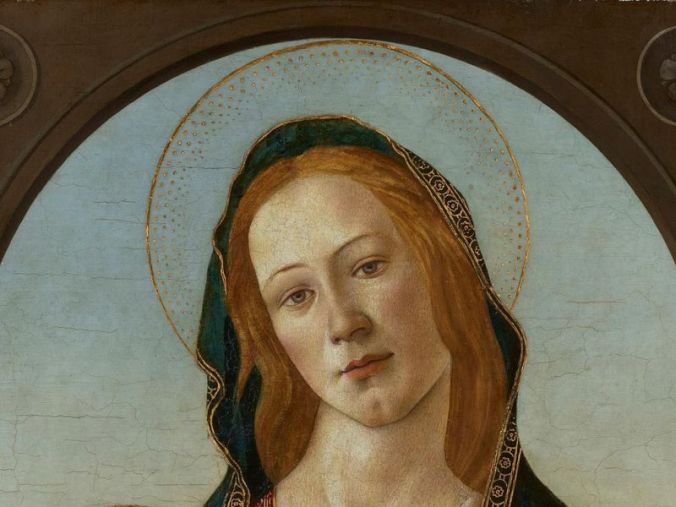
The painting above sat in a storeroom for decades. The woman who gifted it to her local museum thought it was a Botticelli, but the experts declared it merely the work of some unknown apprentice. They had studied for years and had been “willing to undergo the effort needed to understand [art].” They knew so much they put it away and didn’t look at it again for fifty years.

Perhaps someone might have noticed it is beautiful? Someone finally did. The collector, Gwendoline Davies was right. “National Museum Cardiff has put on display a painting of a Madonna and child that had for decades been dismissed as a crude copy of Botticelli’s style.” But it was the real deal. Not appreciating the art without the name? Major fail.

There’s a Joni Mitchell song about this, “For Free” on Ladies of the Canyon. It has been recorded by over sixty artists who know great art when they hear it. So have their audiences. No great effort required.

For Free

I slept last night in a good hotel
I went shopping today for jewels
The wind rushed around in the dirty town
And the children let out from the schools
I was standing on a noisy corner
Waiting for the walking green
Across the street he stood
And he played real good
On his clarinet for free

Now me I play for fortunes
And those velvet curtain calls
I’ve got a black limousine
And two gentlemen
Escorting me to the halls
And I play if you have the money
Or if you’re a friend to me
But the one man band
By the quick lunch stand
He was playing real good for free

Nobody stopped to hear him
Though he played so sweet and high
They knew he had never
Been on their T.V.
So they passed his music by
I meant to go over and ask for a song
Maybe put on a harmony
I heard his refrain
As the signal changed
He was playing real good for free

[Joni added these lyrics to the song during the 1983 tour]

Playing like a fallen angel
Playing like a rising star
Playing for a hat full of nothing
to the honking of the cars


In case you have read this far, allow me to recommend two older (than me) bloggers, “Margaret and Helen: Best Friends for Sixty Years and Counting… “. Helen Philpot has a lot to say this morning and says it better than I could. She generally does. Here’s a snip:

“Suggesting that 13 year old Barron Trump isn’t a Baron is unforgivable but mocking 16 year old Greta Thunberg for wanting to save the world will get you several hundred thousand likes in MAGA Twitter World.”

SHORE BIRDS

fullsizeoutput_1135

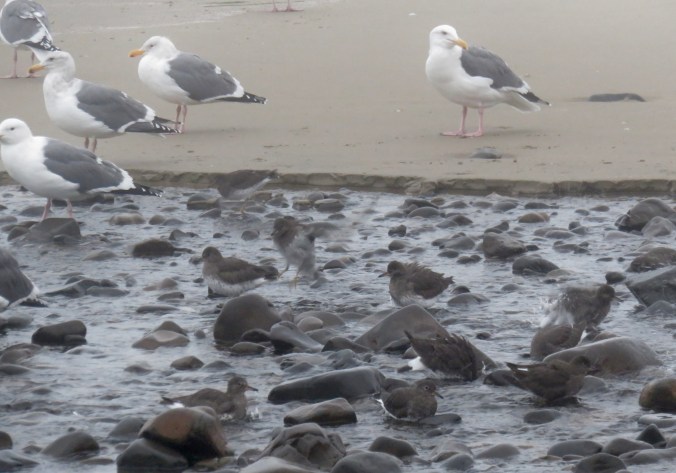
We saw dozens of  small shorebirds bathing in Asbury Creek this morning. They looked like smallish (largish robin-sized) but very fat pigeons. I stood and watched them while Gary moved quietly up to my side and gestured to his pocket where he carried the camera. A neighbor joined us. None of us knew what they were, and I took photos to be sure I could accurately recall what they looked like.  Continue reading

DEFINE TERMS

IMG_0018

Early in the school year, I used to do vocabulary activities in my junior English classes. They required the use of hardcover dictionaries and most often teamwork. In each case the terms and their definitions were written into classroom journals which could be accessed during quizzes and exams. No need to write any of this down, I’d say, but if you find you need the information during a test, you can look it up in your own journals. Sometimes I did this twice.

The short version had four words: “sympathy,” “pity,” “empathy,” and “compassion,” and illustrates the classic case of dictionary definitions that reference one another. Continue reading