THE CANON

[from main page, CLICK TITLE above TO READ THE ENTIRE POST] 
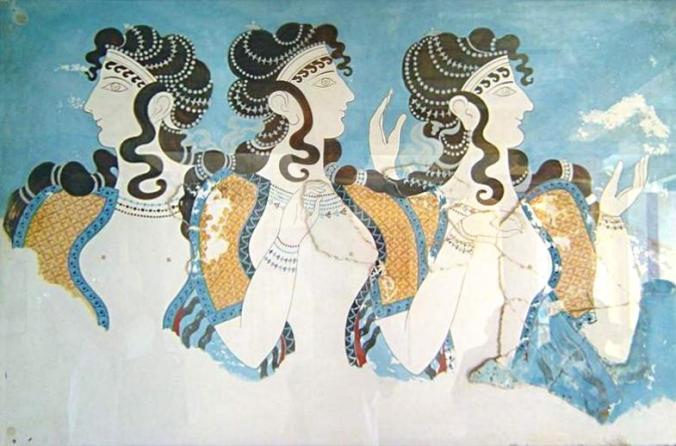
Minoan_Queens_Fresco.jpg

This is the “Minoan Queens,” one of my favorite frescoes from Knossos on the island of Crete, a mural from a civilization flourishing between the 27th and the 15th centuries B.C.E. The image appears, quite inappropriately, on the cover of the Wilson translation of The Odyssey. It is beautiful but in no way reflects the time or the culture of Homer’s Greece. Most scholars believe the epic works attributed to Homer were created late in the 8th century B.C.E., several centuries after the fall of the Minoan Empire, which was, in fact, not quite Greek. (Wilson makes a case for The Odyssey a few centuries earlier, but it’s still a clear miss.) The peaceful seafaring and trading society was long gone by Homer’s day. Some guess that this wide-reaching Mediterranean society was egalitarian in terms of gender. They worshipped a goddess. They kept no weapons of war. Very different from Homer.

The canon is the essential literature that we assume everyone ought to read. In the twentieth century the Western Canon came under attack for being too determinedly dead, white, and male. Mostly dead. It has broadened somewhat since the days I was in school and read dozens of stories and novels by white men. There was not one novel or story written by a woman or person of color. I read The Diary of Anne Frank, but even Shirley Jackson’s story, “The Lottery,” was not in the curriculum of my school.

I found A Raisin in the Sun as a teen and was blown away by this story of racial injustice and poverty. I determined to provide a broader view of the world to my own students and for twenty-five years I assigned texts by men and women of color,  from Africa and the rez, and yes, from white men.

I was also writing my own stories and was assured again and again that if I continued to do good work, it would find recognition. Maybe so, but I have not found that to be true for other writers, and I question whether the canon is or has ever been representative of the best.

A great many dreadful books remain in print, and Zora Neale Hurston was out of print for decades. She did, of course, find her way back into print, but almost accidentally. The resurgence of appreciation of her work was the result, partially at least, of a single fan who found a copy of one of her books in a library, went searching, and wrote up her discovery for a new magazine called Ms. The fan was Alice Walker, author of the Pulitzer-winning The Color Purple, which is also a block-buster film. Walker championed the out of print novel of Hurston, and now that novel is widely read. I taught it for years.

It would be optimistic to assume that every novel as fine at Their Eyes Were Watching God would gain publication and remain in print, but I suspect in this case this is not the result of some magical efficiency in our system of evaluating and choosing great works.

What we most treasure is what we are told is good, what we are forced to read, and what others helps us to appreciate. That does not diminish the book we’ve never heard of, the one aging and unread in the school library, or the book we do not have the background to immediately understand. What we love in books can never exceed our experience, and our experience is limited.

Somewhere in someone’s attic is a novel written out in longhand, typed, or word processed—just the one copy—that you and I will never know but which might have changed our lives.

I was reminded of this truth recently as I began reading through a third complete translation of The Odyssey, the prize-winner by Robert Fagles (1996). I have already read one version that makes no pretense at replicating the poetry of the original, but places line numbers in the margin so that I know where I am in the original (Rieu, 1991). The other translation did its best to manage the original line-for-line in iambic pentameter, so that it offers precisely the number of lines as found in Homer’s Greek (Wilson, 2017). Fagles offers line breaks and stanzas in the appearance of poetry, and he numbers his lines, but his line numbering is of his own lines, not Homer’s.

Unfortunately, I am not interested in Fagles’ line numbers; I want to compare his translation directly to the other two. In some of the twenty-four “Books”, his line 190 is a line or two off of the original shown in the other two translations, other times it is off by a dozen or more. I must scan for Homers 7:107 to find the weavers’ oily cloth on line 123. I am still not certain if the oil used is from olives or some less precious source. One translation offers olive oil, but Walker, gaming determined to keep 10-syllable lines (which she often fails to achieve)  and the other poetic version, do not offer a type of oil:

…their hands fluttering like the leaves of a tall poplar, while soft olive-oil drips from the close-woven fabrics they have finished. [7:106-7 translated by Rieu as prose]


with fingers quick as rustling poplar leaves,

and oil was dripping from the woven fabric. [7:106-7 translated by Wilson as “iambic pentameter”]


fingers flickering quick as aspen leaves in the wind

and densely woven woolens dropping oil droplets. [7:122-3 translated by Fagles as poetry]

[I think, ironically, the prose is the most musical. Wilson’s poetic translation is awkward and not iambic pentameter. Homer sometimes dropped a syllable in his 12-beat line for emphasis, Wilson adds a syllable, but I cannot say why. The word “fabric spoils the rhythm and might have as easily been translated as “cloth.” And Fagles, oh dear, the alliteration nearly becomes a tongue-twister. Where is the poet-translator when most needed?]

Was it olive oil that dropped from the cloth and not some common oil? This matters, because The Odyssey includes many such details of wealth to emphasize the elite position of the principle characters. Class and position are continuously emphasized in details of food and clothing, gifts and weaponry. Odysseus is expected to be treated well as a stranger, but the fictional birthright Odysseus invents is immediately used in support of this treatment. We are not dealing with ordinary people, we are dealing with favorites of the gods.

One introduction dismissed the possibility of a woman composing these epics because a woman would not have been adequately familiar with warfare to tell about it in The Iliad. I wonder how a blind man would have known any of it? How would he have known so many details about housekeeping and weaving and the dyeing and spinning of wool, all of which are covered in great detail in The Odyssey. Never mind, I will accept that it is unlikely that a woman of this period could have composed these epics. I have other quarrels.

Each introduction I have read, has focused on the challenge of understanding Penelope’s purposes and feelings. On the basis of only two translations and several introduction, no Greek, and my own experience and research, do not find Penelope’s actions the least bit opaque. She was commanded by her husband when he went to war: raise my son to manhood and remarry. She has stalled the suitors until Telemachus is grown and then, much as she would prefer not to, she will marry. How is this inscrutable? No action by Penelope contradicts these goals. When another characters swears faith but privately conceals deceit, Homer’s words reveal the lie. Penelope follows the promise to her husband. She will do whatever she must to safely raise her husband’s son and then she will remarry. She is not happy about remarriage and she misses her husband, cries over his absence. These are an absolute constants. Homer is not cagey about the secret feelings of anyone, not even Penelope.

Today, we might find such loyalty rather bizarre, but Penelope is not mistress of her own fate, she is a loyal member of her husband’s household. She does her level best to abide by his wishes.

This is a story of blind obedience, of absolute rank and privilege. We might want to believe Greece is the birthplace of democracy, but it was a brutally stratified society in the days The Odyssey was told, and a few centuries in the golden age of Athens, it was little improved. Only land-owning men had rights, and there was punishment for overstepping position or dressing beyond what was defined by law. Slaves had no rights. Servants were beaten. Failing to follow instructions lead invariably to death.

The Odyssey is not a nice story.

There are other details of form that are addressed in introductions, but rarely translated—the names of main characters, for example, are routinely prefaced with an epigram that denotes their essential character. Certain passages such as the oft-translated “rosy fingered dawn” are repeated each time in the original Greek, but most translators insist on varying the language, and lose the original oral patterns in the process.

When a translator abandons or adds detail in order to create a palatable text in another language, ignore characteristic repetition, or utilizes contemporary idiom, are we reading Homer or some other version, like a “based on” Hollywood movie?

Never mind. The Odyssey concerns a culture mostly dead—and it would be unreasonable to expect every student to learn Greek in order to read the epic in the original. People did, though, as late as a hundred years ago. The story is not completely beyond our understanding. You might recognize the bombastic egotism of Odysseus—and then you might wonder why anyone considers this braggart a hero. The motivations and values of its characters are worthy of study for how they are different from the motives and values of most of us.

This rather far-fetched and nasty story rarely taught in public schools, and then usually only in excerpt. The Cyclops story Odysseus tells in Book 9 is a favorite and most familiar. And there are other monsters and magicians and dangerous sea voyages and butchery that go on for twenty years. Odysseus’ journey is appropriately nasty, brutish, and long. Only Odysseus survives, and he survives, according to his own account, by superior wits and the aid of the gray-eyed goddess Athena.

I am not done with The Odyssey. It is a different world and it carries the reader to a different place. There is still the rest of Fagles for me to read and then Chapman’s Homer (1616), which ignores any attempt to follow or mark Homer’s lines. But it is beautiful.


But all had motion apt, as Aspen leaves.

And from the weeds they wove, so fast they laid,

And so thicke thrust together thred by thred,

That th’oile (of which the wall had drunk his fill)

Did with his moisture in light dewes distill. [7:141-45 translated by Chapman as poetry]

Translation, as I have said before, is a bitch.

But despite my devotion to understanding Homer, without learning the necessary Greek, I cannot help wondering what other great works I am missing. What has the canon left out?

Might there have been equally adventurous and more egalitarian tales of Homer’s age? Perhaps. No high school teacher I know has ever assigned The Monkey, for example. I have read only bits and pieces myself. In translation, neither is a favorite, but each is has been enormously influential. I found Sappho n my own and read her work when I was 15. I found many authors who were not in the canon.

What texts did we miss? What else was written that might more closely reflect our values?

It is widely assumed the The Odyssey is a vital and necessary and supreme piece of our literary canon. And so it is true. But how do we know what else might have held its place? As one example, in it’s day Romola by George Eliot was regarded as her greatest work. I have never met anyone who even pretended to have read it, though many are familiar with Middlemarch. Who decided that Middlemarch was Eliot’s greatest work?

I return to the question about the canon: Do we base greatness on what has been recognized throughout time, what was most treasured in its own day, or from what we have to choose from? And do we accept the texts that reflect our values or merely attempt to squeeze our current values into old stories?

Are we reading the right texts?

If I had another life, I would study Greek and produce a strange, rhythmic story meant to be spoken in all its brutish glory.
SaveSave

SaveSave

SaveSave

SaveSave

SaveSave

FIFTEEN MINUTES

IMG_1041 (1)

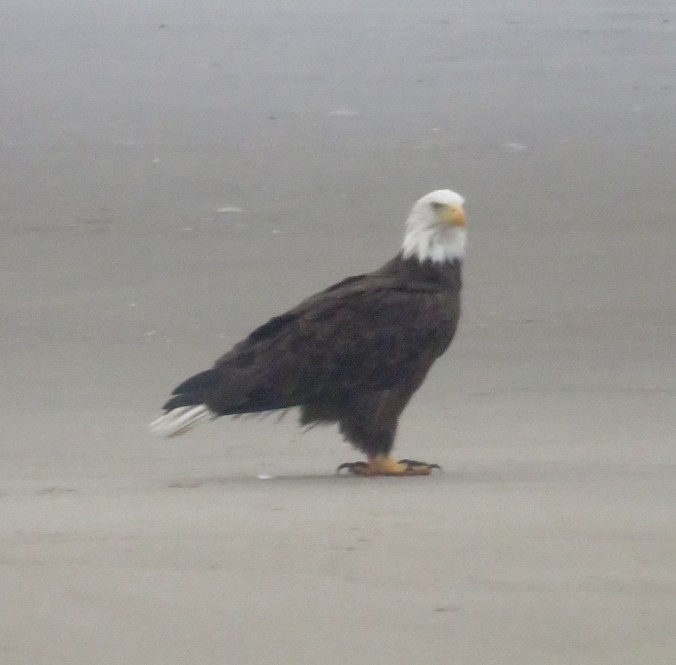
[CLICK TITLES TO READ THE ENTIRE POSTS]  An eagle flew by just offshore. Both my husband and I noted that she was flying lower than we had ever seen one of our eagles fly. Gary thought she would hit the water, but she was working hard and stayed in the air. I watched her skim around the big rock on the cape, catch an updraft, and abruptly drop out of sight. Wet, I figure. She was flying, but struggling to get home with wet wings. They don’t like being wet.

That eagle has never read a book, but you should. Books will help you live longer. Books can make you a more empathetic person. Books take you places you will never go any other way. There is a connection between happiness and books—people who read more report feeling happier—though perhaps not a causal relationship.

Just in case, you should read more books

Yes, I know, you read so much troubling news, you cannot possibly be expected to read anything heavy. You read for your work. You are an academic and read student essays. You have a demanding job. You teach middle school. You work with the public. There are only so many hours in the day. It is all too much. No one should expect you to read—um—literature in your limited spare time.

In three weeks of reading about fifteen minutes a day, you can read a novel. That’s 17 novels or works of narrative nonfiction a year. The average American reader reads maybe 4 or five books a year. Many read nothing at all.

The man who does not read good books has no advantage over the man who cannot read them.—probably not from Mark Twain, but smart


I do not read anything but history and biography. You perceive that for me to presume to indicate the hundred authors which a person ought to read, would be folly. No, leave me out: My testimony would not be valuable.—Samuel Clemens in a letter to Joseph B. Gilder, 16 May 1886

You may read a young adult book or something The New York Times recommends. I already have a stack to chose from, but choose your stack of to-read books based on what you like. Even the easy ones will leave you feeling good about yourself. The hard ones will annoy and exasperate you, but have you feeling proud and eager to tell someone else.

Fifteen minute, huh? I hear you scoff. Where am I supposed to find fifteen minutes a day?

Read for fifteen in the morning before allowing yourself time on Facebook. You have been meaning to cut back on social media anyway, right?

Read for fifteen minutes before you go to sleep. You would likely just be lying there anyway, desperate to unwind. Unwind with a novel.

Read for fifteen minutes while you wait in line at the bank, at the gas station . . .

Read for fifteen minutes while the baby naps as a reward for being a parent and before you start cleaning the kitchen.

Read for fifteen minutes after you clean the kitchen. It’s an excuse to sit down.

By all means, take the stairs at work to get a few minutes of cardio. Eat a smaller portion for lunch, have only a salad for dinner, or skip dessert. Call a friend. Plan a vacation. Take a nap, for goodness sake, if that is even a possibility. All of that is good.

Taking care of yourself is not punishment. It’s a reward.

Read for fifteen minutes a day.


SaveSave

DONE/NOT DONE

Eight hours, then six hours the next afternoon, then a day off, then another seven hours revising my 2016 novel after working my paying job. I have queried it more times than I am willing to admit and under four different titles. (The husband of a friend suggested the title last week that I think has stuck.) I have written eleven drafts of this novel. It has drifted up and down between 75 and 82 thousand words. Two agencies are interested. I just queried another agent, and I have sent out 22 story submissions this year. In March, because clearly I have too much time on my hands, I committed to writing a 40-page novelette and a new poem each day in the month of April.

Ask me how that’s going.

I have a few lousy poem drafts and 21 pages of a science fiction short story that is already too long and does not want to be novelette. (We’ll call it the “pigeon” story, because it does actually have a pigeon in it for about a page.) I really do want to put the pigeon story aside because it gets more strange and complicated every time I think about it. And anyway, it’s done. Isn’t it? Sixty-five hundred words is long enough and I should stop. Shouldn’t I? Or maybe it’s only that I do not want to give it another 20 pages. It’s a lot more work for a story that is strange without being actually horrifying, and which no one will like, right? Maybe I am even afraid of what will happen if I do write more? That is entirely possible. I am not sure if there is a market for stories this long, and the story itself is creeping me out more than a little bit.

Like so much of what I write, this one, the pigeon story, starts with a story about birds. I have another creepy bird story that already wants work. It has crows. Maybe I can set this 21-page pigeon story aside and work on the crow story for a few days. The owl story is going to be published. I am afraid to look at it again. Heaven help me, I know I would begin to revise.

My husband and I went on our first actual vacation in fifteen years last month—all the way to Victoria in Canada. Both of us are familiar with Vancouver Island and Victoria from our youth. Gary had Unitarian friends there when he was a teenager and I used to show dogs and stay with friends on the Island.

We did not take a device capable of accessing the internet with us to Canada. For three nights and four days, we were out of touch. Even the flip phone did not work since we were out of the country.

I had been busy sending out work before we left and several pieces were being held—short-listed for further review. I did not think about them. We napped, walked, ate, looked in shops, talked, admired views, and napped some more. I finished reading two books, but I did not even write in my journal or take photographs. It was a lovely time, and I fell asleep in the car while my husband drove most of the way home.

As we neared home, I took over driving because the bridge over the Columbia River is four miles long and he Gary hates driving across. I confessed to him that if I did not have some sort of positive response to my writing when we got home, I was going to be sad. He replied with suitable gravity that he expected that.

While I was reviewing two hundred unread emails, I found the good news I hoped for. And while responding to acceptances of the owl story and the crow essay (not the crow story, which is something else), a request for a full manuscript of my novel arrived from an agent I have queried in the past.

Yes, a very good day. I was happy and I congratulated myself and my husband and I drank a full bottle of sparkling wine. Yes. Yes, we did.

And without in any way dismissing the glory of this good news, these three successes, I do not believe I “have turned a corner” in my writing life. Everything will not go well from now on. It may immediately go back to mostly unsuccessful. For example, no journal will choose to take the story that three journals are currently considering—even though each has held it twice as long as they usually hold work. (The longer they have it, the better—it means that a first reader liked it well enough to pass it on, and the second reader too.) It’s likely that all three of the editors thinking about liking my story will decide they do not like it enough to publish it. That happens all the time, often enough that a website online tracks not just the text of form rejections, but also the text of “higher tier” rejections. I mostly submit to journals and magazines with an acceptance rate somewhat below 1%. I am submitting to journals which show hundreds of submissions but no acceptances at all in the stats at Duotrope where I track my submissions. Yes, I could make it easier by sending work to smaller journals, but if I wanted easy, there are other things I could be doing rather than writing stories with birds in them.

Nothing is changed because I have recently had a story and an essay accepted. My mother always warned me about getting my hopes up. I have been up there before.

There was the year I won a Literary Arts grant, was accepted into an MFA program, and had a story published by Calyx. This was followed by hard work on my MFA and then . . . nothing. My mother died. I could not write at all but dwelt on one story day after day without making any progress. Three years passed.

There is no corner a writer can come around and find everything easy and neat. Writing is not like we might have hoped, like maybe the man in the White House thought everything would go his way, once he won the electoral college.

Real life, even if you get away with telling lies or you write fiction, is messy and out of control. If you told the truth or wrote nonfiction, it would still be messy. Poetry? Messy, messy, messy. Right up to the moment the poem sings.

This is what I know about success:

  • success does not last, but good writing does
  • acceptance is glorious—celebrate when it comes
  • nothing good can last, but neither will the bad
  • count rejections because they will come anyway (I already have 33 this year and my goal is to have 100 for 2018)
  • sometimes the “dream market” is the only one with readers smart enough to appreciate your best (A prize-winning story of mine was rejected by tiny journals before finding publication with a better one. This happened twice.)
  • failure was at the beginning and so it shall be at the end

Almost 400 years ago, Hobbes claimed life is “nasty, brutish, and short.” Writing should not be like that. But the struggle is long and exhausting. Reward seldom comes when we need it most. People misunderstand, but I know for certain that I am never certain about what I am doing. The writing is messy and personal and haunts me awake and asleep.

In case it’s hard to tell, I am enjoying myself quite a bit just now.

How I spent Spring Break

IMG_0729

I napped, walked, read, cooked, revised older words, wrote new words, traveled, drank coffee, took a ferry twice, queried, submitted, and received good news. We went to the march in Astoria last Sunday. We both support sane “well regulated” gun safety. I set up blog posts to go live in the middle of the night. Life has been trundling along peacefully, but our passports were about to expire in April without our having ever used them, so we decided we had to leave town.

Usually Spring Break is an especially busy time for my students who work in the tourist industry—many of my students do. In fact, local teenagers and immigrants are the only way most of my local restaurants and hotels can stay open.

Though I offer a syllabus with information on where we are headed in class, I never give homework over vacations. Nothing is due the day we get back. They can come to class as unprepared as they like and we will pick up from there.

A friend who is retiring is struggling to figure out what he wants to do with his time. How do I manage? I suppose the best answer is that most often I hardly know the difference between work and non-work. Sometimes I am eager to bake bread and other days it is just something that must happen because the sourdough start on the counter needs to be put to use. Teaching my college class is like that. Most often I am eager to get to class, but some days I have to put in time preparing merely because the task has to be done. The walk on the beach in the rain? Not so different this morning than yesterday when the weather was lovely. Mostly, I do not dread any part of my life.

Most often, I devote Spring Break to working on curriculum and grading papers. I did not do that this year. Instead, I did the bare minimum and my husband and I went away for three nights—the longest we have been gone in 15 years. We stayed in B&Bs in Port Townsend and then took the Black Ball ferry across the Strait of Juan de Fuca from Port Angeles to Victoria in Canada. During this passage north, we talked to a couple visiting Victoria for the first time. We had visited many, many times, but not for thirty years.

Gary and I used to travel to Vancouver Island to stay with friends and show our Afghan Hounds. We attended the first Canadian lure course on Vancouver Island and our Onika was Best of Breed. I was nearly always there around Easter because the the Vic City shows. The old Dutch Bakery sold fancy molded rabbits in three kinds of chocolate. I intended to buy three, one for each grandchild.

I finished reading two books, one already started, but the novel was from a Port Townsend author and I interrupted The Odyssey to read it. I bought a bit of yarn and batik fabric—3 quarter-yard pieces—and three chocolate rabbits-in-roadsters from the Dutch Bakery in Victoria. Gary bought The Nation and 3 pounds of wildflower honey. We did not have access to the internet during the entire trip. We relaxed.

It wasn’t until we were nearly home again that I commented to Gary that I wanted editors and an agent who genuinely loved my work, not just liking it but enthusiastic about it. I found over 200 emails waiting. I responded first to Dinty Moore, editor at Brevity, who had emailed two days before to ask if my essay “Murder of Crows” was still available. Yes! I found a request for the full manuscript of my novel (the second such request). And after I had responded to everyone and written a blog post, Liminal Stories emailed acceptance of my peculiar owl story. I emailed the readers who had helped me with that story to share my good news and to thank them. I returned phone calls from people who had left me messages. I went back to work on the eleventh draft of my novel and worked through three more chapters. I began a work of nonfiction about restoration of a stream and wetland on the Olympic Peninsula, land we passed on our travels. A few days ago, I committed to the Camp NaNoWriMo challenge to complete a project this month. After our walk yesterday, I began work on an SF story, and I will work on it today too. But I always do the National Poetry Month Challenge to write a poem a day. The afternoon was crowded with words.

Saturday, we delivered a chocolate rabbit-in-roadster to each of our grandchildren. I played with each one, and I walked two of them home from their Easter Egg Hunt, loaded with tiny treats. The rabbits were not long for this world.

What I did not do: scored 4 of the essays in APA form that wait on the dining room table; order Malabgrio yarn; complete more squares for the quilt I began, last month now; knit anything beyond a swatch that is unsuccessful; finish painting walls and the rest of the ceiling upstairs violet-gray, or the four matching dining room chairs black or green.

Yesterday I poached sockeye salmon in lemon, garlic, and wine, roasted potatoes, and churned ice cream. I watched some television and recognized that during this vacation I both accomplished and relaxed. I opened the draft of the activity I plan for my writing students today, completed, and printed it off. I went to bed and rose early, heading back to work. Change is good, relaxation is healthy, but so are the ordinary tasks that give meaning to each day.

SHORTLISTED update: ACCEPTED!

wood2

A story I am particularly proud of is “shortlisted”—that is, the editors told me they liked it and wanted to hold it longer—with a paying online journal. This particular story had been shortlisted three times before, each time by a journal that pays professional rates and does not allow simultaneous submissions. As a result it has been held for months, and then rejected three times already. It is sad for me to recognize how long ago I first drafted this story.

I desperately want a journal to publish this story. Three well-published literary friends have read it and helped me revise. The editors of this current journal said they would get back to me with a decision by the end of February. It is now the end of March.

To say I am anxious would be understating my feelings about publication of this story. Fourth time’s the charm? I don’t want editors to lower their standards for my story. I want them to love it as much as I do. They see a lot of great work. I want mine to belong to that rare group. I could save myself a lot of pain if I could lower my own standards. I could send it to smaller, nonpaying markets. I could send it to minor journals that have asked for my work. But it feels to me like an important story, a great story with an impact I will never replicate. Or is it merely a good story that is simply never going to be good enough? I really cannot say.

I read a lot, and I am pretty sure I know what my favorite journals are really, really looking for. It is not my story. I recognize the quirkiness of my story’s genre, which is mildly disturbing but not disturbing enough to be classified as horror. It is fantastic, but not in the conventional way that immediate labels a story fantasy. It’s not realist fiction or SF. It has humor but is not a comedy.

“If It Were True Owls Dream” is an odd, amusing, and somewhat unsettling short story in need of a home. It felt like magic when the first draft arrived. I need a little publication magic right about now.

I worked on a recent story and committed to work during April on another.

30 March 2018 update: Liminal Stories has accepted “If It Were True Owls Dream” for their summer issue! And it arrived in the same emailing—or in my same reading—as acceptance of a true story by Brevity and a request for a full manuscript by an agent I have been interested in for a long time. We had gone to Canada for a few days without internet and came home to all this wonderful news.

“Thank you for sending ‘If It Were True Owls Dream’ to Liminal.  We love it and would be pleased to accept it for publication. We were drawn in by the strong voice of the piece and found it wonderfully engaging and unusual.”

MY NOVEL

cropped-img_2225.jpg

My query-letter pitch:

Imperfect Patience*, a literary novel of about 76k words, follows a woman’s odyssey beyond grief. It is a novel of love overwhelming adversity.

Thena Justice was building a new life near Seattle after the death of her mother and breakup of a terrible marriage when her former husband murders the neighbor-babysitter and their daughter before committing suicide. Lost in grief and guilt, Thena first hides in a friend’s converted garage, then in a tiny cottage on the Pacific coast, thrashing her way through anguish, apathy, anger, and routine. Instead of returning to Puget Sound, she moves to Portland, Oregon, the city where she was born, takes the bus to a retail job each day, and keeps her head down until a child crying in the night wakens her sense of agency and hope.

My work has earned an Oregon Literary Arts Fellowship, Arts & Letters fellowship, Soapstone residency, Pushcart nomination, and publication in journals such as the Brevity blog, The MacGuffinCALYXThe HumanistNorth American Review, and anthologies on running and race. I have BFAs in studio arts, and an MFA in fiction from Pacific University. I live and teach in the NW corner of my home state of Oregon. My house has been home to six generations of my family, which like most has seen its share of tragedy.

I have written the novel I searched for when I faced my own life troubles, a story proving the pathway back from unimaginable loss. Women, especially, do this all the time. I have little faith in fairytale romance, but I do believe in grit, I believe in recovery, and I believe in love. I believe stories can sometimes save us.


Currently, I am writing nonfiction and science fiction, but later this year I will begin revising another realist novel—a completed draft that will go through several more drafts. You can also read more about revision.

*I have gone through several titles (at least five). If someone decides to represent this novel, perhaps they will help me name it too.

BULLET PROOF BACKPACKS

This morning on the news was a story about bullet proof backpacks. What children will be wearing this next fall?

Publisher’s Lunch is an industry publication that sends out a daily condensed report for free. Right at the top is an overview of recent sales of manuscripts, categorized by genre and target audience.

This morning, under “Children’s: Fantasy”

“NYT bestselling author Kristin Cast’s THE KEY, a story about a ‘massive pandemic spread by touch that becomes the catalyst for a drastic societal change’ led by a dynamic force of young adult heroes and heroines . . . “

Young adult novels are written for a market aged 12- or 14-18, though increasingly this is what actual adults are reading. Middle grade readers are aimed at children aged 8-12. This fantasy about a pandemic is aimed at younger children no more than 10 and as young as 7. Years younger than the boy who just shot himself in school in Ohio. I wonder what twisted, cruel imagination thought that a story about a world pandemic would be appropriate reading for a second grader?  Even one with heroic young adults?

What we teach young children about the workings of the world impacts them for life. The narrative we live as children sticks. Neglectful and abusive parents do damage, but so do authoritarian parents. Children raised in households with strict power hierarchies—the sort of family where the father’s every whim is absolute law, for example—most often learn that government is tyrannical and dangerous. They may grow to be adults who are anxious and afraid of tyrannical rule. 

Experience becomes a narrative, which the child comes to see as “real life.” But reading itself is experience, as recent research makes clear. Reading makes us smarter, more empathetic; it literally rewires our brain in ways that allow us to absorb experiences beyond those lived as if we had lived them. All of this is good, researchers hasten to explain. The narratives in novels particularly become as instructive as lived experiences. 

And that is where I stop and recall the only novel my parents ever considered censoring. I wanted to read I Never Promised You a Rose Garden when I was eleven. My father was worried—I don’t know his specific concerns—but my mother, who had handed me a book on sex (an awful book in my memory) when I was ten, argued I should be allowed to buy it. What I now know was a semi-autobiographical novel by Joanne Greenwood, was published under the pen name Hannah Green. I had an early fascination about insanity, and Joanne Greenwood was schizophrenic. She also claimed a cure, which no one believed in at that time.

I read Greenwood’s controversial novel and found comfort in Ward Four. When I was confronted with a young woman in full psychosis, I recognized her symptoms immediately. I called the police and she was committed to the hospital. Her father drove from California and he seemed a kindly man, horribly distressed. Was that woman’s drug use the trigger of her illness or a reaction to it? I don’t know. I do know her parents were not the cause.

I know that somewhere between authoritarian and neglect, there is a sweet spot where children are allowed to grow and become their own person. Somewhere between unreasonable expectations and locking them in closets is giving children opportunity to find their way meaningfully in the world.

There is room for superheroes and fantasy and dystopia on our shelves, but perhaps a secret garden, all creatures great and small, the story of real people from George Washington Carver to Sue Barton, Sojourner Truth and Maxine Hong Kingston, Sandra Cisneros and Josephine Hull. Maybe even Shackleton or Frederick Douglas. A little balance, please. A heavy dose of common sense along the way.

What does it tell children when we provide them with a bulletproof backpack and hand them only books about the end of the world as they know it, where only superheroes can solve our problems?


A little sweet:

IMG_1663

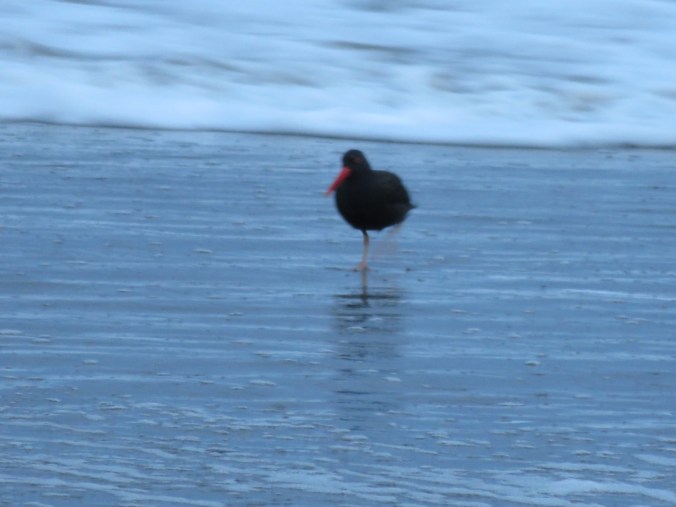
Oystercatchers are about.

SaveSave