READINGS

I used to require my college writing students to attend:

MFA in Writing Residency Brings Top Writers to Seaside for Nightly Readings in January

BeachThe Pacific University Master of Fine Arts in Writing program hosts readings by top contemporary writers during its 10-day residency in Seaside. The series offers a rare opportunity to hear these writers read on successive evenings. Free and open to the public, the evening readings begin at 7:30 p.m. and take place from Friday, January 10 through Friday, January 17 at the Best Western Ocean View Resort, located at 414 N. Prom in Seaside, Oregon.

This year’s lineup includes Kwame Dawes, recipient of the Windham-Campbell Prize and Pete Fromm, five-time winner of the Pacific Northwest Booksellers Literary Award.

7:30 p.m. at Best Western Ocean View Resort in Seaside, OR

Jan. 10 — Marvin Bell, Claire Dederer, Pete Fromm
Jan. 11 — Ellen Bass, Jack Driscoll, Debra Gwartney
Jan. 12 — Frank Gaspar, Scott Korb, Mahtem Shiferraw
Jan. 13 — Chris Abani, Mike Magnuson, Mary Helen Stefaniak
Jan. 14 — Claire Davis, Valerie Laken, Joseph Millar
Jan. 15 — Sanjiv Bhattacharya, Shara McCallum, Kellie Wells
Jan. 16 — Kwame Dawes, Cate Kennedy
Jan. 17 — Molly Gloss, Shelley Washburn

The authors who are reading also teach in Pacific’s low-residency MFA in Writing program. For more information about the writers or the MFA in Writing program, contact Shelley Washburn, MFA in Writing director, at 503-352-1531.

LUCKY

The Conditional

Ada Limón – 1976-

Say tomorrow doesn’t come.
Say the moon becomes an icy pit.
Say the sweet-gum tree is petrified.
Say the sun’s a foul black tire fire.
Say the owl’s eyes are pinpricks.
Say the raccoon’s a hot tar stain.
Say the shirt’s plastic ditch-litter.
Say the kitchen’s a cow’s corpse.
Say we never get to see it: bright
future, stuck like a bum star, never
coming close, never dazzling.
Say we never meet her. Never him.
Say we spend our last moments staring
at each other, hands knotted together,
clutching the dog, watching the sky burn.
Say, It doesn’t matter. Say, That would be
enough. Say you’d still want this: us alive,
right here, feeling lucky.

BREAK A LEG

IMG_5234

Some of this story is fiction, but it doesn’t matter which parts because that’s not the point.

When you are seventeen, riding a borrowed bicycle, you are stuck by a car and suffer what they used to call a compound fracture. You could search online for what they call that kind of break today.

Continue reading

BRING BACK OUR MIGHTY DREAM

Let America Be America Again

Langston Hughes  (1902-1967)

Let America be America again.
Let it be the dream it used to be.
Let it be the pioneer on the plain
Seeking a home where he himself is free.

(America never was America to me.)

Let America be the dream the dreamers dreamed—
Let it be that great strong land of love
Where never kings connive nor tyrants scheme
That any man be crushed by one above.

(It never was America to me.)

O, let my land be a land where Liberty
Is crowned with no false patriotic wreath,
But opportunity is real, and life is free,
Equality is in the air we breathe.

(There’s never been equality for me,
Nor freedom in this “homeland of the free.”)

Say, who are you that mumbles in the dark?
And who are you that draws your veil across the stars?

I am the poor white, fooled and pushed apart,
I am the Negro bearing slavery’s scars.
I am the red man driven from the land,
I am the immigrant clutching the hope I seek—
And finding only the same old stupid plan
Of dog eat dog, of mighty crush the weak.

I am the young man, full of strength and hope,
Tangled in that ancient endless chain
Of profit, power, gain, of grab the land!
Of grab the gold! Of grab the ways of satisfying need!
Of work the men! Of take the pay!
Of owning everything for one’s own greed!

I am the farmer, bondsman to the soil.
I am the worker sold to the machine.
I am the Negro, servant to you all.
I am the people, humble, hungry, mean—
Hungry yet today despite the dream.
Beaten yet today—O, Pioneers!
I am the man who never got ahead,
The poorest worker bartered through the years.

Yet I’m the one who dreamt our basic dream
In the Old World while still a serf of kings,
Who dreamt a dream so strong, so brave, so true,
That even yet its mighty daring sings
In every brick and stone, in every furrow turned
That’s made America the land it has become.
O, I’m the man who sailed those early seas
In search of what I meant to be my home—
For I’m the one who left dark Ireland’s shore,
And Poland’s plain, and England’s grassy lea,
And torn from Black Africa’s strand I came
To build a “homeland of the free.”

The free?

Who said the free? Not me?
Surely not me? The millions on relief today?
The millions shot down when we strike?
The millions who have nothing for our pay?
For all the dreams we’ve dreamed
And all the songs we’ve sung
And all the hopes we’ve held
And all the flags we’ve hung,
The millions who have nothing for our pay—
Except the dream that’s almost dead today.

O, let America be America again—
The land that never has been yet—
And yet must be—the land where every man is free.
The land that’s mine—the poor man’s, Indian’s, Negro’s, ME—
Who made America,
Whose sweat and blood, whose faith and pain,
Whose hand at the foundry, whose plow in the rain,
Must bring back our mighty dream again.

Sure, call me any ugly name you choose—
The steel of freedom does not stain.
From those who live like leeches on the people’s lives,
We must take back our land again,
America!

O, yes,
I say it plain,
America never was America to me,
And yet I swear this oath—
America will be!

Out of the rack and ruin of our gangster death,
The rape and rot of graft, and stealth, and lies,
We, the people, must redeem
The land, the mines, the plants, the rivers.
The mountains and the endless plain—
All, all the stretch of these great green states—
And make America again!


[and every woman too . . . originally published in the July 1936 issue of Esquire]


2 FAVORITE NOVELS of 2019

43984883

Some books were entertaining but slid right off the dinner plate of my attention and a few I did not like. Here are two novels—though not the only two—I thought were wonderful.


Olive, Again by Elizabeth Strout

I loved Olive Kitteridge, but I loved this one more. Maybe that is because I am aging and Strout has tackled the challenge of writing about older people without sentimentality, but with realism, compassion, and wisdom.

An example: Out of the blue, Olive visits a much younger woman who is undergoing cancer treatment and fears death, but who also feels confused and guilty that she is becoming unkind to her husband, irritated and impatient. Olive shares about her own husband.

” ‘I don’t know,’ Olive said thoughtfully. ‘He may have been [sick before] and I just didn’t know it. He became very needy. And I wasn’t—I just wasn’t very nice to him. It’s something I think about a lot these days, and it bugs me like hell.’

. . . [and later in the same visit]

“You’re scared to die, even at your age?”

“Olive nodded. ‘Oh Godfrey, there were days I’d have liked to have been dead. But I’m still scared of dying.’ Then Olive said, ‘You know, Cindy, if you should be dying, if you do die, the truth is—we’re all just a few steps behind you. Twenty minutes behind you, and that’s the truth.’ 

“Cindy had not thought of that. She had thought that Tom, and her sons, and—people—that they would go on living forever and ever, without her. But Olive was right: They were all headed where she was going. If she was going.”

Of course it is Olive looking back sometimes, as well as forward, but that is Strout who recognizes how this tough, hard-edged “old bag” will continue her voyage. Again and again Olive’s choices and words felt personal to me. I laughed and cried and reread passages. There was one where someone confesses to Olive how weary she is at the idea of starting over and Olive basically says, “Oh, now, we never star over, we just go right on.”

As the first book, Olive is not always central to the narrative in these chapters which concern many people in the town. I read Olive Kitteridge when it was new and I feel fortunate to win an ARC of this follow-up. This in no way affects my review. I loved this novel. It’s one I want to read aloud to my husband, and that is a rare compliment.


Normal People by Sally Rooney
Normal People by Sally Rooney 

It was amazing.

I had it in hand for months, for a year even, sitting someplace in a stack of books to read, before I read it because I thought the cover was boring. Yeah, I know. Dumb, huh.

“Life offers up these moments of joy despite everything.”

My husband likes to share a Swedish saying: “There is no bad weather, only bad clothing.” That line is in this novel. No kidding. Most everything in this novel felt like that, like finding something I knew but mostly had not realized I knew.

For some, reading functions “as class performance, literature fetishized for its ability to take educated people on false emotional journeys, so that they might afterward feel superior to the uneducated people whose emotional journeys they liked to read about.” Bits about people who are more interested in sounding like they know than about actually knowing . . . oh, yeah. Been there.

Rooney offers personal wisdom about relationships, about power differentials between people, about seeking popularity, about wanting to be liked, about fearing being known. And broader truths about class and about self-acceptance, about forgiveness and making a difference in the world. There is wisdom about leaving home, about writers and writing and readings, about dependence and strength.

I did not read any reviews until I’d made up my mind. A lot of people adore this book (I do) and not a few hated it. Maybe it came to those who “hated” it at the wrong point in their lives, maybe their life experiences have not run parallel to this story, maybe they just do not get it. I am sorry for whatever reason they did not read the novel I read.

This reader got it. This reader loved it. I did not cry, but I really should have because this is a powerful book about young people figuring things out, about those fraught years between teenager and full adult, about people accepting others and themselves, supporting and honoring responsibility. This is the age to beg forgiveness and grow up.

The main characters Connell and Marianne want to feel normal, a normal they can be proud of, a normal that is good, and a normal they are unsure even exists. They want to believe of themselves that they are good people. They fail along the way sometimes.

A couple of unfavorable reviewers said it was depressing and so I worried throughout the second half about what would happen at the end, about how it might devolve into apathy or cynicism. I rushed through too much too fast, and loved it even so. Two days and done and now I am so sad it’s over. NOT depressing, enlightening. What I read illuminates. It gives light.

There’s nothing more I could ask for.

FOR FREE

botticelli31500x900.jpg

[There’s a great link at the bottom—don’t miss it.]

“Art never responds to the wish to make it democratic; it is not for everybody; it is only for those who are willing to undergo the effort needed to understand it.”—Flannery O’Connor, Mystery and Manners: Occasional Prose

vs.

For some, reading functions “as class performance, literature fetishized for its ability to take educated people on false emotional journeys, so that they might afterward feel superior to the uneducated people whose emotional journeys they liked to read about.”—Sally Rooney, Normal People

“Art for Art’s Sake” was a popular slogan when I was in art school in the 1970s. There was a general attitude that artists were some sort of elite beings, that their work spoke to an exclusive club, and also that the only real art was paintings, sculpture, and architecture. The rest was mere craft.

Thanks to my future husband, I was taking not just the required studio and Art History series, but a lot of Anthropology classes. This meant that I understood that art was never reserved only for the precious few. What we regard as “art” served the wealthy aristocracy in Europe after the Renaissance. Before that, and even after, and at every time and everywhere around the world, art serves to satisfy the aesthetic needs of all people, expressing ideas, power, yearning, hopes, dreams, fears, and distinct perceptions of beauty. Art reflects appreciation and even affection for the objects and environments we touch and use and admire every day.

That is to say, that while I like Flannery O’Connor’s fiction and I get what she is driving at, and every advisor I had in my MFA program pushed her books onto my reading list (and I read Mystery and Manners: Occasional Prose), I think that quote from her above is elitist crap.

There is no great effort required to appreciate or understand most art. And it shouldn’t be all that hard or reserved only for the special few.

Art does not choose only certain individuals nor is it handed out as a gift via a Muse. Creativity is not reserved for some sort of intellectual or preordained elect. Appreciating art is not a gift from the Almighty who only allows understanding by those chosen few. Art is human creation. No, it’s simpler: Art is human.

I won’t argue that there are not great artists and that creating art does not require enormous effort and even talent. Spare me Hallmark cards and bad art—and there is bad art—but I refuse to accept the narrow view that art is accessible only to special people. I will argue that if only a few people can “read” the art, its message does not speak effectively to the human condition.

There is room for art that offends or challenges our notions of art. Certainly art must not merely sooth but provoke and wound. That too is the proper place of art, to wake and stir our souls. To break us open and heal us too.

“I think we ought to read only the kind of books that wound or stab us. If the book we’re reading doesn’t wake us up with a blow to the head, what are we reading for? So that it will make us happy, as you write? Good Lord, we would be happy precisely if we had no books, and the kind of books that make us happy are the kind we could write ourselves if we had to. But we need books that affect us like a disaster, that grieve us deeply, like the death of someone we loved more than ourselves, like being banished into forests far from everyone, like a suicide. A book must be the axe for the frozen sea within us. That is my belief.”—Franz Kafka

Maybe even Kafka was full of it. Everyone wants to argue that what they make or like or pay for is the only true art.

“What we have here is a failure to communicate.”  Yes, art is communication and if it only speaks to a tiny fraction of the population, that might only be because it is a small and narrow effort.

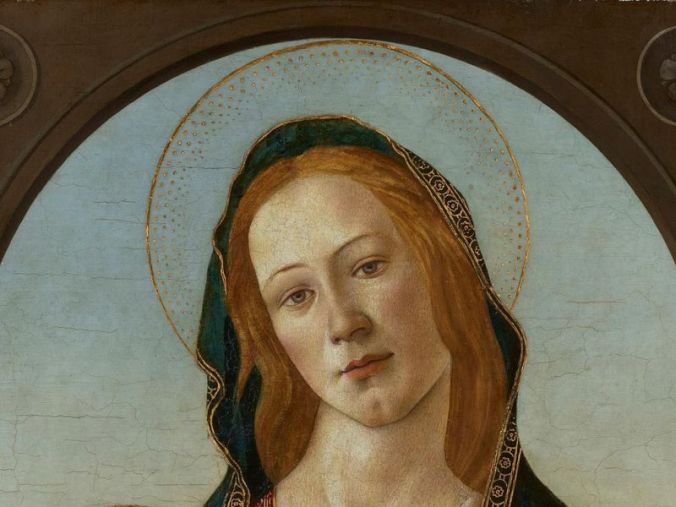
The painting above sat in a storeroom for decades. The woman who gifted it to her local museum thought it was a Botticelli, but the experts declared it merely the work of some unknown apprentice. They had studied for years and had been “willing to undergo the effort needed to understand [art].” They knew so much they put it away and didn’t look at it again for fifty years.

Perhaps someone might have noticed it is beautiful? Someone finally did. The collector, Gwendoline Davies was right. “National Museum Cardiff has put on display a painting of a Madonna and child that had for decades been dismissed as a crude copy of Botticelli’s style.” But it was the real deal. Not appreciating the art without the name? Major fail.

There’s a Joni Mitchell song about this, “For Free” on Ladies of the Canyon. It has been recorded by over sixty artists who know great art when they hear it. So have their audiences. No great effort required.

For Free

I slept last night in a good hotel
I went shopping today for jewels
The wind rushed around in the dirty town
And the children let out from the schools
I was standing on a noisy corner
Waiting for the walking green
Across the street he stood
And he played real good
On his clarinet for free

Now me I play for fortunes
And those velvet curtain calls
I’ve got a black limousine
And two gentlemen
Escorting me to the halls
And I play if you have the money
Or if you’re a friend to me
But the one man band
By the quick lunch stand
He was playing real good for free

Nobody stopped to hear him
Though he played so sweet and high
They knew he had never
Been on their T.V.
So they passed his music by
I meant to go over and ask for a song
Maybe put on a harmony
I heard his refrain
As the signal changed
He was playing real good for free

[Joni added these lyrics to the song during the 1983 tour]

Playing like a fallen angel
Playing like a rising star
Playing for a hat full of nothing
to the honking of the cars


In case you have read this far, allow me to recommend two older (than me) bloggers, “Margaret and Helen: Best Friends for Sixty Years and Counting… “. Helen Philpot has a lot to say this morning and says it better than I could. She generally does. Here’s a snip:

“Suggesting that 13 year old Barron Trump isn’t a Baron is unforgivable but mocking 16 year old Greta Thunberg for wanting to save the world will get you several hundred thousand likes in MAGA Twitter World.”

FALLING

iu-1.jpeg

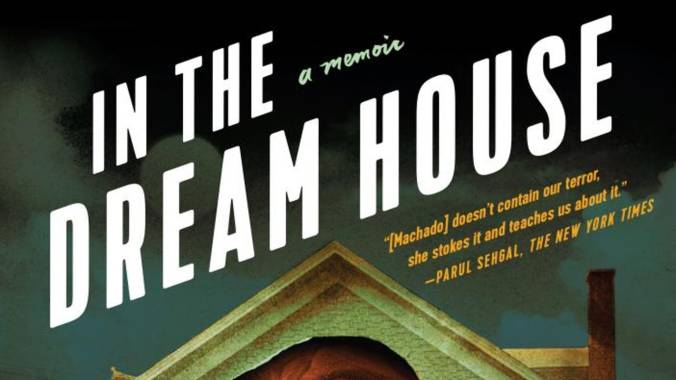
I just finished In the Dream House by Carmen Maria Machado. I usually read a book in a few days, but this memoir took longer. Where was the wisdom I was seeking? I was afraid for a long time that it would not come. I was doing NaNo during those weeks too, so I was writing my own angry story and struggled to know how to rate Machado’s until the last entries raised it up for me. “Dream House as Memory.”

Machado is brilliant and her writing is important. There is an element of revenge here but also of documentation. I believe her. She did not have to work so hard to prove her experiences to me. 

“It’s not radical to point out that people on the fringe have to be better than people in the mainstream, that they have twice as much to prove. In trying to get people to see your humanity, you reveal just that: your humanity.”

She did not need to prove that abuse is also possible between women lovers, I understand that. I have seen abuse. The seduction and gaslighting she so deliberately documents through her own experience and popular culture with an episode of Star Trek and Alice’s adventures. Readers must be forgiven for thinking again and agin: Why is she still there? Why does she come back? Again? Though Machado fails to fully explore the why, the answer is common enough. We believe the abuse is what we deserve. 

The last entries saved this book for me. I was impatient throughout the second hundred pages, but she writes so well—I make this judgement as a writer. She is brilliant. I nearly did not finish because I disagree that queer abuse is different. From inside all abusive relationships are the same. It is only details that differ. It is strong relationships, constructive and kind relationships that [should] matter, and this is merely a sketch here. I wish she had the perspective and distance to tell me more of that story. 

Perhaps in time she will.

PROGRESS

fullsizeoutput_1126

On Tuesday, I “won” the National Novel Writing Month (NaNo) challenge by completing fifty thousand words. It needs at least twenty or thirty thousand more words, but I have identified the arc of the story, my two main characters in their parallel experiences, a structure that imposes both tension and order, and some sort of closure. Words, words, words. I am not done but have the beginning of a novel, and I have cheated, which is totally allowed.

Once a week I play Scrabble with a friend and we cheat. We do not keep score, we use  the dictionary and a page with two-letter-words to check spelling and aid our choices, and our goal is interesting words and enjoyable play. We have never actually traded tiles, but we frequently lament picking a third and fourth A from the bag of letters. The letter I seems to gather too often as well. We offer to move our new word to another part of the board in order to make play easier for the other. We both celebrate a new word neither of us has used before. We laugh when each of us manages to put down the same word: OATH or QUIET. We play until we have used all the tiles, and then we play a second game. We have been doing this most weeks for a couple of years.

My husband and I began playing Scrabble in 2015 when I retired from full time teaching. But I usually won because I like winning competitive activities and I am a strategist. It was not so much fun for Gary. Running had to be abandoned because of my arthritic feet. Instead, we began taking our daily walks together. Yesterday, we walked for over two hours. We do not go so far from the house, even in two hours. We walk up and down the beach, and gather a lot of plastic, until my back aches from bending over fifty or a hundred times to fish a bit of blue plastic or cup lid from between stones. On certain parts of the beach we follow a very close zig-zagging course, searching every inch for sea glass. Yesterday I found a nub of thick brown glass. Gary found an impressive lump of clear and pale green larger than a quarter.

He tells me I am grieving because I have left teaching. He was delighted that I retired. (Gary takes exception to the “delighted” because “from the situation you were in—yes. From the work that you loved—no,” he says.) It was the right decision, the situation was too stressful, and it was good that I retired. But he still says I am grieving.

I have gained ten pounds, and my days are a muddle. I hope, once an entire school year has passed that I will be in a better state. We miss our children and grandchildren though they are not so far away. We miss the dog. We miss the cat. We are clearing out the house. Only one bedroom is piled with gifts waiting to be wrapped, and my work space is pure chaos. I have three quilts wanting binding. Three knitted items being blocked. Boxes of materials and piles of scraps that want sorting.

My life wants sorting. I recently read Gail Collins’ new nonfiction, No Stopping Us Now, which chronicles the accomplishments (and struggles) of older women in the United States. Despite medical opinion over the decades that women are unfit, insane, or simply dangerous in age, older women have managed to change the world. My personal favorite example is the author of Silent Spring, Rachel Carson. Carson did what many women I have known and worked with have done. She sacrificed her ambitions, abandoned her educational goals after completing a Masters and went to work as a marine biologist for U.S. Fish and Wildlife Service in order to support her family. When a friend begged her to find out why all the songbirds were dying after a community DDT spray, she looked for someone in that field to write about the danger of pesticides. She was in her 50s when she accepted that no one in the field would risk the backlash from industry, she devoted the remainder of her life to documenting the dangers of the poisons spread on crops and neighborhoods.

“Although Silent Spring was met with fierce opposition by chemical companies, it 1024px-Rachel-Carsonspurred a reversal in national pesticide policy, which led to a nationwide ban on DDT and other pesticides. It also inspired a grassroots environmental movement that led to the creation of the U.S. Environmental Protection Agency. Carson was posthumously awarded the Presidential Medal of Freedom by President Jimmy Carter.”—Wikipedia
Rachel Carson was 56 when she died of cancer.

November is the beginning of the dark days of the winter season. It is a false glittering and interior time. I tend to look inward, to make plans, set goals in this season. I have no illusion of contributing to the world as Carson did, but I am not done contributing. I will complete the projects currently cluttering my work space, clear it out and begin cluttering it again. I am teaching a workshop for Willamette Writers in April, and perhaps I will complete a novel over the coming months.

SEEING BASALT?

IMG_5172

Seeing things?

My blog is loaded with mistakes. Misspelled and missing words, usually. I figure most of them out and correct them eventually. Some slide right by for months or forever. Sometimes I might blame auto-correct, but more often it’s just my lousy typing.

I was reading a personal essay in a literary magazine. The piece has a title that includes a couple of food items, including a particular mushroom. I realize that the essay isn’t actually about mushrooms, but using them as a metaphor, but I don’t believe that is enough of an excuse to use a photo of chanterelles clear across the top of the page. I know my chanterelles. I’ve picked them and enjoyed eating them. They are not at all the species referenced in the essay title or the essay itself. I was completely distracted, scanning the essay for a reason that illustration was there. No. Apparently someone wanted an attractive photo of mushrooms. Any mushrooms.

If the designer had gone to Wikipedia, he or she would have found an image—not in the public domain but a source is available and likely would have allowed use. Or a photo of the other metaphorical food. That one would have been available at the local market for purchase and photographing. Wikipedia has a terrific photo that is free to use with credit. Not so very tricky.

Instead, a few hundred people are going to think Auricularia auricula-judae look like chanterelles. Different color, shape, texture and flavor.

I suppose this only bothers me. Like the writer who used the word “voodoo” in a novel that was supposed to take place close to a hundred years before that word was coined. Adult crows with pink legs. A cottonmouth snake a thousand miles outside its range. Horses and big cats and other animals behaving in impossible ways. I find such errors all the time. Sometimes I think: I could make that mistake (well, witness how often I do here). But other times I begin to doubt the narrative. I wish the author had completed just a bit more research. Sometimes the mistake just feels like carelessness. Indifference to truth. The “creative” in writing does not mean every- or anything is possible. Even a fantasy novel creates an internal consistency, rules by which the magic operates.

I’ve closed the page on that mushroom-not mushroom essay. It’s possible that the designer (I refuse to blame the author) used the wrong species of mushroom deliberately to make some sort of point or to drag me in. I should go back and reread to see if it was a plot designed to intrigue people like me. (Fusspots and picky-readers.)

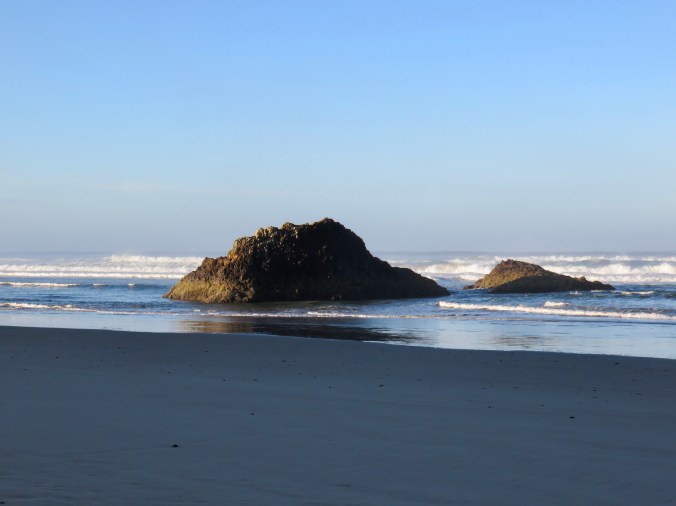
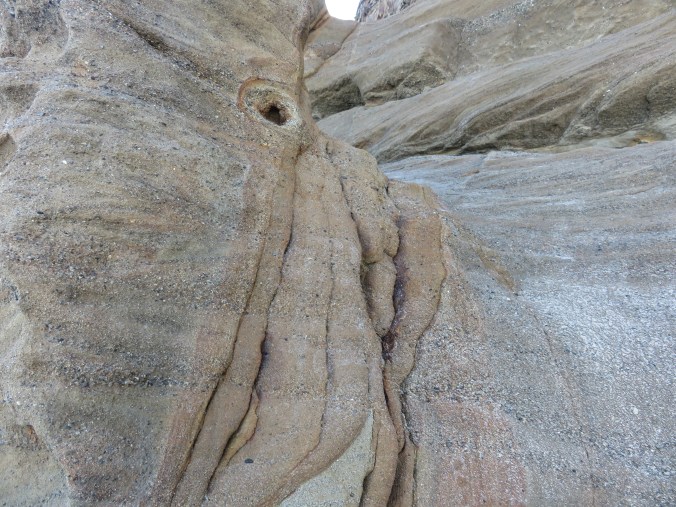
But no. I am set off and distracted and writing my own blog post about how basalt lines my shore. When the tide is high a retreating wave tubes the stones over one another, clattering in a deep-throated tumble that very gradually rounds and smoothes their edges. (Yeah, that’s sandstone up at the top of this post. Different color, texture, shape, flavor. I could have posted a photo of basalt, but why?)

CHANGING WEATHER

fullsizeoutput_1122

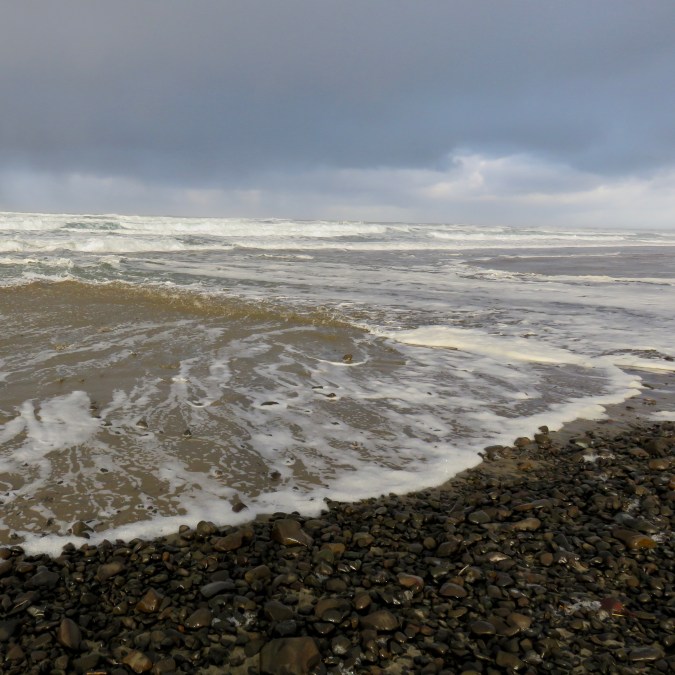
Dark clouds, rain, waves coming from odd directions, not just onshore but across. This is the point we turned for home on our walk yesterday.

Lots of new roofs going on lately. We put a new roof on our little duplex rental and it seems to be holding up under the weather. The roofers are busy. It took our contractor six months to get a roofer to do the job. Gary is still picking up trimmings and roofing nails. The contractor working on the house north of us put a wrap over half the roof because it was dripping inside the house and then had to come out and put on a larger wrap. In the end, he roofed it himself, though in my experience general contractors don’t like roofing themselves.

In the mean time, the barometer has been dropping, we are experiencing 10′ tides, and neither Gary nor I has found a piece of sea glass for a few days [found green later in the day]. That last is unusual with high tides washing into the rocks. But there is no telling. Lots of bits of pumice have been kicked loose

People staying in the rental since the roof was repaired have been out in the ocean. A reminder: it’s November. Barefoot, swimwear, and playing in the surf during outgoing tides. Sometimes it was all I could manage not to go out and tell them to get their kids out of the water. In forty years, we have known too many drownings.

We expect to see snow in the coast range today. We expect to get in a walk because high tide is late in the morning. Yesterday we went out after dawn and after the tide had been coming in for a while and had to walk home on the road because the waves were washing up into the rocks by the time we got to our turn around. We got a little bit wet too.

A huge drift log, a couple feet across and thirty feet long, rolled and floated up and down in the tide. That log lived in the hedge next door for at least a decade [Gary says at least 2 decades], but yesterday afternoon it was lying in the sand directly in front of our house. We hope that 10-foot tides today and tomorrow will move it on.


I have finished my last holiday gift and picked up larger needles to make a hat for my grandson. The #6 needles felt so fat after knitting with #1s that I unraveled the hat and started over with #5s. I have a little dress to make too, and it’s supposed to be done the day after tomorrow. I am not optimistic.

NaNo is also a struggle just now. I have over 45k words, but the last few thousand are coming slow. How hard could it be to write those last five thousand words? At this point in previous years I had 70k, well over what I need for NaNo. And here I am struggling to get to the minimum.

fullsizeoutput_1124The good news is that I may have figured out how to develop the generational historical v. contemporary conflict I  had in mind at the start. Yeah, four days to go in NaNo and I might finally know what I’m doing? I have devised a plot twist (yes, plot! actual plot!) and have about a third of that written. I know about how it ends. I think I am writing Elizabeth Berg when I keep hoping to write something far more edgy, more like Emily Fridlund’s History of Wolves.

Well, there you are. Scratch this cynic and the optimist bleeds.