SHUT DOWN

Gary and I were awake at three this morning. I am trying not to read the news, not to compulsively check statistics for an entire day. I deleted unread all the news in my mailbox right away this morning without even reading headlines. Instead, I worked on the story, revising what will go live today. Gary has brought me coffee, and then drank it himself. Coffee allows him to go back to sleep. (which we did.)

I think today I will finish the second shawl of this warp. I was still weaving yesterday past seven in the evening so there is not so much left of that dreamy ocean-colored shawl. (The photo shows just the start of that piece.) I usually take a risk with the third length of weaving, choosing unexpected colors for the weft. I am not decided how the last will go, will I use the odd multicolored skeins with violet that I have laid out or something entirely different?
Continue reading

LOST & FOUND

IMG_5564.jpg

I am writing right here. Right. Here.

Four friendships lost: Carmen died, and even though the break between us was because of things she did, it is only my fault we never made it up and there is no going back because she has died. When I finally got around to searching, I found only the notice of her mother’s death and it listed Carmen as among those predeceased. I did try to make it up with Pat and Denyce but they are still not speaking to me. Knowing how the break-up happened with women I once corresponded with near-daily does not help. That there was nothing terrible about the break-up from my point of view (we did not betray or steal anything, and I never stopped caring) does not alter the fact that they will not respond to me. I find it is my failure.

A fourth best friend from First Grade moved away when we were little. We shared a love of horses and she had horses.  Continue reading

ASSIGNMENT #2: Lost

fullsizeoutput_11c1

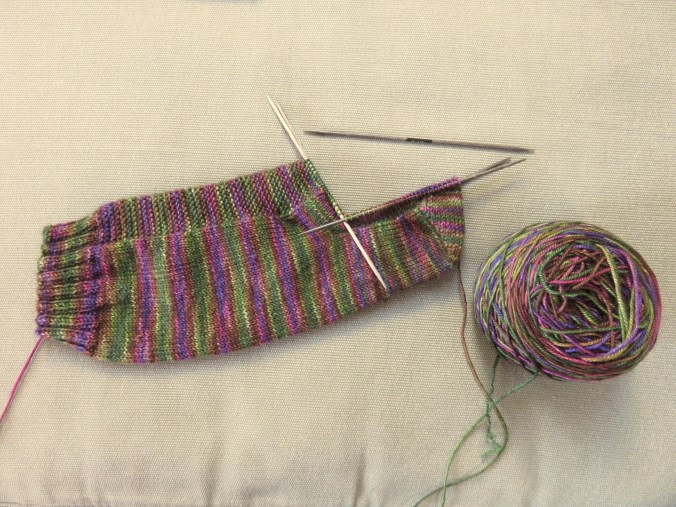
The sock I’m knitting.

In Brevity 22, Fall 2006, Brian Arundel’s “The Things I’ve Lost” begins

“Fleece hat and gloves: in the backseat of a Boston cab in 2002, before driving back to Maine. Round, purple sunglasses: in an Atlanta pool hall over drinks with Ashby, whose wife was determined to save their marriage by having a baby. A measurable dose of self-skepticism: at about 14, when I realized I was very good at both playing violin and baseball, while not necessarily everyone else was.”

Go read the complete essay. Now make your own list of things you’ve lost. You aren’t limited to the concrete. Arundel’s list includes kisses, love, elections, and bad habits, but also a lot of other things. Be specific about where and when, why and who else was there.

List physical objects like socks in a dryer. List people and places that you will never see again. List youthful aspirations and innocence. List expectations. When you get scared, go back to the socks and remember another. Begin by listing five things, then five more, then keep going until it’s impossible—that’s when you will find the hardest things you lost.

In your first revision, just rearrange your list and add detail. Do what Arundel does and tip the rage of your losses early with concrete and abstract ideas in the first few lines. Save the best for last.

Later this week I’ll post a major revision strategy.

NOTE: Brevity is a treasury of very short nonfiction, all less than 750 words. This early essay still appears on the Creative Nonfiction website but today it has its own website and the blog features many guest writers and publishes several times a week.

btw This is the second post based on Arundel’s Brevity essay. The first one is probably better and you can find it HERE.

BREAD

fullsizeoutput_11bf

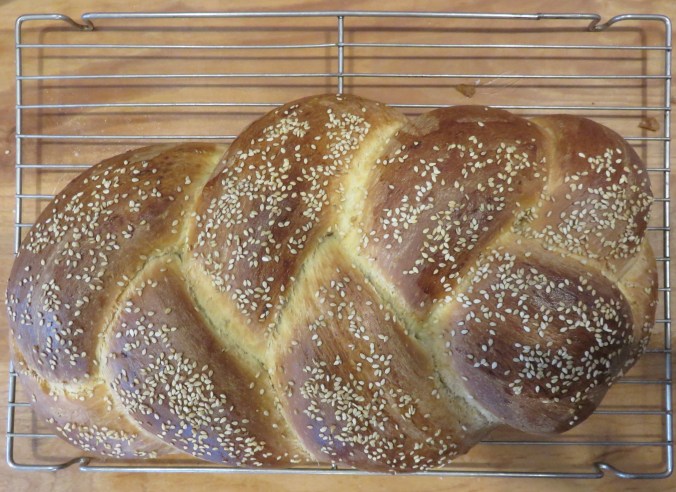
When I retired I intended to revive a college habit of baking a braided loaf on Fridays. I used to make it entirely by hand and I once broke a wooden spoon beating the sponge. This loaf is only three strands and I always braided four, but it’s a tasty loaf.

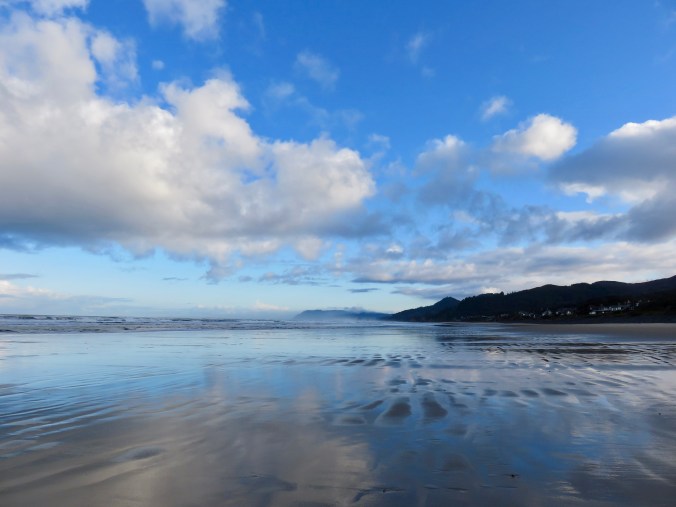
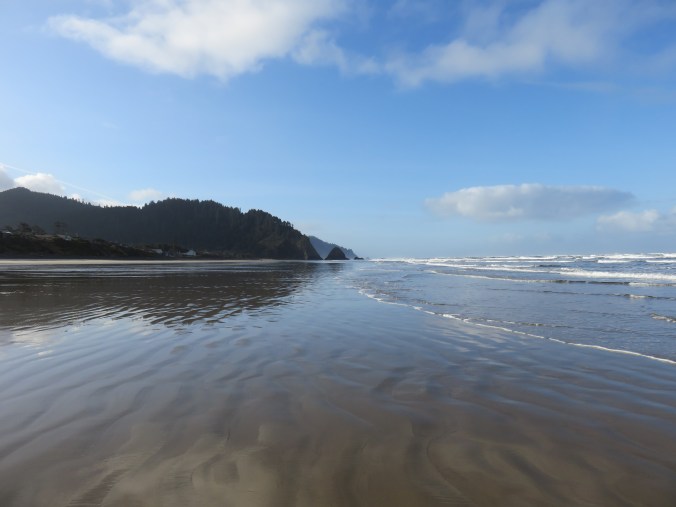
We have all our mail through this past Thursday. I baked bread the next day. We’re still getting our early walks, but there are unfamiliar people and dogs on the beach today. Yesterday the gale force wind was desperately chilling in the morning. Today is mild. So. Walking, baking, writing, and staying safe.

Continue reading

The Mentalist: Reward and Routine

fullsizeoutput_11be

Getting through a national crisis might be a little crazy like a police consultant following instinct and impression or it might be orderly like completing a knitted pair of socks. Maybe it’s a little of both. I have one sock of a pair in the works, knit top down. The leg part is done, the heel flap, and the heel is turned. I also have five book-length projects I could be working on just now, at least 350k words that need work. I could be working on revising those books, or I could be painting the hallway even though there is snow on the hills behind my house. (Because the paint is zero-VOC and I have brushes and a roller ready to go.) I could scrub dust from the baseboards or the molding of the bathroom door. I could sort my books or bake sweet rolls. I still have plenty of flour, five eggs, and sis sticks of butter. I could bake something. My husband says I should be doing our taxes. And I have the time. 

I am not going anywhere anytime soon.

Instead, I want to watch season 6 of The Mentalist. Continue reading

ASSIGNMENT #1: Fable

Crane_title.jpg

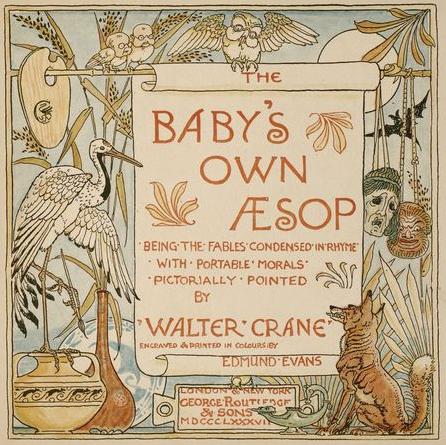
Today, and at least for the following four Mondays, I will post a writing assignment. Then later in the week, a weird revision strategy.

Just for fun, write a fable . . . We will follow the conventions (rules) of a fable, at least at the beginning. They are relatively easy rules. If you have a computer and prefer to type, you may use it or write it out long hand. The assignment is short—that’s one of the rules. Continue reading

How To Generate Content

This is such excellent advice I decided to figure out how to “reblog.” (HINT: Allison K. Williams’ Brevity posts are always worthwhile.) Perhaps I will even try to take this good advice. I keep thinking this might be the time to share my best writing prompts, especially since Willamette Writers has postponed events (well, of course they have) so I don’t know when my presentation will take place.

Allison K Williams's avatarThe Brevity Blog

“Start a blog!” agents say. “Write a newsletter!” announce publishers. “You’ll build readership and be more attractive to agents and publishers!”

But what the heck do you put in it? Hey, I got rejected again by the same magazine?

Yes.

Absolutely.

(I do.)

The daily grind of your writing life is indeed fodder for bulletins every week or two. More than once a week gets annoying; less than once a month and people forget who you are and unsubscribe. Try to share your work the same time and day, so that people have a subconscious expectation of reading you, say, Tuesday mornings.

I have to write something every week? What if it’s not good? What if it’s not a diamond-sharp, multiply-revised presentation of my Best Thoughts Ever?

And a blog post or email newsletter is not a lengthy, many-drafted essay. In fact, the best content is:

Brief,

Personal, and

Useful

View original post 709 more words

GIVING

IMG_5490

This morning I compared the message of an essayist to “The Gift.” That poem by Li-Young Lee describes how self-discipline was taught to a young boy by his father, who calmly tells him a story while removing a splinter. Search for that story and you will find it.

“to get the news from poems . . .”

I also received an email with links to

Poems of Joy, Hope, and Community

One of them is by Alberto Rios. I have had a soft spot for Rios since reading his poems about death by avocado and because he was born the same year I was.

When Giving Is All We Have

Alberto Ríos – 1952-

                                              One river gives
                                              Its journey to the next.

We give because someone gave to us.
We give because nobody gave to us.

We give because giving has changed us.
We give because giving could have changed us.

We have been better for it,
We have been wounded by it—

Giving has many faces: It is loud and quiet,
Big, though small, diamond in wood-nails.

Its story is old, the plot worn and the pages too,
But we read this book, anyway, over and again:

Giving is, first and every time, hand to hand,
Mine to yours, yours to mine.

You gave me blue and I gave you yellow.
Together we are simple green. You gave me

What you did not have, and I gave you
What I had to give—together, we made

Something greater from the difference.


I have not donated to the nonprofit Academy of American Poets this year. Perhaps you will find enough comfort in this website to help them continue their offerings of hope.

It can be helpful to spend a few moments each day with language to maintain our well-being and fortitude. As we find ways to come together while apart, please find a selection of poems our team has curated especially for you, from Poets.org:

Darling Coffee” by Meena Alexander
For Keeps” by Joy Harjo
Song Out Here” by Juan Felipe Herrera
Lift Every Voice and Sing” by James Weldon Johnson
These Poems” by June Jordan
Leisure” by Amy Lowell
The Last Thing” by Ada Limón
So Much Happiness” by Naomi Shihab Nye
Cento Between the Ending and the End” by Cameron Awkward-Rich
When Giving Is All We Have” by Alberto Ríos
Everyone Sang” by Siegfried Sassoon
The Flower at My Window” by Lucian B. Watkins
The Things That Count” by Ella Wheeler Wilcox
[I wandered lonely as a Cloud]” by William Wordsworth
To All My Friends” by May Yang

SUNSET

IMG_5482

I should know what sort of fish this is, but I know only that it resembles a member of the seahorse family and it’s dead. Poor thing.

We track where the sun sets in relation to the rock o.6 nautical miles offshore. When it’s north of the rock, we think summer, and when it sets south of the rock, we know summer is gone. The truth is that this shift from south to north this happens close to the Equinoxes. The sun set right behind the rock a couple of days ago.

Continue reading

MY DARK VANESSA

I feel like all the small things I count on are fluttering like ash to the ground. Deaths from covid-19, the five recalls on my car, friends who are ill or their mothers are ill, the only way I can open a new post here on Chrome, but Chrome will not open my photos, my son went to the ER a week and a half ago and no one bothered to tell us, the man in the bakery was rude. The trivial and the terrifying? Conflating disease and rudeness? None of this is killing me. Yet. Challenging the ease of a white author against the injustice of struggling to find a publisher of a woman of color’s memoir with strikingly similar themes. I don’t know. Isn’t it like happy families? All abusers are alike? I haven’t read the memoir. I rarely do. #MeToo?

I read the novel, My Dark Vanessa.

I read until four in the morning, desperate to complete this incredible novel. Vanessa is an intelligent and lonely girl of 15 when she meets the man who will play on her inexperience and insecurities. She knows about rape because one of her musical heroes has told about it.

Fiona Apple was raped when she was twelve years old . . . I had no reason to care about rape then—I was a lucky kid, safe and securely loved—but that story hit me hard. Somehow I sensed what was coming to me even then. Really, though, what girl doesn’t? It looms over you, that threat of violence. They drill the danger into your head until it starts to feel inevitable. You grow up wondering when it’s finally going to happen (192).

What she does not understand and fails to recognize is the selfish exploitation of her innocence and desire for love when it arrives. The author is at pains to make clear that this is fiction, not her life. It is a necessary distinction since Russell gets everything so right. The molester announcing that he is the “toughest” teacher his students will have in high school. Maybe in college.

[Scary that I used to warn students that my Honors class would be their hardest in their Junior Year (an appeal to hubris), and students often thanked me for that after attending college.]

The parallel visions, flipping back and forth between then and now chapters in these pages explore both how she is groomed and “seduced” at 15 and how she excuses and redefines that experience into her 30s. It is explicit, very much so. [I don’t usually read explicit sex. A warning there.]

I was not molested as a child, but my tolerance for reading about abuse is very low. I have never been able to read Lolita but I admire what Russell does with the novel and other writings here. I am amazed I could stand to read it.

My favorite Ninth grade teacher had an affair with a Seventh Grader. When a friend told me, I recall two powerful and simultaneous reactions: Why her and not me? and It’s a lie. I was ashamed to have felt jealous of what I thought in my naiveté must be love and knew even then that envy was unhealthy and pushed it aside. But it was years before I was forced to accept that the accusation of molestation was not a lie. Yes, he did that. He had a relationship with a child of no more than twelve. I have since witnessed men do this to vulnerable young girls—men who were trusted as teachers, coaches, a campus cop. These men NEVER acknowledge their trespasses because they serve only their personal desire. Abuse is heaped on victims of sexual exploitation. The girl is blamed, threatened, and ruined by the violator and by society. So is Vanessa. Her abuser so redefines her identity that she is ruined, truly and utterly ruined.

The ending satisfied me, though I feared throughout the reading that it would not. I believe this story. It is very hard not to believe it is all true.

And then there’s hope.

The video is fantastic: