#2 REVISION

IMG_5553

You might have guessed because my post yesterday is already halfway there. (Or, like a family member who read it, decide that this assignment is all too sad.) If you wrote a list of things you lost, today write what you found. You can write it as a talk-back to the lost list, interleave what’s lost and found (as I did), or take it all the way (as I intend to do) and replace the lost with what is found.

I keep thinking of more things I found:

The dawn chorus.

Cumin, cardamom, and chipotle powder in my cooking, that cinnamon tastes different when it’s from Vietnam, and that turmeric does more than make commercial mustard yellow.

Caramelized onions.

Algebra.

Coffee.

My husband.

Running!

Crow quills. (The tiny dip pen points used by Edward Gorey.)

Edward Gorey, who illustrated to scale.

Aagah, who came to us completely wild, when she jumped the seven foot wall and I chased her for two miles and found her at the edge of the old reservoir, miserable in the rain, and after that she trusted me.

The maze of Knossos, the architecture of Gaudi, the paintings of Artemisia Gentileschi. Hagia Sophia.

How to knit many colors from Kaffe Fassett.

Color.

 by Edward Gorey (By Source (WP:NFCC#4), Fair use, https://en.wikipedia.org/w/index.php?curid=35531939)


LOST & FOUND

IMG_5564.jpg

I am writing right here. Right. Here.

Four friendships lost: Carmen died, and even though the break between us was because of things she did, it is only my fault we never made it up and there is no going back because she has died. When I finally got around to searching, I found only the notice of her mother’s death and it listed Carmen as among those predeceased. I did try to make it up with Pat and Denyce but they are still not speaking to me. Knowing how the break-up happened with women I once corresponded with near-daily does not help. That there was nothing terrible about the break-up from my point of view (we did not betray or steal anything, and I never stopped caring) does not alter the fact that they will not respond to me. I find it is my failure.

A fourth best friend from First Grade moved away when we were little. We shared a love of horses and she had horses.  Continue reading

ASSIGNMENT #2: Lost

fullsizeoutput_11c1

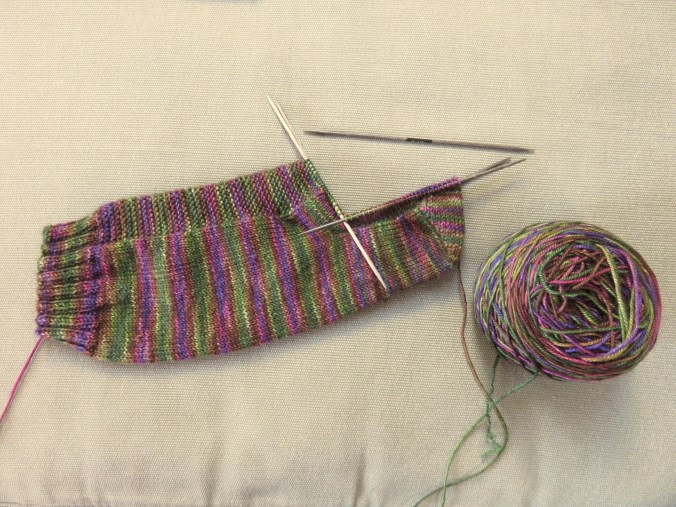
The sock I’m knitting.

In Brevity 22, Fall 2006, Brian Arundel’s “The Things I’ve Lost” begins

“Fleece hat and gloves: in the backseat of a Boston cab in 2002, before driving back to Maine. Round, purple sunglasses: in an Atlanta pool hall over drinks with Ashby, whose wife was determined to save their marriage by having a baby. A measurable dose of self-skepticism: at about 14, when I realized I was very good at both playing violin and baseball, while not necessarily everyone else was.”

Go read the complete essay. Now make your own list of things you’ve lost. You aren’t limited to the concrete. Arundel’s list includes kisses, love, elections, and bad habits, but also a lot of other things. Be specific about where and when, why and who else was there.

List physical objects like socks in a dryer. List people and places that you will never see again. List youthful aspirations and innocence. List expectations. When you get scared, go back to the socks and remember another. Begin by listing five things, then five more, then keep going until it’s impossible—that’s when you will find the hardest things you lost.

In your first revision, just rearrange your list and add detail. Do what Arundel does and tip the rage of your losses early with concrete and abstract ideas in the first few lines. Save the best for last.

Later this week I’ll post a major revision strategy.

NOTE: Brevity is a treasury of very short nonfiction, all less than 750 words. This early essay still appears on the Creative Nonfiction website but today it has its own website and the blog features many guest writers and publishes several times a week.

btw This is the second post based on Arundel’s Brevity essay. The first one is probably better and you can find it HERE.

#1 REVISION

IMG_5525

Okay. Maybe you’ve written a fable of about 500 words, one that you might even have typed and fits single-spaced on a single page. Or maybe you did something else. Maybe you followed the rules, or maybe you didn’t. Whatever. This is not a test of your ability to follow instructions.

It’s time to try doing something “weird” to the story. Or not. Your choice.

  • Prepare to rewrite. If you typed it, save the version you have and retype it. (If it’s short, it’s actually quicker to retype than to do a find/change.) Just keep both versions.
  • If you wrote in past tense, change the verb tense throughout your story to present tense. “He ran home” becomes “He runs home.” The story is told as it’s happening. If you already chose present tense, change it to past tense. This change will alter every single sentence. Often, more than the verb has to change to make the sentence work. But verbs are actually the least of your problem.
  • You were supposed to write in third person with no I or we other than perhaps in dialogue. Take a breath. Trust me, it’s doable. Change the point of view to first person observer-narrator. Even if you ignored the rule and wrote in first person, choose another character to tell the story or make one up a new character. Remember my Bird story I published yesterday? It’s third person/past tense. I need an observer to tell my story. I might have to invent a new character, someone watching the action and telling about it in real time. The observer tells a story about your main character.
  • Add dialogue. Yeah, really.

BEFORE: In a place people think they know and not so long ago, a small bird with a black head, a grayish back, and white flight feathers picked at the ground. By nature she was a cautious person. She was busy looking for seed and finding it. She pecked at small red ants and swallowed them too. Some might have named her genus and species. She had no such names for herself. She was Bird. Everything was simple in her world. …

AFTER: All the littler People think they know this place, but they really don’t. I know it because I have always lived here and I see everything. That bird there—mindless, eating seeds on the ground, ants, heaven knows what. She takes off every time the winds shifts, everytime anything stirs and she’s off. It must be a boring life. That bird is unprepared minute by minute, but she gets by. She’s a simple creature.

“Bird!” I say, and off she flies. I want to warn her about Rat. Does she even see him?

When she comes back, I try again: “Bird! It’s just me, Tree!”

This goes on and on—I greet her, she flies away—until she finally looks before she leaps into my branches. “Oh, hi,” she says. “What did I do?” And she begins apologizing for pooping on my branch last night

  • Your story might get longer because you have to add characters talking to one another or because it starts in a different place. The plot might change. It might get funnier or sadder or find a new ending. The moral of your story might even change. All of that is fine. Let the changes happen!

When you are done messing about, have a look at both versions. Which one do you like better? What can you borrow from one to make the other better. In other words: you are on your own for draft three.

If you want to, you could post your fable (any version) as a comment. Or not. Whatever. I will post my revision at the weekend. I’m not sure I want my observer-narrator to be a tree.

NEST WEEK: [and mostly from now on] a nonfiction assignment!



ASSIGNMENT #1: Fable

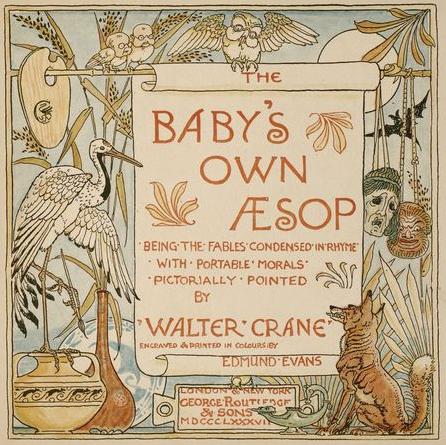
Crane_title.jpg

Today, and at least for the following four Mondays, I will post a writing assignment. Then later in the week, a weird revision strategy.

Just for fun, write a fable . . . We will follow the conventions (rules) of a fable, at least at the beginning. They are relatively easy rules. If you have a computer and prefer to type, you may use it or write it out long hand. The assignment is short—that’s one of the rules. Continue reading