PEPPER JAM

fullsizeoutput_82e

This is not this year’s jams, but pretty typical, though I did not get to the rhubarb (second from right) or salal (left) this year. I missed the raspberries entirely. Still, I love these colors, and will post a new photo after the pepper jams are done. Maybe I should label them.

Today the rain has come hard and steady, just as Gary said, and we might have a mostly pajama day, though I need to make two batches of pepper jam.

We had a number of errands yesterday during our typically swift trip to Portland. There was this list, but I did not try on new shoes and we did not get to Cargo’s semi-annual sale. We did get to the watch store to see about cleaning and repairing Gary’s gold watch. (Sticker shock so no progress on that front.) We bought two clay pots and some bulbs at Portland Nursery. Gary found his favorite beer. At the Portland’s Farmer’s Market in the Portland State green space we found many things, but the key purpose of the day was buying peppers for the freezer.

In September, Westwind Gardens in Forest Grove shows up and fire-roasts their organic peppers on site. They bring bins of many varieties of chilis and have two huge rolling gas-fired cage roasters. Imagine a Bingo or lottery number cage, hand-cranked from one side. Now make the cage over two feet across and three feet wide in a stand about six feet high. The roaster puts in several pounds of the fresh chilis and turns the cage over the huge gas flame, cranking them over the fire to char the skins. That end of the market is thick with the smell. Luscious! I’ve been buying their peppers for years and freezing several pounds for use over the coming year. I never get enough. Ten pounds is not enough, but that’s all I bought yesterday. I chose three varieties of the dozens they grow: a mild red, a moderately hot red, and a medium poblano. The hot and some of the poblano are destined for jam. And I will hope for another trip to the Portland Farmers’ Market to pick up more for the freezer.

While at the Market, we had our favorite cotilla cheese and artichoke tamales for breakfast at Salvadore Molly’s (they recognize us!). I did not buy the yummy caramel corn or apricot brandy or a bag of vegetables as I usually do. This trip was all about the peppers, but we did manage two whole grain loaves from Pearl Bakery (one for the freezer and a cookie for Gary to eat right away), two chocolate bars made only with coconut and cocoa, fresh masa from Three Sisters, Italian plums and hard-stem garlic, and a pound and a half of wild black huckleberries.

Gary did all the driving, but when we got home, my work began. Usually, I put them straight into the freezer in the plastic bags they are packed in. But this year I determined to save myself having the clean them as I need them but doing it all up front. A fine sieve inside a colander in the sink are designed the catch what might otherwise go down the drain. I put on gloves and worked on the two pounds of hot red chilis under a running stream of cold water. The charred skin rubbed off easily, then I split the peppers, removed stem and seeds and any tough membrane, and rinsed, drained and packed them into the fridge. Then after a break (my eyes burned a little) and without gloves I cleaned the other eight pounds. Most of these went into the freezer in glass containers and with each half-pound separated by parchment paper.

I repacked the huckleberries into one-cup portions and froze five packets for use through the winter. With the sixth cup, I made James Beard’s Huckleberry Cake (no, blueberries are not an adequate substitute). We will have some of that today with whipped cream.

Today I must make the red and green pepper jams, and I have the last of the strawberry shrub to use with the hot red peppers. The green peppers will get some lime, I think. Organic sugar and cider vinegar. Mixing red and green peppers does taste great, but the color becomes brown and I like my jams to be pretty colors. So there will be red hot and milder green jams. I should like to pack all these into half-pint jars, but I have used nearly all of them this summer. Just four jars left, and I could use a dozen more. (The quart jars will never see peaches or tomato sauce again—anyone want them?) I have pint jars, too, but a pint of pepper jam is a lot to open. Gary surprised me by not having a fit when I suggested buying more half-pint jars. We didn’t want to go anyplace today, but we will go out for jars. Maybe he likes the jam?

I am already forgetting what flavors of jam I put up earlier in the summer. There is strawberry with a bit of huckleberry, strawberry with something else; apricot with lemon and ginger (specifically for making rugelach); peach with some of last fall’s poblano, I think; and nectarine with . . . ? Oh dear, I can’t recall.

The remaining peppers will later make black bean chili verde, vegetable stew, enchiladas, and butternut soup. Maybe I will make white-cheddar-and-mild-red-pepper yeasted rolls. It’s been a long time since I made them. A slow rise overnight in the fridge, and then breakfast!

Flavor and color. A promise of future delights.

9 YEARS AGO

NINE YEARS AGO ON MY OLD BLOG I POSTED:

Today’s blueberry-peach pie. My family is of the opinion that a pie is done once it’s bubbled out of the crust. Yesterday I made pesto and apricot-gooseberry jam. Tomorrow… carrot-ginger jam.

8/8/2010: I woke this morning and realized that I didn’t have to run today [I was mostly running every other day until 2012], the weather is perfect, and I’ve spent my entire summer reading to prepare for the new school year and making jam. The jam is tasty, but I like making it more than eating it. The dog is not pregnant. The bathtub for the bathroom remodel is still in the garage. I haven’t written a story. I didn’t attend the Bellevue Arts Fair. I didn’t attend my 40-year high school reunion (that’s another thing, I’m getting old). We didn’t go to Lisbon. We didn’t go anywhere on vacation. I have two weeks before school starts up again.

I’m already tired just thinking about it, but I also look forward to getting back to work, to feeling useful and occupied. It feels good to be working a job I love.

A series of studies Dan Pink describes at RSA finds that once basic needs are met and people aren’t worried about money, money ceases to be a motivator for higher performance. It actually works in reverse—offer them more money and their job performance goes down. Yeah, weird. The study began at MIT but has been replicated all over the world such as rural India. Same thing. Extra monetary incentive for high performance doesn’t work when the work requires thinking. Assembly line tasks—more money, more work. Ask people to problem-solve, be creative, or think… and the whole scenario begins working in a way that seems counter to reason.

So pay people enough that money is not an issue anymore, and then if you want them to think harder and achieve really great things, you need a better motivator.

Instead of money, what motivates thinking people who aren’t worried about how to pay the babysitter or their overpriced medical care are three things: autonomy, mastery, and purpose.

  • Autonomy: Give us a challenge and just get out of our way—let us make our own choices about what to do. We want to be self-directed.
  • Mastery: It’s fun to do things well. That’s why we often work so hard at our leisure activities even though they do not “pay” us anything.
  • Purpose: Humans want to feel useful. We want to make a difference in the world.

What’s the lesson to be learned from this? Some of our traditional beliefs about leadership and motivation are turned on their head. Top down direction and money rewards work for the most simplistic tasks, but fail to address the need for creative and intelligent work in a modern society. To be fair, they aren’t working well for traditional cultures either, which include autonomy, mastery, and purpose in every job from cooking a meal to weeding a field. It’s the industrial system that has caused us to lose sight of the value of work because the end-game tasks are so divorced from the control and skill of the individual worker.

I have two weeks where I can wake up in the morning and decide what to do, practice doing it well, and look toward being useful. I guess that’s how I’ve spent my summer vacation.


Today I did not make a pie, but I took a walk. I made salal scones and eggplant Parmesan. Both turned out well, and we also attended the Tillamook County Fair this morning. I am fully retired, have still not been to Lisbon, and have heard no word about my 50th high school reunion that is coming up next year. I have made two kinds of pesto and six kinds of jam this summer. Nothing with carrots.

But yes, I still want independence, mastery, and meaning.

HEDGE

fullsizeoutput_fcb

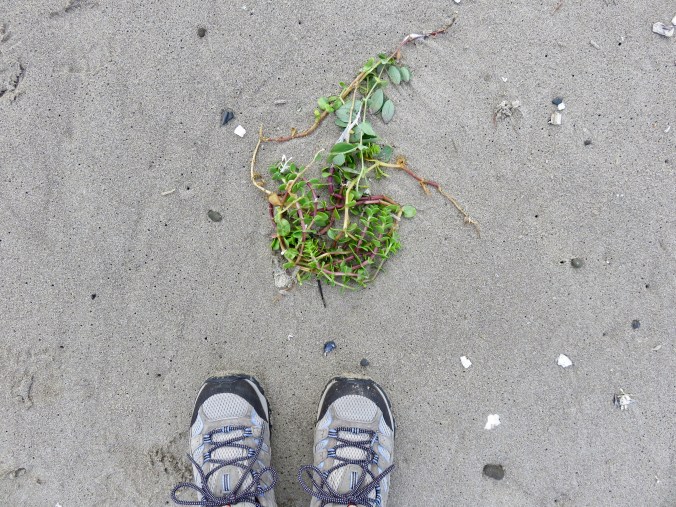
Yesterday, someone—I hope it was a visiter and not a local person—ripped the wild seasonal succulents out of the rocks bordering the sand. Ripped them all right out of the ground! The devastation began a hundred feet south of our path and continued north for hundreds of feet north. These people left a long line of plants littering the shore, tore them out by their roots just because they could. Like the party who started a fire of drift logs and abandoned it to smoke and smolder all night long. Like the people staying north of us who managed to drop their kite all the way over our house and into our courtyard (not the first time), and woke me with loud laughter at nearly eleven the other night. They seem like nice people, but they’re on vacation.

There is a hedge in front of our house, what we call the “front” because the ocean is too vast to be anyone’s backyard. The hedge is mostly salal that grows wild. The local rose, which is thorny and has dark pink flowers the size of quarters, is native too. The cultivar montbrecia, which will pop out in racemes of brilliant orange flowers any minute now, is a thriving but benign volunteer. The same cannot be said for English ivy that threatens to take over the world. My step-grandmother may or may not be responsible for starting ivy on its aggressive path in our hedge. I recall a two-inch pot of decorative ivy. Yes, she might have planted that in her garden as a ground cover. Many people did in the 60s. It was already thriving all over local beach gardens. We religiously remove it from the courtyard and fight to a truce in the hedge.

By contrast, I give Genevieve credit for planting honeysuckle, which has spread but without strangling any other plant. And it smells better than ivy, though its foliage is not such a stunning, healthy green.

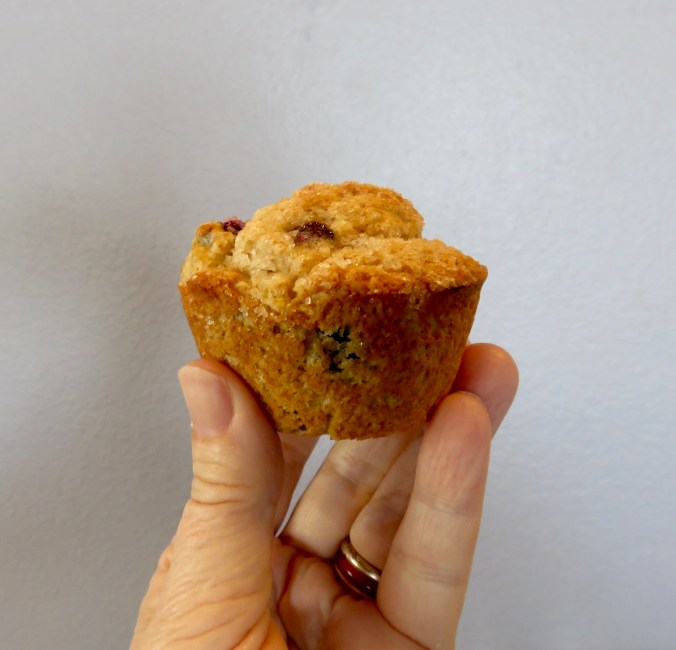
The salal was not invited or planted. It belongs here. It grows in the forest and along the beachfront except where it has been pushed out by invasive ivy or deliberately planted rugosa roses. White or carmine pink. The salal has stiff, leathery foliage used by florists, and berries I use in muffins. I like that I had nothing to do with it, that I need not water or spray or tend it in any way. It is what it is.

Today is the 50th anniversary of Stonewall, the night gay people stood their ground and refused to be passively bullied any more, the night they began a movement. Some call it a riot or a rebellion or an uprising. Stonewall works for me. Gay Pride.

Gary’s co-worker Chris took his draft physical the day after Gary earlier that same year, 1969. Both Chris and Gary failed the physical, Gary for his eyesight. They compared notes at the Book Store, and Gary asked how Chris had managed to flunk his physical. “I told them I was gay.” Oh, right.

When Gary went to Chris’s house to listen to Ziggy Stardust, he knew Chris was gay but he didn’t want to “try something new.” Chris took no for an answer and they remained friends. That’s usually how it goes. I’ve been hit on, so gently that I only figured it out later, and I’ve had gay and lesbian friends going all the way back pretty much forever. I knew who they were and who they were interested in sexually at least from my junior year of high school, but it was never an issue. Like someone being married or in a relationship: It only matters if you are romantically interested in the person. Mostly I failed to pay much attention. What possible difference could it make to me that the girl, who had done me a kindness when we were both six year old, liked girls? Barb was my friend and I valued her for her friendship. I miss her still.

fullsizeoutput_fca

The salal berries I use in whole wheat muffins and the wild huckleberries I use in butter cake are among the best things I know to bake. Published recipes suggest that blueberries can be substituted for these NW berries. Perhaps. Perhaps if they were wild and smaller berries I would love them. Perhaps if I could not get the real thing the substitute would be good enough. If I lived in Maine, it would make sense to me. But I live in Oregon and I am pretty sure that what grows here without my help or interference is the best of all.

We are all visitors here. Letting things be is the theme for today. Allow the natural to thrive and you owe it nothing more, no anger or resentment, no ripping up just because you have that power. A pact of noninterference because we all inconvenience and irritate sometimes. At least allow what lives to thrive. Enjoy it or ignore it, as you choose.

Camp NaNo day 22: EARTH DAY

fullsizeoutput_f28

Camp NaNoWriMo word count: 35,655 before 7am on Monday, 22 April 2019

EMD word count: 70,007. My novel’s word count has gone backwards in a dramatic way. Though I did add a sentence or two, I have butchered out an entire chapter, and now I fear it’s too short. I think only famous people are allowed to write short books. But serious reorganization and butchery in chapters 11-14. It feels like progress.

I submitted poems to two journals yesterday online and prepared a packet to be mailed to another. We had two walks and moved furniture and Gary scrubbed floors while I made a curtain. We are looking forward to work on the garden. The good news is that all four rhubarb plants have survived. One is thriving to the point that it did not notice the slender young stalks I pulled to make a tart. We had rhubarb tart for dinner.

PIE DAY

fullsizeoutput_ed3

She said she’d gotten into the program because she was from a Brahmin family and had gone to Scripps. “He’s sorry now,” she told me. “I’m not what he expected, and now he won’t even talk to me.” The young woman had relocated thousands of miles from home for the program, but realized all too soon that she was a disappointment to her thesis advisor. Only one of the graduate students was allowed to call their department chair by his first name. This young woman felt like a failure at twenty-two.

I worked with a woman at the University Book Store who had made a mistake too. Florence had a job during the war as an engineer, and then the war ended and so did her job, her parents were ill, and she spent most of the rest of her life caring for them. By the time I met Flo, she was in her 60s or 70s, her hair still dyed red, working close to minimum wage because she’s lost most of the middle of her life. I met two sisters, in the 80s in Iowa. They too had cared for ailing parents, had never worked, and were too proud to accept pubic assistance. Those three women had led good lives and were aging into desperate poverty.

Just now, a great many students who struggled to achieve their educational goals are reevaluating everything they have been taught about hard work and persistence and earning their way. Richer parents bought their children admission to college.

The world is not fair. We hear that all the time. Yet many well-off people cannot seem to overcome the belief (a Puritan belief) that financial life success indicates human merit.

We do not live in a meritocracy where each person earns their place. Most Americans build on what is handed to them. The Horatio Alger story of rags-to-riches is a myth. Almost not one does that. People born rich become richer. People who claim they were born “middle class” went to private schools and do better, sometimes than their parents. Most often in American today, being born poor predicts a life of poverty. Merit has almost nothing to do with it. Good people who are kind to small animals and children, attend regular religious services, do favors without even being asked, and pay their taxes, are poor in the United States.

I figured this out a long time ago. We cannot be whatever we want to be—not all of it and not all at once. It’s another of the great lies that if we tried we could have anything we want.

In our lives we will make hard choices about family or career, risky job or safe choice, more money or more interesting co-workers? Sometimes we might even make the wrong choice, but more often there will be the details of accident that make all the difference. Our parents’ marriage or divorce or choice to have neither; the randomness of who interviewed just before us turning the mood in the room sour; the moment we paused and turned right instead of left. And that is not all.

Unless we have the money for the private education—forget charter schools, we are competing with schools demanding the tuition of a private university—and test prep and parents who can afford to bride their way in, not to mention the legacies who gain them a few extra points on that entrance calculation—there is no level playing field.

“And if you’re a high school senior lucky enough to have won this genetic and demographic lottery yourself and thus improved your admissions odds some, keep this in mind: You may have earned the grades and the scores to put you in the running, but you are also the beneficiary of enormous, unearned economic privilege.”—TNYT

Over the years, I have written recommendations for students who went on to graduate from high-prestige schools such as Yale, Brandeis, Brown, Reed, Stanford, Duke, University of Chicago, and Pepperdine, not to mention the Naval Academy and Quantico. They are painters and doctors, nurses, engineers, college professors, “drug pushers” for Merck, private pilots for famous New York Senators, and Department Heads for major city governments. They have died of cancer in their 30s and in car accidents and by suicide, and some survived those catastrophes. They have married both badly and well. Some of them came from families below the poverty line, and some others from considerably above it. Three were Gates Millennial Scholars, several won Ford Fellowships, and perhaps a few graduated without any college debt at all. Some of them are so widely admired for their general goodness that no one would question their right to good lives. And some have lied snd cheated right along and still found happiness.

Nothing in life, and certainly not in American society, is certain.

The students from well-off families have an easier time. I know we are supposed to pretend that everyone has problems. Even Cheryl Strayed warns not to assume other people’s lives are easier than our own. How about the other way around?

Truly, if that student’s parents are addicted to drugs, he is from a single-parent family struggling to get by on a minimum wage job, or a parent or sibling dies while she was in high school? There is suicide or rape or life-changing illness? I think it’s only right to assume that student had a harder time than I did.

I went without dental care for some of my childhood. We had powered milk and Kool-Aide and margarine, only rarely real milk, and never soda or butter growing up. Sometimes my parents borrowed a couple of hundred dollars from my grandmother to get by through an emergency, sometimes my mom hid from the paper boy because she did not have the few dollars she owed him that week. I never had a steady allowance as a child, never took lessons after school like most of my friends, and never took the Ski Bus because there was no money for things like that.

My family was not poor. After all, I had a grandmother who could load us $200, but we were close enough to poverty that I could guess about it, and my husband comes from generational poverty. Most of my life with Gary and working with students has been an education in inequity.

It is a splendid splinter of optimism to tell a child they “can be anything you want.” The back side of that promise is the bleeding when it’s plucked—the sense of failure when they do not measure up to “anything they want.” Many of my students have lived lives that warned them about dreaming too high.

But while I argue that “anything” is unrealistic, most of my students underestimate their power. They can be more, have more, achieve more.

We are a country, a society eager to punish failure. We are less happy to help correct mistakes than we are to see them penalized.

Just every now and again—compassion, empathy, understanding. Being rich might mean a great deal of hard work, earned success. But poverty is not personal failure. It might just be a misstep, a life devoted to care. It might want no more than not judging. Success is more than affluence. A meaningful life is not judged by paychecks and net worth.

And then Swedish Greta Thunberg has been nominated for her activism regarding climate change, a 16 year old with Aspergers. She might do anything.

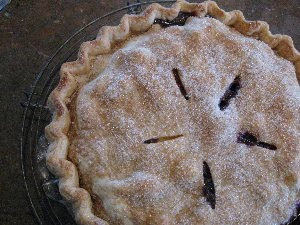
Next month there will be rhubarb, but I think I have berries in the freezer. It’s Pi Day, 3/14. I’m going to bake a pie. [It’s blackberry, not cast in stone, and we each want our slice.]

fullsizeoutput_ed4

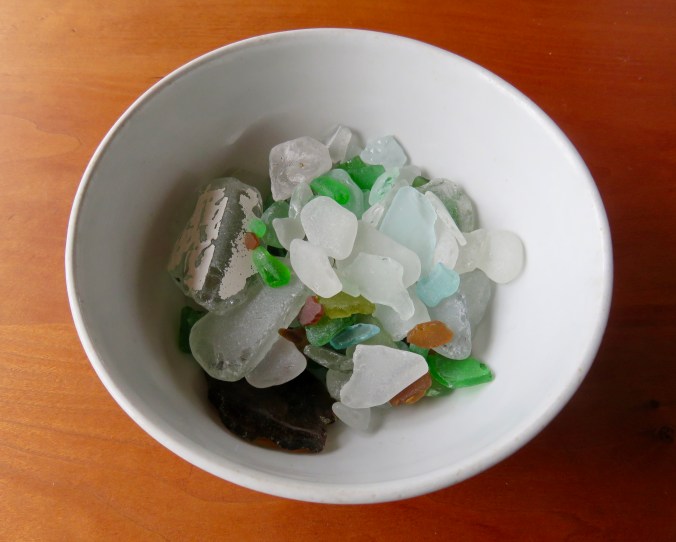
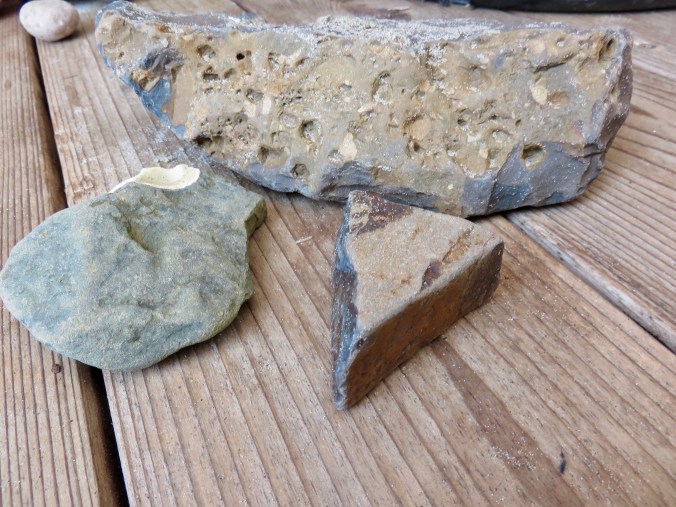
What we are mostly looking for during our beach walks is sea glass (see top) and what we mostly find is trash. But today, Gary found a wedge of stone “like a piece of pie. And it’s Pi Day!”

EDITING & BREAD

IMG_3900

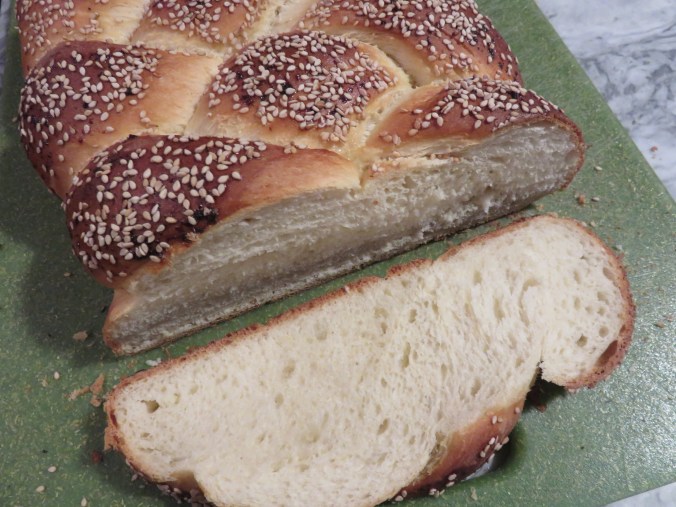
This first challah is light and tender, soft, finer grained than this photo shows. I used some bread flour (“strong flour”) and no whole wheat, but I think I miss the wheat flavor.

I suppose this means I should complete my editing before posting.

On 8 February 2019, I found I had 100 followers. That makes my day. Seriously. This is true especially because I wrote about common-sense self care as part of countering depression. Every time I have tried to post anywhere about depression, I’ve been attacked. People who were friends and generally seemed to like me, went off on my comments have apologized for using language in response to my post. “You don’t know anything about depression . . .”

The thing is, I do know about depression. I am not as self-assured as some people seem to assume. I know depression. I won’t describe details here, but I have been depressed and I have a strong thread of serious depression and anxiety disorders in my family. Maybe I cover it better than most? Maybe I was told I should smile about a thousand times when I was six and I acted on that suggestion.

In any event, I am not writing a memoir, but a blog. I am not telling the story of my childhood here today. I write about myself too often as it is.

Most often I write as often in direct response to something in the news as to anything happening in my life. Friday I played Scrabble with a friend and in the afternoon I had challah rising. I used to make a huge braided loaf each week, but it’s been decades since I did that. Most of my life has passed with only occasional loaves cooling on the counter.

Baking bread each week was one of the things I swore to do now that I am mostly retired. And challah—in a dead tie with brioche for best bread in the world. (For now we can set aside cinnamon buns and panettoni, which are sweet breads rather than bread loaves.)

So the bread was in its first rise. I’d have taken a nap if it hadn’t needed to be punched down and shaped in about 10 minutes. I recall three rises (or proofing a sponge and then proofing twice, which is the same thing) before shaping, but fingers crossed. That first attempt on Friday would have only two rises, one in the bowl and the second as a braided loaf. Most of the kneading was done with a dough hook by my electric mixer.

I first learned to make bread from my mother who had a recipe for four loaves, lost now. [There was a typo here. I noticed it and fixed it five minutes after I posted. sigh] Though she never enjoyed cooking or baking, her loaves were marvelous. In college, I made whole wheat bread in a very large crockery bowl, stirring by hand with a wooden spoon (I broke a spoon one time) until I turned it out onto a board to knead. I quite liked kneading; it reminded me of wedging clay and as a Ceramic Arts major I had a lot of experience wedging clay.

My first job in Oregon was in the old Cannon Beach Bakery, which baked the “Haystack Loaf” in a brick oven, one of the last remaining fired brick ovens in the state and gone now. Harrison’s Bakery in Seaside, with its marvelous “Beach Bread” is gone too.

My old recipe for challah is also long gone. There were 7 cups of flour and 6-8 eggs and butter and honey and cardamom, as best I can recall. It made an enormous loaf, almost too big for my tiny apartment oven. I wish I had my old recipe, the one I used in college 45 years ago. I thought it came from the Tassajara Bread Book, the source of my ordinary whole wheat recipe, but I’ve looked and there is no recipe for challah. Challah is not supposed to have lemon peel, but I recall I put it in anyway and I will today too. None of the recipes I found online were quite right in other ways—not enough eggs, sugar instead of or in addition to honey, and oil rather than butter—so I used my best guess, and when I make bread again today, I will make any necessary adjustments. I used oil the first time.

“Like thousands of cooks of my generation, I have in my kitchen an ancient volume of The Tassajara Bread Book, its cover gritty with flour, its spine cracked from use, its pages stained with molasses, and dog-eared with decades of perusal. It is the book that taught me how to make bread and its simple wisdom has been present in every loaf I have baked. I will recommend it with enthusiasm to a new generation of cooks.” —Steve Raichlen, author of The Barbeque Bible

That’s the book. Sometimes, back in college, I made a loaf in two layers, a three-strand on top of a six, but I generally made a 4-strand braid, and that is what I did on Friday. It had a rest and second rise while I was writing this. When I took a break from writing, I preheated the oven, mixed an egg yolk and honey wash, brushed it, scattered sesame seeds, and baked for however long it took. Recipes I found recommended temperatures from 325° to 425° and times from 20 minutes to the better part of an hour. I aimed for someplace in the middle, and 25 minutes in a 350° oven seems to have done the trick. Maybe I was writing in between baking bread and not the other way around?

IMG_3895

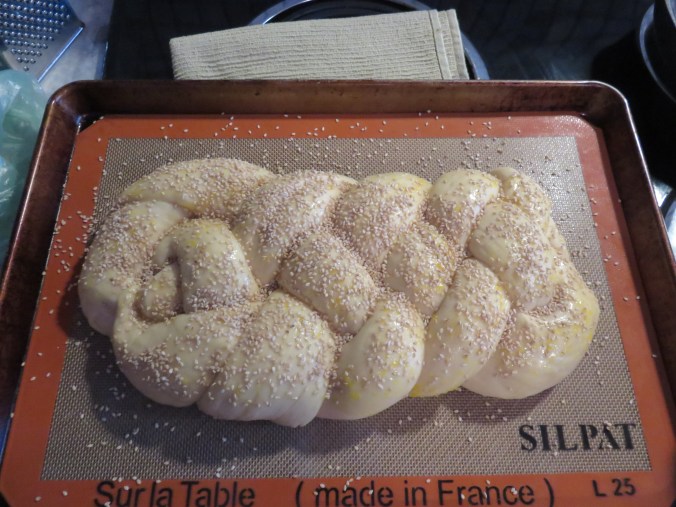
The first rise was in a bowl, the loaf shaped and allowed to rise again. Here is my 4-strand braided loaf ready for baking.

I have a couple of dozen blog posts drafts saved that I will never finish. I begin posts and never go back to them. But after I’ve posted, I do always go back. I correct typos, add a link or another photo. Sometimes I correct information or even add an entirely new paragraph. With so many people reading (I hope), it’s about time I corrected typos before posting, don’t you think?

There is a second baking scheduled today after our walk, and I want to celebrate. Over a hundred people have chosen to receive my posts. That is worth celebrating. It also reminds me of that bad habit I need to change. I write fast and post, and almost immediately people receive my blog post as an email. I am grateful when they “like” my post because that gives me a sense of the success of what I have written.

Finding those “likes” on my posts is something like my husband asking for a third and fourth slice of bread, fresh out of the oven. Except I get to see him smile.

WELLNESS

IMG_3881

Early in the first episode of season 14 of Silent Witness, a hospital doctor completely loses it as he observes patients in an outdoor lounge smoking dope and cigarettes and drinking beer and soda. He knocks smokes and cans out of their hands, shrieking: “What is the point?!” They will not regain health if they continue their unhealthy behavior.

There are all sorts of magical diets and pills available for people looking to live healthier lives. In the mean time, they avoid addressing the obvious: sleep, diet, exercise, focus. Someone I know ate a restaurant salad, had an “allergic reaction,” and concluded she was responding to tiny bits of cheese she ate by mistake. Maybe it was the lettuce? About 20% of E.coli infections come from leafy greens. Most of us cannot be troubled to change our behavior unless we are offered that change as a near-magical cure for what ails us.

Sometimes we are depressed because our lives are depressing. We can’t always do anything about that. Sometimes only time will heal us—everyone is depressed when a loved one dies. Taking a pill might not help at all, though we have faith in pills.

Improved health for most of us is simpler than medication. It might come down to getting enough sleep, eating better, avoiding soft drinks and alcohol, taking regular walks, and stilling our minds.

Until there were anti-depressants and an irrational percentage of Americans making Big Pharma billions, nearly everyone with clinical depression recovered with or without treatment within a few months. Medication today has its role, but most anti-depressants need a couple of weeks or months to become effective. While we wait, we might try taking better care of ourselves. This might not be the only answer, but it is a good place to start. And for most of us, it is exactly what we need.

A minimum of eight hours of sleep a night was considered normal for at least a hundred years. That recommendation has dropped to a range of seven to ten hours, and may continue to drop in response to the amount of time we actually sleep. We want to believe our sleep patterns are “normal” and theories seem to evolve in order to support our desires. Is it natural for anyone to “need” only a few hours of sleep? Perhaps not.

A hundred years ago and more, we slept more because it was dark at night. Today we sleep less because we are on our devices with electric lighting. For a long time the belief about sleep was that it kept human beings out of trouble. Except for our intelligence, the reasoning went, we are a harmless and relatively defenseless species. We do not see well in the dark compared to most predators. Curling up someplace safe and sleeping, biologists assumed, kept us out of trouble. They were wrong.

Some medications, advancing age, and brain damage all impact sleep. But sleep does a great deal more than keep us out of trouble. Research into Daylight Savings Time revealed a connection between that one lost hour of sleep and an uptick in heart attacks. We now know that the various stages of sleep allow us to sort and save information (remember), cope with daytime concerns, repair the synapses in the brain, and heal. Lack of deep sleep contributes to dementia. Lack of REM sleep makes us fractious. Lack of sleep can lead to weight gain by making us hungrier, but also has an impact on depression, anxiety, and suicidality. “Add the above physical and mental health consequences up, and a scientifically validated link becomes easier to accept: the shorter your sleep, the shorter your life.” (The Guardian)

Get your sleep. Stop eating a few hours before bed. Turn off devices. Avoid caffeine and other stimulants. Make the room dark and go to sleep at a decent hour.

What we eat makes a difference too. It is amazing to me sometimes how readily people accept that sugar impacts the behavior of small children, but how resistant these same people often are to the impact of what they eat and drink on their own mental state. Sugar, too much meat, refined grains, alcohol and other drugs—all these impact mood.

“Eat food. Not too much. Mostly vegetables.” advised Michael Pollan in The Omnivore’s Dilemma. He’s right about that. Though Pollan does not have the formal training to be considered an expert in nutrition, he has earned his prestige. Because I am largely vegetarian, people like to call themselves “carnivores” when we eat together. No. No, we clearly are not. Look in the mouth of a cat, research the structure of their digestive system. Cats are carnivores. Humans do not have the mouth, teeth, digestive chemistry, or other physiogomy to survive on a meat-based diet. Peoples in the far north such as the Inuit can because 98% of them have a genetic mutation allowing them to exist on fish and mammal flesh. They are genetically adapted to the cold and a meat-centered diet.  For most human beings, nothing about us is adapted to eating that way, though many of us have one of the several genetic mutations allowing us to consume milk after childhood.

Wheat has been part of the human diet for at least ten thousand years. We have been cooking foods for at least hundred thousand years. (There is no physical proof yet, but many anthropologists and evolutionary biologists believe that cooking foods, especially foods that are easier to digest such as legumes, is the reason humans became the smarter, smaller-toothed species we are today.) The wheat found today is somewhat genetically different from what our very distant ancestors consumed. The animals we consume today are also very different genetically, far removed from what our distant ancestors consumed. They are also fed and raised differently. There is nothing remotely Paleolithic about today’s beef, pork, or chicken.

Of more significance is that most of our food (not to mention our water and air) is contaminated. All foods, domesticated plants and animals, are weighted down with chemicals our ancestors could not have known. Pesticides, herbicides, and broad-spectrum poisons that were invented only in the last century. Our drinking water in major cities has trace amount of antibiotics, anti-depressants, and other chemicals as well. You already know about the lead.

Eat better. Save sugar for a rare special occasion. Avoid alcohol and refined foods, packaged foods, “foods” containing chemicals, most meats and conventionally raised food.

There is overwhelming evidence that regular exercise results in improved physical and mental health, less disease and longer life. Fifteen minutes a day could do it.

Meditation or even just sitting quietly for a few minutes each day lowers blood pressure and relieves all sorts of symptoms. The mental rest disconnects us from day-to-day stresses. Turn off social media and stop stewing over things we cannot control. “Relax!” they tell us.  We hear it all the time, and it is excellent advice.

Social interaction is healthy and so is reading a cheerful book. Maybe turn off the news, social media, the gloomy or horrific Netflix movie. Watch something funny. Read a hopeful novel (honest, it’s a proven-effective therapy), and refuse to discuss politics with your raging-reactionary uncle.

Getting enough sleep, eating a healthy diet, moderate exercise, and giving our emotions a clear break from day-to-day stresses and demands absolutely result in improved mental and physical health. Seriously. No doubt about this at all. Trusting that making such healthy changes also triggers hope and hope is another essential. It is likely the primary benefit of most anti-depressants. Taking that little pill each day triggers hope that we might feel better tomorrow. That impact will wear off if the problem is actually untreated mental or physical exhaustion, or if the underlying problem is grief. Everyone feels depression and reveals the symptoms of clinical depression after a beloved family member dies. Such grief mostly needs time for a cure.

SLEEP. DIET. EXERCISE. REST. TIME.

All this is hard if we are depressed. I get that. Depression means it is hard to care much about anything. It’s hard to get out of bed. But if we can care enough to take ourselves to a doctor, perhaps we can care enough to listen to soothing music or take a walk, eat a little better or have a conversation with a friend.

“Dorian Deshauer, a psychiatrist and historian at the University of Toronto, has written that the chemical-imbalance theory, popularized in the eighties and nineties, ‘created the perception that the long term, even life-long use of psychiatric drugs made sense as a logical step.’ But psychiatric drugs are brought to market in clinical trials that typically last less than twelve weeks. Few studies follow patients who take the medications for more than a year. Allen Frances, an emeritus professor of psychiatry at Duke, who chaired the task force for the fourth edition of the DSM, in 1994, told me that the field has neglected questions about how to take patients off drugs—a practice known as ‘de-prescribing.’ He said that ‘de-prescribing requires a great deal more skill, time, commitment, and knowledge of the patient than prescribing does.’ He emphasizes what he called a ‘cruel paradox: there’s a large population on the severe end of the spectrum who really need the medicine’ and either don’t have access to treatment or avoid it because it is stigmatized in their community. At the same time, many others are ‘being overprescribed and then stay on the medications for years.’ There are almost no studies on how or when to go off psychiatric medications, a situation that has created what he calls a ‘national public-health experiment.’ ”—“Bitter Pill” The New Yorker

We have survived as a species for 200,000 years, and we’ve had anti-depressants for only the past few decades. Today, one American in five is taking medication for something no one had access to until recently. Suicide rates have been going up instead of down ever since the introduction of anti-depressants. Let that sink in.

Toward the end of the episode, Nikki is exhibiting symptoms, which a doctor diagnoses as depression: “My soul has the flu.” As it turns out, her brain is not sick nor is her chemistry out of order. Something in her life causes the problem. She experiences anxiety and sadness, and even depression as part of the normal range of emotions every human experiences in life. She does not need medication. Mostly Nikki needs some sleep, a better diet, regular exercise, some mental rest and decompression, and a little time to recover.

We all do.


BLAME THE CHILI VERDE

IMG_0001

This is not chili verde, but half-eaten pot of Sunday Soup, made differently each week from vegetable stock and veggies + some combination of legumes, rice, or potatoes. recipes below

Early on, in the ’90s, when I said I didn’t eat meat, people would offer me chicken, and I would have to point out, Isn’t chicken meat? What about duck? they would ask. Turkey? Rabbit? I started calling myself a “vegetarian” because trying to explain what I ate led to a lot of confusion. And a lot of questions. And then more questions. Why? But why? And eventual irritation on both sides.

Let’s Cook It Right and cookbooks. I read a great many books on nutrition when I was in college. Some of my friends were vegan for religious reasons, and we all cooked. I came to terms with butter (I’d been raised on margarine) and sugars and avoided pseudo-foods. I cooked a many bad meals and followed any number of recipes, and Gary gamely ate most everything I set before him. He claims today that he became a vegetarian because I stopped feeding him meat.

We eat wild seafood sometimes and dairy and eggs. We are not vegan. I am not ready to give up dairy and honey and eggs. I have been told I am “Full of s–t” for claiming I am vegetarian. Most vegetarians agree. Today, I can call myself a pescatarian and people know what I mean, but in 1990 that was expecting too much. The term was not then in common use. None of these terms were familiar 30 years ago. Properly speaking, we are ovo-lacto-pescatarians. Even today, using that term in most company, non-vegetarian company, stirs up trouble.

Instead, I labeled myself vegetarian, and mostly for moral reasons. I had always loved eating meat, but after close exposure to feed lots and the flavor difference between grass fed and feed lot beef; way too many horror stories about slaughterhouses and animal diseases from a friend working in the vet school in Fort Collins, Colorado; recognition of the damage done all over the world to habitat, global warming, indigenous populations, and so forth by raising mammals for Americans to eat; ; more stories about how we raise farm animals in this country, the genuinely horrific conditions in which pigs and chickens are often raised; and a family that is painfully sentimental about animals and horrified by cruelty to animals; I decided it was wrong to eat what I would not kill. Why cry over the injured animal in a film and then eat a hamburger? I could not do both. I loved eating lamb, roast beef and stew, and pork shoulder in my chili verde, but I stopped by choice because I believed it was wrong for me to do.

These days, I still eat fish and shellfish on occasion because I would be willing to kill them in order to put them on my table. This is not to say that I did not cry when I caught a bullhead as a child, my dad clubbed it, and then threw it back in the water. I did not cry for the trout on another occasion. But also, I was not the one that killed either fish. And I eat eggs and dairy. I can be particular about sourcing both, but dairy, in particular, disturbs me. I need to give up cheese. I know this. Butter too. The dairy industry . . .

In the 70s, didn’t I give up on table grapes for years because of the farmworkers’ strike? Haven’t I given up other foods for health and moral reasons?

Processed meats is unhealthy. I loved bacon, but gave it up even thought I love that salty goodness. Ham was the easier pork product to abandon. I do not understand why people want pot bellied pigs as pets and get weepy reading Charlotte’s Web but will eat pork. Isn’t there an inconsistency there? If describing beef as “dead animal flesh” is offensive, it is also accurate.

There is the reality that meat from a supermarket is not what my grandmother would have been eating from off the farm, and a long ways from what my ancestors a hundred, much less a few thousand years ago were eating. The meat we eat is genetically different from what our ancestors ate, and it is born, fed, and raised differently. The flesh found in a supermarket packet is chemically, nutritionally quite different.

It is this sort of thinking that made me determined, more than 30 years ago, to stop.

It was the chili verde that held me up the longest. I needed several years to figure out how to feed my family and myself food that was delicious and also contained nothing with a face. My chili verde had to be as wonderful even without meat. I use no recipe, but an approximation exists in my personal cookbook:

chili verde

1970s • makes two or more quarts • serves 6-12

I used to make this according to the recipe from the Denver Ladies Society which called for pork shoulder browned first in oil and then the rest of the ingredients (no onions or beans!). I learned how after visiting Colorado for the first time in the mid 70s. I tried beef and finally accepted that it was best made with pork shoulder (bone in and then removed from the pot and the meat picked off and returned to the other ingredients. This chili was so good, it had the final hold on me as an eater of meat. The recipe here is almost nothing like the original in terms of ingredients, though I promise it’s as delicious as the original version from years ago.

1 large onion, chopped

1 T. garlic, crushed

2-3 lbs. roasted or fresh cut up tomatoes or 2 large cans tomatoes 

1/4 t. cinnamon

1 T. ground cumin

1 T. ground chili or more to taste (ground chipotle is best)

1 t. salt, or more (the recipe called for 1 T., but  I use smoked salt)

1 lb. fire roasted, seeded, and chopped poblano or 2 large cans diced green chilies

3 c. cooked black beans

chopped red or green bell pepper

Sauté onions in 1 T. of oil till transparent. Add garlic for a minute longer. 

Add remaining ingredients and simmer altogether for at least 45-60 minutes. May simmer for hours and additional ingredients such as zucchini or bell pepper may be added later; it is better the next day.

*optional: usually I begin by cooking 1 c. of dried black beans in water or stock to cover or add 2 or 3 drained cans of black beans and a grain such as corn or rice. You may substitute fresh tomatoes, add chopped cilantro, chopped zucchini, green onions, fresh chili peppers, etc. For a heartier meal (and a complete protein) add a pound of frozen or fresh corn kernels right at the end, or 1/2 c. raw rice and simmer 45 minutes or longer before the end of cooking. NOTE: beans do not cook well in an acidic liquid, so if you want to cook the beans with the rest of the ingredients (which I do from time to time), add the tomatoes and chilis only after the beans are tender. 

Serve hot with cilantro on top, nonfat sour cream or a stick of cheese stuck into the middle, and hot rice or chips on the side. Or serve with or over the rice or spooned over crushed tortilla chips for tortilla soup with cheddar cheese grated on top.

green chili dip: add equal parts grated cheddar cheese to completed chili and heat gently. I made this once for a party and three quarts were gone in the time it took me to greet more people at the door. This also makes a wonderful, if rich, meal.

The Sunday Soup, such as shown at top, is easier and more variable. Begin with onions and garlic, add stock and rice or lentils or potatoes and other root vegetables. I add fresh herbs such as thyme or dried such as a curry powder mix or chili, simmer 20 minutes (or start brown or wild rice sooner to cook). Then add whatever other vegetables I have—zucchini, fennel, fresh beans or tomatoes, mushrooms, etc. Cook just till tender, then serve with something fresh on top: cilantro, parsley, basil, a grating of cheese.

All vegetable trimmings go into a freezer container, which becomes stock for the soup the next week. I made this every Sunday for years when I was working 60-70 hours a week, because it fed us for three or more days and other than chopping the vegetables, it was easy to make while I scored papers.