FOGGY FOGGY DO

When our firstborn boys were tiny, a friend in a community just fifteen miles or so north of us used to call me every morning to ask if we had fog. I would look west to the roll of clouds lying on the horizon over the water and admit we didn’t. have fog Then, between puffs on her cigarette, she would complain about the fog. She lives in the high desert now where it gets hot in summers and icy and snowy in winter but is sunny nearly every day. If I lived there I would surely complain about the heat and cold, but that’s why I chose a climate I enjoy.

This morning at the waterfall on Hug Point beach.
Continue reading

NO GOOD DEED

Until last March, Gary and I picked up trash during our daily walks. In 2018 and 2019 we gathered about a ton of garbage, mostly tiny pieces or broken plastic and bottle caps, but also entire bottles, fishing tackle, toothbrushes, take-out containers, candy wrappers, toys, commercial and sport fishing gear, lengths of plastic rope a few inches or many yards long, and as you might guess from the photo below, polystyrene foam. We both seem to collect.

Yeah, he’s wet.
Continue reading

6 WORDS about the awful year

You might think sunset—but this is dawn wrapped clear around the sky to the west.

Education Week asked teachers and administrators for a six-word review of “the awful year.” Here are three examples:

Bars are open. Schools are closed. 

Chad Aldeman, Bellwether Education

No one in my family died. 

Janet Keller, Santa Monica, California

We’re doing the best we can.

Shari C, elementary school principal
Continue reading

PUTTING OUT FIRES

There is a spruce tree falling off the headland—you can see it sticking out not quite at the top. Even nature changes direction over time.

This year I developed a new habit with books. As I finish a book, I make the decision: Will I ever want to read or refer to this book again? Will I want to lend it to a friend or give it to someone as just right for them?  A couple of years ago, I went through my books and sorted out the ones I knew I’d read but didn’t like well enough to miss. Even so, I have thousands of books. Whatever anyone tells you, you CAN have too many books. When there is no longer room to place one more bookcase against a wall, start making the hard choices.

attempted comment on “Aspirational Clutter”

My comment (above) is awaiting moderation on a website I frequent. It’s been there for an hour. I cannot see how to either delete it or fix it. I do not know what I should fix. That’s never happened to me before. I was invited to describe personal decluttering challenges, and that’s what I did. I understand there is some sort of logarithm that determined my post might have violated the site’s “community standards”, I just can’t figure out what I did wrong. Can you? No vulgar words here. No personal attacks. It does not contradict another person’s comment—quite the opposite. Is the use of all caps in “CAN” the problem? But someone else did that too.

The editors are not censoring me. They only want me to be polite. At least I hope that’s the goal. They also want to protect their brand.

Of course I monitor all the comments on my own blog. I try to address them immediately, though I can do this only from my laptop. The only ones I do not let through would be spam, and the WordPress filter pretty much always catches that before I do.

That got me thinking: Surely the filters for FaceBook and Instagram could do better than this. They must. Assuming the effort is made to keep lies and cruelty off the sites?

On the other hand, the reason I left FaceBook was that I was tired of putting out fires. Metaphorical fires, but the similarity to the literal fires we are suffering from here in Oregon might stand. Ugly lies are spread because people believe them and fail to factcheck. Factchecking was about 20% of what I did when I was grading persuasive essays written by teenagers as a teacher. I got to be pretty good at it. And as a teaching professional, I took it upon myself even before FaceBook to confirm or debunk claims.

In the 90s, a medical resident who was also poetry editor for a prestigious literary journal foolishly (imo) revealed on a literary chat-site how he sorted the poetry submissions as they came to him. The first cut was whether they got his name right on the outside envelope. Then he tossed the ones that were not typed, had typos, etc. People were outraged, they threatened his safety, questioned his humanity. To be fair to the editor, the man received thousands of submissions in a week. Working through his inbox would be a nightmare for anyone, and he was almost a doctor. He was an unpaid volunteer doing the best he could. Plus publication in the highly-respected journal he worked for would be a professional coup for any poet. If the submitter didn’t care enough to spell the editor’s name correctly or know enough to type their work, they probably are too new to have earned publication. Let those who have devoted years to their craft advance to the front of the line. Younger, newer poets found his strategy for shortening his to-read pile arbitrary and cruel. I tried hard to balance acknowledgement of understandable outrage with the overwhelming and unpaid task the editor faced.

There have been other verbal firestorms I have attempted to douse and nearly always without effect. It was hard for me to accept that. I wanted to help, my intention was always to be helpful, but there is a kind of arrogance in that thinking—assuming I know best, and all that. Most people do not appreciate being corrected even if they are actually wrong and will resist changing their minds on principle. While trying to put out fires I sometimes fanned the flames.

Literal fire, on the other hand, is dangerous in other ways. The West is on fire and the very air we breathe is unsafe. However much we might want to place specific blame—the campfire that got out of hand, the homeowner allowing brush to build up to close to their home, the lack of funding to research wildfires and develop a proactive approach to fire—the truth is complicated and deadly.

The West is on fire, and I came to understand why east coast newspapers were giving so much space to the smoke when I realized it had drifted over Iceland and was approaching the European mainland. What happens here affects people many thousands of miles away.

Gary has a brother in Tennessee and a niece in Kentucky, but the rest of our close family lives in the PNW. Some of our friends and relatives are Trump supporters, some are solidly democratic. We have a friend who recently transferred his loyalty from Trump to Jesse Ventura. There is just no telling people what or who to believe.

In The Fire Next Time, James Baldwin explored the roots and responses to systemic racism. That is another fire we seem finally to have decided to fight—the burning devastation of bigotry. I highly recommend Baldwin’s book. Baldwin is brilliant, compassionate, and true. And yet, the feds have recently outlawed training that confronts “white privilege”. That term comes from an essay by feminist Peggy McIntosh, who made it simple in “White Privilege: Unpacking the Invisible Knapsack.” There are many versions of this 1989 essay available, and I can recommend it. I can also recommend a powerful response from another woman: “Explaining White Privilege to a Broke White Person” published in 2014. Between the two, they might just start a fire for anyone willing to read and think about them.

Some foresters have been trying for decades to explain why not all fires are bad, that some are necessary to make us safer in the future.

What we do here and now affects not just those around us but our entire world. What we are willing to research and factcheck makes a difference. Many fires are burning. The solutions are not simple, but they rely on all of us if we hope to thrive.

I have too many books, more than I can find space for on shelves. That doesn’t mean I will stop reading.

THE BOSS OF ME

Who was the boss of me? Most often that would have been my mother. Corporal punishment was extremely rare in my childhood. I ran wild in the woods and rode for miles on my bicycle. I came home with frogs and splinters and muddy clothing with the knees worn through. I do not recall being punished for any of that. On the rare occasion I was in deep trouble, I was sent to my room. (“Time Out” had not yet been invented, but “Go to your room until I tell you that you may come out” was pretty much the same thing.) Sending me to my room, I would eventually overhear in adult conversation, was not entirely successful. It seems I liked being in my room and would draw or read books without noticing my punishment.

Mostly I was well behaved. I said please and thank you as I’d been taught. I asked permission. I do not recall ever being deliberately rude to anyone except maybe my brother. Even sibling harassment (which flowed both ways) rarely occurred within earshot of my parents. That definitely led to banishment to my room. I was given rules about how to treat other people. Talking back, disrespect, refusal to do my chores—none of that was tolerated. “Think how the other person must feel,” my mother would say. Think how the other person must feel. I heard it a hundred thousand times. I believed her when she said it was important. She was almost always right, and I wanted to be good.

One painful example of my failure to be good involved thank-you notes. The very idea of writing a thank-you note made my stomach twist. I remember the feeling clearly all these years later, and also that I did not know what to write or how to do it. I suggested that Mom write the note and I would sign it. She actually did that once before she gave up entirely. My resistance was a mystery to me even as a child. Why couldn’t I write the thing? Sixty years later, I think I know. I really really did not know how to do it. There were no lines on the inside of the card, the card was very small, and I was used to lines and big pages and a fat pencil. I needed a model, or for my mother to help me create a model of a thank you note. All I had as an example of writing to my grandparents was watching my mother write letters. A hundred lines of neat writing on thin stationary was not something I could imagine doing.

It sounds ridiculous now to say that I did not know how and needed a model with the words “Thank you Gaga and Papa for the toy rabbit. I played with it all day. Love, Janice,” but I think it’s true. I needed my mother to write out the words for me on a sample piece of paper so that I could understand where to start and where to end. I dearly loved my grandparents. I just did not know how to fit my words on the card.

When I was teaching English to 16 and 17 year olds, I often found myself taking students step-by-step through tasks and ideas that seem obvious to most adults. We memorized The Preamble, wrote essays, took notes in several styles, and we studied the difference between fiction and nonfiction, considered how a person may be wrong without lying, and that it is important to thank the person when completing a personal interview.

When I insisted my Honors students address and mail me a one-page letter proposing their research topic, writing the letter was only half their battle. For a few years, when college applications were still on paper, I insisted they mail the letter to me. They were horrified. (Seriously.) I gave them a printed template for the letter—an outline for four brief paragraphs in full block business letter form with directions—and handed out #10 envelopes. (It was not safe to assume they had access to envelopes at home.) I drew an envelope large on the whiteboard, and demonstrated where to write their return address and the address they must send it to. Yes, they would have to buy a stamp. I told them what it would cost.

No one complained that they already knew this stuff. Almost none of them had ever mailed a letter before. Several told me after the fact that they had never before entered the Post Office, even though many of them did not even have home delivery of mail. They knew how to do many difficult things, but there were massive gaps in their experience even on simple tasks. This was not anyone’s fault. They were smart students, capable and generally willing, but like the definition of “pejorative” and typing an m-dash, they had no experience of how to do it. I needed to explain step by step.

That was me writing a thank you card when I was six. It is like taking a bus, filing taxes, changing a tire. Basic, maybe even essential skills, but someone has to show us the first time. [Full disclosure: I cannot use a smart phone. Yes, I can text—though I don’t—and search the internet, and I am confident I could manage more if it were necessary, but no one has offered to show me how to do anything, and so long as I can avoid figuring it out on my own, I will.]

When I finally sent a colored pencil drawing of a dragon as my thank-you, my grandmother unfolded and pressed it flat, framed it, and Papa put it up on the wall. I was astonished. I had not thought how they would feel. But my mother would continue to remind me.

Simple courtesy is not automatic. If there is crude language or anger or name-calling in the home, a child does not learn that these are unacceptable in the world at large. [I was sent home from school with a note when I was six or seven because I had used a swear word I’d heard at home. That was a mistake I struggled not to repeat with my own children.]

Students deserve respect. And that sometimes meant a detailed explanation of the difference between vulgar language and actual swearing and why the latter is particularly offensive to some people. I assured my students that I was not personally offended by most language, but that it was likely hurtful to some of their peers. In addition, I absolutely did not tolerate racist, sexist, ablest, homophobic, or other bigoted language. I told them such bigoted remarks were personally painful, that I hoped they would show respect toward me as I did toward them. Am I ranting? I do not think so, not quite.

But wait, there’s more. I insisted on some courtesies as necessary to life, just like changing a tire or using a phone. Know how to ask a favor, how to express gratitude, how to respond to someone who has lost their temper. Think about how the other person must feel.

The danger, as I saw it, was that without considering how others felt, my students were likely to be far from home some day and unknowingly offend a person they had absolutely no intention of hurting. That would be sad, I told them, wouldn’t it?

[For years, I also suggested in conversation the very real danger that when they were far from home they would use bigoted language that would get them “stabbed through the heart.” And then that happened to a student I knew. The boy lived, but being rude to some smaller, harmless-looking individual, he discovered they had a bigger cousin.]

Think how the other person must feel. Teasing, loudness, cruel words—think how the other person must feel.

It’s easier, lazier I would argue, not to hold standards, to give in or fail to follow through and strive to be consistent, fair, and clear. Isn’t that the perennial complaint: Kids these days! I hear that even from people younger than myself. But I think they are wrong that kids these days are different. Kids have not changed. Parenting is not harder or easier. I don’t think it was any different for me or my mother or her mother before that. Maybe we can do better.

My mother did not always exercise perfect judgement. She was not perfect. She made her mistakes. But she was the boss of me—as was my dad, grandparents, teachers, and other trusted adults. Mom set standards for my speech and other behavior that continue to guide me in the right direction. She did not necessarily reason with me as a child; she told me that certain words, attitudes, and behaviors were unkind or dangerous. You are not to do that again. It was not a negotiation. It was a rule.

One of the most helpful parenting tips I ever received had to do with the presentation of important rules. Some rules you can work on (guidelines, aspirations?), some are absolute and should not be followed by “okay?” I hear it all the time, that near-automatic request as if for agreement from the child. Do not hit the cat, okay? is not the message you want to deliver. Try: Do you understand? Do you promise? Don’t ask them to agree or disagree unless you are prepared to have them respond to your okay? with no!

I hear that “okay?” at the end of all sorts of parental directions, as if the child has a choice. But sometimes they do not. No toys at the table because banging metal cars dents the wood. You will brush your teeth in the bathroom because it’s easier to clean spit off the mirror than this couch. You will not say mean things to your grandfather because he is trying to help you and you will hurt his feelings.

It’s fair for a child to ask for reasons, and it is fair that a parent does not budge if the reasons seem unreasonable to the child. It is not okay to hit the cat. Not ever. You will not hit the cat, full stop. I want you home for dinner. Call me when you get there. Do not use that word when you are at school. There is no discussion or negotiation about such rules. The child does not have to like these rules or agree to them. They are about proper behavior.

“You will write a letter proposing your research topic, put it in an envelope, and ensure it will arrive in my P.O. Box by next Tuesday.” A discussion follows of how that may be accomplished, of how the mail is delivered, what happens if the letter is late or incomplete. I can explain and defend the need to do it. They have a choice of topic and thesis, Helvetica or Times New Roman font. Not writing the letter is failure of the assignment. Write the letter and mail it. , okay?

The other parenting tip I learned was about threats. Never threaten to do anything you will not actually do. If you threaten to send a child to her room for the entire morning if she hits the cat again, you better be willing to follow through. Mean what you say, make rules only about what is necessary, and if you give directions, do not ask for permission that they be followed but whenever possible offer choices or options you can live with.

As parents, our job is to provide guidance and rules. Maybe we can reason with the child, but if they do not care to listen about the danger of turning the oven on without permission, we insist anyway. Maybe we bargain about playtime and chores and bedtime. We negotiate: do this and you can have that. We do not always give them options. Sometimes we must be the parent: we insist this is what must happen. Behaviors with the potential for injury, pain, offense, unkindness are not subject to negotiation. We do not ask them if it’s okay. We can and certainly should explain the how’s and wherefores of accomplishing what is necessary, but certain behaviors are not acceptable. You will not hit your brother. You will eat your dinner if you want dessert. I am proud of you for holding your temper. I am glad to see you being so careful not to hurt the cat. I know you are disappointed, but I love you anyway.

My mother was the boss of me. During a shopping trip she told me that the four-poster bed I admired was a stupid choice. I was forty years old that day. Mom was still trying to tell me what to do and I was a mother of two teenagers. It made me shrug and change the subject. Well, Mom was not perfect, but she was a good mother and taught me a lot. She irritated me, but I didn’t argue. We moved on to look at chairs because she needed a chair. I bought that bed twenty years later after she died. I laugh when I tell the story because I love her and she loved me. Right or wrong, she was still trying to do her job.

And I was thinking about how the other person must feel.

GRAMMAR again

Some mornings there is really no excuse for fussing about grammar and I resist. On other days, it just might keep slapping me in the face. I am not a grammarian and often have to look up rules. My understanding of these rules of grammar is the result of determined study after the age of forty.

In my youth, my understanding of grammar rested entirely on what sounded right.

If the verb tense or sentence structure sounds right, I generally assume it is correct. However, sound is a reliable model of proper speech only if it’s what has been heard growing up or has otherwise become habitual. I used to tell my students that if they grew up in an English-speaking household that consistently used formal register English they had an unearned advantage over students who had not. They should be grateful for their “ear” but not smug.

My childhood was financially modest but linguistically advantaged—that is, thanks to the G.I. bill, my only aunt (on my mother’s side) and my father both went to UofC, Berkeley, and both eventually completed masters degrees though no one else in their families had previously attended college. My parents often quoted Shakespeare and sang Gilbert and Sullivan lyrics. I heard proper English spoken as a child in my immediate family. That’s my luck.

What sounded right to me generally was correct. As a result, I never learned the rules of grammar, never bothered with any of that. A mistake. [I have always been a poor speller. Maybe the bad spelling is somehow connected to this? Arrogance? I used to warn my students about my poor spelling, which was nonetheless better than most of theirs. “If you see me misspell a word on the whiteboard,” I told my classes early in the school year, “go ahead and correct me. I will not be offended.” I modeled looking things up. As an adult, I worked hard to improve my spelling, and I still make mistakes, sometimes because of my poor hunt-and-peck typing and other times because I am just careless. I struggle with overuse of commas, I think, as a result of reading too much Victorian literature, which revels in them.] I read a great deal. I took two years of Latin in a public school and should have taken a third year, but it seemed at the time that even Cicero could not repay me for an entire year of Caesar’s Gallic Wars.

These days I still look up words and grammatical rules. I also occasionally add to a modest file of published errors. Here are a few:

“A man was seen with a gunshot wound laying motionless on the ground in the area near where the opposing groups had fought and where mace had been deployed.—yesterday’s The Washington Post [“laying” should be “lying” Laying refers only to an action done to something. e.g. I was laying down the book, while I was lying down to read.]

“Thompson performed a driving maneuver that led Lewis’ vehicle to crash and came to a stop.“—NPR, 17 Aug 2020 [“crash and came” should be “crash and come”]

“They can make a child too listless to pay proper attention in school or so sick she misses many school days.”NPR [If the author wants to avoid the growing gender-neutral use of “they” as a singular pronoun, there is still an easy fix: “They can make children too listless to pay proper attention in school or so sick they miss many school days.”]

Good morning. Joe Biden and Kamala Harris made their debut as running mates. The British economy sunk into its deepest recession on record. And the QAnon conspiracy theory has found its way to the mainstream.”The New York Times [I am fairly certain it should be “sank” unless they mean “has sunk,” which would also work in this context. I looked it up to be sure.]

“Her three decades of high-stress nursing was behind her.”—Goodreads novel blurb [“was” refers back to “three decades” and therefore should be “were”—though I might be wrong about that: “High-stress nursing was behind her.” “Her three decades were behind her.” To my ear the “of” makes the “high stress nursing” a modifier, not the subject. Dreyer might disagree.]

“Gaudí’s ambitious design originally featured 18 towers, including 12 for each of the biblical disciples, but as the Associated Press notes, it’s possible that some of these spires will never be erected.”Smithsonian [I am certain the author does not mean there are twelve towers for each of the disciples. Aren’t I? “…including a tower for each of the twelve disciples.”]

“Martin Gugino, a 75-year-old protester, lays on the ground after he was shoved by two police officers in Buffalo, New York. Jamie Quinn, via Reuters”TNYT photo caption [again, should be “lies”]

I note these things because I paid for access to most of these typos, because news published in mainstream media should be able to afford a proofreader/line editor, and because I cannot help myself. No, that’s not right: I choose not to stop myself from pointing them out. I believe I have an excuse for my errors, but refuse to grant The New York Times the same tolerance.

[An applicant for a position as Head Secretary at my school twenty or more years ago failed to get an interview because the current Head Secretary did not like having her three grammatical and spelling errors pointed out to her. She tossed the application. She was most indignant when she told me this.]

Again, I will reiterate that I am not a grammarian and I make mistakes all the time myself both here and in conversation. I have worked to achieve a technical understanding of grammatical rules because I was an English teacher for most of my professional life. I believe people should care enough about their jobs to continually work to be better at them. [I know what a “comma splice” is, how to explain the concept to my students, and why it should not make college professors and high school English teachers scream in fury, but that it does. That’s why they should avoid them.] No one likes errors pointed out to them. Well, most people don’t.

Someone did yesterday.

In my daily life I cling stubbornly to what sounds right and what sounds wrong to my ear, but I have studied the rules of grammar and I am willing to improve. Even now that I am retired. [And, no, that is not a complete sentence—incomplete sentences have been one of the feature of modern writing that I have learned to adjust to. And ending on a preposition too.]

For example, the word “boughten” sounds wrong to me. I have looked it up after finding it in a novel. Webster insists there is such a word, but I cringe to hear or read it. Boughten? ouch

I rarely pick up feathers on the beach—there are so many in summer. But this little beauty caught my eye.

I will also note the I could not find a way to change the color of my text (which is why I used bold above) or to indent a block of text (the other reason I used bold above), but just now I discovered how to do those things and how to wrap an image with text using this new editor—though I may have to figure it out all over again next time I want the effect.

Machinery does not come any more naturally to me than grammar. I have to work at it until I can internalize the process and it becomes habitual.

This morning I learned that I won a free book, PR for Poets by Jeannine Hall Gailey over at her blog. Her blog is a pleasure. She is a kind person who speaks forthrightly about her health struggles and generously about her fellow poets. I rarely think of myself as a poet, but I do read poetry and routinely compose in my head, and I have published poetry.

Poetry, in my life, has offered a strategy for organizing and crystalizing my life experience. A revelation of truth and connection. Poetry allows the world to rest here, just between my fingertips, just at the edge of my understanding. A fluttering demand to be recognized. A rare flighting bird.

Gailey’s book might be just what I need to rediscover my off-and-on-again daily poem habit.

BECOME A TEACHER

fullsizeoutput_13a1
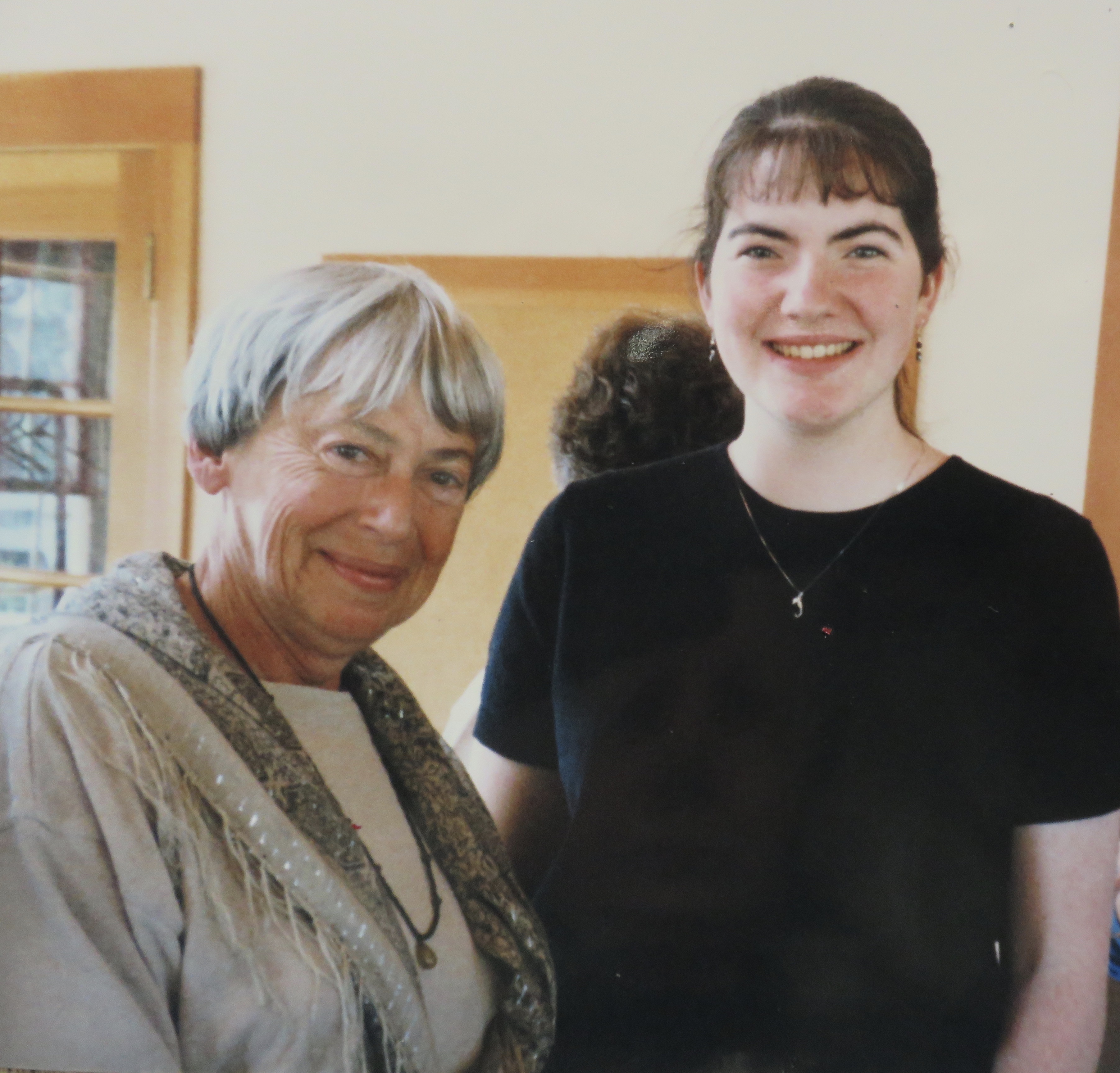
One of my former teachers and one of my former students. This was taken a long time ago. One has “left the planet” and the other is now a tenured professor of English. We are taught and we teach and sometimes those we teach become teachers.

We need teachers. We need teachers who are not merely well-educated and kind and hard-working. We need teachers who are smarter than most of their students. My original post “WHY YOU DON’T WANT TO BECOME A TEACHER” went up on my previous blog while I was actively teaching in a public high school. I reposted it here in February of last year, a month before I retired completely. Nearly two thousand people have looked at it just since, a thousand just this year. Google leads people to it from all over the world. People in Thailand, South Africa, Nepal, Greece, the UK, and France read it while I am asleep. It is my most-read post. Again.

Continue reading

PERSON2PERSON

image

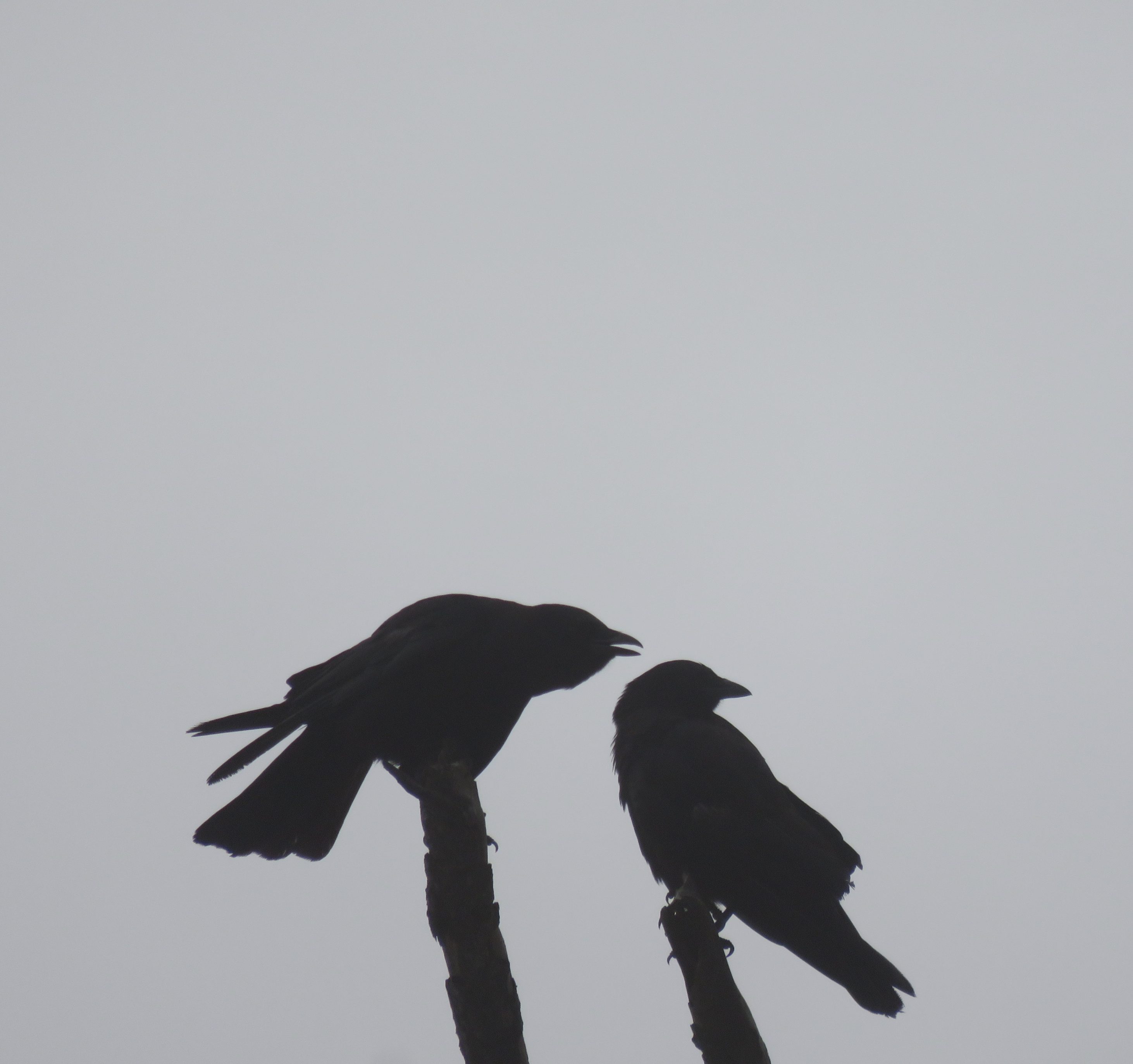
Crows perched high up on a massive drift log south of our home. I can rarely zoom in this close and still have the photo be in focus. And in the fog. (In case you wonder—we love fog.)

A friend asked me what local schools in my area are doing this fall. So this will be a rant. Don’t read more if you don’t care to know what I think. Continue reading

DEAR RAT

IMG_3959

Our cat Leakey was named for the anthropologist. She arrived on our doorstep literally half-starved and Gary saw her first. When I got home, I picked her up and she purred like a motor boat. “Don’t touch it, don’t pick it up!” Gary said over and over, but who had fed her the can of tuna? I brought her into the house. She had fishhook claws and liked to tease the dog.

The other day when we came home from our morning walk, Gary did what he generally does and walked around the house. Just in case. That day he found a dead rat on the north side concrete walkway. No blood, no wound, an apparently sleek and healthy but certainly dead rat.

Continue reading

RISK

fullsizeoutput_1255

A friend traveled to her vacation house, another marched for justice, and our younger son and his children are here for the weekend.

Most of my yarn order arrived in the post office, but we will not visit before Monday or Tuesday. The website promoting my fifty-year high school reunion has not been updated for months. The painting I bought early in May is still lost by UPS. So is Gary’s CD from Estonia and the doll from Russia. I discovered that UPS does not acknowledge or search for lost packages until and unless you absolutely insist. Who knew? Continue reading