REPRESENTATION?

b5a9770aa1ddb9cd7fd79830cebfa844.jpg

Yesterday there was a march and protest in Portland. Our younger son and his wife work in the theater, which means that they are nearly always downtown on Saturdays. Charlie and the Chocolate Factory is on stage at the Keller. The A.P. reported: “Flag-waving members of the Proud Boys and Three Percenters militia group began gathering late in the morning, some wearing body armor and helmets.” Proud Boys are designated as a hate group by the Southern Poverty Law Center. The white nationalist American Guard also said it would have members in Portland. Local news reported, “Steven Howard, a Vancouver resident who was the Imperial Wizard of the Ku Klux Klan in Mississippi, told KOIN 6 News he will attend the protest on Saturday.”

The tweeter-in-chief: “ ‘Major consideration is being given to naming ANTIFA an ‘ORGANIZATION OF TERROR’, the president wrote from his golf club in Bedminster, New Jersey on Saturday morning. ‘Portland is being watched very closely. Hopefully the Mayor will be able to properly do his job!’ ” The actual marchers—such as Proud Boys, self-described as the all-male western chauvinists—are bigots, but the president didn’t say a word against them.

Portland mayor Ted Wheeler said of Trump’s tweet: “Frankly, it’s not helpful. This is a potentially dangerous and volatile situation, and adding to that noise doesn’t do anything to support or help the efforts that are going on here in Portland.”

The president expressed concern only about those protesting the protesters, Antifa, but it is the Proud Boys who threaten to return to Portland streets every month: “Sooner or later, [Portland mayor Ted Wheeler] will run out of money and his counterparts in government will no longer take him seriously. The path forward for Mayor Wheeler is simple, free your city from the grip of Antifa, take direct and meaningful action.”

In the mean time, police seized weapons from and arrested thirteen participants. None of these people represent Portland’s community. Only four minor injuries were treated and reported by medics on the scene, but it was a tough day for police officers.

ECMOpGsUwAAEjZA

“We receive criticism no matter what. It’s either too much, not enough, you arrested this group and not this group,” Portland Police Bureau spokeswoman Tina Jones said. “It seems like some people are keeping score, and that’s not what it’s about on the law enforcement side. One hundred percent, it’s about public safety.”

My husband and I worried about the police presence and their safety, ordinary shoppers and shop-keepers, working people, and the safety of our family. We worry because Trump has taken sides and fanned the flames of violence. Again.

We don’t think any of these extreme groups are representative of our nation.

An Op-Ed in The Washington Post reveals how a fake article by a fake “real live worker” calling himself Archie Carter, not only outwitted (biased) fact checkers to find publication but “sheds light on the way right-leaning commentators depend on the voice of an imagined white working class to legitimize and advance their own viewpoints — viewpoints that are often opposed to those of the real working class.”

Before the gunman killed 22 people, authorities believe he wrote, “I am simply defending my country from cultural and ethnic replacement brought on by an invasion.”

This polity — white working class, racist, xenophobic, misogynist, homophobic — is just as imaginary as Archie Carter.

We are better than that. A lot better. Most all of us descend from or are immigrants in the United States. We get it. The right, especially the reactionary extreme right we are seeing in Congress and in the White House and all over certain media outlets, is wrong about who Americans are and what we believe.

Working class people overwhelmingly voted for Hillary Rodham Clinton by a 10 point spread. “Reagan actually lost union and low-income households to Jimmy Carter.” Working people, actual middle class and working class people are not so racist, xenophobic, misogynist, and homophobic as the Right likes to believe.

Most Americans do not share these vile views. Most Americans find the Proud Boys Western Chauvinists, Patriot Prayer, KKK, and Antifa, who protested in Portland to be despicable. (We might even call them “deplorable.”) Most Americans are opposed to the hate speech we hear coming from the White House. Most Americans did not vote for him and continue to oppose him.

Yet, he still lies: “I got it approved. Veterans Choice,” Trump has claimed more than eighty times, of the program signed into law by Obama in 2014. Thousands of lies, lies every day, every time he tweets or talks. Such bizarre things come from him that it’s hard to joke about what he might do. Nothing is too outrageous. He would like to buy Greenland. Yes, really.

Political satire begins to sound reasonable. The Borowitz Report suggests that Denmark might offer to purchase the United States. Perhaps we could benefit from national health care, education, and reasonable compromise in pursuit of common goals? Heck, let’s give ourselves away. Isn’t that what we are doing already?

Denmark, come and get us!


EMAIL

fullsizeoutput_100e

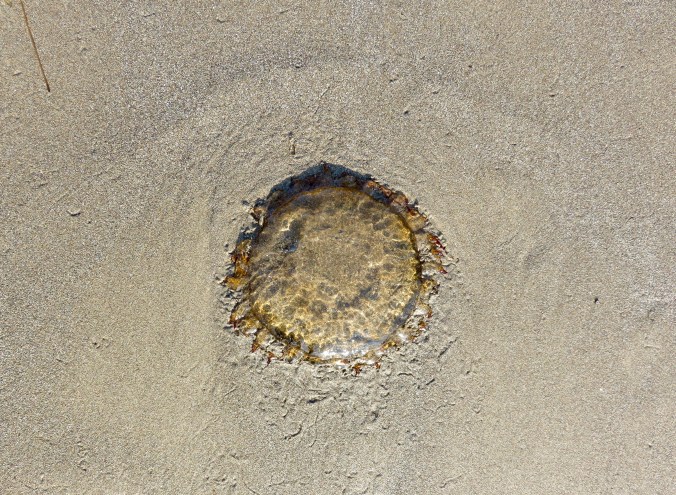
It’s a jellyfish, which is neither jelly nor fish, but common names are often like that. It’s actually a colony living together to make a shape. My dad warned against these orangey ones. They sting, even “dead” on the sand like this one.

I received a bulk email from a neighbor. He neglected to use the blind feature (Bcc) so better than three dozen people who apparently do not know one another except through him now have one another’s emails. (I should tell him my story about the Bonsai Kittens—a hoax my then-adolescent niece believed and sent out to well over a hundred people, outing their email addresses at a time people were particularly sensitive to junk email.) The original email promotes Biden as the best bet to defeat Trump. We do not all seem to be on board with that. I have disliked the man for decades and nothing he’s done recently restores any faith in his capacity for making wise choices or any vision.

A Canadian weighed in warning about the radical left. I wish he had been this Canadian:

My 91 year old father in law has been diagnosed as having a terminal illness.  He has lost the use of his legs and has a large cancerous mass in his lungs which cannot be treated due to his advanced age and fragile health.  We are having a lift installed to transfer him from bed to chair and back again.  He will receive 4 times a day care from nurses and aides and housekeeping services for him and my mother in law.  There are no charges for this, NOTHING, no deductibles, no co-pays, and no limit.  There will be no charges for his 3 weeks of hospitalisation either.  Sounds good?  Well, this is Canada, and this is how we treat people.  No one dies from lack of health care at any age, and no one ever goes bankrupt from medical expenses.  We all pay, and we all receive.

This person wrote in response to an article in The Washington Post about the murder-suicide of the elderly couple in Washington State. They explained they were overwhelmed by medical bills. Someone assured readers that they should have planned better in order to have better insurance.

It does not seem like a radical notion to provide health care for people in the richest nation on earth. I will also say that I had a medical emergency in Canada a long time ago. I was in terrible pain and a doctor came in to his office on his day off, took good care of me, and did not charge me a dime. Maybe he was just a nice guy. What a concept.

Before we go dismissing the “far left” for their crazy-impractical-radical notions, we might consider that most of, no, nearly all of the first world is already doing those things. Reducing greenhouse gases, cutting out unnecessary use of plastics, preserving parks and forests, healthcare for everyone, affordable public education right through college, better maternal and infant care, a rising life expectancy—we actually can afford it all and most of the world (well, not third world countries) does.

We are a rich country, but many poor countries take better care of their ill and elderly, care better for the environment, and have lower taxes. It’s amazing what a nation can afford when it does not spend more than the next ten wealthiest countries combined on military spending. Military bases in hundreds of foreign countries (would we pursue or even allow this in the United States?) cost enough to pay for the best medical care in the world for everyone, not merely the wealthy. New paint job for the President’s jets or healthcare? Do I have to choose?

more . . .

What Toni Morrison wrote just after the 2016 election. She saw what was coming.

So scary are the consequences of a collapse of white privilege that many Americans have flocked to a political platform that supports and translates violence against the defenseless as strength. These people are not so much angry as terrified, with the kind of terror that makes knees tremble.

On Election Day, how eagerly so many white voters—both the poorly educated and the well educated—embraced the shame and fear sowed by Donald Trump. The candidate whose company has been sued by the Justice Department for not renting apartments to black people. The candidate who questioned whether Barack Obama was born in the United States, and who seemed to condone the beating of a Black Lives Matter protester at a campaign rally. The candidate who kept black workers off the floors of his casinos. The candidate who is beloved by David Duke and endorsed by the Ku Klux Klan.

I have to remind myself that Hillary Clinton won the popular vote.

The great tennis champion Arthur Ashe spoke long ago about being the first black tennis star. He warned that he was easy to accept—modest in appearance, “well-spoken,” and polite. He was acceptable as the token black man. There would be players in the future, he said, who would not fit so comfortably into the elite white world of professional talent. Yes, he saw the Williams sisters coming. It was not okay but accepted as inevitable that a few white players misbehaved. There was plenty of rudeness and poor sportsmanship among white (male) players long before Ashe’s gentle persona made an appearance and reminded people that tennis was a gentlemanly sport. But a few years later Serena raises her voice and suddenly the white world has hysterics.

Sometimes you need one foot outside the lines to see a bad call. Or to make a good one.

QUOTE

I know the world is bruised and bleeding, and though it is important not to ignore its pain, it is also critical to refuse to succumb to its malevolence. Like failure, chaos contains information that can lead to knowledge—even wisdom. Like art.—Toni Morrison, in a 2015 essay for The Nation

&

Word-work is sublime … because it is generative; it makes meaning that secures our difference, our human difference – the way in which we are like no other life. We die. That may be the meaning of life. But we do language. That may be the measure of our lives.—Toni Morrison, in her Nobel lecture in 1993

TONI MORRISON too

Toni-Morrison.jpg

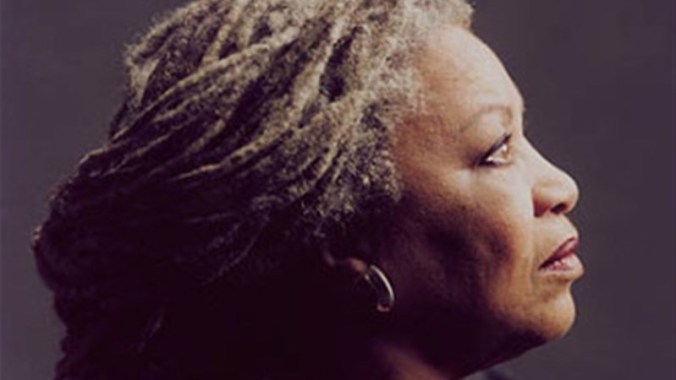
Toni Morrison died yesterday at the age of 88. “Rest in power.”

When I began teaching English, I was already a great fan of Toni Morrison. I photocopied her entire first novel, The Bluest Eye, to use for one class and later was able to order classroom sets. A student came up to me after class and asked where he could find her poems. She doesn’t write poetry, I said. I mean that poem you read in class. He was talking about this:

Nuns go by as quiet as lust, and drunken men and sober eyes sing in the lobby of the Greek hotel. Rosemary Villanucci, our next-door friend who lives above her father’s cafe, sits in a 1939 Buick eating bread and butter. She rolls down the window to tell my sister Frieda and me that we can’t come in. We stare at her, wanting her bread, but more than that wanting to poke the arrogance out of her eyes and smash the pride of ownership that curls her chewing mouth.

The story is of Pecola Breedlove who will be raped by her father and utterly ruined. This is no spoiler. Morrison tells readers this on the very first page. Her concern is not what happens but how. She writes that why is difficult, but this is a novel about love and it is the how of love that she reveals in The Bluest Eye. Pecola’s brutal father destroys her. The narrator Claudia’s loving father protects her. Parents all seem harsh: “Adults do not talk to us—they give us directions. They issue orders without providing information. When we trip and fall down they glance at us; if we cut or bruise ourselves, they ask us are we crazy. When we catch colds, they shake their heads in disgust at our lack of consideration. How, they ask us, do you expect anybody to get anything done if you all are sick? We cannot answer them.”

The scene begins in iambic pentameter and ends a couple of pages later—

But was it really like that? As painful as I remember? Only mildly. Or rather, it was a productive and fructifying pain. Love, thick and dark as Alaga syrup, eased up into that cracked window. I could smell it—taste it—sweet, musty, with an edge of wintergreen in its base—everywhere in that house. It stuck, along with my tongue, to the frosted windowpanes. It coated my chest, along with the salve, and when the flannel came undone in my sleep, the clear, sharp curves of air outlined its presence on my throat. And in the night, when my coughing was dry and tough, feet padded into the room, hands repinned the flannel, readjusted the quilt, and rested a moment on my forehead. So when I think of autumn, I think of somebody with hands who does not want me to die.

There is enormous wisdom in these pages. It is not the most popular Morrison novel but one of the shortest. It shows up in standardized test questions and college courses. Many students have written essays about the novel in order to get into college. More have emailed me from college to thank me for introducing them to her work.

I taught Toni Morrison’s first novel for most of twenty-five years and assigned that opening passage every year I taught. It was one of the few disappointments of my MFA program that not a single person recommended her novels or referenced her work in a craft talk. Seriously. Not one.

Perhaps it was judged too high for graduate students to aspire to? In my own teaching, I always aimed above what my students thought they could do. Morrison always aimed high. The only path to excellence is to aim higher than our reach, to point the way to better than what we think we are capable of. Sometimes we surprise ourselves. I think many of my students were astonished at their own accomplishments. I hope they were.

Underestimating our capacity as a nation is equally problematic. When we assume that the United States deserves no better than a bully for a president, when we assume that it is too soon for a black or gay or woman president, we doom ourselves. We deserve better. It is the ideal upon which our country was founded. We deserve to strive and push beyond our comfortable complaisance into greatness. Isn’t greatness what the Founders had in mind?

Those eighteenth century wealthy white men aimed for a nation where people are judged by the content of their character rather than by their birth. Wasn’t that an amazing goal for such entitled folk who had all been raised to accept the divine right of kings? Of course they would not be comfortable in our society today, where a man dismissed as “white trash” can become president. (I am not talking about Trump who sits on a gilded toilet.) Their ideals far outstripped their capacity for justice.

Our ideals should always frighten us a little. I did my best as a teacher to break down complex tasks into clear and manageable steps. We must continue doing that as a nation. As Toni Morrison did in her novels: push the envelope, they say. Step out into our own idealistic world.

Step out.


“Toni Morrison, 88, winner of the 1993 Nobel Prize in Literature and the 1988 Pulitzer for fiction, died on Monday night at the Montefiore Medical Center in New York. Robert Gottlieb, Morrison’s longtime editor at Knopf, said in statement, ‘She was a great woman and a great writer, and I don’t know which I will miss more.’ Sonny Mehta, chairman of Knopf, said: ‘Toni Morrison’s working life was spent in the service of literature: writing books, reading books, editing books, teaching books. I can think of few writers in American letters who wrote with more humanity or with more love for language than Toni. Her narratives and mesmerizing prose have made an indelible mark on our culture. Her novels command and demand our attention. They are canonical works, and more importantly, they are books that remain beloved by readers.’ ”

“One of her most provocative public commentaries came during what she saw as the persecution of President Bill Clinton during the Monica Lewinsky scandal. In a polarizing New Yorker magazine essay, she observed that Clinton, his ‘white skin notwithstanding,’ was ‘our first black President.’

” ‘Blacker than any actual black person who could ever be elected in our children’s lifetime,’ Ms. Morrison wrote in that article, published in 1998, a decade before Barack Obama, the son of a Kenyan father and a white American mother, occupied the White House. ‘After all, Clinton displays almost every trope of blackness: single-parent household, born poor, working-class, saxophone-playing, McDonald’s-and-junk-food-loving boy from Arkansas.’ ”

She thought we would not be ready for an actual black president in her lifetime. Thank goodness she was wrong about that.

And I was wrong about Toni Morrison writing poetry. Here are five.

“In short, this is a full novel — rich, slow enough to impress itself upon us like a love affair or a sickness — not the two-hour penny dreadful which is again in vogue nor one of the airless cat’s cradles custom-woven for the delight and job-assistance of graduate students of all ages.”—from Reynolds Price’s review of Morrison’s Song of Solomon (1977)

WELL REGULATED?

Embedded video

Chant of “Do Something!” breaks out as OH Gov Mike DeWine speaks at a vigil in .

from a reader comment on The Washington Post:

Do something.
What do you want done.
I suggest
Ban assault type firearms like AK-47
Limit clip /magazine capacity.
Pass a federal Mulford Act type law that Reagan signed when governor of California which mandated  5 years in the clink for anyone carrying a loaded gun in public.
Close gun show loophole
Mandatory background checks.
Put assault type weapons under the 1934 National Firearms Act which required owners of machine guns and short barrelled long guns to  register with federal authorities and submit to fingerprinting.
Treat assault weapons the same way.

It will not be enough, but we need to do something.

What we have among the NRA gun advocates is a sickness. It is a perversion. It is a misunderstanding of history and a complete lack of common sense. Guns do not make us safer. Though a gun lobby Act prevents the government from compiling statics, we can be pretty sure that the number of guns in private hands contributes to unnecessary  death.

Until a few decades ago, only the gun lobby thought indiscriminate gun ownership was an absolute right, and they have spent fortunes getting their way. It’s time they were stopped. The second amendment did not come first in the Bill of Rights. It should not be the only right American citizens value. It should not be valued over human life. It does not reflect our current needs or the threats we face as a nation. The founders had something very different in mind when they wrote in a protection for the right to bear arms. Single shot, muzzle loader. A well-trained archer was more deadly in the early days of our nation. (No joke. Look it up. And then there is the “well-regulated militia” that we no longer rely on since we have a standing military larger than most of the rest of the world put together and hundreds of bases all over the world, including in countries with which we do not have diplomatic ties. How does any of this even make sense?)

Something must be done and now. However, if we simply ban the “bad weapons” we will continually be at the mercy of money-and-power-motivated people who will find a way to skirt the law.

It has always seemed to me that we are dealing with the very real threat of dangerous weapons backwards. Instead of saying people cannot have this or that, be positive. Approve guns. Don’t ban them. Allow the “well regulated” ownership of hunting rifles and occasional handguns. Allow ownership among people who meet a minimal standard of behavior and fitness, safety protocols and training. Make this need-based. Allow ownership among sports hunters, subsistence hunters (such as the local hunters I know who fill their freezers), people with occupations that put them at risk such as locksmiths, and collectors.

Do not approve sales to anyone of weapons that have no practical application. Several years ago on Facebook I made a similar statement and a former student responded that every hunter needed an assault-style weapon when going after deer. And then I just sat back and watched other former students who actually had hunted deer their entire life tell him he was wrong. (They might own them, just for fun, but useful for hunting? There wouldn’t be meat left to eat!)

I probably know people who will object to my proposal, but most of the actual hunters I know would be onboard, I think, even if they had to give up a couple of toys. The government should approve them, buy back the ones civilians should never have had in the first place, regulate them well.

“It’s really just scapegoating people with mental health issues,” says Dr. Seth Trueger, an assistant professor of emergency medicine at Northwestern University. And while rates of mental health conditions such as depression, anxiety and suicidal behavior are on the rise in the U.S., Trueger says other nations have similar problems and experience far fewer mass shootings. “Other countries have the same kind of mental health issues we have, the same kind of violent video games we have, the same religiosity that we have. All that stuff is just a distraction” from the need for better gun control, he says.

That position is hardly new. Studies show that a relatively small percentage of violent crimes are perpetuated by people with diagnosed mental health issues, and that gun access—not mental health symptoms—is the primary predictor of firearm violence. As a result, an increasingly large and vocal cadre of doctors has been arguing for years that gun violence is more an issue of access and regulation than it is mental health. Groups including the American Academy of Pediatrics and the American Medication Association are active in advocating for stronger gun laws and more widespread violence-prevention programs, and the American Psychological Association regularly cautions against blaming mass shootings on mental health.

“Routinely blaming mass shootings on mental illness is unfounded and stigmatizing,” read a statement the APA issued on Aug. 4, after the Dayton tragedy. “The rates of mental illness are roughly the same around the world, yet other countries are not experiencing these traumatic events as often as we face them. One critical factor is access to, and the lethality of, the weapons that are being used in these crimes. Adding racism, intolerance and bigotry to the mix is a recipe for disaster.”—Time

BIRTH RIGHT

IMG_4630

The beach is empty when we go out most days. On weekends there are crowds sometimes. Houses owned by people who do not live here sometimes have a dozen or more “guests.” The world is more crowded, but it doesn’t have to be.

I have always supported abortion rights because I believe all children should be born wanted. No child should be born because their mother made a mistake or a man did or because she had no choice. Despite statistics suggesting that many (or even most) pregnancies are unplanned, it has always seemed to me that a person should not ever be born into this world because of an accident.

In 1976 Adrienne Rich wrote, “We need to imagine a world in which every woman is the presiding genius of her own body. In such a world. . .sexuality, politics, intelligence, power, motherhood, work, community, intimacy, will develop new meanings; thinking itself will be transformed.”

An article posted today suggests another reason that birth control and abortion rights are critical:

I simply could not have existed, as I am, in any other preceding time or place. . . I could have been a professional writer at any period since the 17th century in Britain or in France. But I could not have combined this latter with a life as a sexually active woman until the introduction of contraception.—Angela Carter

The third excellent reason, perhaps the most critical reason, comes up in most articles discussing women’s health. When given the choice, women have smaller families because they can do better for two children than for six. For every kid who grew up in a large family, loving every minute there is an overworked parent. For every one of those happy-childhood kids there are a dozen with worse memories, with fewer opportunities, with hunger and necessary neglect. Often the boy of the family is spoiled—so common it is a cliché—because for some reason the parents know that child is the last. Hysterectomy, in past generation, was a common stopping point.

Paley had an abortion when she was married, pregnant for the third time, unwell, and “exhausted with these two tiny little kids; it was just about all I could do to take care of them. . . My whole idea in my heart had always been to have five, six children—I loved the idea of having children—but I knew I couldn’t have this kid.”

The planet could do with fewer humans in it. World population has quadrupled in my lifetime and is chairing ahead toward ten billion before the end of this century. The depletion of resources, global warming, starvation, disease . . . population is always controlled. Better women had the choosing and control.

Yet this morning I read in a national newspaper that Japan is alarmed that women are choosing not to marry and have children. The author puts blame this on a culture where women are expected to shoulder the burden of housework, childcare and elder care. It is possible that men are making the same choice, but the article did not explore that possibility. It is possible, too that overwork makes marriage and child raising a challenge for almost everyone in Japan. Yet, throughout this discussion, the fact remains that Japan is seriously overpopulated, that it is as highly vulnerable to global warming as any country. (Tokyo will not likely be under water in fifty years, but Shanghai and many European and American cities will be. New Orleans anyone?) It cannot produce all the food it needs to feed its population. People choosing to remain single and without children, despite inconvenience to the labor force, is probably good news.

Birth control, reproduction as a choice instead of as a burden is an inevitable result of opportunity. And not everyone wants that opportunity to be available, particularly not for women. Barefoot and pregnant was very much a strategy for keeping women down.

“What men frequently do when they want to manage and govern women,” Toni Morrison has commented, is to “focus on their babies—whether they’re having them or not having them. Reproductive organs become the focus.” Adrienne Rich wrote that “Women are controlled by lashing us to our bodies.”

My community is far more populous than it was when I was a little girl or when my mother was small or before that when only one person lived here alone in the nineteenth century. Of course, he is rarely counted because he was a Native person. None or one or two children. That is what we are entitled to. Having a large family in this world today is a sin against the planet and our future on this planet. I believe that, have believed it since I was a young girl and first understood the population bomb. I watched the woods and pastures where I had played be paved over, split level homes springing up like dragon’s teeth in a terrible mythology.

Give us emptiness. Give us land not relegated to “highest and best use” which translates as development and dollars. Give us wild place of beauty and possibility.

A little peace and quiet please.

VISIT the WC

IMG_4635

Each of our sons has brought his family for a visit this summer. For several summers we have hosted everyone at once, including cousins. After last year’s reunion, we acknowledged to one another that we were just too old (too tired, too house-proud?) to have thirteen people in our home. We are sorry to let that long weekend go but relieved too.

Friday, our younger son and daughter-in-law brought their two. Ruby has been in the ocean a dozen times, never wearing a bathing suit. She told me she only wears her suit in a pool or “a lake or something.” There has been one dress or another hanging on the line since Friday afternoon. Logan is content digging in sand and collecting crab claws. He is a preschooler and pissed at the cape, well below the high tide line. There is an excuse for little children the better part of half a mile from a toilet.

Last evening, before the sun set and well before darkness, fourteen people and three dogs staying in a local rental house partied on the beach. They were loud and drinking and put an entire log on their fire. One very drunk woman walked up our path and deliberately used our sitting log as a partial screen while she pissed. From my window I watched her reveal her pale butt and simply could not believe it. I walked out to tell them that I lived here and my grandchildren played where she pissed. She said she was sorry. Sorry? “What were you thinking?” I said. “What do you want us to do?”

In November this might not be such an issue. In late fall and winter, the tide washes up high into the rocks above where this woman squatted. But this is August. The tide mostly leaves fifty or a hundred yards of dry sand, with the occasional sneaker not coming anywhere near that spot. Which is to say: We should not be expected to live with her drunken blunder for months.

People on vacation. People out of the city. People to whom the rules of common decency do not apply. They were, perhaps unsurprisingly, a youngish, affluent, white group. Fourteen adults, one of whom could not be bothered to walk back to the rental house to take a leak. People who think it’s okay to piss in public if there is not so much of the public around.

In past summers children have built rock castles in our path, adults have accidentally kicked rocks into it. A man once built a fire in a wind-sheltered spot in our path through our hedge (which is not actually public property). People have come into our yard to take wood for their own beach fire and routinely dismantle laid fires we have set up on the beach.

Clearing our path and setting the log with stones to make it steady was the work of several days. That log has been used by many people this summer. Old couples have rested there. Young couples have sat and watched the sun go down. We have sat on the log ourselves, of course. Gary vows that this is the last year he will build a “fort” for our use. It’s too bad.


CLEARING THE DECKS

fullsizeoutput_ff1

I could have posted the photo of the crow parents showing their offspring a pair of running shoes on a log or the passage of pelicans. Instead, a pattern in the rock.

Yesterday Gary drove to Astoria and waited an hour to hand over our two cable boxes. I did not renew Acorn (which is why I watched all of Poirot last week). I stopped our subscriptions to Washington Post and The New York Times. I receive free regular information from Smithsonian and The Guardian and blogs and poetry journals, and we will continue to support several charities. From Smithsonian:

Keeping you current

Ethiopia Plants 350 Million Trees in 12 Hours—a New Record

The government claims that volunteers at 1,000 sites participated in the coordinated reforestation efforts

I tried watching the debates this evening but the first hour was taken up with arguing about whether Americans should be “forced to give up our chosen health insurance plans.” I wonder what America these people (the questioners and some of the candidates) live in? I do not know anyone who actually has much choice about their insurance plan. Maybe if I owned a large company I could chose. Five years ago when I had insurance through my employer, I could chose from three levels of one plan. I was allowed so many dollars to spend and I could bet I would get sick and spend my entire allowance or bet I would be healthy and take one of the cheaper plans and pocket the difference. It wasn’t much of a choice but it’s more than most Americans have.

Most of us, if we even have insurance through employment, are, A) stuck with whatever our employer offers. Or if we are buying insurance on the open market, B) our choice is between coverage that costs more than we can possibly afford and a plan that takes half our salary. Not much of a choice for anyone.

People work at jobs and in places they hate because they cannot afford to be without insurance. They work longer hours than they should because they need so-many hours to qualify. If they choose to cut hours to take care of family or are sick themselves or find a job they like better and lose coverage, they risk having to do without.

That’s not choice.

One candidate repeated that Medicare-for-all would close hospitals. This has been proven to be untrue. Hospitals would like us to believe it’s true, but it’s a lie. (Even my local hospital is the sleekest, most modern, well-appointed building in the area. Private rooms are nice and all, but medical care is supposed to be their goal, and I have had too many dealings with them, have witnessed too much in the ER.) Another claim was that Medicare-for-all would be easy and cheap, which is probably also untrue. Change is always hard.

What everyone agrees on is that the current system is better than it was in the past but not nearly good enough. We need to change the system to ensure that everyone receives the care they need and the insurance companies should have no say in how that is done. I would argue that sometimes the hard thing is exactly what we have to do.

Some years ago now, a single woman complained to me about how unfair it was that married people with children (me) had their entire family covered while she only had coverage for herself. She should receive a discount or be paid more. I pointed out that my entire family’s medical costs over the previous five years were less that hers had been in the last six months. (True, though not typical—but she had a raft of health issues, some of which were the result of her own unhealthy choices.)

She said: “Insurance companies don’t care how much my care costs.” Say what?

Insurance companies exist to profit. I buy insurance to ensure that I am not financially ruined by the costs of medical care. In case people didn’t know, medical expenses are the single most common reason people in the U.S. declare bankruptcy. It’s a gamble—break a leg, have a child with serious health issues, a mystery illness . . .

Insurance is a gamble where the house always wins. These companies do not exist to help anyone but themselves, they exist to make a profit. Long before our collective premiums add up to less than our health care costs, the premiums have been raised to ensure that the company can skim its percentage off the top. (Is their profit margin 23% as was claimed last night? I wish my savings earned such a return!) I do not smoke or drink to excess, I exercise daily, take no prescription drugs, and have no chronic health problems. This saves me a few dollars a month for my supplementary catastrophic Medicare policy. But if I were thirty years old and diabetic and looking for health insurance? Ouch.

Medicare has operating expenses of 2-3%, insurance companies take 23%. The math is simple here. Whatever system we come up with to replace private insurance will cost less per person while covering everyone. Will unions renegotiate pay once their employers no longer pay medical premiums? You better believe it. Will taxes go up? Probably, for many they will, but my employer paid well over ten thousand dollars for my insurance. It would have been nice to have yearly cost-of-living raises, and I might have had them if they had not used my medical insurance costs as an excuse to hold back. You think?

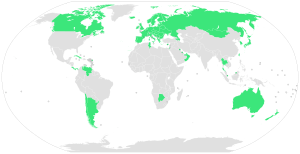
The average person in sixty-three countries receives care through some form of Universal Health Care and pays a fraction of what we do here in the United States. They live longer and healthier lives, their babies die less often, and they do not have to worry about a change of work costing their coverage. It is foolish to accept the argument that what works in dozens of other countries cannot work here.

Sure it can.

600px-Universal_health_care.svg

Nations with universal healthcare.

My husband and I have done our best to simplify our home and our lives. But terrible things do happen even when we have ever-so-carefully planned otherwise. Insurance is a way of playing safe against the risk of losing everything. The problem in the United States is that playing safe costs us more than it should—in dollars and peace of mind.

WHAT WE WANT

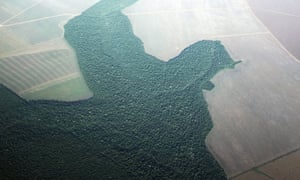
Amazon rainforest turned into farmland

Headlines in the United States concern politics, specifically disappointment that Mueller testified exactly as he said he would. It’s all in his report. The man in the Oval Office is a liar and cheat and does not care what happens to anyone so long as he’s at the top of the news. The news in the United Kingdom is about their new Prime Minister and the record-breaking heat. A few headlines down find concerns about logging in Brazil:

Deforestation of the Brazilian Amazon has surged above three football fields a minute, according to the latest government data, pushing the world’s biggest rainforest closer to a tipping point beyond which it cannot recover.

Amazon deforestation accelerating towards unrecoverable ‘tipping point’The Guardian

The photo above shows a vast area turned from forest to farmland. That forest feeds oxygen to the world, converts pollutants to pure cooler air. We need a stable climate, we need to preserve a livable world. The ocean of humanity needs the ocean’s temperature to stop rising. If humanity is to survive we need our appetites to cool. As Americans get fatter, farmland grows to feed our desires. This is not about need, it’s about what we want.

We know that plastic bags, meat production, air conditioning, driving, flying, use of fossil fuels in general contribute to global warming. Endangered tropical hardwood on the dining room floor. Some of these activities are more avoidable than others. Some of these activities are more damaging than others, but we don’t want to stop.

Assuming the plane is full, an individual’s share of a single one-way flight from coast to coast of the U.S. contributes greenhouse gases equivalent to driving a car for a year. We would still have to get home, so that’s another year. Airports and air travel have always been subsidized by our taxes. Like the tobacco industry, we aggressively protect the things we want, whether they are good for us or not.

Like our president, we want what we want and we do not want to hear the nay-sayers. We will contribute to the cause in some way that does not cost too much and make up for our use of endangered hardwoods or vacation to Europe or steak at dinner, the plastic bottles of fizzy water my husband is fond of. There are alternatives, there is sacrifice, but like most people, we don’t want to bother. We want what we want.

fullsizeoutput_fe9

I wanted this little shell—delighted to find a whole snail shell. It is occupied by a hermit crab so I put it back into the water. You can just barely see its legs to the left of the shell. The little hermit crab just wants to live.