MISTRAL

It’s been many years since I took a class from Ursula K. Le Guin and in one of them she talked about the Chilean poet Gabriela Mistral. She was incensed at how little work of hers was available in English. After all, Mistral was a Nobel laureate, and her work was important. Le Guin had majored in French in college, but over the years she indulged in translation. (I taught a speech from one of essay collections called “Hunger” from a speech she delivered to a fundraiser-luncheon. In it she translated a poem from the Spanish by Pablo Neruda. Students struggled sometimes with Le Guin’s short speech, even to identifying the main idea, which was hunger, as set up immediately by the title.) She determined to study Spanish to do justice to Mistral. Other readers will judge how well she managed to maintain the music and meaning of this poem.

NOTE: On the Poets.org website, the translation is listed before Mistral’s words. I have placed the original Spanish first.

La Contadora (The Teller of Tales)
     by Gabriela Mistral 
    Cuando camino se levantan
todas las cosas de la tierra
y me paran y cuchichean
y es su historia lo que cuentan.

    Y las gentes que caminan
en la ruta me la dejan
y la recojo caída
en capullos que son de huella.

    Historias corren mi cuerpo
o en mi regazo ronronean.
Tantas son que no dan respiro,
zumban, hierven y abejean.
Sin llamada se me vienen
y contadas tampoco dejan…

    Las que bajan por los árboles
se trenzan y se destrenzan,
y me tejen y me envuelvan
hasta que el mar los ahuyenta.

    Pero el mar que cuenta siempre
más rendida, más me deja...

    Los que están mascando bosque
y los que rompen la piedra,
al dormirse quieren historias.

    Mujeres que buscan hijos
perdidos que no regresan,
y las que se creen vivas
y no saben que están muertas,
cada noche piden historias,
y yo me rindo cuenta que cuenta.

    A medio camino quedo
entre ríos que no me sueltan,
el corro se va cerrando
y me atrapa en la rueda.

   Los ribereños me cuentan
la ahogada sumida en hierbas,
y su mirada cuenta su historia,
y yo las tronco en mis palmas abiertas.

    Al pulgar llegan las de animales,
al índice las de mis muertos.
Las de niños, de ser tantas
en las palmas me hormiguean.

    Cuando tomaba así mis brazos
el que yo tuve, todas ellas
en regalo de sangre corrieron
mis brazos una noche entera.
Ahora yo, vuelta al Oriente,
se las voy dando porque no recuerdo.

    Los viejos las quieren mentidas,
los niños las quieren ciertas.
Todos quieren oír la historia mía
que en mi lengua viva está muerta.

    Busco alguna que la recuerde
hoja por hoja, herbra por hebra.
Le presto mi aliento, le doy mi marcha
por si el oírla me la despierta.


Mistral's "The Teller of Tales"
        translation by Ursula K. Le Guin

    When I’m walking, everything
on earth gets up
and stops me and whispers to me,
and what they tell me is their story.

    And the people walking
on the road leave me their stories,
I pick them up where they fell
in cocoons of silken thread.

    Stories run through my body
or sit purring in my lap.
So many they take my breath away,
buzzing, boiling, humming.
Uncalled they come to me,
and told, they still won’t leave me.

    The ones that come down through the trees
weave and unweave themselves,
and knit me up and wind me round
until the sea drives them away.

    But the sea that’s always telling stories,
the wearier I am the more it tells me...

    The people who cut trees,
the people who break stones,
want stories before they go to sleep.

    Women looking for children
who got lost and don’t come home,
women who think they’re alive
and don’t know they’re dead,
every night they ask for stories,
and I return tale for tale.

    In the middle of the road, I stand
between rivers that won’t let me go,
and the circle keeps closing
and I’m caught in the wheel.

    The riverside people tell me
of the drowned woman sunk in grasses
and her gaze tells her story,
and I graft the tales into my open hands.

    To the thumb come stories of animals,
to the index fingers, stories of my dead.
There are so many tales of children
they swarm on my palms like ants.

    When my arms held
the one I had, the stories
all ran as a blood-gift
in my arms, all through the night.
Now, turned to the East,
I’m giving them away because I forget them.

    Old folks want them to be lies.
Children want them to be true.
All of them want to hear my own story,
which, on my living tongue, is dead.

    I’m seeking someone who remembers it
leaf by leaf, thread by thread.
I lend her my breath, I give her my legs,
so that hearing it may waken it for me.


From Selected Poems of Gabriela Mistral: Translated by Ursula K. Le Guin. Copyright © 2003 Ursula K. Le Guin. Courtesy of University of New Mexico Press. Published in Poem-a-Day on September 27, 2020, by the Academy of American Poets. Pulled from The Academy of American Poets online site.
The Chilean poet, Gabriela Mistral, also known as Lucila Godoy y Alcayaga (1889-1957), was the first Latin-American writer to receive the Nobel Prize in Literature (1945). Born to a family of teachers, she mentored Pablo Neruda who would also with the Nobel. Unlike him, however, not enough of her work existed in translation to English.  (A bi-lingual edition by Doris Dana published in 1971, 272 pages, and some translations by Langston Hughes.) Ursula K. Le Guin studied Spanish in order to change that. 
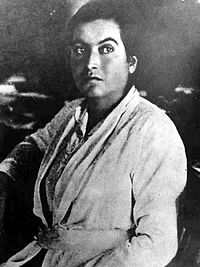
As a younger woman

Mistral may be most widely quoted in English for Su Nombre es Hoy (His Name is Today):

We are guilty of many errors and many faults, but our worst crime is abandoning the children, neglecting the fountain of life. Many of the things we need can wait. The child cannot. Right now is the time his bones are being formed, his blood is being made, and his senses are being developed. To him we cannot answer ‘Tomorrow,’ his name is today.

—Wikipedia
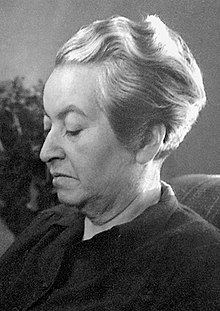
Gabriela Mistral 1945.jpg
In later years
Most mornings…

SO MUCH WANTS DOING

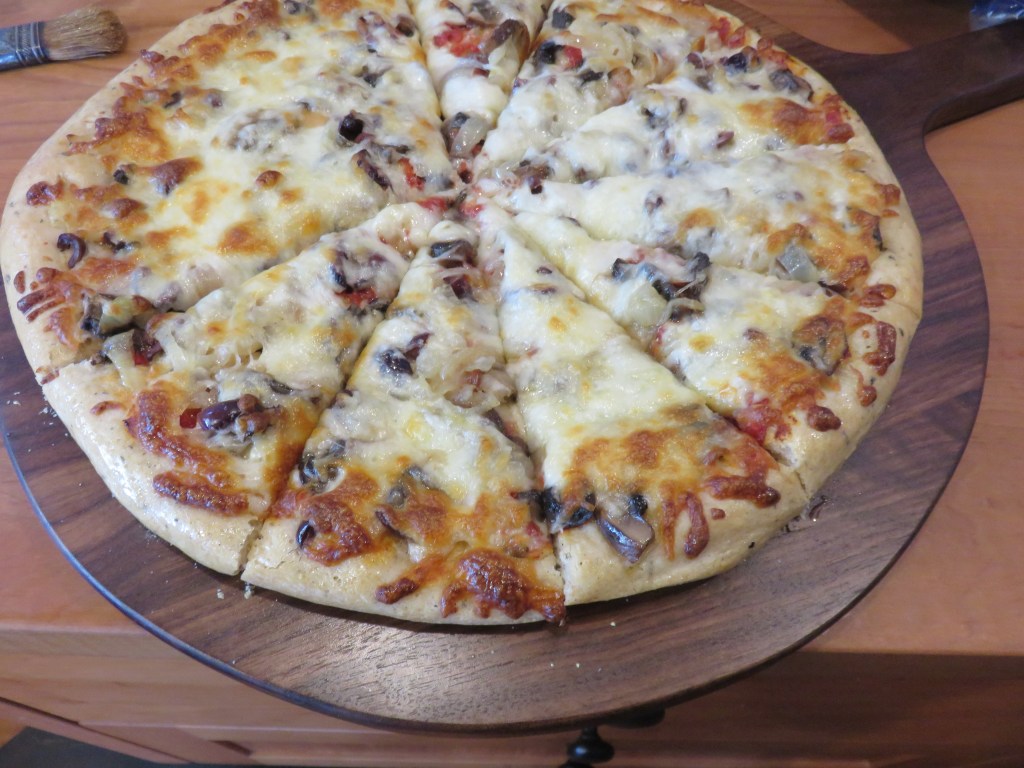
Hello world. I’m writing about covid and my BMI and tidying up. You might want to stop right here and not read any more. The pizza was wonderful, btw.

Mushroom, olive, cheese pizza on sourdough crust.
Continue reading →

WEAVING WEATHER

This is what’s on my loom just now: the third 94″ length for a blanket! It shifts pattern from long block to narrow and in the middle from dark coral to purple. What you cannot see in this photo is how it went from the warm colors in the lower part of the photo to what I am currently weaving. Magic!

I promise to post a photo of the blanket when the three lengths are finished and seamed.

My studio degrees are in ceramics and metal. I exhibited while still an undergrad and completed commissions. But after I graduated I never really went back to clay or gold. Instead, I went for fabric.

Important influences include Kaffe Fassett’s Glorious Color, Randall Darwall’s breathtaking silk weaving, and my grandfather’s wife Genevieve and my friend Toni who gave me looms.

Continue reading →

YESTERDAY

Things I have not accomplished in the last 24 hours:

  • blueberry muffins
  • weaving
  • a walk this morning or Tuesday because of weather
  • finished a book
  • made decisions
  • cleaning of any kind whatsoever

Things I (or we) accomplished in the past week:

Continue reading →

VITREOUS

Vicious, viscous, victorious, vitreous. That last word has been humming around in my head for a week. Vitreous describes a material such as ceramic which has melted into itself, creating a glass-like and waterproof material. Clay molecules “stick” to one another as they are heated to liquid and taken to a high enough temperature the molecules melt into a solid mass. Vitreous porcelain, as one example, has been fired so hot that the clay molecules melt into one another to make an impervious whole. Thin enough, you can see through some china.

In about 1973, Bob Sperry gave all the Ceramic Art majors an assignment to collaborate—the throwers he worked with would pair with the hand-builders who worked with Howard Kottler and Patti Warashina. Together they would create something. As a hand-builder, I paired with a thrower, Sam Scott, whom I had known since we both hung out most of the day in the ceramics room during high school. I gave him my low-fire white clay body to substitute for his usual stoneware on the wheel, and a design profile for a covered casserole dish.

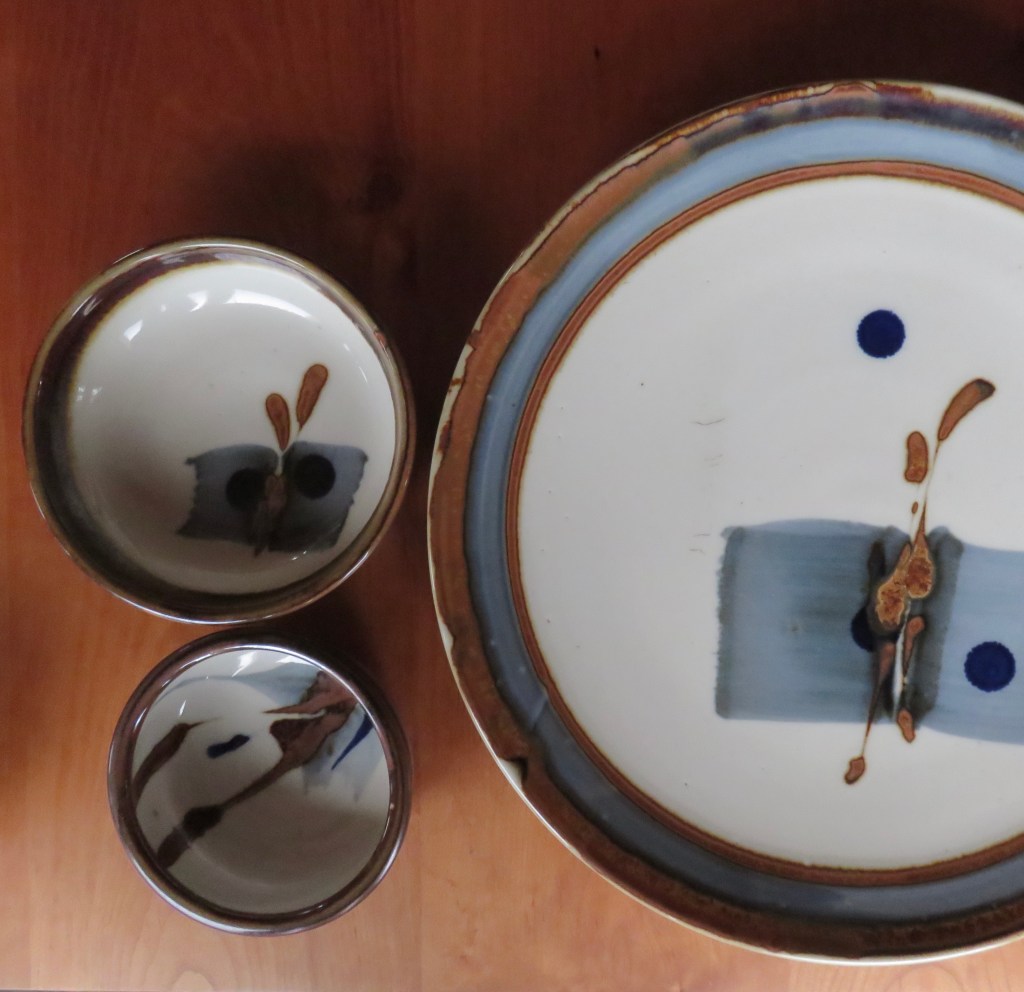
The result of the experience changed Sam’s work. Turned out he loved white clay and began throwing with a porcelain clay body as he had previously thrown stoneware—thicker than people generally throw porcelain but a perfect canvas for his iron and cobalt brushwork. (Another friend threw stoneware thin as porcelain.) My family was hard on the many pieces I bought from him, but I managed to hide a few survivors. A massive platter and some bowls. They are handsome pieces.

Porcelain by artist Sam Scott. You can find him here: https://www.samscottpottery.com

Vitreous.

Continue reading →

BAD AT NAMES

I am forgetting words, but this is nothing new. Proper names have always been a problem for me, a significant handicap when I was teaching 150-200 students a term. Is the girl there in the corner desk Patty or Michelle? I generally tried hard to resist pretending that I knew names. I would warn students on the first day of class of three things: “I talk too fast, so don’t be afraid to raise your hand and ask me to back up—your classmates will thank you; I am naturally a bad speller, though I work to get it right, so if you notice I’ve spelled a word wrong on the board, don’t be afraid to point that out, you won’t hurt my feelings; and I am bad at names and will still be struggling to remember your name halfway through the year. That’s not your fault; it’s all on me.”

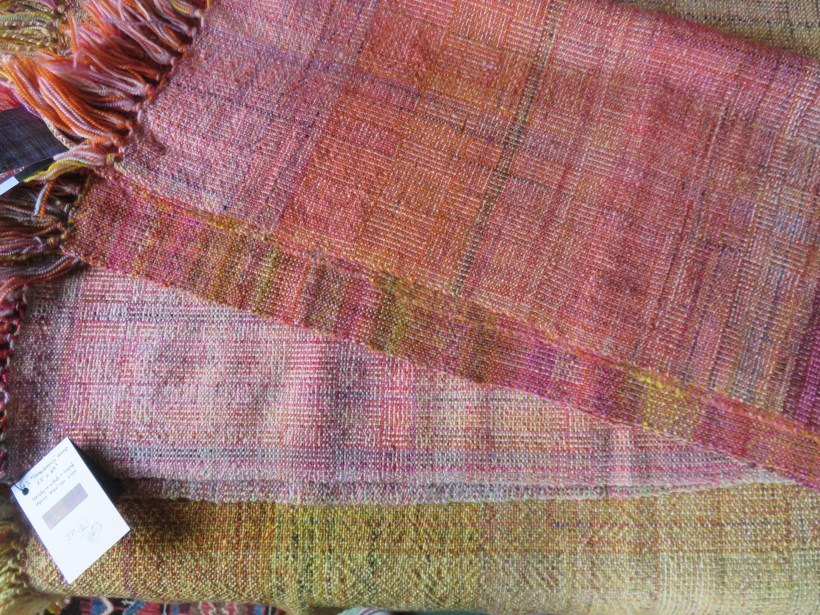
Old weavings from the “Marigold,” Strawberry,” “Gilded” warps. The warp I am working on now is unnamed. Perhaps it is time I unnamed them? (“Gilded” is sold. The top two shawls/scarves, the apricot “Marigold” and the sweet pink “Strawberry” are still available.)

I was not exaggerating.

Continue reading →

NO GOOD DEED

Until last March, Gary and I picked up trash during our daily walks. In 2018 and 2019 we gathered about a ton of garbage, mostly tiny pieces or broken plastic and bottle caps, but also entire bottles, fishing tackle, toothbrushes, take-out containers, candy wrappers, toys, commercial and sport fishing gear, lengths of plastic rope a few inches or many yards long, and as you might guess from the photo below, polystyrene foam. We both seem to collect.

Yeah, he’s wet.
Continue reading →

MORE, PLEASE

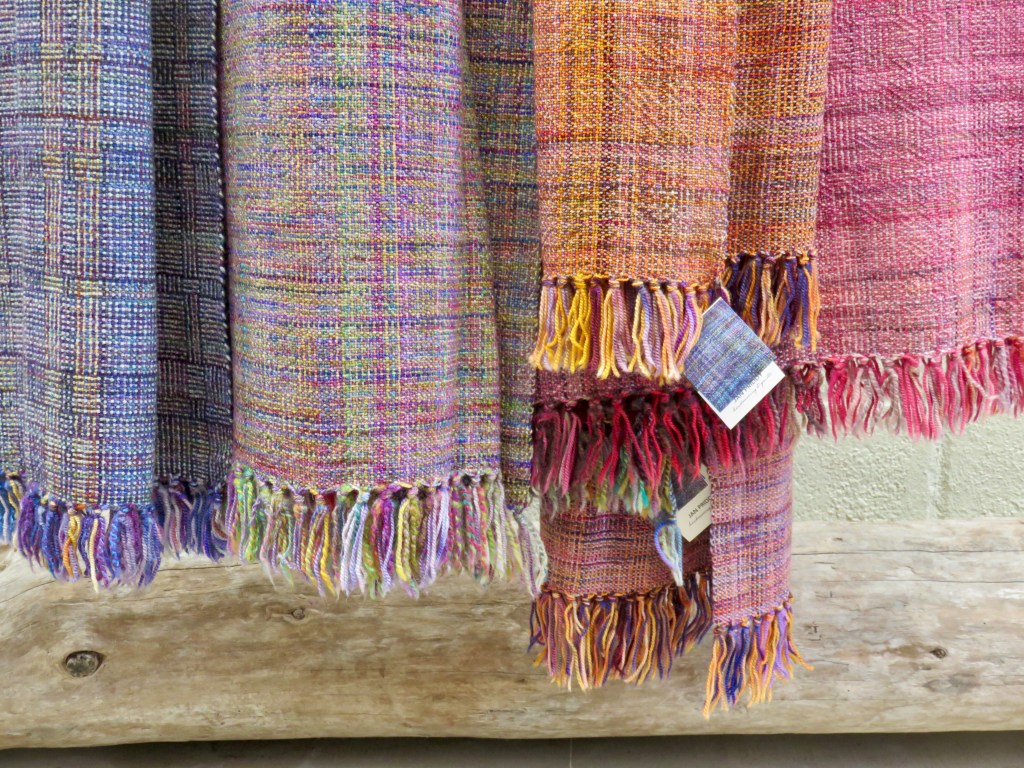
I laid different shawls/scarves out on the bed yesterday afternoon, and then another row on the cedar chest (above), but already the light was too dim in this north and east facing bedroom. Ten stretch out full length over the bed, and another eight are folded at the foot. The photos are from this morning. Still not much light, but I’ve made no attempt to “correct” anything as the colors look accurate on my screen. (The greens suffered a bit.)

Continue reading →

THE COVID WEAVING

I planned to have a dozen shawls/scarves woven by this past December. But stuck at home, I began weaving and sometimes went on from dawn to darkness. The results are lovely, soft, and variously hued. Not to mention numerous.

Here are a few. They are each about 23″ wide, 65-75″ long plus fringe, and after weaving and fringing, they are washed in cold water with shampoo, hung to dry overnight without blocking, and then labels sewn on. Others like them are owned and worn by both men and women.

Four shawls/scarves from four warps. Each is labeled and tagged.
Continue reading →

QUILTED PANDEMIC

My work is meant to be handled and used. To that end, I do not make wall hangings or “art” pictures. My shawls belong on shoulders and my quilts belong on beds. I completed or pieced seven quilts in 2020. The five quilts below are all sewn from hand-dyed cotton batik fabrics, usually 60-100 different fabrics in each, shading dark to light and one hue into another. The photos are the best I can manage in such tiny form.

Continue reading →