FAILED [THE] TO TEST

A massive study involving over 43,000 cases of confirmed covid-19 in China estimates that young children are not at risk. That’s the good news.

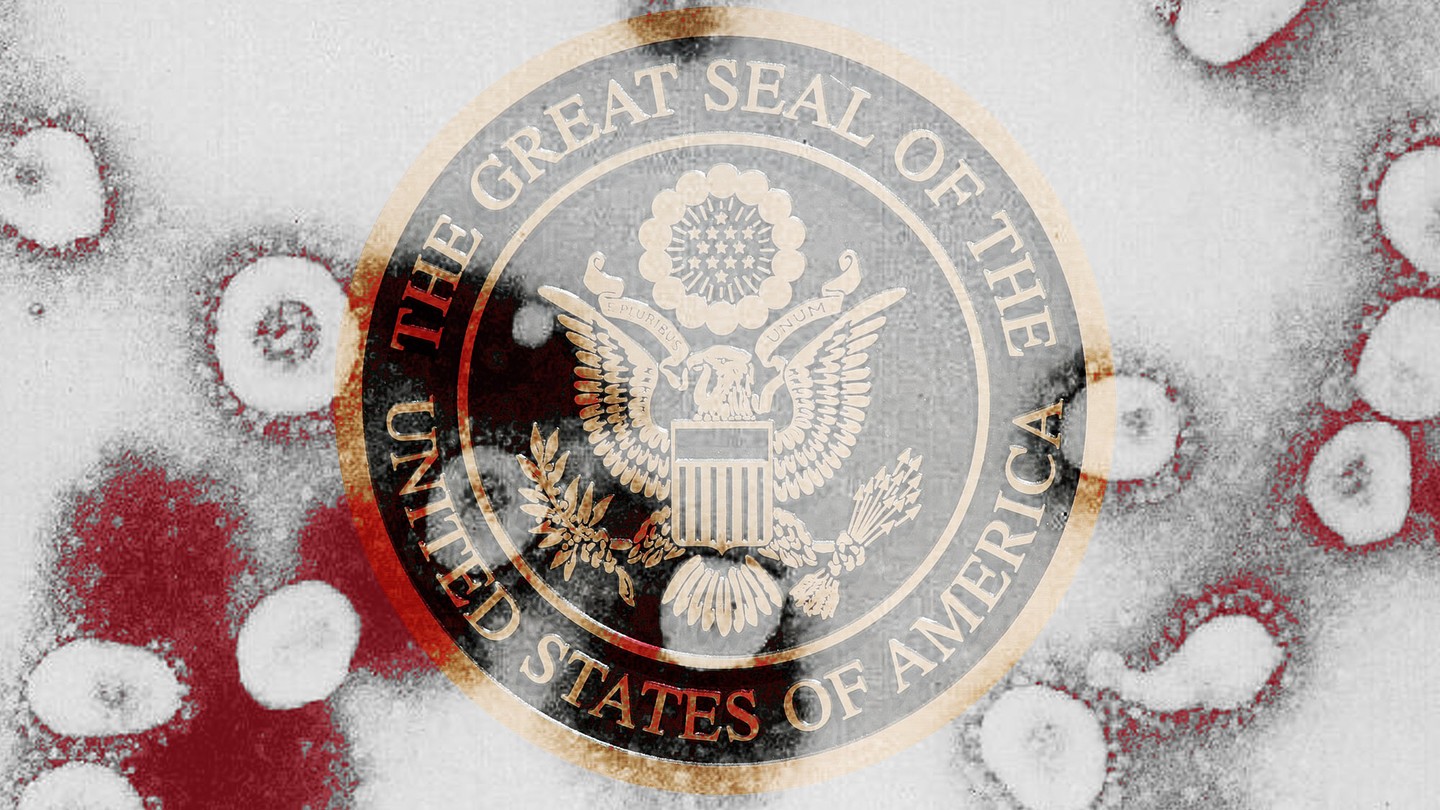
As a nation we have bungled our response to a disease we cannot cure (only nurse) and cannot protect against with a vaccine (for another year or more). Most estimates suggest that covid-19 will kill 3.4% of those who contract it. Mostly they will be old. really bad news is, we have no idea how many Americans are actually sick. Continue reading →

STRANGER THINGS

IMG_5438

This is sea foam, not pollution, the product of heavy seas and plankton, not soap.

A family member believes that Paul McCartney has been dead for years and is being impersonated by a stand-in. You can tell he’s dead because he has bare feet on the cover of the Abbey Road album. Oh, and Queen Elizabeth II is a reptile. I watched a silly video of a white horse showing “distress” because the Queen is reptilian or reptoid or something. (The video has been obviously messed with, the sound track is entirely fabricated, and if that horse is shy at all, it’s not of the Queen but of the man beside her.) Nevertheless, here’s what YouTube knows about reptilian royals:

“The Reptilian Collective consists of several branches.

    1. Reptilian: (Pure DNA).
    2. Reptoid: (Human- Reptilian Hybrid).
    3. Reptilian Hybrid: (Non-Human – Reptilian Hybrid).
    4. Draconian: Similar to the original Reptilians, but they are physical.”

But then again, we are talking about scenarios that insist we need a Paul too much to let him go and both Elizabeths are concealing their true forms with crystal magic.

It should be funny. I laughed, but then I considered that a member of my own family does not get the joke. This isn’t even the person with diagnosed mental illness. If I let slip that this family member voted for Trump and reportedly has a picture of Putin on the wall, does it make more sense? Maybe not.

But then the President asked the CDC on camera last week if the flu shot would help with the COVID-19 epidemic and later claimed (also on camera) that he had no idea people could die from flu. Who knew? His grandfather died of flu in 1918.

More recently, in the 2017-18 season, 61,000 Americans died of flu, in part because “The flu season was exacerbated by a shortage of IV bags caused by IV bag plant closures in Puerto Rico following Hurricane María,” according to Wikipedia. But never mind that year was on Trump’s watch, and he didn’t even know people could die of flu?

In Washington State, Echo Lake Elementary School where I attended grades 1-6 has been exposed to the novel coronavirus by a father attending parent-teacher conferences. “Everyone who wants one” cannot get a test, and we have tested less than 1 in a million Americans for the disease. South Korea has tested thousands more per million. It is only one of the reasons they have diagnosed more cases.

A University of Washington medical team began developing a diagnostic test in January mostly for the heck of it because they wanted to see if they could. They could and did and they have been up and running since last week, providing a thousand results in 24 hours while the CDC needs 3-5 days to confirm diagnosis.

I have friends in cancer treatment, a tenant who just had a triple bi-pass, and many of the people I care about are over sixty. I am not panicking, but I have said for years, only half joking, that it would be a virus that killed me. I am susceptible to respiratory infections. (Second hand smoke throughout my childhood, scarring on my lungs, a history of bronchitis and pneumonia. But I got the flu shot in 2017 and did not get sick.)

Another friend, young and with no risk factors, is supposed to be a keynote speaker at an out-of-state conference in a few weeks and wonders if flying is safe, if the conference will go forward, if exposure in another state might endanger relatives who do have risk factors such as age and illness. I have tickets to an event in Portland in a couple of weeks and am seriously expecting the speaker to cancel and to cancel my hotel reservation and stay home.

It will be at least a year before we have a vaccine for COVID-19, but the vast majority of people who become ill during the next 12-18 months will not die or even get very sick, though I might.

So what scares ya’, Baby? Reptilian royalty, fake Pauls, or large crowds?

3060759904ccfee8af41742aa7eacd8d-getS3Image-600-0-70-8.png

3db743ea11ea984ea65e9cc6dda5c8ae-getS3Image-600-0-70-8.png


An update from Friday the 13th, four days after I wrote the text above. All the public school in my state are closed. My son who works on computer was (finally) told today that he should work home for the immediate future. My other son and his wife work in the theater, usually big shows. My daughter-in-law is not prepping for the opera in Portland today, she is striking the show (dismantling it). All the larger venues are shutting their doors, so they will be busy for a few days striking shows that are postponing their openings or flat out cancelling. He has one still planning to open tomorrow in a small theater in Washington.

So when we think about how and whom to help . . . consider the children with little to do and no school-provided meals, parents who may or may not be working, contract workers who not only have no benefits from their employers, but minimal options for lost work.

From The Atlantic today:

“The U.S. remains dangerously behind on testing for COVID-19, thanks to “bureaucracy, equipment shortages, an unwillingness to share, and failed leadership.”

“An investigation co-led by The Atlantic could only confirm that 16,471 people in the U.S. had been tested as of this afternoon. For comparison, at this point in its own outbreak, South Korea had tested more than 100,000 people.

“When asked at a press conference earlier today if he takes responsibility for the lag in availability of testing kits, Donald Trump replied, ‘No. I don’t take responsibility at all.’ ”

Just for a bit of perspective, we have about 330 million people in the United States. Do the math.
 

DIXIE CHICKS

YrJfGzhZTUGuSSGkiRzlcg_thumb_2ef3.jpg

A man called his girlfriend a “chick” the other day to me. He didn’t notice my expression. I was thinking: If you knew me well, you would know I don’t like hearing women called “chicks.”

Continue reading →

MY DARK VANESSA

I feel like all the small things I count on are fluttering like ash to the ground. Deaths from covid-19, the five recalls on my car, friends who are ill or their mothers are ill, the only way I can open a new post here on Chrome, but Chrome will not open my photos, my son went to the ER a week and a half ago and no one bothered to tell us, the man in the bakery was rude. The trivial and the terrifying? Conflating disease and rudeness? None of this is killing me. Yet. Challenging the ease of a white author against the injustice of struggling to find a publisher of a woman of color’s memoir with strikingly similar themes. I don’t know. Isn’t it like happy families? All abusers are alike? I haven’t read the memoir. I rarely do. #MeToo?

I read the novel, My Dark Vanessa.

I read until four in the morning, desperate to complete this incredible novel. Vanessa is an intelligent and lonely girl of 15 when she meets the man who will play on her inexperience and insecurities. She knows about rape because one of her musical heroes has told about it.

Fiona Apple was raped when she was twelve years old . . . I had no reason to care about rape then—I was a lucky kid, safe and securely loved—but that story hit me hard. Somehow I sensed what was coming to me even then. Really, though, what girl doesn’t? It looms over you, that threat of violence. They drill the danger into your head until it starts to feel inevitable. You grow up wondering when it’s finally going to happen (192).

What she does not understand and fails to recognize is the selfish exploitation of her innocence and desire for love when it arrives. The author is at pains to make clear that this is fiction, not her life. It is a necessary distinction since Russell gets everything so right. The molester announcing that he is the “toughest” teacher his students will have in high school. Maybe in college.

[Scary that I used to warn students that my Honors class would be their hardest in their Junior Year (an appeal to hubris), and students often thanked me for that after attending college.]

The parallel visions, flipping back and forth between then and now chapters in these pages explore both how she is groomed and “seduced” at 15 and how she excuses and redefines that experience into her 30s. It is explicit, very much so. [I don’t usually read explicit sex. A warning there.]

I was not molested as a child, but my tolerance for reading about abuse is very low. I have never been able to read Lolita but I admire what Russell does with the novel and other writings here. I am amazed I could stand to read it.

My favorite Ninth grade teacher had an affair with a Seventh Grader. When a friend told me, I recall two powerful and simultaneous reactions: Why her and not me? and It’s a lie. I was ashamed to have felt jealous of what I thought in my naiveté must be love and knew even then that envy was unhealthy and pushed it aside. But it was years before I was forced to accept that the accusation of molestation was not a lie. Yes, he did that. He had a relationship with a child of no more than twelve. I have since witnessed men do this to vulnerable young girls—men who were trusted as teachers, coaches, a campus cop. These men NEVER acknowledge their trespasses because they serve only their personal desire. Abuse is heaped on victims of sexual exploitation. The girl is blamed, threatened, and ruined by the violator and by society. So is Vanessa. Her abuser so redefines her identity that she is ruined, truly and utterly ruined.

The ending satisfied me, though I feared throughout the reading that it would not. I believe this story. It is very hard not to believe it is all true.

And then there’s hope.

The video is fantastic:


INTIMIDATING

12nov2012

It seems to be my month for bad dogs. Yesterday a large dog charged up and began barking in my face. I have seen this dog exhibit aggressive behavior toward others onshore. The owner of the (illegally unleashed) dog tried to call the dog (no effect) and to reassure me he was harmless. Yes, head and tail down, weighing close to a hundred pounds. Harmless. “He can be intimidating,” she said. She was laughing when she said that, and walked right on without apology or any attempt to correct the behavior. Well, yeah. The last time someone told me their dog was “friendly” I got hit in the face. Continue reading →

ROLLING PIN

fullsizeoutput_1190

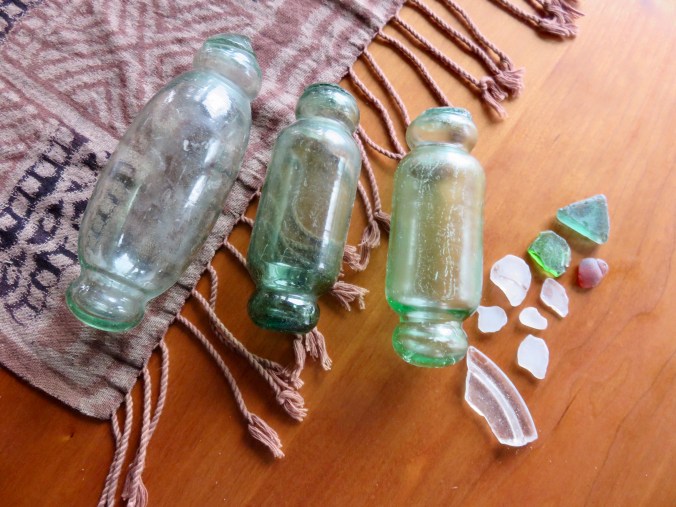
My grandfather’s pair and mine on the right after cleaning. Also today’s seaglass.

My grandfather found three of them. I still have two of the ones he found. This morning I found a Japanese glass float of the kind called a “rolling pin.”

fullsizeoutput_118eIt was pure chance. It always is. We went out this morning intending a quick walk. We were halfway home and Gary was anxious for his breakfast but I was determined to gather plastic bottle caps and poly-styrene foam anyway. I had turned back for a blue plastic bottle cap when I saw it. I knew, just knew. It was covered with sea growth and I still knew it was glass. the narrow necks at each end would have accommodated ropes in nets that might have been strung for miles in the ocean.

We have many floats, a couple of them still in their rope nets and they used to hang outside the front door before we remodeled. Gary has found many floats, including really large round floats the size of volleyballs. I have found two small round floats the size of oranges and a large, cracked float. That last one is only two millimeters thick in the spot where it’s broken. Wikipedia says the Norwegians are the first to use glass floats in the early 1840s, but in our ocean, beginning in 1910, “recycled glass, especially old sake bottles in Japan, was typically used and air bubbles/imperfections in the glass are a result of the rapid recycling process.”

fullsizeoutput_1191It didn’t look like much on the beach but to us, a glass float is a huge find. It’s been years since either of us found one on the beach. These days the floats are plastic. We’re finding those too. Bell-shaped floats in white and orange. The round ones are usually black with loops on opposite sides or a pair on one side. I hauled home a huge lime green one the other day loaded down with gooseneck barnacles.

These too are from very far away and a long time ago.


.

TREASURE, TRASH, & TROUBLE

IMG_5417

This is a partially threaded warp, just strung through the reed, looking at the back of the reed. The new warp is red and soft violet-and-purples and ashy pinks. All hand-painted or dyed-in-the-wool fingering weight merino. I have begun threading the heddles since I took this photo and might begin weaving tomorrow. The weft will be half handspun and mostly red. Three shawls.

We picked up almost 40 pounds of trash yesterday. We meant to walk a mile north and not begin collecting until we turned for home. But there was too much to ignore and we were overloaded by the time we’d walked a mile.  On the way home we realized we could not even complete our stretch of the shore and left the beach to drag our load on the road. The beach was littered with tiny bits and pieces, but also major chunks of heavy stuff. Usually we find plastic bottle lids, but yesterday there were so many! Many blue and with embossed Japanese characters. Two short lengths of heavy braided rope, poly-styrene foam, and my favorite green plastic twine that I often find in four-inch sections, usually with a knot. There were plastic bottles and a huge hatch lid Gary found late and just in time to use as a sled to drag the junk home. Some trash was stashed and we hope to bring it home today. We will need an extra trash pick-up. Recycling will not take it. No one will take poly–styrene foam in any condition. It is an enduring menace to the environment.

Perhaps it’s understandable that halfway through our walk I held perfectly still when the dog ran up close to me barking. In the past I would have assumed that the wagging tail was counter to the bark. I will not be making assumptions anymore.

Continue reading →

OPINIONS VARY

IMG_5389

Oil on the beach sand. (No, it does not belong there, and that is not merely my opinion.)

From swimsuits to snowflakes in one predawn session.

I read an article this morning by a woman who has decided against giving reviews of items she has purchased online. She finds the process impersonal and the expectation an imposition. She bought a swimsuit she likes and has purchased many times and her continued patronage ought to be enough. Why become part of a commercial?

Continue reading →

Dear Margaret and Helen,

ad astra: Margaret & Helen Are BackI am always so glad when I check my emails and your blog is there. It’s a breath of fresh air.


“… when an impeached President Trump waves his hands, points at people and even tries to take a seat during the Anthem while others stand at attention with their hands over their hearts… well we don’t hear much about that because evidently the Iowa Caucuses were rigged. Thanks media. Once again you have proven about as useful as a one-legged man at a butt kickin’ contest.”

Continue reading →

LIFE EXPECTANCY

fullsizeoutput_1185

completed last night: The “Shelley” warp with “Storm” (mostly blues) “Water” (mostly greens), and “Wave” (mostly peacock) shawls. Each woven with dozens of Canadian hand-painted merino wool and handspun dyed-in-the-wool yarns, and about 25″ wide by 65″ to 75″ long plus fringes. This is the first warp of the year and two of them will be in the sale this coming December.

People often look at life expectancy statistics and assume that people died at the age of 46 in 1900 because medical care was poor and that people seldom lived past age 46. In fact, anyone reaching the age of 46 in 1900 was probably as likely to reach age 75 or 80 or even 95 as someone is today. Life expectancy is an average, and children more often died of diseases and then-untreatable infections and pneumonia. Families died from eating tainted food or because their water system was poisoning them. People also died at work more often, but that has changed in the last hundred years.

Continue reading →