“Janet Sobel (May 31, 1893 – November 11, 1968), born Jennie Olechovsky, was a Ukrainian-born American Abstract Expressionist painter whose career started mid-life, at age forty-five[2] in 1938. Sobel pioneered the drip painting technique that directly influenced Jackson Pollock. She was credited as exhibiting the first instance of all-over painting seen by Clement Greenberg, a notable art critic.”—Wikipedia
When her father was killed in a pogrom, she, with her midwife mother and siblings immigrated to the United States. Here she married quite young, raised five children, and began painting at age 37. In the following years she created a revolutionary way to paint and to approach painting.
This morning I read an essay promoting a new book by Noah Charney, “the internationally best-selling author of more than a dozen books.” His essay, “Drip Painting Was Actually Invented by a Ukrainian Grandmother… Not Jackson Pollock” arrived today as a blurb from Lit Hub.
Two problems with this. The easy one; I did in fact know Janet Sobel’s name, though I am inclined to misspell it and like generations of students taking Art History in college we never studied a single female painter. The stickier issue is that a someone already wrote this essay.
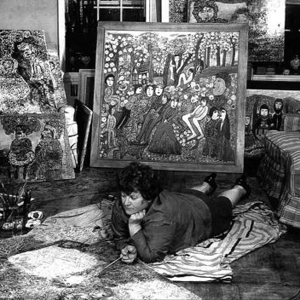
Janet Sobel in her studio.
Original publication: unknown
Immediate source: http://jamesbarronart.com/publications/
Wikipedia
.
Most every detail, structure, and ceven the outrage of “Charney’s” essay is found in “Janet Sobel: The woman written out of history” by Kelly Grovier, but published 20 months earlier. The opening with Pollack as heroic creator, the turn to Sobel who was the actual creator and had exhibited those paintings which were seen by Pollack a year before he “invented” the style, the crack about “furtively” and her history, the details of her life, and the reasons she faded from view, and why Pollack did not fade. Everything plus a bit more of the story and images of Sobel in her studio, her work, and her speaking with Eleanor Roosevelt.
“In 1946, the same year that she opened a solo show at Guggenheim’s Art of the Century gallery, her husband Max moved the family from Brooklyn to Plainfield, New Jersey, in order to be nearer to his costume jewellery enterprise. Unable to drive, Sobel quickly found herself cut off from the ebb and flow of the art scene in which she had only just become an important player.”
from Grovier’s essay in the BBC, 8 March 2022
“The family moved to rural New Jersey, which was where her husband’s costume jewelry business was based. Sobel didn’t know how to drive and therefore couldn’t access the heart of the art world, New York City.”
from Charney’s essay published more than a year and a half later
Hmmm… Perhaps Kelly Grovier revised his essay and Charney is not the author but editor of the essay collection from which I read an excerpt this morning and Lit Hub made a mistake about authorship. Perhaps Noah Charney and Kelly Grovier are friends and Grovier handed over his essay to him. Perhaps Grovier said, “Yeah, not many people commented on my essay so go ahead, take it.” Perhaps this writer is Kelly Grovier but using another name for his books.* Because otherwise, the recent article attributed to Charney was already written by Kelly Grovier and published on 8th March 2022 in “Culture” section of the BBC.
You have to love the irony of Grover’s calling out the misogyny of Sobel’s contemporaries dismissing her as a housewife and then writing or allowing a headline that classes her as a “Ukrainian grandmother”… not to mention the structure and contents of the essay itself showing remarkable similarities to an essay already published, which is what happened to Sobel herself.
Each detail and step of the essays are similar, sometimes remarkably so. As a college writing teacher, I would take Mr. Charney aside and explain why we credit our sources.
I don’t lightly use the plagiarism word, but seriously. Accident? Coincidence? Decide for yourself. Have a look at both essays. Tell me who actually wrote them.
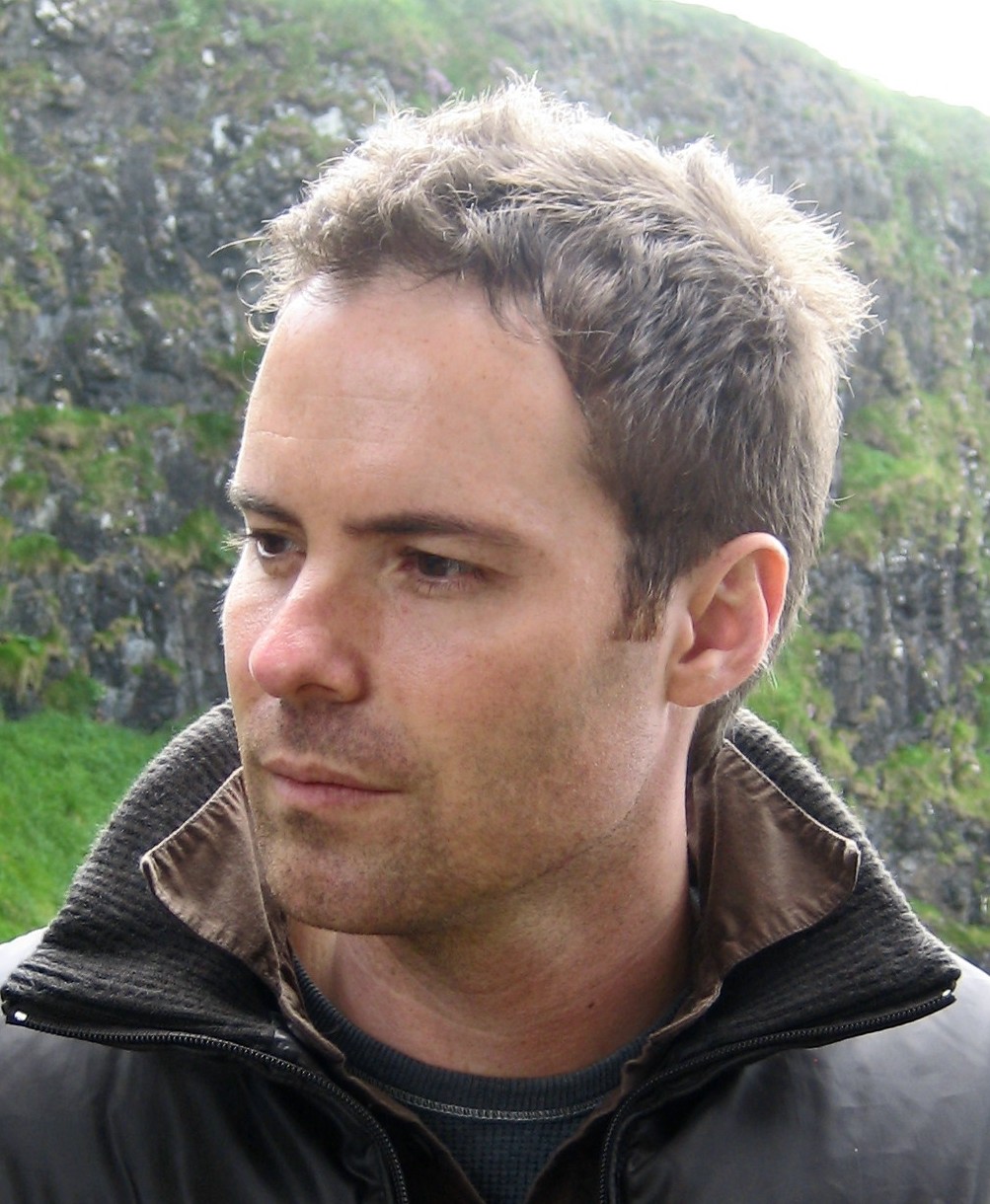
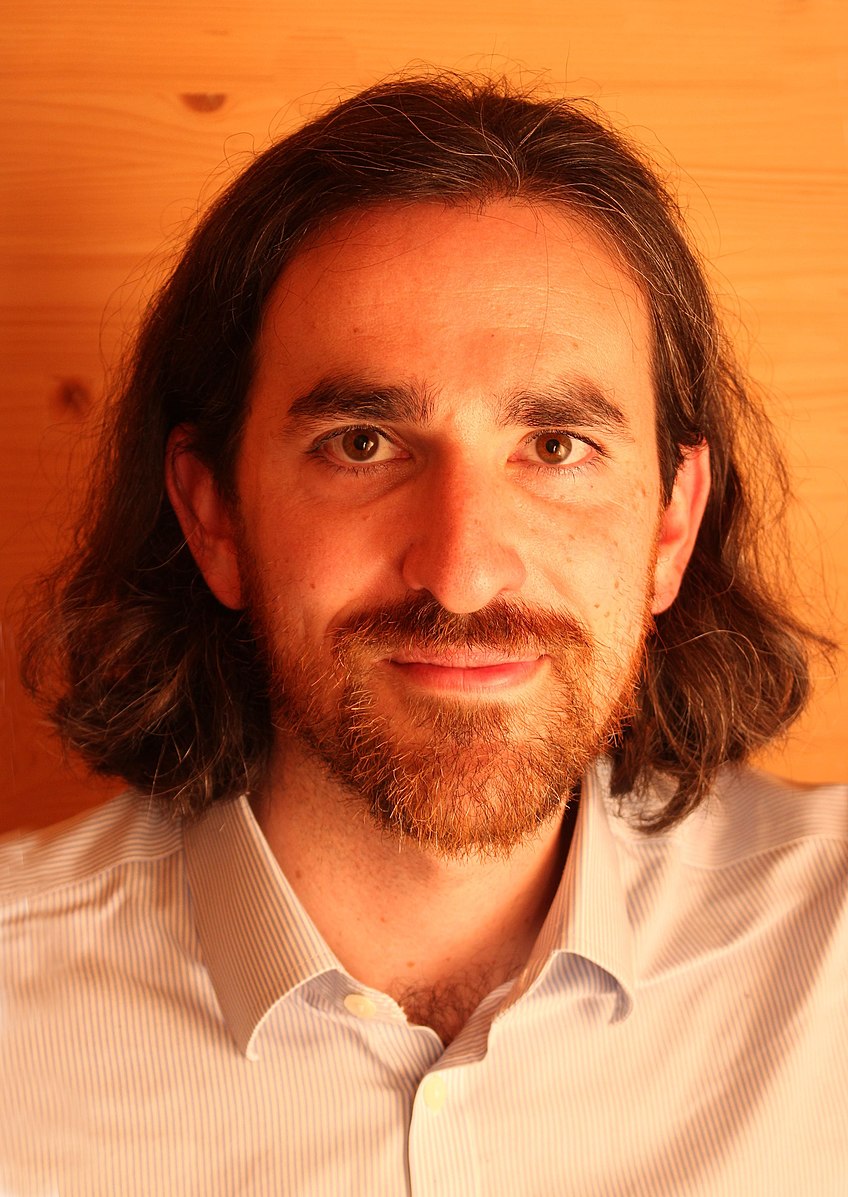
*The men don’t look alike. I did my research after first assuming that Kelly was a woman. Whoops. Kelly Grovier [left] is an American poet, historian, and art critic, who also has a dozen books out. Grovier’s image is in the public domain. Charney is on right: PJakopin, CC BY-SA 4.0 https://creativecommons.org/licenses/by-sa/4.0, via Wikimedia Commons
NaNo total so far on the 11th day: 25,427 words
 IMPERFECT PATIENCE
I have emailed the publisher of Charney’s new book.
LikeLike
received this morning:
Dear Ms. Priddy,
Thank you for sharing your concerns with us and for linking to the Grovier essay, which saved me from having to search for it. I appreciate that.
I can see why you were concerned: Literary Hub’s post is an edited/condensed excerpt of the introduction to Noah Charney’s book, and it does not contain the endnotes from the published chapter. Grovier’s work is cited (and quoted) appropriately in Charney’s book, and Charney also acknowledges Grovier in the book’s Acknowledgments.
Best regards,
Julie
LikeLike
You may decide for yourself whether this email from an editor at Rowman & Littlefield is an adequate reply.
LikeLike