I am forgetting words, but this is nothing new. Proper names have always been a problem for me, a significant handicap when I was teaching 150-200 students a term. Is the girl there in the corner desk Patty or Michelle? I generally tried hard to resist pretending that I knew names. I would warn students on the first day of class of three things: “I talk too fast, so don’t be afraid to raise your hand and ask me to back up—your classmates will thank you; I am naturally a bad speller, though I work to get it right, so if you notice I’ve spelled a word wrong on the board, don’t be afraid to point that out, you won’t hurt my feelings; and I am bad at names and will still be struggling to remember your name halfway through the year. That’s not your fault; it’s all on me.”
I was not exaggerating.
I could see the difference between the two Ter Har twin girls, but today I could not tell you their first names. Some essays I can still remember very well, and sometimes that helps me remember the writer’s name. Jenny wrote a thousand words in Holden Caulfield’s voice about the last minute of class when the minute hand first jumped backwards and then forwards—it drove “Holden” crazy. But it is conversations I remember best. My best classroom aide did not care for the button I made for her—”You are a peach!”—because she didn’t like being compared to food. She manages a bookstore now. I have wondered if the student who did not mind the U.S. being the “bully in the school” feels differently after living so many years in Japan? [2023: He does.] The boy who tracked six weeks of sobriety on my white board struggled for years but is doing fine now as best I can tell. Some students have died and I try not to think about them being gone.
I recognize that not remembering their names is insulting.
Some years, when we were using a grading system that made printing off photos easy, I would practice in advance. (The grading system was chosen by and for the convenience of the State Department of Education and changed frequently at about the point we’d gotten used to it.) I always asked the student named William or Patricia, how I should call them—William, Will, Bill, Pat, Patti, Patty, Patricia? If they said they did not care, I did not believe them and would check the first paper they handed in and use whatever they had written. At the very least, I typed out all their names and made labels for their class work folders kept in filling crates beside the door.
I generally tried to be respectful. I always got in trouble for teasing. Even when I absolutely, positively intended the tease as affectionate, it was a mistake.
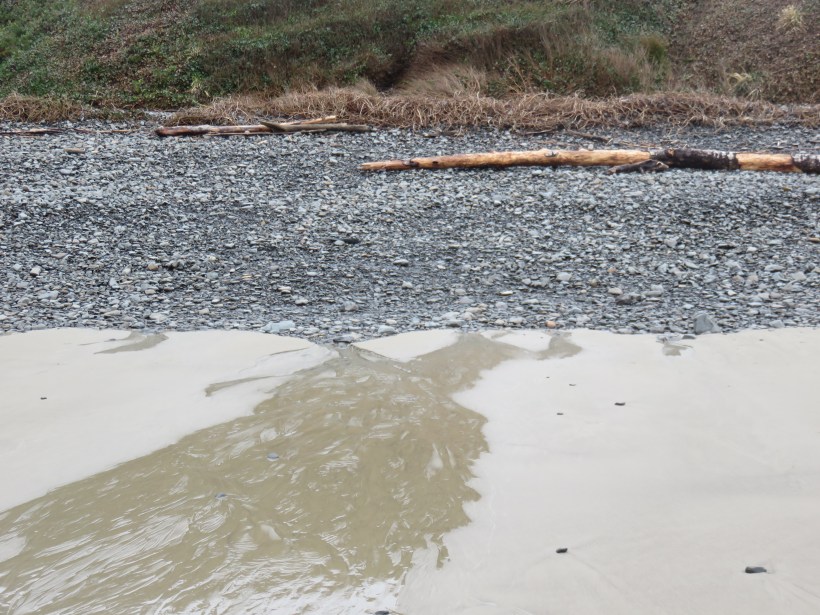
On our walks, Gary and I have lots of names we would probably get in trouble for if people knew. Paths to the beach are: Tunno, Store, Swimming Pool, Creek, Flagpole, and Stair Path. Houses whose owners we do not know include: the Elevator House, Taco Bell, Sewing Machine, and “I like that house” said every single time we pass it. And there are little places in our own home that we have named: the Garden or Dog Yard, Leakey’s Door, the Cat Room, and the Dog Yard even though there are no longer dogs or cats and the Cat Room was never a place cats hung out, unlike the Cat Closet, which was. Alan’s Room and Ian’s Room are still Alan’s Room and Ian’s Room. The beds are always made up for them though no one has been here to sleep in those rooms for a long time.
There have major events in our shared lives, such as the Big Mess, the Elk Crossing the Road, and the Wheel Chair.
Naming a thing is one way to exert power over it. At least in the mind of the namer, this works, but throughout history and all around the world, there has been great power associated with naming. In the Bible, Adam names all the animals; in Twain’s satire, it is Eve who names them; and in Ursula K. Le Guin’s “She Unnames Them” the animals themselves are given that choice to keep a name or not. In the brilliant award-winning post-apocalyptic story “Of Mist and Grass and Sand” by Vonda N. McIntyre (a short story that grew up to became dual award-winning Dreamsnake), the main character is a healer too tired from traveling across a desert to feel patient with people who trust her to save their child’s life but not to know their personal names.
“This was the practice: I was starting to get rid of my possessions, at least the useless ones, because possessions stood between me and death. They didn’t protect me from death, but they created a barrier in my understanding, like layers of bubble wrap, so that instead of thinking about what was coming and the beauty that was here now I was thinking about the piles of shiny trinkets I’d accumulated. I had begun the journey of digging out.”—Ann Patchett
I wanted to get rid of my possessions, because possessions stood between me and death.
Ann Patchett in “How to Practice“, this week in The New Yorker
My mother was an irrepressible collector, distrustful of people who did not gather things. But like Patchett, I appreciate the need to divest.
My name at birth was Janice Lynn Priddy, though for most of my youth I could not remember how to spell my middle name. With or without a final E? The only time I heard my full name was when I was in trouble with my mother so I discarded it. I never used it. When I married, I kept my last name, the first part of my first name, and gave up the middle name entirely, legally becoming who I am today. My mother was the one who argued with Records at the University of Washington about that name change. They wanted something strong as a court order and my new Social Security card had not yet arrived. The magic words Mom found were that I used the name “professionally.” It was true. By then I’d exhibited ceramic and metal sculpture all over the world under my name: Jan Priddy.
We named our puppies in honor of their parents, as racehorses are sometimes named to honor a sire. Gary’s dog Manny was Volant O Solitary Man because he was an only pup. The next litter sired by Oden had just two boys: Tanner (Wotan) and Loki. From the S litter we kept Sequoyah and Snowbird. The H litter from Snowbird gave Henna who was co-owned and we took back “Spot” who was a darling. Taidi, from the great German von Katwiga kennel of Erika Roedde, gave us a gorgeous litter, the Ts. I would have to sit and list them on paper to remember the names of all our puppies, though there were not many, not even including puppies bought or we took back.
But I digress.
I have called myself a daughter, sister, mother, student, wife, teacher, employee, grandmother, sculptor, gold- and silversmith, enamelist, field trial judge, owner-handler, weaver, artist, runner, writer, friend. I think I must be a difficult friend, I have not judged a field trial in a very long time (my license has lapsed), and I no longer run. I have written poems but am not comfortable claiming to be a poet. My brother denied I am his sister more than a decade ago. (When that news was told to me at a public event, I had to sit down. The teller was discomfited as she’d assumed he was joking. I knew he wasn’t.) The rest is up for review.
What we are named and how we are called—a title that has not quite found a story. I am not good with names. I search titles I am considering to see if the reason it sounds good is because I have already read a book called that. Dinty Moore retitled a blog post I submitted with a better title (though without warning me in advance). One of my best titles was for a poem, and a student gave it to me, is: “Why I Run North” but I could not tell you that student’s name without going through annuals to find him. I remember his manner and voice, but am ashamed not to remember his name. He was a good poet at age seventeen, kind and smart and injured, and I hope he is well.
WHY I RUN NORTH*

 Winter runs are early, before sunlight reaches over
 the coast range. Visitors sleep, safe in rented beds,
 while my flashlight shines the way to sand, from there
 south to the creek, turn, and north as far as waves allow.

 Every winter, seals roll onshore, shot in the head,
 and left to bleed. Seals and sea lions steal from nets,
 scavenge scraps, tangle lines, interfere with traps.
 Yesterday on my run, I passed a spotted seal

 washed into the rocks. I didn’t detour for a closer
 look. I remembered other years: bodies shifting
 with each twice-day tide, the awful stink drifting
 for months, until all that remained were scraps of hide.

 Today, the ocean has swept the spotted seal
 closer to my home, dropped it in my path. It has no
 head. Half its ribcage is exposed. Scavenger
 birds can’t pierce seal skin. A stronger animal—

 coyote, eagle?—has opened the belly, eaten liver, heart,
 the rich fat beneath the skin. Now, gulls tear scraps
 from bone. Ravens come. Crows. They will return
 each dawn, circling in their search, as the body roams.

 The story of the spotted seal ends at sea. After
 a long day of wet labor, the fisherman’s rest
 comes when he steps safely home. For gulls,
 ravens, and crows there’s no story at all, only

 starvation or food today. Is it easy to say
 who is the villain of my story? Who is saved? (Once,
 I would have thought this simple.) Now all these
 years deliver consequences I carry on my miles.

 I point my small light ahead on the sand, my stride
 pushing past. I hope tonight’s incoming tide floats
 this seal far south. And under tomorrow’s weightless
 sky—I, who have no answers—I will run the other way.
- First published in Winter 2013, StringTown, Issue 12.
 IMPERFECT PATIENCE
Sometimes not being able to remember or listen or hear or understand allows the wonderful opportunity to come up with hilarious responses which take the direction of the topic to a hole nude level and thereby creating an entirely hippopotamus botched cesspool of delights—the secret is to do this type of thing early in life so that when one gets old and stinks everyone will think nothing is wrong because you have always been that way—ergo always beefing bad at names is very clever and a sure fire way to conceal any brain blemishes that naturally occur throughout our lives.
LikeLiked by 1 person
Thank you, sweetheart. I appreciate the support for my devious memory strategy begun when I was eight and forgot how to spell “the.”
LikeLike
Pingback: SWEDISH DEATH CLEANSING | IMPERFECT PATIENCE