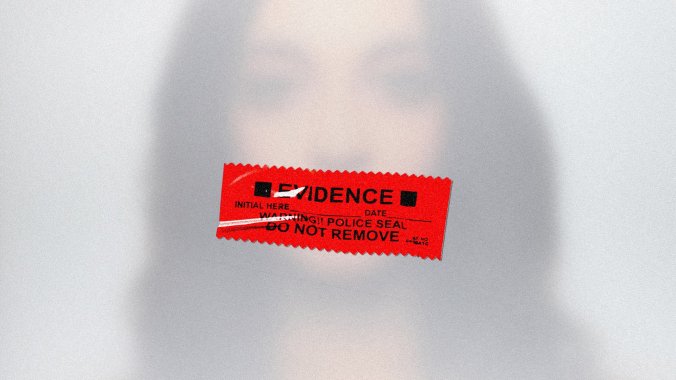
 The current cover story of The Atlantic describes the crime most likely to escape prosecution. It’s rape. And not for any of the reasons we have assumed for so long. People are no more likely to lie about having been raped than any other crime, but police are far more likely to think a rape victim is lying. Think about it. If someone says their sister was murdered or robbed, is the initial reaction doubt that the death or loss of property occurred? If you saw someone you actually recognized running off with your television, would that mean the police would not bother to investigate the theft?
And if that same person stole someone else’s television, and another, and another . . . ? Except what is stolen during a rape is person and privacy and a sense of safety and well being. The crime is violation, and often by someone known to the victim, which results in police assuming it’s probably untrue or a one-off and not prosecutable. And the police would be wrong about all of that. Often the rapist knows his victim and the next ones too. Unless he is stopped, he does not stop.
Each year, 125,000 rapes are reported across the United States.
In 49 out of 50 cases, the assailant goes free.
These figures are a sobering reminder that, even in the era of DNA testing and #MeToo, rape is the easiest violent crime to get away with. In her cover story for The Atlantic’s August issue, Barbara Bradley Hagerty offers a sweeping, heartbreaking analysis of why so few rape cases are investigated by police, let alone brought to trial.
What she discovers—from her dozens of interviews with victims, police officers, prosecutors, and researchers—is law enforcement’s abiding skepticism of women who report sexual assault. And evidence shows that reported predators often go on to attack again. “How many rapes could have been prevented if police believed the first victim?” Hagerty writes. “How many women would have been spared a brutal assault?” Her piece is an unflinching assessment of the nation’s collective inaction and a guide to where we might go from here.
Jeffrey Goldberg
Editor in Chief, The Atlantic
Also in the news: a woman in Arizona is convicted of having sex with a thirteen year old child. I haven’t read the story, but she was sentenced to 20 years in prison. I would assume she will have to register as a sexual offender.
A woman Gary knew in Tillamook County was stabbed and killed in front of her two little children. Her ex-husband drove to town, bought beer, and drove then to his father’s house: “I killed Judy.” The man was sentenced to 5-7 years for murdering his former wife. He threatened to kill everyone associated with his case, but got out of prison early on good behavior and immediately sued for custody of his children.
It makes me wonder.
 IMPERFECT PATIENCE
It makes me sad and angry!
LikeLiked by 2 people
It is shameful, but I should not be surprised. Men routinely downplay concerns they leave to women—their health and safety, their intelligence and aspirations. Some days I am so angry about that. But even my anger is suspect. How many times have women been put in their place for having a controversial opinion or for expressing anger? How often are women’s experiences and their stories dismissed as “trivial” or repetitive or a mere litany of suffering? How seldom are our goals and needs given any sort of priority? When do we begin to recognize that in film and story, in the way we spend money through government and health must shift focus from competition and warfare to cooperation and caring?
LikeLike