THE CANON

[from main page, CLICK TITLE above TO READ THE ENTIRE POST] 
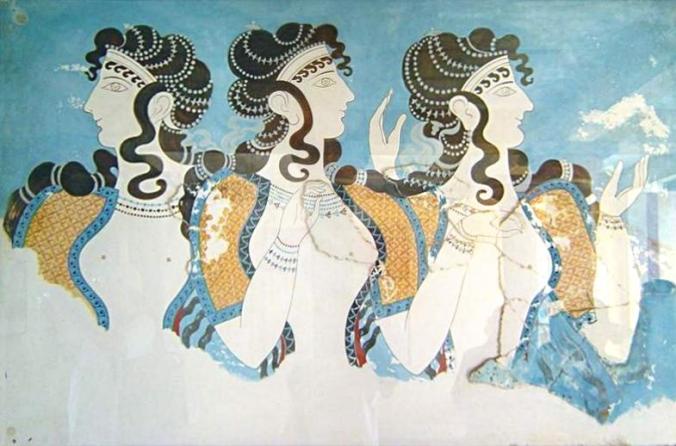
Minoan_Queens_Fresco.jpg

This is the “Minoan Queens,” one of my favorite frescoes from Knossos on the island of Crete, a mural from a civilization flourishing between the 27th and the 15th centuries B.C.E. The image appears, quite inappropriately, on the cover of the Wilson translation of The Odyssey. It is beautiful but in no way reflects the time or the culture of Homer’s Greece. Most scholars believe the epic works attributed to Homer were created late in the 8th century B.C.E., several centuries after the fall of the Minoan Empire, which was, in fact, not quite Greek. (Wilson makes a case for The Odyssey a few centuries earlier, but it’s still a clear miss.) The peaceful seafaring and trading society was long gone by Homer’s day. Some guess that this wide-reaching Mediterranean society was egalitarian in terms of gender. They worshipped a goddess. They kept no weapons of war. Very different from Homer.

The canon is the essential literature that we assume everyone ought to read. In the twentieth century the Western Canon came under attack for being too determinedly dead, white, and male. Mostly dead. It has broadened somewhat since the days I was in school and read dozens of stories and novels by white men. There was not one novel or story written by a woman or person of color. I read The Diary of Anne Frank, but even Shirley Jackson’s story, “The Lottery,” was not in the curriculum of my school.

I found A Raisin in the Sun as a teen and was blown away by this story of racial injustice and poverty. I determined to provide a broader view of the world to my own students and for twenty-five years I assigned texts by men and women of color,  from Africa and the rez, and yes, from white men.

I was also writing my own stories and was assured again and again that if I continued to do good work, it would find recognition. Maybe so, but I have not found that to be true for other writers, and I question whether the canon is or has ever been representative of the best.

A great many dreadful books remain in print, and Zora Neale Hurston was out of print for decades. She did, of course, find her way back into print, but almost accidentally. The resurgence of appreciation of her work was the result, partially at least, of a single fan who found a copy of one of her books in a library, went searching, and wrote up her discovery for a new magazine called Ms. The fan was Alice Walker, author of the Pulitzer-winning The Color Purple, which is also a block-buster film. Walker championed the out of print novel of Hurston, and now that novel is widely read. I taught it for years.

It would be optimistic to assume that every novel as fine at Their Eyes Were Watching God would gain publication and remain in print, but I suspect in this case this is not the result of some magical efficiency in our system of evaluating and choosing great works.

What we most treasure is what we are told is good, what we are forced to read, and what others helps us to appreciate. That does not diminish the book we’ve never heard of, the one aging and unread in the school library, or the book we do not have the background to immediately understand. What we love in books can never exceed our experience, and our experience is limited.

Somewhere in someone’s attic is a novel written out in longhand, typed, or word processed—just the one copy—that you and I will never know but which might have changed our lives.

I was reminded of this truth recently as I began reading through a third complete translation of The Odyssey, the prize-winner by Robert Fagles (1996). I have already read one version that makes no pretense at replicating the poetry of the original, but places line numbers in the margin so that I know where I am in the original (Rieu, 1991). The other translation did its best to manage the original line-for-line in iambic pentameter, so that it offers precisely the number of lines as found in Homer’s Greek (Wilson, 2017). Fagles offers line breaks and stanzas in the appearance of poetry, and he numbers his lines, but his line numbering is of his own lines, not Homer’s.

Unfortunately, I am not interested in Fagles’ line numbers; I want to compare his translation directly to the other two. In some of the twenty-four “Books”, his line 190 is a line or two off of the original shown in the other two translations, other times it is off by a dozen or more. I must scan for Homers 7:107 to find the weavers’ oily cloth on line 123. I am still not certain if the oil used is from olives or some less precious source. One translation offers olive oil, but Walker, gaming determined to keep 10-syllable lines (which she often fails to achieve)  and the other poetic version, do not offer a type of oil:

…their hands fluttering like the leaves of a tall poplar, while soft olive-oil drips from the close-woven fabrics they have finished. [7:106-7 translated by Rieu as prose]


with fingers quick as rustling poplar leaves,

and oil was dripping from the woven fabric. [7:106-7 translated by Wilson as “iambic pentameter”]


fingers flickering quick as aspen leaves in the wind

and densely woven woolens dropping oil droplets. [7:122-3 translated by Fagles as poetry]

[I think, ironically, the prose is the most musical. Wilson’s poetic translation is awkward and not iambic pentameter. Homer sometimes dropped a syllable in his 12-beat line for emphasis, Wilson adds a syllable, but I cannot say why. The word “fabric spoils the rhythm and might have as easily been translated as “cloth.” And Fagles, oh dear, the alliteration nearly becomes a tongue-twister. Where is the poet-translator when most needed?]

Was it olive oil that dropped from the cloth and not some common oil? This matters, because The Odyssey includes many such details of wealth to emphasize the elite position of the principle characters. Class and position are continuously emphasized in details of food and clothing, gifts and weaponry. Odysseus is expected to be treated well as a stranger, but the fictional birthright Odysseus invents is immediately used in support of this treatment. We are not dealing with ordinary people, we are dealing with favorites of the gods.

One introduction dismissed the possibility of a woman composing these epics because a woman would not have been adequately familiar with warfare to tell about it in The Iliad. I wonder how a blind man would have known any of it? How would he have known so many details about housekeeping and weaving and the dyeing and spinning of wool, all of which are covered in great detail in The Odyssey. Never mind, I will accept that it is unlikely that a woman of this period could have composed these epics. I have other quarrels.

Each introduction I have read, has focused on the challenge of understanding Penelope’s purposes and feelings. On the basis of only two translations and several introduction, no Greek, and my own experience and research, do not find Penelope’s actions the least bit opaque. She was commanded by her husband when he went to war: raise my son to manhood and remarry. She has stalled the suitors until Telemachus is grown and then, much as she would prefer not to, she will marry. How is this inscrutable? No action by Penelope contradicts these goals. When another characters swears faith but privately conceals deceit, Homer’s words reveal the lie. Penelope follows the promise to her husband. She will do whatever she must to safely raise her husband’s son and then she will remarry. She is not happy about remarriage and she misses her husband, cries over his absence. These are an absolute constants. Homer is not cagey about the secret feelings of anyone, not even Penelope.

Today, we might find such loyalty rather bizarre, but Penelope is not mistress of her own fate, she is a loyal member of her husband’s household. She does her level best to abide by his wishes.

This is a story of blind obedience, of absolute rank and privilege. We might want to believe Greece is the birthplace of democracy, but it was a brutally stratified society in the days The Odyssey was told, and a few centuries in the golden age of Athens, it was little improved. Only land-owning men had rights, and there was punishment for overstepping position or dressing beyond what was defined by law. Slaves had no rights. Servants were beaten. Failing to follow instructions lead invariably to death.

The Odyssey is not a nice story.

There are other details of form that are addressed in introductions, but rarely translated—the names of main characters, for example, are routinely prefaced with an epigram that denotes their essential character. Certain passages such as the oft-translated “rosy fingered dawn” are repeated each time in the original Greek, but most translators insist on varying the language, and lose the original oral patterns in the process.

When a translator abandons or adds detail in order to create a palatable text in another language, ignore characteristic repetition, or utilizes contemporary idiom, are we reading Homer or some other version, like a “based on” Hollywood movie?

Never mind. The Odyssey concerns a culture mostly dead—and it would be unreasonable to expect every student to learn Greek in order to read the epic in the original. People did, though, as late as a hundred years ago. The story is not completely beyond our understanding. You might recognize the bombastic egotism of Odysseus—and then you might wonder why anyone considers this braggart a hero. The motivations and values of its characters are worthy of study for how they are different from the motives and values of most of us.

This rather far-fetched and nasty story rarely taught in public schools, and then usually only in excerpt. The Cyclops story Odysseus tells in Book 9 is a favorite and most familiar. And there are other monsters and magicians and dangerous sea voyages and butchery that go on for twenty years. Odysseus’ journey is appropriately nasty, brutish, and long. Only Odysseus survives, and he survives, according to his own account, by superior wits and the aid of the gray-eyed goddess Athena.

I am not done with The Odyssey. It is a different world and it carries the reader to a different place. There is still the rest of Fagles for me to read and then Chapman’s Homer (1616), which ignores any attempt to follow or mark Homer’s lines. But it is beautiful.


But all had motion apt, as Aspen leaves.

And from the weeds they wove, so fast they laid,

And so thicke thrust together thred by thred,

That th’oile (of which the wall had drunk his fill)

Did with his moisture in light dewes distill. [7:141-45 translated by Chapman as poetry]

Translation, as I have said before, is a bitch.

But despite my devotion to understanding Homer, without learning the necessary Greek, I cannot help wondering what other great works I am missing. What has the canon left out?

Might there have been equally adventurous and more egalitarian tales of Homer’s age? Perhaps. No high school teacher I know has ever assigned The Monkey, for example. I have read only bits and pieces myself. In translation, neither is a favorite, but each is has been enormously influential. I found Sappho n my own and read her work when I was 15. I found many authors who were not in the canon.

What texts did we miss? What else was written that might more closely reflect our values?

It is widely assumed the The Odyssey is a vital and necessary and supreme piece of our literary canon. And so it is true. But how do we know what else might have held its place? As one example, in it’s day Romola by George Eliot was regarded as her greatest work. I have never met anyone who even pretended to have read it, though many are familiar with Middlemarch. Who decided that Middlemarch was Eliot’s greatest work?

I return to the question about the canon: Do we base greatness on what has been recognized throughout time, what was most treasured in its own day, or from what we have to choose from? And do we accept the texts that reflect our values or merely attempt to squeeze our current values into old stories?

Are we reading the right texts?

If I had another life, I would study Greek and produce a strange, rhythmic story meant to be spoken in all its brutish glory.

SaveSave

SaveSave

SaveSave

SaveSave

SaveSave

FIFTEEN MINUTES

IMG_1041 (1)

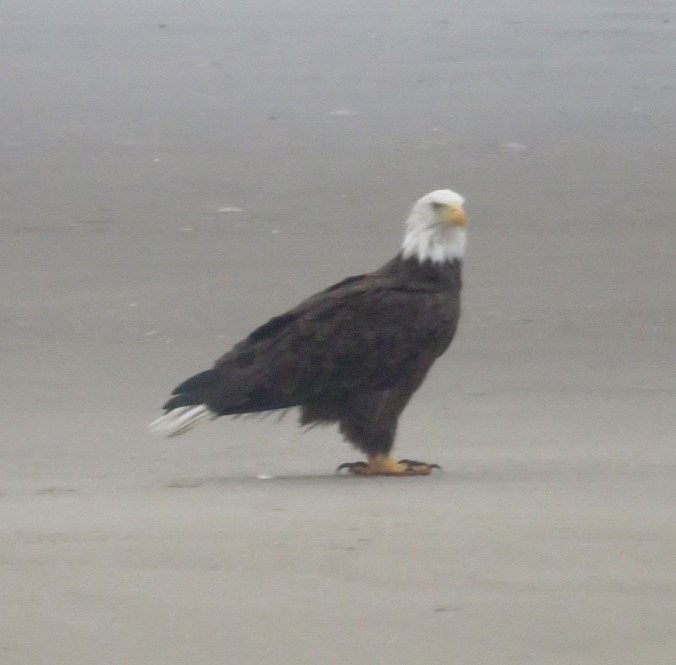
[CLICK TITLES TO READ THE ENTIRE POSTS]  An eagle flew by just offshore. Both my husband and I noted that she was flying lower than we had ever seen one of our eagles fly. Gary thought she would hit the water, but she was working hard and stayed in the air. I watched her skim around the big rock on the cape, catch an updraft, and abruptly drop out of sight. Wet, I figure. She was flying, but struggling to get home with wet wings. They don’t like being wet.

That eagle has never read a book, but you should. Books will help you live longer. Books can make you a more empathetic person. Books take you places you will never go any other way. There is a connection between happiness and books—people who read more report feeling happier—though perhaps not a causal relationship.

Just in case, you should read more books

Yes, I know, you read so much troubling news, you cannot possibly be expected to read anything heavy. You read for your work. You are an academic and read student essays. You have a demanding job. You teach middle school. You work with the public. There are only so many hours in the day. It is all too much. No one should expect you to read—um—literature in your limited spare time.

In three weeks of reading about fifteen minutes a day, you can read a novel. That’s 17 novels or works of narrative nonfiction a year. The average American reader reads maybe 4 or five books a year. Many read nothing at all.

The man who does not read good books has no advantage over the man who cannot read them.—probably not from Mark Twain, but smart


I do not read anything but history and biography. You perceive that for me to presume to indicate the hundred authors which a person ought to read, would be folly. No, leave me out: My testimony would not be valuable.—Samuel Clemens in a letter to Joseph B. Gilder, 16 May 1886

You may read a young adult book or something The New York Times recommends. I already have a stack to chose from, but choose your stack of to-read books based on what you like. Even the easy ones will leave you feeling good about yourself. The hard ones will annoy and exasperate you, but have you feeling proud and eager to tell someone else.

Fifteen minute, huh? I hear you scoff. Where am I supposed to find fifteen minutes a day?

Read for fifteen in the morning before allowing yourself time on Facebook. You have been meaning to cut back on social media anyway, right?

Read for fifteen minutes before you go to sleep. You would likely just be lying there anyway, desperate to unwind. Unwind with a novel.

Read for fifteen minutes while you wait in line at the bank, at the gas station . . .

Read for fifteen minutes while the baby naps as a reward for being a parent and before you start cleaning the kitchen.

Read for fifteen minutes after you clean the kitchen. It’s an excuse to sit down.

By all means, take the stairs at work to get a few minutes of cardio. Eat a smaller portion for lunch, have only a salad for dinner, or skip dessert. Call a friend. Plan a vacation. Take a nap, for goodness sake, if that is even a possibility. All of that is good.

Taking care of yourself is not punishment. It’s a reward.

Read for fifteen minutes a day.


SaveSave

BEING SOLD

Just now I have only two ads on the side of my Facebook feed. One is for organic cotton sheets and the other offers to sell me the “best reviewed” mattress. I am seeing these two ads because yesterday I was shopping for organic sheets and a new mattress. You see the connection, right? Facebook knows where I have been and so do the newspapers I read. Twist ads always appear in the middle of my Times stories. If I look too long at a lamp on the Crate and Barrel website, the company sends me an email warning me how few they have left in stock.

I have the general understanding that cookies are involved. It is as if I were shopping at a mall and someone continuously walked behind me, noting on a little pad of paper what I look at and for how long, and then sent me junk mail based on those notes.

Except that the internet does it with computers and they do it far more efficiently.

Mark Zuckerberg is testifying before Congress this week. Many of those asking him questions seem not to understand how social media works. Despite, an excellent article in the Post, which illustrates how little those questioning him understand social media, I wonder how much most users understand.

The platform exists to make a profit and it does this by selling our shopping habits, also our political and social concerns. It also made money by selling space to propagandists Cambridge Analytica, bent on electing Donald Trump as president.

 “It was my mistake, and I’m sorry,” [Mark Zuckerberg] said.

He sounded as if he had broken a vase, not a democracy.

But the entire purpose of Facebook is to make money by treating its users as the product that it sells to advertisers. Anything that impedes that is going to be extraordinarily unwelcome — and thoroughly resisted — despite Zuckerberg’s insistence to the contrary.

In case you were in any doubt, Facebook makes a great deal of money selling space and users. Is there a difference between selling space in order to convince you to buy “the best reviewed bed in the world” and trying to sell you lies about our political candidates.

Yes, dears, there is a difference. We were sold, and in this case we were sold to people lying to us about our country. And while Zuckerberg is in some trouble just now and has vowed to fix this “problem” (Facebook stock is back up), I assure you that he will continue to sell to whomever is willing to pay.

I knew signing up that Facebook was for sale, and that I was for sale by using it. I weighed benefits (no cost up front) against cost (someone collecting my information) and chose to participate anyway. When I see the lunatic memes, I call them out or let them pass depending on my mood and whimsey. I am not the web police. I am the daughter of parents who believed in getting facts straight. I make my living by teaching others, among other things, to distinguish between opinion, fact, fiction, and outright lies. (They do not always learn.) When the claim is important, I check it out.

Most of what I read on the internet is marvelous and accurate reporting. Some of what is posted on the internet is trash. Even news markets vary. When coal miners were trapped underground in Chili, Fox News had the only reporters who remained until they were rescued alive after their record-length 69 day entombment. But Fox & Friends, the channel’s afternoon “news show” is about as trustworthy as three of your alcoholic neighbors working on their second or third sixpack. They might say anything. A reporter on a morning news show offers a “maybe” conspiracy theory, and by afternoon the Friends are reporting it as fact.

Know your sources, and doubt the outrageous story. If whether it makes you furious or frightened: Check and verify. Avoid the “op-ed” and “opinion” pieces if you want straight news, but be aware that being aware requires trusting the right people.

The truth is out there. It is rarely as entertaining as you might wish. It is always more complicated. Distrust the easy answers. No one is out to get you . . . They just want you to buy their brand of mattress. They want your vote. “Follow the money,” the saying goes.

Your attention is for sale. Beware.

WHITE

IMG_2860

Skim milk and new snow, American’s teeth, the inside of most apples, stratus clouds, locker room towels, fleet trucks, bathtubs, coconut flesh, porcelain, chalk, sugar, bleached flour, drawing paper, Jockey shorts, daisy petals—loves me or loves me not?—, picket fences, the whites of their eyes, the fog line beside the highway, and the sign that warns “Do Not Pass.” 

I am granted the option, but I do not decline to acknowledge my race on the forms. I check the box Non-Hispanic Surname Caucasian, though All of the Above is closer to truth. My great grandmother on one side was from Mexico, and on the other was perhaps Blackfoot. I was never made to suffer for their color or languages. I am white. My relatives spoke English before I was born. My mother’s skin was pinkish, her eyes were blue, her hair was pale. All my dolls had pinkish skin and blue eyes and blond curly hair. They did not resemble me in any detail. I dismantled them, pulled apart their arms and legs and removed their heads, studied their soft plastic joints, reassembled them in different order, used nail polish remover to wipe away their red lips and their dimpled pink cheeks, filled their bodies with dirt, left them out in the backyard rain. My childhood fury is what I conjure to remind myself what it means to stand before the master narrative and find myself excluded. No President has been a woman. It is not true that the masculine implies the feminine, as I was taught in school. 

The White House, white nights, doves, frosting, feathers, pinprick stars, white chocolate, white out.

In the Western world, white is the color of innocence and brides, and what we name white diamonds in her ring is a colorless stone, clear like the raw white of a fresh egg. In the East, white is the mourning hue, not unblemished but the unadorned and empty void. In most Asian nations, brides traditionally wear saffron or red. 

In light, white is all colors, in pigment it is the absence of color. White is a matter of perspective. White opals are valued for the color sparking their interior. A white paper is the concise and authoritative guide to solving a problem. Black Friday is the biggest shopping day of the year—the day retail goes solidly into the black and makes a profit. White imperialism, black power. Black heart, white swan. How we are named and what we are called. 

Sun-bleached shells are white. In death, barnacles leave behind a white anchor and sand dollars I find on the shore are never white until they have passed dying and been thoroughly scoured by sea and light. The perched bald eagle I stood below this morning on my walk has white feathers on her head and also on her tail, but her heart and wings are clothed in brown.

Colors show on white. The pale page reveals the dark text, like the stripes make the zebra. It is the words that register, not the paper. 

The leader of a workshop on teaching about race assured her audience that race did not exist. Scientifically, we accepted she was correct, but she was speaking to public school teachers. She compared distinguishing between black and white to believing Asian people could be recognized by country of origin. She said that Japanese and Korean and Chinese people looked alike. You know she was white. I told her: You grew up in the Dakotas; I grew up in Seattle. It would be unwise to tell a Korean American she looks Japanese. Not being able to see the difference between Italian and Swedish or Indian and Chinese heritage shows you have not been paying attention. Physical anthropology aside, telling my students that race does not exist is unhelpful. Race exists in my country. It is a social and political reality. Yes, we invented it, but it will not go away because we pretend it does not exist. Race and gender are the first things we notice about a person. That is my country. This is where I live. 

Dress shirts, bleached cotton, froth on the leading edge of every wave, white supremacists, white lies, fresh bandages. 

I do not decline to answer because that seems a shameful way of pretending that, all things being equal (they never are), being white is something or anything other than an advantage in my country. I am fortunate, I am privileged, I cannot deny this. I am white. 

Most pearls are not true white, but tinged cream or pink. The most valuable pearls are those with color, the South Sea pearls in aubergine, amber, and smokey gray. My mother’s skin was not white and neither is mine. We are white but not white. The white ermine turns to a brown stoat in response to longer hours of daylight. A white elephant is the gift you have no use for. Polar bears show yellow shadows, a white Russian is only white on top, a great white shark is only white underneath, white lies are what we tell to avoid getting into trouble, and white water is the dangerous but thrilling stretch of rough river where we want to almost drown. White names are the ones discarded by slaves when they took back their freedom to identify themselves. That is not my people, they are my people. On white nights the sun never goes down. In a white out, your life is at risk from cold and confusion. 

Race stands between people, makes us suspicious of motive and genuine affection. It should not matter, but it does. Race matters. Sometimes the racial fog between people bars friendship because the advantaged (me) and the other (them) cannot see past. White means I might be asked where I am from, and I can respond with the names of countries people have learned about in school, not a continent or region they cannot identify on a map. White means I glow in the dark. If I were a white male, white people would assume I earned my job and forget that my father might have friends, HR was hiring someone who looked like him, or I work for bigots. If I were a black woman, I would not be allowed to speak at all. 

Hospital sheets are not all white anymore. White chicken meat is not white and the dark is not so very dark. Pork is the other white meat and it is not white either. White is bleached, white is dead, white is blinding bright. Some Arabian horses are born dark chestnut or black and silver with age to gray and sometimes appear pure white, but these horses all have black skin underneath. 

All skin is colored except pink albino skin that reveals the blood flowing inside us all. 

Lives matter. I do not need to say that. Black lives matter. That needs to be said aloud.

My President was not white. He is a person of color, the child of a broken home but also fortunate to have grandparents who paid for private schools. His culture is mainstream not ghetto, not poor. He did not wait on the porch on paydays for groceries to enter his kitchen. He did not walk to school in flip-flops because he had no other shoes. Advantage is a relative thing. When they were in high school my sons walked into shopping mall stores and they were not automatically followed by Security, but I would bet money both Barack and Michelle Obama had that experience as a teenagers.  

The steady hum of white noise puts us to sleep.

I do not decline to answer. I am answerable. I have no answers, I listen. Times change but not fast enough. We are a nation of many skin colors. 

We are all shades of human.

NOTE: This essay was originally published in an anthology about race. The editors of that collection failed to provide the copies they were contractually obligated to provide to authors (or any other renumeration). 

VERIFY

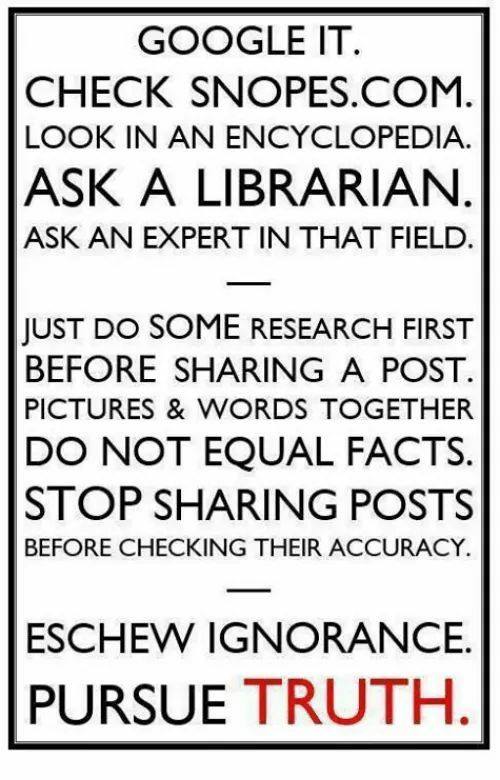
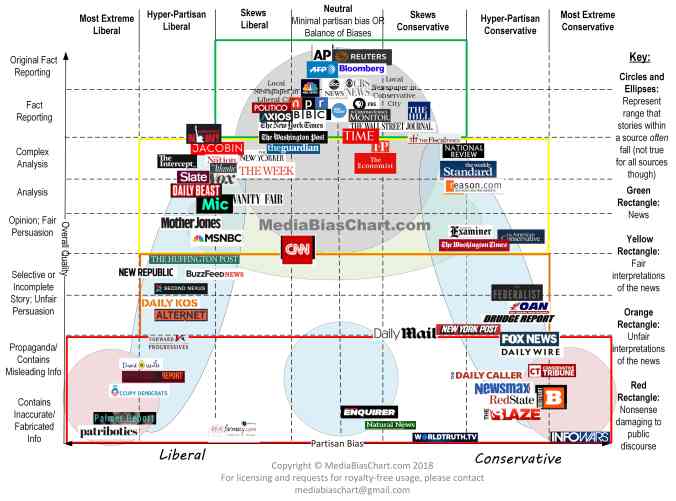
Check straight news services such as Rueters and the AP, check Pew surveys, check NPR, The New York Times, Washington Post, and The Hill. Check the left and the right. Look for government statistics. Verify. Wikipedia does a decent job.

29793664_1649135925177782_7381491503991881728_n.jpg

I might not place each news source exactly as shown below, but it’s a pretty good chart, I must admit.

Media-Bias-Chart_Version-3.1_Watermark-min.jpg

DONE/NOT DONE

Eight hours, then six hours the next afternoon, then a day off, then another seven hours revising my 2016 novel after working my paying job. I have queried it more times than I am willing to admit and under four different titles. (The husband of a friend suggested the title last week that I think has stuck.) I have written eleven drafts of this novel. It has drifted up and down between 75 and 82 thousand words. Two agencies are interested. I just queried another agent, and I have sent out 22 story submissions this year. In March, because clearly I have too much time on my hands, I committed to writing a 40-page novelette and a new poem each day in the month of April.

Ask me how that’s going.

I have a few lousy poem drafts and 21 pages of a science fiction short story that is already too long and does not want to be novelette. (We’ll call it the “pigeon” story, because it does actually have a pigeon in it for about a page.) I really do want to put the pigeon story aside because it gets more strange and complicated every time I think about it. And anyway, it’s done. Isn’t it? Sixty-five hundred words is long enough and I should stop. Shouldn’t I? Or maybe it’s only that I do not want to give it another 20 pages. It’s a lot more work for a story that is strange without being actually horrifying, and which no one will like, right? Maybe I am even afraid of what will happen if I do write more? That is entirely possible. I am not sure if there is a market for stories this long, and the story itself is creeping me out more than a little bit.

Like so much of what I write, this one, the pigeon story, starts with a story about birds. I have another creepy bird story that already wants work. It has crows. Maybe I can set this 21-page pigeon story aside and work on the crow story for a few days. The owl story is going to be published. I am afraid to look at it again. Heaven help me, I know I would begin to revise.

My husband and I went on our first actual vacation in fifteen years last month—all the way to Victoria in Canada. Both of us are familiar with Vancouver Island and Victoria from our youth. Gary had Unitarian friends there when he was a teenager and I used to show dogs and stay with friends on the Island.

We did not take a device capable of accessing the internet with us to Canada. For three nights and four days, we were out of touch. Even the flip phone did not work since we were out of the country.

I had been busy sending out work before we left and several pieces were being held—short-listed for further review. I did not think about them. We napped, walked, ate, looked in shops, talked, admired views, and napped some more. I finished reading two books, but I did not even write in my journal or take photographs. It was a lovely time, and I fell asleep in the car while my husband drove most of the way home.

As we neared home, I took over driving because the bridge over the Columbia River is four miles long and he Gary hates driving across. I confessed to him that if I did not have some sort of positive response to my writing when we got home, I was going to be sad. He replied with suitable gravity that he expected that.

While I was reviewing two hundred unread emails, I found the good news I hoped for. And while responding to acceptances of the owl story and the crow essay (not the crow story, which is something else), a request for a full manuscript of my novel arrived from an agent I have queried in the past.

Yes, a very good day. I was happy and I congratulated myself and my husband and I drank a full bottle of sparkling wine. Yes. Yes, we did.

And without in any way dismissing the glory of this good news, these three successes, I do not believe I “have turned a corner” in my writing life. Everything will not go well from now on. It may immediately go back to mostly unsuccessful. For example, no journal will choose to take the story that three journals are currently considering—even though each has held it twice as long as they usually hold work. (The longer they have it, the better—it means that a first reader liked it well enough to pass it on, and the second reader too.) It’s likely that all three of the editors thinking about liking my story will decide they do not like it enough to publish it. That happens all the time, often enough that a website online tracks not just the text of form rejections, but also the text of “higher tier” rejections. I mostly submit to journals and magazines with an acceptance rate somewhat below 1%. I am submitting to journals which show hundreds of submissions but no acceptances at all in the stats at Duotrope where I track my submissions. Yes, I could make it easier by sending work to smaller journals, but if I wanted easy, there are other things I could be doing rather than writing stories with birds in them.

Nothing is changed because I have recently had a story and an essay accepted. My mother always warned me about getting my hopes up. I have been up there before.

There was the year I won a Literary Arts grant, was accepted into an MFA program, and had a story published by Calyx. This was followed by hard work on my MFA and then . . . nothing. My mother died. I could not write at all but dwelt on one story day after day without making any progress. Three years passed.

There is no corner a writer can come around and find everything easy and neat. Writing is not like we might have hoped, like maybe the man in the White House thought everything would go his way, once he won the electoral college.

Real life, even if you get away with telling lies or you write fiction, is messy and out of control. If you told the truth or wrote nonfiction, it would still be messy. Poetry? Messy, messy, messy. Right up to the moment the poem sings.

This is what I know about success:

  • success does not last, but good writing does
  • acceptance is glorious—celebrate when it comes
  • nothing good can last, but neither will the bad
  • count rejections because they will come anyway (I already have 33 this year and my goal is to have 100 for 2018)
  • sometimes the “dream market” is the only one with readers smart enough to appreciate your best (A prize-winning story of mine was rejected by tiny journals before finding publication with a better one. This happened twice.)
  • failure was at the beginning and so it shall be at the end

Almost 400 years ago, Hobbes claimed life is “nasty, brutish, and short.” Writing should not be like that. But the struggle is long and exhausting. Reward seldom comes when we need it most. People misunderstand, but I know for certain that I am never certain about what I am doing. The writing is messy and personal and haunts me awake and asleep.

In case it’s hard to tell, I am enjoying myself quite a bit just now.

IT’S COMPLICATED

Battle_of_Churubusco2.jpg

I have been reading and writing since I was at least five years old. A science teacher complained some years ago that English was offered to students every year in school. “You would think kids would know how to read and write by now.” I could see his point. Two years of high school science is clearly not enough, given everything from technology to understanding the difference in treating a bacterial infection versus a virus. You would think we could find a way to teach writing and reading throughout the curriculum so that all subject areas received adequate attention. I could get behind that.

Sadly, only a few teachers of science or social studies or mathematics bother to reinforce, let alone teach reading and writing skills. The careful scanning for bias in a text, interpreting multiple perspectives, and writing well-documented analysis. The complaining science teacher was not among those. That would be my complaint.

Some teachers do teach reading and writing skills relevant to their disciplines. A local Social Studies teacher insists student read primary source material such as “Letter from a Birmingham Jail,” and a Biology teacher assigns The Sixth Extinction. Yesterday, I handed my coffee-stained copy of Saving Tarboo Creek to an English teacher, suggesting that while the biology of habitat and spawning salmon was a primary draw, the memoir was worth reading for the analogies alone.

There is no single discipline we studied in high school that explains how to buy the right car or plan a vacation or choose a future career. No high school class teaches us how to be responsible citizens and happily married. Our lives are not neatly divided into school subject areas. The skills and information specific to a discipline should best be taught within that discipline, but our education must expand beyond school.

When I ask students in an English class to use basic arithmetic to compute a letter grade or their reading speed, they sometimes look at me as if I have lost my mind. Why are we doing math in English? They demand an explanation, perhaps an apology. I am asking them to mix stuff up. As if our lives were not a confusing mixture already.

Our lives are a messy tangle of obligations as members of families, communities, nations, religious affiliations and social groups; work in our homes, our neighborhoods, as citizens, and on the job; choices about procreation and leisure, career and family planning, government and law; and steps taken to ensure the mental and physical health of ourselves, our loved ones, and the more general population.

What we know how to do and our perspectives on justice and fairness and the future are determined by our family backgrounds and experiences and also by the tools and information provided by our formal education. If we lived in a hunter-gatherer community, those food-collecting skills would have been taught by people we had known and trusted since birth, people who had themselves been taught and practiced those skills all their lives. We are long past the time when every adult in a community knew everything there was to know.

Geometry and Botany and multiple translations of The Odyssey (and the original Greek) are disciplines that might each consume a lifetime. Most of us need a little of each. Our lives are far more complicated today. We travel. Our lives are touched by people, experiences, events, and demands beyond the capacity of any one person to grasp entirely. We know a little about a lot of things. We might know a lot and a few things. We require complicated skills of computation and reasons, reading and writing to manage even that much.

Rudyard Kipling wrote “If history were taught as stories, they would never be forgotten.” He had something there, and not only about history.

My students often want a simple narrative, a right and a wrong. The world does not work that way, or anyway, it rarely does. The truth is not possessed by one side alone. That would be science, and even science evolves.

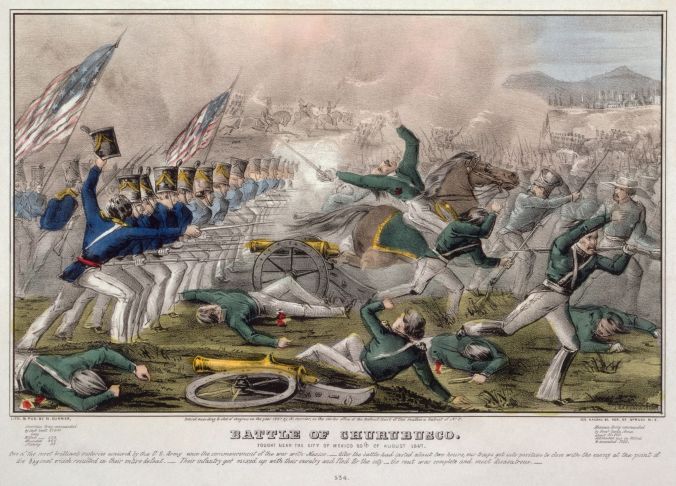
We need stories to go with all our studies. We need stories about ecology and mathematicians and social movement. If we are truly to understand the Mexican-American War, we need the stories from Polk and Taylor and Perry; of the San Patricios, enlisted men and others who moved to the other side; of Americans, Mexicans, and native peoples who fought and died and the ones left behind; and the stories of those who came after. There is more than one true narrative.

We need all the stories if we are to make sense of our lives, too. Our lives are not high school classes, neatly divided into discrete disciplines. Our lives are complicated. Our lives change all the time. Our lives matter as story.


TRUTH TO POWER

15walkout-01-superJumbo

When I set up my essay on the little black dress (LBD) to run on Tuesday, it was because I have a series of essays about color that I planned to post on successive Tuesdays. I am releasing them in order, and it was that essay’s turn. It was posted automatically this morning with me doing a thing.

Not only will we have to repent for the sins of bad people; but we also will have to repent for the appalling silence of good people.
—Martin Luther King Jr.

Wednesday is the 50th anniversary of the death of the Reverend Doctor Martin Luther King, Jr. so I have been thinking about him all day. I am old enough to remember.

I used to do an activity or talk each year about three men. I held a globe in my hands and spun it as I talked about different places. I began with a New Englander, an American who refused to pay taxes that contributed to an unjust system and was jailed. He argued that by doing this, he harmed no one but himself and thus was not forced to act outside his morality. He called his actions Civil Disobedience.

On the other side of the world and decades later, a young lawyer fresh out of university in England tried boarding a train in South Africa and was told he was not allowed in First Class. Then that man went home to India and found that there, too, he was a second class citizen. Like the New Englander, his personal values would not allow a violent response. He chose another way. Sometimes he stood on train tracks and refused to move. In prison, he refused to eat. He called his actions Satyagraha, nonviolent protest.

Return again to the American South a few decades later, and here a young minister looked for a way to force change without sacrificing his soul in the process. He sat at lunch counters and ordered coffee. He marched in the street and sang. He called his actions nonviolent resistance.

Thoreau and Ghandi and King were inspired, each one, by the actions of others before them. Each one made change happen. Each one followed and then led in turn. It was not only men. Sojourner Truth, Josephine Hull, Fannie Lou Hamer, and many others created a path, stepping before those behind them, and lighting the way ahead.

Be inspired.

LITTLE BLACK DRESS

Little-Black-Dresses-Assort_1349795787_670x0.jpg

Black skin and black eyes, black noses and black fur, black hair, and the darkness inside tunnels. Darkness playing against light, the strength of contrast, of deepest intensity.

The little black dress is all about reliability, the safe but shapely and dependable dress that will always looks right for an occasion. When I was young and weighed considerably less than I do now and wore what today would be a size 0, but was then labeled a size 8, Sizes have changed. It is all about numbers, When I was a girl, I thought I was too fat and too white for black. I wore short tent dresses in sherbet shades of pink and orange and worried about my hairy arms and whether I had shaved under them recently enough. I could, in those days, fit into vintage dresses from the 1920s and 30s, beautiful narrow gowns in pleated silk with a pattern of black on rust and ruby velvet with black jet beads. I had a pair of black kid leather boots from the previous century, but when I wore a slender black wool crêpe, my mother declared it “too old” for me and I worried it made my skin look like the underside of a fish. My white skin carries an olive undertone that was unfashionable without a tan. My friends lay for hours in the sun. I hid in shadows.

A few decades pass and today most of my wardrobe is black. Looking down the line of my closet there are rare slices of deep coral and olive green, brown and purple and gray. Mostly, though, there is black hanging in my closet. Black jeans are my favorites. Black t-shirts and tank tops hang beside black cardigans in wool and linen. I have patterned leggings purchased one fall in the spirit of fun with turquoise zigzags and red hearts, but more often I wore the four black pairs. Black socks fill one drawer and black underwear another, two pair of black boots and black shoes line the floor. I had a red pair, but wore them out and failed to replace them. Hanging on the taller side of the closet that mostly belongs to my husband, there are four long black dresses. I save the smokey purple velvet one for winter weddings, but my best dress, the long lean, black jersey dress is good for occasions in any season. It is a petite large, mid-calf sleeveless, rayon jersey Eileen Fisher basic. When I have lost weight I belt it, and when I have gained I wear it loose with a light cardigan to conceal my waist. I do not worry that the dark color makes me look too pale, I hope it makes me look thinner. Like many women in America, I worry about my weight but do nothing about it other than casting illusions with my wardrobe. None of my black dresses is little. Though I wore little dresses that rode my thighs in many shades other than black when I was young, in my sixties the dresses in my closet hang well past my knees. A dark disguise.

Black is hard to see. Black is the lack of seeing, the absence of light reflected from a surface—when we see black, in fact, we are seeing nothing, the absence of light. Black clarifies the outline of objects in silhouette, but obscures what comes between its edges. The object is perceived as smaller than it is—hence the mystique of the little black dress.

I first became aware of this shrinking invisibility in real life rather than theory at a dog show. I had driven north and slightly east of Seattle in order to look at Afghan Hounds at the Puyallup Kennel Club show held indoors in a fairground stadium. The lighting was poor, and the black dogs being shown appeared nearly invisible, obscure blobs moving around the ring. When I later went looking for a dog, I knew I wanted one that looked like Barberryhill Dolly, a red Afghan in a photo from the 1930s. In a reversal of Henry Ford, I did not care what color so long as the color was not black. I flew to Arizona and came home with Oranje Anisette, a year old black bitch named for the anise-flavored liquor. She had white chest locket the size of a quarter that rarely showed, a good outline, and I finished her championship in Canada, but I would return to that fairground three years later to win a major with her distant cousin, who was red.

Anisette was one of our sweetest dogs. Licorice can be sweet or salty, red or black. I took mine black and sweet, but black as a color has other associations in the west: funerals, witchy hats, cats crossing our path. Black is the color of funerals and ill fortune, evil hearts and cruel magic events. The type on our page is black, but the page itself is innocently white. In the West black is the color of mourning, but some eastern cultures have a wiser approach to sorrow. They mourn loss by wearing white, the absence of color, not the absence of its reflection.

Applied to objects in dyes and inks, black is a supersaturation of pigment, so much pigment that the fabric or signature appears black until time, sunlight, or bleach fade it to purple or rust. This can be used to advantage. During my practicum, at the time I was student teaching in a middle school, Lynn Gray found black corduroy pieces from several bolts to make a group project. Students did reverse tie dye—discharge—tying cut squares with string and rubber bands and twine, dipping briefing in a bleach solution and then in baths to neutralize the bleach and rinse it clear. We expected a pattern of white on the original black, but none of the squares bleached to gray, instead some showed smokey blue, others rust or green. We came to greet this variation with enthusiasm.

Black itself varies, fades, shows bleaching from the sun. water on black ink may float in waves of colors. We may choose to write in black or blue or any dark color at all, but legal documents generally require dark ink, blue-black or black. The blue-black ink in my father’s fountain pen was a throw-back to early European times when the gall-ink black was transparent when first applied and a blue dye was added to ensure the writing was visible. Over time the gall ink turned dark and black.

The earliest India inks were from China and colored with carbon from sources such as burnt bone and oil. The Romans also wrote in black ink made from soot, but a recipe for black tattoo ink includes iron sulfate, bronze ground with vinegar, pine bark, and gall from insect egg deposits. Europeans made black ink colored with black iron gall—iron salts and tannic acids, often from oak—beginning in the twelfth century, but this acidic pigment is destructive of cellulose paper. The ink of Bach’s original eighteenth century scores have faded to brown and threaten to destroy the paper on which they were written so that conservators wrestle with how to preserve them. The signatures on my undergraduate diplomas, from not forty years ago, have mostly faded to illegibility.

Newspapers today are printed with carbon pigment suspended in oils, which results in ink coming off on the hands of readers. In Wodehouse’s stories, the impeccable butler Jeeves irons the Times so that the ink will not rub off on Bertie Wooster’s hands. My regional newspaper, The Oregonian, began using “rub-free” ink in the 1980s, but no one reads print newspaper much anymore.

The word black itself is derived from Old English dark and earlier words meaning to burn, gleam, shine, or flash. That might refer to the night sky, which in the days before streetlights would indeed and gleamed and shone, bright with stars no city-dweller can see today. The earliest know art, such as the caves at Lascaux, were painted in the dark with ground charcoal and manganese—mostly black on the stone. The marks are guessed to be wishful thinking of hunts and plenty.

The Egyptians regarded black as fortunate in their rich black soil but also through Anubis, god of the underworld and protector of innocence. The Greeks created a more complicated relationship with black, using black in ornament and cosmetics, decorating red pottery with black and later red drawn on a black ground. Black was darkness and death in the afterworld, darkest for those deserving punishment. But the Romans reserved colors for those of rank and black became the clothing of commoners. Death itself was named the Black House. In the north, there was the goddess of the night, but soon enough the prejudice of black as evil robed the devil in black. This would change in the West as black became fashionable and associated with the rich and powerful. Colors such as scarlet and blue and purple were still reserved for the wealthy and those with standing in the church, but black became the color of government officials and later the emblematic color of the Reformation, a somber and serious morally upright color, a hue of humility before God.

Thus use of black often carries a moral message, from black cats and witches’ hats to religious austerity in cleric’s cassock and nun’s habit, from the ostentatious display of sable furs and silk magistrates’ robe to the wretched industrial revolution’s soiled cities, black tie to tail coats, butlers and the governess’s modest dress to the Grim Reaper.

Queen Victoria made a life-long ceremony of wearing black in mourning for her husband from 1861 until her own death forty years later. Convention mourning of her day required plain black to be worn for a year and a day after the death of a family member. Gradually black was relieved by touches of white and then a shift to muted colors such as gray and mauve over the next years. Not everyone could afford to wear their grief but others played it to their advantage. Lily Langtry, the Jersey Lily who became one of the Prince of Wales’ mistresses and internationally famous beauty—Langry, Texas is named for her—entered society wearing a plain black silk mourning dress, which she secretly restyled each day for daytime and then evening wear. Without the money for jewelry or fashionable changes of clothing, her unadorned appearance ran against the highly decorative style of the day, and captured the public’s imagination.

In the midst of all this Victorian mourning, John Singer Sargent’s portrait of a notorious financier’s wife in a tight, low cut black dress, reveals Virginie Amélie Avegno Gautreau’s precious skin glowing like opal against the darkness. The painting that became known as “Portrait of Madame X” suggested a new and delightfully wicked association for the color in clothing.

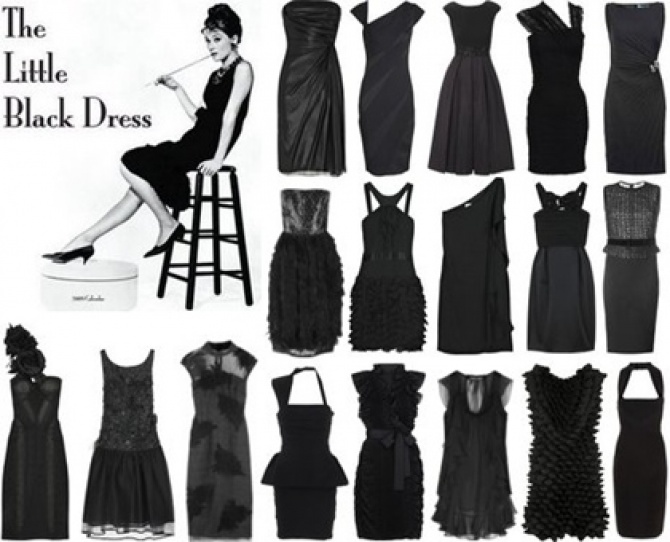
The Little Black Dress dates back to designers Coco Chanel and Jean Patou in the 1920s who were looking for understated chic. This sexy thing is available from every department store today—Nordstrom offers over seven hundred versions. Think of Audrey Hepburn with her long cigarette holder, her long black dress in Breakfast at Tiffany’s. Black shows the cat’s hair, but is a workhorse in the wardrobe, going everywhere and with everything. The use of black today conveys a message of elegant choice rather than judgement, punishment, or come-hither titillation. I only wear black in order to seem more slender than I am. A tiny visual lie. Surely not so dangerous a failing.