AUTUMN

We are a couple of hours into the new season. Each of us woke this morning and thought: “We need a fire.” Friends were just here for the tail of summer, but each fall there is a morning when the cool damp weights our chest and abruptly makes us want a fire in the wood stove. It’s a day not to worry, but to hold moments before us, remember trust, and revel in the reliability of the world. Today was that day.

Only gulls this morning during our walk. We choose our path so as not to disturb resting birds.
Continue reading

PELICANS & DAY TWO

1:50am. The power blinked off and back on a few minutes ago. We were already awakened by the gale blowing harsh music through the eaves. It must be November.

We’re wondering about the pelicans. There are a dozen fishing just offshore. In the past twenty years, we’ve often had pelicans around for months. The confusing bit is that it’s November. Pelicans should be long gone by now. There’s something else too.

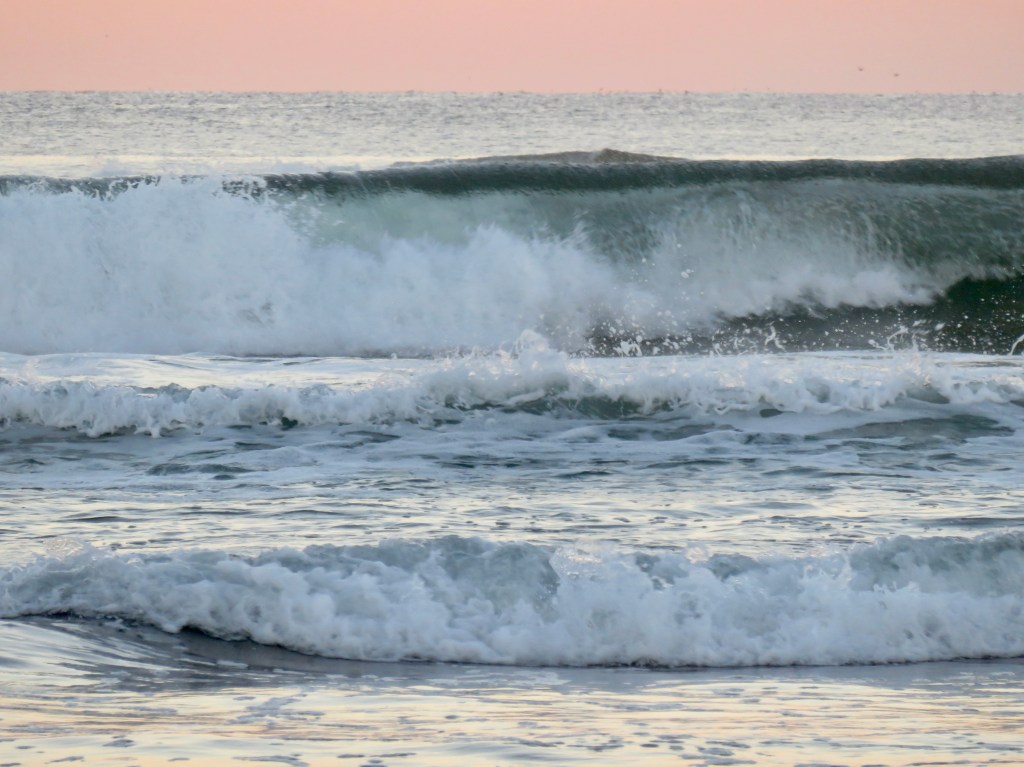
Typical surf, most days since June.
Continue reading

LIARS&ICE

Word count, dental visits, complaints about the weather, lies, and the lying liars who tell them.

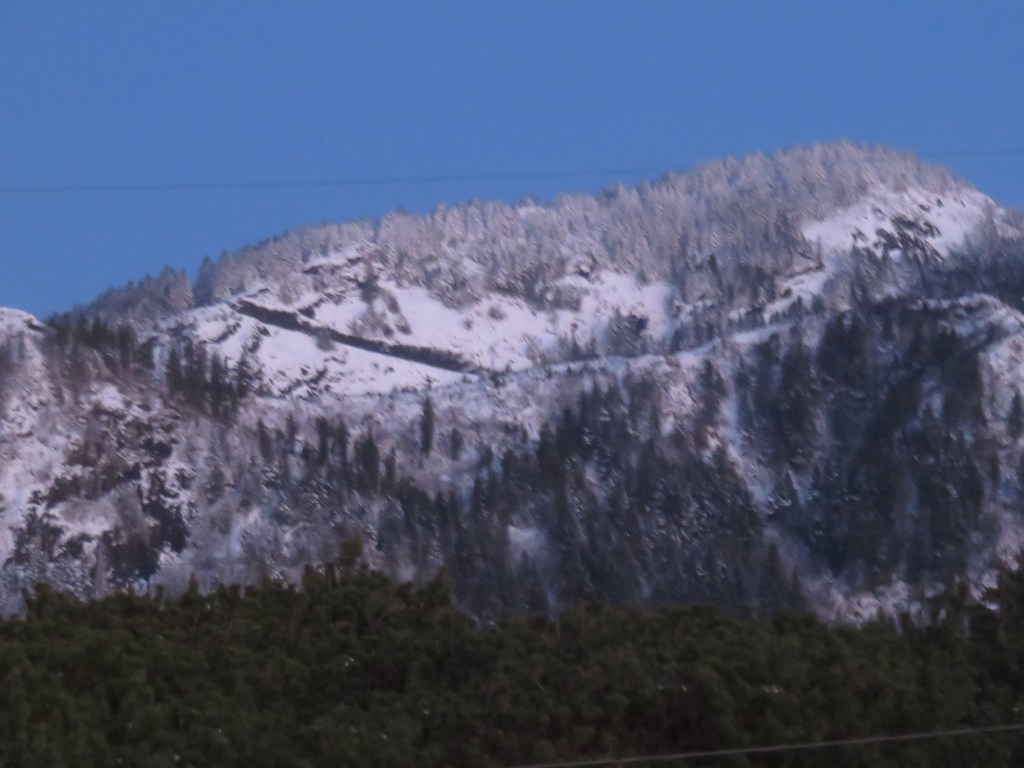
I hope I don’t often complain about weather or climate, but any time the snow and hail wants to stop for the season is not too soon for me. It hailed off and on all day yesterday, and I am sick to death of it. A few plants in the garden are sick to death of it too. These are the hill back behind our house.
Continue reading

MIRTH & day 4

I woke too early this morning. That happens a lot these days. Sometimes I can get back to sleep. Sometimes I go to work. Lately I am knitting and revising my novel. Doesn’t that sound wonderful to myself: revising my novel!

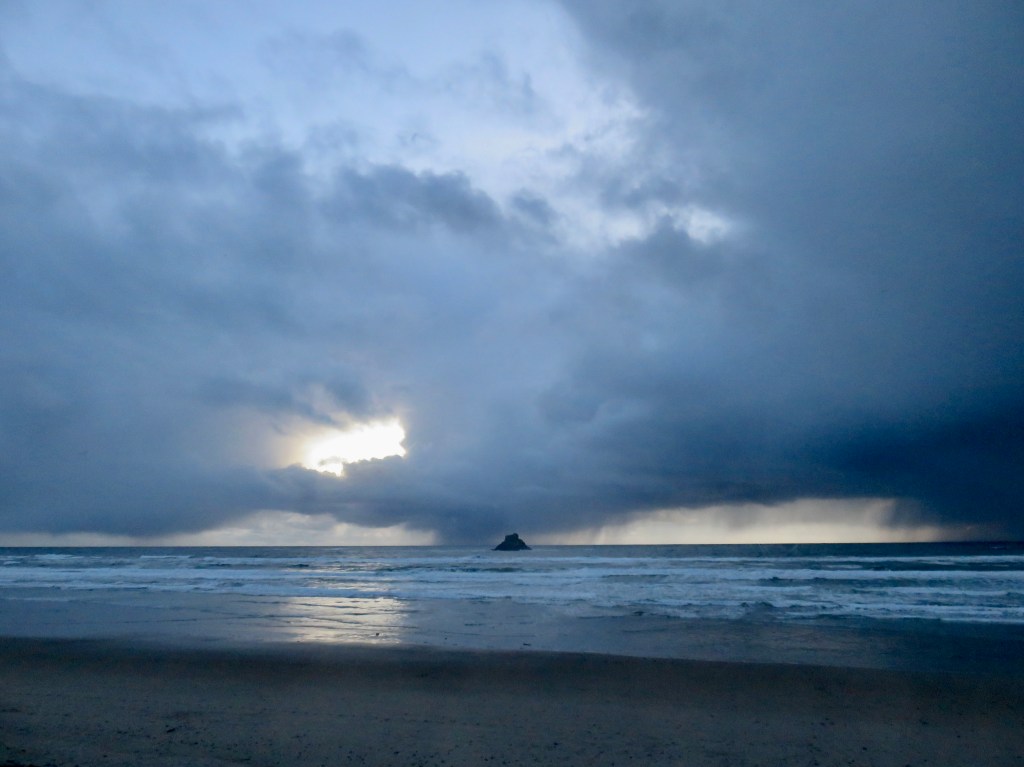
Rain falling out over the ocean.
Continue reading

WHY WE STAYED HOME

Today is my high school reunion, the 50th delayed to year 51, and it is also my elder son’s 41st birthday. I will be baking a vegan, gluten-free, refined sugar-free cake later today. Our family is coming. They’ve had good reason to stay safe, isolated, and healthy. So that is the best reason for staying home. But there’s also the pandemic, which is the real reason.

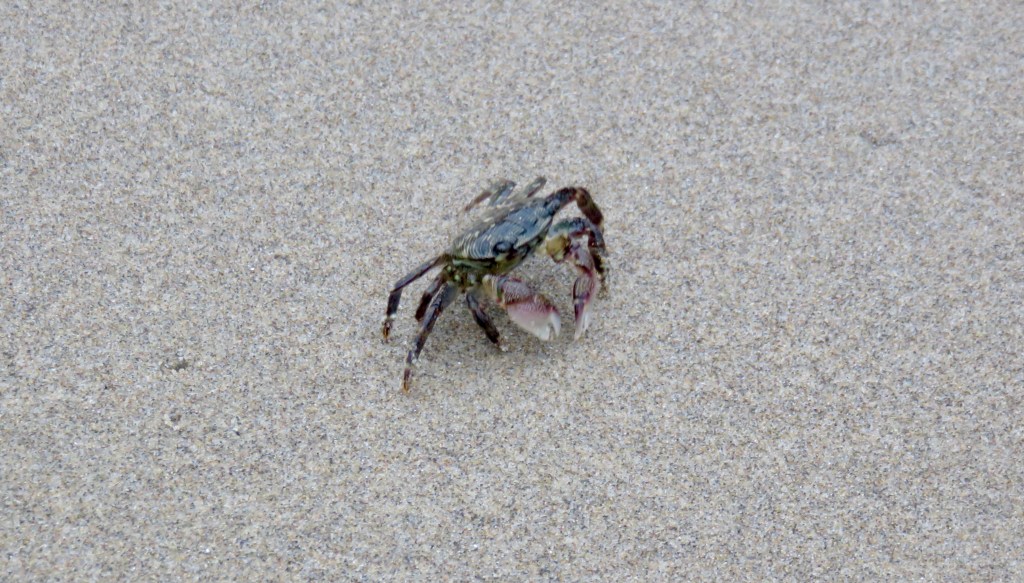
We occasionally see crabs stranded by a high wave, especially in late summer. Usually it’s a big Dungeness so far up on the sand that it would bake before the tide came back in. Such crabs requiring two hands to carry back to a tide pool. We got this little guy—about an inch front to back of the body and furious at being noticed— back to a tide pool, and the tide was incoming. It probably lived.
Continue reading

FOGGY FOGGY DO

When our firstborn boys were tiny, a friend in a community just fifteen miles or so north of us used to call me every morning to ask if we had fog. I would look west to the roll of clouds lying on the horizon over the water and admit we didn’t. have fog Then, between puffs on her cigarette, she would complain about the fog. She lives in the high desert now where it gets hot in summers and icy and snowy in winter but is sunny nearly every day. If I lived there I would surely complain about the heat and cold, but that’s why I chose a climate I enjoy.

This morning at the waterfall on Hug Point beach.
Continue reading

TREADING LIGHTLY

The coast can be a madhouse sometimes, especially during good weather and a holiday weekend. Like now. The air is already smokey with beach fires this afternoon. We’re not supposed to leave fires untended even in damp weather, our dogs are supposed to be leashed, and most of our footprints in the sand should be gone by morning. All of us are visitors here.

Our favorite black oystercatcher couple was busy gathering food. There are no oysters here, but they are fond of mussels.

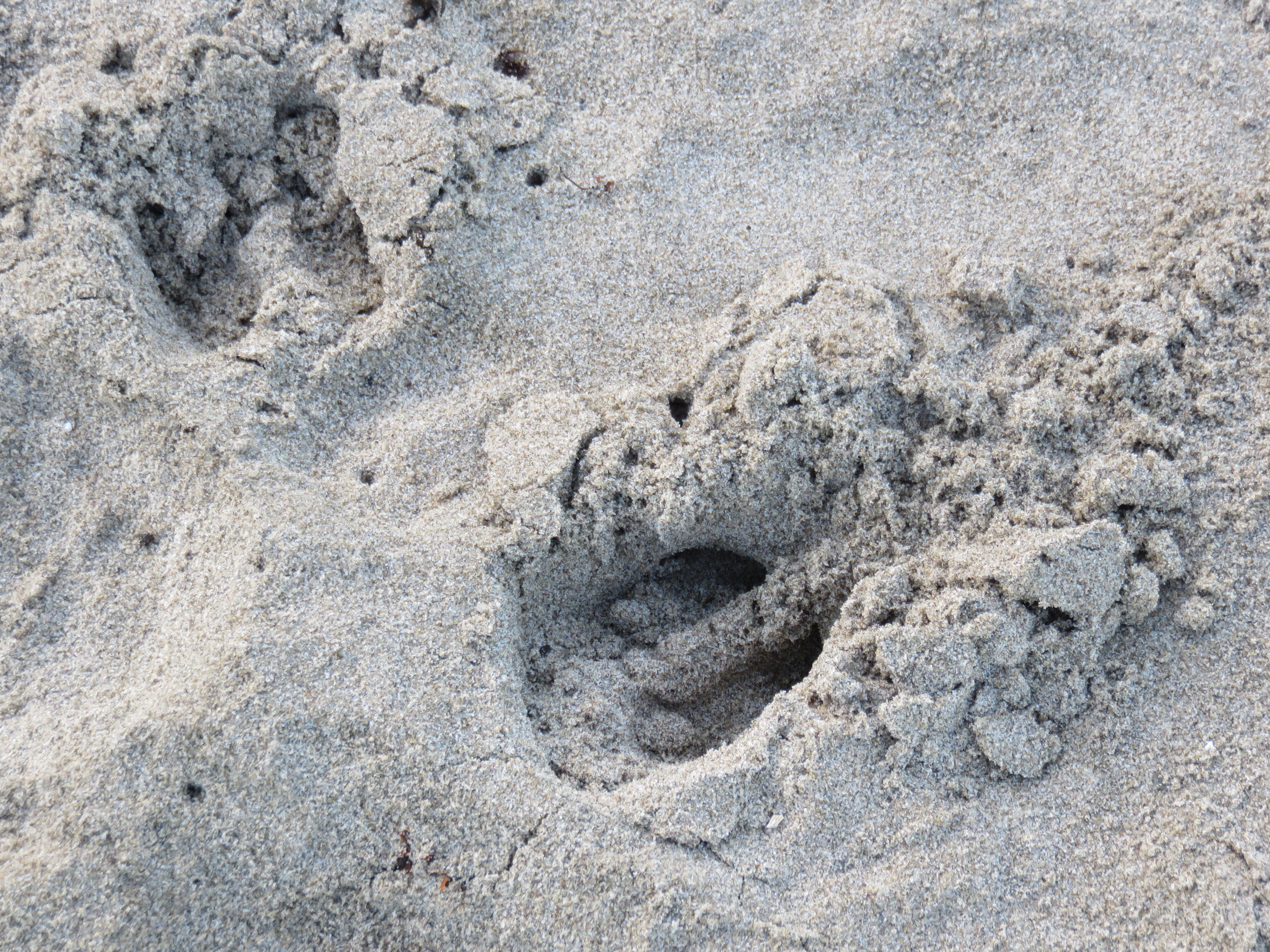
Gary and I walk out around 6am. We are not always the first on the sand. We look for Tammy, Tom, and Larry who are after the same things we are: a good long walk, good empty sand, and a few birds. We see the footprints of raccoons and coyotes and deer, and many birds. They tread all lightly.

Most days we go out before the sun is technically up, and most days the wind blows and the sky spits rain on us. But we never know. It was so mild by the time we turned for home on Friday that I took my hair down. Gary wanted a picture. (He wants credit for this.)
Continue reading

WEATHER OR NOT

We’ve been talking about moving. To be candid, we’ve talked about moving on and off ever since we moved to my family’s home on the Oregon coast in 1979. We missed family and friends. Now it’s the non-stop stream of tourists in a residential neighborhood that used to house people who actually lived here. The truth is, however, that we like the climate, the weather, and our permanent neighbors. We raised our children here, wetsuits dripping over the tub. They moved off but we stayed. We love our daily walks on the shore, even when our fingers and toes go numb in winter. We are accustomed to the continual roar of ocean and water shifting stone. We are used to silence.

We are used to seeing sky, to watching the storms roll in, the sea go high, the gulls and black oystercatchers and broken shells in the rocks. We enjoy finding the shoreline changed every day. This past year has not been easy for most people. The weather alone has been, as they say, interesting.

You can see the two fallen-over trees on the cape are still hanging on. So are we.
Continue reading

WEATHER CHANGE

We like being the first out, while the sand is still unmarked by dogs and people. Usually we find prints and recognize by position who they belong to. That’s John out for his run because the bare feet make prints so close together. Larry drags a bit. Tammy walks close to the water. The tracks of dogs are familiar too. Roxxie and Charlie and Hank.

In summer we have been out on the sand before five in the morning. Real time is nearly 6am just now. [Have we all forgotten that time is not purely a human invention? Noon, for example, is a genuine natural event, that instant when the sun is highest in the sky, and is now marked on the DST clock an hour before it occurs. Like summer and winter, noon is not a fiction, but part of the natural way of things.]

Summer is long gone. Two days ago tides swept away our entire pathway cleared through the stony edge of our beach. Gary cleared that path in spring and it remained clear all this time. The beach is routinely washed free of sand in the winter months, but that day did not show a particularly high tide measured in feet above and below sea level. We check the tide table each day. Their numbers do not reveal the entire story. High surf from a storm at sea, a tame ocean under heavy clouds.

It is the wave action, sometimes showing only one or two low breakers, but this past Thursday breaking nearly to the horizon, breaking over the top of Castle Rock, thick and foamy at the edges. We had walked early in a gale. Our sitting log is gone and an enormous log that rested high up into the hedge fifty yards north of us. Thirty inches across and thirty feet long, that rotting monster has found a new temporary lodging further up the beach. Our sitting log (the one the visitor to a neighbor’s house used to pee in public) has vanished altogether. We walked a mile without finding where it had drifted.

I no longer take photos of waves crashing up into the air, a hundred feet above Castle Rock. I have those photos from previous autumns, dozens. Now I watch.

The surf is up, as they say. We watch with concern when tourists take their little children onto the sand during at out-going tide. A former student drowned, a strong swimmer, and on a pleasant day. No telling when the sea will swing her skirts.

A single wave in January of 1999 pushed the basalt stones up out of their bed and into a ridge along shore that we have never seen before. Until that winter, summer tides brought sand in from the offshore bar and nearly covered the rocky edge, and then for years we did not have a clear sandy beach at all.
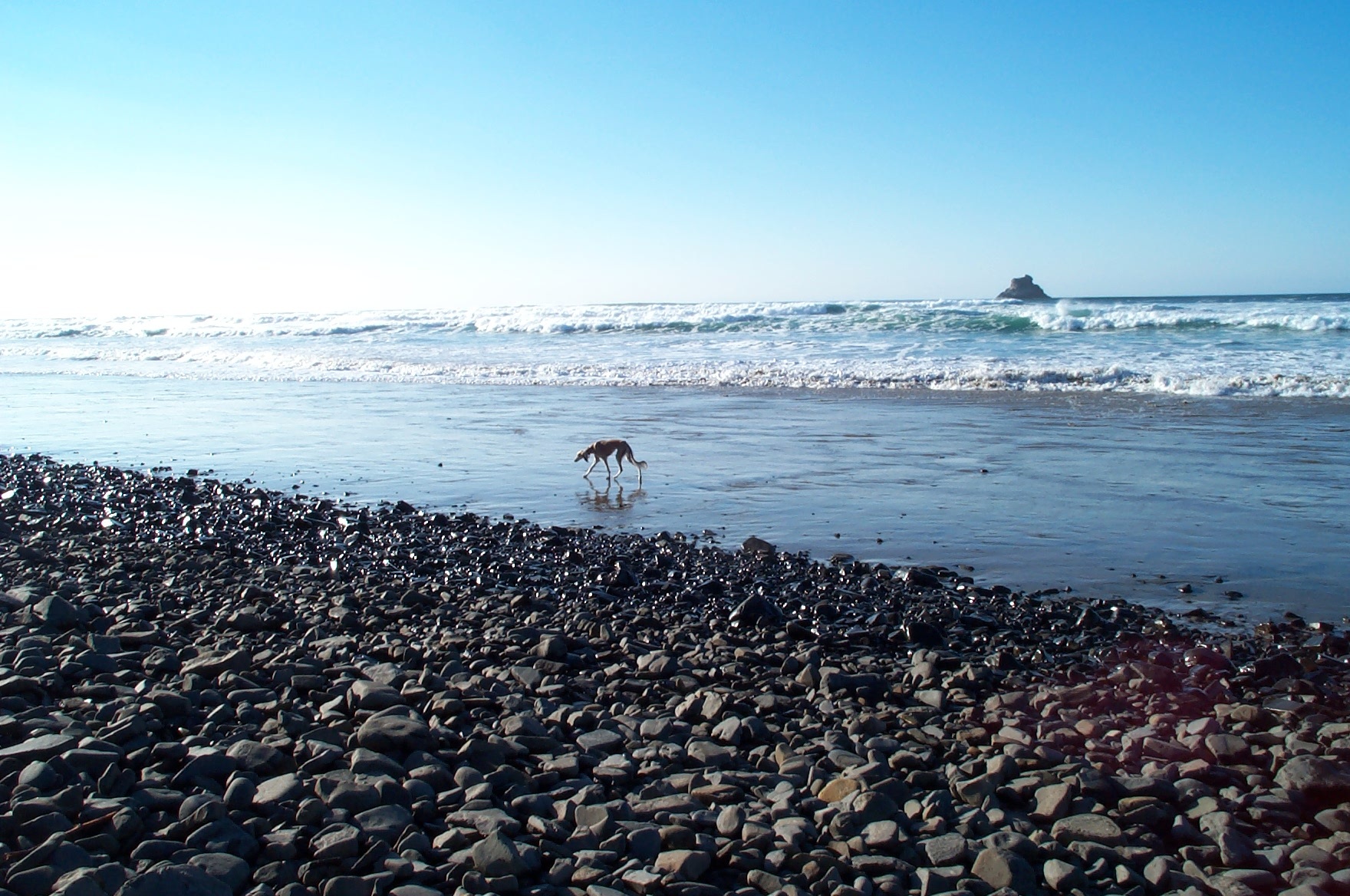
yetiONbeach

The sand has come back, though the rocks have not been completely covered for twenty years.

A friend came to lunch the other day and asked me whether I spent much time watching the ocean. Yes, both of us do. Even after all these years—forty so far—we watch the ocean and shore. When we think about moving, that is a major sticking point. We are accustomed to the view. Watching the weather come in, tracking the birds in the air and in our tiny front garden, the shift of sand and tides, wave action. Nothing new, always different.

When we walk north, the shoreline dips and rises on our right. Some neighbors need long stairs to get to the beach. Our property is set low, just a few feet above the beach. My grandfather’s old path through the hedge, built before the Great War, is completely overgrown. There were no more than a half dozen concrete steps. That stair might still be there buried under salal and sand and basalt rubble. From our western door we walk through a new path in the middle of our hedge and down a short stretch of stones Gary has placed to ease our steps down to the shore.
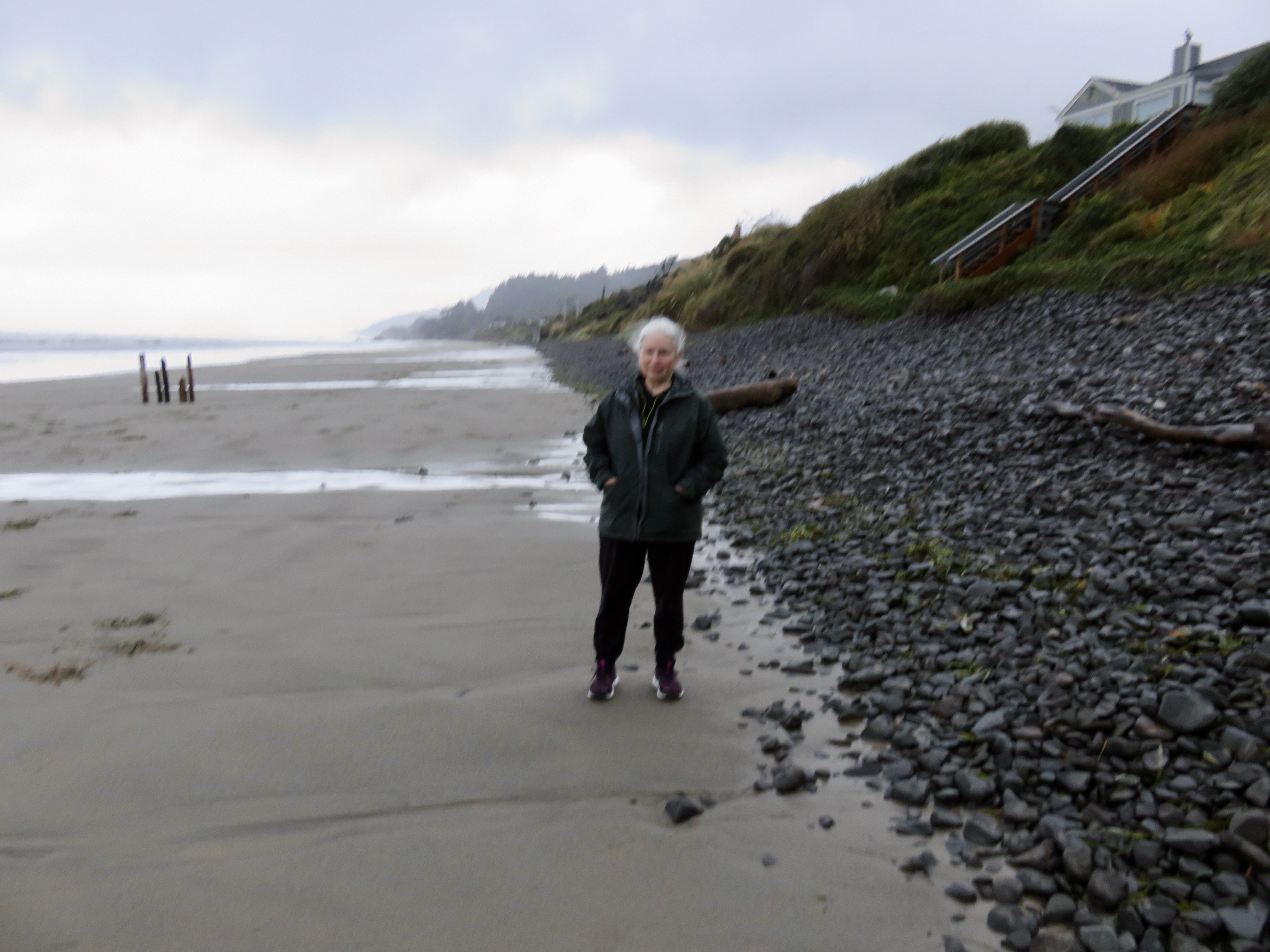
fullsizeoutput_10e9

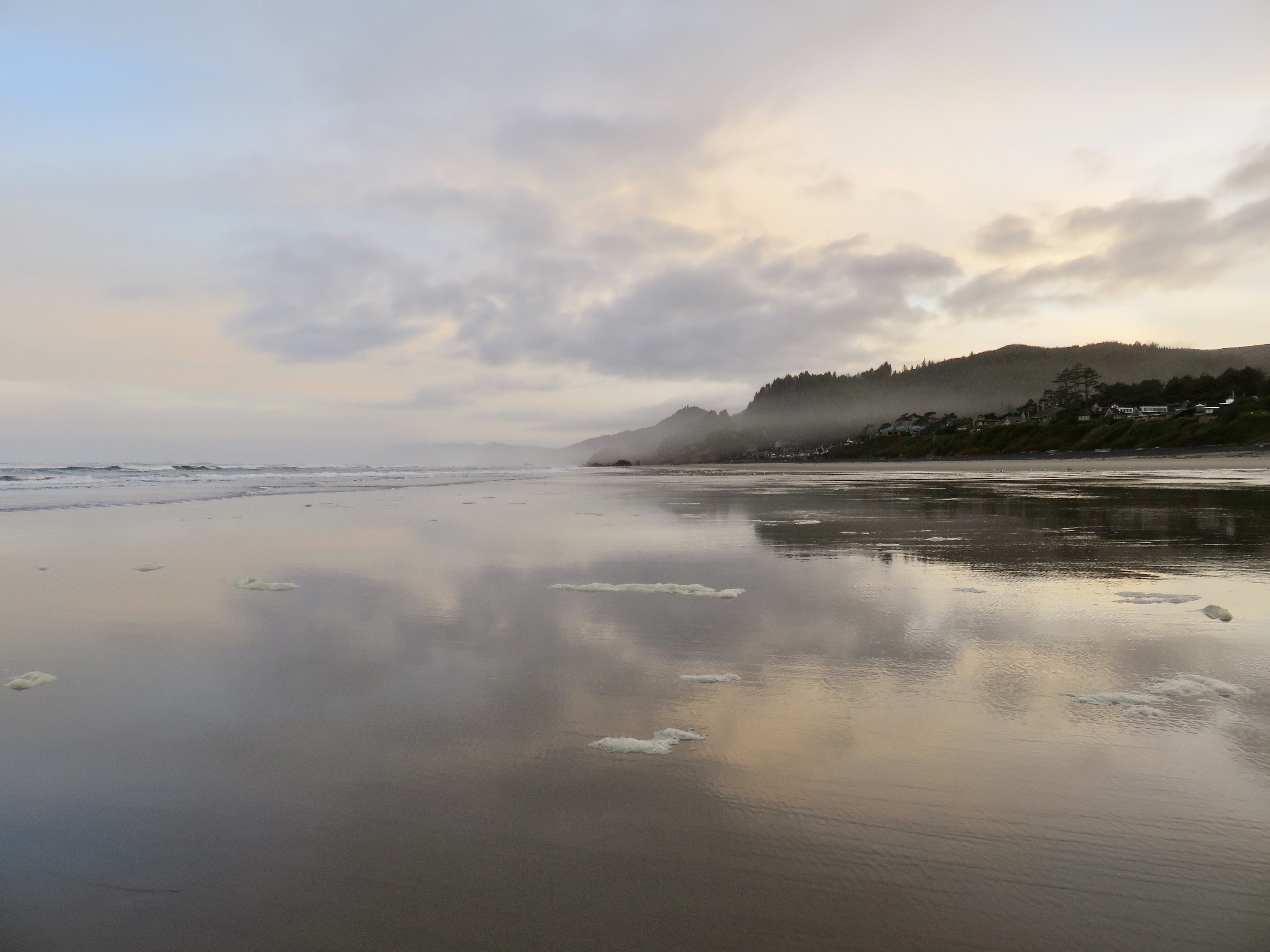
This is what counts as “a lot” of sand. At low tide there might be a couple of hundred yards of sand between the black basalt and surf. I paced off the distance other day.
fullsizeoutput_10de

The out-of-state owners of the rental north of us, after their first autumn, asked what happened to “our sand?” Gone for the season, I told them. Visitors have asked us whether the sand is trucked in, where we get the rocks brought in to protect the shore. Tourists try to “save” resting baby seals and fully grown eagles. It is hard for us, who live here, to imagine such ignorance. We have watched the flow in and out, the fledging of birds and the drowned onshore, the shift and shuffle of sand, the rare hard freeze, the slow progress of water and wildlife.

The sand is leaving. Maybe it will return in the spring. We watch for that.


WET

IMG_4967.jpg

Yesterday there were deer tracks at the base of our path to the beach. This morning a coyote had passed by. We went out a bit late, and I did not put up my hair or even put on a hat because it wasn’t cold or windy, just cooler and damp the way we like it. I unzipped my jacket on the way north because the rising breeze hit my back and I was warm. By the time I thought I should put up my hood, it was already wet inside. I figured that was okay. I hadn’t worn the jacket to keep warm but because it was wet.

As a rule, we do not mind the wet. If we minded we would live someplace else.

We walked for an hour, north and then back south. On our way north, Gary mostly followed the tracks of the coyote on the sand, and I mostly walked in the basalt rubble lining the shore. The tide came right up over the sand and several feet into the rocks last night. I found plastic bits and bobs and leftovers from fireworks, a piece of quartz, a crumb of sand-buffed green glass, and a shell. On the way home, we walked with Tammy. She was dressed for weather—hood, rubber boots—though she’d decided it wasn’t worth digging out her rainproof pants. Like my hair, her pants were drenched by then.

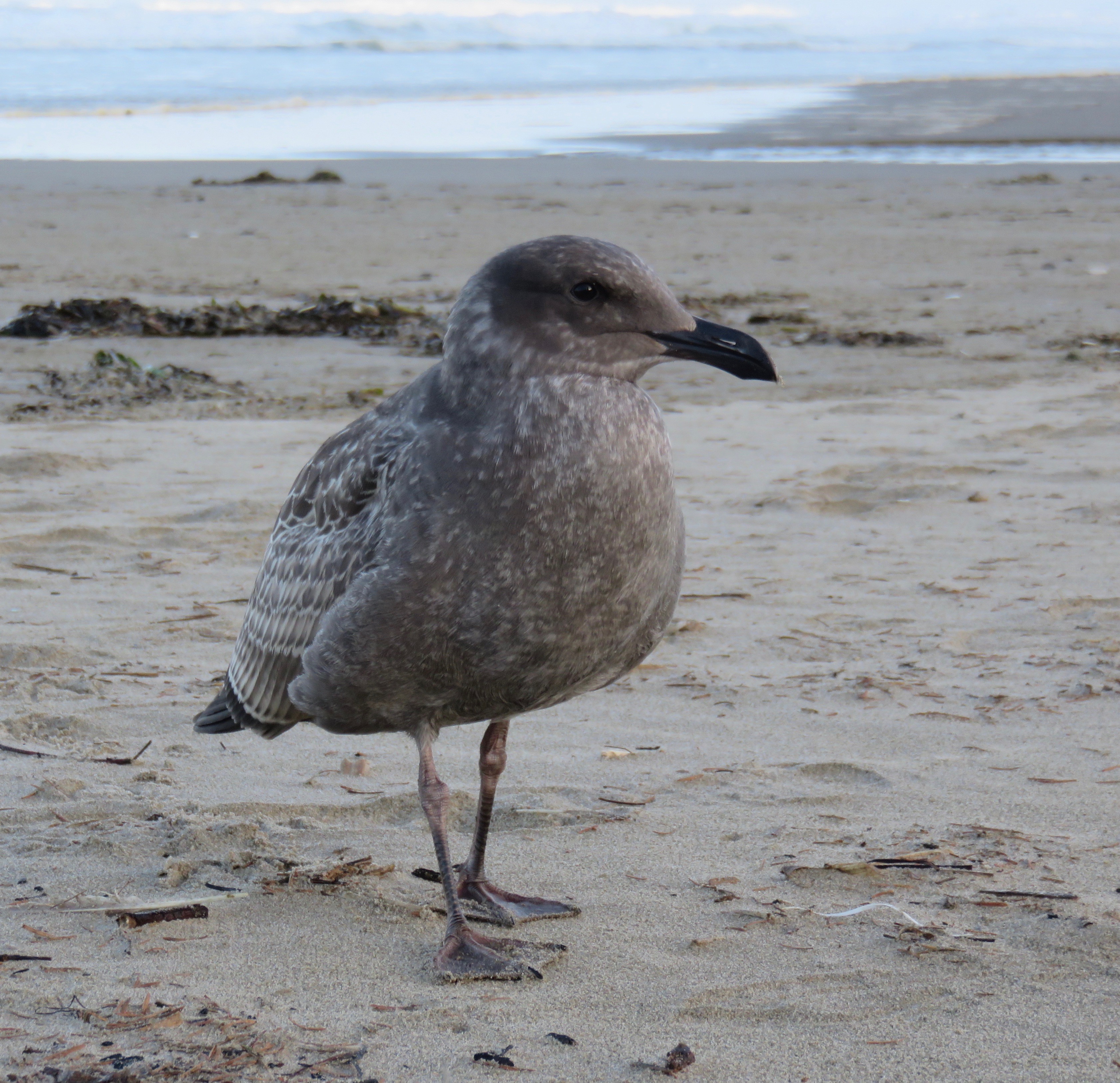
IMG_4966.jpgRecently, juvenile gulls have been following me. One trailed me up and down the sand and over the rocks for a quarter mile the other day. I told him that was not wise. Humans are not to be trusted, and I would not feed him even if I had anything in my pockets he could eat. Yesterday, one came quite close, stood no more than four feet away and waited for a long time for me to do something. What?
There are too many dead birds on the beach, it seems to me. We always see one or two when we walk a few miles. This time of year the new seabirds who have failed to learn their survival skills start showing up, juveniles who have starved or done something stupid. Fully grown juveniles hunker down and call weep-weep at their mothers, who are done feeding them. After the first big storm or a crazy tide, youngsters are swept off Castle Rock and wash up onshore. This morning we saw a dead bird every five to fifteen yards, and that is not typical for late September or really at any time. We haven’t had a storm and many of the dead are adults. Three banded birds in as many yards—a seagull and two cormorants. Gary says the banding may have been enough to stress them, and there is no typical, no normal anymore.

Climate change has killed billions of birds, and millions of species are already lost or threatened.

But this morning we came home dripping and I sat comfortably watching the pale sky dissolve into pale sea. The osprey was fishing, the tide rushed in, waves swept across the sand, which has not begun moving back out into offshore bars.

IMG_4969I have finished a third quilt earlier than I expected (the last four rows of stitching completed Tuesday evening instead of Friday). Late next week I will carry it to Linda, or whenever she’s finished the two I pieced in August.

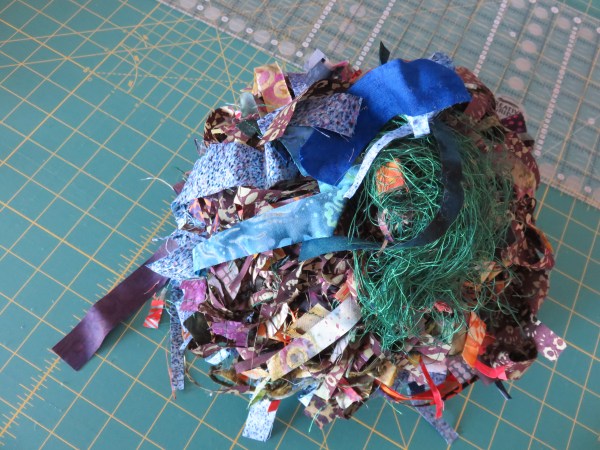
Yesterday I cleared out my work space, sweeping my work table, sorting colors into warm and cool and black&white bins, and finding storage for miscellaneous sewing and knitting tools and notions. The floor seems oddly empty without fabric spread out in patterns. The scraps from stitching and trimming—trimmed threads and bits of fabric less than an inch wide—made a heap on my work table. I dug through the little pile once more and then tossed it into a waste basket. I hope Gary might pluck out bits and pieces to save for birds’ nest-building in the spring. If we composted, they could go in as “carbon” I think.

The season is changing, weather and focus. There was Open House at the high school last evening, but we were at a restaurant visiting with mostly-retired school employees. Are you enjoying retirement? Some confess to having a hard time, missing students and the work. Some are simply relieved to stop. A friend in the former group is in the hospital. After decades of deep involvement and commitment to teaching, the way we are let go can seem rather heartless. And the way those with social connections are privileged and allowed to continue on their own terms can seem unfair. Six months out, I am still uncertain where I stand.

My kitchen floor is cleaner than it’s been in almost thirty years.

Change is inevitable. Not all of it is good. Not all bad.