TREADING LIGHTLY

The coast can be a madhouse sometimes, especially during good weather and a holiday weekend. Like now. The air is already smokey with beach fires this afternoon. We’re not supposed to leave fires untended even in damp weather, our dogs are supposed to be leashed, and most of our footprints in the sand should be gone by morning. All of us are visitors here.

Our favorite black oystercatcher couple was busy gathering food. There are no oysters here, but they are fond of mussels.

Gary and I walk out around 6am. We are not always the first on the sand. We look for Tammy, Tom, and Larry who are after the same things we are: a good long walk, good empty sand, and a few birds. We see the footprints of raccoons and coyotes and deer, and many birds. They tread all lightly.

Most days we go out before the sun is technically up, and most days the wind blows and the sky spits rain on us. But we never know. It was so mild by the time we turned for home on Friday that I took my hair down. Gary wanted a picture. (He wants credit for this.)
Continue reading

ON NOT CONNECTING DOTS

fullsizeoutput_1129

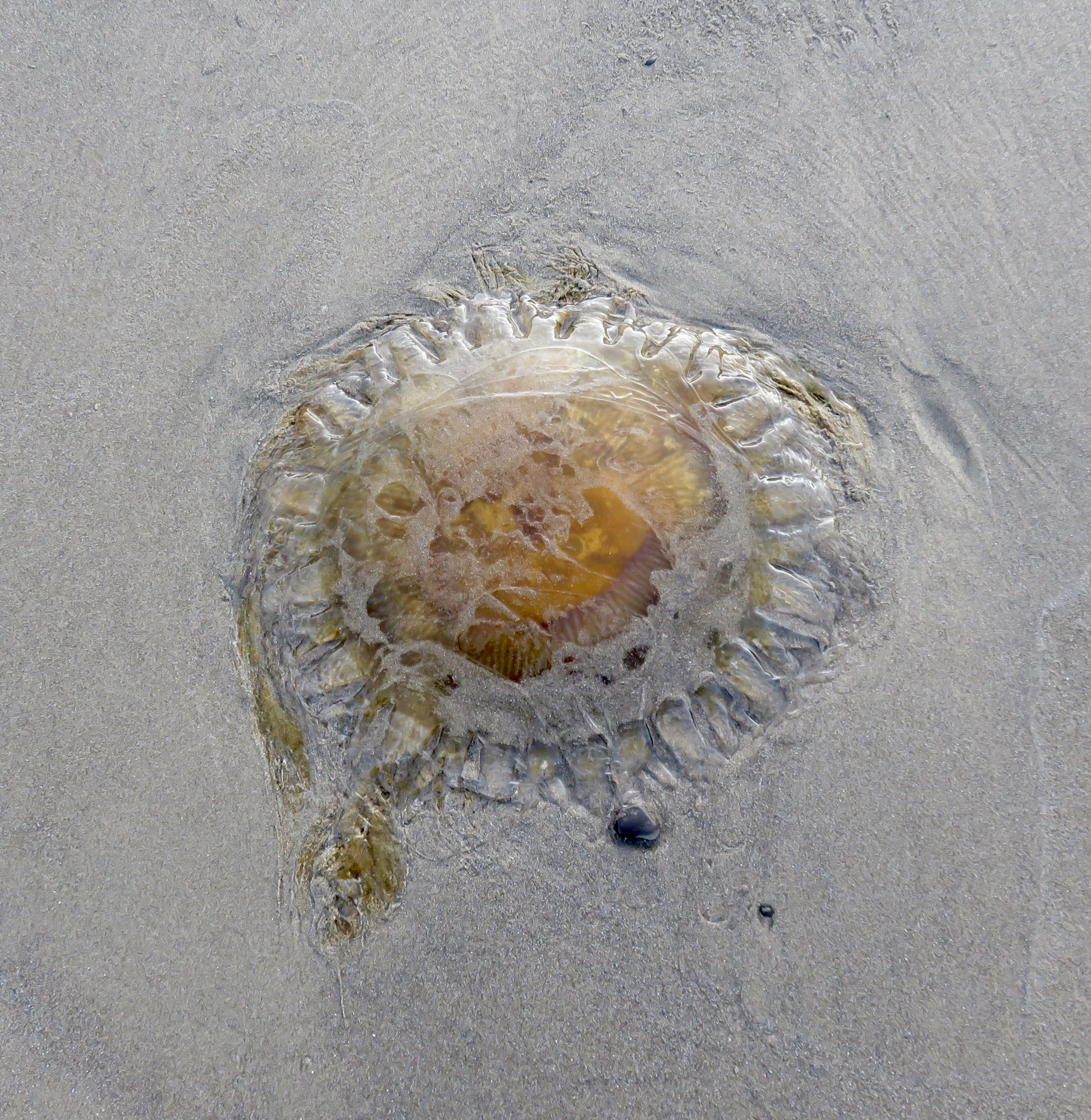
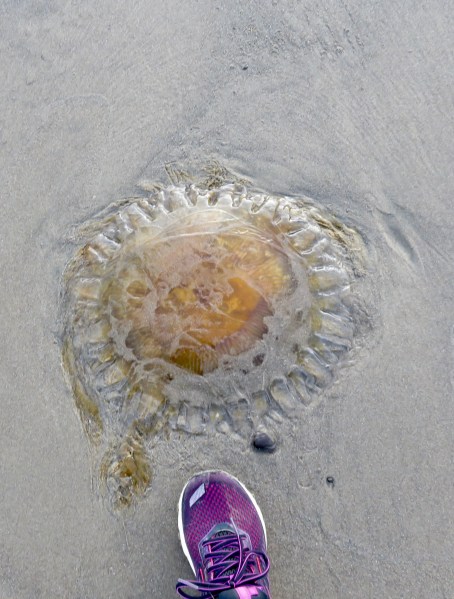
It was the orange jellies I was warned against as a child. The clear ones tended to be a couple of inches across when I was young. The orange ones were six or eight inches. This one is closer to eighteen inches. No, Daddy, I didn’t touch it.

We had such a wonderful Thanksgiving that I am embarrassed to think of it. I told Tammy on the beach this morning that I didn’t feel I deserved such a lovely day. She said, “It’s best not to connect the dots.”

Our drive over was uneventful—good news given forecasts of snow and ice. We walked in Forest Park with our younger son’s family, checked into a hotel, had dinner with our older son’s and his wife’s family, and then went back to the Kennedy School for a long soak in their pool. It was very cold and the soaking pool is outdoors. Bamboo and fats and palms rustled overhead, but the water was perfectly warm. We slept well, had breakfast and drove home again. Snow on the verges but no ice on the pass.

We also had an opportunity to drive in the city. Always an adventure. We were honked at twice, each time while waiting for a pedestrian in a crosswalk. People gave us exasperated looks for driving too slow—barely over the speed limit. (I have come up with a new safety rule about speed: drive at the posted limit plus 20% and other drivers will not throw up their hands.)

Today I received a link to a fascinating history of automobiles in the U.S. Apparently our “love affair with the automobile” began where Groucho Marx declared it so in a documentary financed by the car industry. Early on there were perfectly functioning electric cars and people walking, on horseback, or driving were not in such a rush. Most hated the new cars that only the wealthy could afford. All Americans would pay for the roads these drivers demanded.

In his 1896 essay making the case for electric vehicles, Salom decried the fumes associated with the internal combustion engine: “Imagine thousands of such vehicles on the streets, each offering up its column of smell . . . and consider whether such a system has general utility or adaptability.”

Instead of thousands of such vehicles, we now have more than a billion. Had the desire of working Americans for safety been prioritized and their enthusiasm for public space been respected, transport might have designed on the basis of public good rather than private enrichment. If that had happened, the planet would look very different today.

Instead, a relatively small number of entrepreneurs successfully campaigned to reorganize the country—and subsequently the world—so that their particular business model might succeed.—“The Car Culture That’s Helping Destroy the Planet Was By No Means Inevitable: On the Relentless Campaign to Force Americans to Accept the Automobile” bJeff Sparrow

Today is the last day of NaNo and I have over 53 thousand words. I think they are mostly in the right order, though I might have to flip chapters 19 and 23, which are both flashbacks and probably need to be in chronological order. I have marked the five chapters I need to develop further. Overall, it is way too short, but I think once I develop another plot thread (plot!) and those five short chapters, I might get to a more desirable length. I aim for 70-80k words.

fullsizeoutput_112bThis morning we went out for our beach walk on last night’s high tide line where we expected to find trash. We did and brought it home, and I found three pieces of glass, some shells and frozen jellyfish. When I was a girl, jellyfish were rare. I might see one orange jelly six or eight inches across in a half mile walk. These days we see dozens or hundreds, both blue and orange and ranging from an inch up to two feet across.
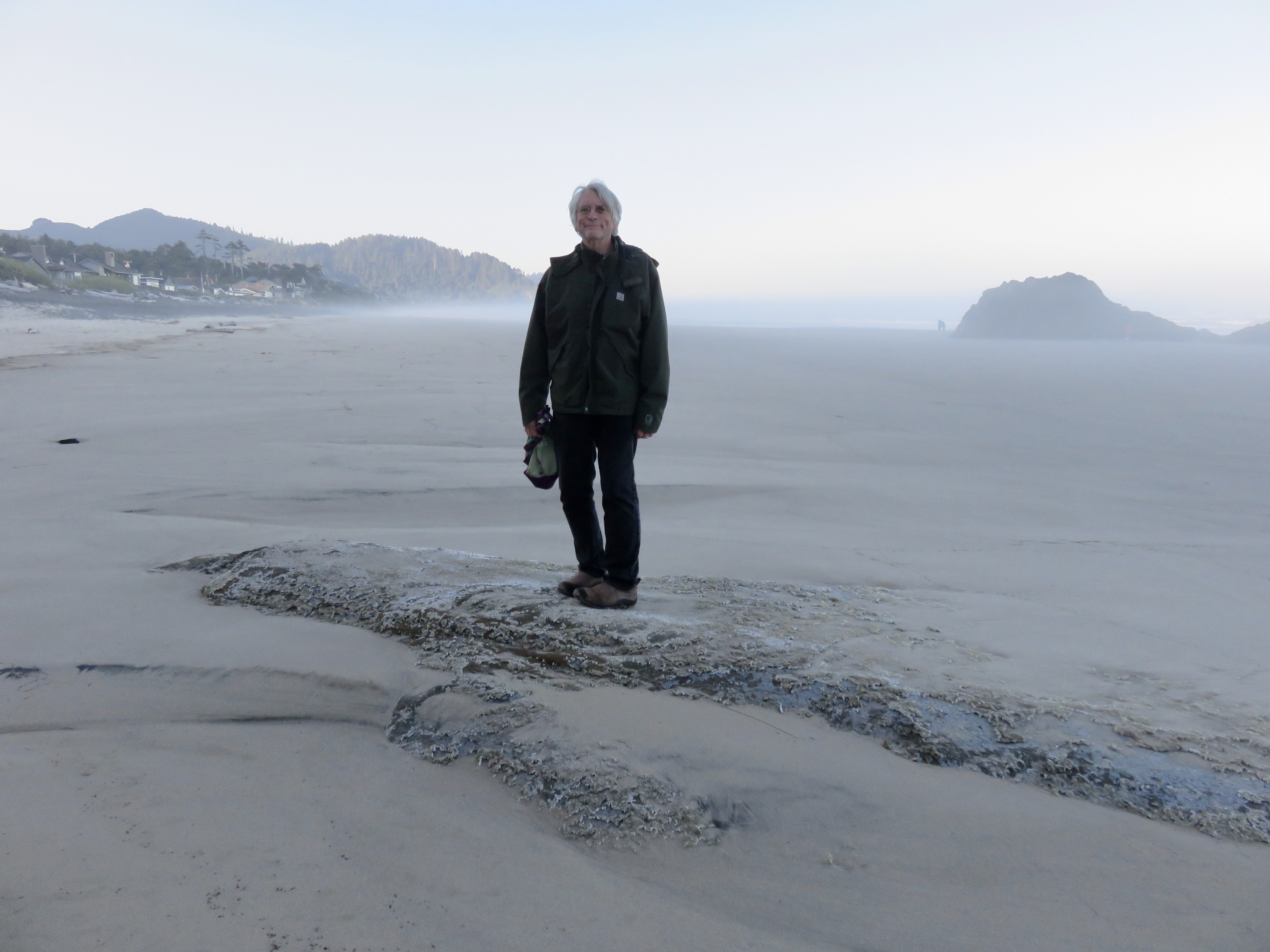
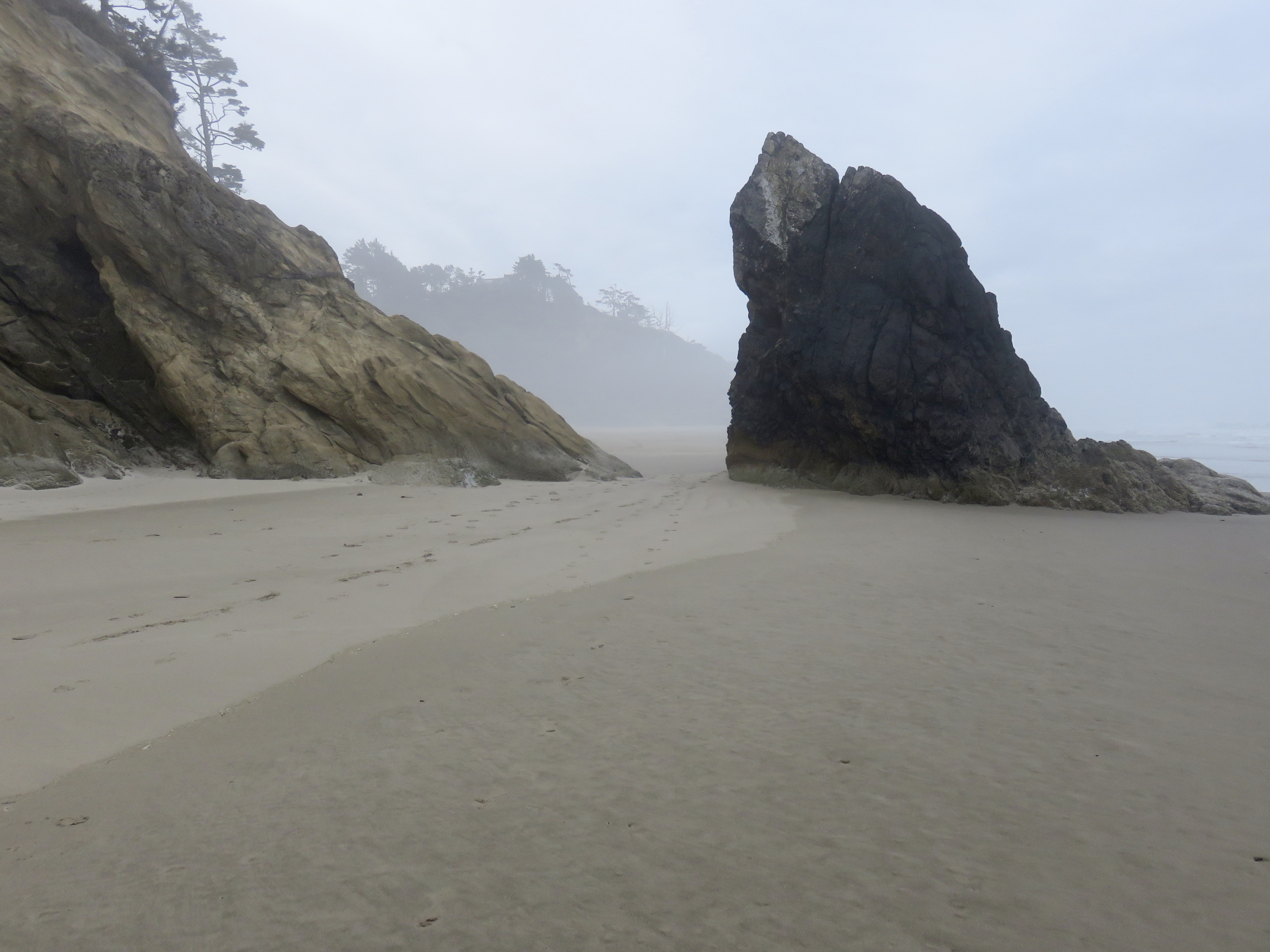
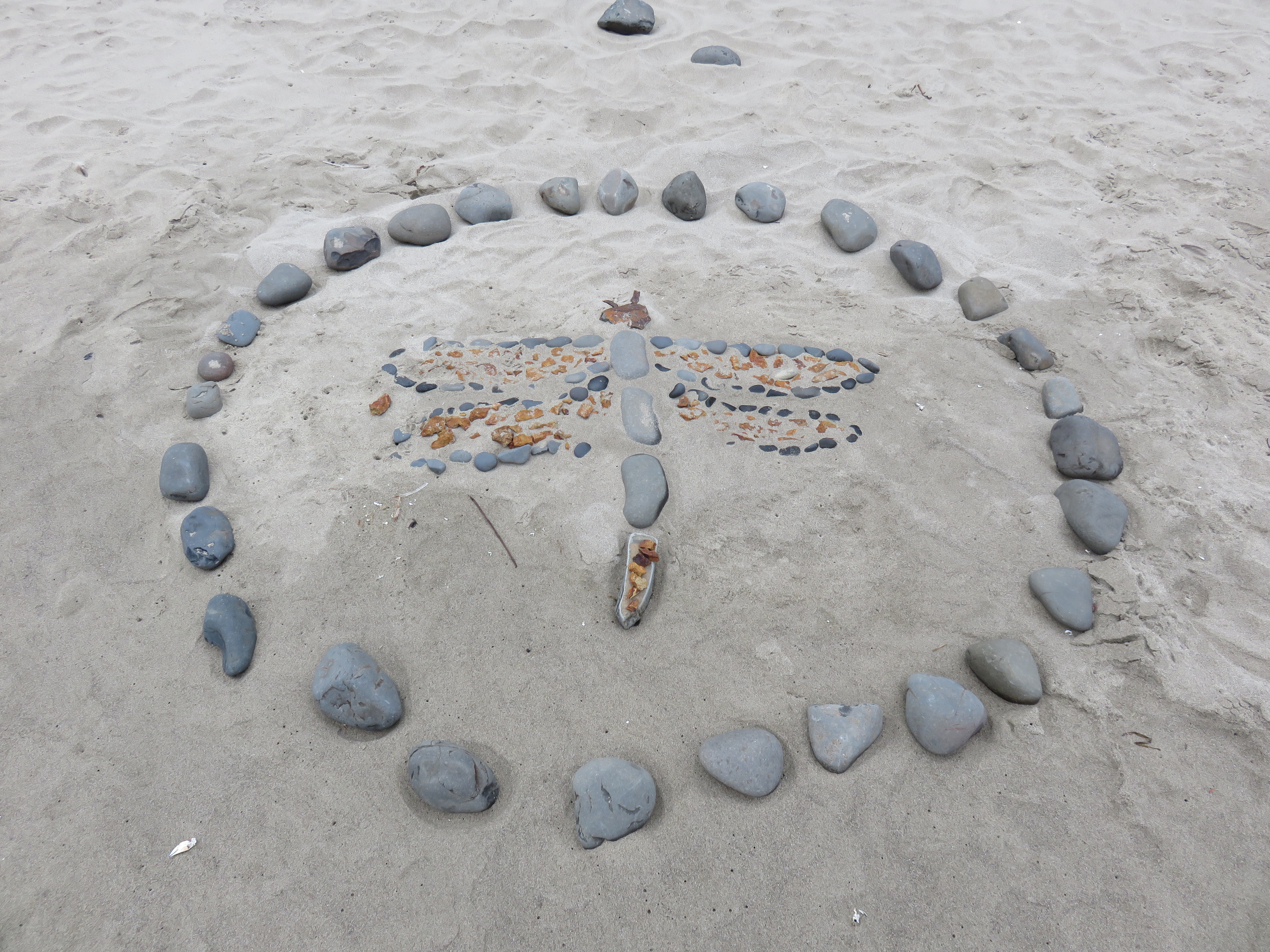
It was sunny and cold this morning, and we were glad to be out and home.


WASTED

fullsizeoutput_103b

Yesterday on our predawn walk north, Gary stood on a rock that usually rises above my head from the sand. This summer it is nearly covered. This is the deepest sand we have had in twenty years. In January of 1999, a storm-driven high tide dug the basalt from under the sand into a high ridge and took out far more sand than usual. It’s taken all this time to see it return.

Wasted. Not drunk or high, I’m talking about money.

Our biggest waste was “The Maples,” a piece of land just over two acres that my husband and I purchased in the early 80s when our firstborn was a baby. I have photos someplace of me holding him in my arms. Above us are the enormous bigleaf maples that inspired our name for the property. It was on the other side of the coast range, up the Nehalem Valley on a road called Anderson, and a stream ran along the north side. No houses I designed had yet been built, but I had great hopes for that property, purchased on contract from a widow.

And then the sale of our Seattle house fell through. What year was that? We’d accepted a very long escrow in return for a very large earnest deposit of $5000. That was in the fall. It was the following spring, early June, a week before the sale was supposed to close that the buyers told us they’d changed their mind. “No hurry” returning the earnest money.

And the money was spent on The Maples. We didn’t have it. We could not pay back the deposit, which was paid to guarantee that the buyers would not do what they did. Change their minds. I was pregnant with our second son, and we had counted on the sale closing in order to pay off the land because we really could not afford the house payments as well as the land payments.

And suddenly we were in trouble financially with contract payments on the acreage and mortgage payments on the Seattle house. Remodeling on the house I had inherited from my grandfather’s third wife. Renters had been turned out of the Seattle house, as the buyers requested, and there was some damage from the buyers opening walls and from the house lying empty for all those months. We had lost the rent and now had repairs to make before the house could be sold. Less than month before our second child was born, I was not in a position to drive back to Seattle and do the work myself. My Visa bill already did not bear thinking about. We had hard decisions to make.

We gave the land to the people who had bought the property next door, just gave it away. They would take over our payments and Tootie Anderson, from whom we purchased it, would not miss payments she relied upon, and we would be out from under one of those monthly payments we could not afford.

The Maples were gone.

Gary has a hunk of quartz crystals found at the base of one of those spectacular trees. Gary calls it our “thirteen thousand dollar rock.” That was what we lost in down payment and monthly payments on the property we gave away.

There have been other wastes. When I opened this page, I’d intended to talk about my husband’s dismay when he found that a coat he purchased a few years ago, an expensive cold-weather coat, was on sale for a quarter of what he’d paid. There are plenty of examples of wastefulness, wasted spending. Bad meals in restaurants. A pair of shoes I could not return after they gave me blisters. Fabric. A braided rug. Gary has bought CDs he realized he already had, or once had and did not like. Three incomplete sweaters that I will never finish. I have bought yarn I never used.

In our downsizing process, I let go of many projects I no longer wanted to work on. I sold a few hundred dollars worth of yarn for $90 and gave away my enameling kiln to a former student. I never heard from her afterward. Perhaps she didn’t like the yarn. I unearthed additional tools related to the kiln that I would like to give her. Perhaps the kiln did not work. Perhaps this is her own story of waste. sigh

But most of our “wasted time” was not wasted at all. It was lived. Dozens of stories and several novels consumed half a lifetime and that was not wasted time even though they are unpublished. But money. Money is not something we are supposed to talk about. For almost the whole of my life I worried about money, a habit encouraged by my mother who actually prided herself on being a “worrier.” It is a waste of time, I think.

A friend referred to travel by train as a waste of time. But on the one train trip I took as a girl, watching the countryside pass by was not a waste. Biking across a landscape is not a waste of time, running the Hood to Coast was not a waste of my time. Walking the beach this morning—we plan to walk south around the Cape—is time spent, not wasted. Time lived.

There is rain today, cooler temperatures began yesterday and I slept right through the lightening and thunder last night. Slept a good eight hours. Not a waste. Life.

fullsizeoutput_103e

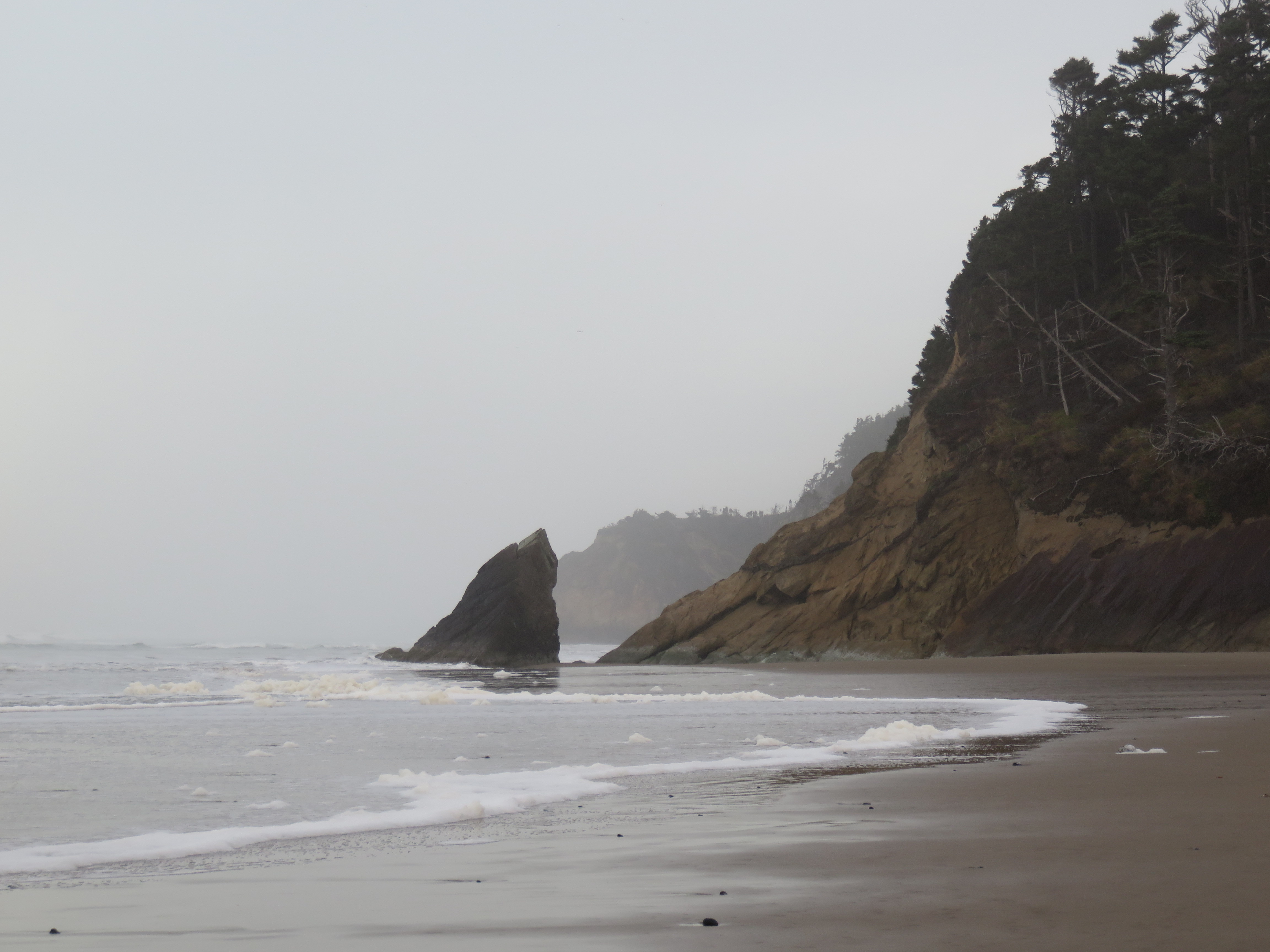
This is also from our four-mile walk, looking south. Last year we could not walk between the Seal Rock and the headland—the gap above that is filled with sand. Last year it never filled in even by August and there were pools of water and barnacled rocks. This year that is all under feet of sand.


‘Are we there yet?’

IMG_4718

We found this about a mile and a half north. It had survived a couple of high tides, but not the one last night. It was gone this morning.

It’s one of those phrases. “Poor kitties” is another. I should probably list more, but two will do. Today is our anniversary. Forty-fifth, unless you count our time together as a couple, which pushes it to fifty. We have a lot of lines and inside jokes that no one gets but the two of us. We were laughing about that this morning as we walked. We were out for about an hour.

Nothing last forever, certainly nothing human. But we have lasted a very long time as a couple. Fifty years is a long time in people-years. Three or more lifetimes for a dog or cat. Thirty-seven thousand high tides.

Numbers.

Human beings are devoted to numbers. it is our fundamental technology, like nest-building for some birds. Spiderwebs. I recall being told that a mother cat licks each kitten by way of counting them. Perhaps. Certainly a mother cat keeps track of her kits. But cats care nothing for mathematics.

My English students complained about doing math in my class. I thought they should understand how many words they read in a minute, what a score of 67/90 points worked out to as a grade (74%, a C). They thought they should not have to deal with such calculation unless they were at the other end of the school in a math class. Once, when I passed back an exam worth 50 points, an Honors English student started to haul out his calculator. He was taking Trigonometry that term and needed a tool to calculate his grade? I about had a fit. Double your score and that’s your percentage! How do you not know that?

I was never one of those girls who are “not good at math.” I loved math in school. I still do. I use it all the time, numbers running through my head as I bake or sew, the way they used to run through my head as a runner. (When I could not compute minutes/mile on a run I knew I needed a walking break. Thirty seconds. Maybe forty seconds of walking. I would return to a run and recompute how much time I would spend on the distance.)

Hood-to-Coast is this weekend, that Mt Hood to Seaside relay. I ran it five times, 1996-2000, first out of the second van, about 16 miles total. My pace on a very good day running the beach or even highway hills in those days was 8.5 minute miles, but usually I ran a steady nine minute mile. I never got close to that on the Hood to Coast. In 1996, the temperature on my first 6.2 mile leg was 96°F, already rated “very hard” for hills and distance. I had never run in heat before, but I maintained a steady pace. The night run was another sort of revelation. I had never run in the dark before, and it was lovely. I calculated my speed throughout my three runs. Another runner commented that my first mile and my sixth were almost exactly the same speed. Oh yes.

My last long run was from home to school on the first day of in-service in 2011. I underestimated the distance by a half mile and I forgot to wear my new shoes. By the time I was into my sixteenth mile I ran slow and would have taken a ride if Gary had not lost me along the way. My shoes were flat and I damaged my feet that morning. My minutes/mile do not bear thinking about. I would never run further than four miles again.

Numbers.

Fifty years married. During that time, my husband and I have traveled together and apart, completed five college degrees, worked in a dozen retail businesses and for five public agencies, saw through life ten dogs and five cats and a conure and a parrot, raised two sons, lived in three homes, bought seven vehicles, but I will not count the times we each lost our tempers and did incredibly stupid, bonehead things for which we have been forgiven. The love does not take to counting.

This morning we took our walk. We walked north and then south to home again, about three miles. Sometimes we walked side by side and sometimes fifty yards apart. I picked up seven shells, he gathered seven bits of beach trash. We’ve missed our walk only a couple of times this summer. A few times we walked twice. Sometimes we walked a couple of miles, and on an ambitious day we walked five. I will be 67 in a couple of months, he will be 70 in eight days.

Those numbers do not matter at all, of course. That’s just our technology—a foolish way of measuring progress.

It’s about glancing up shore to see where Gary is walking. It’s about knowing he is there. It’s about the walk. Not about how far or when we arrive. We arrived a long time ago.

Happy anniversary, sweetheart.

HABIT

IMG_1622

Taken on a winter day, the tide was out far enough this morning that I could walk well out on the sand beyond that triangular seasick I think of as a seal sticking his head up out of the sand.

Clouds like cobblestones drift over the eastern horizon. Light seams their edges. Birds join the morning music.

We might miss a half dozen days out of the year, but my husband and I try to walk each morning. We go out as soon as there is light or whenever I can get my behind in gear. Two cups of coffee, checking my email, and this time of year, it is light at 4 but even so we are usually not before 6am.

We are rarely first.

This morning was perfect, sun already over the coast range, reaching across the sand. Low clouds sliding down along the cape to the south and mist rising up off the ocean. A roll of fog out on the horizon, blue sky overhead. We walked south, Gary with the trash bag, mw filling my pockets with little stone, as is our habit. Sometimes we walked together, more often we wove away and back across sand and the rock edging the beach, looking for trash, agates, and glass. The tide was sweeping in, but there was a broad expanse of sand and last night’s high tide had left a stretch of dry sand along most of our shore.

We headed north, waving at locals as we went. I thought about going past the northern point, the first long distance of the year. Drift logs pile up in that little cove north, the way they once did all along Arch Cape beach. My mother used to play a game with her sister where they pretended the sand was poison and they walked drift logs all the way south to the big creek. I might have played that same game in my own childhood, but now locals cut up the logs and tourists place them whole across beach fires and walk off.

A group of campers were just waking up on the sand just south of the falls at Hug Point State Park. It can be a risky place to camp. When the tide comes in high in the dark, it strikes the cliff face and the only escape is pretty much straight up.

By the time I got to Hug Point, a hundred-year-old roadway carved into the rock, waves were already lapping around at the base of the rock. I went up anyway. This was part of my favorite run. No wind. No chance of drizzle. A bright blue, misty day cool enough that I would not be overheated. I ran this path for twenty years. This morning, I would have run all the way to Arcadia, if I had been running and not walking.

It was a good and healthy habit, my running days. Giving it up was one of the hardest things I have ever done. Ask anyone. Ask anyone who used to smoke. Kicking a habit is hard.

I never smoked, and experimented with drugs only briefly. When I was caring for my mother I drank too much, too much for me. Three glasses of wine and I am wasted, and I did that once or twice a week during those five terrible years. I gained weight, but kept running, which certainly shortened my running days. One bad habit destroying a good one.

I am trying to find better habits of eating and drinking, walking and work. I track everything and already, after almost four weeks of keeping track, I am doing better—drowning the bad habits with the good one.

It seems to me that there is too much talk these days about addiction and lifestyle. I was not addicted to running and I was not addicted to eating too much or drinking or writing. These were habits. That is not meant to minimize their power; I mean to acknowledge the power of habit.

When I stopped running I thrashed around, seeking some way to move. I swam when my boys were little, but chlorine and I are not friends and the pool is my only option. I tried bellydance for a while, but now I am a walker, which seems to suit me best.

We were out for two hours this morning, four mile as the crows flies, longer as a real crow might fly and as I walked up and down, up and down, my eyes examining thousands of square feet of rocky shore and sand.

We brought home a sheet of polystyrene foam the size of a lounge chair, a bag of trash, a pocketful of agates, two limpets, and ten sand-washed bits of glass.

Then I went out into the yard and picked the first salal berries from our hedge to make muffins. That is a habit too. At the peak of season, I could make muffins most very day from the berries in our yard. I will save the pickings from three or four days and make jam next month.

I have only worked on my loom for a short time this morning. A bit over four inches are done so far today, and I want twenty.

Some will call this a lifestyle. It’s just life.