Someone using Mauritius as their home address visits my blog most days. I have access to view-counts and country-counts. I know where in the world my viewers are logging on and how many pages have been viewed from each country. I can’t help being curious about who is reading my posts from Mauritius. I know where that is, but not who.
The pandemic has cost me travel and entertainment and face to face meetings, Scrabble games and Farmers Market shopping. But some things might might change permanently, and some of those changes might be . . . at least interesting.
As one example, some events I would never have traveled to are now scheduled as online meetings. I can attend an Adroit issue launch, for example. I’m not certain I could do that before. I’ve been invited via email to several readings I am certain I could never have seen before. Living in a tiny community of mostly vacation homes in Oregon, New York City public readings might as well have been on the moon.
I understand people missing the “water cooler” moments and the schmoozing and drinking after-event events. Since I never enjoyed those sorts of gatherings, this is no loss to me. I see opportunity here.
Another opportunity is a sensible reorganization of clocks. Since much of the world ignores real time anyway—noon no longer means when the sun is at its zenith—maybe rethink this whole clock thing. Clocks made sense once upon a time as a way of dividing time. Now they are simply a matter of numbers telling us what to do when. And this is complicated by the way time zones divide up the world.
If I want to speak to a person in a London shop, for example, I must first look up their hours of operation online. Then I call up a conversion table to find out what 8am is local time. Then I can schedule a call.
Imagine that the entire world went on Greenwich Mean Time, the time I increasingly find on charts and websites these day. That is, today would begin just after the clock showed midnight at Greenwich, but it would be today all over the world at the same time instead of already tomorrow in some places—or is that yesterday? It would still be inconvenient to wake in the morning and find that the London shop had already closed at 5pm, but it would be open at 8am, which would be early afternoon for me tomorrow, and 8am would be 8am all over the world. London doesn’t currently observe GMT, which adds another wrinkle. In a worldwide system of GMT, they would, and if they wanted to open for business an hour later in the summer, they could do that.
Sure, confusion at first. We are fond of our numbers. Locally, I would be waking with the sun about 1pm, but the time would be 1pm everywhere. No confusion about whether it’s today or tomorrow in Hong Kong. (Seriously, you are never confused about that international date line?) Hours posted would hold true all over the world. Could I get used to rising when the clock says 1pm instead of 6am and heading for bed when my clock says 4am? They’re just numbers. I think I could accustomed myself to the numbers. My internal clock wakes me at sunrise and sends me to bed at dark.
In the mean time, I would still wonder who looks at my blog in Mauritius late in my night?
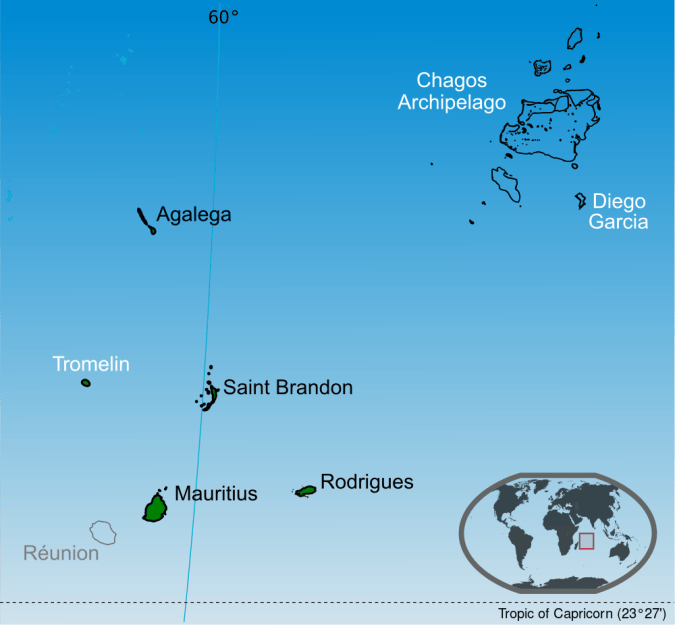
I know about these islands because one of Patrick O’Brian’s Aubrey/Maturin novels is set in the islands. This image is from Wikicommons.

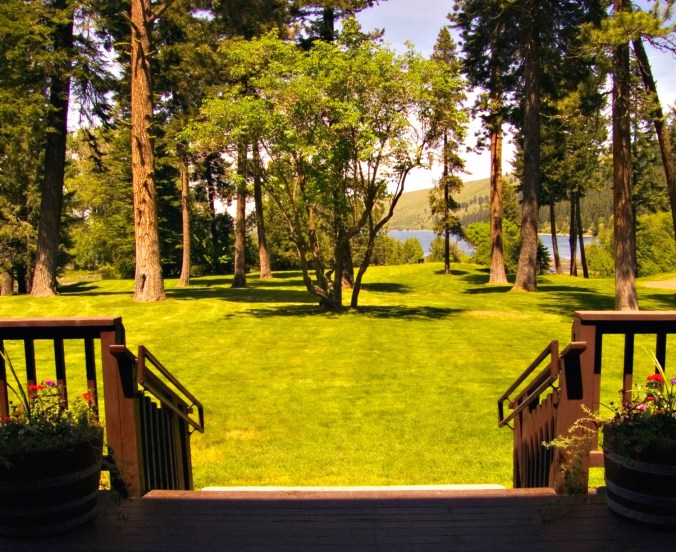
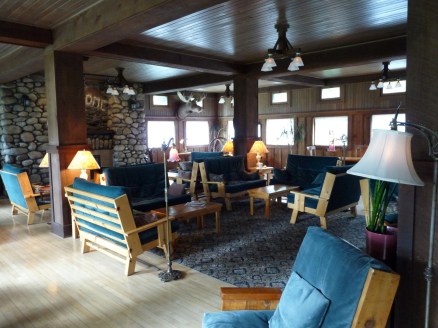 So far I have seen people I recognize, but no one I actually know. Yesterday we sat in the beautiful great room of Wallowa Lake Lodge (opened in 1923). We walked across the street for dinner. We walked through Canada goose poo to admire the river pouring into the lake. I watched clouds pass over head, the nearer moving east, those higher up shifting more slowly south. We have seen an unfamiliar species of ground squirrel and several deer since we arrived yesterday, and I had a pleasant talk with a local woman who was also knitting while her husband and daughter participate. Time passes slowly. I varnished the dining and kitchen floors before we left the house. Being here while “paint dries” is only an excuse. We plan to read and relax and hope to visit with friends.
 IMPERFECT PATIENCE