SMOKE

This is as clear as Castle Rock has appeared since Monday. It’s right there just left of center, 0.6 miles offshore. Much of the week we have not been able to see it at all, even though we know just where to look. Smoke between here and there has turned the air yellow, the sun, even at noon, no brighter than an orange ball in the sky.

My tongue tastes copper metallic. My throat feels the smoke. Sand blew in the skylights open at the beginning of the week.

Gary and I live in my grandfather’s house on the Oregon coast. My family has been here for 109 years. My mother recalled the Tillamook Burn, the first one. She and her sister played in an ocean that was warm and returned to the house covered in soot. She said it was wonderful fun, but their mother was exasperated. All water in 1933 had to be hauled by hand and warmed on a wood stove. There was not yet a road to leave and my grandfather only came on weekends. Thinking over that story my mother told me, I think my grandmother must have been terrified.

That first of the Tillamook Burn fires began 14 August 1933 and was not extinguished until rainfall put it out the 5th of September. My mother was eight years old. All told, 350 thousand acres burned during those weeks. While that fire still burned, my mother, her sister, my grandmother and grandfather drove north on the beach and then east to escape to Portland, Oregon where they lived nine months of the year.

(The second fire burned 190 thousand acres in 1939, the third burned 180 thousand acres in 1945, and the fourth 32 thousand in 1951 before I was born. These mostly burned over the same ground.)

Yesterday, Portland had the worst air quality of any city in the entire world. By this afternoon more acres had burned in the past three days than during all four Tillamook Burns put together. People died—no one is certain how many in my state. Nearly a million acres have burned in Oregon. Many fires are still completely out of control, “uncontained.” Some are predicted to continue burning right through Autumn and into Winter. Firefighters (30% of them college students) are overworked and tired.

The number of acres that have burned in the state in the last three days is almost double the amount that typically burns in an entire year. “We have never seen this amount of uncontained fire across the state,” Governor Brown said.

The Oregonian

Here, visibility has closed off views north, south, east, and west. The smoke has been so bad sometimes that we could not take our daily walk or open windows. It is worse in the Willamette Valley and further down the coast.

Irresponsible locals blew illegal fireworks into the air at the edge of the State Forest a few days ago. People walk toddlers on the sand. Tourists who arrived yesterday in the rental house next door are burning a wood fire in the fireplace. We shake our heads.

Isn’t it obvious why a smokey fire is a terrible idea? Even on vacation? While forest fires make breathing “hazardous” in nearly the entire state and thousands are homeless? They probably put the air conditioning on because the weather has been unseasonably hot. (But no, they opened windows.)

The yellow sky holds a blood red disk. 
The air burns orange, the light 
all tinted brass. Take care, dear friends, 
it's dangerous. We all still hope 
we'll survive this year, more than that: 
live to see a yellow sun again, 
a blue sky, clouds, and rain in puddles.
Share my faith in future better times, 
in quiet walks, a song hummed, truth
told, the news of birds returned to nest.

• from the State of Oregon:

Stay safe from wildfire smoke

As wildfires continue throughout the state, please continue to take care of yourselves and those around you. Keep an eye on local conditions in case evacuation levels change and find resources at wildfire.oregon.gov.

With wildfire smoke creating unsafe air quality conditions that are expected to persist for several days, please remember to follow these tips to protect yourself and your family:

  • Stay indoors as much as possible.
  • Limit activity outdoors.
  • If you have heart or lung disease or respiratory illnesses such as asthma, follow your health care provider’s advice about prevention and treatment of symptoms.
  • Reduce other sources of smoke, such as cigarette smoking and wood-burning stoves, for example.
  • Check current air quality conditions. Go to oregonsmoke.blogspot.com to find the current air quality and wildfire smoke resources.
  • Stay hydrated. Drink plenty of water.
  • Remember that while cloth masks and face coverings do not protect you from wildfire smoke, they do offer protection against COVID-19. N95 respirators may offer some protection if properly fit-tested and worn. Otherwise, they may create a false sense of security. N95s are not available in children’s sizes.
  • Learn more about the dangers of wildfire smoke and how you can stay safe by visiting healthoregon.org/wildfires.

It is probably fair to note that the State officially asked people to avoid outdoor fires in April. April.

BURNING

IMG_2225

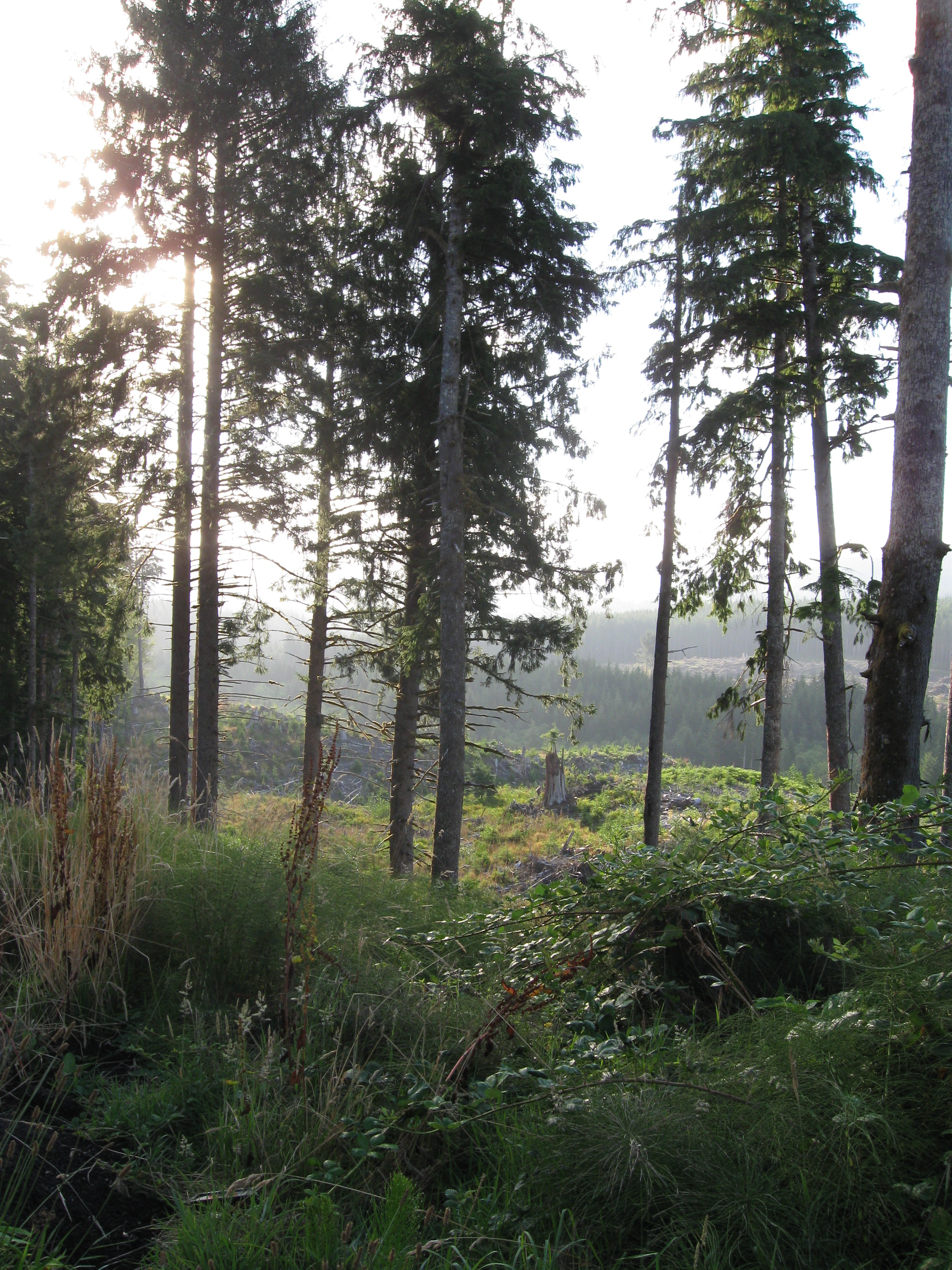
This is “managed forest” in the Coast Range. There is an abundance of fuel for fire.

The West is burning.

In 1975, Canadian friends picked me up in Seattle to ride with them to Colorado. The driver was Jeff, and Jeff smoked cigarettes. At one point, he tossed the lit butt of a cigarette out his window. It was early September, the end of a long, hot, dry summer. We were in eastern Montana and there was nothing, absolutely nothing to stop a fire in those grasslands.

This was something I knew was dangerous. I had been raised with respect for forest, and by a father who never tossed his cigarette butts. I said something from the back seat of the van. Maybe I said it was dangerous to throw a lit cigarette out the window, maybe I merely yelped and said he shouldn’t do that. I don’t remember what I said. I was thinking at the time about what I knew about fire, and cannot recall my words, What I remember is his irritated response.

“What do you care? You don’t live here,” he said.

Maybe we argued after that. Reasons lined up: I did live there. It is my country, my nation. My father was born in Montana. This sort of reasoning that because it would not be my field that burned I should not care was immoral. I should care. He should care.

The West is burning. The human body count continues the rise.

Pundits, politicians, and ordinary people would like someone or something to blame—errors in forest management, a camp fire, climate change, an unusually dry summer. All of the above? Answers are rarely simple.

Someone always points out that Native peoples set fires (every time, I see it). This doesn’t make setting fires a good practice. Humans in every culture have done foolish and cruel things.

Europeans drove entire herds off cliff faces. The BaMbuti pigmies roast songbirds alive because it makes their flesh more tender. Londoners drank water contaminated with typhus. Stupid.

My point is that what a small population can get away with is not necessarily the answer to our troubles today. One post I read claimed that Fewer trees/acre does not signify. I know from walking in the coast range that trees were once further apart. This was first, pre-logging, “old growth” trees with stumps six feet across. Most Americans will never see old growth trees that massive. And even so, there were forests so dense, a horse and rider could not pass between them. Most forest fires used to be started by lightening strike. Today, most are begun by humans.

The West is burning because we have more forest remaining in the West compared to the East; because climate change is causing forested, moist places to become drier; and because we start fires with cigarettes and electrical sparks and camp fires and good intentions.

California’s fire record dates back to 1932; of the 10 largest fires since then, nine have occurred since 2000, five since 2010 and two this year alone, including the Mendocino Complex Fire, the largest in state history.” Undergrowth, including the low growth after an area has been logged and replanted, allows for a fast-moving fire. The Tillamook Burn of 1933 destroyed 390,000 acres in western Oregon. The next three Tillamook Burns would take over 400,000 additional acres. It was so huge my mother and her sister swam in a warm ocean, and came out covered in soot. That one started from a spark from logging operations. A couple of years ago there was a fire a half mile east of our home in the coast range. That one started from a slash burn that went out of control in high winds.

Fire suppression, which worked for most places, played a part, but climate change, weather, and human beings played critical roles. Well, human beings mostly.

Even “controlled burns” get out of hand, and the research does not entirely support any method currently used to prevent fires, other than not starting them to begin with.

The West is burning and we are looking for someone or something to blame.


THESE VIOLENT DELIGHTS HAVE VIOLENT ENDS by Caitlin Gildrien

I don’t want to write
about California. I don’t want to look.
Did you know there were two new litters
of mountain lions in the Santa Monica mountains?
A mama can only carry one at a time. I don’t know
why that’s the thing that breaks me. It’s the world
that breaks me. We’ve broken the world.
Just past the tweet that tells me about the kittens
is a thread about Romeo and Juliet,
the Claire and Leo movie version,
and that is what I click through. How I loved that movie,
the fish tank, the kissing. I wanted to live
in a world like that, a world like this world
except slant. Better lighting, better language.
How you can understand it best
by not listening too closely. I think too much.
All the fish in that tank scooped probably from the sea;
how the sea is failing. I wanted to love someone
until they would die for me. I wanted to be the one
they would choose to carry out of the burning world.
When the fish stocks fail, when the Amazon tips
past the point for which it can compensate
with the meager reforestation it is allowed—
there should be nicer language for this in a poem,
I’m sorry. I just keep thinking of Juliet, who thought the sea
was infinite and so a good metaphor for love.
But we’re determined to find the bottom
of any bounty. They thought this continent
was boundless, too, and scraped it clean
to prove themselves its better. They.
Did you see that storm of smoke,
utterly apocalyptic, over the highway?
It makes a person say God. God, lift me
by the scruff. Or the throat, maybe.
All of us, maybe. Shake hard.
Be rough with love.

—from Poets Respond
November 15, 2018

__________

Caitlin Gildrien: “A friend who is a science writer tweeted about the mountain lion kittens, and though of course the costs of these fires are deep and broad for humans and for the rest of the environment, that fact really shook me—as did the way that Twitter shoves the somber and heartbreaking up against the trivial as though they are equally weighted. I was born in California, though I live across the country now, and it’s been increasingly painful each year to watch the fires become more uncontrollable. It’s one of the many reasons I fear for our future.”

Reprinted without permission. It made me cry.