SLOWER

Before I thought of myself as a writer, I thought of myself as an artist—not incompatible identities. Among the many lessons I learned as a visual artist that also apply to literary arts: slow down. Wait. Wait. Wait. The eye (thought) moves faster than the hand on the page; you have to slow down so that the hand can keep up.

Thought is like that too. We can think 1300 words a minute. We can read a fraction of that and write even fewer. Everything jumps ahead of itself with the result that what we read or record skips like a pebble over a smooth pond. What we think we know and what is there, if we take time to look. All that water below… If we want to reveal it all, we must slow down to see it.

The gray gulls above are juveniles; the white-headed and breasted ones are adults. You might guess from this photo: there are a great many kids this year—more than half of those resting onshore. Forty-seven birds shown; seventeen are adults. Mist began yesterday on our shore and the air quality index began to drop. This morning the drizzle started and air quality became breathable throughout the western edges of the Pacific NW from the Willamette Valley north to Puget Sound, Portland to Seattle. I got my short two mile run this morning. Ballots arrived today. Our property tax info came in the mail and the RMV (real market value) of our home has been set at one and a third times what it was last year.
Continue reading

A YEAR OF READING IN REVIEW


I read, I realize now, a great many memoirs, beginning with Anne Frank’s Diaries and I Never Promised You a Rose Garden by Hannah Green [Joanne Greenberg], and right through recent best sellers. An essay on the Brevity blog defends the memoir against accusations of “misery porn.” Judging from my recent history, I am on that writer’s side.

On the other hand . . . she had warts.

On the other hand, I want more than even a well-written narrative of suffering. I want humor. I want objectivity earned through humility and suffering. I want wisdom beyond complaint. Growth. Insight. There are plenty of memoirs that offer all that. And not a few that fail.

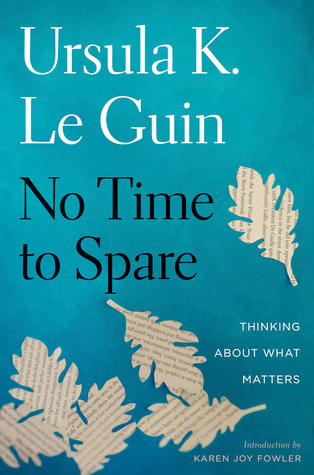
33503495Of the 66 books I read this year, several were memoirs or biographies. Of those, I managed to completely forget some. A Scientology surviver managed to bore me. A novelization of Dorothea Lange’s life was so awful I had to stop reading it. A collection of essays, introductions, and random notes by a favorite poet offered little to love, while Marilyn Chin’s new collection was quite marvelous. Ursula K. Le Guin’s No Time to Spare was a highlight, moving in ways that should not have surprised me. Ursula always had something valuable to offer an audience. Reading Lucia Perillo’s work makes me sorrow for her too-short life. Mazzeo’s book about Eliza Hamilton failed to decide whether it wanted to be bio or fiction. And though I am generally a fan of Joan Didion, her elitist attitude in Slouching Toward Bethlehem irritated me. (She goes to the grocery store barefoot and in a bikini and is incensed that someone has the nerve to be offended? Well, yes, in that time, it would indeed have been offensive, no matter who you thought you were.)
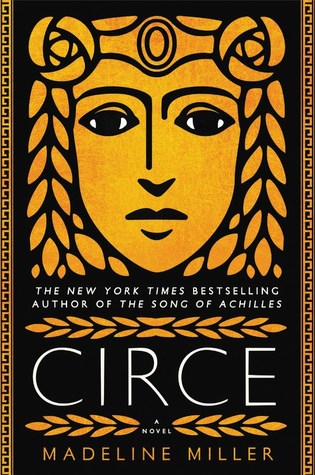
35959740Sadly, Pat Barker and Emily Wilson failed to impress me with their books of Homer. Madeline Miller, by contrast, completely astounded me with Circe.

In nonfiction, none was more impressive than Essential Essays: Culture, Politics, and the Art of Poetry by Adrienne Rich. I hardly know what to say. A 1997 speech explains the history of “identity politics” and how we must continue to find ourselves not only as individuals but as members of communities, that believing we exist as consumers in the marketplace fails us in ways that anyone alive and paying attention today will recognize. She was always ahead of her time.

But it is the novels that struck me this year, beginning with Circe. This is one of three books I hope to reread. Bette Husted’s novel knocked me down. Hild by Nicola Griffith is another. It made a huge impression on me for the way it reveals a brilliant mind in a long-ago time. Like Circe, Hild is shown doing what a woman in her position and living in her time would do, the day-to-day details, without diminishing how she wrestles with her dangerous situation.

Hild searches for pattern, for the warp and weft of her time, of the people and weather and the others living around her—birds and deer and the small shrews. From an endangered family, in a time when men in power can do anything, anything at all, Hild at 3 is already aware of how the light might fall just so and make her dead. How she stays alive, as an un-pretty child and then a sexually aware young woman, how she uses her blade, her understanding—this alone would make a powerful story. But Hild is more than that. She lives through transitions of Christianity and change, the clash of armies and of the secret powers of woman and priests.

She sees mor61+uqLOhUeL._SX331_BO1,204,203,200_.jpge in an instant than others will ever understand.

I recognize that people struggle with the names (of mostly real people, so the naming is not up to the author) and details (of ancient lives) but it is rare that a writer so fully captures the daily texture as well as the swordfights and trauma of any time, much less one so distant.

This is one of the great ones, one of those books I dwell on for a long time after because I cannot imagine having written it but desperately wish I had.

Historical fiction is challenging to both write and read. It must assume knowledge (and ignorance) on the part of readers while world-building in alignment with history. I know a great deal about the crafts detailed in this book and I am an unapologetic critic when writers get the history or details wrong. (As Pat Barker does in her new novel about ancient Greece.) I would have her metalsmith show Hild how to draw wire, but what is revealed here about crops and croft feels entirely authentic. The texture and flavor in these pages allowed me to trust the near-magic of Hild’s weaving.

Have I mentioned I love this book? There was a line I have been quoting: “Men are afraid women will laugh at them. Women are afraid men will kill them.”

Next volume please.

Closer to home in setting (though not in miles) is Oregon author Bette Husted’s All Coyote’s Children. Bette is a friend and I always read her work with interest, but this novel marks a turning point for me.

bette-lynch-hustedall-coyotes-childrenjpg-bc0574e4e7ab768d.jpg

One morning, my husband and I walked a long ways north before turning for home. I had been reading All Coyote’s Children before we fell asleep and again that morning. Once we were home from our walk I read after breakfast and during the day between doing other things. Some books you don’t want to end, but you also cannot bear to set down.

Gorgeous, elegant, heartfelt prose right from the beginning. There is a gradual release of information, of facts in this story of a family in recovery, which I admire a great deal. I appreciate a story that focuses on recovery after the fall rather than the fall itself. Everyone falls. Not everyone gets back up.

This is one of those books you want to hand to people, to friends and loved ones and people you barely know.

There is a reconciliation in these pages, tenderness and glory. I have a lump in my throat and tears in my eyes and I just want to sit back down and read it again because “sometimes a piece of story breaks off and rides the wind, and even if you close your eyes you know it’s going to find you. You hear it coming.”

There is confusion in the beginning, a reflection of Annie Fallon’s confusion after the death of her husband. These are loving, flawed, believable people making mistakes, doing the best they know how, and messing up sometimes. The complete story of this family is a long time coming and it is revealed in community. Lately I’ve thought a lot about community. The scientific evidence is mounting that the sort of relationships Husted develops in this novel are what most of us living in the “modern world” are missing. Missing all that connection to history and people and the very land itself might be what is killing us.

This novel provides a powerful reminder of the cure for what ails us.

I would like to see this taught in high schools. The story itself is strong, the history is solid, and the redemption it accomplishes is unique. It is an extraordinary story, a beautiful and important one about how we come to terms with history and landscape, family and obligation.

I read for love of reading, but also as a writer. So Circe, Hild, and All Coyote’s Children want another look.

Speaking of rereading, this was also the year I restarted an old habit of reading aloud to my husband. We began the Patrick O’Brian Aubrey/Maturin series a few weeks ago. It is my third reading, and I am impressed all over again. We are already on book 4, The Mauritius Command, and unlikely to finish it before New Year’s. There are twenty books in the series, and I read a few pages at a time, mostly while he drives or while we are in bed. Next year . . .

I read newspapers each morning, magazines, literary journals. I read some terrific books this year and wish I had time for more. I am not a fast, but a determined reader. I have selected a few books for their structure, but mostly I read what I love, the sorts of books I wish I had written.

There is just one essay left of Rich’s Essential Essays and I will be sorry to finish the collection, making it the last completed book for my year of reading.

HELP, I’VE FALLEN BUT I GOT BACK UP

IMG_3294

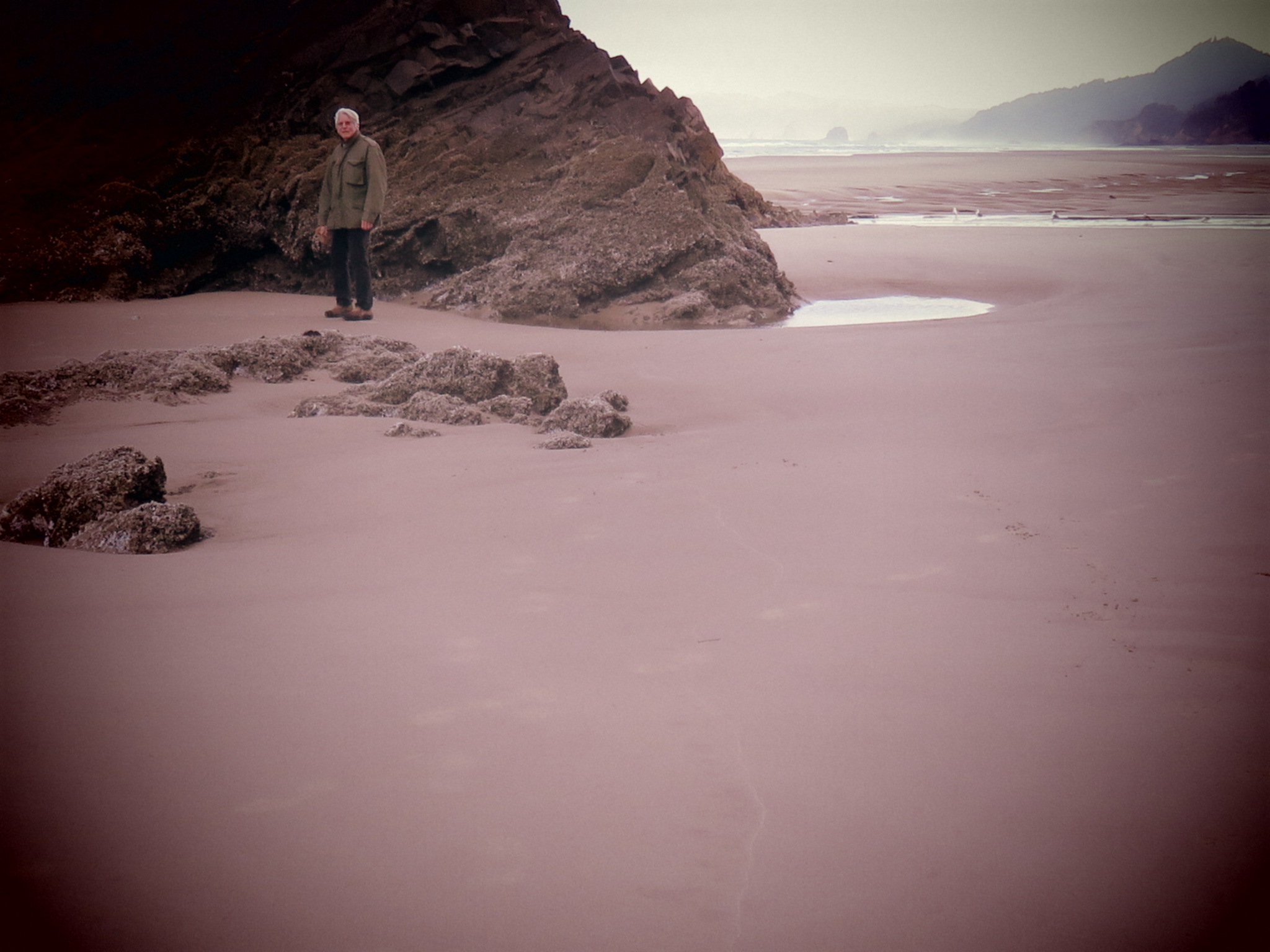
I fell hard yesterday. I was doing something stupid, trotting backwards as I tried to photograph my husband and a seastack and he kept walking right out of my frame. (If he knows he’s being photographed, he mugs or frowns. Photos of Gary smiling are pretty rare.)

So I was backing up to keep Gary in my photograph, and I tripped over a rock poking out of the sand that I had failed to notice and landed hard on my back. The smooth wet sand was hard as concrete. I did not land on the rock.

Still on the sand, I held still to discover how badly hurt I was. Would I be able to stand up? Had I broken my pelvis? I hurt. Gary had been watching me and wondered what I was doing. He says he thought, “Why is she trotting backwards? She’s going to hit that rock.” Then I did and he trotted over to me.

When he arrived, he said: “What are you you trying to do?” I snapped back at him, and he considered that a good sign. I hurt.

When I was pregnant with our first child I tripped and landed in a seated position. I damaged my tailbone. The doctor said it might have been cracked, but they couldn’t Xray because of the baby, and “there’s nothing we could do for you anyway.” Time would heal me, not any treatment they could offer beyond over-the-counter pain meds such as Tylenal. That was almost forty years ago, but I remembered that pain and considered that I might have cracked something in my pelvic area, but there wasn’t much to be done about it.

Aside from, maybe, my little toe and the little finger on my right hand, I have never actually broken a bone. Usually, I am a good faller. I could probably recall every time in my life I have ever fallen. Never from a tree, but once on my bike as a child. I jumped from a second story window, but that was a stupid choice, not a fall. I’ve been thrown from horses without a mark. One fall while pregnant, once I tripped over the oversize shoes my podiatrist insisted I wear, before I was used to them. About fifteen years ago, I fell while running hills when I missed my footing at the edge of pavement on the highway. I got right back up and kept running. This time was not like that.

After a half minute assessing my condition, flat on the sand, I rolled carefully to the side and got up. Yes, hurt. Not broken, not flashing or searing pain, nothing stabbing or worse on standing. We continued our walk, stopped when we got to a stream we could not cross without getting wet, and turned for home. I took two aspirin, sat carefully, discovered what movement hurt more or less, and went back to work on a quilt. A few hours later I took another dose of aspirin, and that’s all I have done. A former student, now nearly a nurse, warned me not to use aspirin, so I stopped.

Gary told our older son on the phone about my fall, which I had not planned to reveal to anyone. Like their dad, sons worry.

When I got out of bed this morning, I felt odd in my head—not pain, but fluffy, disconnection. I lay back down for a time, considering the possibility of concussion. When I got up again, I felt the same wooly-headedness, and I was careful.

So maybe a cracked bone, certainly some bruising though nothing shows, and maybe a concussion—I hit the back of my head hard. I will take it easy for a few days. I will not think too hard since research suggests that an active mind after a concussion slows recovery. I think about my students who were in car crashes, suffered concussions and came back too soon. I think about the coach who put his own son back into a game after he suffered a concussion. I think about my age and that I am too old to risk the loss of brain function. I think worrying probably isn’t good for me.

My husband brings me coffee in bed each morning. My favorite grandparent, my step-grandfather Lavin Hansen, whom I called “Papa,” brought coffee to my grandmother in bed each morning.

The mind travels even when the body is in pain.