TONI MORRISON too

Toni-Morrison.jpg

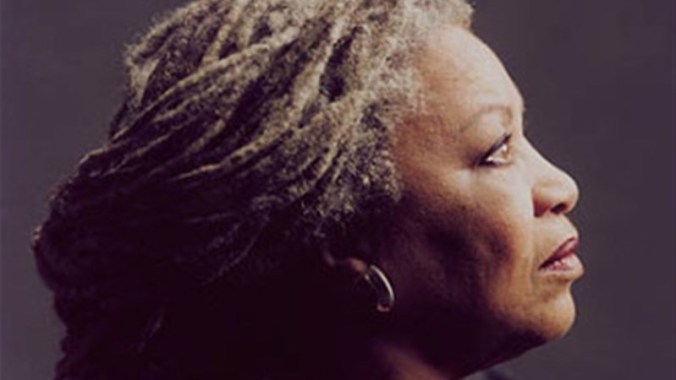
Toni Morrison died yesterday at the age of 88. “Rest in power.”

When I began teaching English, I was already a great fan of Toni Morrison. I photocopied her entire first novel, The Bluest Eye, to use for one class and later was able to order classroom sets. A student came up to me after class and asked where he could find her poems. She doesn’t write poetry, I said. I mean that poem you read in class. He was talking about this:

Nuns go by as quiet as lust, and drunken men and sober eyes sing in the lobby of the Greek hotel. Rosemary Villanucci, our next-door friend who lives above her father’s cafe, sits in a 1939 Buick eating bread and butter. She rolls down the window to tell my sister Frieda and me that we can’t come in. We stare at her, wanting her bread, but more than that wanting to poke the arrogance out of her eyes and smash the pride of ownership that curls her chewing mouth.

The story is of Pecola Breedlove who will be raped by her father and utterly ruined. This is no spoiler. Morrison tells readers this on the very first page. Her concern is not what happens but how. She writes that why is difficult, but this is a novel about love and it is the how of love that she reveals in The Bluest Eye. Pecola’s brutal father destroys her. The narrator Claudia’s loving father protects her. Parents all seem harsh: “Adults do not talk to us—they give us directions. They issue orders without providing information. When we trip and fall down they glance at us; if we cut or bruise ourselves, they ask us are we crazy. When we catch colds, they shake their heads in disgust at our lack of consideration. How, they ask us, do you expect anybody to get anything done if you all are sick? We cannot answer them.”

The scene begins in iambic pentameter and ends a couple of pages later—

But was it really like that? As painful as I remember? Only mildly. Or rather, it was a productive and fructifying pain. Love, thick and dark as Alaga syrup, eased up into that cracked window. I could smell it—taste it—sweet, musty, with an edge of wintergreen in its base—everywhere in that house. It stuck, along with my tongue, to the frosted windowpanes. It coated my chest, along with the salve, and when the flannel came undone in my sleep, the clear, sharp curves of air outlined its presence on my throat. And in the night, when my coughing was dry and tough, feet padded into the room, hands repinned the flannel, readjusted the quilt, and rested a moment on my forehead. So when I think of autumn, I think of somebody with hands who does not want me to die.

There is enormous wisdom in these pages. It is not the most popular Morrison novel but one of the shortest. It shows up in standardized test questions and college courses. Many students have written essays about the novel in order to get into college. More have emailed me from college to thank me for introducing them to her work.

I taught Toni Morrison’s first novel for most of twenty-five years and assigned that opening passage every year I taught. It was one of the few disappointments of my MFA program that not a single person recommended her novels or referenced her work in a craft talk. Seriously. Not one.

Perhaps it was judged too high for graduate students to aspire to? In my own teaching, I always aimed above what my students thought they could do. Morrison always aimed high. The only path to excellence is to aim higher than our reach, to point the way to better than what we think we are capable of. Sometimes we surprise ourselves. I think many of my students were astonished at their own accomplishments. I hope they were.

Underestimating our capacity as a nation is equally problematic. When we assume that the United States deserves no better than a bully for a president, when we assume that it is too soon for a black or gay or woman president, we doom ourselves. We deserve better. It is the ideal upon which our country was founded. We deserve to strive and push beyond our comfortable complaisance into greatness. Isn’t greatness what the Founders had in mind?

Those eighteenth century wealthy white men aimed for a nation where people are judged by the content of their character rather than by their birth. Wasn’t that an amazing goal for such entitled folk who had all been raised to accept the divine right of kings? Of course they would not be comfortable in our society today, where a man dismissed as “white trash” can become president. (I am not talking about Trump who sits on a gilded toilet.) Their ideals far outstripped their capacity for justice.

Our ideals should always frighten us a little. I did my best as a teacher to break down complex tasks into clear and manageable steps. We must continue doing that as a nation. As Toni Morrison did in her novels: push the envelope, they say. Step out into our own idealistic world.

Step out.


“Toni Morrison, 88, winner of the 1993 Nobel Prize in Literature and the 1988 Pulitzer for fiction, died on Monday night at the Montefiore Medical Center in New York. Robert Gottlieb, Morrison’s longtime editor at Knopf, said in statement, ‘She was a great woman and a great writer, and I don’t know which I will miss more.’ Sonny Mehta, chairman of Knopf, said: ‘Toni Morrison’s working life was spent in the service of literature: writing books, reading books, editing books, teaching books. I can think of few writers in American letters who wrote with more humanity or with more love for language than Toni. Her narratives and mesmerizing prose have made an indelible mark on our culture. Her novels command and demand our attention. They are canonical works, and more importantly, they are books that remain beloved by readers.’ ”

“One of her most provocative public commentaries came during what she saw as the persecution of President Bill Clinton during the Monica Lewinsky scandal. In a polarizing New Yorker magazine essay, she observed that Clinton, his ‘white skin notwithstanding,’ was ‘our first black President.’

” ‘Blacker than any actual black person who could ever be elected in our children’s lifetime,’ Ms. Morrison wrote in that article, published in 1998, a decade before Barack Obama, the son of a Kenyan father and a white American mother, occupied the White House. ‘After all, Clinton displays almost every trope of blackness: single-parent household, born poor, working-class, saxophone-playing, McDonald’s-and-junk-food-loving boy from Arkansas.’ ”

She thought we would not be ready for an actual black president in her lifetime. Thank goodness she was wrong about that.

And I was wrong about Toni Morrison writing poetry. Here are five.

“In short, this is a full novel — rich, slow enough to impress itself upon us like a love affair or a sickness — not the two-hour penny dreadful which is again in vogue nor one of the airless cat’s cradles custom-woven for the delight and job-assistance of graduate students of all ages.”—from Reynolds Price’s review of Morrison’s Song of Solomon (1977)

VIOLATION


IMG_3354

The rape scene is explicit. I taught The Bluest Eye for 25 years. It is an extraordinary novel told from multiple perspectives. A little girl is ruined, driven insane and lost. The language is stunning, beautiful, masterful. I introduced the novel with an early event where a narrator describes being sick and feeling her mother’s anger. This anger is not toward her daughter, but toward the sickness, which the narrator eventually understands: “Love, thick and dark as Alaga syrup . . . welled up in that house”

The first pages tell the story. I always warned my students about the graphic description of the rapes so that they could skip those pages if they wished. Sometimes they asked to read another book, which I offered. I reread the novel every year with my students, but truthfully, I did not reread those pages myself every year. They are brilliant. Brutal paradox  is set up immediately in the book when Claudia McTeer describes how her vomit sticks to itself “so neat and nasty at the same time.” Ultimately about love, the eloquent revelation of pain never lets up. It is sharp and bloodying. Toni Morrison claims there is no understanding the why of her Pecola’s father violating his 11 year old child, of a community destroying her. We must be content with how.

Morrison accomplishes more than that, in my opinion. I always told students they might understand why Cholly Breedlove rapes his little girl, but that Morrison does not require us to forgive him. We are not asked to forgive him. We understand, but even so his actions are not forgivable.

______________________

The rape scene before me was explicit. I stood up and walked out of the room. My thoughts fluttered. Why? Generally, I am a determined viewer. I do not watch porn, but I do not enjoy scenes of sex in books or movies. Nudity does not bother me a bit, but violence with sex makes me cringe. Rape drives me out of the theater, off the page.

For most of my adult life, I struggled to understand why I reacted so badly to rape scenes in films and avoided them in books. I was never raped. I was never violated. It made no sense that I had such a visceral reaction to violation in fiction.

I wondered if I had suffered some trauma I had repressed? I raked through my memories for truth. Nothing. All through this, I was aware of an ugly experience from the age of 7 or 8. I knew it had happened, but my understanding of that event minimalized my experience. It was not so bad, I would think for many years after. After all, much worse things happened to others. Much, much worse things happened all the time.

“It isn’t necessary to minimize one group’s pain and suffering in order to legitimize another’s,” a former student posted on my Facebook page.

I think enormous stigma and shame is what all survivors share. Insistence that some suffer more than others—while certainly true in a general way—serves to separate us and undermine our shared felt reaction.

There is a reason that even today only a tiny fraction of rape victims of either sex report the crime. Recently, I have posted elsewhere that I was molested on the playground by a group of boys who held me still. I never told anyone at the time and did not even admit it as an act of molestation to myself or characterize the experience as a sexual assault for almost 50 years.

As a young teenager, men exposed themselves to me and I did not tell.

The one time I tried as a college freshman to report an event, I was treated very poorly. And I knew this was my fault. I had no words to describe it as anything else by mine. I had been told in an infinite number of ways from the sex education I received at home and at school to the general attitude of my culture, that if I was victimized, if something “nasty” happened to me, I had done something to “ask for it.” My fault.

Are we not still in that terrible place?

Being loud, insistent, bombastic even, seems to convince some people. When it comes from a man. Tears. Denial. The silence or the soft (female) voice is refuted. Why not talk about it immediately? Why talk about it at all. What did you do?

Society weaves a thick blanket of blame and certainty over who I was then. That absolute judgement that what happened to me, if it happened at all, did not matter. That, I knew.

And now I unweave this memory. I examine it. I consider the glee in the faces of those boys. Those boys who never had paid me the slightest attention in the past, a wonder to me, approaching me with grins on their faces. I was small, small for my age, and youngest in the class.

I could not tell you the boys’ names or the date it happened. I could describe the light, their faces, the buzz cut of the boy who violated me. I know where I was standing on the playground. I remember the weeds I ran through after running from the blacktop playground. I was surprised to have escaped. My arms had been pinned, boys all around me. Perhaps my passivity, my well-trained smile, left them unprepared for my explosion. I escaped, but they had already gained what they wanted. Hadn’t they? They were done with me. They let me go.

It felt like escape at the time. I had not escaped. They were through.

The story of that day never left me. I simply ignored the warning.

If, as a victim, I could not admit even to myself the trauma of those boys surrounding me on the playground, holding on to my body, and one boy thrusting his hand into panties, my abrupt realization of what he was doing, and my scream and abrupt break. Running away. My tears. I told not a single soul. I did not, in 1960, even have words to describe what those boys and that boy had done. I pushed the memory away. I told myself it was a minor event.

So many people have suffered so much worse.

BOOKS I TAUGHT

phony.jpg

A student wrote to me the other day to thank me for assigning Mountains Beyond Mountains when she was  junior in my class. The young woman is in her third year of medical school and credits Tracy Kidder’s true story of Dr. Paul Farmer for inspiring her ambition. It was not the only nonfiction I taught, but it was the only nonfiction book I taught.

I showed films to introduce my students to other lives and other times. I am proud that I taught the novels Their Eyes Were Watching God, The House on Mango Street, Things Fall Apart, and A Yellow Raft in Blue Water.

A self-proclaimed “non-reader” in my regular English class agreed to keep reading Yellow Raft after I’d read the first chapter of part one “Rayona” but could not read “Christine” because she was “too much like my own mom.” So we struck a weekend bargain. He would read seven pages and if he still couldn’t stand to read that part of the book, I would given him a summary and he wouldn’t have to read the rest. He came back to class on Monday and declared he “loved Christine.” She helped him understand his own family and the fictional character remained her favorite in the novel.

Sometimes we find ourselves or people we need to understand in a novel.

I taught both The Catcher in the Rye and The Adventures of Huckleberry Finn for over 20 years. 

I generally shared William Raspberry’s column about Huck Finn, and worked hard to introduce my students to satire. The novel was a consistent failure in my Honors classes. These “good readers” were unwilling to slow down and hear Huck and Jim speak, they were too good at skimming. As a result they found the novel unfunny and boring. However, when my voice could manage it, for several years I read nearly the entire novel aloud to my “regular” students. They got every joke.

Huck is a poor boy with a rotten father, a racist boy who eventually learns to respect and honor his friendship with the young man, the slave Jim. He is on a hero’s journey but he fails because he does not figure out that slavery is wrong. He cannot overcome society’s instruction about what is decent and proper. Even at the end, he believes it is a sin to help a runaway slave. Nevertheless, he is willing to go to hell rather than betray a friend: Jim, who is far craftier and kinder than Huck recognizes. Jim reveals himself as one of the view decent adults in the novel when he risks his life staying with the critically wounded Tom. Some students responded to the moral lesson in the novel and the humor throughout. Many missed it completely.

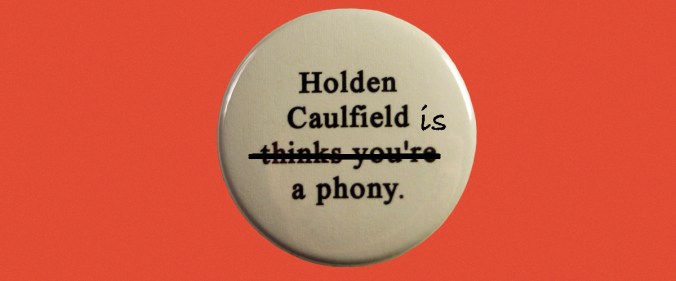
By contrast, for more than twenty years, students loved Holden Caulfield in The Catcher in the Rye.

Holden is a rich white boy attending elite private schools but with neglectful parents. He is grieving and riddled with guilt. He does not overcome these challenges. Parents of my students sometimes balked at the language, but the real problem with this novel, from this parent’s perspective, is that Holden is suicidal throughout and in a mental hospital as he relates his story and he’s been there for months and still lying about where he is and why.

Teaching this novel allowed students to develop understanding of “voice” in literature, and to realistically extrapolate Holden’s future (they were never optimistic). One girl waited after class to speak to me and sobbed that Holden would not like her if they met. Sadly, she was right. Holden’s tolerance for most people is slim.

I used Jane Smiley’s ridiculous take-down of Huck Finn and Calvin Trillion’s questionable 50th anniversary review of Catcher in order to introduce my students to opposing views, to critical thinking, and evidence-based argument. The more they liked the novel, the more passionate was their response to the reviews. To be fair, however, even people who had not initially liked Huck Finn sometimes became fans after recognizing the false equivalency of Smiley’s comparison of Huck Finn to Uncle Tom’s Cabin. As if Jane Austen failed because she did not write novels more like Charles Dickens.

Eventually the tide turned for Holden, and one year a majority of readers found Holden “annoying.” I gratefully replaced him with Jason Taylor in Black Swan Green by David Mitchell. That book also contains language, but deals with bullying and class. Jason is also a relatively affluent white boy, but younger and in many ways nicer than Holden. He is not oblivious to social injustice. He is not so obsessed with his own suffering that he is largely incapable of noticing others’. 

We read all of The House on Mango Street aloud in class, each student choosing a story to read and I read the rest. It is brilliant and a superior trigger for personal stories. We talked about fiction and creative nonfiction and prose poetry. It’s all there.

I taught Toni Morrison’s first novel The Bluest Eye for 25 years. I warned students about content. I advised them to skip pages or call me if they had trouble. I had an alternative and more euphemistic novel in the wings. But Toni Morrison is our only living Nobel novelist, and she is among the best writers to ever exist. There are no substitutes. She writes about love, including the love of little black girls, the most neglected of all. She teaches paradox of pain and beauty, of survival when someone loves us and tragedy when we are unloved.

Isn’t that what all novels are about?