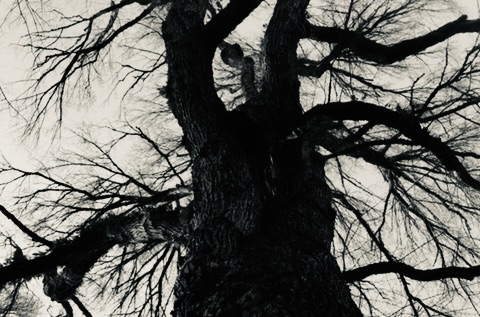
A favorite Heritage Tree in Portland, shown in winter. It began dying a few years ago. It’s gone, but a sapling thrives in its place.
A favorite Heritage Tree in Portland, shown in winter. It began dying a few years ago. It’s gone, but a sapling thrives in its place.
I missed this past Friday’s post. Apologies.

I never claimed to be “blocked.” You know that word, right? It’s a term familiar even to many people, even those not devoting their days to being writers. Visiting my MFA Residency as an alum this past week, I am reminded there are several ways of being “blocked” as a writer. I’ve denied it until now, but yeah, I’ve been blocked. I have experienced at least three kinds of blockage: not writing much is rare for me and usually just means I’m resting and doing other creative work; writing badly, something that’s absolutely useless but at least it shows on the page‚oh, yes; and writing something I can’t let go of but keep fussing over and fiddling without getting anywhere. That last is where I am now. The most recent novel is done and however eager I might be to continue working on it, it’s time to set it gently aside.
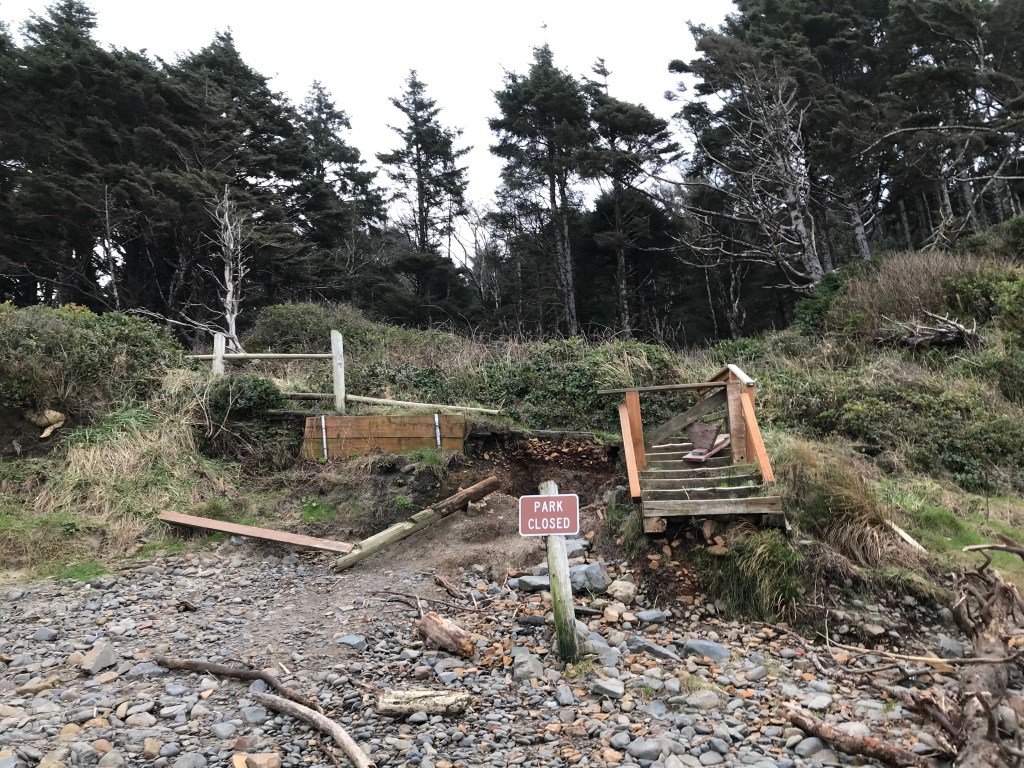
I was asked what I write. The answer is complicated.
There has been plenty to write about and I have been getting some of it down, typing away at my computer.
Continue readingOn my run this morning I thought about how, as a teenager, I used to plan my life. Alone or partnered? With or without children? Horses? Goats? I was still dreaming of five acres and independence in college when I completed a sustainable living plan for a Botany class using a book by that title as a reference. [Five Acres and Independence by Maurice Grenville Kains, 1935]
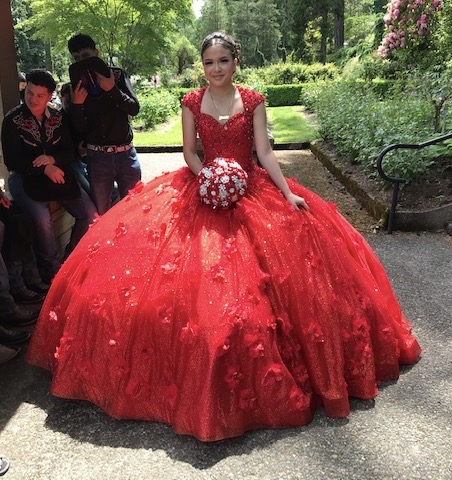
I was younger than the young woman pictured below, but she must also have dreams of where her life might take her. Life will probably surprise her.
It might have been a very young Ruby who used to say: “Doing?” as in “What are you doing?”
Knitting, reading, and revising and submitting two stories and four poems. And working on the novel. You remember that? The book? I meant to take a break from the novel, slow down, get some rest, but it’s almost as hard to stop as it was to get moving so fast last month!
You might have guessed because my post yesterday is already halfway there. (Or, like a family member who read it, decide that this assignment is all too sad.) If you wrote a list of things you lost, today write what you found. You can write it as a talk-back to the lost list, interleave what’s lost and found (as I did), or take it all the way (as I intend to do) and replace the lost with what is found.
I keep thinking of more things I found:
The dawn chorus.
Cumin, cardamom, and chipotle powder in my cooking, that cinnamon tastes different when it’s from Vietnam, and that turmeric does more than make commercial mustard yellow.
Caramelized onions.
Algebra.
Coffee.
My husband.
Running!
Crow quills. (The tiny dip pen points used by Edward Gorey.)
Edward Gorey, who illustrated to scale.
Aagah, who came to us completely wild, when she jumped the seven foot wall and I chased her for two miles and found her at the edge of the old reservoir, miserable in the rain, and after that she trusted me.
The maze of Knossos, the architecture of Gaudi, the paintings of Artemisia Gentileschi. Hagia Sophia.
How to knit many colors from Kaffe Fassett.
Color.
 by Edward Gorey (By Source (WP:NFCC#4), Fair use, https://en.wikipedia.org/w/index.php?curid=35531939)
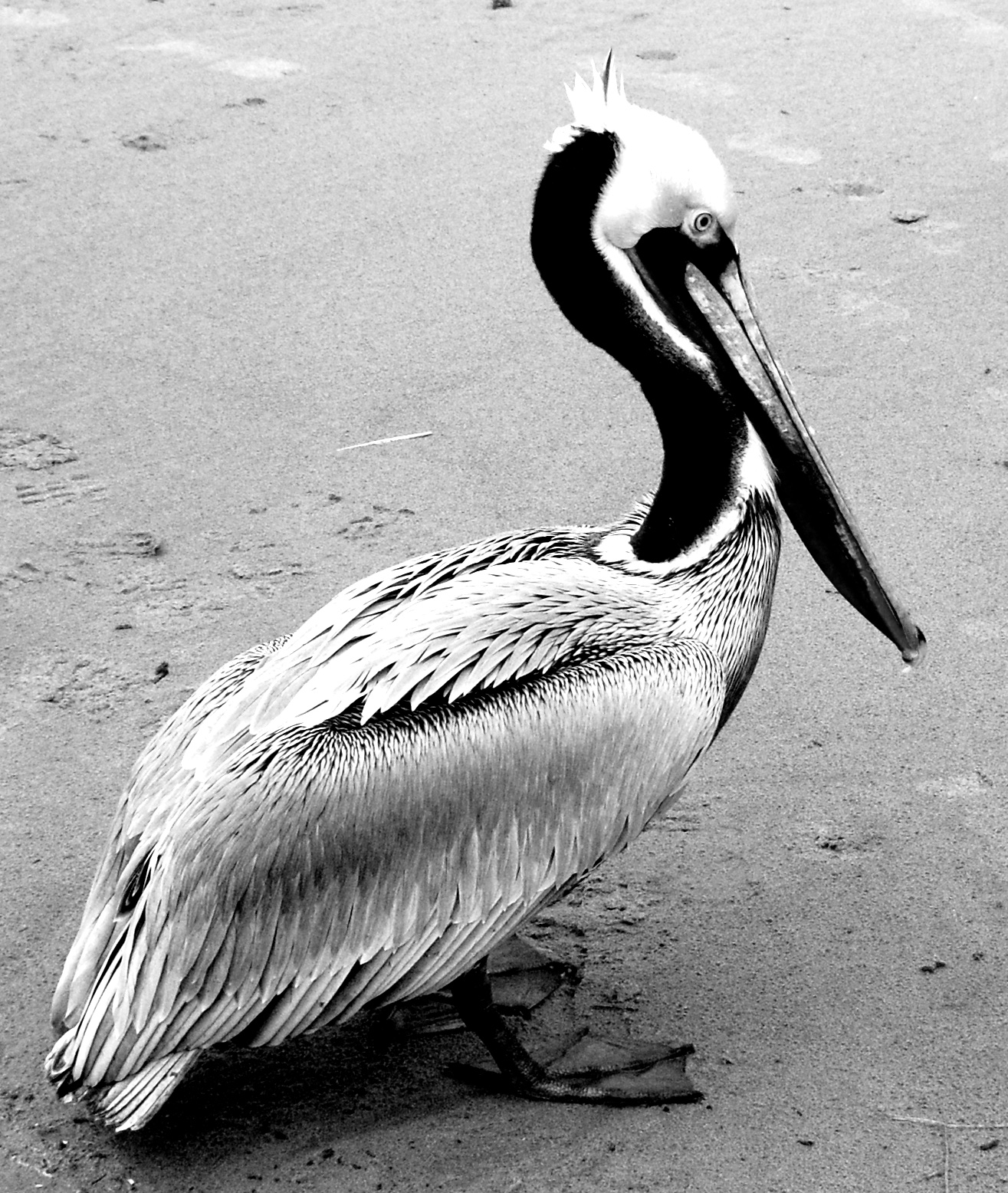
In the last week: band-tailed pigeons and Eurasian doves, Steller’s jays and a single scrub jay, robins and goldfinches, red-wing blackbirds, song sparrows, hummingbirds, crows and ravens, bald eagles, red-tailed hawk, black oystercatchers, gulls, whimbrels, Canada geese and brown pelicans, and a mixed flock of semi-palmated plovers and dunlins (this latter with distinct dark bellies—I wish I’d had my camera). Gary calls the black birds with bright eyes “cowbirds”, but I wonder if they are the same as a bird called a Brewer’s blackbird? They are new in our neighborhood.
The other day I watched three pairs of Canada geese herding 15 goslings across tidal flats fifteen miles south of my home. One pair had 8 babies, one pair had 4, and one pair had 3, and the tender care of both parents was genuinely touching. I was at the dentist having my teeth cleaned, but everyone stopped what they were doing to admire the three families.
There is a story there.
At least twenty years ago, my writing partner Rebecca Olson noted that my stories always had birds in them. I had not noticed. It is my husband who loves birds. As a result, I think about birds more than I would otherwise.
That impulse to focus on birds has resulted in stories. I imagined children falling asleep and becoming owls; then the owls fall asleep and slip back into being children. My story “If It Were True Owls Dream” was accepted for publication by Liminal Stories and will be available online in July. The first day I sent it out was to Shimmer and the editor E. Catherine Tobler rejected it but urged me to send it to Liminal. I owe her for that excellent advice.
Most recently, I began a science fiction story wherein I imagined all the birds in the world dying. I originally meant it to be a short story, but the early draft grew longer and longer and more and more complex. I have drafts that are nearly 20,000 words long. This fell into three parts, one in the near future, one hundreds of years later, and a third part even further into the future. Then I worked just on the first section, which was also the longest at nearly 10k. A friend urged me to cut most of it, which I did.
I had the idea of the vanished birds, but also other ideas about veganism and overpopulation. Then it became a story of about 6,000 words that began working as a story. It was not done, of course. Not in four drafts or ten, since I have only been working on it for a few months, but still. It is science fiction and it is about birds . . . and mostly about life on Earth.
I carved back that shorter story and carved back some more. It is less than five thousand words now and maybe it works. Probably it lags in the middle because my stories often lag in the middle, and there is not enough action—there is never enough plot in my stories.
There are usually birds.
I want another story, and I have one, but it is not quite figured out. “On Cherry Street” is about a young woman returning to the house where her mother died. She is very much aware that crows are watching. Birds again. I still don’t know what it is trying to be. Is it a horror story? I’ve not explored horror. Is it magic realism? This story is about four thousand words and I am not even sure what it is about.
Back to thinking. Back to visualizing.
When I create a story, as when I create anything, I need a solid visual. This is true when I am piecing a quilt or, just recently, designing a program cover for an event. Most often what I am creating must be complete in my mind before I actually make it. Even the weaving where I deliberately provoke randomness and choose yarns that vary in color, I have a vision. When I was painting, I would spend far more time imagining what I wanted to create than actually painting it. The stories are harder as I build them up and tear them back down on the page.
Creative work is like that. How and what we create must be first born in the imagination. Only when that vision has grown can the work be realized for others to see. Sometimes the ideas come home to roost.
There is always the danger they will simply fly away.

The brain is a greedy organ*. I heard once that Einstein used the same energy when he was thinking hard that a marathon runner would be using about mile 25.
I am thinking a lot these days. I am revising curriculum on the fly because my tiny writing class needs to become a more muscular group, and I am grading their essays and trying to give them specific writing advice—actually all sorts of advice.
At the same time I am writing a story. It is not ready to be submitted, but it has undergone enormous revision. When I butcher four or five thousand words out of this long story, write a thousand new words, and then butcher out another thousand to make room for them; when I rethink how the story should end and what, perhaps it means; and when I allow myself to become distracted enough that I risk killing that darling at the beginning of my novel (a very different project), which I am trying to find representation for . . . I need to take a nap.
My exhaustion is not physical, but it is real. I have been thinking. And all my thoughts are about what to put on the page.
This year I set an unusual writing goal for myself. I would like to plan on publications, but acceptance for publication is primarily the choice of editors. I have no control about what is published, other that to submit work for consideration. All I can do is send work out. So a more reasonable goal is to set a number of submissions. A friend of mine, in her effort to gain tenure as a college writing professor, set a goal of having 100 submissions out at all times for a year. That sounds admirable but insane to me. One hundred? I have been paying attention for a long time and have read many, many—in fact, an astounding number of—journals, and I have found 104 to put on my list. There are close to 4,000 I might consider, but even of those on my list, there are perhaps a couple dozen that really interest me. In the past, I have tried to keep at least 8 submissions out at a time. Sometimes I go for double digits.
The entire process of submitting work is work, and mass submissions also require that I have a lot of work “ready for publication” (see above). And there is that word “submit.”
At some point toward the end of 2017, I read about a writer whose goal was to have 100 rejections. That is pretty smart, I thought. Sneaky too, since in order to have 100 rejections, I would need at least 100 submissions over the course of the year. In 2017, I had 78 submissions—close—so I thought about this and decided it was totally doable.
Counting rejections also has the advantage of giving my some tiny advance in my record-keeping each time an editor sends me a note that says, “I liked the quality of the prose, but overall the narrative didn’t quite win me over and I’m going to pass on this story for [our magazine]. I wish you best of luck finding the right market for it and hope that you’ll continue to keep us in mind in the future.”
Well, that story really does needs more work. I sent it out too early, and I should have asked a friend reread it. I should have read it aloud to my husband. But . . .
But good news, halfway through May, I already have 45 rejections! Whoopee me! I am going to meet my rejection goal!
The bad news? My brain is completely worn out. Wiped out. Soggy noodle. Maybe I should go take a nap? Or two. Or a good night’s sleep?
Tomorrow I will read that story aloud and do the needful.
My query-letter pitch:
Imperfect Patience*, a literary novel of about 76k words, follows a woman’s odyssey beyond grief. It is a novel of love overwhelming adversity.
Thena Justice was building a new life near Seattle after the death of her mother and breakup of a terrible marriage when her former husband murders the neighbor-babysitter and their daughter before committing suicide. Lost in grief and guilt, Thena first hides in a friend’s converted garage, then in a tiny cottage on the Pacific coast, thrashing her way through anguish, apathy, anger, and routine. Instead of returning to Puget Sound, she moves to Portland, Oregon, the city where she was born, takes the bus to a retail job each day, and keeps her head down until a child crying in the night wakens her sense of agency and hope.
My work has earned an Oregon Literary Arts Fellowship, Arts & Letters fellowship, Soapstone residency, Pushcart nomination, and publication in journals such as the Brevity blog, The MacGuffin, CALYX, The Humanist, North American Review, and anthologies on running and race. I have BFAs in studio arts, and an MFA in fiction from Pacific University. I live and teach in the NW corner of my home state of Oregon. My house has been home to six generations of my family, which like most has seen its share of tragedy.
I have written the novel I searched for when I faced my own life troubles, a story proving the pathway back from unimaginable loss. Women, especially, do this all the time. I have little faith in fairytale romance, but I do believe in grit, I believe in recovery, and I believe in love. I believe stories can sometimes save us.
Currently, I am writing nonfiction and science fiction, but later this year I will begin revising another realist novel—a completed draft that will go through several more drafts. You can also read more about revision.
*I have gone through several titles (at least five). If someone decides to represent this novel, perhaps they will help me name it too.
 IMPERFECT PATIENCE