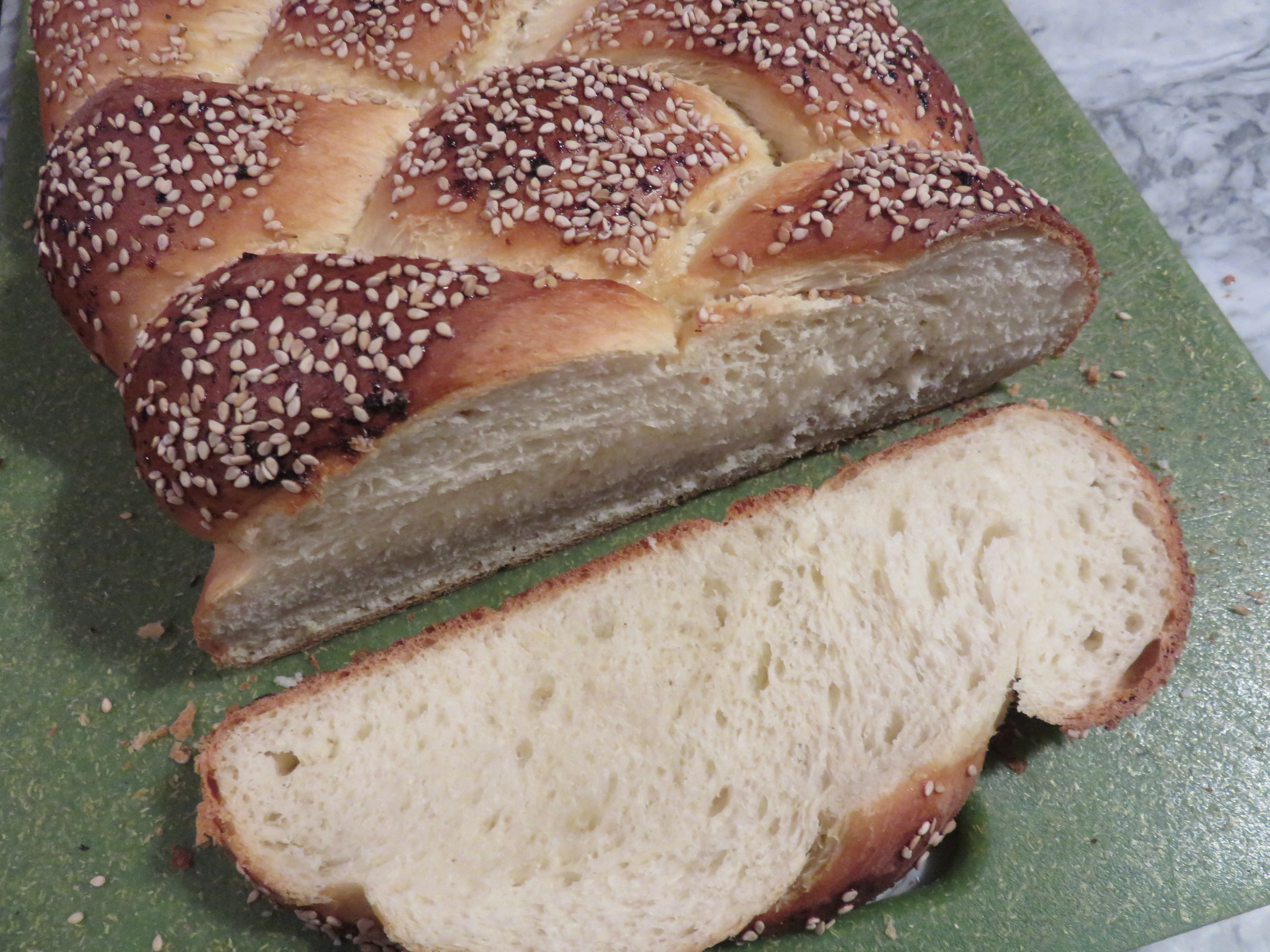
This first challah is light and tender, soft, finer grained than this photo shows. I used some bread flour (“strong flour”) and no whole wheat, but I think I miss the wheat flavor.
I suppose this means I should complete my editing before posting.
On 8 February 2019, I found I had 100 followers. That makes my day. Seriously. This is true especially because I wrote about common-sense self care as part of countering depression. Every time I have tried to post anywhere about depression, I’ve been attacked. People who were friends and generally seemed to like me, went off on my comments have apologized for using language in response to my post. “You don’t know anything about depression . . .”
The thing is, I do know about depression. I am not as self-assured as some people seem to assume. I know depression. I won’t describe details here, but I have been depressed and I have a strong thread of serious depression and anxiety disorders in my family. Maybe I cover it better than most? Maybe I was told I should smile about a thousand times when I was six and I acted on that suggestion.
In any event, I am not writing a memoir, but a blog. I am not telling the story of my childhood here today. I write about myself too often as it is.
Most often I write as often in direct response to something in the news as to anything happening in my life. Friday I played Scrabble with a friend and in the afternoon I had challah rising. I used to make a huge braided loaf each week, but it’s been decades since I did that. Most of my life has passed with only occasional loaves cooling on the counter.
Baking bread each week was one of the things I swore to do now that I am mostly retired. And challah—in a dead tie with brioche for best bread in the world. (For now we can set aside cinnamon buns and panettoni, which are sweet breads rather than bread loaves.)
So the bread was in its first rise. I’d have taken a nap if it hadn’t needed to be punched down and shaped in about 10 minutes. I recall three rises (or proofing a sponge and then proofing twice, which is the same thing) before shaping, but fingers crossed. That first attempt on Friday would have only two rises, one in the bowl and the second as a braided loaf. Most of the kneading was done with a dough hook by my electric mixer.
I first learned to make bread from my mother who had a recipe for four loaves, lost now. [There was a typo here. I noticed it and fixed it five minutes after I posted. sigh] Though she never enjoyed cooking or baking, her loaves were marvelous. In college, I made whole wheat bread in a very large crockery bowl, stirring by hand with a wooden spoon (I broke a spoon one time) until I turned it out onto a board to knead. I quite liked kneading; it reminded me of wedging clay and as a Ceramic Arts major I had a lot of experience wedging clay.
My first job in Oregon was in the old Cannon Beach Bakery, which baked the “Haystack Loaf” in a brick oven, one of the last remaining fired brick ovens in the state and gone now. Harrison’s Bakery in Seaside, with its marvelous “Beach Bread” is gone too.
My old recipe for challah is also long gone. There were 7 cups of flour and 6-8 eggs and butter and honey and cardamom, as best I can recall. It made an enormous loaf, almost too big for my tiny apartment oven. I wish I had my old recipe, the one I used in college 45 years ago. I thought it came from the Tassajara Bread Book, the source of my ordinary whole wheat recipe, but I’ve looked and there is no recipe for challah. Challah is not supposed to have lemon peel, but I recall I put it in anyway and I will today too. None of the recipes I found online were quite right in other ways—not enough eggs, sugar instead of or in addition to honey, and oil rather than butter—so I used my best guess, and when I make bread again today, I will make any necessary adjustments. I used oil the first time.
“Like thousands of cooks of my generation, I have in my kitchen an ancient volume of The Tassajara Bread Book, its cover gritty with flour, its spine cracked from use, its pages stained with molasses, and dog-eared with decades of perusal. It is the book that taught me how to make bread and its simple wisdom has been present in every loaf I have baked. I will recommend it with enthusiasm to a new generation of cooks.” —Steve Raichlen, author of The Barbeque Bible
That’s the book. Sometimes, back in college, I made a loaf in two layers, a three-strand on top of a six, but I generally made a 4-strand braid, and that is what I did on Friday. It had a rest and second rise while I was writing this. When I took a break from writing, I preheated the oven, mixed an egg yolk and honey wash, brushed it, scattered sesame seeds, and baked for however long it took. Recipes I found recommended temperatures from 325° to 425° and times from 20 minutes to the better part of an hour. I aimed for someplace in the middle, and 25 minutes in a 350° oven seems to have done the trick. Maybe I was writing in between baking bread and not the other way around?
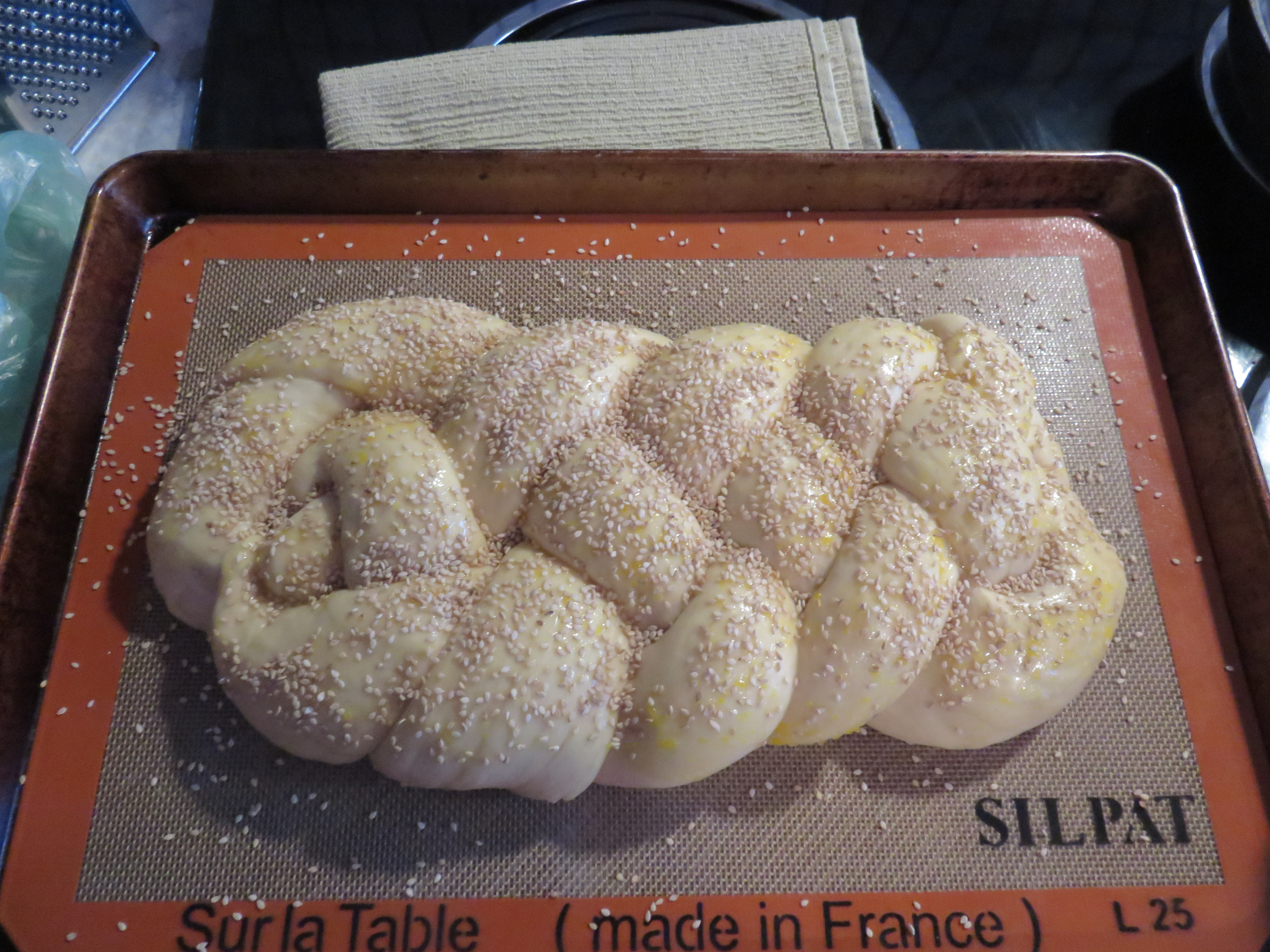
The first rise was in a bowl, the loaf shaped and allowed to rise again. Here is my 4-strand braided loaf ready for baking.
I have a couple of dozen blog posts drafts saved that I will never finish. I begin posts and never go back to them. But after I’ve posted, I do always go back. I correct typos, add a link or another photo. Sometimes I correct information or even add an entirely new paragraph. With so many people reading (I hope), it’s about time I corrected typos before posting, don’t you think?
There is a second baking scheduled today after our walk, and I want to celebrate. Over a hundred people have chosen to receive my posts. That is worth celebrating. It also reminds me of that bad habit I need to change. I write fast and post, and almost immediately people receive my blog post as an email. I am grateful when they “like” my post because that gives me a sense of the success of what I have written.
Finding those “likes” on my posts is something like my husband asking for a third and fourth slice of bread, fresh out of the oven. Except I get to see him smile.





 IMPERFECT PATIENCE