PUTTING OUT FIRES

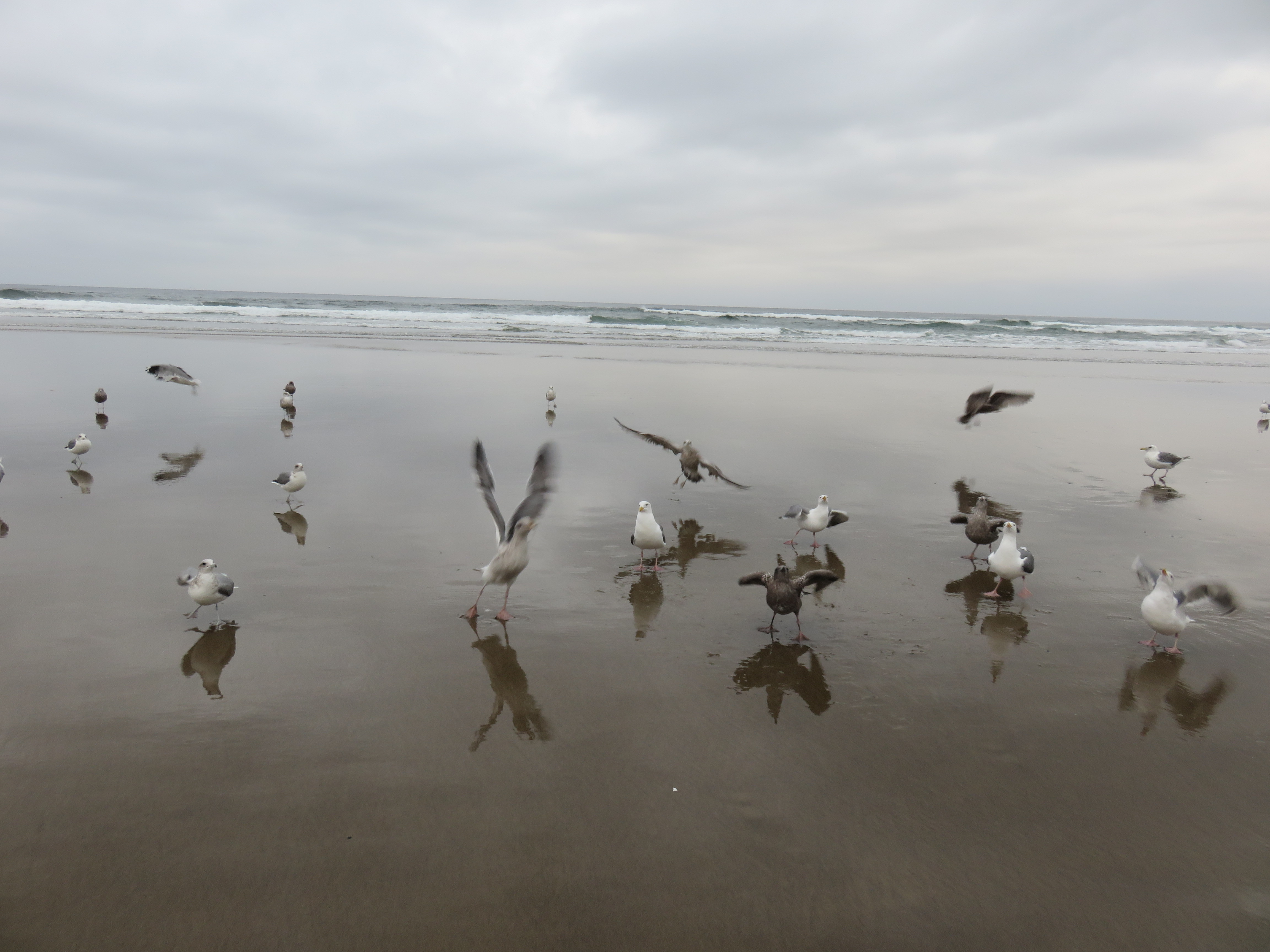
There is a spruce tree falling off the headland—you can see it sticking out not quite at the top. Even nature changes direction over time.

This year I developed a new habit with books. As I finish a book, I make the decision: Will I ever want to read or refer to this book again? Will I want to lend it to a friend or give it to someone as just right for them?  A couple of years ago, I went through my books and sorted out the ones I knew I’d read but didn’t like well enough to miss. Even so, I have thousands of books. Whatever anyone tells you, you CAN have too many books. When there is no longer room to place one more bookcase against a wall, start making the hard choices.

attempted comment on “Aspirational Clutter”

My comment (above) is awaiting moderation on a website I frequent. It’s been there for an hour. I cannot see how to either delete it or fix it. I do not know what I should fix. That’s never happened to me before. I was invited to describe personal decluttering challenges, and that’s what I did. I understand there is some sort of logarithm that determined my post might have violated the site’s “community standards”, I just can’t figure out what I did wrong. Can you? No vulgar words here. No personal attacks. It does not contradict another person’s comment—quite the opposite. Is the use of all caps in “CAN” the problem? But someone else did that too.

The editors are not censoring me. They only want me to be polite. At least I hope that’s the goal. They also want to protect their brand.

Of course I monitor all the comments on my own blog. I try to address them immediately, though I can do this only from my laptop. The only ones I do not let through would be spam, and the WordPress filter pretty much always catches that before I do.

That got me thinking: Surely the filters for FaceBook and Instagram could do better than this. They must. Assuming the effort is made to keep lies and cruelty off the sites?

On the other hand, the reason I left FaceBook was that I was tired of putting out fires. Metaphorical fires, but the similarity to the literal fires we are suffering from here in Oregon might stand. Ugly lies are spread because people believe them and fail to factcheck. Factchecking was about 20% of what I did when I was grading persuasive essays written by teenagers as a teacher. I got to be pretty good at it. And as a teaching professional, I took it upon myself even before FaceBook to confirm or debunk claims.

In the 90s, a medical resident who was also poetry editor for a prestigious literary journal foolishly (imo) revealed on a literary chat-site how he sorted the poetry submissions as they came to him. The first cut was whether they got his name right on the outside envelope. Then he tossed the ones that were not typed, had typos, etc. People were outraged, they threatened his safety, questioned his humanity. To be fair to the editor, the man received thousands of submissions in a week. Working through his inbox would be a nightmare for anyone, and he was almost a doctor. He was an unpaid volunteer doing the best he could. Plus publication in the highly-respected journal he worked for would be a professional coup for any poet. If the submitter didn’t care enough to spell the editor’s name correctly or know enough to type their work, they probably are too new to have earned publication. Let those who have devoted years to their craft advance to the front of the line. Younger, newer poets found his strategy for shortening his to-read pile arbitrary and cruel. I tried hard to balance acknowledgement of understandable outrage with the overwhelming and unpaid task the editor faced.

There have been other verbal firestorms I have attempted to douse and nearly always without effect. It was hard for me to accept that. I wanted to help, my intention was always to be helpful, but there is a kind of arrogance in that thinking—assuming I know best, and all that. Most people do not appreciate being corrected even if they are actually wrong and will resist changing their minds on principle. While trying to put out fires I sometimes fanned the flames.

Literal fire, on the other hand, is dangerous in other ways. The West is on fire and the very air we breathe is unsafe. However much we might want to place specific blame—the campfire that got out of hand, the homeowner allowing brush to build up to close to their home, the lack of funding to research wildfires and develop a proactive approach to fire—the truth is complicated and deadly.

The West is on fire, and I came to understand why east coast newspapers were giving so much space to the smoke when I realized it had drifted over Iceland and was approaching the European mainland. What happens here affects people many thousands of miles away.

Gary has a brother in Tennessee and a niece in Kentucky, but the rest of our close family lives in the PNW. Some of our friends and relatives are Trump supporters, some are solidly democratic. We have a friend who recently transferred his loyalty from Trump to Jesse Ventura. There is just no telling people what or who to believe.

In The Fire Next Time, James Baldwin explored the roots and responses to systemic racism. That is another fire we seem finally to have decided to fight—the burning devastation of bigotry. I highly recommend Baldwin’s book. Baldwin is brilliant, compassionate, and true. And yet, the feds have recently outlawed training that confronts “white privilege”. That term comes from an essay by feminist Peggy McIntosh, who made it simple in “White Privilege: Unpacking the Invisible Knapsack.” There are many versions of this 1989 essay available, and I can recommend it. I can also recommend a powerful response from another woman: “Explaining White Privilege to a Broke White Person” published in 2014. Between the two, they might just start a fire for anyone willing to read and think about them.

Some foresters have been trying for decades to explain why not all fires are bad, that some are necessary to make us safer in the future.

What we do here and now affects not just those around us but our entire world. What we are willing to research and factcheck makes a difference. Many fires are burning. The solutions are not simple, but they rely on all of us if we hope to thrive.

I have too many books, more than I can find space for on shelves. That doesn’t mean I will stop reading.

RANDOM FACTS

IMG_3392

Years ago, long before non-GMO became a common label on foods, before Safeway even had an “Organics” section, and before “gluten-free” became a thing, a junior came to class with an idea for her research paper. “It sounds interesting. They are altering the genes of food,” she said about the NPR broadcast she’d listened to on her way to school. ”

“What do you think about it?” I asked.

“I don’t know,” she said. “I want to find out.”

Her eventual essay included the word “Frankenfoods” in the title, so we can see where that led.

Over the years, students rarely choose to write about topics they begin by knowing little about, but those papers are most often the best. Writing a research paper should be as much about finding out truth as proving it.

Changing our mind is probably one of the greatest struggles any of us have. We get an idea in our head and simply cannot move. For a teenager to research a topic with an idea already clear in their head about what they want to say is pretty typical. For a reversal to occur is rare indeed.

Recently, a junior was writing about forcing sports teams to change what some perceived were racist logos. She argued this would be unnecessarily costly and inconvenient, would destroy honored traditions and history, and anyway, “racism” was not the intent and probably not even effect of these logos. She got through two drafts, and then the day before the next draft was due, the one that was supposed to be done other than minor word-smithing, she came to see me after class.

“I have a problem,” she said. “My thesis is wrong, or anyway I disagree with my thesis. I made a mistake and now I don’t know what to do.” She had, the night before, read an opinion piece about the damage racist stereotypes, including the images used as sports logos, do to young people living on reservations. Such images preserve and inflate prejudices and contribute to a sense of exclusion and hopelessness for children already living in poverty and on the margins of society. “I’ve seen that,” she said. “It’s true.” She had worked as a volunteer on a reservation.

“Change your thesis,” I said.

“But I don’t have time to start over.” She sounded surprisingly reasonable, given her sense of her dilemma. This had to feel like a disaster in her world and she was struggling to maintain her calm. She began to rattle off all the arguments that supported her original thesis.

“But one article convinced you that you were wrong.”

She nodded.

“So use everything you already have, and then show me how you were convinced. Concede everything—inconvenience, costs, fan outrage—and show me how there is something more important at stake. It convinced you; convince me as a reader.”

She did it too. Changed her hook, reversed her thesis, fiddled her body paragraphs, and concluded with a bang. Her argument was logical and emotional, reasonable and persuasive.

It can be done. We can change our minds.

Long ago, another junior showed up before class, the day before a draft of the same assignment was due. She was in tears. “They have to shoot them,” she wailed. “They have to do it as a symbol, and the sea lions aren’t even the real problem.” She had been writing a paper to argue against killing the sea lions that were eating salmon at the base of a dam spillway. She could prove that the sea lions were not the cause of dwindling wild salmon populations, but she also came to understand that the issue was not as simple as she’d hoped.

Another student, in his senior research paper (SRP) was struggling to prove his thesis, that welfare recipients should be drug tested as a condition of receiving public assistance. Why should people on public assistance be allowed to abused those funds? The trouble was that drug-testing had been tried and had proven that few people do abuse drugs and it cost a great deal more to test for drug abuse than was gained by cutting such people off from public services. Ten or twenty times more. There were also issues related to privacy and other forms of public assistance and contracts that he did not even want to address. He had not changed his world view, but he did change his point of view on this particular policy.

Students have proposed legislation that was eventually adopted (hat off to you, Russell for advocating pleasure boat pilot licenses), as well as the use of artificial turf, graphite bats, and golf carts during tournaments. I read about forty essays on allowing or banning abortion, most of them on both sides rather hysterical and unconvincing, before I banned the topic altogether. One senior cried so hard every time she tried to work on her pit bull essay that I chose to put that topic, too, on the banned list.

Religious arguments? Mostly banned. When a student used Thomas Jefferson’s faith as part of his proof that we are a Christian nation, I suggested he had better read the work of our third President. When his mother argued that no Christian ever owned slaves, I gave up trying to reason with her. In order to use a faith-based argument, you would first have to convert your audience. I was teaching in a public school.

I readily confessed the obvious. I have opinions. I am opinionated, but I am more interested in the writing. I have been convinced by students, and even when I am not convinced, my purpose is to evaluate their skill, not to make them agree with me. One of my all-time favorite essays, one I still recall vividly and with respect, was written to support preserving “under God” in the Pledge of Allegiance. It was a hot topic one year because of a California lawsuit. Three students wrote supporting restoration of the original form of the Pledge. Two wrote supporting the current form. One of those last was brilliant. I still don’t say “under God” because my mother taught me not to, but I respect and honor that student’s essay. Her exploration of the history and implications of the Pledge were more complete than anyone else. She won me over.

It is one of the side gifts of teaching researched persuasive essays: I learn a lot. Sometimes I find I know random facts I cannot even explain. I have no reason for knowing about water rights and road-building, statistics about rape and fishing, the costs of medical insurance and how many student athletes are injured by sport. Part of scoring their papers involves reviewing their research, verifying their claims, checking for additional overlooked aspects of a problem. I read a great deal.

And as determined as students are to avoid interviews, talking to the right person will yield solid facts and details available no other way. Even so, the right questions of the right person are critical. A student asked an engineer working with nuclear power via email what health risks were associated with nuclear power? The man emailed back that he was “unaware of any health risks.” The student quoted this as proof that nuclear power was non-polluting and harmless. I had to break it to the student that “he may be joking.” An engineer would not be the right person to ask about health issues, and he needed to research nuclear accidents. Plus, you know, the long term effects of The Manhattan Project . . . “Look it up.”

I am a good researcher, and with the internet and experience evaluating sources, it is surprising even to me what I can find out if I look hard enough. The key is a willingness to look beyond what supports my prejudice.

Skepticism is a good thing, I have found. Finding multiple sources to confirm the same information is important. Avoiding the crazies. Doing the math. Recognizing that a minority opinion is not necessarily wrong. But it isn’t necessarily right either. What’s worth arguing is never simple.

In the face of personal experience, we might alter our perspective. In the face of evidence and logic, we must be willing to consider other perspectives.