MEAN GREENIES

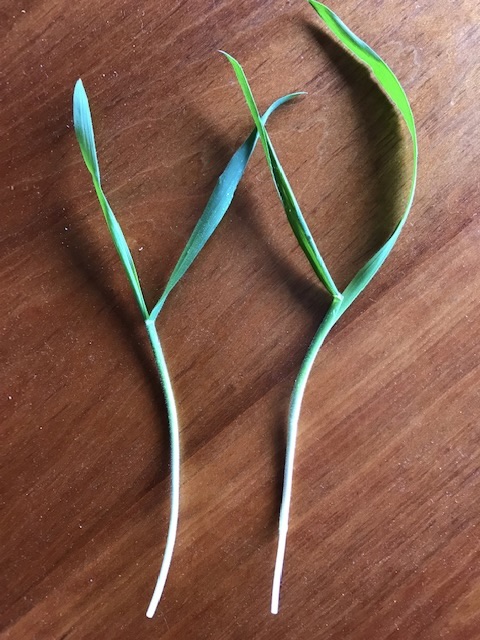
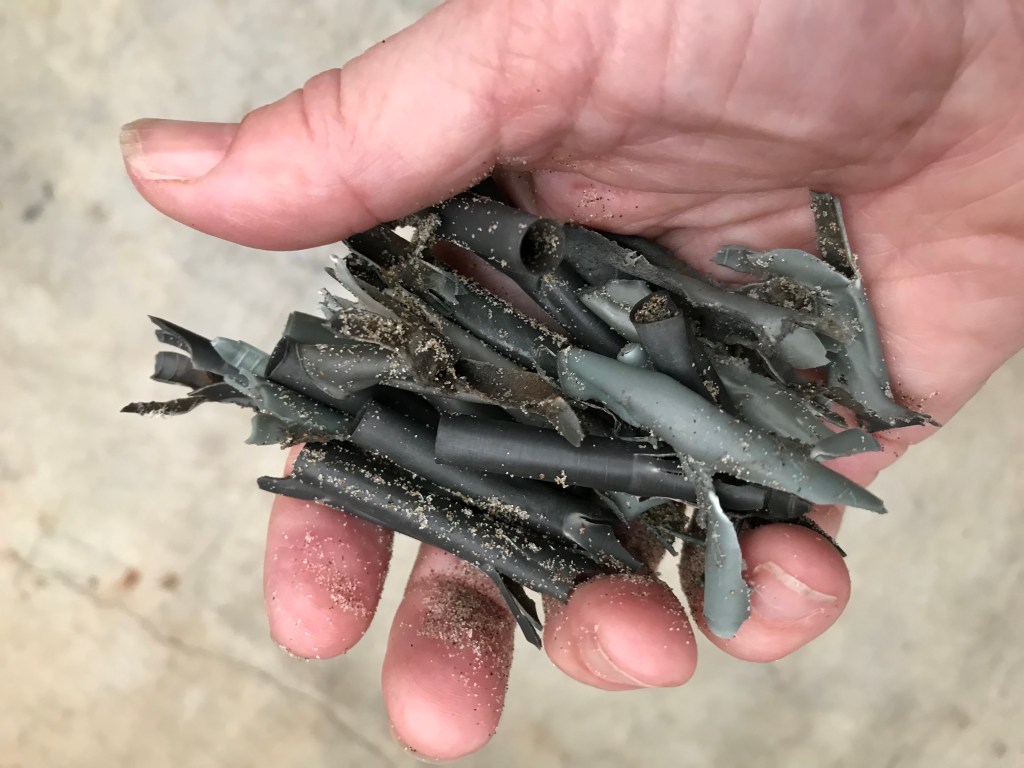
Yeti, our last dog’s favorite treat was a Greenie, a green starchy chewable bone-shaped object she could chew into bits and swallow in a minute of two. Green meanies are something else and they hurt my hand to hold, as I am in this photo. I wish people would pick them up so I didn’t have to.

I call them “green meanies” because I stepped on one once barefoot. Though I didn’t bleed, it was painful. They are the remains of fireworks of some kind and difficult to spot amongst bits of seaweed on the tideline. I search for them every day, plucked a couple dozen from the sand this morning, and I will still be finding them in January.
Continue reading

HOLIDAY

Like last week, this post is late. I mean to write early, but it’s been a week of strong wind, heavy rain, an 18-hour power outage, some baking and planning and writing, and exhausting work on our rental. A friend sent me notes on the novella version of my book and I began a new draft. Good stuff. It sounds like I’m complaining, but I have no business doing that.

This morning the shore is littered with spruce and fir needles, branches, yard debris, and at least two Adirondack chairs, one red, one green, broken into sticks. We brought home a big bag of litter. We started out thinking we’d walk north for at least a mile, but at the first seasonal creek had to wait out a wave. The tide was coming in and we decided we might find ourselves caught between beach access paths by a sneaker, so we turned south. We didn’t get rained on, but you can see the next squat coming from the southwest in the photo.
Continue reading

READING ALOUD

The latest research claims that “learning styles” are a myth but that reading aloud to one another is a good thing. I have to wonder sometimes if educational researchers ever consider their own biases?

Gary worried, when he brought me these stems, that they were bamboo from our neighbors’ ugly bamboo hedge. I think: No. At least, I hope not. Anyone?

Continue reading

GLOSSARY OF EDUCATIONALESE

Depending on when they went to school, elementary teachers were taught different methods of teaching reading. The approach they choose in their classrooms and the terminology defining it keeps changing. They are given a package to teach, proscribed minutes to devote to this effort, and schools often pay a lot of money to provide direction in the manner and method of delivering reading instruction. Every new packaging of education receives a new name. Often the new name describes something that’s been common practice in the past.

I used to call the affection education academics have for recreating terminology every few years “educationalese.” I created a satirical glossary as part of my term project for an Ed Psych class decades ago. [Persuasive writing has had several names over the years: persuasion, argumentative, position paper, essay, etc. It’s all the same thing. You’ll find my glossary below.] Since I mostly have taught high school students, my focus was on writing. In elementary school there is open warfare about how to teach children to read.

—KQED
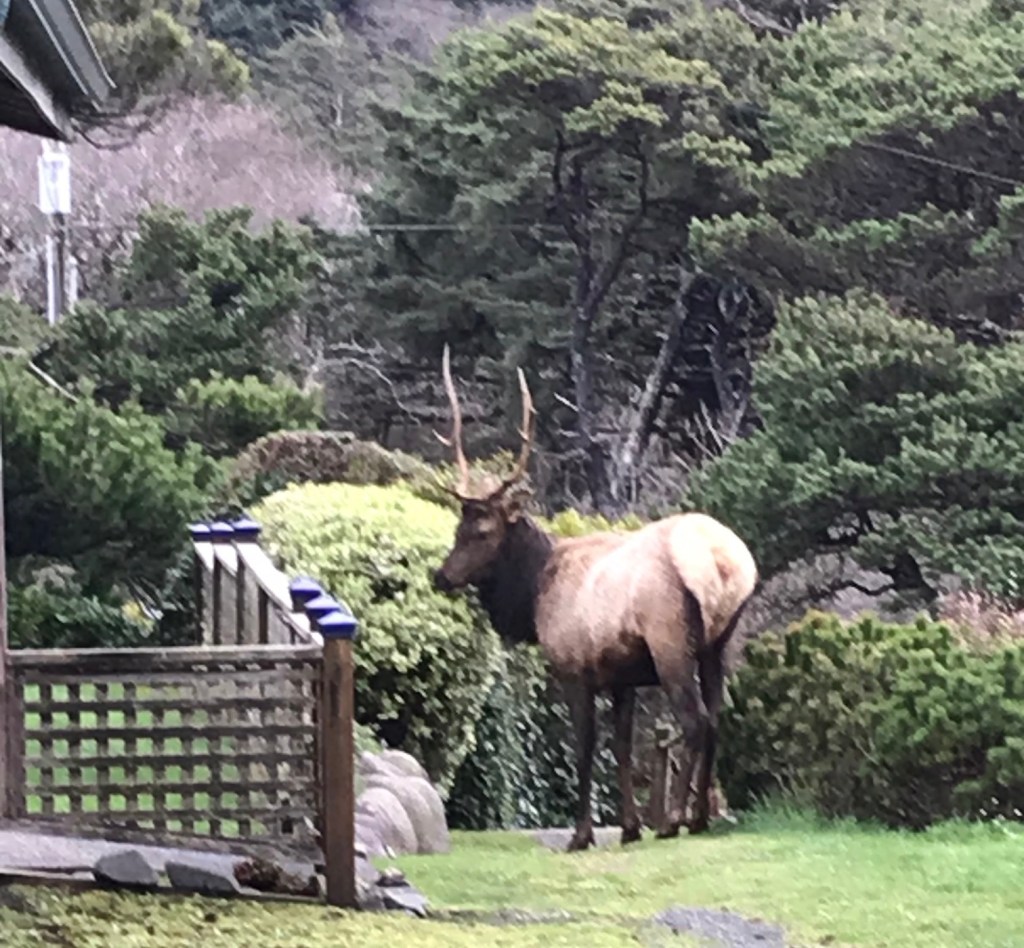
A bull elk that has recently taken up residence in our neighborhood. Gary was standing outside the garage talking to our immediate neighbor Patrick when this fellow walked out of the wetland north of us and crossed over to the yard across the street. Later in the day he is seen chewing on a hedge a few houses away. Yes, Roosevelt elk are big, the largest elk in the world.
Continue reading

LOVE ACTUALLY

I know, I know, some of us love that movie and some hate it. I’m not going to write about the film. The 20-year anniversary documentary is playing, but either way, you are safe to read on.

Truth, fact, history. Lies, fiction, invention. Racism. Yes, I went down a rabbit hole of investigation and research.

Continue reading

CHOOSING BOOKS

IMG_2574

Yes, you can have too many books. People who believe this is impossible? Well, that’s fine for them. I have thousands of books in my house. My husband has a thousand more of his own. I only read about seventy books a year, plus newspapers online, stories and poetry in journals and, again, online.

Sometimes I read a book I do not like. If it does not “spark joy” I do not have to keep it. I don’t have to keep it if it is one of seven copies of the same title or if I liked it somewhat but will never read it again or if I read the first chapters and felt no desire to continue reading or if have have not and never will read it for the first time.

Even so, I have thousands of books. I have more books than my 17 bookcases can hold.

How do I choose what to read?

COVER. I picked up Gregory Maquire’s Wicked and David Mitchell’s Black Swan Green, both while still in hardcover, for their covers. They remain among my all-time favorite reads. I taught Black Swan Green for years. My students loved it too. There are plenty of books I have ordered online for their covers and found myself irritated because the insides did not match the promise of the outsides.

FIRST PAGE. In my hands, I read a bit. Black Swan Green had me laughing halfway down the first page. This is the safest way to choose, in my experience. I have rarely been disappointed after enjoying a five minute introductory read.

AUTHUR. Some you know you are safe. You know you will love the book because you loved the last one and the one before.

DISTRACTION. I began reading science fiction just to appease my father. Foundation is sexist and homophobic, but still . . . all through college I read SF. I chose books written by women or with a woman on the cover, so long as she was not being carried a la Conan. The Women of Wonder story collections edited by Pamela Sargent introduced me to more authors. I read SF to find a world in which my gender was not all that mattered about me.

ASSIGNMENT. I detested Mrs. Stevens Hears the Mermaid Singing required for a class by a wonderful instructor, but after considerable struggle, I was able to respectfully and usefully identify what bothered me in May Sarton’s novel. Sometimes people hand me exactly the right book at exactly the right moment. Things Fall Apart was probably the best book I was assigned as an undergrad. Though I never warmed to the recommended stories of Flannery O’Connor in my masters program, I assign “A Good Man Is Hard to Find” and both versions of Carver’s “Beginners” and “What We Talk About When We Talk About Love” and allow my students to judge for themselves.

RECOMMENDATION. I loved Middlemarch recommended by a former student and I’ve read it twice. Toni Morrison came to me as a friend’s recommendation. I have read and reread Patrick O’Brian’s 20-volume series. Currently I am in the middle of the seventh book. It is as good or better this time around. Aubrey and Maturan deserve a full shelf all to themselves and they have one.

CHANCE. I don’t remember how I found some of the books on my shelves, the ones that stay. I saw Dorianne Laux’s chapbook What We Carry at Powell’s turned out on the shelf and bought it after reading the title poem. I picked up Black Swan Green and Wicked for their covers.

RE-VISION. I change my mind. The first time I read Maxine Hong Kingston’s Woman Warrior I gave up less than halfway through. Four years later, I picked up a different edition and loved it. It was not until I arrived at the exact page where I had previously abandoned the book that I remembered how disappointing I’d found it the first time and somehow it became brilliant in th years since. I read but failed to be particularly impressed the first time I read Alice Munro’s “Meneseteung” in Best American Short Stories. A few years later, in a class exercise involving reading short stories, a student picked it out as her favorite. It won over the entire class and more than a decade later I wrote my critical essay for my MFA on that story.

The ones that fail to stay?

  • Did I enjoy reading this book?
  • Did it teach me something?
  • Do I remember the story?
  • Will I reread it?
  • Do I know someone else who will enjoy it?

It’s always about choosing.

SLEEPING IN

IMG_3725

Sleeping in . . . will not happen. Of course it won’t. Tomorrow is Christmas and even though I do not have to provide a holiday meal for anyone, I did make 5 panettones today, plus the stuffed baked potatoes with and without dairy, and the pumpkin custards with and without dairy and refined sugar. This evening we are invited to a Christmas party, taking along chocolate pots de creme, rugelach, and roasted broccoli. Later will open presents to one another and light the candles on the little German whirling forest.

In the morning we drive over a mountain range. Our older son and his family have colds and our younger son and his wife work in theater and The Nutcracker has not yet closed and been loaded out. They will all be exhausted but determined to feed us well, and they will smile past sleep. Perhaps we and the other grandparents will commiserate while all the youngsters doze sitting up.

Here is a short piece from 10 years ago when I was still running and more of us lived here. It was written with my students for the Idyllic Place assignment in 2008:

The Still Day

The day is overcast and I am not working.  The dog and I have had our run, my husband is at work.  A wood fire burns in the living room stove and I have set my watch to beep at me every hour or so, a reminder to add logs throughout the day.  Outside, wind blows and waves move forever onshore.  I am curled in a chair with a book, a good one with characters I like, adventure and the promise that the story will turn out well with my heroes better off than they were at the start.  Maybe they will fall in love, maybe they will save a life, maybe they will suffer and experience loss but at the end they will know they are stronger and wiser than at the start. 

The sofa is squishy under my body, but I need another cushion behind my back to get comfortable.  Yeti is upside down on her loveseat, one lip dropped away from her teeth and her eyes tight shut.  The cat sleeps on the little wing chair that used to be my mom’s favorite.  She’s been there since Gary left for work, and unless I disturb her, she’ll still be there when I put down my book and go downstairs to begin dinner. 

I wear my pajamas of red and pink pencil-striped cotton jersey and my orange cashmere robe that I bought on eBay.  I have a jug of water by the sink, but I am cozy, my feet tucked under and finally warm, my head resting on the corduroy cushion, the book pressed open against my knees.  I feel heat at my core and know a hot flash is coming, but I’m alone in the house so I stand and shed my cozy robe, sweat begins breaking on my skin and I strip off the socks on my feet and the top of my pajamas.  I head for the bathroom and pour water into the jug, gulp it down, replace the lid, and rest my palms on the edge of the counter.  I breath in and out and check my watch to see if the fire needs tending, my pores close and the sweat begins to dry.  I replace my clothing and head down the stairs to put wood on the fire.  I’ve left the curtain open at the base of the stairs and I feel cool air drifting along my bare feet as I turn down from the landing.  But now I close the curtain so the downstairs will have a chance to heat up. 

The air over the stove shimmers from the heat rising off it, and I can hear soft sounds from inside the steel that reassure me even before I touch the handle: my fire is still burning.  The handle squawks when I turn it and the door squeals as it opens. 

Gary is retired now. Me too, mostly, and I gave up running more than five years ago. The dog and cats have gone over the rainbow bridge. But this morning we got to pet two dogs on the beach. Life still goes on.

Below: another Swanson-Vance creation, a winged cat from 1979, the same year we moved home to OregonIMG_3728

A YEAR OF READING IN REVIEW


I read, I realize now, a great many memoirs, beginning with Anne Frank’s Diaries and I Never Promised You a Rose Garden by Hannah Green [Joanne Greenberg], and right through recent best sellers. An essay on the Brevity blog defends the memoir against accusations of “misery porn.” Judging from my recent history, I am on that writer’s side.

On the other hand . . . she had warts.

On the other hand, I want more than even a well-written narrative of suffering. I want humor. I want objectivity earned through humility and suffering. I want wisdom beyond complaint. Growth. Insight. There are plenty of memoirs that offer all that. And not a few that fail.

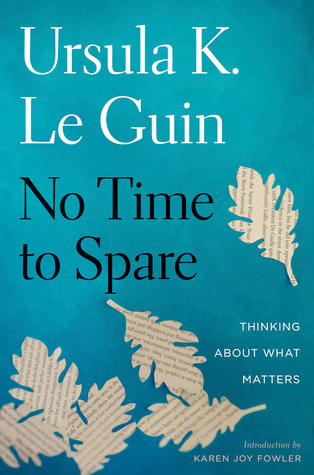
33503495Of the 66 books I read this year, several were memoirs or biographies. Of those, I managed to completely forget some. A Scientology surviver managed to bore me. A novelization of Dorothea Lange’s life was so awful I had to stop reading it. A collection of essays, introductions, and random notes by a favorite poet offered little to love, while Marilyn Chin’s new collection was quite marvelous. Ursula K. Le Guin’s No Time to Spare was a highlight, moving in ways that should not have surprised me. Ursula always had something valuable to offer an audience. Reading Lucia Perillo’s work makes me sorrow for her too-short life. Mazzeo’s book about Eliza Hamilton failed to decide whether it wanted to be bio or fiction. And though I am generally a fan of Joan Didion, her elitist attitude in Slouching Toward Bethlehem irritated me. (She goes to the grocery store barefoot and in a bikini and is incensed that someone has the nerve to be offended? Well, yes, in that time, it would indeed have been offensive, no matter who you thought you were.)

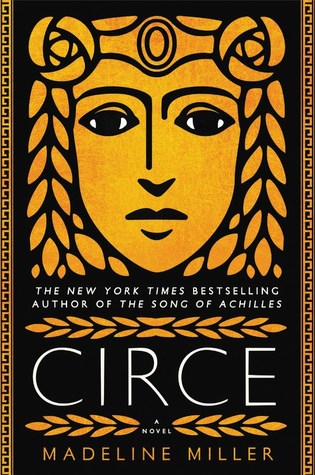
35959740Sadly, Pat Barker and Emily Wilson failed to impress me with their books of Homer. Madeline Miller, by contrast, completely astounded me with Circe.

In nonfiction, none was more impressive than Essential Essays: Culture, Politics, and the Art of Poetry by Adrienne Rich. I hardly know what to say. A 1997 speech explains the history of “identity politics” and how we must continue to find ourselves not only as individuals but as members of communities, that believing we exist as consumers in the marketplace fails us in ways that anyone alive and paying attention today will recognize. She was always ahead of her time.

But it is the novels that struck me this year, beginning with Circe. This is one of three books I hope to reread. Bette Husted’s novel knocked me down. Hild by Nicola Griffith is another. It made a huge impression on me for the way it reveals a brilliant mind in a long-ago time. Like Circe, Hild is shown doing what a woman in her position and living in her time would do, the day-to-day details, without diminishing how she wrestles with her dangerous situation.

Hild searches for pattern, for the warp and weft of her time, of the people and weather and the others living around her—birds and deer and the small shrews. From an endangered family, in a time when men in power can do anything, anything at all, Hild at 3 is already aware of how the light might fall just so and make her dead. How she stays alive, as an un-pretty child and then a sexually aware young woman, how she uses her blade, her understanding—this alone would make a powerful story. But Hild is more than that. She lives through transitions of Christianity and change, the clash of armies and of the secret powers of woman and priests.

She sees mor61+uqLOhUeL._SX331_BO1,204,203,200_.jpge in an instant than others will ever understand.

I recognize that people struggle with the names (of mostly real people, so the naming is not up to the author) and details (of ancient lives) but it is rare that a writer so fully captures the daily texture as well as the swordfights and trauma of any time, much less one so distant.

This is one of the great ones, one of those books I dwell on for a long time after because I cannot imagine having written it but desperately wish I had.

Historical fiction is challenging to both write and read. It must assume knowledge (and ignorance) on the part of readers while world-building in alignment with history. I know a great deal about the crafts detailed in this book and I am an unapologetic critic when writers get the history or details wrong. (As Pat Barker does in her new novel about ancient Greece.) I would have her metalsmith show Hild how to draw wire, but what is revealed here about crops and croft feels entirely authentic. The texture and flavor in these pages allowed me to trust the near-magic of Hild’s weaving.

Have I mentioned I love this book? There was a line I have been quoting: “Men are afraid women will laugh at them. Women are afraid men will kill them.”

Next volume please.

Closer to home in setting (though not in miles) is Oregon author Bette Husted’s All Coyote’s Children. Bette is a friend and I always read her work with interest, but this novel marks a turning point for me.

bette-lynch-hustedall-coyotes-childrenjpg-bc0574e4e7ab768d.jpg

One morning, my husband and I walked a long ways north before turning for home. I had been reading All Coyote’s Children before we fell asleep and again that morning. Once we were home from our walk I read after breakfast and during the day between doing other things. Some books you don’t want to end, but you also cannot bear to set down.

Gorgeous, elegant, heartfelt prose right from the beginning. There is a gradual release of information, of facts in this story of a family in recovery, which I admire a great deal. I appreciate a story that focuses on recovery after the fall rather than the fall itself. Everyone falls. Not everyone gets back up.

This is one of those books you want to hand to people, to friends and loved ones and people you barely know.

There is a reconciliation in these pages, tenderness and glory. I have a lump in my throat and tears in my eyes and I just want to sit back down and read it again because “sometimes a piece of story breaks off and rides the wind, and even if you close your eyes you know it’s going to find you. You hear it coming.”

There is confusion in the beginning, a reflection of Annie Fallon’s confusion after the death of her husband. These are loving, flawed, believable people making mistakes, doing the best they know how, and messing up sometimes. The complete story of this family is a long time coming and it is revealed in community. Lately I’ve thought a lot about community. The scientific evidence is mounting that the sort of relationships Husted develops in this novel are what most of us living in the “modern world” are missing. Missing all that connection to history and people and the very land itself might be what is killing us.

This novel provides a powerful reminder of the cure for what ails us.

I would like to see this taught in high schools. The story itself is strong, the history is solid, and the redemption it accomplishes is unique. It is an extraordinary story, a beautiful and important one about how we come to terms with history and landscape, family and obligation.

I read for love of reading, but also as a writer. So Circe, Hild, and All Coyote’s Children want another look.

Speaking of rereading, this was also the year I restarted an old habit of reading aloud to my husband. We began the Patrick O’Brian Aubrey/Maturin series a few weeks ago. It is my third reading, and I am impressed all over again. We are already on book 4, The Mauritius Command, and unlikely to finish it before New Year’s. There are twenty books in the series, and I read a few pages at a time, mostly while he drives or while we are in bed. Next year . . .

I read newspapers each morning, magazines, literary journals. I read some terrific books this year and wish I had time for more. I am not a fast, but a determined reader. I have selected a few books for their structure, but mostly I read what I love, the sorts of books I wish I had written.

There is just one essay left of Rich’s Essential Essays and I will be sorry to finish the collection, making it the last completed book for my year of reading.

WRAPPING UP

fullsizeoutput_e57

The year is not over, but with Hanukkah already past, five days to the beginning of winter, and just over two weeks till 2019, “the season” is closing in. The day before yesterday I wrapped gifts for twenty people. Yes, I am amazed too. We sent out fewer holiday cards, but we did get them out.

It was been an interesting year, and by “interesting” I mean in the sense of the Chinese curse: May you live in interesting times. I mean both marvelous and traumatic for me personally. A man who pursued me on the beach, screaming obscenities, pretty much ruined summer, and then the Kavanaugh hearings brought up old stuff I could have lived without reliving. The determination of people to deny a bad word about the dead, the continuing horror that is the current national administration . . . I did not sew a dress. I did not bellydance for an hour a day. I recklessly ordered a custom desk, but when it arrived it was nothing like what I asked for and it took a month to get the brute out of my office space.

I might not be blamed for feeling a little down.

Instead, we feel cheered to have paid off our mortgage this year. We are not yet accustomed to having disposable income. There is a large open space in the middle of my office space that I quite like. I read several dozen books and gave away books, and there will be more about that later. Reading aloud to my husband is something we have enjoyed in the past. Just now we are beginning the fourth book of Patrick O’Brian’s 20-volume series. It’s my third time through and it’s better each time.

We replaced our skylights, repaired some plumbing, and I painted the entire upstairs myself, including floors. We have been seriously divesting lovely things we do not need, have no room for, and our family doesn’t want either. The attic contains only a cardboard box and plastic tubs to catch the leaks, and no rodents. It’s never permanent, of course, but Gary got the job done. (Next year, the roof itself needs replacing, obviously, and the deck now has holes large enough for both my feet to step through.)

We went on vacation, several times, and not merely 6-hour daytrips to Portland that we have counted as “vacation” in the past 16 years. We went to Canada for two nights, Seattle, Forest Grove, Nye Beach, and Decatur Island. Nine days away. Imagine!

I sold a story and an essay—yes, actual money changed hands. I did not find an agent for my newest novel, but that is the result of my determination to indulge in an unpalatable structure. I am working on something else now. Plus, during NaNoWriMo, I wrote a lot of new material, and in the new year, I will work on that too.

On the visual arts front: I knit hats and sweaters; wove blankets, scarves, and shawls; and pieced one completed quilt. This was not all I had planned and a baby blanket is still waiting for me to complete a warp on the loom so that I can put on a blue-gray warp. Still.

Gary and I picked up half a ton of trash off the beach, and gathered an assortment of seaglass, shells, and pebbles that I have only half-sorted.

I taught Writing 121 and 122 last school year, and I have begun teaching that series again this month with a large class of willing and capable students (hooray!). This Thursday, a half dozen former students will be speaking to my college class about their college experiences. I will have made at least three batches of “the chocolate thing” from a Canadian recipe. (That making will happen after I get home late from school on Wednesday.) It is cream, good chocolate, egg yolks, and a tablespoon of orange liquor for nuance.

51mVnm2RrDL._SCLZZZZZZZ__SY500_SX500_Confirmation of my order of The Speed of Darkness by Muriel Rukeyser revealed the cover image, which I immediately recognized. I thought: I have that book already, downstairs in Ian’s old bedroom on one of the poetry bookcases. I have not yet looked to be certain it’s there. If this book was inherited from my aunt or mother, and I have possessed it all this time without reading it, well, that would be both bad news and good, wouldn’t it?

My husband is most pleased that I am regularly using my grandmother’s desk. It is tiny, a ladylike drop-front desk of satinwood, and unsuited to spreading out. I must confine my mess to a narrow surface and that might be a part of the appeal. I generally sit on the sofa with my laptop, or in bed as I am now, typing this post, but I open that drop-front desk each morning and sit at it for a time, and then in the evening, I plug my laptop in on a chest to my left and close my grandmother’s desk. Gary finds all of this precious.

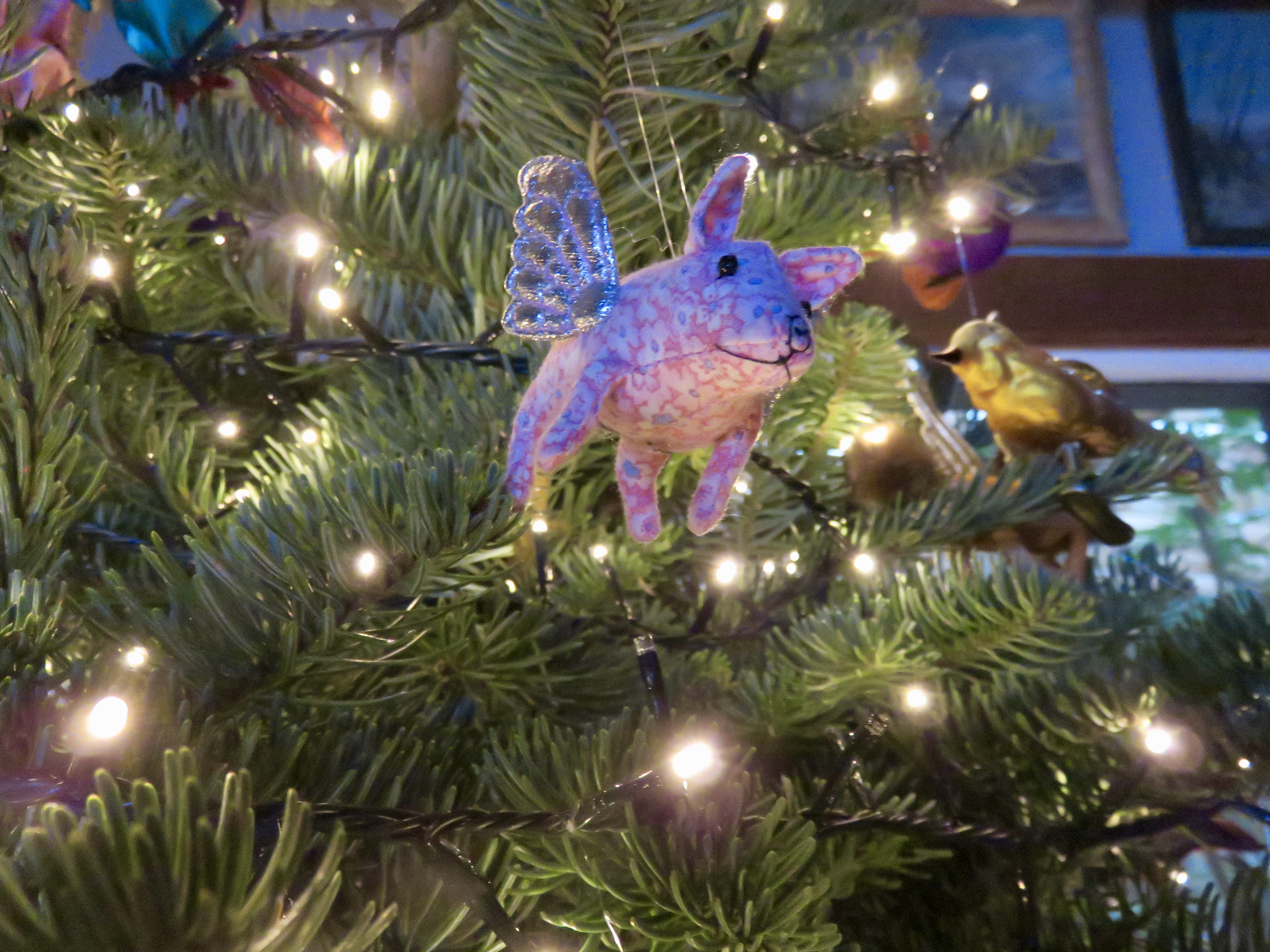
IMG_0015aThe tree downstairs has a thousand LED lights and is decorated with glass birds and tiny stuffed, winged animals made by Margaret Swanson-Vance of SewWing Studios. Some are more than 30 years old. This flying tiger has painted embellishment by her husband, who has passed (marked T  W  MS ’94 ‘Nar Bachcha’). The silver-winged pig at top is brand new. Upstairs is a little white paper tree in the front window. It has only a few lights and white ornaments, some of which are also from Margaret. A unicorn is on its way.

I have learned to bake panettone this fall. The sourdough start has not died but provided waffle batter, sweetrolls, and crumpets throughout the year. I did not make jam or jelly, but there are packets of fire-roasted peppers in the freezer, and we picked up tamale-ground organic masa from Three Sisters Nixtamal. For our Christmas there will be tamales! I plan to bake panettone, rugelach, and pecan cookies for the holidays, too, though it’s tight between the beginning of Winter Break (this Friday) and Christmas Day (next Tuesday).

We’ll manage in joy.
 

THE LAST CHANCE

IMG_0523

[CLICK TITLE TO READ MORE] Just now, sitting up in bed, I have already updated my progress on Ursula K. Le Guin’s last book No Time to Spare. Le Guin ruminates about, among other things such as her cat and overpopulation, the meaning of spare time. Here I have to stop for a moment.

Through my email inbox, The Literary Hub offers links to various articles and I read one or two of those. The New Yorkers sends me the frequent Borowitz Report. I read the headline and kicker, but I do not click through.

The New Yorker wants me to subscribe. This is my “last chance.”

I read a good deal every day. I read stories from three newspapers (I subscribe online to two of them) and some days I read stories on NPR or The Atlantic. I read Brevity—both the blog and the magazine. I read short fiction on four SF/fantasy websites. I receive daily posts from three poetry websites, and occasional ones from a poet and an educator, plus a handful of others. Sometimes I even read whatever book I am carrying around. In the school library I look over a magazines.

I do not read The New Yorker cover to cover, though I have a friend who has been doing that since we were both in high school, going on 50 years ago. I have an attitude about The New Yorker. I am not their target demographic.

Even when Jamaica Kincaid was writing Talk of the Town, I found the magazine elitist and representative of a view from, as Walter Lee Younger declared, “a bunch of hustling people all squeezed together being Eastern.” Richer than me, too. It is one of the magazines I find in the library. I enjoyed Zadie Smith’s essay about (finally) discovering Joni Mitchell. I sometimes read the fiction, which used to be common in magazines and is still featured there. I routinely urged students to check it out for full length literary analysis essays, another increasing rarity in mainstream magazines. I do not subscribe.

These days, I subscribe to Poets & Writers, which I fail to read, and occasional other literary journals, which I also fail to read. This failure to subscribe has not always been my practice. There were years when I subscribed to many journals and read each one cover to cover, particularly making note of fiction. One year, when The Best American Short Stories (BASS) came out, I had already read all but two of the award-winning stories.

Then my thesis adviser, as I was completing my MFA, asked: “Why bother to submit to journals? No one reads them.”

And I realized that I didn’t read them anymore either. It was the most depressing thing anyone had said to me since my mother began dying. I felt that my literary goals had been shot dead on the spot. Certainly this was not the intention of my mentor, but it bit deep, even so.

The New Yorker wants me to subscribe, and I am a reader. But no. I will read in the library and I will read periodicals online and save the paper.

I will not be subscribing. It is not my last chance. I receive such emails at least once a week. The New Yorker will offer many others.

In the mean time, I am not done myself. This is not my last chance. I will go for a walk this morning once it is light enough to see. I was asked to bake a birthday cake for our youngest grandchild’s 2nd birthday party. EV just turned two. She likes pink and she like berries so there will be wild huckleberries in the cake, blackberries tinting the buttercream pink, and raspberries on top. I will be busy today making lemon curd, a layer cake, and buttercream. There is a lot to get done and I have only an outline of my day. I have not yet begun.

At 65, I accept that some things are pretty much over for me. No plans to run another 10k. I will not be teaching full time again. Not ever. But I am still doing most things I love. I am writing every day. This is not my last chance.

What I do now is not my last chance, but I have no time to spare.


SaveSave