An imperturbable demeanor comes from perfect patience. Quiet minds cannot be perplexed or frightened, but go on in fortune and misfortune at their own private pace like a clock during a thunderstorm.—Robert Louis Stevenson
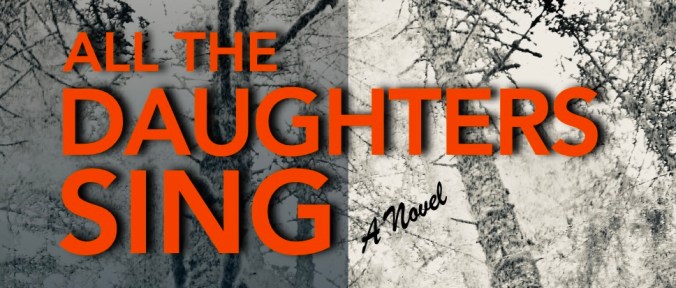
After I wrote the first four novels, after I’d committed to this one, after the years of writing and revising, authenticity edits and developmental edits, after proofreading and proofreading again. After I finally decide it’s perfect [it isn’t], there is the next step. Next I submit to agents or small presses who will look at unagented novels. That does not go well for my book.
The world might be better once we’re mostly gone.
Suppose I decide to self-publish? It was always an option. The publishers who would do so much of the work in design and promotion were well out of my budget. Eventually I found a printer who works with small presses and decided to trust them. Books are out and in the mail, with 50 of 100 gone. The process took a while.
I love a stormy sky, and I surely got wet on the day I took this photo. We often are rained on during our walks. I know what it feels like to have gloves and rain gear soaked through, to feel my fingers stiffen. It’s why I understand the bits of rope we find onshore, usually with a knot, often only a knot cut from a working line. The man who cut that plastic twine or rope (maybe the woman) could barely feel their fingers. There was no chance of untying the knot. It drifts in the salt water until it’s cast onshore, and my husband and I gather it and toss it along with other bits of plastic and foam—all the pounds of litter we gather from the shore.Continue reading →
I began writing fiction in 1990 as a result of a week-long summer class for teachers teaching writing. I had three art degrees and had taught art at an elite prep school but had been hired to teach English and Yearbook at the local public high school. On paper I was not remotely qualified for that position teaching English. The department chair urged me to apply because I’d subbed for her and she said i was better read that she was.
Over that long-ago summer of 1990 I prepared by passing the NTE exam, which granted me certification and taking graduate classes in English, writing, and computers. A writing-for-teachers class with Sandra Dorr offered assignments we might then use with our students. I did go on to use what Sandy suggested. Also, at the end of that intensive week, I went home and wrote my first short story, “Baptism.” Eventually, that story was published in Stringtown. I was teaching English part time to high school juniors and made it my policy from the beginning to write everything I asked my students to write. I stood by that policy for the next 25 years, despite a colleague telling me it was “ridiculous.” I’ve been a strong writer since I was a girl, but essays and poetry, not stories. That changed.
The gulls often rest onshore near Asbury Creek just up the beach from us. I don’t know why there were a thousand or more the other day. We are careful not to disturb them.
In the 1990s I began writing with a student over the summer. We met weekly to share progress and intended to each write a novella. But before mid-summer, it was clear we were writing full length novels. Hers was better than mine, and today Rebecca Olson is a tenured professor with many publications including two books. I am proud that two other former students have MFA degrees.
A lot. My injured foot is still a problem. No publisher for my novel. We’ve canceled an anniversary vacation. A neighbor is not doing well. And I am assured by a former student that, “There is hope in this world, ya know. And it’s okay to get depressed; it just means you’re paying attention. And while anyone is still paying attention, there is still hope for everyone who is not.” Walking, submission, altruism, A Christmas Carol, righteousness, and hope. The ocean of my business.
A couple of weeks ago on a trial 1-mile walk that went well.Continue reading →
You write. You submit. You wait. You are rejected.
Only that first verb matters. Remember that. Keep going.
You write. You submit. You wait for rejection. It is tempting to believe in failure, that rejection is deserved, that it is right.
Every creative person knows this process of making and reworking and finishing, and then sharing and waiting and hoping for appreciation. We all know disappointment. Those of us in MFA programs, those sitting alone behind a desk, with a notebook on our lap, everyone with a dream of finding an audience, even those with an audience waiting and eager to read our words. We focus on we have to share, bring on every skill we have practiced, but fear our audience will not remain seated. Even our mother will lose interest.
We envy people who never doubt. We doubt.
It is tempting to believe that others never doubt themselves, that someone somewhere is writing better stories and essays and poetry, that readers respond with the same passion that writer felt while writing, that their work is snapped right up. And maybe you’ve had work that was snapped right up. Maybe you have published poetry or fiction or essays that someone somewhere told you they loved. Maybe they even told you why. Or maybe they never did. Not once.
Either way, you doubt. You write. You submit. You wait. You are rejected. Each time you start over. You want to believe others are not good enough, but you are perfect, and then hubris drops its calling card and you know you are lost. Envy scars your work, plants its ugly face between you and what you love.
It is tempting to believe that maybe this rejection is all you have, that the essay or memoir or poem or story you wrote isn’t good enough. You should revise it, set it aside for a time and revisit it, rearrange the paragraphs or stanzas, make a stronger opening, invent a new word, wrap your thoughts in metaphor or scene, reconsider what you think you are writing about. Maybe you thought this piece was about love and really it’s about hope or loss or—heaven help you—giving up.
It is tempting to give up.
You write about giving up. You write until you find the next story or scene, the new essay or poem. You find a line or a single word. And then you fall right back into writing. Hours go by, and you laugh at the memory, the paradox, the irony written before you, the odd turn of phrase, the way a character or idea does something you hadn’t expected. You might cry when you find your own blood staining the page, or laugh all over again from pure glory. You polish the line until you realize it is too shiny and you must allow the next line to shine brighter. Hotter. You might stay up too late, revise those lines a hundred times, stir that emotional pot while it boils. You might get burned, but even the rising steam belongs to you. You work with sound until the words reveal what you knew all along. You have something to say.
You glow with effort and accomplishment. You said it, you wrote it, you made it clear on the page. Hold on to this. You hold on.
You write. You submit. You wait. You are rejected.
Repeat. Repeat. Repeat.
The response you are waiting for does not arrive.
It is tempting to believe you are wasting your time and your energy and your very heart on an endeavor that you were never meant to pursue. You want to believe that someone somewhere needs your words. You fear you are wrong. It is tempting to believe you will never write better than this. Maybe, you think, I should stop. You are not good enough. Maybe it is a delusion to trust your words matter to anyone anywhere. Maybe it was never important, what you write and try so earnestly to share. You do not have it, whatever it is that is found wanting.
You want it.
It is tempting to decide that laughter —yours—and tears—yours—are small things. They’re not. It is tempting to dismiss your accomplishment. It towers over your head, this dismissal. It is a momentous thing like sliding off a mountain peak. When you found the right word, the right sound, the piece that finally fits—there is triumph in that instant before you begin to doubt.
Remember. You have struggled. You have discovered. You have created a new thing entirely your own.
Remember the process, the laughter and tears and precision. Maybe you forgot that it was the writing you loved best of all. Maybe you forgot why it matters most of all.
You wrote this. It is yours. It is important to you.
Remember that precious verb: write. Set aside submitting, waiting, rejection. Maybe those next three verbs give you nothing good, only judgment and disappointment. You are better than that.
Only that first word is good for us. We deserve to write. We need to have the last word about the value of our work.


 IMPERFECT PATIENCE