THE DROPOUT RATE

In the UK, what we call private schools are called “public schools,” and they cost many thousands to attend. In the US, a private education can cost four times what a public college education costs, even more than Harvard costs, in tuition and fees. When people complain about failing public schools, it’s well to consider that you get what you pay for. It’s well to look at what wealthy people have tried to convince the rest of us about public education. The insistence over the past fifty years that public education is failing is a self-fulfilling prophecy promoted by wealthy people who feel have no stake in quality education for other people’s children. The rest of us do have a stake, because we care about our children, and maybe we should care about all children as future citizens. I won’t pretend the issues are simple.

Yes, a rainbow right down onto Castle Rock, and just the other day. We could see both ends, north and south.

The other alternative is home-schooling.

Continue reading

RISK

fullsizeoutput_1255

A friend traveled to her vacation house, another marched for justice, and our younger son and his children are here for the weekend.

Most of my yarn order arrived in the post office, but we will not visit before Monday or Tuesday. The website promoting my fifty-year high school reunion has not been updated for months. The painting I bought early in May is still lost by UPS. So is Gary’s CD from Estonia and the doll from Russia. I discovered that UPS does not acknowledge or search for lost packages until and unless you absolutely insist. Who knew? Continue reading

WHY TEACH?

IMG_3522

There is a long tradition of public service in my family, and perhaps that’s why.

I scored a dozen essays yesterday and my students will all be disappointed with their grades. Nevertheless, they wrote better essays in two weeks than they did in two months just last fall. They haven’t thought much about that yet, but we will talk on Monday after I finish marking up the other dozen essays. They will write a new draft, and if it is not yet as impressive as it might be, we’ll do a draft after that. Each time they work through the process, they become stronger. The essay is less important than their appreciation of the process.

There were a lot of things I could have done with my life. I am a wife and mother, but I did well in college. I was an art major, but I considered law as a career, or botany, or graphic design. I considered other fields, and I worked in several, but eventually I chose teaching as my profession.

My first three years as a teacher were in a private girls prep school east of Seattle. I wasn’t a very good teacher in those days, but I did the best I could as a very young woman in ideal circumstances. My students were elite—the daughters of affluent and actually wealthy parents who already lived in excellent public school districts but who could afford to buy an even better education for their girls. It was and is a great school, but if I’d had daughters I would not have sent them there. I believe in public education.

When my husband and I moved to my family home in Oregon, I had a variety of jobs: working both the back and front of a bakery, drawing plans for a local architect, designing freelance graphics, and for eleven years I was a sub in my local public schools. I worked one or two days a week and in Kindergarten through 12th grade, every subject including high school foreign languages I could not speak, Physics and Calculus, Band and Choir, Resource Room, and P.E. when all the offices and equipment were in the boys locker room. I went to work on those days masquerading as someone else, struggling to keep up for eight hours. I came home exhausted and hopeful I would work the next day too. After a while kids got to know me and my job was a little easier.

There are plenty of important reasons to become a high school teacher. Here are a few:

  • You want to teach because you discover you are good at it.
  • You want to teach in order to make a difference.
  • You want to teach because students deserve to have people in their lives who care about them, teachers who like them, and teachers who have other options that pay better but choose to teach anyway.
  • You want to teach because students deserve teachers for whom high school was not the best time of their life—they need to be assured that whoever is telling them that high school is the best time of their life is either lying or has led a very, very sad life indeed.
  • You want to teach to make the world a better place, and you want the opportunity to help other people find hope and promise in the world.
  • You want to teach to work hard, to engage deeply with ideas and people, and to know that what you do is important.

And the big one we should all care about—

  • You want to teach because a strong public education system is the greatest tool for developing democracy that exists. It makes us one people. It makes us known and useful to ourselves and to our communities.

There are, in fact, teachers who do not love their job. Most leave within four years for other work. There are teachers who chose to teach high school because that was the best time of their life while they played sports and they want to hold on to their teenaged dream. There are teachers who do a job, and that is the extent of their commitment. I don’t think that last is anything but rare.

My husband likes to say I am “never off the clock.” Most teachers are like that.

I’ve been a teacher for over forty years. And though a few of them have been very hard, I regret none of those years. I am grateful for a few thousand fascinating people who entered my room and listened to me, who sometimes even laughed at my stupid jokes and teased me, who agreed and disagreed with my opinions, who asked me questions I couldn’t answer, who taught me about baseball and boats, computers and dance, 4-H livestock, music, theater, science, and how very, very hard life is for too many teenagers today. Sometimes I made them angry, I hope more often I gave them the skills and the knowledge that they had a right to expect me to share. I hope I sent them away wanting to be better people and that what they learned in my classroom was useful in that effort. I hope they left possessing greater faith in their own abilities, greater trust in the process and in themselves. I know many of them have been grateful for assignments I gave them that didn’t seem important at the time, but showed their value later.

Teaching is one of the great accomplishments of my life. Most days it makes me proud and hopeful. I hope to keep doing it until I die.


A follow-up: Less than a month after I wrote this post, I quit teaching in the local school district. I had enjoyed teaching college classes, but in those last months everything became awkward, difficult. I do not regret this decision, though I miss teaching very much. Perhaps I was trying to convince myself of something, because I cannot properly explain my abrupt decision. No one really wanted to know. Why is it that people who are paid a great deal of money to administrate so often fail?

I am not done teaching. It is the great habit of my life, and there are many avenues for pursuing my vocation.

Out of the blue I was recently asked to teach an adult writing workshop next year, and I am looking forward to that. My visual art has been accepted for a show in a local gallery late next year—I had applied on impulse. I look forward to both of these opportunities and home to do well in both.


AUGUST

IMG_3206

It is the last of August, and this ending could not come too soon. It’s been a memorable month.

There are great things about August: my wedding anniversary, the birthday of my older son, and surely something else.

In the old days, August is the month I began playing solitaire compulsively—with cards, not on the computers. Wikipedia suggests that about 79% of games are winnable, but I am fortunate to win a tiny fraction of that number. I have no idea what I am doing wrong. I can play a dozen hands of the game without winning.

That’s how August feels to me.

And too many tourists, preparing for company, cleaning up after company, completed projects.

The real reason August is a depressing month is that I am eager to start my teaching year. Until I retired, August simply stood between me and a new school year. Now I only teach one class each in Winter and Spring terms. The end of August means I still have 12 weeks to go.

I need a project.

When I finally checked my class list, I discovered 36 students listed in my Writing 121 class. No college or university I know would inflict that many students on a writing instructor. It is likely a few will drop, but I am thinking about how to fit that many into a classroom. I am mentally adding hours each week to my grading time. They have moved my students into two different rooms, new to me since last year and the year before, and years before that. No one contacted me about any of this, I was unable to schedule a meeting with my department, I did not receive the schedule letter from the school, and the principal was briskly friendly when I stopped by earlier this week. This is merely to say that my high school, like all public schools, is struggling.

I just read a pair of articles about pay at public school districts, one about the highest starting pay, and the other about pay scales that dip into six figures. One reality of teaching is that schools generally hire as cheaply as possible. You might observe that this is true for any business, but you might be missing a key difference about hiring teachers. A public school seeking a new principal (or a law firm seeking a contract lawyer) can find the candidate they want to hire and then negotiate a salary commensurate with desired skills and experience. That is, they know what they want and hire the best person for that job.

Public education doesn’t work that way. The districts with the highest starting pay, offer more money to beginning teachers for two reasons: they are building a stellar school system or no one wants to move to Wyoming. School districts with exceptionally high pay can do that because their tax base is exceptionally high, cost of living is high, and because they are building exceptional schools. They are throwing their money down to hire the best teachers. If you are tempted at this moment to repeat that old saw, “You can’t solve a problem by throwing money at it,” you are both right and wrong. Throwing money around is pretty pointless. But having money to spend can allow a school to hire the best and brightest teachers.

Almost no district can afford the best and brightest teachers. They have limited funds and overfilled classrooms. They hire the best teacher that they judge they can afford. Whether 80 or only 12 apply for the job, districts hire first-year teachers because they are cheaper. They might hire a teacher with 3-5 years of experience, but they can’t afford more years, or anyway, they do not afford more years of  experience. Each year of experience means additional pay, and they do not budget for that extra pay.

Districts offering the highest starting pay assume that this is one way to find and keep teachers. If they can keep them for a few years, those straight-out-of-college teachers who chose to go somewhere for the high starting pay will find they are not desirable candidates anywhere else. The longer a teacher stays in a position, the less likely another district will spend the money to hire them away.

Compare that to most other industries where experience not only costs employers more, but is actually valued more. In schools, this only seems to work for administrators.

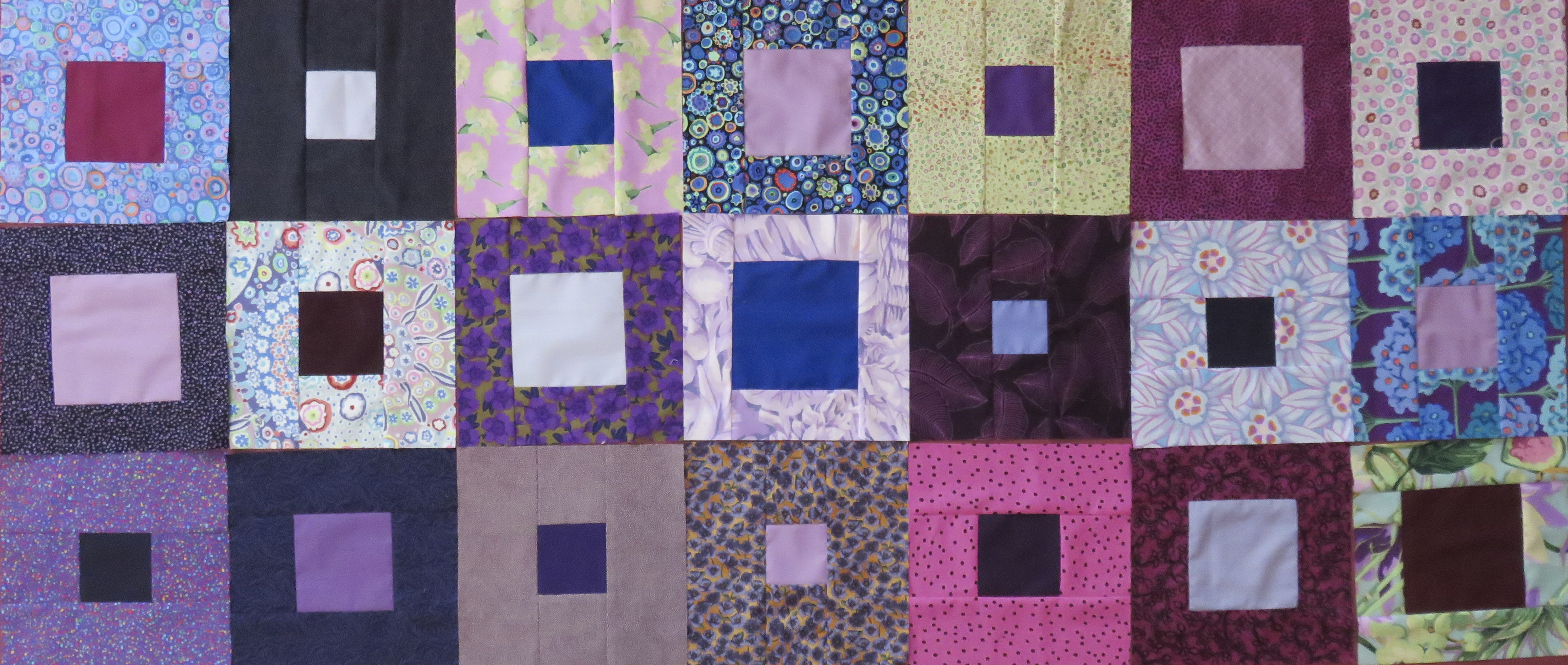
And yet. And yet, I am eager to begin. I will visit classrooms and volunteer my time in the school library on Wednesdays, and I am eager to begin teaching. In the mean time, I am piecing a quilt and playing solitaire.

“There are four types of hands [playing American Solitaire, or Klondike]: winnable games, theoretically winnable lost games (the player made a selection that resulted in a lost game, but could not know what the correct selection was because the relevant cards were hidden), unwinnable games (there is no selection that leads to a winning result), and unplayable games.”—Wikipedia

I am playing blind.