
Several of my students went on to Pacific University, but that is not the reason I am fond, of course. Today is the last day of events scheduled for the MFA residency.
Continue readingSeveral of my students went on to Pacific University, but that is not the reason I am fond, of course. Today is the last day of events scheduled for the MFA residency.
Continue readingI have no introductions to review and revise, but I will write today and tomorrow about what else is happening at Pacific.

I used the forecast of rain to skip my run, but it’s not raining, and now I feel guilty for still sitting up in bed, draining my second cup of too-strong coffee (the only coffee I like), and listening to Jack Driscoll in a video from January of last year. I was there. In “First, Do No Harm” from January 2023 in Seaside, Oregon, Jack reminds us: find your character on your page, care deeply, even for the flawed characters, especially for their flaws, because that’s what we all are. That story he read got me again. [I hope the link opens.] I have not heard the other two talks that are linked on the residency Bulletin. I’ll need more time to go there.

For Jack, Gary went over to campus and sat on a bench and played “Parting Glass” by the High Kings, the live version where the pipes come in [at 2:32], turned up all the way on his phone, and cried because it was for Jack and because of the pipes and because… We think Jack would like that. We’ve listened to it a few times now.
Continue readingToday is Wednesday, which is noted at the top of today’s residency schedule, but which I find myself in need of reminding. Wednesday, and the last day, the day of graduation, will be Saturday. Count the days. [3.] I will introduce one more faculty reading, celebrate this 20th anniversary of my MFA program, and then leave after graduation on Saturday. There will be bagpipes!

I am trying something different, something obvious. Instead of writing my report of the day all at once the following morning, I begin this day with my own beginning: I have four miles today, two running, which is usual for a Monday. When I was a student here in 2005-2007, I ran further and away to the west. Five miles, six. Faster. I cannot do easy nine-minute miles anymore. This morning, I ran close to, through, and around campus. I circled dear Marsh Hall and Old School Hall each several times, ran all the way north to highway 8, and walked a cool-down mile. I slept better last night—seven hours. I will nap this afternoon.

It feels very much like bragging to say I’ve so far had lunch with Claire Davis, dinner with Molly Gloss, and lunch with Omar El Akkad. But there, I’ve done it. Saturday, Claire and I talked about what book covers can do to reveal a book or damage its sales. Molly and I talked about the program and our writing. Sunday at lunch, Omar and one of his students and I talked about Portland, fire and how wealth insulates some people even from disaster while leaving others homeless, and that the best Indian food he ever had was while appearing at an event in Iceland. We talked about food. He asked about my novel, would I tell about it? Well. You know the answer.

It is the middle of the night after the second day of the Pacific University MFA program residency. So far: five crafts talks and two faculty readings, but I skipped the second student reading last night in hopes of getting a better night’s sleep. [That last is not going well. I should not be awake.] Yesterday, I ran in the morning, napped twice, and so much has come on so quickly, I feel simultaneously sated and drained, inspired and exhausted.

I am in Forest Grove, Gary too far away. This week is the residency of the Pacific University MFA program, my alma mater. I am the emcee for the seven evening faculty readings. The faculty are astonishing and wonderful, the reading last night was wonderful, and I am filled with wonder.

I used to require my college writing students to attend:
 The Pacific University Master of Fine Arts in Writing program hosts readings by top contemporary writers during its 10-day residency in Seaside. The series offers a rare opportunity to hear these writers read on successive evenings. Free and open to the public, the evening readings begin at 7:30 p.m. and take place from Friday, January 10 through Friday, January 17 at the Best Western Ocean View Resort, located at 414 N. Prom in Seaside, Oregon.
This year’s lineup includes Kwame Dawes, recipient of the Windham-Campbell Prize and Pete Fromm, five-time winner of the Pacific Northwest Booksellers Literary Award.
7:30 p.m. at Best Western Ocean View Resort in Seaside, OR
Jan. 10 — Marvin Bell, Claire Dederer, Pete Fromm
Jan. 11 — Ellen Bass, Jack Driscoll, Debra Gwartney
Jan. 12 — Frank Gaspar, Scott Korb, Mahtem Shiferraw
Jan. 13 — Chris Abani, Mike Magnuson, Mary Helen Stefaniak
Jan. 14 — Claire Davis, Valerie Laken, Joseph Millar
Jan. 15 — Sanjiv Bhattacharya, Shara McCallum, Kellie Wells
Jan. 16 — Kwame Dawes, Cate Kennedy
Jan. 17 — Molly Gloss, Shelley Washburn
The authors who are reading also teach in Pacific’s low-residency MFA in Writing program. For more information about the writers or the MFA in Writing program, contact Shelley Washburn, MFA in Writing director, at 503-352-1531.
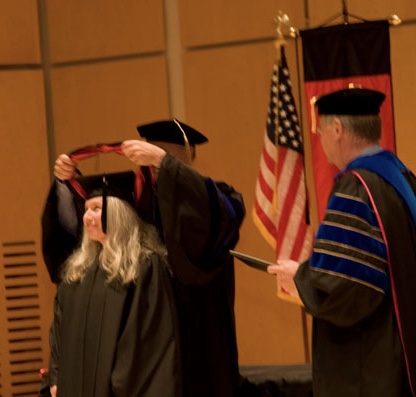
It was a Saturday in June. My husband has been talking about that day 11 years ago when I was completing my last MLA residency and my mother was dying. I did not know this about my mother, and he says now how he remembers how happy I looked when I gave my speech. I had been chosen as class speaker. Claire Davis spoke that day too. There was a bagpiper. A friend sent champagne, which I forgot in the dormroom refrigerator after he told me, he was in such a hurry to drive home.
This evening, I went looking for the speech, not sure my new computer would open that old file, and here it is. It makes me cry to read it over. Gary says he “had a little cloud” over him when he heard it that same time. He enjoyed it more just now.
Here is what I told my graduating class:
ART SAVES LIVES by Jan Priddy
Good afternoon. On behalf of the class of 2007, including those tethered to their lives far away, I welcome students, faculty, honored guests, friends and family, the interns, Amber, and Shelley—oh, Shelley—who is a writer and sparks this magic that happens to us. We are grateful to one another for the help along the way, for reassurance and emails, Art Barns, phone calls, and other metaphoric hand-holding. We thank you all.
I used to have a bumper sticker on the back of my car that said: Art Saves Lives. I was sorrier to lose that slogan than I was, eventually, to lose the car. Because here we are saving our lives. Here. All together. And we are a part, all of us here, together we join a long line of readers and writers, of people who value language and who need to write. We add our words to those who came before. We claim them: Sappho and Shakespeare, Emily Dickinson and Mark Twain, William Stafford and Ursula K. Le Guin. All part of us now.
Last year Peter stacked books on this podium solidifying the reason we are here. Art on the page. We all want to transport our readers with words, carry them across time and space to meet people and feelings and ideas. We should be humbled, but our goals are not humble. We want to change the world with our imaginations, one word at a time.
We are writers. Crafty people. For two years we learned our craft from those before us. Words are our tools, and I know from studying with David that each word matters. Valerie taught me to shape my imagination. We know dialogue is important, Pete, and that we share the world with other people, Marvin.
We’ve savored Dorianne’s smoky Juliet, followed Claire’s frog down the throat of a child, and reconsidered John’s take on Job. A hawk ruptures Sandra’s window and Pattiann hands us sex on a cloud. Jack plunges us under the ice and Craig mourns a child. Judy’s natural disaster drives us to community and Ellen soaks us in honey and pins us to the wall. Joe’s porcelain throne gleams in imagination. So do our fellow students.
But I am a story teller and most of my ideas come attached to stories.
Here is a story:
In 1836, a recently widowed visionary, remarried. With his second wife he fathered seven children, preached, taught, found academic employment, and wrote in his study while a large household revolved cautiously about him. Quiet. Don’t disturb Papa, he’s working.
Most of us scramble and bargain for writing time, often finding it only in slivers and odd hours, between the detritus of day-to-day responsibilities and paying work, wedged between the insistence of people who rely on us to put their demands first behind our human need for rest. How lovely to sit behind a door, working until we are ready to stop, parishioners anxious and waiting, our loved ones tip-toeing past the door—Quiet, don’t disturb the Writer.
But we are not writing sermons that come crashing into the world with authority and an eager audience, we are not Calvin Stowe, that mystic composing in his study, and most of us have never even heard of him.
It is his wife we know—the wife who bore the seven children and ran the house and did not, in her day, enjoy legal recourse to law, the right to vote, or a paying occupation. The woman who provided Stowe with a room of his own, didn’t have one herself. Harriet Beecher Stowe. It is her writerly story that more closely resembles ours. Harriet Beecher Stowe, nearing forty years of age and with a newborn seventh baby, began writing Uncle Tom’s Cabin at the kitchen table while running her household.
The little lady who started the Civil War, Lincoln called her.
Harriet Beecher Stowe lived to see slaves freed in America and granted citizenship. She saw her own 85th year, but no other writing of hers had the impact that Uncle Tom’s Cabin had upon the world, but then again, neither has the novel of any American since.
I wonder: Was she scared? Did she wonder if her words would run out? Did she call herself a fraud and suffer writer’s block? Was it possible for her to have imagined, with a household bustling, interrupting, and tugging at her, that the words she struggled to pen would change the world?
Maybe we are writing our own transformational books at our kitchen tables and we don’t even know it.
Few of us have sheltered space or devoted congregations. We are not Emily Dickinson or even Calvin Stowe. We are poets scribbling lines while we wait for laundry to spin, composing in our head on a run; we are novelists running sentences across the ceiling before sleep or rehearsing stories in the hour, the rare hour, children are preoccupied; we are memoirists and essayists getting up to make the coffee and losing ourselves in words when we have so much to do. We hear voices. We stare into space and forget where we are and what we’re supposed to be doing. Hopefully this doesn’t happen while we’re driving to the grocery store.
We cannot know the influence our words might have on that still-imaginary audience. We only know we want to do it—this writing.
With so little outside our need, without free time or a room of our own, the leisure and space that all human beings deserve and crave whether they are writers or not—what have we?
We have words. We have each other. We have imagination. I’ve been using that word a lot. We can’t know what we cannot first imagine. Time, curiosity, stolen moments, and imagination. We’ve had two years of community and permission. We have only just begun to find voice on the page. We look up from our table and out at the world, and, bending to our page agin we’ll write what we understand of it, or admire, or deplore, dream, fear, hope.
We can read and think, write and reason, feel and sing, and always question, and do this honorably and diligently and during every moment we breathe.
People have been asking us all week what we’re going to do now that we’re graduating. The only answer that matters is: Keep writing. We’re not done with our work at the kitchen table. Whether we transform the whole wide world, or our own private corner, Art saves lives. I know it’s true. I think it’s why we’re here. We’re saving ourselves.
 IMPERFECT PATIENCE