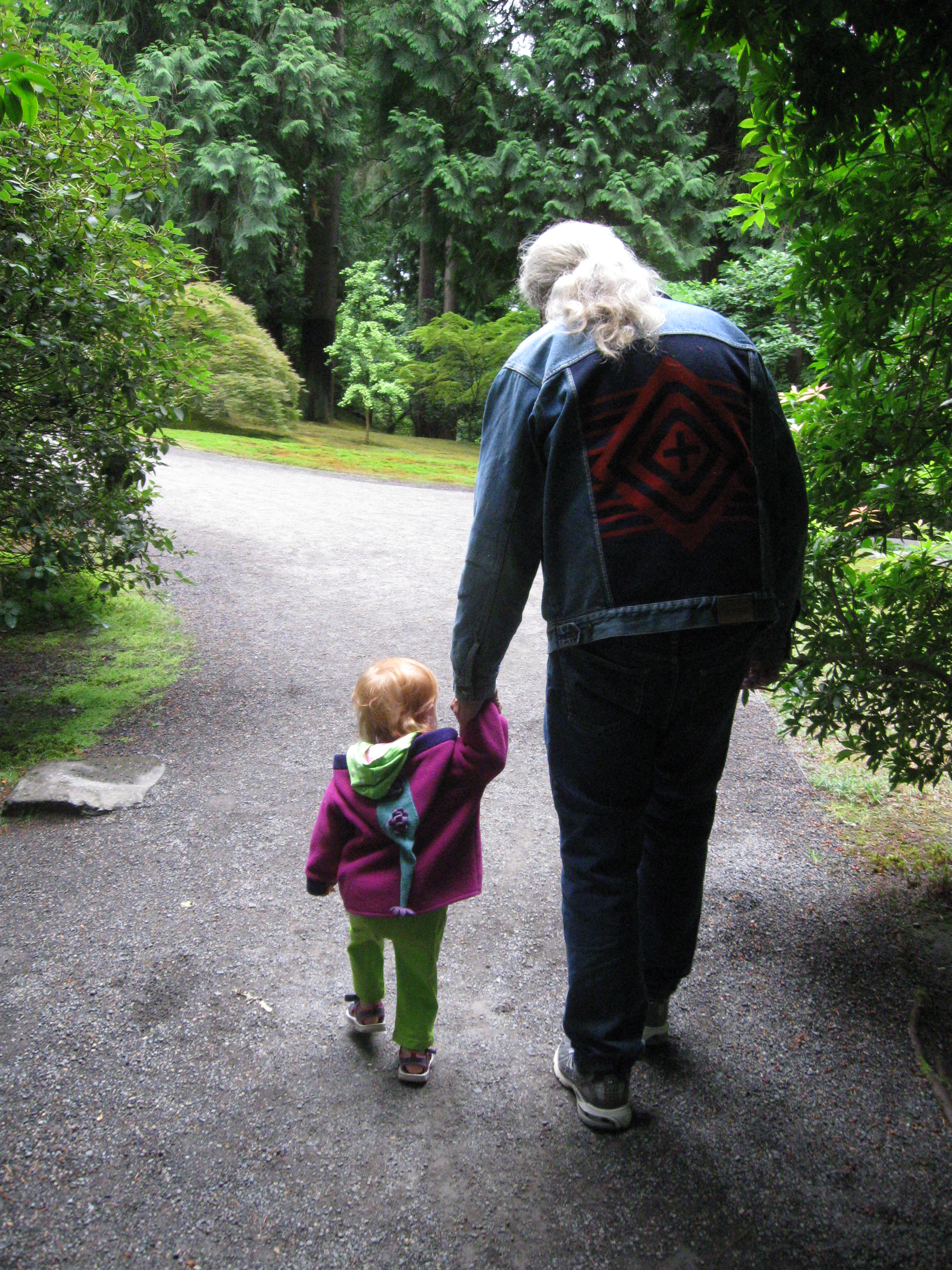
When we were children the zoo in Seattle was free. There were no tickets, no guarded gates. You could walk in the main gate or by the elephant exhibit or from Lower Woodland or over by the rose garden on the south side. The Seattle Art Museum (then at Volunteer Park on Capital Hill) was free. I have photos of my brother and me on the backs of stone camels. The Seattle Aquarium was privately owned, but for a time my family had free passes because my dad worked for the Bureau of Commercial Fisheries and he knew the owner.
Writer Sandra Cisneros spoke about visiting the museum on the free day in Chicago as a girl. Access to such cultural sites without paying admission was a critical aspect of her childhood. Mine too. These places were beautiful and free.
It was what her family and mine could afford.
The Asian exhibit on Capital Hill is still perfectly clear in my mind’s eyes though I have not been there in over forty years. The elephant walking across clouds carved into pale jade. That spectacular collection has been undergoing renovation and will reopen next year. It will not be cheap to visit. Nearby is the brick tower I climbed in my teens and a conservatory where I recall the overarching tropical foliage, volcanic rock just inside the door to the right of the entrance, the cactus and rows of potted flowers. That glass house costs money to enter, a relatively modest $8 for the two of us if we went today because we are seniors. By contrast, The Burke Museum on the University of Washington campus, a place we used to wander in and out of without a thought, would cost us $40. The Museum of History and Industry, which was a favorite haunt in my childhood would cost about $36. The Pacific Science Center would cost us $48 for entrance but another $70 if we wanted to see everything. There are free days, usually once a month, for many exhibits, though not that one.
If we drove to Seattle (which Gary absolutely resists doing), the museums (some of them free one day a month) and conservatory (except on the first and third Saturday) will cost admission. The zoo has been on lockdown since Gary worked there in the 1970s. It was free when he started as a volunteer in the aviary, but admission was added while he worked in the commissary. This was particularly controversial at the time since admission fees did not go to maintain the zoo but into the general funds for the City. It costs $42 for a pair of seniors to visit today. Cheaper than the Pacific Science Center, more than the Burke. I don’t know where the funds go for all these attractions. I use Seattle as my example only because we once knew the city so well.
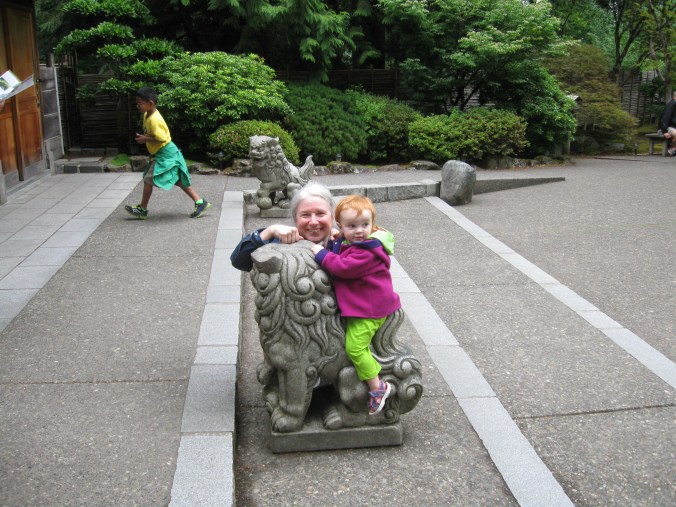 More recently, when passes were on sale, we bought a family pass to the Portland Japanese Garden. We took our oldest granddaughter to these gardens several times when she was little, and she loved the “big fish” though she says she doesn’t remember anymore.
 The gardens are crowded when we drive by, as we sometimes do on our way into town. For $110, we can purchase a senior family ticket to the Japanese Garden, and after concentrating on our house for the past couple of years, perhaps we will. Though it seems expensive, we can afford admission. Many families cannot.
I understand that people object to taxes and to paying for venues they never visit . . . and I think about the billions allocated for sports arenas, which are all about profits and competition and ritualized violence. And I think about the gilded screen with dozens of crows I saw as a child in Seattle, the science experiments, the wave machine, the Tiffany window—all those shared human cultural experiences I enjoyed as a child.
Public parks and museums should be free to the public, not restricted to those who can afford to pay. I wish everyone, every child, could experience what I did through public access. Very few can.
 IMPERFECT PATIENCE