On the beach before dawn yesterday, rainclouds had moved off, and the sky was aqua over the ocean. My husband Gary and I followed the tideline until we met a friend and stood for a time admiring the cool air, the empty beach. We shared news of neighbors, and then said goodbye until tomorrow. We pass neighbors on our walks almost every morning—heading home while others are on the way out.
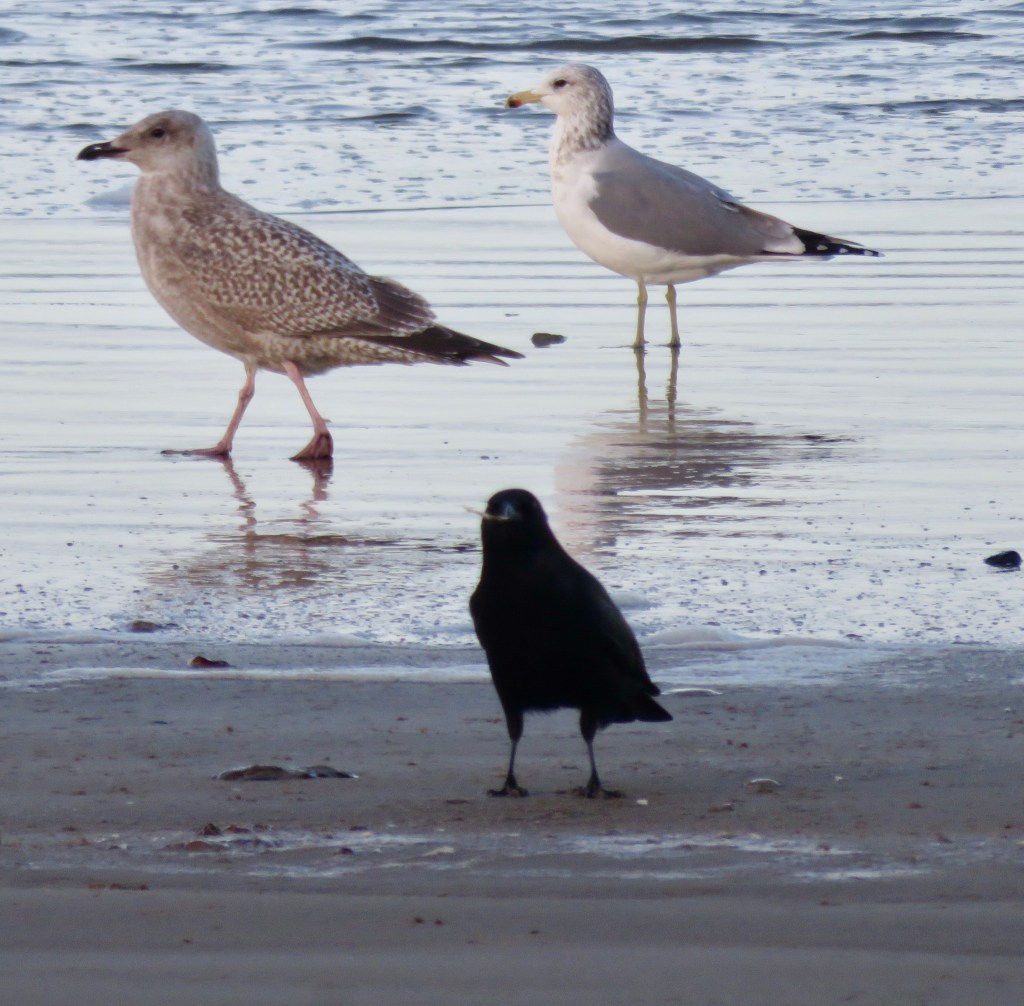
Dark rainclouds moved toward us from the north, with a flag blowing from the east. We turned at Asbury Creek so as not to disturb seagulls resting onshore in the water. The rain began soon after that. I put up my hood when I heard it pattering on the back of my raincoat. The flag was blowing from the south by then, the rain moving in from the north. That’s the way it is sometimes, everything coming from directions that make no sense.
Are you worried about aging? No.
When we moved to Arch Cape forty years ago we were youngsters, and now we are the old timers. Just old, I guess. And lucky to be here.
My grandfather built a duplex on the east end of our property. He rented the tiny one-bedrooms by the night, but Gary and I had managed an apartment building while we were in college and knew we did not want to impose short term rentals on our neighbors or ourselves. Our renters stay for years, and that is how we have afforded our taxes. Thank you, Gordon Keays Smith. And thank you, Genevieve, for leaving me the home that’s been in my family since 1911. Genevieve was Gordon’s third wife, the only one who out-lived him. My mother did not like her, but as weavers, Genevieve and I got on well. However, it was Gary who actually won us the house. Genevieve’s second husband, Colin, got on well with Gary, and he told her to leave us the house so we could move here and have a family. That’s exactly what happened.
When we arrived, we scrambled to support ourselves and raise our boys. Our neighbors were mostly elderly, in their seventies and eighties. Now we are the old-timers of the neighborhood. No family has lived here longer.
Are you worried about aging? No.
My husband and I are at that point in our lives when aging is impossible to ignore. We are retired. We walk miles each day, but we no longer run or drink three glasses of wine or ignore the need for an occasional nap. We have friends whose parents are still alive, but that is not true for us. We are our oldest living relatives. No parents, no living aunts or uncles, no older siblings stand between us and age. Gary has lived five years longer than either of his parents as well as his one elder sibling.
Surveys of mental health often ask whether the subject is worried about aging. I always answer no. I assume that is the right answer. But my answer is a lie, of course. I do worry about aging. For years this was more about planning and not really worry, but now it is both. I try to plan for diminished capacity snd I worry more about loss of vitality. I cannot help wondering what sort of denial people assume in order not to worry about aging. I see it coming, inevitable frailty and loss of mental sharpness. I know people ten years older than myself, even more than ten years older who get around fine, living active and meaningful lives. I would be happier if I could think only of them because they are doing so well. But I also have friends with cancer and dementia and some are already lost.
It began in the 1980s with HIV and AIDS. Suddenly people I had known for ten or fifteen years were gone. Cancer took our fathers. Heart disease took our mothers. My former students lost to accident, cancer, and suicide. Old friends droop and drop.
Are you worried about aging? No.
For years I watched the housing market in Portland. My plan twenty years ago was to purchase a small condo or house and prepare it for our use when we drove to town and for later, when we no longer drive, as a familiar place to move. (I was hit decades ago by a woman driving onto highway 30. My boys were still little and in the back seat. The driver was 80, and witnesses said she just drove into my path. My own mother at 80 was no longer driving, but had scared our sons with her erratic driving long before that. She too simply drove onto busy roads, assuming others would get out of her way. I vowed to quit driving before I became a danger to myself or others.)
My mother left me money that would have made this imaginary condo affordable, but I paid off our sons’ college debts instead, and then I forgave a loan to one and gave the same amount to the other in cash. How long ago was that? But I still look at vintage condos. I still imagine living closer to groceries and good health care. Our home is far larger than we need for the two of us. Downsizing is important to both of us and moving to a smaller place of just a few hundred square feet would have pushed that.
Instead we are emptying this home of forty years. Clearing space, cutting back, making the rooms look more deliberately decorated instead of crowded with living. I have cleared out for too many other elderly people to want the full mess dumped on our children. Even some things we loved—furniture and books and yarn—have left the building. (Like Elvis?)
The house has reached the point where trips to a charity shop (three trips? six?) would put it in shape for someone to come in and clean for us when we can no longer do that for ourselves. Gary will object because he believes in doing for himself. The notion of “servants” offends him. We have always tried to do everything for ourselves: taxes and haircuts, gardening and upkeep. Not to mention the expense.
Are you worried about aging? No.
Times change. Neither of us are willing to crawl under the house or out onto our roof again. Gary still checks the attic and under the duplex, but he has to work himself up to do either, and I begin to understand why people hire an accountant to do their taxes.
We cannot afford a second place in Portland. Living here is our good fortune for a few more years. We will move to a downstairs bedroom. There is space for the TV and clothing. The books will be an issue. Gary has some sixty feet of bookshelves, all downstairs, but I have even more, almost entirely upstairs. Will I still be reading? Will I have abandoned my daily walks on the beach? Will the loom remain upstairs or will someone offer to cart it back down? The sewing machine is heavy too. Am I nearing the last quilt? Will I abandon writing?
At this point I should turn my post to something positive, find the gilt lining of my worries. Is there precious metal here?
Are you worried about aging? No.
The roof is leaking. Our taxes continue to rise in a manner disproportionate to our income. If we live long enough, we will stop driving and that will force a move. There is nothing within walking distance and no public transportation or Uber nearby. If I die first, Gary will be financially stable. There will be less money, but he will inherit my pensions. If he dies first, I will manage. If one of us needs round-the-clock care, the house might sell for enough to pay till we die. Or not. Depending.
What we leave behind will be the people we love and little else. That might be enough. It’s only what we do while we are here that matters. That much is true. Has there been enough? Some days I think there hasn’t.
I earned my MFA from Pacific University in 2007 and was the graduation student speaker. Twelve years later, in her graduation talk this past June, Jill Deasy noted: “Poet Kwame Dawes opened residency with a talk about these times we live in. He explained that ours is an age where lines blur between fact and opinion. It’s an age where one’s beliefs and one’s own ideas can be oddly proclaimed as truth regardless of evidence. Therefore, he said, our task as writers is to be honest about what we don’t know then recognize our ignorance is the beginning of understanding.”
Perhaps admitting fear is my first step.
Are you worried about aging?


 IMPERFECT PATIENCE