CULT OR CIVILIZATION?

Civilizations rise and fall. A goal of the current administration is to eliminate support for most individuals, particularly those who require food and other support, to lean in to the rich, and deny rights to anyone unable to pay for them. The rationale seems to be that if a person cannot be rich, they don’t deserve assistance.

Yesterday, well before dawn because Gary has trained me to rise early, we stood at the front window and admired the moon. It was blood-red. My camera could not capture that light so my photo only shows a bit of the red reflected path and turned the moon pale gold. What we saw in life was far more glorious. That’s usually true.
Continue reading

THE DUTY OF CARE

And now. The election. I do care. I do believe I have a duty of care not only toward myself but toward others. I want to make clear that the only people I blame are the Americans who believe that in order to win, “Other people” must lose…

.

I took off all my rings and refused to leave my bed. I worked on revising for NaNo with a kind of despair; read Virginia’s Apple, found delight; waited for Gary while he did errands alone because I had been too depressed to leave my bed; and read a friend’s blog that reminded me I needed to do something,.

Continue reading

CALM DOWN

Maybe I should keep it to myself. But no, that would not do. I read most of it aloud to Gary. Then I composed an email, but kept adding to the Bcc. So here. Here it is. It’s unlikely that any (none?) of my family will read it, but sending it as a link in an email probably wouldn’t change that.*

I am calm in desperate situations, sometimes passionate in discussion, but quiet at my core under stress. Pressing down fear, anger, frustration, and other emotion in fraught situations is almost automatic. (Most people who think they have seen me angry have no idea.*) I learned to suppress those emotions when I was being teased, bullied, and otherwise harassed in childhood and adolescence. It is a skill I have fallen back on throughout my life when dealing with mentally ill relatives and grief. And injustice every darned day.

All my life I have vowed to fight the good fight. And if I have had little impact on my world, it is not from lack of trying.
Continue reading

WORTH MENTIONING

Some things are worth mentioning: the freedom to marry the person you love, food, clean air, water in streams, the compassion of people you know and also of the people you do not know. Children, uncles and aunts or third and fourth cousins, the devotion of grandparents, the expectation that if I fall someone will help me rise to my feet. If I am bleeding someone will bandage my wound. I might travel north to another state to visit old friends. I may worship, read, visit a theater, and laugh out loud.

None of these things are mentioned in the Constitution.

Continue reading

“YOU DON’T FEEL MY PAIN?”

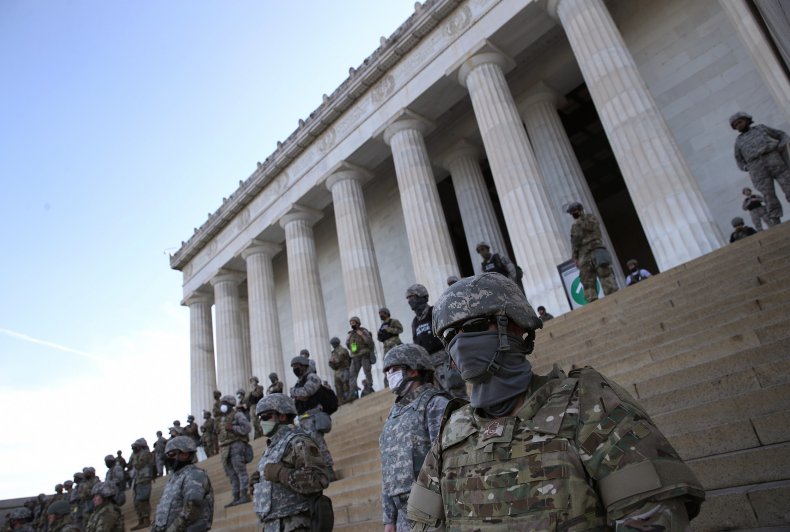
lincoln-memorial

“Dozens of National Guard troops were positioned on the steps of the Lincoln Memorial on Wednesday night . . . The appearance of a band of troops at one of the nation’s most iconic monuments came as protests escalated throughout the nation in response to the police killing of Floyd, an African American man who died in police custody in Minneapolis.”


In the video I watched this morning, a man on his knees before armed and shielded guards asked for reform. “I just want reform. Reform. . . . Will you shoot me?”

In what world does a man have to get down on his knees to beg for simple respect, for fairness, for justice? For all.

In what reality, other than a YA dystopian nightmare, does the Lincoln Memorial resemble Tiananmen Square?

Maybe some are too young to remember that such visions were once something white Americans thought only happened in Other Countries, dangerous autocratic countries ruled by bullying dictators and communist regimes gone vile.

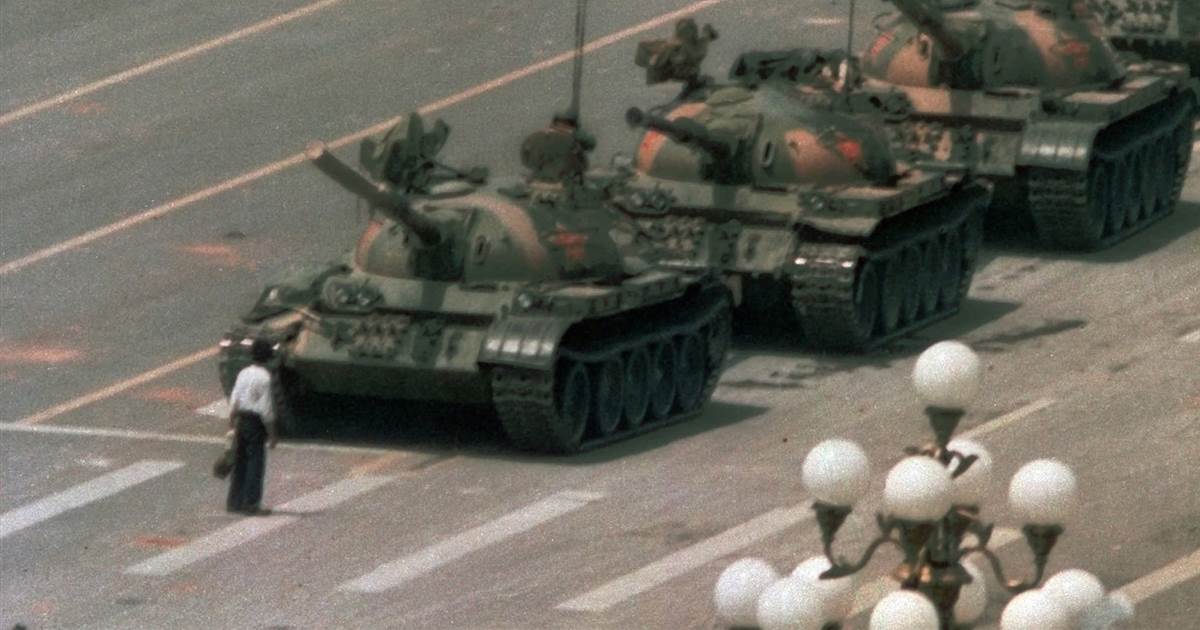
Maybe, some actually think that man who defied Chinese tanks was asking for it?

190604-tiananmen-square-1989-mc-835_215f3009bb35c257a195a2f72af1c116.nbcnews-fp-1200-630

“Set off by the death of pro-reform Communist general secretary Hu Yaobang in April 1989, amid the backdrop of rapid economic development and social changes in post-Mao China, the protests reflected anxieties about the country’s future in the popular consciousness and among the political elite. . . . On June 5, the suppression of the protest was immortalized outside of China via video footage and photographs of a lone man standing in front of a column of tanks leaving Tiananmen Square via Chang’an Avenue. The ‘Tank Man’, as it became known, became one of the most iconic photographs in the 20th century. As the tank driver tried to go around him, the ‘Tank Man’ moved into the tank’s path. He continued to stand defiantly in front of the tanks for some time, then climbed up onto the turret of the lead tank to speak to the soldiers inside. After returning to his position in front of the tanks, the man was pulled aside by a group of people.
Although the [identity and] fate of ‘Tank Man’ following the demonstration is not known, then-paramount Chinese leader Jiang Zemin stated in 1990 that he did not think the man was killed. Time later named him one of the 100 most influential people of the 20th century.”—Wikipedia

I am going to try very hard not to look at the news today. The coastal parks are being reopened tomorrow and we are hoping for rain. We are alarmed by license plates from Texas and California and Georgia, and especially the many from Washington state which has a much higher rate of infection. We are trying to be safe. We would like a vacation from taking care. We would like to see our sons and daughters-in-law and grandchildren in person. We would like to attend a birthday party, even outdoors on a deck. We would like to observe the precautions that are convenient and ignore the ones that interfere with our lives. But my husband and I have tried to follow the rules exactly.

I could, and do blame a national failure to prepare and national irresponsible and careless and largely absent leadership. I acknowledge that those in the White House have interfered with progress rather than led the way, but surviving this pandemic is also about us all. It’s not enough to blame Trump for his failures if we fail to do what little we can to ensure we and our nation survive. It is not enough to assume a vaccine will solve the problem—it certainly is not a time to pretend the pandemic does not exist.

If everyone, absolutely everyone, did what they were supposed to have been doing during the past couple of months, the United States would be like New Zealand, which had zero new cases in the last ten days. Instead, most people cheat a little bit or a lot. Too many Americans think the rules do not apply to them personally. We like to brag about our “rugged individualism” and claim we have the best of everything. In truth, this is is our entitlement speaking. A month of rigor and we might be clean. Instead as a result of carelessness, we live in the United States, where despite a call for people to stay home and maintain social distancing for the past ten or twelve weeks, over two hundred thousand (200,000) Americans were diagnosed in the past ten days, and over nine thousand died. Many of them were health care workers, grocers, and meat plant workers because of lack of proper protective gear, unmasked customers, and unsafe working conditions. People of all ages, ethnicities and in every state have died in the United States at the rate of about five in one hundred cases. The relative death rate is much higher for people of my age, for poor people, for people of color, but no one is immune.

Armed men invaded state capitals to demand their right to move freely despite the pandemic, and they were encouraged to do so by man incapable of leadership. Contrast that with unarmed citizens using the First Amendment rights to assemble, demand redress, and report on these events are tear-gassed and clubbed. Both risk their lives. I know which group earns my sympathy and respect.

“Where’s the bottom?” cries Beneatha in A Raisin in the Sun. (She is the younger sister of Walter Lee Younger, hoping to defy her tenement upbringing and her sharecropper grandparents and become a doctor.) Where, indeed, if we fail in our civic duty? What can it mean to be patriotic if citizenship demands sacrifice we are unwilling to honor? Some have given their lives for our country, yet we are unwilling to stay safely at home? We choose to attack those who merely want justice, those who look like they might expect fairness?

It is more than our bodies that wander while seeking the promised land.

A former student, recently become a doctor, admits “there has been a lot of hostility towards Asian-Americans and I am lucky that this has not affected me as much, but I fear for my family members and other members of the community. I aspire to be a positive representative for Asian-Americans and to help break down that hostility.”

She was an excellent student, and insisted, since before she even began her medical training, that she wanted to help those who struggle to find good care. She since recommitted to working with under-served populations. May she be granted the freedom to fulfill her goals.

Put a knee to the ground instead of on anyone’s neck.

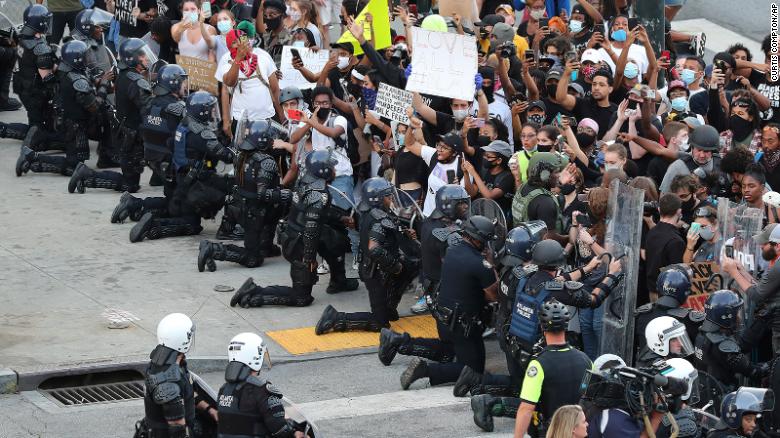
TAKE A KNEE

(CNN) “Americans have been protesting the death of George Floyd at the hands of Minneapolis police for days on end in dozens of cities throughout the United States.

“While tensions between police and demonstrators have heated up in many places, some officers have shown solidarity with the movement by hugging protesters, praying with them, mourning with them, and taking a knee to honor Floyd.” 

. . . and another: ” ‘In that moment, it wasn’t about kneeling to appease anybody,’ an officer said. ‘I was kneeling because I wanted to show my people I’m with them in solidarity. … It would have ate me up if those protesters were like, “Kneel with us, kneel with us,” and I said, “No.” It would have ate me up.’ ” They knelt in Santa Cruz, California and Portland, Oregon, in Des Moines, Iowa and Washington DC, in Flint, Michigan and Spokane, Washington, in Germantown, Maryland and Coral Gables, Florida. And protesters thanked them, blessed them because their mission is to protect and serve. “Walk with us!” the public said to police officers all over our nation. They bowed their heads in thanks and walked in pride.

Respect.


more . . .

The Washington Post Editorial: “Even amid the tear gas, the rubber bullets, the sirens, the fires, the standoffs, the looting, the “vicious dogs” and “ominous weapons,” the best of America has been visible. People who were angry and scared have acted with peace and compassion, defusing situations by protecting and embracing — sometimes literally — those whom others in their position might have feared.”

And a voice of justice and compassion “Biden, in speech to the nation, denounces President Trump’s actions against protesters and vows to heal racial wounds” He reminded me what national leadership sounds like.

“With malice toward none, with charity for all, with firmness in the right as God gives us to see the right, let us strive on to finish the work we are in, to bind up the nation’s wounds, to care for him who shall have borne the battle and for his widow and his orphan, to do all which may achieve and cherish a just and lasting peace among ourselves and with all nations.”—Abraham Lincoln

https://www.washingtonpost.com/video/opinions/opinion–this-is-propaganda/2020/06/02/aa178cd0-875f-4f1f-9ced-ba1dee619078_video.html


POLITICAL

IMG_5991

A few seconds after I took this photo yesterday, the eagle backed off from his kill.

from the news:

“I took six rubber bullets, but do you know what didn’t happen to me?” Elizabeth Ferris, a 36-year-old Georgetown University student, told The Washington Post. “No one kneeled on my neck.” Continue reading

WINNING OMELAS

IMG_4577

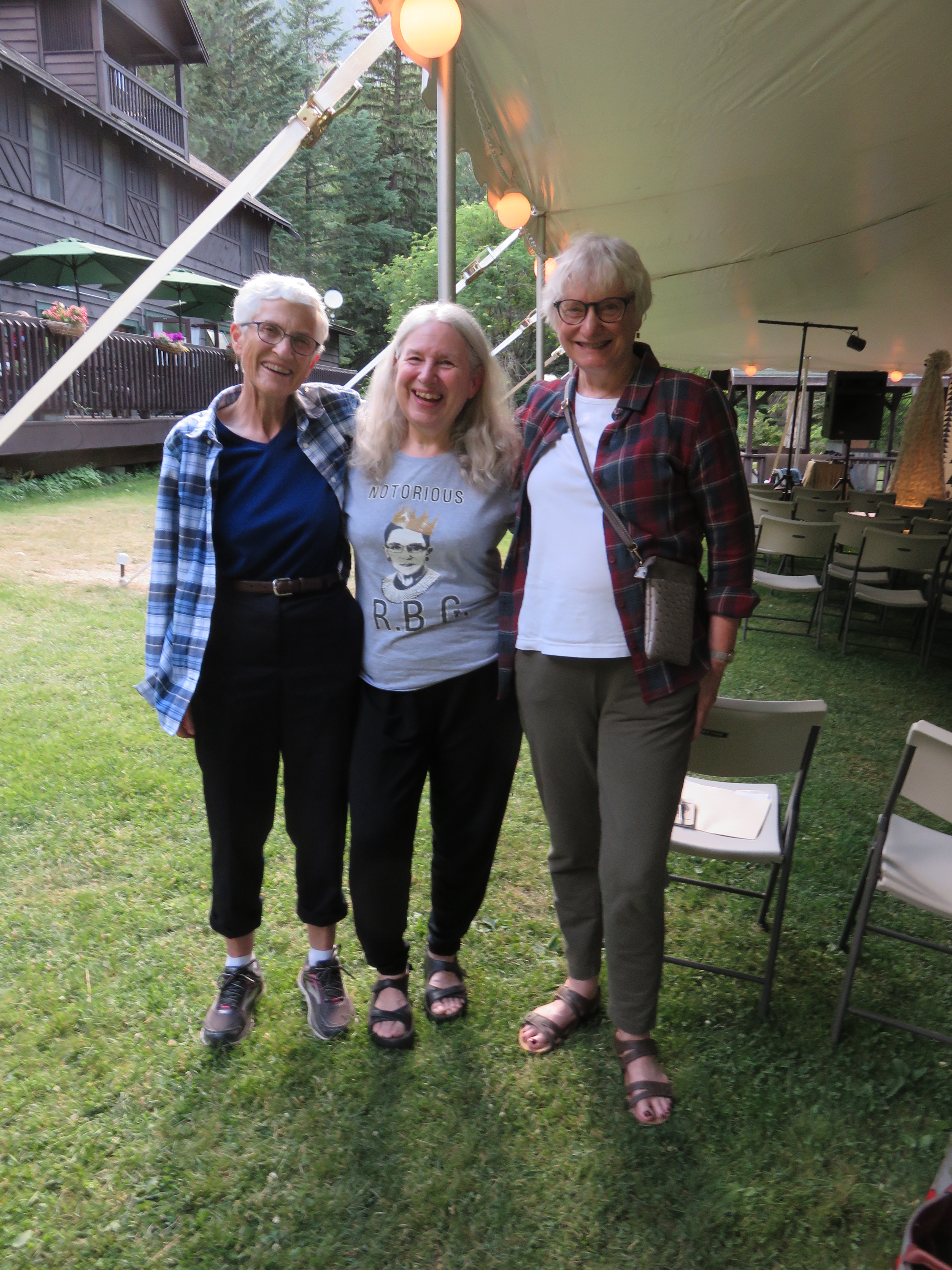
In good company: brilliant Bette Husted, me, and magnificent Molly Gloss. [Cheesy, perhaps, but such excellent cheese.]

“Those who build walls are their own prisoners. I’m going to go fulfill my proper function in the social organism. I’m going to go unbuild walls.”

— Ursula K. Le Guin, From The Dispossessed

The review of a book about mental illness in the Brevity blog this morning reminds me about American obsession with competition and our “country concerned with triumph.”

I have been thinking a great deal about gaming and about competition, the basis for survival according to most these days. Winning is everything. I saw it in education, the work of my yearbooks staff that created groundbreaking design and content, but only received notice when I shared a “win.” Those certificates for cover design and deadlines never meant as much to me as the students who found work based directly on skills learned in class. We were not in competition, we only wanted a good book at the end of the year. By “good” we meant a distinctive, complete and compelling record of the year that we’d managed to pay for. No one had to lose in order for us to “win.”

That’s not how we look at things, is it? For there to be a winner there must be losers, the more losers, the bigger the win. It is the most essential understanding and assumption of how the world works.

People making a great deal of money believe they are winning and thus are superior to those of us who are not. We have accepted dollars as the mediator for morality. That and being white seem to be the only focus for our current nation’s executive branch.

I am thinking about this especially because of “The One Who Walk Away from Omelas” by Ursula K. Le Guin. (First published in 1973, it won the Hugo for short fiction in 1974 and is collected in The Wind’s Twelve Quarters in 1975.) We spent the weekend participating in the final act of a yearlong tribute to Le Guin. Many people referenced her most famous story, the perfect joy of a utopian society “a shimmering city of unbelievable happiness and delight” held aloft by a single suffering child locked in a cellar. “The terms are strict and absolute; there may not even be a kind word spoken to the child.”

In the biographical film presented Saturday, students offered three solutions, one beyond what Le Guin herself seems to suggest. One would tolerate the injustice for the child for the sake of paradise, another would fight to free the suffering child, and the third would walk away. In Le Guin’s thought experiment no one chooses to free the child in Omelas, they accept the inevitability of the child’s suffering, and a few walk away as unwilling to participate in such a society. The story demands we consider the moral option, that we choose. “The place [those who leave] go towards is a place even less imaginable to most of us than the city of happiness. I cannot describe it at all. It is possible it does not exist. But they seem to know where they are going, the ones who walk away from Omelas.”

I have taught the story many times. My students, like the students in the documentary, like every adult I know, see the three options. Most will claim that they will walk away. That is presented the most moral choice.

“The only winning move is not to play.”

War Games

My own view of Le Guin’s story is somewhat different. The story begins with Le Guin offering the reader utopia, perfect joy and celebration, conceding trains and drooz “as well as exciting the pleasure of sex beyond all belief; and it is not habit-forming. For more modest tastes I think there ought to be beer. What else, what else belongs in the joyous city? The sense of victory, surely, the celebration of courage. But as we did without clergy, let us do without soldiers. The joy built upon successful slaughter is not the right kind of joy; it will not do; it is fearful and it is trivial.”

Perfection.

And yet she questions the reader mid-story: “Do you believe? Do you accept the festival, the city, the joy? No? Then let me describe one more thing.” And it is here she introduces payment for perfection.

The child suffering is necessary for the perfections of this city.

And then she asks: “Now do you believe them? Are they not more credible?”

She knows that we demand payment, that we assume there must be pain as some sort of balance to pleasure, that sorrow inevitably balances joy, that evil must balance good.

Once we are given the balance of pain for pleasure, we believe absolutely. Le Guin know this. Within the context of her thought experiment even Le Guin herself insists that someone must pay for our happiness, that there must be losers if we are to win.

No.

Despite my own superstitious belief in a balance, I have not found that this is true. Driving away from Fishtrap, I thought a great deal about the story of Job. For decades I detested that story of God proving to the evil angel that his “good servant Job” would be faithful despite hardship. Why did God need to prove anything?

It has only been later in life that I understood that the story of Job does not exist to prove anything to anyone within the story. It exists to demonstrate to me, the reader, that terrible error of assuming balance. Though God returns all of Job’s lost fortune seven-fold, restoring the previous life, it is not the point of the story. There is no win, no lose in life that represents moral justice. We cannot expect overt success to represent spiritual triumph.

There is no battle raging between good and evil with the winner proved righteous. Thousands of years ago, scripture impressed that truth upon us. Winning is not virtue. It is belief, not truth, not a factual representation of the world I live in. In fact, terrible things happen to good people, and evil people become president of the United States.

Those who live deplorable lives are not made to inevitably suffer in their lives. People who are good do not necessarily achieve a good life. People who are kind and generous and deserving of long life and happiness often do not achieve fraction of what goodness should balance the sorrow in their lives.

I have been supremely fortunate in my life, I know this despite some ordinary grief and disappointment, occasional despair and sorrow. My life, I might want to say, is “blessed.” But I am not in competition. No one lost to give me joy and my “win” is not deserved. As a thought experiment, “Omelas” is an extraordinary gift, but its message is more complicated than how I choose to respond to injustice.

No. And again, no. I know there is no perfection, but I do not believe my joy must be taken at the expense of anyone’s sorrow. I do not accept that a child must suffer in the basement.
IMG_4576

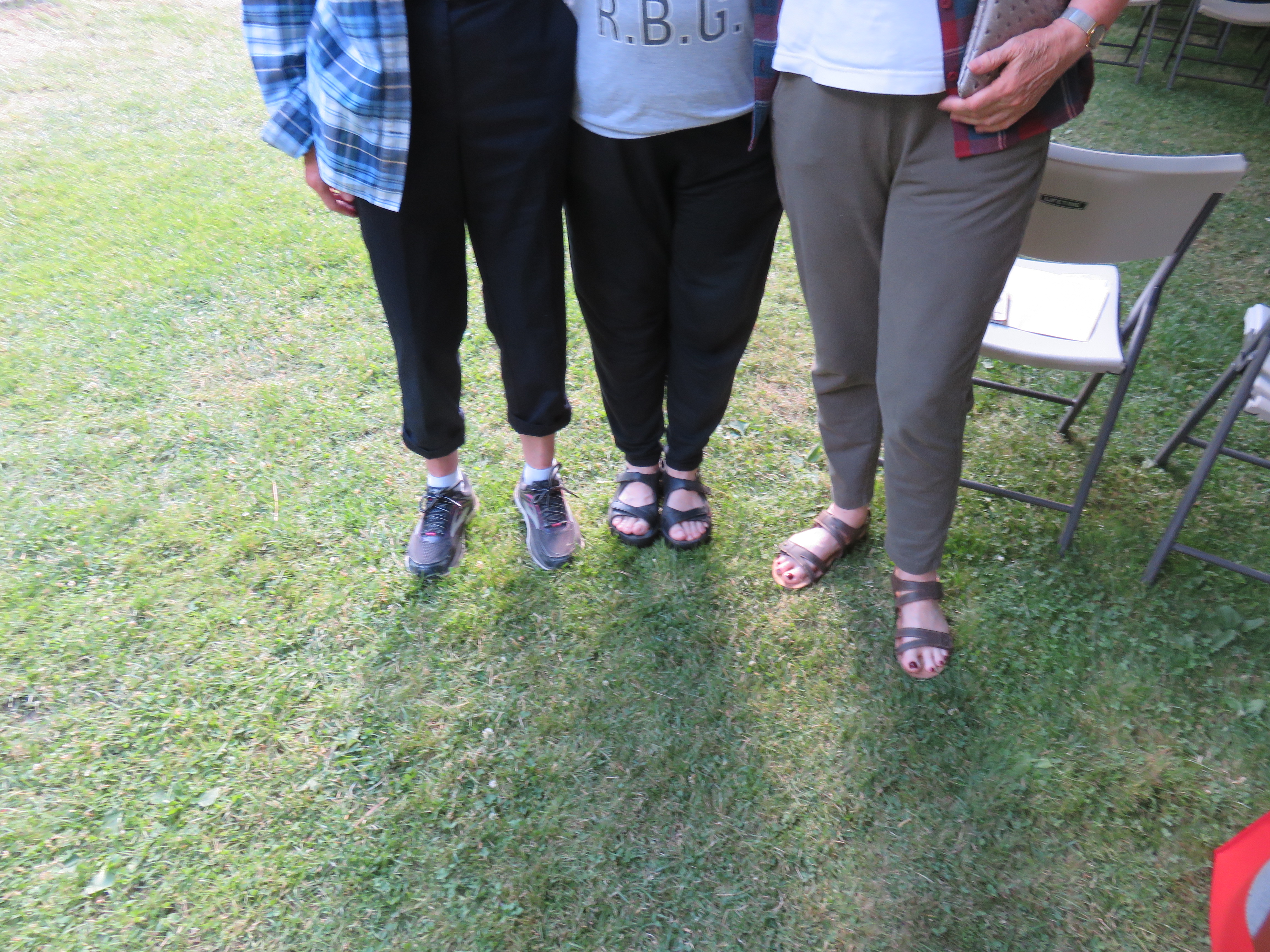
Molly was right: Gary photographed our feet first.