
LOVING JONI

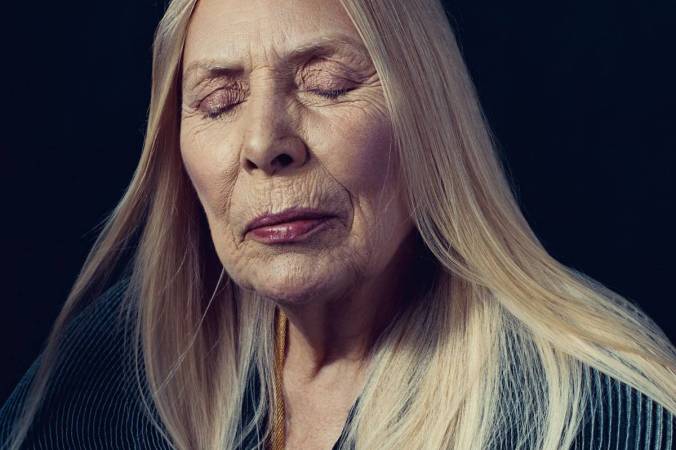
joni-mitchell.jpg

As a child I hated green olives and blue cheese. Today these two foods are among my favorites. Coffee. And napping—once resisted absolutely. Brushing my teeth. Boredom. I have changed my mind many times and about a lot of things.

Sometimes what we love and who we are seem to be at odds. There is a disconnect that might last for an instant. Perhaps for a lifetime. Sometimes that relationship between aspiration and daily life shifts and our point of view shifts with it.

Zadie Smith has written of this in an article in The Guardian, with an unfortunate title that uses the words “political correctness.” (I have been at pains to explain to students that the term “politically correct” is a pejorative.) Smith insists that change is inevitable and desirable.

“In an essay in her collection, Feel Free, she investigated one such change in herself, when she fell in love with the music of Joni Mitchell, a singer she had despised when she was a mixed-race teenager growing up on a London housing estate. ‘The reason for hating Joni Mitchell was that I didn’t listen to classical or “white” music,’ said Smith.

“ ‘Then I had an epiphany, and suddenly realised that her voice was beautiful. It’s a responsibility to be as open as you possibly can to the world as an aesthetic object.’ ”—The Guardian

Smith speaks about risking characters in her novels who are dissimilar to herself, and the risk of “collective identity.” That last is a new term to me, but Gary immediately recognized it as a term used in social psychology, also known as “referent group.” That is the term I learned.

“Polletta and Jasper defined collective identity as ‘an individual’s cognitive, moral, and emotional connections with a broader community, category, practice, or institution.’ ”—Wikipedia

The term has changed, the existence of identity has not gone away.

Joni Mitchell is Canadian, famous, a musician, a visual artist, and very ill. She is still alive and I am deeply grateful for her music. No one in my college writing class had ever heard of her. I played “A Case of You” for them and they were unmoved, blank and staring.

Maybe later.

I knew I should have played one of the early ones they were more likely to know. Instead I played the song from Blue because I heard her debut that album in Seattle back in the day. And because although I do not like change any more than anyone, I immediately fell in love with that particular reinvention of Joni Mitchell. “Michael from Mountains” is still stunning, but I moved on to new sounds right with Joni Mitchell.

We change our minds. We reinvent ourselves, and we sometimes do this over and over as experience and people around us push us along. Such changes are not always desirable. PTSD might inspire unwarranted responses to previously harmless situations or people. But growth is a complicated thing. We might need to twist with the wind or bend around obstacles in search of the light.

We are allowed. We are allowed to be ourselves and for that self to be re-framed throughout a long life as many people, as Chicana and then Latina, as artist and then song-writer, as woman, citizen, ally, professional, parent, sister, daughter, as elder, crone, as they, and ancient. Our referent group is not stable throughout our life because we ourselves change and find connections, we shift, slide, and reform.

We are allowed.

RANDOM FACTS

IMG_3392

Years ago, long before non-GMO became a common label on foods, before Safeway even had an “Organics” section, and before “gluten-free” became a thing, a junior came to class with an idea for her research paper. “It sounds interesting. They are altering the genes of food,” she said about the NPR broadcast she’d listened to on her way to school. ”

“What do you think about it?” I asked.

“I don’t know,” she said. “I want to find out.”

Her eventual essay included the word “Frankenfoods” in the title, so we can see where that led.

Over the years, students rarely choose to write about topics they begin by knowing little about, but those papers are most often the best. Writing a research paper should be as much about finding out truth as proving it.

Changing our mind is probably one of the greatest struggles any of us have. We get an idea in our head and simply cannot move. For a teenager to research a topic with an idea already clear in their head about what they want to say is pretty typical. For a reversal to occur is rare indeed.

Recently, a junior was writing about forcing sports teams to change what some perceived were racist logos. She argued this would be unnecessarily costly and inconvenient, would destroy honored traditions and history, and anyway, “racism” was not the intent and probably not even effect of these logos. She got through two drafts, and then the day before the next draft was due, the one that was supposed to be done other than minor word-smithing, she came to see me after class.

“I have a problem,” she said. “My thesis is wrong, or anyway I disagree with my thesis. I made a mistake and now I don’t know what to do.” She had, the night before, read an opinion piece about the damage racist stereotypes, including the images used as sports logos, do to young people living on reservations. Such images preserve and inflate prejudices and contribute to a sense of exclusion and hopelessness for children already living in poverty and on the margins of society. “I’ve seen that,” she said. “It’s true.” She had worked as a volunteer on a reservation.

“Change your thesis,” I said.

“But I don’t have time to start over.” She sounded surprisingly reasonable, given her sense of her dilemma. This had to feel like a disaster in her world and she was struggling to maintain her calm. She began to rattle off all the arguments that supported her original thesis.

“But one article convinced you that you were wrong.”

She nodded.

“So use everything you already have, and then show me how you were convinced. Concede everything—inconvenience, costs, fan outrage—and show me how there is something more important at stake. It convinced you; convince me as a reader.”

She did it too. Changed her hook, reversed her thesis, fiddled her body paragraphs, and concluded with a bang. Her argument was logical and emotional, reasonable and persuasive.

It can be done. We can change our minds.

Long ago, another junior showed up before class, the day before a draft of the same assignment was due. She was in tears. “They have to shoot them,” she wailed. “They have to do it as a symbol, and the sea lions aren’t even the real problem.” She had been writing a paper to argue against killing the sea lions that were eating salmon at the base of a dam spillway. She could prove that the sea lions were not the cause of dwindling wild salmon populations, but she also came to understand that the issue was not as simple as she’d hoped.

Another student, in his senior research paper (SRP) was struggling to prove his thesis, that welfare recipients should be drug tested as a condition of receiving public assistance. Why should people on public assistance be allowed to abused those funds? The trouble was that drug-testing had been tried and had proven that few people do abuse drugs and it cost a great deal more to test for drug abuse than was gained by cutting such people off from public services. Ten or twenty times more. There were also issues related to privacy and other forms of public assistance and contracts that he did not even want to address. He had not changed his world view, but he did change his point of view on this particular policy.

Students have proposed legislation that was eventually adopted (hat off to you, Russell for advocating pleasure boat pilot licenses), as well as the use of artificial turf, graphite bats, and golf carts during tournaments. I read about forty essays on allowing or banning abortion, most of them on both sides rather hysterical and unconvincing, before I banned the topic altogether. One senior cried so hard every time she tried to work on her pit bull essay that I chose to put that topic, too, on the banned list.

Religious arguments? Mostly banned. When a student used Thomas Jefferson’s faith as part of his proof that we are a Christian nation, I suggested he had better read the work of our third President. When his mother argued that no Christian ever owned slaves, I gave up trying to reason with her. In order to use a faith-based argument, you would first have to convert your audience. I was teaching in a public school.

I readily confessed the obvious. I have opinions. I am opinionated, but I am more interested in the writing. I have been convinced by students, and even when I am not convinced, my purpose is to evaluate their skill, not to make them agree with me. One of my all-time favorite essays, one I still recall vividly and with respect, was written to support preserving “under God” in the Pledge of Allegiance. It was a hot topic one year because of a California lawsuit. Three students wrote supporting restoration of the original form of the Pledge. Two wrote supporting the current form. One of those last was brilliant. I still don’t say “under God” because my mother taught me not to, but I respect and honor that student’s essay. Her exploration of the history and implications of the Pledge were more complete than anyone else. She won me over.

It is one of the side gifts of teaching researched persuasive essays: I learn a lot. Sometimes I find I know random facts I cannot even explain. I have no reason for knowing about water rights and road-building, statistics about rape and fishing, the costs of medical insurance and how many student athletes are injured by sport. Part of scoring their papers involves reviewing their research, verifying their claims, checking for additional overlooked aspects of a problem. I read a great deal.

And as determined as students are to avoid interviews, talking to the right person will yield solid facts and details available no other way. Even so, the right questions of the right person are critical. A student asked an engineer working with nuclear power via email what health risks were associated with nuclear power? The man emailed back that he was “unaware of any health risks.” The student quoted this as proof that nuclear power was non-polluting and harmless. I had to break it to the student that “he may be joking.” An engineer would not be the right person to ask about health issues, and he needed to research nuclear accidents. Plus, you know, the long term effects of The Manhattan Project . . . “Look it up.”

I am a good researcher, and with the internet and experience evaluating sources, it is surprising even to me what I can find out if I look hard enough. The key is a willingness to look beyond what supports my prejudice.

Skepticism is a good thing, I have found. Finding multiple sources to confirm the same information is important. Avoiding the crazies. Doing the math. Recognizing that a minority opinion is not necessarily wrong. But it isn’t necessarily right either. What’s worth arguing is never simple.

In the face of personal experience, we might alter our perspective. In the face of evidence and logic, we must be willing to consider other perspectives.

 

“The Supreme Court traded one injustice for another 74 years later.”

FIGHTING HATE // TEACHING TOLERANCE // SEEKING JUSTICE

JUNE 30, 2018

Weekend Read // Issue 86

Fred Korematsu was 23 when he defied the order sending him to an internment camp.

He was one of 120,000 Japanese immigrants and Americans detained by the federal government under Executive Order 9066. He fought his case all the way to the Supreme Court.

He lost.

Korematsu v. United States — in which the Supreme Court ruled that the internment was justified — was never overturned.

Not even after President Gerald Ford formally terminated Executive Order 9066; not after President Ronald Reagan provided each detainee with financial redress; not even after President Bill Clinton awarded Korematsu with the Presidential Medal of Freedom did the Supreme Court overturn its ruling upholding the internment of Japanese Americans.

That all changed Tuesday, when the Supreme Court finally repudiated Korematsu v. United States, writing that it “was gravely wrong” — at the same time that it upheld Trump’s discriminatory Muslim ban.

It was painful irony, especially for Korematsu’s daughter.

“Racial profiling was wrong in 1942 and racial profiling and religious profiling is wrong in 2018,” Karen Korematsu told The Washington Post. “The Supreme Court traded one injustice for another 74 years later.”

Using the “same dangerous logic underlying Korematsu,” wrote Justice Sonia Sotomayor in a powerful dissent, the Supreme Court “blindly accept[ed] the government’s misguided invitation to sanction a discriminatory policy motivated by animosity toward a disfavored group, all in the name of a superficial claim of national security.”

Or, as Karen neatly summarized it, the court allowed the government to “racially profil[e] a group because they looked like the enemy.”

It’s not the only parallel between the Trump administration’s actions and the incarceration of people President Franklin D. Roosevelt deemed “alien enemies.”

Once targeted, Japanese Americans were interned for over four years. They were held in converted racetracks, fairgrounds and horse stables in camps west of the Rocky Mountains. Korematsu himself was held in a horse stall with a single light bulb.

“Jail was better than this,” he told one biographer.

Today, migrant children are being detained — soon, ostensibly, to be held with their parents — in “tent cities” and converted Walmarts.

Their trauma, according to psychotherapist Satsuki Ina, herself born in an internment camp, is all too familiar. As she detailed for Splinter:

They have no idea how long they’re going to be held. They have no idea if they’ll ever see their parents again. That level of anxiety causes tremendous emotional stress, and we know from the research in neuroscience that constant release of these stress hormones can affect a child’s ability to learn, a child’s ability to self-manage, to regulate themselves. The long-term impact that I’ve seen in my own Japanese American community is this hyper-vigilance … a reaction to having been incarcerated unjustly. This kind of treatment has consequences for a lifetime for a child. The trauma effect is pretty severe when there’s been captivity trauma. We were unjustly incarcerated when we weren’t guilty of anything.

Today, people across the country will rally to protest Trump’s “zero tolerance” policy toward migrants who cross the border. We’re partnering with the ACLU and the Alabama Coalition for Immigrant Justice to host the Families Belong Together rally here in Montgomery, Alabama, as well as in Atlanta and Washington, D.C.

Now, more than ever, apathy is not an option. As Ina recalled for Splinter:

When thousands of Japanese Americans were being removed from their classrooms, from their jobs, and their neighborhoods, there was no outcry. No one instituted any kind of protest. … My hope is that people will know how important it is to stand up for the injustice that’s happening right now.

We couldn’t agree more.

The Editors

‘Can We Talk About Race?’

002_1477347.jpg

I remember when I first understood that “Negro” had gone the way of “colored.” In the late 60s, I walked home from school and explained this to my mother: “Don’t say that word, ‘Negro’. Say ‘black’,” and because we were that kind of family, Mom and I discussed respect for a long time. Years later the language changed again, and I screwed up my courage to ask one of my best friends if she preferred to be called “black” or “African American”? We discussed respect too. Even then, I understood that she was making a personal choice, not a definitive one.

My mother disliked the word “drapes.” So I called the fabric hanging across her windows “curtains.” It’s no skin off my nose.

When talking about ourselves, this is more critical. People have the right to label themselves, to choose their own identity. I am not a “broad” or a “chick” or a girl. I am not “65 years young” or a “young lady” or “as old as I feel.” I have lived sixty-five years, and I have been paying attention. Some language offends one person and is shrugged off by another, even when that other seems to share many similar qualities, even when the words themselves seem too similar to make any difference.  I detest certain words used to demean or define me. Not everyone minds. I am also old, and I feel it would be silly to deny that. I didn’t like a doctor calling me “elderly” at 63, but “old” or “older” don’t bother me a whit. I was a young woman in the 70s, and I was white. I am a white woman.

I can claim a great grandmother Rosa who crossed the Mexican border to marry in Texas, and I suspect my great grandmother on the other side was unrelated to the six tall red-headed brothers in her family—she was under five feet, dark-skinned, and black-eyed—but it makes no difference what investigating my genes proves. It means nothing. I was raised white and that is who I am.

Writing workshops frequently get around to the question of who is entitled to tell what story. One short answer is “anything you want.” There are longer, tougher answers.

As a woman, can I speculate about my grandfather immigrating to this country over a hundred years ago? Am I allowed to write across boundaries of time and space, gender and race? A better answer would be that writers may tell any story they have the skill and courage to tell, but that is pretty shallow. The reality is different. We need to talk about what belongs on the page. We need to talk about tact but also truth.

Language draws us in, but it also drives us apart. We do not have equal access to words we are born with, choose, and claim through observation and suffering. I was given “white” by birth, and I did nothing to earn or to claim it. It is a word I cannot put aside. I am also the oldest living member of my family, and I have no word for that. I am retired, but not retiring. I am warned against quiet writing, but also shouted at for raising my voice.

In a bio prepared for a recent public reading, I called myself a “native Oregonian” because I was born, spent my early childhood, and have lived nearly all my life in Oregon. A concerned reader invited “the organizers to interrogate the use of ‘native’ in one of the bios provided, and reflect on how it may contribute to the ongoing erasure of Indigenous people that underlies mainstream US American society.” My Alaska Native friend and I interrogated that usage. It would be useful to have a broader discussion about language and the words I use and should use, and to consider who is in the best position to help me make those choices.

I can choose words for myself, and I must respect that right for others. How about “Oregon-born”?

Indian Country asked prominent people their preferences for self-identification, and they chose a variety of terms to self-identify: indigenous, Native, Indian, American Indian, original people, First American, Native American. First Nations is a term of preference in Canada, but all those interviewed were clear that their first preference is to be known by their tribes and their personal names. When in doubt, when it is necessary to know, ask people how they prefer to be identified.

Getting the words right is only the beginning of the challenges when discussing race in America. Science assures us that race and ethnicity are social constructions invented by a dominating whiteness. We are so closely related that if we were plants, we might merely be different colors of snapdragons. Pink flowers off this stem, yellow off another. Nevertheless, “race” is not going away because we recognize that it is a false division or even because it makes white people uncomfortable. Race is muddled up in our Constitution and laws. It shows up on identification records just as caste does in India. It does damage. America has an insidious history of racial injustice and systemic persecution. We need to talk about race, and perhaps more important we need to listen more carefully and report faithfully what we hear. We need to judge less and observe more.

Forget our past? When people are still reenacting the Civil War? When 23&Me is dragging up genetic structures and telling people they’ve been celebrating the wrong holidays? When Faulkner claimed: “The past is never dead. It’s not even past.” It’s right here with us. Pretending it’s over denies the lingering impact of our personal, family, and communal histories.

Maybe what we can hope for is to overcome the past. We can talk about it. We can plan for a better future.

Guilt, embarrassment, and resentment cloud our talk. It might seem easier, safer even, not to refer to race at all. Some argue there are enough human struggles and conflicts without entering a potential mine field, and not all people of color welcome white authors telling stories based on guesswork rather than firsthand experience. White authors may respectfully shy from writing characters of color or about situations involving racial, ethnic, religious, and other differences. That creates another layer of fabrication, because an all-white fictional world defies reality, and impoverishes our writing.

We cannot write about ethnicity or race without risk of getting something wrong. This is a legitimate concern, but the same challenge exists when I write about my grandfather, dead these fifty years or about the experiences of my mother who is also not here to tel her own story. Pretending different realities do not exist is one way we hide our trespasses and become complicit in disrespect of others’ feelings and lives. When we limit our writing to “our own” we limit our story in a way that can be fatal to truth. Can we speak from personal preference and experience without demanding absolute authority? Can we tell our truth without infringing upon the truth of others? And can we enrich our stories by including other’s stories?

Would I prefer my story be told incorrectly or would I prefer it not told at all?

Am I only allowed two choices?

An Oregon author writing a novel that included tribal members went to a tribal member and asked for help in getting things right. Bette Lynch Husted found a third choice for All Coyote’s Children: Write as carefully as you can, do the research, and then ask for help.

The people I see every day are dark and pale, red-haired and dreadlocked; they visit relatives in China and Germany, Mexico and Florida; they are older and younger than I am; and some speak languages I do not know at all. When I describe the people in my life, I must include all their colors, because all colors are part of my reality. These people are my people. I want to know their stories. I want to share them.

Talking about race might lead to writing reasonably and accurately and to language that expresses those same values. I can listen to those who possess different identities and different lives. Writers, just like readers, want to know other stories alongside our own.

If we trust one another, if we approach with respect and genuine interest, then maybe, yes, maybe we can talk, even about race.

NOTE: An earlier version of this essay appeared in RAIN.