SKEPTICISM

Examples of “evidence” I discount:
• Your boyfriend’s uncle’s friend survived a house invasion only because he kept a loaded gun under his pillow.
* You saw a YouTube video/Snapchat/Tweet/X post/Facebook story that proves there is a cabal of dems holding torturous events at the local pizza palace.
• You found the photo that proves how people in favor of abortion celebrated a legal victory by eating a cake shaped like an unborn child.*

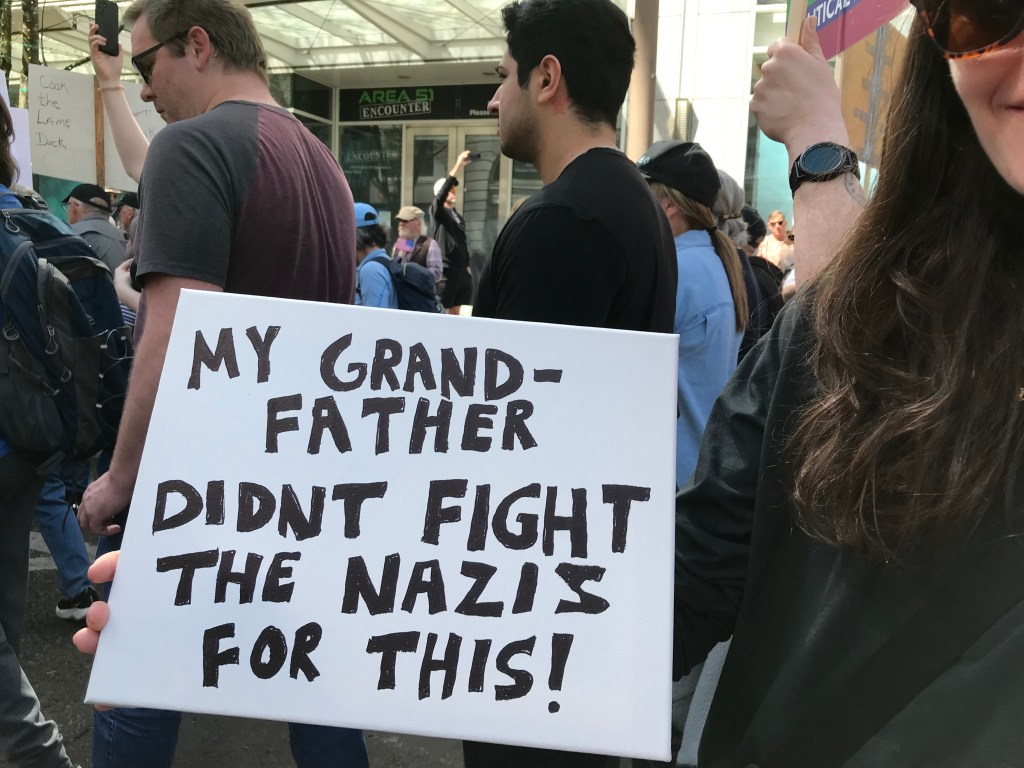
I loved this sign from a Portland, Oregon, demonstration. It wasn’t my sign and it wasn’t my grandfather. I am old. It was my dad who fought. My father served in Europe, fighting the Nazis. The stories about concentration camps that reached the average American before our entry into the war failed to describe the horrors that awaited my dad when he was present at the liberation of a camp.

Have I read these stories? Yes, I have.

Continue reading

LUCK BETWEEN THE LINES

Everything I know about promotion, bias, and lies I learned from television ads. The pain reliever that claims to alleviate most headaches when taken with a glass of water? My dad pointed out way back in the 1950s that most headaches are caused by dehydration. They only needed the water. My dad taught me habits of skepticism that have served me well throughout my life. I question everything, consider the angles of possible deception, and sometimes I see right through the pitch while only half trying.

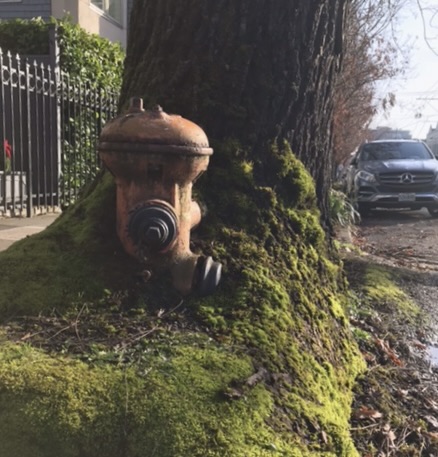
Found on my first run since Covid, the day before yesterday: It’s not your imagination. The base of this tree has grown right around the fire hydrant, which is still seems usable.

Years ago, an educator handed me the new biography, Three Cups of Tea, and assured me it was better than Mountains Beyond Mountains. I had been teaching Pulitzer-winner Tracy Kidder’s book about Dr. Paul Farmer’s campaign to serve the poor in Haiti and elsewhere. Could this memoir be better?

Continue reading

DISTANCE

Sometimes I lie to myself. For example, I promised myself a short run yesterday morning. I held out a single-mile run like a carrot. When I began running north, I was running straight into a 40mph wind and it was cold. The tide was going out and I repeated, “Just one mile.” I didn’t need to run all the way to what we term the Turnaround Rock, 1.5 miles north. I could stop at the metal stairs near my one-mile marker, turn, and walk a mile home. I was thinking there was a good chance that when I turned toward home the wind would be swinging around and I would still face a headwind. That happens sometimes as the sun rises. So I told myself: You can stop running after a mile.

I ran three miles.*

Continue reading

TREE SKIRTS

fullsizeoutput_112e

Over the years three boys in my Junior English classes argued in their research papers that nuclear power was the cheap, non-polluting, and safe alternative to fossil fuels. They were blissfully unaware that radiation is deadly. They did not want to hear about it. When one boy asked an engineer via email whether there were any health dangers associated with nuclear power, he was oblivious to the sarcasm dripping from the nuclear expert’s response: None. I pointed out that a nuclear engineer was certainly an expert but not on health. No matter. He found an industry website that gave him the quote he needed to prove his thesis.

1 million years

That’s how long Germany has to keep the radioactive waste from all of its nuclear power plants buried for it to be safe. The country recently closed all of its nuclear power plants and is looking for a way — and a place — to make the million-year commitment.

Nuclear fuel is only cheap if you do not count the waste left behind. It is absolutely polluting in itself as well in the vast amount of water heated while cooling the reactors, and safe? Seriously? Why did I have to keep bringing this up. Radiation is dangerous. At least acknowledge that and work from there. But these young writers were determined to ignore any information that countered their thesis.

We want to believe what we want to believe sometimes. Climate change is not happening. The hearings are unfair. I do not have to testify. I am safe to drive. I do not have to tell you. My situation is different. 

Yes, it is. They are fair. You do and you should. No, you’re not. Yes, you do. It’s the same for everyone else.

It is inconvenient to face facts.

There is no magic in pretending. What we believe is not the same as what we know. Faith in what we want does not have the permanence of truth in the real world.

Year after year, the majority of my students chose to write their persuasive essays about something they already believed and many of them left cavernous gaps in their argument because they could not be objective in their research. And year after year a few students chose to write about something they did not already believe and generally wrote better papers as a result. Once in a great while students changed their minds, and that was most impressive of all.


Yesterday I addressed holiday cards. They say “Happy New Year!” so there really is no hurry sending them out. It’s just one of those things on our list like ordering candles (done) and finding a tree (also done) and wrapping gifts (whoops). My approach to the holidays is to spread the labor throughout the year so that I can better enjoy the season. This must be a habit left over from having two toddlers and six dogs (with weekly grooming I did myself), and later a job that overwhelmed my time. I even held a holiday Open House for years when the kids were small. (Baking done each night after I got home from school for a month in advance.) Get it done early so that I am “not rushing about at the last minute,” as my mother used to warn me.

By the time the big Black Friday sales begin, my shopping is already done because I started a year ago. I am free to enjoy the season. Yes?

Does that really work for me anymore?

I’m not certain. The truth is that I enjoy making and buying presents. The truth is that I am one of those people who overdo the holidays. The truth is that my mother never entertained so I had no model for how to do that. The truth is my husband had a genuinely impoverished childhood and this was a dreaded season for him before we met, but now he loves it all. So that mission is accomplished.

Is that the goal? I check my list and mark off the tasks and something always remains undone.

There is a tree in our living room and NaNo is done and I still have to seal and stamp cards and one bed is crowded with gifts waiting to be wrapped. I am still knitting. This year I have several projects I hope to complete sooner rather than later. I thought I might actually sew patchwork tree skirts for family members. That project has been on my list literally for years. It generally haunts me till New Years. I plan each year to start on them earlier . . . and then I don’t.

I have already decided that to cross out tree skirts. It is good to let go of some obligations. It is best to face truth that everything cannot and need not be done. I am not sewing tree skirts.

There’s always something.

SEEING BASALT?

IMG_5172

Seeing things?

My blog is loaded with mistakes. Misspelled and missing words, usually. I figure most of them out and correct them eventually. Some slide right by for months or forever. Sometimes I might blame auto-correct, but more often it’s just my lousy typing.

I was reading a personal essay in a literary magazine. The piece has a title that includes a couple of food items, including a particular mushroom. I realize that the essay isn’t actually about mushrooms, but using them as a metaphor, but I don’t believe that is enough of an excuse to use a photo of chanterelles clear across the top of the page. I know my chanterelles. I’ve picked them and enjoyed eating them. They are not at all the species referenced in the essay title or the essay itself. I was completely distracted, scanning the essay for a reason that illustration was there. No. Apparently someone wanted an attractive photo of mushrooms. Any mushrooms.

If the designer had gone to Wikipedia, he or she would have found an image—not in the public domain but a source is available and likely would have allowed use. Or a photo of the other metaphorical food. That one would have been available at the local market for purchase and photographing. Wikipedia has a terrific photo that is free to use with credit. Not so very tricky.

Instead, a few hundred people are going to think Auricularia auricula-judae look like chanterelles. Different color, shape, texture and flavor.

I suppose this only bothers me. Like the writer who used the word “voodoo” in a novel that was supposed to take place close to a hundred years before that word was coined. Adult crows with pink legs. A cottonmouth snake a thousand miles outside its range. Horses and big cats and other animals behaving in impossible ways. I find such errors all the time. Sometimes I think: I could make that mistake (well, witness how often I do here). But other times I begin to doubt the narrative. I wish the author had completed just a bit more research. Sometimes the mistake just feels like carelessness. Indifference to truth. The “creative” in writing does not mean every- or anything is possible. Even a fantasy novel creates an internal consistency, rules by which the magic operates.

I’ve closed the page on that mushroom-not mushroom essay. It’s possible that the designer (I refuse to blame the author) used the wrong species of mushroom deliberately to make some sort of point or to drag me in. I should go back and reread to see if it was a plot designed to intrigue people like me. (Fusspots and picky-readers.)

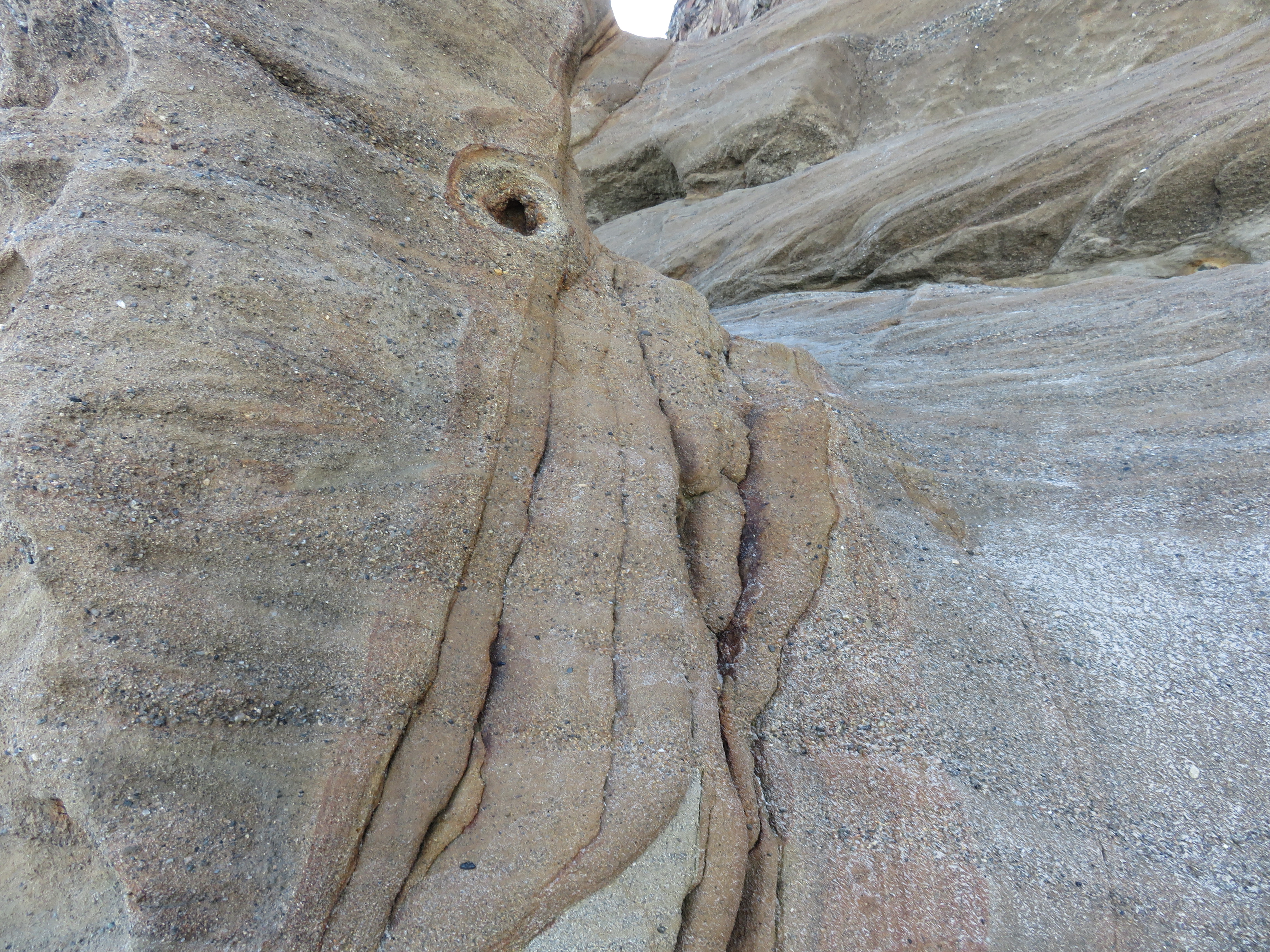
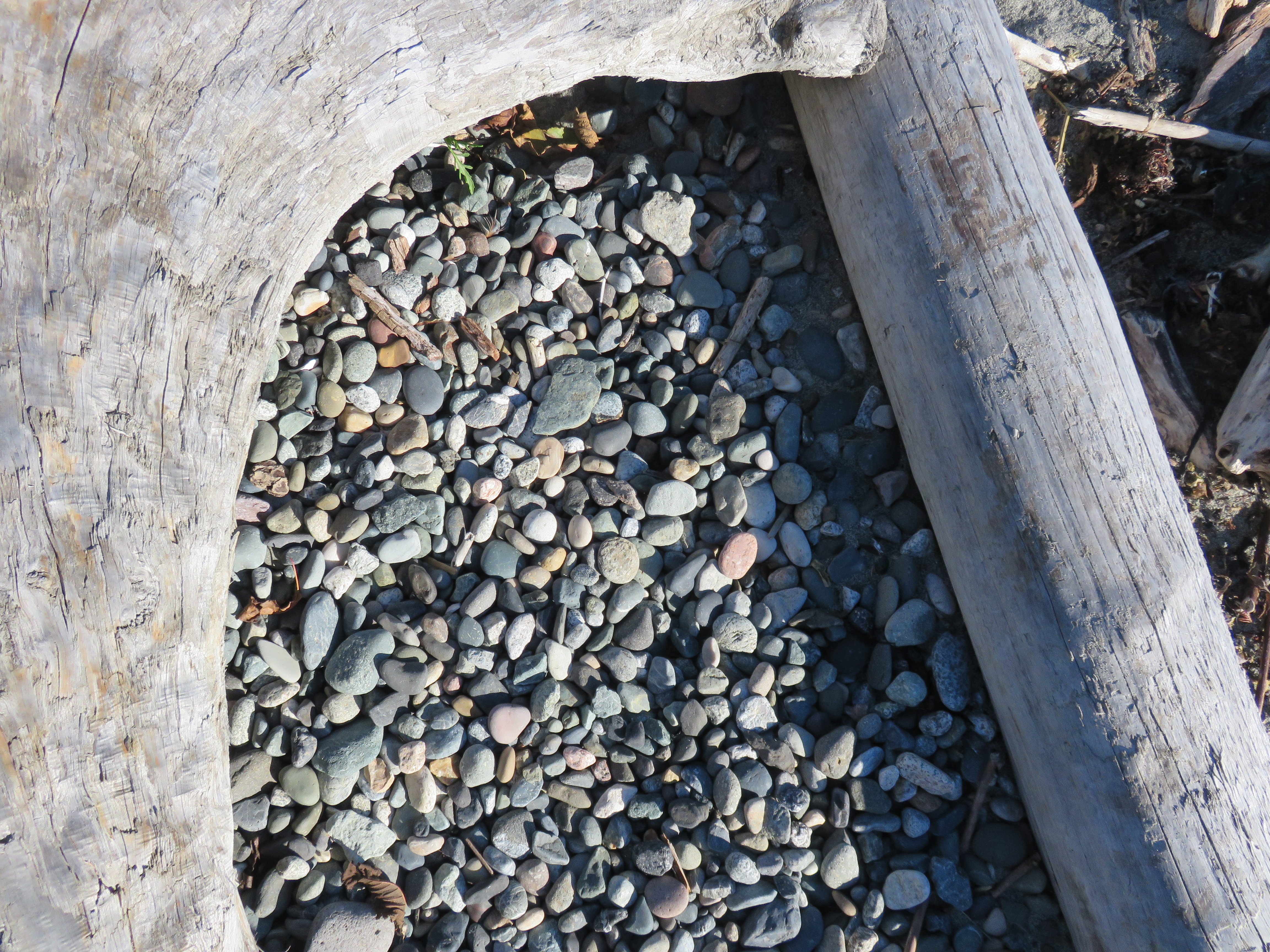
But no. I am set off and distracted and writing my own blog post about how basalt lines my shore. When the tide is high a retreating wave tubes the stones over one another, clattering in a deep-throated tumble that very gradually rounds and smoothes their edges. (Yeah, that’s sandstone up at the top of this post. Different color, texture, shape, flavor. I could have posted a photo of basalt, but why?)

NaNo & GIVING IN


IMG_3650

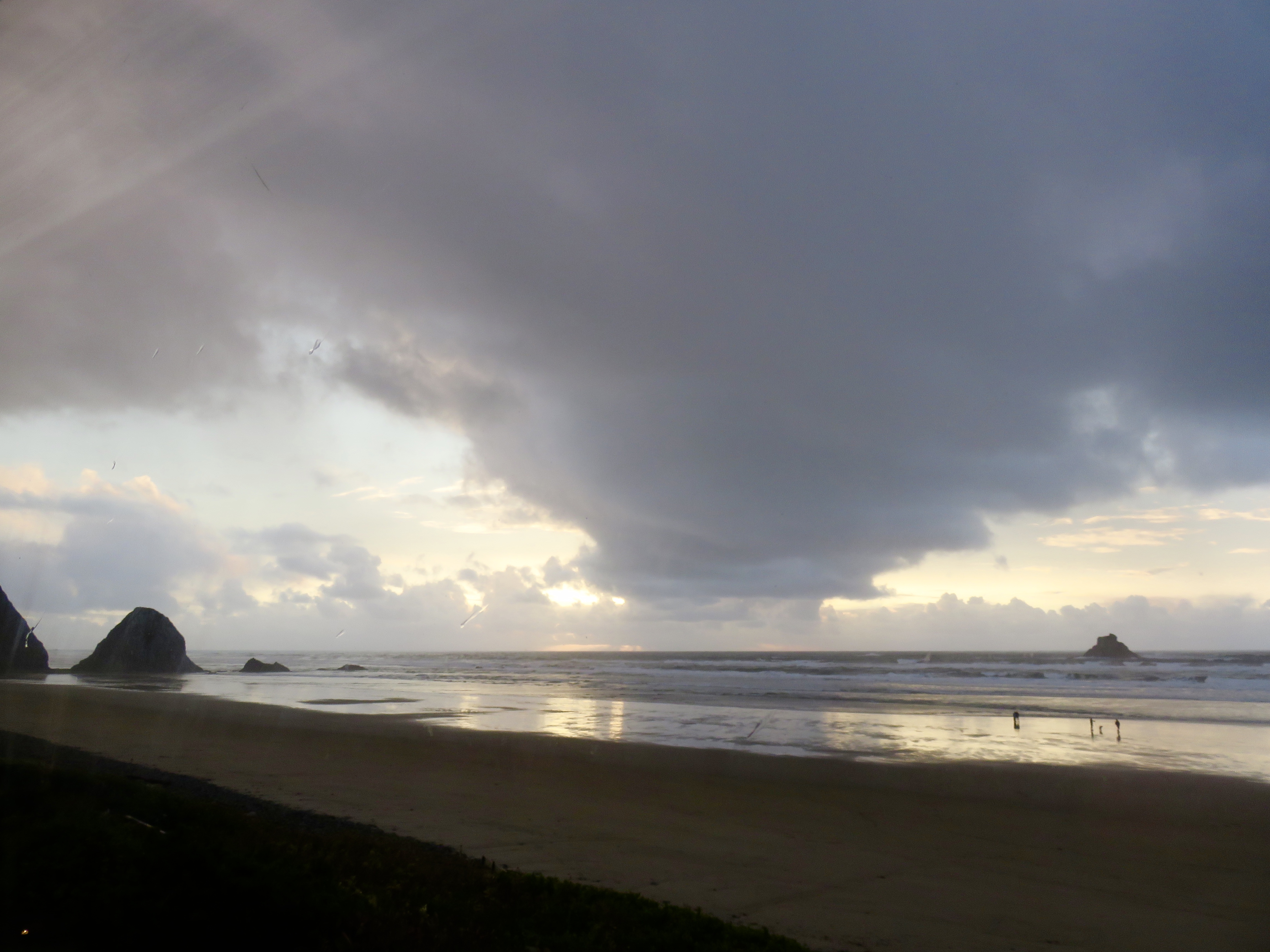
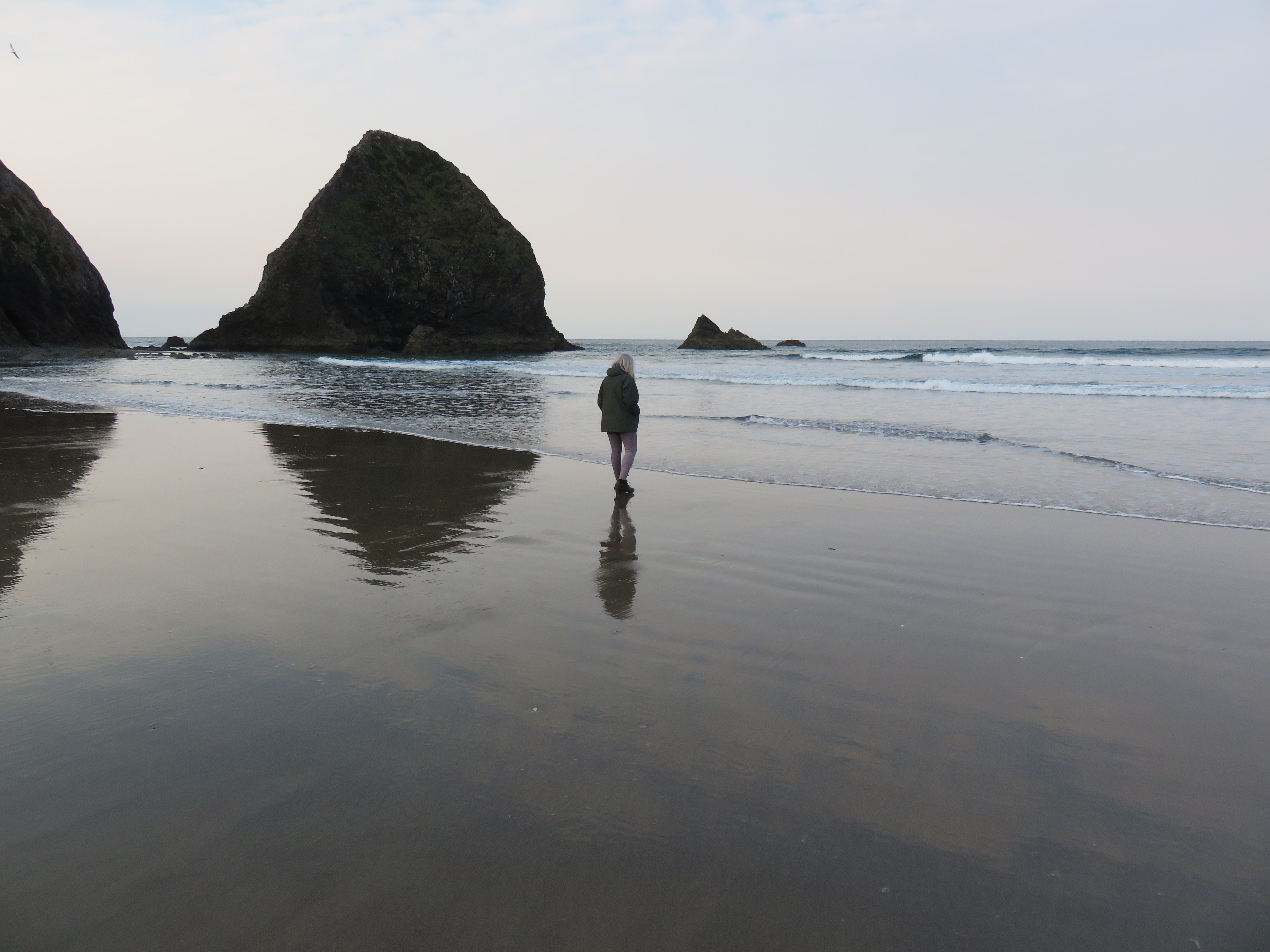
Not our beach.

All this month, I have been writing for National Novel Writing Month (NaNo). My early goal, before November began, was to complete a science fiction novel. I had written 15 k in April, and hoped about 7k of it was worthwhile. But as November approached I lost confidence. I have written several novels—seriously. The first, in 1996, was Love Interest. That one was particularly bad. Then Clean Away, A Single Fact, Living in Snake Land, and recently Everybody’s Mother Dies. I queried the most recent novel all this year. Sixty-six agents, and some liked it, some did not bother to respond. I was trying to do something unconventional. I wanted the terrible thing to happen early in the book, and the majority of the novel would reveal how she recovered from catastrophic loss.

That didn’t play. A very kind reader, who read to the end, said this:

“I’m disappointed but we won’t be able to go further with this. Myself and other readers here talked about this through the week, but still the hesitancy is that ‘Everybody’s Mother Dies’ loses impetus through the middle and the great story potential in the familicide (if that’s the correct term) comes too soon and the tension in the book is weighted too much to the front end. Then we have a quiet novel, which is engaging, but would benefit from some of this tension to pick up and drive through to its end.”

This is somewhat ironic since my original structure for this story held the climax back from the read until near the end. I was thoroughly thrashed for that “withholding.” Yet I have read two novels recently that mange to pull off what that original impulse. The terrible event is hinted at and the reader is teased. My conclusion is that there might not be anything wrong with my story, only I wrote it badly.

I might even go back to it some day, but my confidence wobbled. Maybe am just not capable of structuring a novel. Maybe later?

I thought, instead, I would develop short story ideas for NaNo, even including stories I had started or even “finished” a long time ago. This made me a “rebel” according to NaNo, but I was okay with that. I have over 70k today, and technically, I won a couple of weeks ago when I hit 50k. My concern was ensuring that at least 50k of my finished words are brand new. In the last two days I have written 5k new, and—here’s the cool thing—when I tried to transfer over two more full pages from that April science fiction draft, I cut all but two and a half lines! It’s what I have been doing all month. Paste in a 3k story, cut, rewrite, and expand to a 6k story. A story published years almost doubled in length, even after I cut out stuff.

The long and short of it is that I felt like a cheater at the start and now I am feeling like I earned my “win.”

It’s important to me to play fair, even when no one else cares.

In a blog post at Brevity, Zoë Bossier writes about perspective in “The Art Versus the Artist: On Authenticity in Creative Writing.”

“To preface, historically, writers—and especially white writers—of fiction and poetry have appropriated other cultures, classes, and perspectives in their own writing without much thought to the ethics of this practice. And for a long time, they were highly successful in doing so. Many of these works were (and still are) hailed as masterpieces, taught in high school curricula around the world. The place of these works in western literary canon has never been called into question before.”

There are several issues here for all writers. Accuracy and honesty in detail and perspective are essential to verisimilitude.

ver·i·si·mil·i·tude

/ˌvərəsəˈmiləˌt(y)o͞od/
noun
  1. the appearance of being true or real.
    “the detail gives the novel some verisimilitude”
    synonyms: realism, believability, plausibilityauthenticitycredibility, lifelikeness

    “the verisimilitude of her performance is gripping”

How to get it right? How to be believed?

Am I limited to writing only my own identity? Few would argue that I am.

Writing fiction limited only to writing one’s own personal identity means, for affluent white male authors, that the story is limited to affluent white male characters. There was a time during my lifetime when most stories were written by and about affluent white men. Other than Anne Frank, I was never assigned a book in school not written by a man and focussing on men. More recently, most of the stories I was urged to read during my MFA program were written by affluent white men about their own experiences. Needless to say, it was annoying.

On my own, I searched for stories from other perspectives. I reread Toni Morrison, Alice Munro, and Tillie Olsen who each wrote and write well beyond personal experience. Sandra Cisneros, for example, in her first book of prose writes about a poverty she did not experience with admirable authenticity. Others have not done so well, and some miss the mark entirely.

The classic Chinese poet Li Bai wrote as she. What to say about translations by Amy Lowell?

Even writing memoir, authenticity is at the mercy of perspective. I distrust the male view of Sherman Alexie when he complains about his mother and the affluent white perspective of an adult Vance writing about his “hillbilly” childhood. A few years ago I read a mother’s memoir that was completely lacking in objectivity. I didn’t feel the author lied about her experiences and pain, but that she left her life unexamined. She utterly failed to take any responsibility for her part in the events she describes so beautifully. These are “true” stories, but biased and self-righteous. I recognize this as a mother, as a teacher, as a writer, and as a human reader because I examine the truth of narrative based on broad experience. As a writer myself, I recognize how painful it would be for her, but I want her to do that work anyway.

Like my novel’s weaknesses. I know I need to print it off and find a way to rearrange scenes to make it work. And maybe like that memoirist, it is just more slogging self-recrimination and pain than I can manage. It might be easier to give in and move on. Well, it always is easier to give up, isn’t it?

Fiction or factual, we must tread carefully, finding out way toward truth, accepting that how we present our stories must reflect a greater wisdom earned through close examination, hard-won and painful though that sometimes is.

In the mean time, we must honor authentic experiences in all writing—memoir, fiction, and poetry—from those who expand their view (and ours) beyond the mere self. We can also strive to write from a broader perspective than our immediate self. We do our best to be honest with ourselves and our readers. We can examine our stories, whether memoir or fiction or poetry, from outside our selfish selves.

It is not easy, but it never is.
IMG_3614