It’s been many years since I took a class from Ursula K. Le Guin and in one of them she talked about the Chilean poet Gabriela Mistral. She was incensed at how little work of hers was available in English. After all, Mistral was a Nobel laureate, and her work was important. Le Guin had majored in French in college, but over the years she indulged in translation. (I taught a speech from one of essay collections called “Hunger” from a speech she delivered to a fundraiser-luncheon. In it she translated a poem from the Spanish by Pablo Neruda. Students struggled sometimes with Le Guin’s short speech, even to identifying the main idea, which was hunger, as set up immediately by the title.) She determined to study Spanish to do justice to Mistral. Other readers will judge how well she managed to maintain the music and meaning of this poem.
NOTE: On the Poets.org website, the translation is listed before Mistral’s words. I have placed the original Spanish first.
La Contadora (The Teller of Tales)
     by Gabriela Mistral
    Cuando camino se levantan
todas las cosas de la tierra
y me paran y cuchichean
y es su historia lo que cuentan.

    Y las gentes que caminan
en la ruta me la dejan
y la recojo caída
en capullos que son de huella.

    Historias corren mi cuerpo
o en mi regazo ronronean.
Tantas son que no dan respiro,
zumban, hierven y abejean.
Sin llamada se me vienen
y contadas tampoco dejan…

    Las que bajan por los árboles
se trenzan y se destrenzan,
y me tejen y me envuelvan
hasta que el mar los ahuyenta.

    Pero el mar que cuenta siempre
más rendida, más me deja...

    Los que están mascando bosque
y los que rompen la piedra,
al dormirse quieren historias.

    Mujeres que buscan hijos
perdidos que no regresan,
y las que se creen vivas
y no saben que están muertas,
cada noche piden historias,
y yo me rindo cuenta que cuenta.

    A medio camino quedo
entre ríos que no me sueltan,
el corro se va cerrando
y me atrapa en la rueda.

   Los ribereños me cuentan
la ahogada sumida en hierbas,
y su mirada cuenta su historia,
y yo las tronco en mis palmas abiertas.

    Al pulgar llegan las de animales,
al índice las de mis muertos.
Las de niños, de ser tantas
en las palmas me hormiguean.

    Cuando tomaba así mis brazos
el que yo tuve, todas ellas
en regalo de sangre corrieron
mis brazos una noche entera.
Ahora yo, vuelta al Oriente,
se las voy dando porque no recuerdo.

    Los viejos las quieren mentidas,
los niños las quieren ciertas.
Todos quieren oír la historia mía
que en mi lengua viva está muerta.

    Busco alguna que la recuerde
hoja por hoja, herbra por hebra.
Le presto mi aliento, le doy mi marcha
por si el oírla me la despierta.


Mistral's "The Teller of Tales"
        translation by Ursula K. Le Guin

    When I’m walking, everything
on earth gets up
and stops me and whispers to me,
and what they tell me is their story.

    And the people walking
on the road leave me their stories,
I pick them up where they fell
in cocoons of silken thread.

    Stories run through my body
or sit purring in my lap.
So many they take my breath away,
buzzing, boiling, humming.
Uncalled they come to me,
and told, they still won’t leave me.

    The ones that come down through the trees
weave and unweave themselves,
and knit me up and wind me round
until the sea drives them away.

    But the sea that’s always telling stories,
the wearier I am the more it tells me...

    The people who cut trees,
the people who break stones,
want stories before they go to sleep.

    Women looking for children
who got lost and don’t come home,
women who think they’re alive
and don’t know they’re dead,
every night they ask for stories,
and I return tale for tale.

    In the middle of the road, I stand
between rivers that won’t let me go,
and the circle keeps closing
and I’m caught in the wheel.

    The riverside people tell me
of the drowned woman sunk in grasses
and her gaze tells her story,
and I graft the tales into my open hands.

    To the thumb come stories of animals,
to the index fingers, stories of my dead.
There are so many tales of children
they swarm on my palms like ants.

    When my arms held
the one I had, the stories
all ran as a blood-gift
in my arms, all through the night.
Now, turned to the East,
I’m giving them away because I forget them.

    Old folks want them to be lies.
Children want them to be true.
All of them want to hear my own story,
which, on my living tongue, is dead.

    I’m seeking someone who remembers it
leaf by leaf, thread by thread.
I lend her my breath, I give her my legs,
so that hearing it may waken it for me.


From Selected Poems of Gabriela Mistral: Translated by Ursula K. Le Guin. Copyright © 2003 Ursula K. Le Guin. Courtesy of University of New Mexico Press. Published in Poem-a-Day on September 27, 2020, by the Academy of American Poets. Pulled from The Academy of American Poets online site.
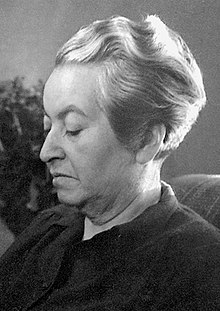
The Chilean poet, Gabriela Mistral, also known as Lucila Godoy y Alcayaga (1889-1957), was the first Latin-American writer to receive the Nobel Prize in Literature (1945). Born to a family of teachers, she mentored Pablo Neruda who would also with the Nobel. Unlike him, however, not enough of her work existed in translation to English. (A bi-lingual edition by Doris Dana published in 1971, 272 pages, and some translations by Langston Hughes.) Ursula K. Le Guin studied Spanish in order to change that.
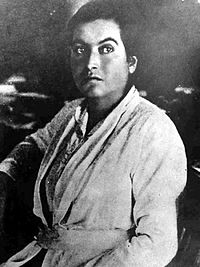
Mistral may be most widely quoted in English for Su Nombre es Hoy (His Name is Today):
We are guilty of many errors and many faults, but our worst crime is abandoning the children, neglecting the fountain of life. Many of the things we need can wait. The child cannot. Right now is the time his bones are being formed, his blood is being made, and his senses are being developed. To him we cannot answer ‘Tomorrow,’ his name is today.
—Wikipedia

 IMPERFECT PATIENCE