CALM DOWN

Maybe I should keep it to myself. But no, that would not do. I read most of it aloud to Gary. Then I composed an email, but kept adding to the Bcc. So here. Here it is. It’s unlikely that any (none?) of my family will read it, but sending it as a link in an email probably wouldn’t change that.*

I am calm in desperate situations, sometimes passionate in discussion, but quiet at my core under stress. Pressing down fear, anger, frustration, and other emotion in fraught situations is almost automatic. (Most people who think they have seen me angry have no idea.*) I learned to suppress those emotions when I was being teased, bullied, and otherwise harassed in childhood and adolescence. It is a skill I have fallen back on throughout my life when dealing with mentally ill relatives and grief. And injustice every darned day.

All my life I have vowed to fight the good fight. And if I have had little impact on my world, it is not from lack of trying.
Continue reading

PANTS IN THE FAMILY

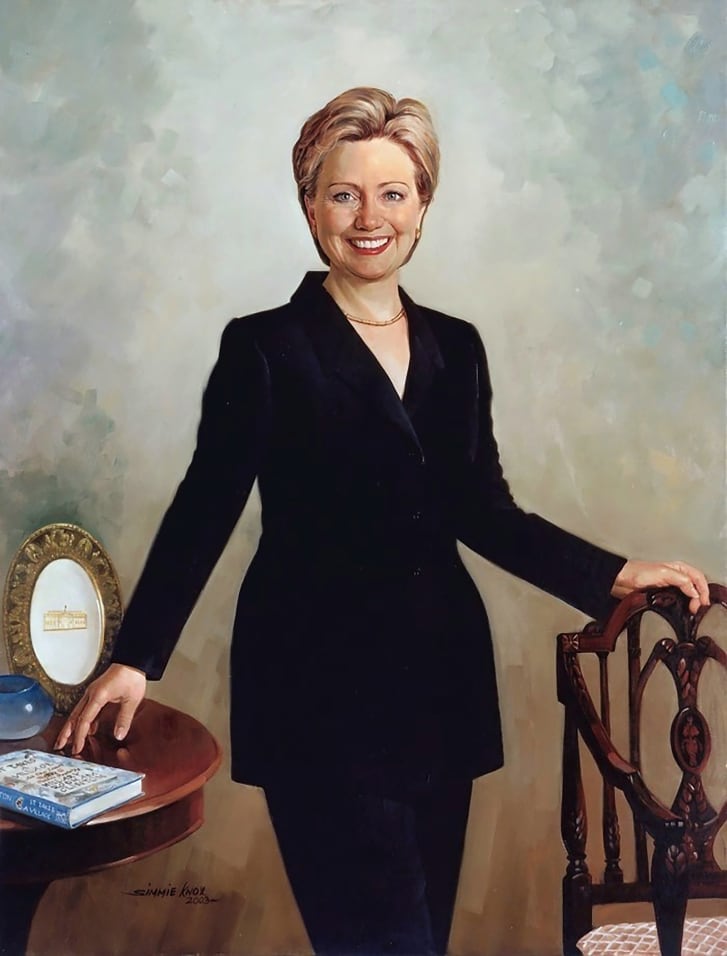
http---cdn.cnn.com-cnnnext-dam-assets-190716065029-hillary-clinton-official-portrait.jpg

In their official First Lady portraits “20th-century predecessors show a parade of cream-colored gowns, strings of pearls and periwinkle skirts. Clinton rocked a pantsuit in midnight black.”

As first lady, she chaired the Task Force on National Health Care Reform, pushing a proposed healthcare system some in the media dubbed “Hillarycare.” That failed, but she found more success with 1997’s State Children’s Health Insurance Program, and then the Adoption and Safe Families Act, and the Foster Care Independence Act.

She worked with the National Institutes of Health to ensure more funding for asthma and prostate cancer. She did not, in short, stay home and bake cookies. Evidence of her own career is visible within the official portrait itself: Her book, “It Takes a Village: And Other Lessons Children Teach Us,” lies on the table beside her.

I remember having scabbed knees almost continuously as a schoolgirl. I was not allowed to wear pants to school, and my dresses were usually torn open under their short sleeves. I played horses and ran around during recess. My mother liked to say I was hard on my clothes  I liked designing clothes for dolls but not actually playing with them.

It was my mother’s idea to get me a Barbie. I thought the doll’s tiny feet made to wear high heels, blue eye shadow, and bright red lips were stupid. Her hairstyle too. 

In the mean time, I had my Aunt Marcia, who lived in the Bay Area—Berkeley and later San Francisco. She was married to my Uncle Harry, but then lived alone. She was the model I wanted when I was a girl. Not Barbie, but an independent individual. Aunt Marcia made the single life an option, something possible and even elegant. She had affairs and a dog and she taught college Sociology. She empowered my daydreams of a single life as a person in my own right.

Hillary Rodham Clinton would have been a good model. Though I’m sorry for her philandering husband, I might like her better for forgiving her husband and supporting him than my aunt who was the one philandering. She was pilloried for saying: “I suppose I could have stayed home and baked cookies and had teas, but what I decided to do was to fulfill my profession.” She was a lawyer and she took her turn supporting her family. I did that too, taking turns with my husband as the primary breadwinner. I admire what HRC accomplished, both what she did and what she tried to do.

Who wears the pants in the family? Everyone. There are plenty of women  who still believe that men should rule their households. My parents did not subscribe to that division of power. My husband and I do not either.

A family should not be ruled. A family should work together toward shared goals. It should be loving and caring and productive, not a dictatorship.

CHOOSING BOOKS

IMG_2574

Yes, you can have too many books. People who believe this is impossible? Well, that’s fine for them. I have thousands of books in my house. My husband has a thousand more of his own. I only read about seventy books a year, plus newspapers online, stories and poetry in journals and, again, online.

Sometimes I read a book I do not like. If it does not “spark joy” I do not have to keep it. I don’t have to keep it if it is one of seven copies of the same title or if I liked it somewhat but will never read it again or if I read the first chapters and felt no desire to continue reading or if have have not and never will read it for the first time.

Even so, I have thousands of books. I have more books than my 17 bookcases can hold.

How do I choose what to read?

COVER. I picked up Gregory Maquire’s Wicked and David Mitchell’s Black Swan Green, both while still in hardcover, for their covers. They remain among my all-time favorite reads. I taught Black Swan Green for years. My students loved it too. There are plenty of books I have ordered online for their covers and found myself irritated because the insides did not match the promise of the outsides.

FIRST PAGE. In my hands, I read a bit. Black Swan Green had me laughing halfway down the first page. This is the safest way to choose, in my experience. I have rarely been disappointed after enjoying a five minute introductory read.

AUTHUR. Some you know you are safe. You know you will love the book because you loved the last one and the one before.

DISTRACTION. I began reading science fiction just to appease my father. Foundation is sexist and homophobic, but still . . . all through college I read SF. I chose books written by women or with a woman on the cover, so long as she was not being carried a la Conan. The Women of Wonder story collections edited by Pamela Sargent introduced me to more authors. I read SF to find a world in which my gender was not all that mattered about me.

ASSIGNMENT. I detested Mrs. Stevens Hears the Mermaid Singing required for a class by a wonderful instructor, but after considerable struggle, I was able to respectfully and usefully identify what bothered me in May Sarton’s novel. Sometimes people hand me exactly the right book at exactly the right moment. Things Fall Apart was probably the best book I was assigned as an undergrad. Though I never warmed to the recommended stories of Flannery O’Connor in my masters program, I assign “A Good Man Is Hard to Find” and both versions of Carver’s “Beginners” and “What We Talk About When We Talk About Love” and allow my students to judge for themselves.

RECOMMENDATION. I loved Middlemarch recommended by a former student and I’ve read it twice. Toni Morrison came to me as a friend’s recommendation. I have read and reread Patrick O’Brian’s 20-volume series. Currently I am in the middle of the seventh book. It is as good or better this time around. Aubrey and Maturan deserve a full shelf all to themselves and they have one.

CHANCE. I don’t remember how I found some of the books on my shelves, the ones that stay. I saw Dorianne Laux’s chapbook What We Carry at Powell’s turned out on the shelf and bought it after reading the title poem. I picked up Black Swan Green and Wicked for their covers.

RE-VISION. I change my mind. The first time I read Maxine Hong Kingston’s Woman Warrior I gave up less than halfway through. Four years later, I picked up a different edition and loved it. It was not until I arrived at the exact page where I had previously abandoned the book that I remembered how disappointing I’d found it the first time and somehow it became brilliant in th years since. I read but failed to be particularly impressed the first time I read Alice Munro’s “Meneseteung” in Best American Short Stories. A few years later, in a class exercise involving reading short stories, a student picked it out as her favorite. It won over the entire class and more than a decade later I wrote my critical essay for my MFA on that story.

The ones that fail to stay?

  • Did I enjoy reading this book?
  • Did it teach me something?
  • Do I remember the story?
  • Will I reread it?
  • Do I know someone else who will enjoy it?

It’s always about choosing.

CHOOSING FAMILY

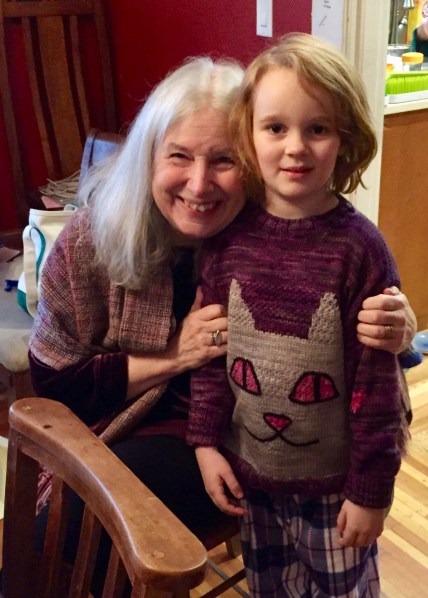
fullsizeoutput_e4a

with my first-born grandchild.

“Marriage still ain’t equal, y’all. It ain’t equal. I tell women that whole ‘you can have it all’ — mmm, nope. Not at the same time. That’s a lie. It’s not always enough to lean in, because that s— doesn’t work.”
— Michelle Obama

Some would consider me a second-wave feminist. This is because I was born in 1952 and have always insisted men and women are the same species, generally need the same things in life (food, air, purpose), and that women should have the same opportunities, rights, and respect accorded to men.

Crazy me.

The day my high school announced that girls were allowed to wear pants to school, I was already wearing jeans. I expected to attend college on my own steam. I expected to work. I expected to make my own choices. I chose to be a “Ms” as soon as that option came to my attention. Neither my husband nor I changed our names when we married nearly 45 years ago. I have opinions. I speak up.

But back to that line above about having it all, all at once. I never believed that.

Raising children is an enormous job. In the past, families, extended families were available to help with child rearing, and that was how parents managed is the days when everything everything about getting by was harder. Laundry took days and reddened hands, cooking required lighting a fire first, and getting to work was either right outside, a long walk, or saddling a horse. Letters written on paper. That’s where we were a hundred years ago. We had to clean the chimney’s of lamps once a week. Everyone worked harder to do things we now complain about when we have to stuff dirty clothing into a machine, pull a frozen meal out of the fridge, drive, compute. But people pitched in and most Americans had lower expectations.

I don’t remember horse-drawn vehicles, but my childhood included party telephone lines and black-and-white television and typing. Dinner on the table ever late afternoon. Mothers at home. Things are easier now, most daily chores anyway. Raising children is still an enormous responsibility. A person needs help.

My husband and I discussed who would stay home with our children. I wanted them in my twenties because physically that seemed the best time. I was working and so was Gary, but he had insurance, and that was why we decided I would stay home with the children. It’s almost an impossible option for most parents today. Even then, it was hard and money was very tight. We scrambled to pay bills and did not expend much on entertainment, but we managed. Children in my twenties, back to work in my thirties, graduate school in my early forties. That was my plan.

I thought, in my twenties, that once my children were grown I would return to school and earn a Masters of Fine Arts in the visual arts, probably in enameling, thus continuing my undergraduate trajectory.

Things turned out differently. I earned an MFA in writing fiction in 2007.  I mostly retired in my sixties though at one time I hoped to teach into my seventies. In 2015, I could no longer manage the long hours as a full time English teacher. I was tired and had been sick for weeks the previous winter. I was unwilling to spend less time working full time, and part-time was not an option. Now I teach two classes a year. I set goals for writing and other creative work.

Beginning as a girl, I have always set goals for myself. I wanted to raise children (usually), live in a beautiful countryside, raise horses, keep a garden, love. Most of those early goals came about differently than I expected when I was a teenager. I raised Afghan Hounds until I had children, our garden is mostly wild, and the countryside is right out in front of me every day. And I love. I never expected to have everything I wanted at once, but I have always kept my eyes on the heart of my life goals.

Marriage is not equal from the outside.

(Not yet, but someday. I am not among those cynics who excuse inaction by complaining that this or that will never happen. Wonderful things happen all the time.)

Women are still paid less than men by every sort of measure (as are many other marginalized peoples). I am sorry that white men find discussion of their advantage offensive. They do not necessarily have anything easy, but all other things being equal, they have things easier. The rest of us work at a disadvantage. We are accorded less respect outside our homes, and too often inside our homes. As one example, I saw this working with occasional contractors who simply could not talk to women as people. Their work was primarily with other men, and they assumed that their advantage is “natural” and fair, that their opinions should always have precedence, unquestioned by women. They were irritated by a woman saying most anything, particularly if they were expected to take directions from a woman. I always feel sorry for their wives, assuming they are still married, and so often they are not. It is pathetic that the only way some men manage is by pretending they are superior to others, including to women they promised to love and cherish.

Yes, I know there are bad women in the world, selfish people of every stripe. But I speak from my own experience. Here I want to speak of marriage as a bonding of equals.

My own marriage is built that way. It is solid. My husband and I care for one another, take care of one another. We hear one another.

I am most fortunate about that. A friend posted a meme listing the qualities of a good and lasting marriage. Love was strangely missing from the list, but a lot of other things were there—respect, kindness, sharing, compromise. It is the determination of two people to make things work, because being alone os not the way people are supposed to live. It is not in our DNA to be solitary in life. Most of our existence today is solitary and alone, but human beings need connection with other people. Maybe these relationships are with spouses, or siblings or cousins or offspring or friends or some combination of people we treasure as family.

Michelle Obama is correct that women are not playing on a level field, that we cannot have everything all at once, but neither can men. We need to prioritize. We need to plan a life we can be proud of. We need to make the best of what comes. We need to treasure relationships.

We need family, all those people we are given by chance or by choice.