
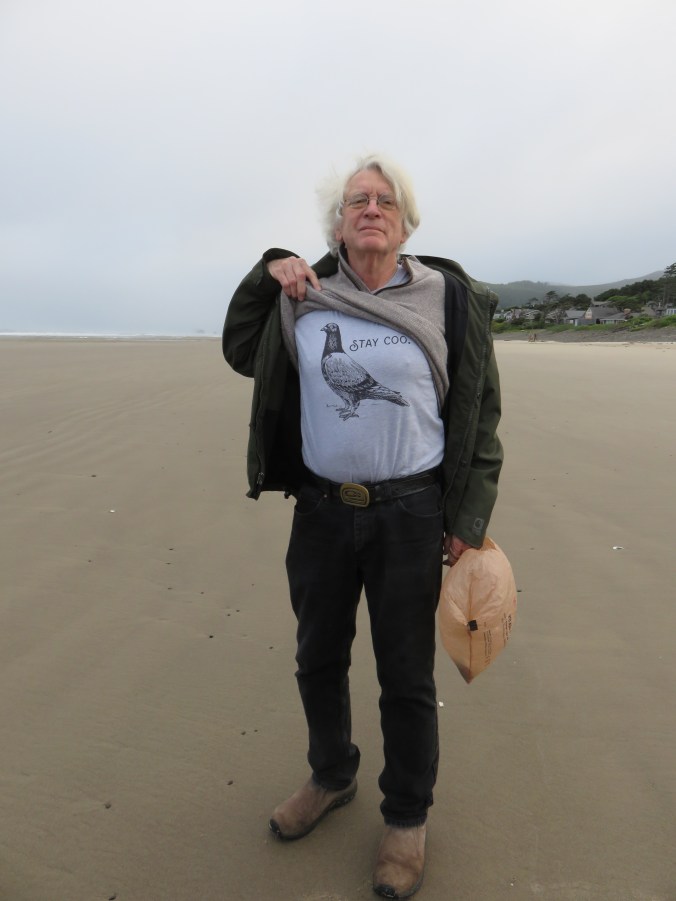
Gary “being silly” a couple years ago when he still had four hats.
My own father, Arthur Henry Priddy, kept “salmon” (orange) three by five cards in the breast pocket of his shirts and he wrote with a striped green fountain pen in blue-black ink. When I asked him questions as a child he always knew the answers. When I wanted to know about trade in the Minoan empire, he pulled out one of the cards and his pen and described their form with a few graceful sweeps of that coveted pen. He told me that Columbus did not discover America and that, in fact, he had not even been the first European to reach its shores. On separate cards he drew the vessels used by Chinese, Portuguese, and Viking explorers and fisherfolk. He always answered my questions. Sometimes he took a very long time answering and I was almost sorry I asked, but the answers always came.
•••
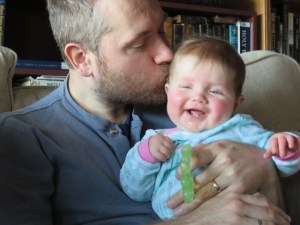
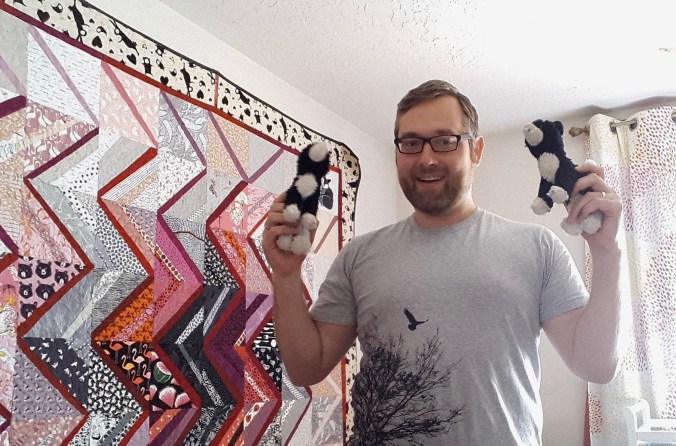
Our older son with his daughter.
My father had been a small, slender boy in a time of Clark Gable shoulders. He was an only child and when his parents divorced, he was raised in a household of three women—mother, aunt, and grandmother. Throughout his life he honored women, but aspired to the masculine pursuits available to his frame. He learned to target shoot and play chess, fly fish and take photographs. He set a record swimming the butterfly, played water polo, and raced bicycles in Los Angeles. He joined the Army in 1942, earned a purple cross and liberated a German concentration camp. He worked for the Bureau of Commercial Fisheries until arthritis stopped him. Over the years he lost his childhood faith and many of his prejudices as he placed his life into the hands of people he’d been raised to distrust.
•••
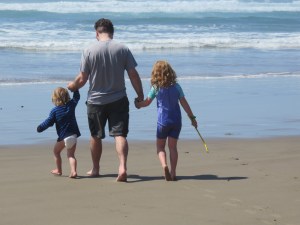
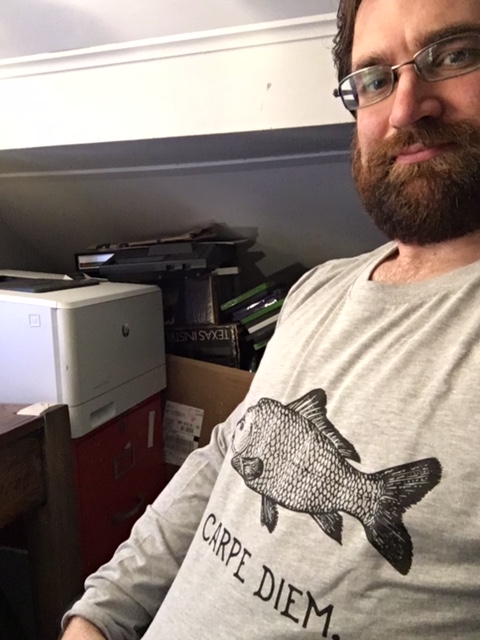
Our younger son with his two.
When the arthritis began, my father hiked the Olympics alone or with his son. He slowed but kept moving, determined to find a way out of the pain. The jogs on the beach ended and the quick flip from prone to standing that made his children squeal with delight. He paced himself and dealt with the setbacks as they occurred. He might spend four days backpacking the High Divide and then pay for it with crippling pain. He might hike for a week, rest, and find he could not walk at all.
Most often, as the rheumatoid arthritis consumed him, he awakened resentfully, late, each stir in his narrow bed a difficulty. He felt the grind of bones on edge and he did not move without purpose, no wild thrashing in his sleep or cat stretches in the morning. He wore familiar clothing and slippers that knew the twists of his body. He sat on the edge of his bed and smoked Camels cigarettes and listened to the radio. He had surgeries to remove spurs of calcium but over the years illness robbed him blind, literally. But it was cigarettes and cancer that took him.
After two radiation treatments he refused to have tubes or a hospital gown, but only a sheet. The oncology nurse took my arm outside his door and told me he was dying. “If he’s trying to leave us, we don’t want to call him back.” She stopped another nurse from turning him and the blood cart from taking tests, until she could find a doctor to cancel them. She darkened the room, drew the curtain halfway to shelter him from the hall, and held my hand for moment.
•••
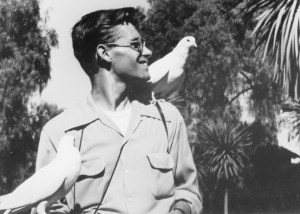
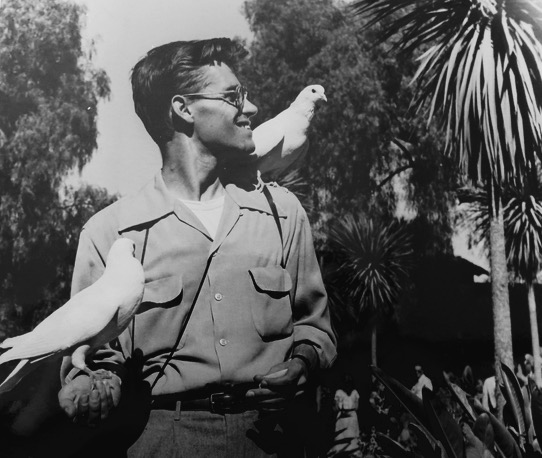
Daddy while at UC Berkeley in the 40s.
My father’s ashes were mailed to me in a little cardboard box and I placed them behind a door in my desk until the other members of my family were ready to deal with them. But one day I opened the door and took out the box, looked at the postmark and realized years had passed. My father had asked that his ashes be scattered on a rock in the ocean in front of my Oregon home, but I would wait no longer for my family to hire a plane and so one morning my husband and young sons and I walked down the beach and let the water take his ashes to the rock in the sea.
I did not cry that day. I had not cried on the day he died, or even on the day, some time before his heart stopped, when I knew he was already gone. But sometimes, even so many years later, I want to ask him a question, and I imagine his fingers holding a green fountain pen, drawing sailing ships on three by five cards, and the tears come.
Thank you to good fathers everywhere today and tomorrow and the days after that.
.
 IMPERFECT PATIENCE