STATS

Explain this, as of 4 6 April:

219,564 residents in Jackson County; 2133 2269 tests; 33 confirmed cases, still no dead

346,868 residents in Marion County; 1567 1716 tests; 188 198 confirmed cases, 5 dead

In Jackson county, as of 4 April, Oregon had managed to complete 1 test for each 102 residents.

In Marion county, Oregon had tested 1 in 221 people. Yet Marion has many more cases and five people have died.

In our most populous county, Multnomah, as of 6 April there have been 4209 4603 people tested with 209 233 confirmed cases and six seven dead. There are 811,880 people in Multnomah County, which means Oregon had tested only 1 on 193 176 people in our most densely populated county, but six seven have already died.

There are 3,831,074 people in Oregon, 18,925 19,556 have been tested (one person in 202 195), and 999 1068 are confirmed positive, 27 have died.

What’s the deal with Jackson County? And while I’m at it, what’s the deal with that person with Marin County, California plates shopping at the local grocery?

Yeah, I should be nicer, but Gary says my mother would be proud of me: “Going through everything, trying too make sense of the puzzle. That’s what your mother did.” It’s true, Mom cared about numbers and fairness.


SCHEDULE

IMG_5593.jpg

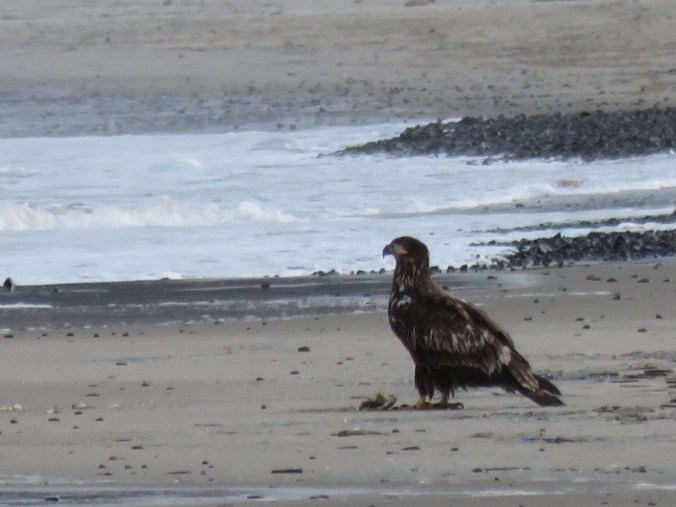
The first few times a juvenile eagle lands on shore they stand around for several minutes (up to an hour). I always assume they are unhappy to be wet and to be forced to launch from flat sand.

Today, a walk creek to creek, a juvenile eagle, meditation on the value of lies, and a little brainstorming to prepare for Monday’s writing assignment. The best one is above, the lies below. So brainstorming.

Monday’s nonfiction writing assignment was a great favorite with my students, the assignment they completed early in the year and which they still loved by the end. It will be satirical and more than a little silly. It concerns a trivial annoyance.

Continue reading

update on BLUETONGUE

IMG_5571.jpeg

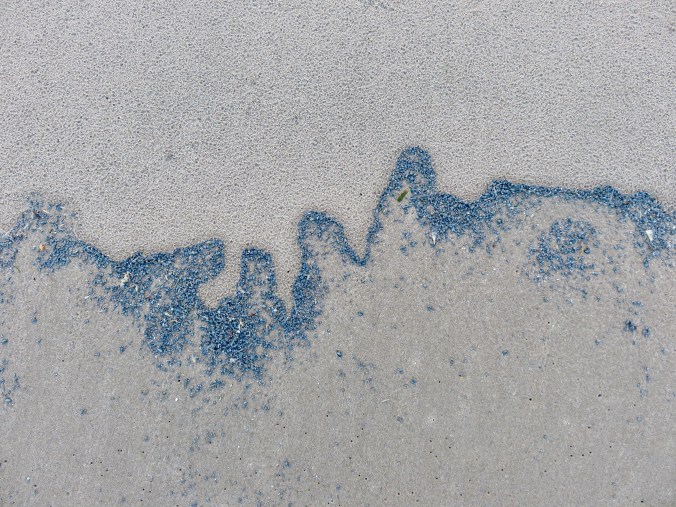
The photo has nothing to do with any disease. This is a beaching of many thousands of tiny Velella vellella. They can grow to be a few inches long, but these are as small as the head of a pin.

I posted a few days ago about my friend who, years ago, was accidentally infected by bluetongue, a disease she was studying in sheep. She insisted that she could not possibly have the disease, but that she certainly had the antibodies in her blood. The disease of cloven-hoofed mammals, was not supposed to infect humans at all. But it did.

Not that it matters all that much to most of us just now where covid19 originated, but it seems that deliberate release has been ruled out, but an accidental one has not. Pangolins apparently have little to no part in this disease—it’s bats. Covid19 is derived from a coronavirus infecting bats. Here’s the catch: there were no bats in the seafood market where the disease supposedly first appeared. A wild bat might have infected someone in the market, of course, but more troubling is that nearby was a lab studying coronavirus in bats. Again, there is absolutely no one (outside of the wackjob conspiracy theorists) who believes it was released deliberately on human populations. It’s more likely someone was either very unlucky or simply careless.

“Richard Ebright, a Rutgers microbiologist and biosafety expert, told me in an email that ‘the first human infection could have occurred as a natural accident,’ with the virus passing from bat to human, possibly through another animal. But Ebright cautioned that it ‘also could have occurred as a laboratory accident, with, for example, an accidental infection of a laboratory worker.’ He noted that bat coronaviruses were studied in Wuhan at Biosafety Level 2, ‘which provides only minimal protection,’ compared with the top BSL-4.” —The Washington Post, 2 April 2020

With over a quarter of a million Americans already diagnosed with covid19, having a look at how this started is going to matter in the future if we have any hope of surviving a repeat. (A reminder the the great influenza pandemic of 1918-19, the so-called “Spanish Flu,” was not from Spain and may have started in Kansas. Troop movements spread it all over the world. According to the CDC: “It is estimated that about 500 million people or one-third of the world’s population became infected with this virus. The number of deaths was estimated to be at least 50 million worldwide with about 675,000 occurring in the United States.”)


source: “How Did Covid-19 Begin? Its Initial Origin Story Is Suspect” by David Ignatius

https://www.washingtonpost.com/opinions/global-opinions/how-did-covid-19-begin-its-initial-origin-story-is-shaky/2020/04/02/1475d488-7521-11ea-87da-77a8136c1a6d_story.html?

BREAD

fullsizeoutput_11bf

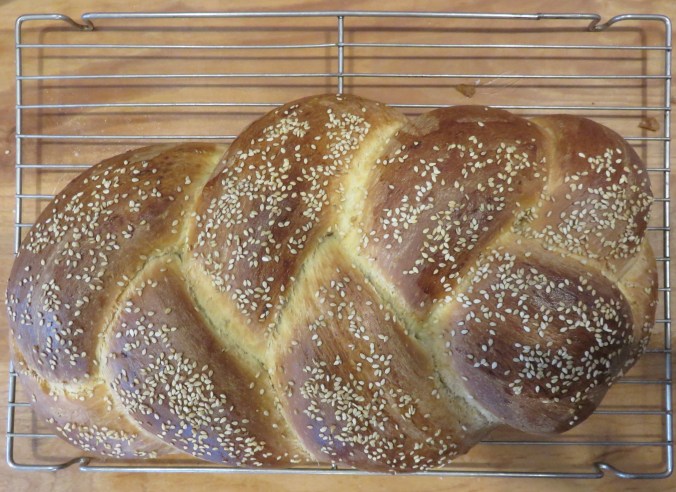
When I retired I intended to revive a college habit of baking a braided loaf on Fridays. I used to make it entirely by hand and I once broke a wooden spoon beating the sponge. This loaf is only three strands and I always braided four, but it’s a tasty loaf.

We have all our mail through this past Thursday. I baked bread the next day. We’re still getting our early walks, but there are unfamiliar people and dogs on the beach today. Yesterday the gale force wind was desperately chilling in the morning. Today is mild. So. Walking, baking, writing, and staying safe.

Continue reading

CLOSED & CAREFUL

IMG_2240.jpeg

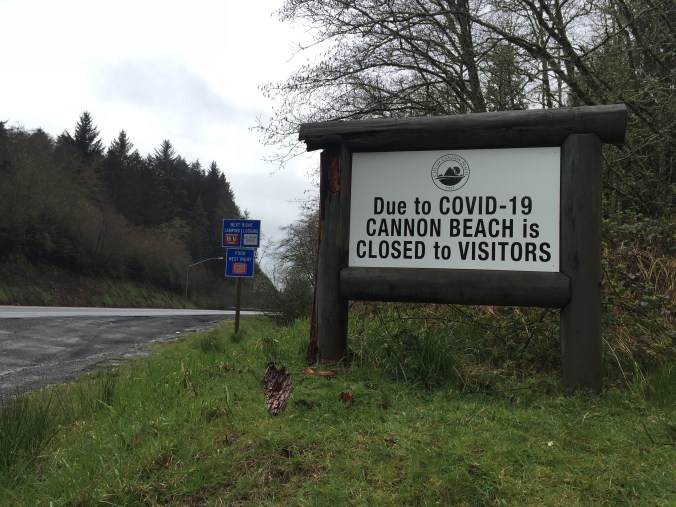
On Tuesday, to his credit, the man looked embarrassed when he said he lived here and he kept his dog on leash. I’ve seen his dog before, but he’s not local. At least, he might have a house here and I have no problem with homeowners being here. They are allowed as are health care workers.

Yesterday morning we drove to Cannon Beach to pick up our mail. We had not gone anywhere other than walking the beach for over 12 days (the last time Gary picked up the mail), but we had spent a ridiculous amount of time looking at used CDs (Gary) and bidding on scraps of kimono silk (me). The USPS does not do home delivery in our area. We had ordered a couple of books (eh-hem!) and warned the post office we would not be in for a while. I carried a huge bag out to the car.

It had been 16 days since we spent time in public, and even then I did not hug my Scrabble partner. I was already taking precautions.  Continue reading

GOOD ADVICE

from The Atlantic:

The people who still aren’t listening—and how to deal with them

Wash your hands. Don’t touch your face. Don’t go to the bar. Don’t go anywhere at all. Wash your hands again.

It’s a lot. We’re currently participating in “the world’s largest natural experiment in behavior change.” And, as last weekend’s partying showed, some people just aren’t willing to commit, whether out of selfishness or ignorance.

For the loved ones of those refusing to comply, this creates a moral and practical quandary: How do you convince a particularly stubborn relative to take the coronavirus pandemic seriously?

For starters, two Wharton psychologists, Adam Grant and Reb Rebele, argue that moral responsibility can be a powerful motivator.

Also here to help is our staff writer Joe Pinsker, who asked a few experts to weigh in. They suggested the following:

  • (Gently) remind people it’s not all about them.

  • Avoid numbers; tell stories.

  • Don’t just ask people not to do something—ask them to do something else.

  • Don’t forget to be nice.

For further explanation—and even a prewritten script you can use on that difficult relative—read Joe’s comprehensive guide.


22 March 2020

A top World Health Organization official warned Sunday that lockdowns are ineffective without programs to identify and isolate the sick and anyone they have contacted, otherwise when they’re lifted, ”the danger is the disease will jump back up.”

DROWNED TREE

fullsizeoutput_11b2

The drowned trees might be from 800 years ago (according to some) or from thousand of years ago. This is the one furthest from shore that appears only rarely. Well, to be precise, all of the drowned trees are generally buried under sand and rock. This one is buried again this week.

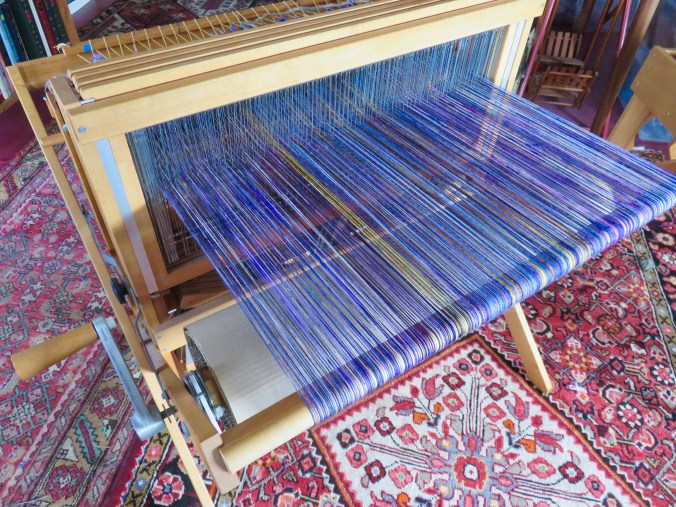
Last Wednesday I began winding a warp and today I am a few inches from completing the second shawl. I will work past dark to get this one done because I have already laid out the weft for the third shawl. This morning I wound off a skein of sock yarn. I will knit socks before beginning the next warp in a couple of weeks.

IMG_5507The last person I hugged other than my husband was Paul at the Twist sale on the 6th of March. That was a couple of weeks ago. By last Tuesday, I was not hugging anyone. I cancelled my Scrabble game. We took stock of supplies and are self-isolating. Gary was listening, just now, to Irish music of the sort that makes me cry even before I listen to the words. Continue reading

GIVING

IMG_5490

This morning I compared the message of an essayist to “The Gift.” That poem by Li-Young Lee describes how self-discipline was taught to a young boy by his father, who calmly tells him a story while removing a splinter. Search for that story and you will find it.

“to get the news from poems . . .”

I also received an email with links to

Poems of Joy, Hope, and Community

One of them is by Alberto Rios. I have had a soft spot for Rios since reading his poems about death by avocado and because he was born the same year I was.

When Giving Is All We Have

Alberto Ríos – 1952-

                                              One river gives
                                              Its journey to the next.

We give because someone gave to us.
We give because nobody gave to us.

We give because giving has changed us.
We give because giving could have changed us.

We have been better for it,
We have been wounded by it—

Giving has many faces: It is loud and quiet,
Big, though small, diamond in wood-nails.

Its story is old, the plot worn and the pages too,
But we read this book, anyway, over and again:

Giving is, first and every time, hand to hand,
Mine to yours, yours to mine.

You gave me blue and I gave you yellow.
Together we are simple green. You gave me

What you did not have, and I gave you
What I had to give—together, we made

Something greater from the difference.


I have not donated to the nonprofit Academy of American Poets this year. Perhaps you will find enough comfort in this website to help them continue their offerings of hope.

It can be helpful to spend a few moments each day with language to maintain our well-being and fortitude. As we find ways to come together while apart, please find a selection of poems our team has curated especially for you, from Poets.org:

Darling Coffee” by Meena Alexander
For Keeps” by Joy Harjo
Song Out Here” by Juan Felipe Herrera
Lift Every Voice and Sing” by James Weldon Johnson
These Poems” by June Jordan
Leisure” by Amy Lowell
The Last Thing” by Ada Limón
So Much Happiness” by Naomi Shihab Nye
Cento Between the Ending and the End” by Cameron Awkward-Rich
When Giving Is All We Have” by Alberto Ríos
Everyone Sang” by Siegfried Sassoon
The Flower at My Window” by Lucian B. Watkins
The Things That Count” by Ella Wheeler Wilcox
[I wandered lonely as a Cloud]” by William Wordsworth
To All My Friends” by May Yang

WEAVING STORY

fullsizeoutput_11bb

When my children were very small, and a long walk on the beach was not practical, I used to sing a little ditty I’d invented out of parental desperation: “Mommy’s going to run around, run around, run around. Everybody run around, run around, run around.” We would jog in circles from the living room to dining, past the kitchen and into the hallway to the entry and then back to the living room—all the while shouting that line over and over.

In the mean time, I am weaving.

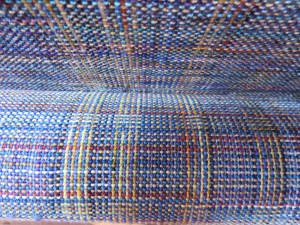
January I wove three shawls on a blue warp. February I completed a red one. Last Wednesday evening I began winding a purple warp of over 300 ends from my stash with one handspun skein from a spinner just a couple of hundred miles north. Less than 48 hours later I was weaving the first shawl with blues, teals, ands gold. Yesterday I began weaving the second shawl using mostly purple weft. I begin first thing in the morning and continue until after sunset.

The work is going well. These shawls are intended for a group show in December. That gallery is closed just now. The schools are all closed. Events are cancelled. One of our sons is working from home. The other who works in the theater is completely out of work. Gary kept talking about getting fuel for the car, and I stopped him right there. We are not leaving the house except for walks on the beach. Mail will have to pile up at the post office. We have plenty of food in the freezer, fridge, and pantry shelves. I am not hoarding, it’s always loaded. Gary only worries about running out of coffee. I want pasta and jarred tomatoes, coconut milk and pesto frozen at the end of last summer. I have half a bag of onions and a few sweet potatoes, and an entire dozen untouched eggs. When all of this is gone, we will go out to see what we can find.

IMG_4272My husband is 70 and I am 67. Neither of us have health issues except thinning bones. We walk for an hour or two each day on the beach without coming closer than ten or twenty feet from anyone other than dogs. Both of our tenants are over 65. One just had a triple bi-pass. When emergency vehicles showed up yesterday, we feared they were for him, but no. It was another neighbor who is also over 65 and had a heart attack, then a more serious one and was eventually Life-Flighted to a Portland hospital yesterday.

If you or someone you love has a high fever and other cold or flu symptoms, you might just have the flu (colds generally present with only a slight fever, if any) or you might have covid-19. You are unlikely to be offered a test to determine what’s going on because despite what other countries have managed and what the president keeps promising, our country is not yet, after two months, up to speed.

In the mean time, many people should be practicing social distancing. Many local governments are closing schools across the country, restaurants and malls, gatherings of all sorts.

Stay away from public places, avoid touching others or surfaces that others might have touched. Small children are as likely to become ill as anyone, but are unlikely to die. (In over 72,000 closely studied cases, China had no deaths of children under the age of ten.) But children are still carriers while they are sick. They can transmit the disease to more vulnerable populations, and we are all assumed contagious before we are symptomatic and for at least a day or two afterwards. There is also some evidence that even if it does not make a person ill enough to be hospitalized, covid-19 weakens the immune system and makes people more susceptible to other illness.

So be careful out there. Turn to your inner resources. Read. Tell your children stories. Run around the house. Make a mess.

Once the purple warp is completed, I will start another.


I will note that a friend’s son has a fever of 102°. They could not get a test (of course they couldn’t), but have accepted that their child’s having covid-19 is a possibility, and that it has likely spread everywhere. They are self-isolating.
FAILED [THE] TO TEST

A massive study involving over 43,000 cases of confirmed covid-19 in China estimates that young children are not at risk. That’s the good news.

As a nation we have bungled our response to a disease we cannot cure (only nurse) and cannot protect against with a vaccine (for another year or more). Most estimates suggest that covid-19 will kill 3.4% of those who contract it. Mostly they will be old. really bad news is, we have no idea how many Americans are actually sick. Continue reading