WOMEN’S WORK


cleaning1920-546x1024.jpg

March 1920 issue of the Delineator magazine, from http://thevintagesite.com/?p=611

A recent post on Apartment Therapy reviews how housework was done a hundred years ago. She describes following a housekeeping manual: “I Tried a 1920s Cleaning Routine for a Week—And It Was Nearly Impossible.” It wasn’t impossible, of course, but it was rigorous, with daily tasks and tasks completed on specific days. Monday was washing day. It was an entertaining read (and illustrated with photographs that do not come from the 1926 book).

“The good housekeeper must bring to her task of housekeeping every one of the qualities that make for a successful executive in the downtown business world.”

Brentnie Daggett, the author of the article, assumes the book was “written for professional housekeepers—teaching them how to take care of their clients’ spaces and manage their businesses at the same time” and that such a housekeeper would have the new gadgets such as an electric washing machine, vacuum cleaner, and dishwasher. She was wrong about all that.

First, the book was written for housewives not professional housekeepers, for married women whose profession was caring for their own home, not for hired staff. The illustrations in the article might depict a maid but should show a housewife wearing her apron, which she would certainly have worn while cleaning house. Most housewives learned their task from older women in their family, but sometimes a book was handy reference for tasks Mother did not explain thoroughly. I have several of these books, some of them quite expansive with chapters on dying cloth and stain-removal, on simple home repairs and pickles. Mrs Beeton’s Book of Household Management comes to mind.

The author of the AT article finds the cleaning process described in the Good Housekeeping book unworkable, even “impossible” yet she only does the morning tasks of breakfast and cleaning. She does try a bit of mending on Mending Day (Tuesday), but she does not mention luncheon, dinner, or entertaining. She also does not mention seasonal tasks such as canning.

Daggett uses an automatic washer and dryer, and I do not blame her for that, but it is very unlikely her great grandmother did. There is no mention of ironing. Untreated cotton wrinkles to a degree few young people would recognize today. In 1929, cotton fabrics were first treated with a solution of urea and formaldehyde, but it would be decades before wrinkle-resistant fabrics became common in American homes. In the 60s, all of our sheets were synthetic because my mother refused to iron sheets. I am 67, old enough to remember ironing my father’s shirts with an electric iron. The task took hours.

Most American homes would not have had anything electric in 1920, no washing machine or dryer, no electric iron, dishwasher, or vacuum. (As late as 1945, the majority of American homes did not have electricity at all.) I recall my step-grandmother doing laundry in a large room, necessarily large because it held multiple tubs of water, mangles and wringers I was warned not to touch. The clean laundry was hung outdoors on the lines strung in front of the vegetable garden.

Cleaning floors between full-on down-on-your-kees weekly scrubbing was accomplished by scattering dampened newspapers on the floor and sweeping them up with clinging dust. Carpets were taken outdoors to be beaten clean with what looked like a massive flyswatter. I had a vacuum cleaner when my children were small, and that took care of the carpets, but I also scrubbed the kitchen floor once a week.

“Clean enough to eat off the floor” was no joke. It was the goal.

Gas or oil lamps had to be cleaned once a week. My mother and her sister did this on Tuesdays during the summers they spent in the house where I now live. It had a wood stove and no electricity or indoor plumbing in the 20s and 30s.

Electric stoves were not in every home, and wood stoves had to be fed with wood that had to be cut and split and stored and carried indoors. The icebox mentioned in the Good Housekeeping book was kept cold with…ICE.

All this non-electric equipment was used every day and had to be kept clean. In the 20s there were no antibiotics and lifespans were lengthening less because of medical science than better nutrition and cleaner homes.

Unmarried people lived in boarding houses for most of the 20th century so that meals and cleaning would be provided and they could go to other jobs. Keeping house was recognized as a full time job and women who stayed home to keep house were on their feet all day, cleaning and cleaning and cooking and caring. And cleaning. 

My great grandmother Rosa [Garcia] Jackson supported her family by opening her home to boarders. She cooked meals and cleaned for pay and that supported her and her children.

My mother was also raised in a single parent household from the mid-30s. Her mother worked full time in a shipping office, but my mother and her sister and their mother all still had the housework to do after work and school. On Saturdays they rushed around to do all the “upstairs” housework in order to be free to attend a Matinee.

Housework was anathema to my mother for the very good reason that her mother never stopped. My grandmother took the bus into the city for her job and then came home to care for her daughters and the four-bedroom home she won in the divorce. She took no alimony and she was paying on time for the furniture her former husband had chosen. My mother avoided canning and embraced every “time-saving” household technique for the rest of her life. Think Campbell’s canned soup and instant mashed potatoes.

In my mother’s childhood winters, laundry was hung in the basement, a chore she hated so much that she used a laundromat throughout my childhood rather than have a washer and dryer in our home. Though she was a stay-at-home-mom throughout my childhood, housekeeping was a full-time job my mother was determined to escape. She was thrilled to return to paying work when my father retired early on disability and my brother hit his teens.

My mother recognized society’s devaluation of women’s work, and she resented it until she died.

 

GETTING ON WITH IT

IMG_4567

From Wallowa Lake Lodge looking north as the sunrise does what it does, taking over the sky.

We meant to wait until Monday, though originally we thought we would have most of the furniture back into the kitchen and dining room yesterday. I had to put a second coat of varnish on the new piece of baseboard, the parts of the room that waited for proper cabinets. That’s been a twenty-year, thirty-five-year project. The cabinets finally in, but the base boards only finished last week. Then, after varnishing the rooms’s floors and baseboards, I came back for a second coat and got a little ambitious. Monday I put another coat on most of the floors. A week to cure and we thought, well, Monday is not too late for company coming Tuesday . . .

That’s confusing, huh? Yes, for us too. The floors were all dry enough today to walk on with bare feet or socks. The furniture around the edges of the room—huge pantry bookcase, pie safe, fridge, could come in without waiting because the floor they sat on is fully cured. The dining table has to wait till Monday.

The real problem was the fridge, which was in the hall facing out of the kitchen, blocking the doorway. Putting it back in place meant crossing over second-coated floor. Gary was suddenly in favor of buying a new fridge. Maybe next year, I kept saying. I think he just wanted the fridge back in the kitchen and buying a new one meant someone else would move it.

We moved it all ourselves. I made salal muffins after an hour beach walk (not so exhausting as the two and a half hours a day before). Gary figured out how to move the fridge without damaging the floor, moved the coffee maker back downstairs, and then began cleaning. I restocked the pantry and made soup and roasted strawberries we are too exhausted to eat. Tomorrow.

Tomorrow morning I will put the first coat of varnish on the two-foot section of baseboard I could not get to because the fridge blocked access. And then we will drive north and I will play Scrabble with a friend. Two games, we cheat and do not keep score.

In the afternoon I will carry on. Maybe I will empty and clean kitchen drawers or begin cutting fabrics.

This morning I irritated someone I respect, and that has distressed me more than it should. I wish it were possible that after reaching a certain age and making a lifetime’s share of mistakes that we just didn’t need to care anymore. We fix it and then move on without self-flagellation.

A wonderful woman once told me that the great thing about turning 70 was “no one expects you to look young anymore.” I look forward to that.

We watched the end of Tales of the City and Olympia Dukakis plays ninety-year old Anna Madrigal. Dukakis is eighty-eight and looks great. We remember again that we are cleaning out our lives along with the house. There is a lot that is not going back where it was. Getting rid of things is never so easy as the magazines make it sound.

I have a new quilt forming in my head, sorted colors by value and hue on my cutting board, and the first “draft” spreading across the carpet. I stare and stare at colors till they form a pattern I can sew together in my head. That’s how I rest.

PARING DOWN and going out

IMG_0046

In our continuing effort to tidy the house, I am following an online series of articles on how to edit and tidy my home. Fifteen days of advice on how to eliminate clutter, and basically sort “stuff” into giveaway, toss, and keep-but-put-away.

The process began by suggesting that I have a “monster pile” someplace in my home. It was true. I had a pile that was a couple of feet high and three by six feet. By the time I’d cleared other areas of my house my monster had grown to four times that size. Even made tidy into straight lines and contained by boxes, it filled the center of my workspace. My online article told me to remove three items from the pile and find a place for them or scoot them out of the house. The next day it gave me a different area to tackle, but then reminded me to take three things out of the pile. That’s mostly how it’s been ever since.

A junk drawer is not necessary only in my kitchen, I was told, there should be one in each room. That made me laugh. I had already sorted out my sewing “junk drawer” but kept the little plastic bin of miscellaneous stuff that needed to be somewhere but did not belong in the baskets with thread, the drawer with scissors, or any other particular place. I have an orderly junk drawer in my kitchen and one in the bathroom vanity. The dressing table in my bedroom contains scarves and miscellaneous “junk” too. All this has been sorted recently, but each day I try to turn the home-tidying advice into practice.

Yesterday, I was told to edit my freezer, fridge, and pantry with specific attention to outdated items or foods I had tried but did not like. While I was upstairs reading these instructions on my computer, my husband was downstairs actually emptying one shelf at a time in—you guessed it—the freezer, fridge, and pantry. He sorted. That afternoon I went through his piles as a second reviewer. Trash, giveaway, and keep. He cleaned the shelves too. The resulting order went well beyond what had been suggested, and even though I didn’t do most of the work, I felt accomplished!

I have been advised to spend a limited time sorting one specific area each day. I did the entire linen closet. I was advised to remove three items from the “monster pile” and sometimes I eliminated an entire cardboard box from the room.

I spent some extra time with my monster pile after dinner, choosing not three items but a mini-pile or box to sort, several days in a row, while the television played something in English where I did not have to read subtitles. My monster is mostly gone, though it seems to be rebuilding.

However, the attic is completely empty. I still have space on my book shelves. (I ruthlessly sorted books again this summer, but there are still eleven bookcases upstairs and more than that downstairs.) We took a small painting to be framed in a wooden frame that came out of the attic. On Friday we hope to take a tiny print up to be placed in another frame from the attic. I gently oiled, sanded, and waxed the beautiful walnut veneer.

Over the past summer, I painted the entire upstairs, ceiling included.

There is still work to be done. Next summer we need to move all the furniture out of the living and dining rooms and varnish the floors. The kitchen, too. The entry and hall floors have a different finish on them and I plan to paint over it. I suspect I missed the weather window for floor paint, so that will likely wait till next year. I sorted through everything in the lower half of my grandmother’s secretary, but there is still the top half.

The Christmas ornaments are at home in a downstairs closet. I have completed most of my Christmas shopping. There is paper and tissue and green velvet ribbon waiting for me to wrap.

I have put a warp on my loom for a pair of scarves and begun knitting a third. These are straight forward, simple projects I can do without thinking much. But I also have less than five weeks to knit my granddaughter a sweater with a cat on it for her birthday.

My laptop is getting a little creaky, but I have been putting off buying a new one. This morning it abruptly turned itself off, screen went black. Later it was fine. Not a very good sign, though. My older son told me before I replaced my last one (after nine years) that laptops have a half-life of about 18 months. The one I am using now is going on six years and unlikely to last much longer, I fear. I want a lighter laptop. I enjoy the screen on my 15″ MacBookPro, but it weighs four and a half pounds. How about two pounds? I am thinking a tiny screen and two pounds, but I have a couple of bills to pay first. In the mean time, I am backing things up.

I made a ginger plumcake the day before yesterday, which we had for breakfast and then broccoli for lunch.

It is also Wednesday and I am sitting in the high school library for Open Library. Three sophomores were working on Chemistry lab write-ups, but they’ve left. Last week I helped a freshman with his Geometry. I’m not sure he finally had the correct answer to the last problem. He’d done it wrong the first time and I did my best to steer him in the right direction. Next week I am promised a few frantic juniors working on the infamous Reading for Writers. I would rather have customers than not.

I have committed to NaNoWriMo this year, and begun notes on an SF novel. That cat sweater has to be done. Maybe that is something I should start tomorrow?

IMG_3365

NAKED

IMG_3557

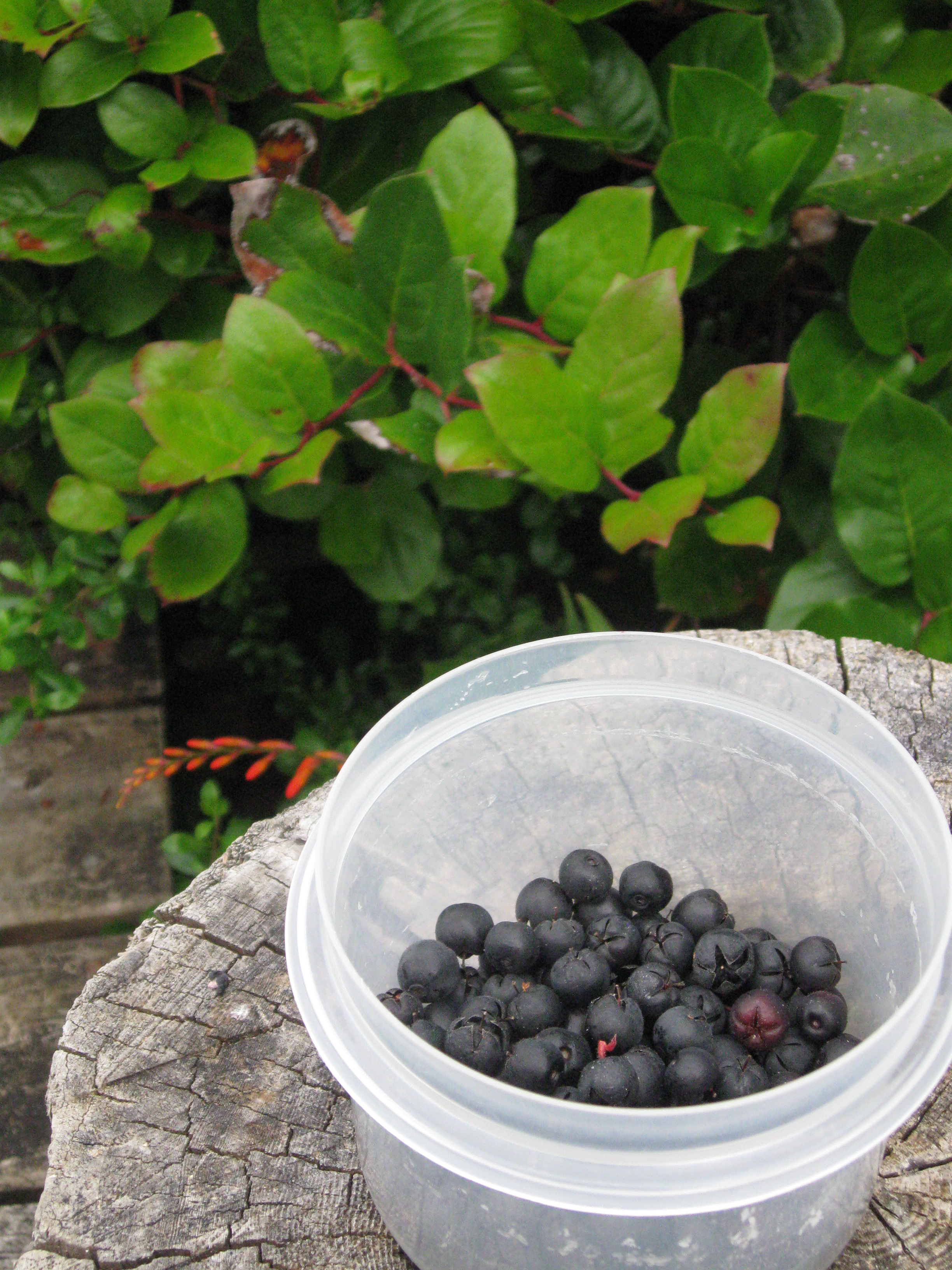
I made salal muffins yesterday morning. The berries grow wild in our hedge and ripen over a period of weeks or months. The muffins were made with organic flour and eggs, butter and some maple syrup for sweetening. I had two with butter for my breakfast. That’s about 400 calories, which is allowed and also delicious.

A couple of months ago, I glanced at myself in the mirror. Then I looked at myself. Naked. I was taken aback. I see myself in the mirror every day, and I got over my cellulite decades ago. But I had intended, in February, to lose 11 pounds, and instead, I went the other way and gained 11 pounds. I had simply refused to see it.

My feet hurt and my lower back and many of my clothes no longer fit. It was one of those seeing-without-seeing periods. I would like to blame this inattention on someone else, but, you know, I just ate too much. Then I refused to see.

Last summer we went to the Oregon Country Fair for the first time. We went early on the first day, and much of what we saw was colorful and wonderful, but mostly we noticed it was hot, dusty, and insanely crowded. I caught only the end of the belly dance demo, which I would have wished to see. I found a doll-maker who turned out to be a good friend of one of our oldest friends. I bought two leather masks. An owl mark is probably destroyed by now by our grandson. I wore the plain red mask for several hours, forgetting completely that I even had it on. I just didn’t notice.

What Gary failed to notice was the nakedness at the Oregon Country Fair, which is well-known for people walking about with only body paint and glitter, at least on the upper half of their bodies and sometimes just the glitter and no clothing at all. It was warm enough. Gary insists he did not see any naked people because he was overwhelmed by the general chaos.

Life is naked chaos.

Since the first of June I have been paying attention to what I eat, and I have been drinking more water. We usually walk for over an hour each morning, and we emptied the attic and I have put a couple of gallons of paint on walls and ceilings. I have read 40 books so far this year, had 6 essays and a story accepted for publication, been rejected by 62 literary agents and a couple dozen literary magazines. I attended the memorial for Ursula K. Le Guin and in a couple of weeks we will have 13 people in our house for the annual summer reunion.

By the reunion I might be back where I started in February. I am nearly back to that weight. Not quite, but it’s been pretty painless. I can stand to look at myself naked again. My back still hurts, but now it’s because I am not sitting properly in my desk chair.

And I have begun rereading Rite of Passage by Alexei Panshin (1968), a book I have read ten times already. Panshin describes an insecure girl looking for a way forward and challenged by her study of ethics—and many more dramatic events I will not attempt to describe here. It is my favorite book, probably of all time. I enjoy each reading.

It seems I never quite let go of some goals and habits, like reading books, while others, like noting how many glasses of water I drink in a day, are acquired through time, and some, like looking in antique shops, fall away.

Just now I am close to done sorting spools of thread by color and fiber. The polyester thread will be given away. I have at least four shoeboxes filled with thread, sorted into war colors, cool, neutral, and black and white. Some are nearly empty, some full. Many are on wooden spools. It is notable that aside from half a dozen spools of hand quilting thread, I did not purchase any of this thread. My step-grandmother’s color pallet is clear as I stand over the boxes. I will probably find a way to keep the cotton and silk.

I have become less sentimental about most other accumulations. We gave away and sold the gatherings of generations. Our garage sale netted a few hundred dollars, mostly items sold for a quarter or a dollar. My one sale was two scraps of cloth for a dollar-fifty. In the next week, we will have a charity come and pick up the furniture and other reusable items. What has been moved out and now fills our atrium will not be welcome back into the house.

After purging my home of so much stuff, I am not eager to fill the vacancies. I like the slices of nakedness on my walls, the space between objects, gaps on bookcases, the way I can sweep all my clothing to one side of the closet, because there is somewhat less of it.

There are riches elsewhere.

Two little pound cakes came out of the oven. I made stock yesterday or the day before and made a lentil soup with coconut milk, vegetables, and spices. We had friends coming for dinner and a couple of nights. There is homemade ice cream in the freezer and local salad greens in the crisper. Gary vacuumed and mopped most of the floors downstairs.

There is space in our lives now that we are retired, and because both of us spent most of our adult lives working and caring for children and pets and indulging in hobbies and muddling along as best we could. There was hardly time to look around.

Home now feels a little like we just stepped out of the shower, all clean and new. Naked.