PAWNSHOPS, STARBUCKS, and RUNNING

When we were in college in the early 1970s, my future husband and I used to take the bus to downtown Seattle and walk through the city, visiting 5 and 10 Antiques sometimes, where my mother worked part time. I have a necklace from that shop. We always went to what Gary called the “Pubic Margaret.” Then we worked our way down First Avenue pawnshops, looking at guitars. That was our Saturday habit for ten years.

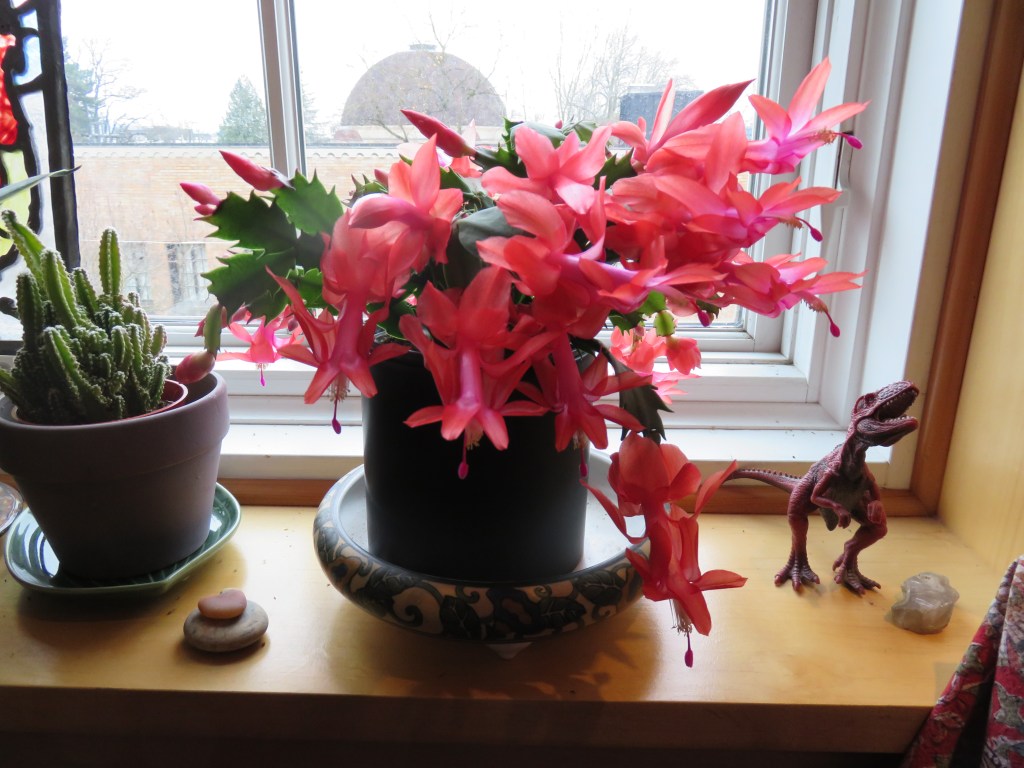
The Christmas Cactus clearly indicated it planned to bloom by Christmas—not on Christmas but soon. By New Years Eve, it had begun opening buds. It is still in full flower. Gary’s plastic dinosaur is Marc, named for Marc Bolan of the band T. Rex.
Continue reading

OPPORTUNITY

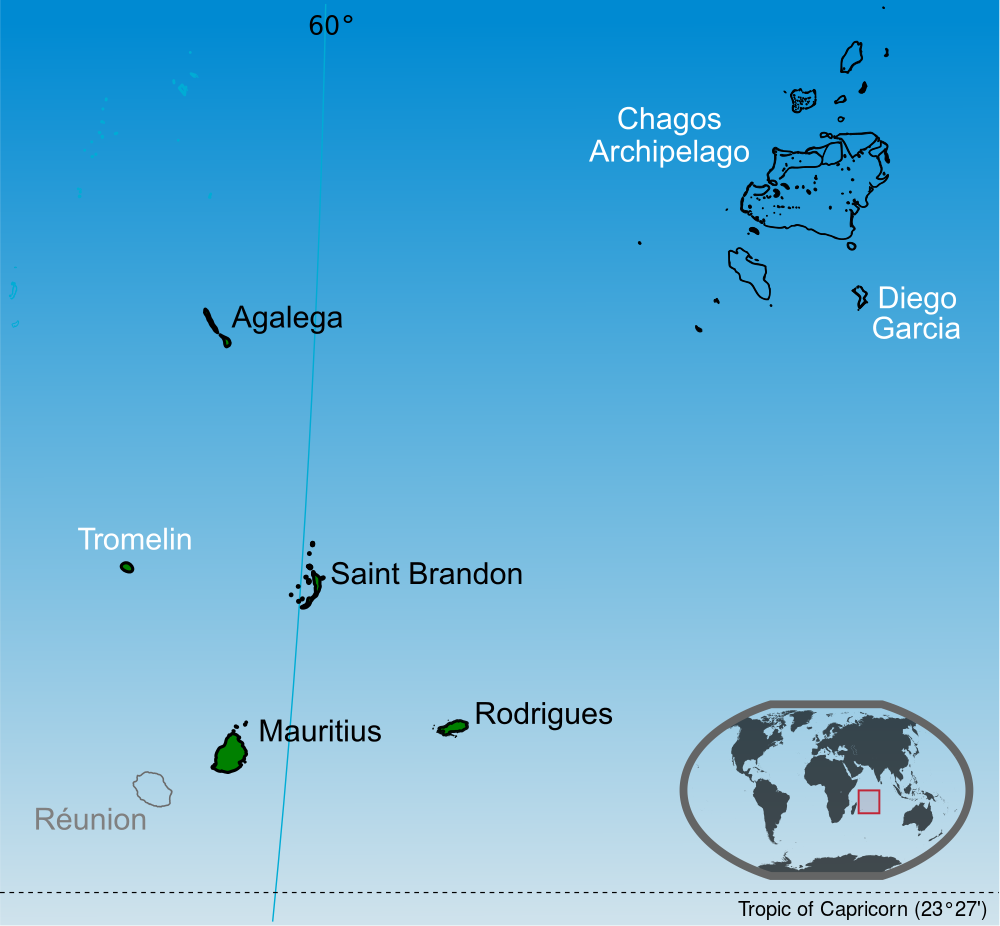
Someone using Mauritius as their home address visits my blog most days. I have access to view-counts and country-counts. I know where in the world my viewers are logging on and how many pages have been viewed from each country. I can’t help being curious about who is reading my posts from Mauritius. I know where that is, but not who.

The pandemic has cost me travel and entertainment and face to face meetings, Scrabble games and Farmers Market shopping. But some things might might change permanently, and some of those changes might be . . . at least interesting.

As one example, some events I would never have traveled to are now scheduled as online meetings. I can attend an Adroit issue launch, for example. I’m not certain I could do that before. I’ve been invited via email to several readings I am certain I could never have seen before. Living in a tiny community of mostly vacation homes in Oregon, New York City public readings might as well have been on the moon.

I understand people missing the “water cooler” moments and the schmoozing and drinking after-event events. Since I never enjoyed those sorts of gatherings, this is no loss to me. I see opportunity here.

Another opportunity is a sensible reorganization of clocks. Since much of the world ignores real time anyway—noon no longer means when the sun is at its zenith—maybe rethink this whole clock thing. Clocks made sense once upon a time as a way of dividing time. Now they are simply a matter of numbers telling us what to do when. And this is complicated by the way time zones divide up the world.

If I want to speak to a person in a London shop, for example, I must first look up their hours of operation online. Then I call up a conversion table to find out what 8am is local time. Then I can schedule a call.

Imagine that the entire world went on Greenwich Mean Time, the time I increasingly find on charts and websites these day. That is, today would begin just after the clock showed midnight at Greenwich, but it would be today all over the world at the same time instead of already tomorrow in some places—or is that yesterday? It would still be inconvenient to wake in the morning and find that the London shop had already closed at 5pm, but it would be open at 8am, which would be early afternoon for me tomorrow, and 8am would be 8am all over the world. London doesn’t currently observe GMT, which adds another wrinkle. In a worldwide system of GMT, they would, and if they wanted to open for business an hour later in the summer, they could do that.

Sure, confusion at first. We are fond of our numbers. Locally, I would be waking with the sun about 1pm, but the time would be 1pm everywhere. No confusion about whether it’s today or tomorrow in Hong Kong. (Seriously, you are never confused about that international date line?) Hours posted would hold true all over the world. Could I get used to rising when the clock says 1pm instead of 6am and heading for bed when my clock says 4am? They’re just numbers. I think I could accustomed myself to the numbers. My internal clock wakes me at sunrise and sends me to bed at dark.

In the mean time, I would still wonder who looks at my blog in Mauritius late in my night?

Mauritius_(+claim_islands).svg.png

I know about these islands because one of Patrick O’Brian’s Aubrey/Maturin novels is set in the islands. This image is from Wikicommons.

WET

IMG_4967.jpg

Yesterday there were deer tracks at the base of our path to the beach. This morning a coyote had passed by. We went out a bit late, and I did not put up my hair or even put on a hat because it wasn’t cold or windy, just cooler and damp the way we like it. I unzipped my jacket on the way north because the rising breeze hit my back and I was warm. By the time I thought I should put up my hood, it was already wet inside. I figured that was okay. I hadn’t worn the jacket to keep warm but because it was wet.

As a rule, we do not mind the wet. If we minded we would live someplace else.

We walked for an hour, north and then back south. On our way north, Gary mostly followed the tracks of the coyote on the sand, and I mostly walked in the basalt rubble lining the shore. The tide came right up over the sand and several feet into the rocks last night. I found plastic bits and bobs and leftovers from fireworks, a piece of quartz, a crumb of sand-buffed green glass, and a shell. On the way home, we walked with Tammy. She was dressed for weather—hood, rubber boots—though she’d decided it wasn’t worth digging out her rainproof pants. Like my hair, her pants were drenched by then.

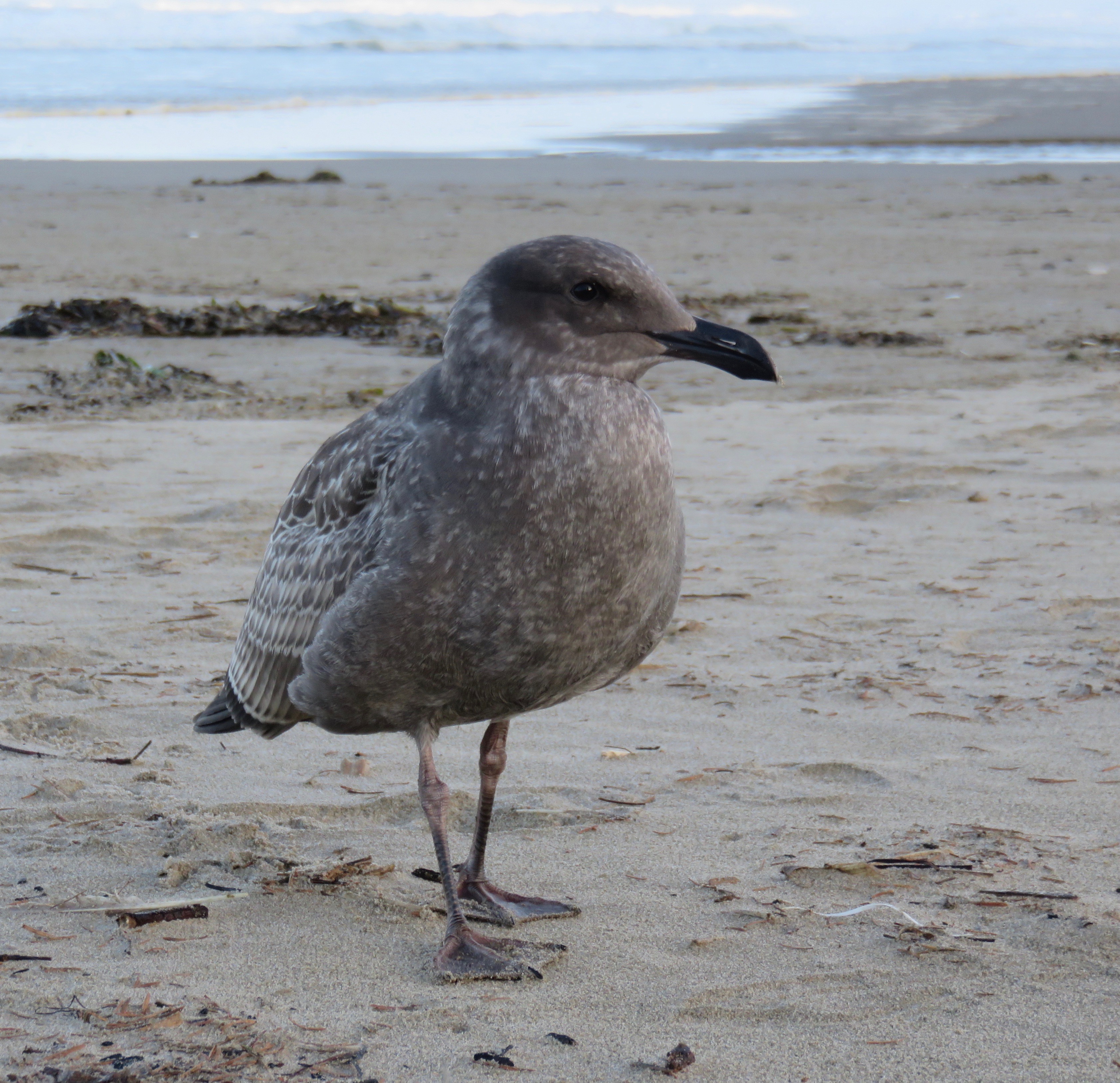
IMG_4966.jpgRecently, juvenile gulls have been following me. One trailed me up and down the sand and over the rocks for a quarter mile the other day. I told him that was not wise. Humans are not to be trusted, and I would not feed him even if I had anything in my pockets he could eat. Yesterday, one came quite close, stood no more than four feet away and waited for a long time for me to do something. What?

There are too many dead birds on the beach, it seems to me. We always see one or two when we walk a few miles. This time of year the new seabirds who have failed to learn their survival skills start showing up, juveniles who have starved or done something stupid. Fully grown juveniles hunker down and call weep-weep at their mothers, who are done feeding them. After the first big storm or a crazy tide, youngsters are swept off Castle Rock and wash up onshore. This morning we saw a dead bird every five to fifteen yards, and that is not typical for late September or really at any time. We haven’t had a storm and many of the dead are adults. Three banded birds in as many yards—a seagull and two cormorants. Gary says the banding may have been enough to stress them, and there is no typical, no normal anymore.

Climate change has killed billions of birds, and millions of species are already lost or threatened.

But this morning we came home dripping and I sat comfortably watching the pale sky dissolve into pale sea. The osprey was fishing, the tide rushed in, waves swept across the sand, which has not begun moving back out into offshore bars.

IMG_4969I have finished a third quilt earlier than I expected (the last four rows of stitching completed Tuesday evening instead of Friday). Late next week I will carry it to Linda, or whenever she’s finished the two I pieced in August.

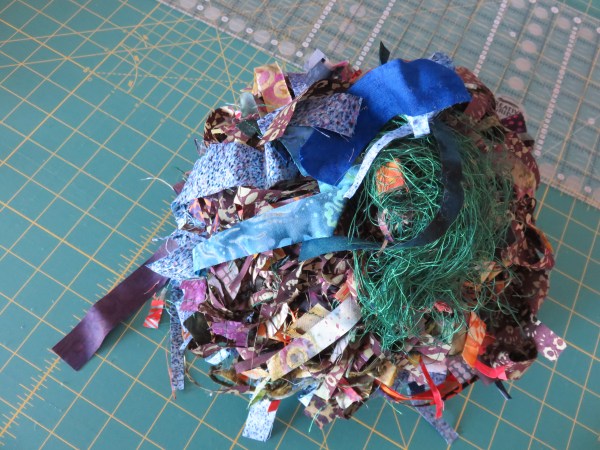
Yesterday I cleared out my work space, sweeping my work table, sorting colors into warm and cool and black&white bins, and finding storage for miscellaneous sewing and knitting tools and notions. The floor seems oddly empty without fabric spread out in patterns. The scraps from stitching and trimming—trimmed threads and bits of fabric less than an inch wide—made a heap on my work table. I dug through the little pile once more and then tossed it into a waste basket. I hope Gary might pluck out bits and pieces to save for birds’ nest-building in the spring. If we composted, they could go in as “carbon” I think.

The season is changing, weather and focus. There was Open House at the high school last evening, but we were at a restaurant visiting with mostly-retired school employees. Are you enjoying retirement? Some confess to having a hard time, missing students and the work. Some are simply relieved to stop. A friend in the former group is in the hospital. After decades of deep involvement and commitment to teaching, the way we are let go can seem rather heartless. And the way those with social connections are privileged and allowed to continue on their own terms can seem unfair. Six months out, I am still uncertain where I stand.

My kitchen floor is cleaner than it’s been in almost thirty years.

Change is inevitable. Not all of it is good. Not all bad.


JUMP

fullsizeoutput_fd8

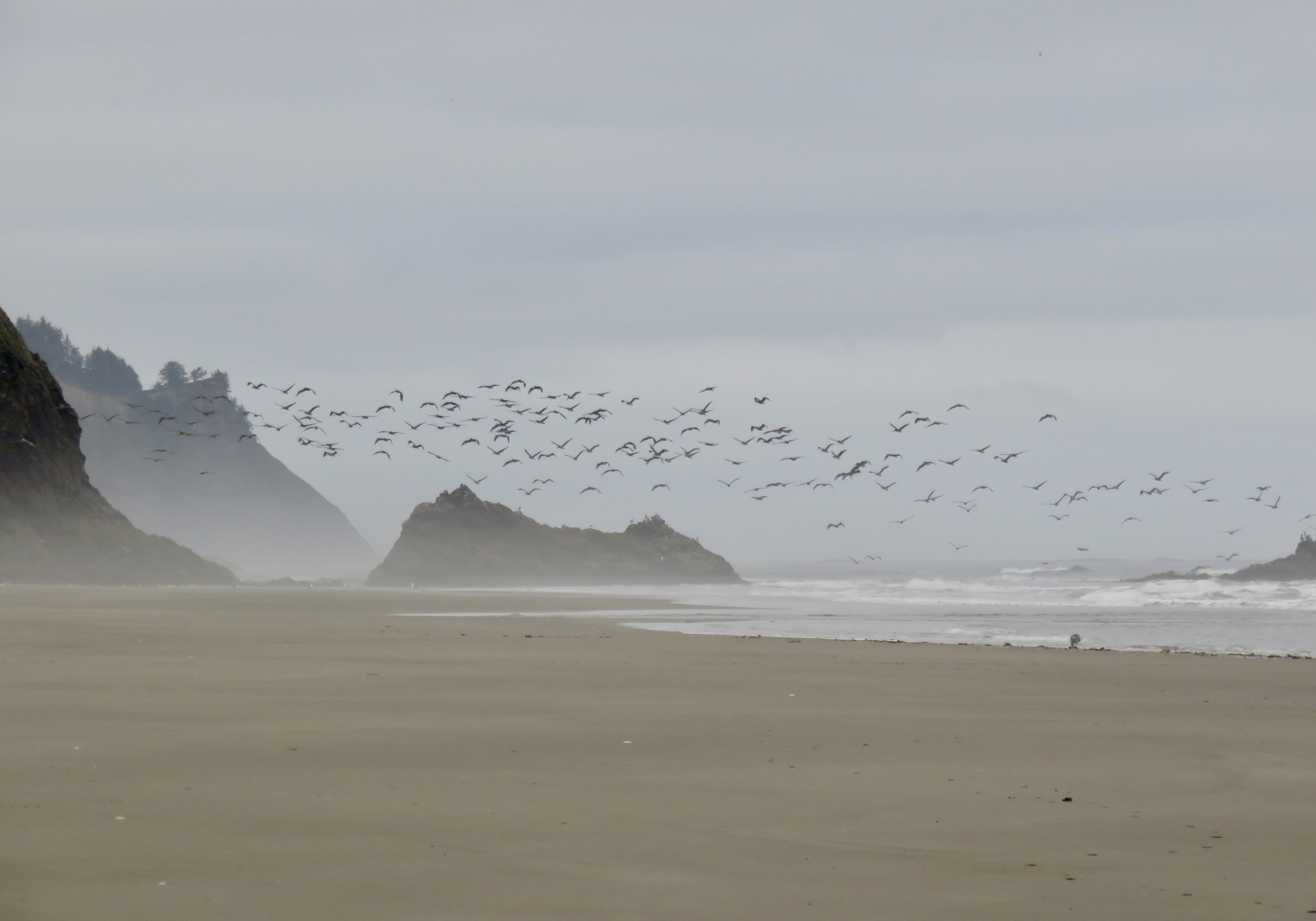
Dozens of pelicans have moved on and offshore lately. They are a grand sight.

Friday evening we drove south to the Farmers Market. We found it in a new venue, a much larger space than where it used to crowd out a small parking lot and spill into the street. We were somewhat dismayed to learn that this is their third year in the “new” location. How did we miss that? Our favorite stop was the falafel truck, and we stopped going when they retired and Fridays began to seem like a better time to stay home.

The coast is booming, though not [yet] literally.

On Saturday we braved traffic again to head in the opposite direction for the memorial of a man I did not know well at all. I know his wife, a woman who always did her best for students and was kind and patient with me too. Both were generous in their lives, their hearts and actions, personally and in the world. I liked singing and the stories. We attended mostly for the wife’s sake, but it was clear from words spoken, the kindness and humor, that missing the friendship of this man was our loss.

Sunday we again drove south to celebrate another passage. One of our favorite book stores is passing into new hands, allowing new possibilities for the store’s founder. She seems excited, and we wished her well.

I made my fifth batch of jam for the year—funny, since I almost never use it myself—and I bottled 48 ounces of strawberry shrub, which I like well watered down with sparkling soda. It’s a new pleasure for me.

My novel about recovery from grief begins with terrible loss, made stunning because of guilt and self-recrimination, lost opportunities to make wiser choices, to share, express love, and admit failure. My central character manages to move on, though she recognizes that healing is a myth. She finds a new life, just as everyone around her suggests she should.

My mother died a dozen years ago today. I miss her still.

Human attention is drawn to the new, but we feel safety in stability.

Nevermind. Change shifts the ground under our feet, rescues us from safety and complacency. Sometimes when we move on, we have no choice. We stumble, we fall, we wail and resist. Love, passion, need, opportunity. Here it is under our feet.

Jump.


Fireworks are illegal on Oregon beaches. That has not stopped anyone up to now. When we first moved to my family home forty years ago, we saw only little stuff, legal fireworks. Then in the 80s a neighbor (a trained fireworks person who worked on the Vancouver WA display—then the largest in the nation) would put on a display the night before or after the 4th, and this drew such a large crowd that after a few years he quit. He believed the crowds made his display unsafe. Unfortunately, people had a taste for it, and lately people buy loads of illegal fireworks. Some years it is completely insane, smoke like a war zone, thousands of dollars exploding all up and down the beach. The floating lanterns are the scariest because there is not telling where they will land. Fireworks cause distress to pets and people (especially veterans who served in combat), wild life, and sleep. They leave a nasty litter of chemicals and plastic onshore.

However, so far, this year seems pretty tame. I’ve heard some small firecrackers, the handful of booms the other day, and that’s been it. I hope people are more aware of the fire danger. A couple of acres burned up on the cape a couple of weeks ago. It was likely campers. I’d like to believe that fireworks are losing some of their appeal for many people, and then fire danger is very real. We have had horrific fires in Oregon over the past few years. And California.
fullsizeoutput_fdb

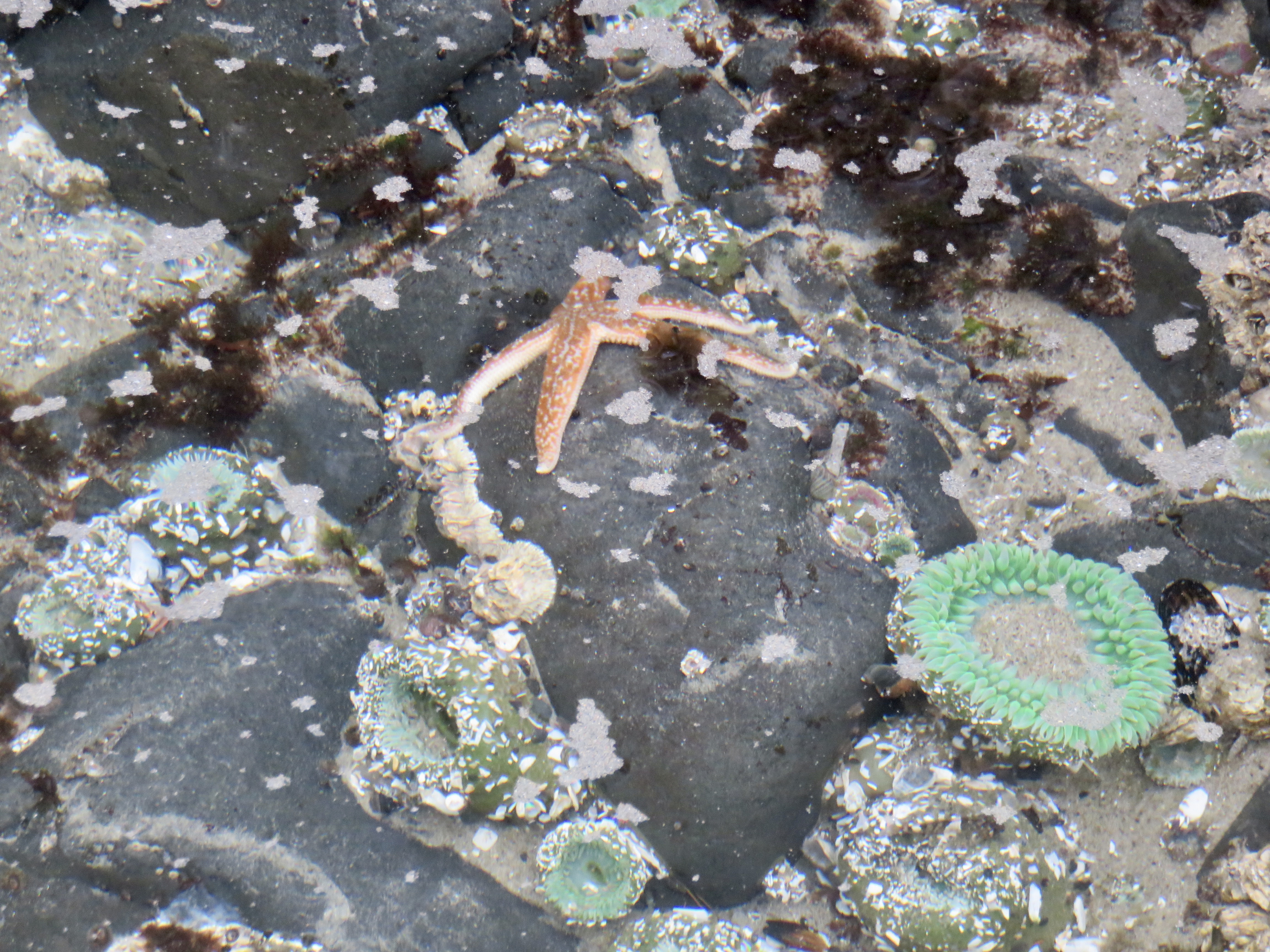
We found a stranded starfish drying on the sand. Since it was still alive, we carried it back to a shady tide pool. It immediately clamped on—as immediate as a starfish can be.

The weather is perfect, a hundred yards of sand out in front of our house and low tide at 8:30 for the night of the 4th. If the big guns come out, at least there is plenty of room for them to set things off well away from trees and homes.
CLEANING OUT


IMG_3003

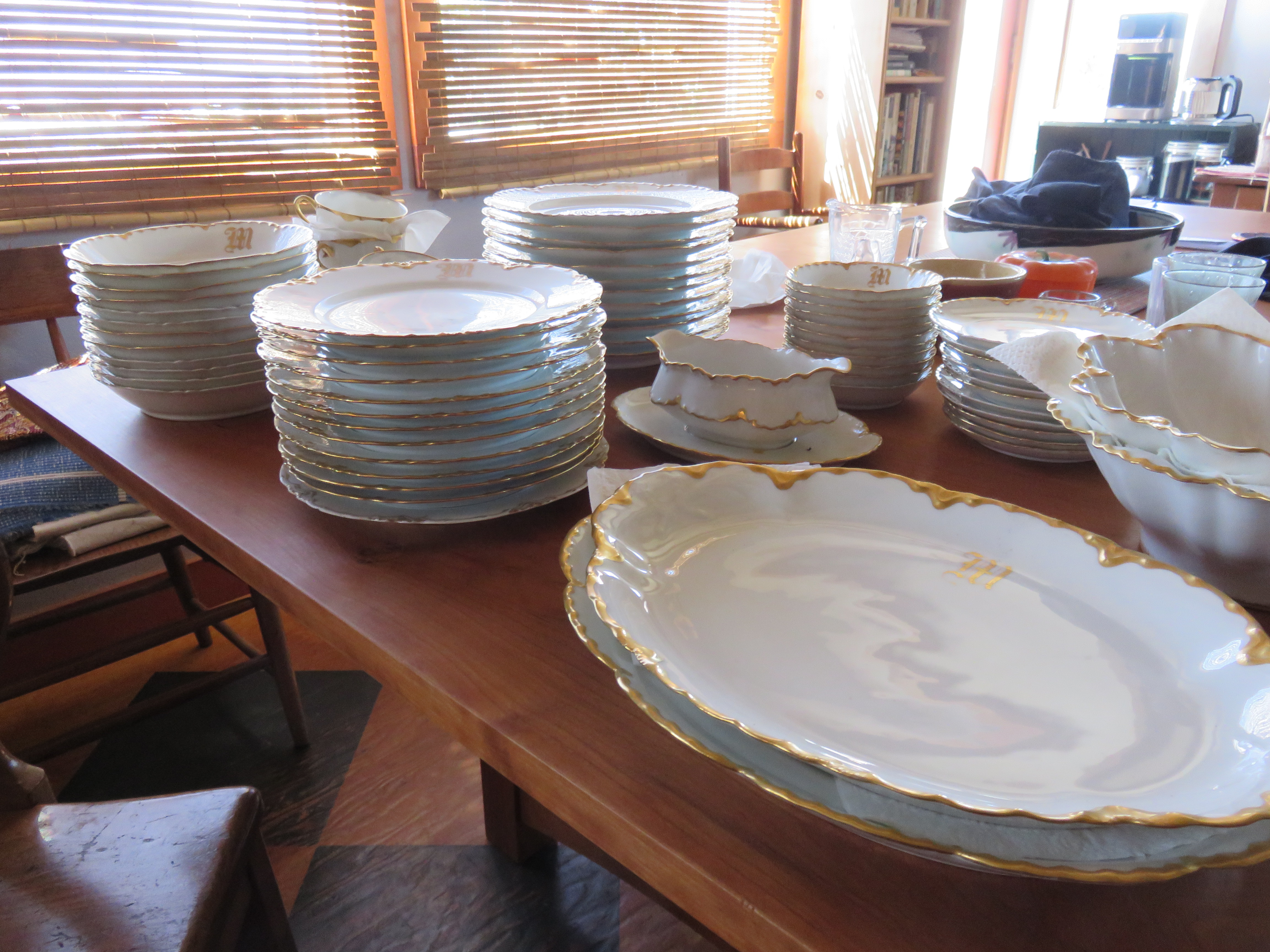
Seeking a loving home: nearly 100 pieces of Havilland porcelain, a pattern called “Ranson” made in France about a hundred years ago and emblazoned with a W or M in 24k gold. I have never used these pieces. Even my grandmother never used them, to my knowledge.

We paid off our mortgage on Tuesday. We asked for a payout balance and had the bank wire the funds. The trick is that we will still be putting the money into the bank to cover insurance and taxes. It feels good even so.

As I type, my husband is realizing a long-term goal. He is emptying the attic. It is part of a broader effort to streamline the house and rid ourselves of accumulated stuff. We have filled the garage and atrium with things that will not return to the house.

For many years I have presented my husband with a pair of champagne flutes on our anniversary. We generally broke them, or at least one of them, but I still have twenty or more cluttering up a cabinet.

No one wants this sort of thing anymore, I find. And neither do I.

In my childhood, coming to the beach was an enormous effort. The highway through Arch Cape was so evenly lined with aged spruce that finding the turn to the narrow gravel track leading to my grandfather’s house was tricky. My mother had spent all her childhood summers here, but even so we always overshot the turn. Today, and especially during the 4th, the change is unmistakable. Nearly all the houses are short-term rentals. A new business of several thousand square feet will be added to the property that was a tiny deli and post office in my childhood. The three-unit rental cabins south of us are converted to year-round rental use and a new 7-unit motel is only the latest.

This is not the quiet, isolated beach where my great grand-aunts purchased property for $10 in 1911. They packed up toilet paper for the summer and drove on the beach at low tide to get here on Memorial Day and stayed till Labor Day. My grandfather inherited the place in the 30s and continued the tradition. My mother raked crabs for supper as a child. She and her sister had to clean the lanterns of soot once a week. There was no electricity or running water. The outhouse hung over the swamp next door. The house on that sand-filled lot rents for $695/night in September these days. It’s fully booked for the rest of the summer at over a thousand/night.

The house was always “too rich for our blood” with taxes costing more than the mortgage on our Seattle house. When we moved to my grandfather’s house, it was a two-bedroom, 1 1/2 bath, one story house. We added back the second story my grandfather removed in the 40s. Our children were born here and raised and went to public school here. Beyond home improvements, we have added too much stuff.

I have bins of yarn and fabric and some day I must have whittled down our possessions so that our sons will not be faced with the monumental task of doing it for us. We did that for my mother, my grandmother, my aunt, and even my grandmother’s second husband’s brother. We still have unexamined boxes of family documents and photos that my mother never sorted and which I will never sort. All the lifetime accumulation of stuff no one wants. If I could sell it, we might afford a vacation. In 44 years of marriage we had no honeymoon and have never traveled for longer than the week spent with friends in Alberta nearly 30 years ago. It is memories of that sort I still desire. But then I live in a vacation paradise, too beautiful to leave. Instead I have beautiful things.

I confess even I no longer want them.

When I explained to my mother that inheriting my grandfather’s house was the reason we had children, that having a safe and largely undeveloped place for children to play was essential to our vision of child-rearing, she called that “a ridiculous reason to have children.”

Maybe she never made the connection between her own childhood spent playing in the woods in Gresham and on the sand here, and my own childhood play in woods and swamp north of Seattle. I cannot imagine growing up in a city. I cannot picture what sort of childhood that would have been. My husband and I both “ran wild” as children. We were determined that our children would have that opportunity.

Those times and those ideals of childhood freedom seem to have gone the way of typewriters. Manual typewriters.

Taxes were the largest portion of our mortgage payment, and living here is really more than we can afford. It always was. There has been no time since 1978 when we could have afforded this house. It has been an enormous gift to live here. Every morning we go for our walk. And Gary is about done emptying the attic.

The china is beautiful. Want it?

SaveSave