BABY SAND DOLLARS

Coming back from my run on this morning, I saw a crow standing well out on the shore in about an inch of water. I gave the bird a bad time about that. “What are you doing out there? That’s not your place. You don’t belong there.” The crow was indifferent to my chiding, but I went on a bit more. “Get in here!” Then the crow turned her head and I saw her red beak and realized she was a black oystercatcher. I had to apologize.

I arranged my finds on the railing of what we call “The Cat Deck” though we no longer have a cat. Most of what I found this morning plus four spices of limpet, scallops of two kinds, a round button of rust (iron, rusted clear through), “Ugly clams,” and the back shells and one head shell of chitons that we call “butterflies.”

.

Continue reading

HEARTS & CORDWOOD

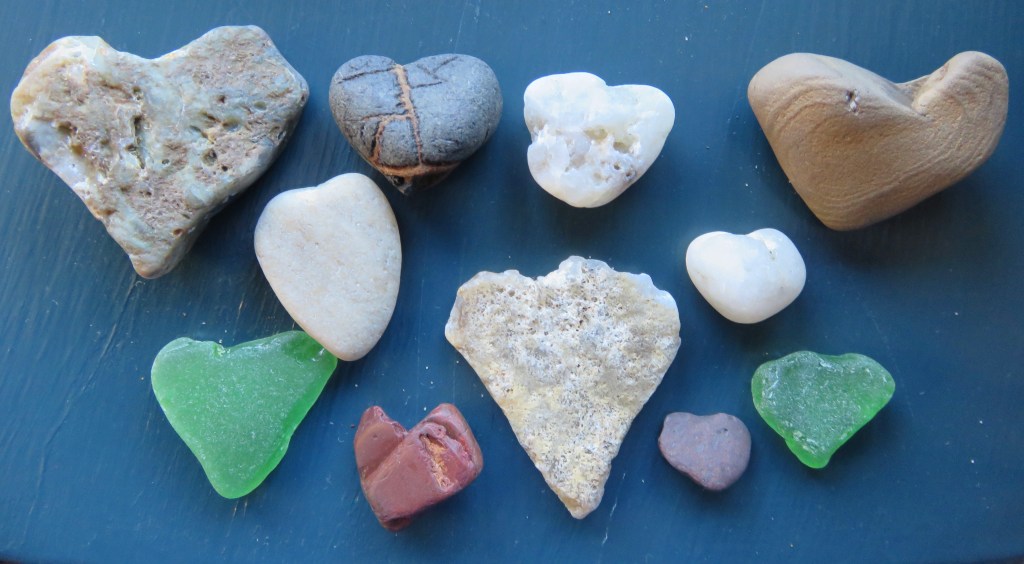
Gary is filling the gap in his woodpile he so carefully straightened and vacuumed. He used to object if I called our cords of firewood “his” but no more. He has never allowed anyone to help him cut, clean, stack, or rearrange that pile. Photos follow.

Back to from, left to right: rough quartz, basalt, quartz (agate), sandstone, three white milky quartz (agates), green seaglass, jasper, purple jasper, and green glass. The glass on the left was what Gary found and gave me for Mother’s Day last year. He found the one on the left this morning.
Continue reading

MOHS SCALE

This post began, the idea of it, last month when I was supposed to be working on the novel. I left a stub and then folded the post away.

I cannot believe it took me so long to actually look up the hardness of glass. It took Duck-Duck-Go all of two minutes to find everything I wanted to know.

When we search the beach, aside from agates and the odd diabetic needle or florescent tube, or the wonderful and rare fishing float, what we are really looking for is sea glass. I have wondered if glass floats more easily than stone, is its specific gravity is lower? Is it lighter and softer and that’s why glass is rare? It wears away?

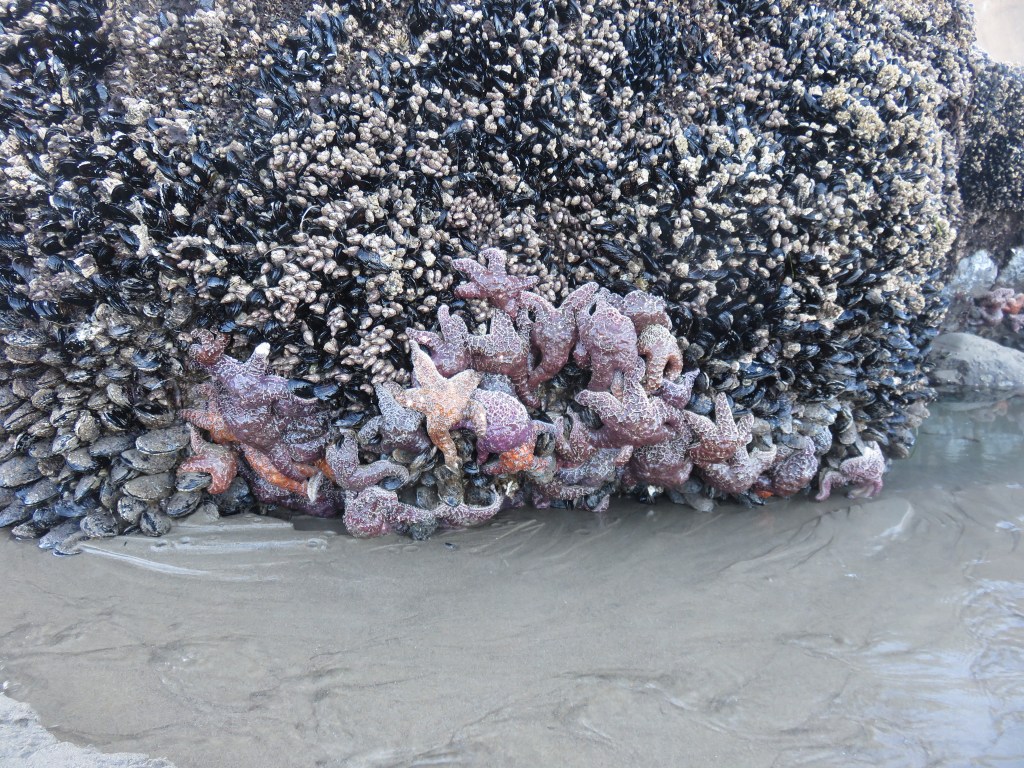
We found this huge group of starfish far south in Falcon Cove last summer. For a time people feared the species might die out completely from a wasting disease. There are gooseneck barnacles and mussels in the photo. The shellfish people were two miles north where there might be two starfish near one another here and there.
Continue reading

FOOLED

We could say we are looking for sea glass, but we never do. We could say we are looking for agates, which is also true, but what Gary tells people is: “Rocks.” This is also true, though not completely true.

This posting concerns gathering treasure from the beach, reviewing promises and lies, and a fictional story about “abused” kittens—no animals harmed in that story. Oh! And I will be selling my weaving at an event sponsored by the Cannon Beach Art Gallery. Note that I say “selling” but actually mean “offering for sale,” which is not the same thing. About ten skeins of hand dyed wool in each length…


Continue reading

ASCOB

Hardly anyone will recognize the letters I used to title my thoughts today. “Any Solid Color Other than Black” is a class in AKC shows for American Cocker Spaniels (ASCOB is pronounced ass’ cob). For the record, I have never owned or shown American Cocker Spaniels of any color, though I do have a scar on my upper lip from being bitten by one when I was a small child.

This is not a post about bites or even dogs. There are no assignments or exercises. A few crows. Trees. Our condo news.

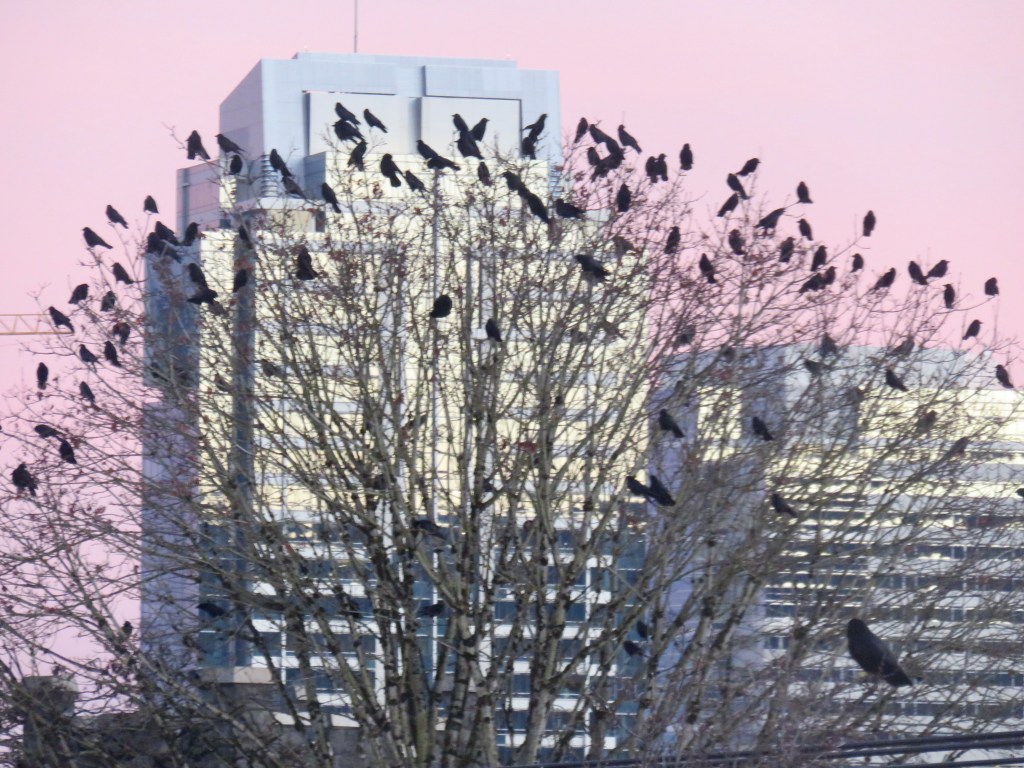
We like crows. Above is a tree with over a hundred crows, but there might have been a thousand nearby when I took this photo. (HINT: this was not the only tree, and most of the birds were flying.) There are “local” birds, but they gather as a massive flock (“murder” seems unkind), usually in late afternoon but on their own schedule.
Continue reading

WHY WE STAYED HOME

Today is my high school reunion, the 50th delayed to year 51, and it is also my elder son’s 41st birthday. I will be baking a vegan, gluten-free, refined sugar-free cake later today. Our family is coming. They’ve had good reason to stay safe, isolated, and healthy. So that is the best reason for staying home. But there’s also the pandemic, which is the real reason.

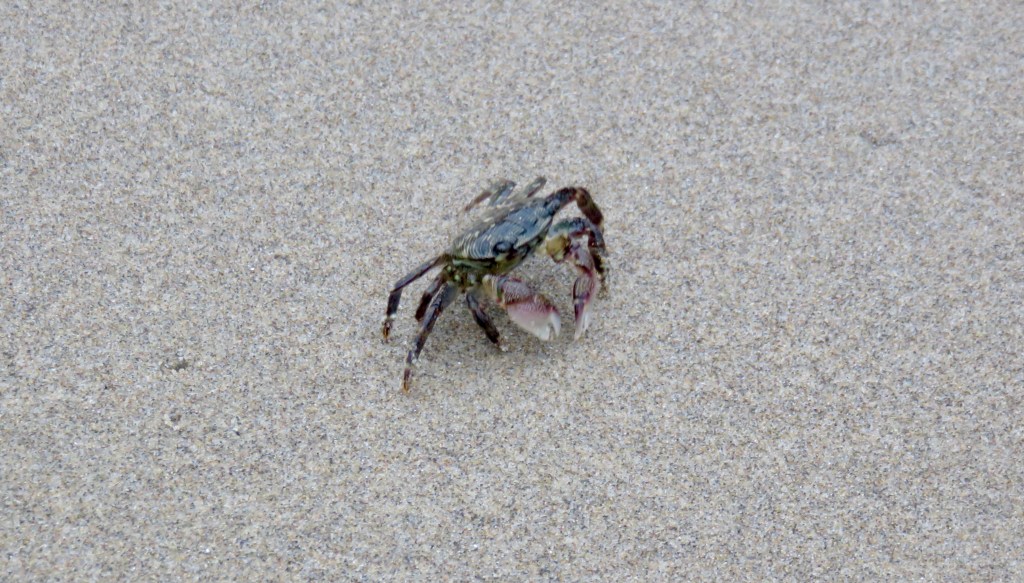
We occasionally see crabs stranded by a high wave, especially in late summer. Usually it’s a big Dungeness so far up on the sand that it would bake before the tide came back in. Such crabs requiring two hands to carry back to a tide pool. We got this little guy—about an inch front to back of the body and furious at being noticed— back to a tide pool, and the tide was incoming. It probably lived.
Continue reading

FOG

fullsizeoutput_1397

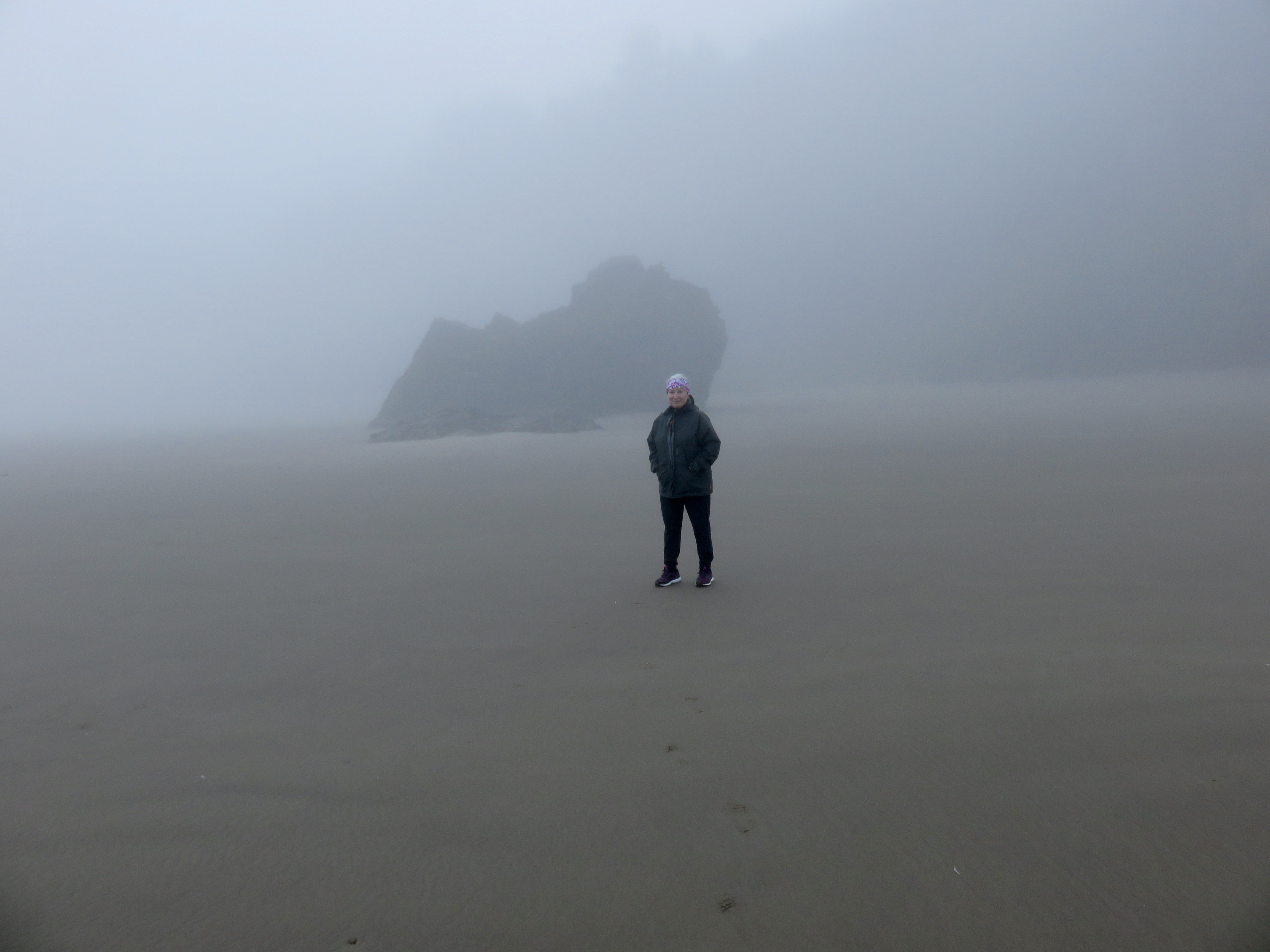
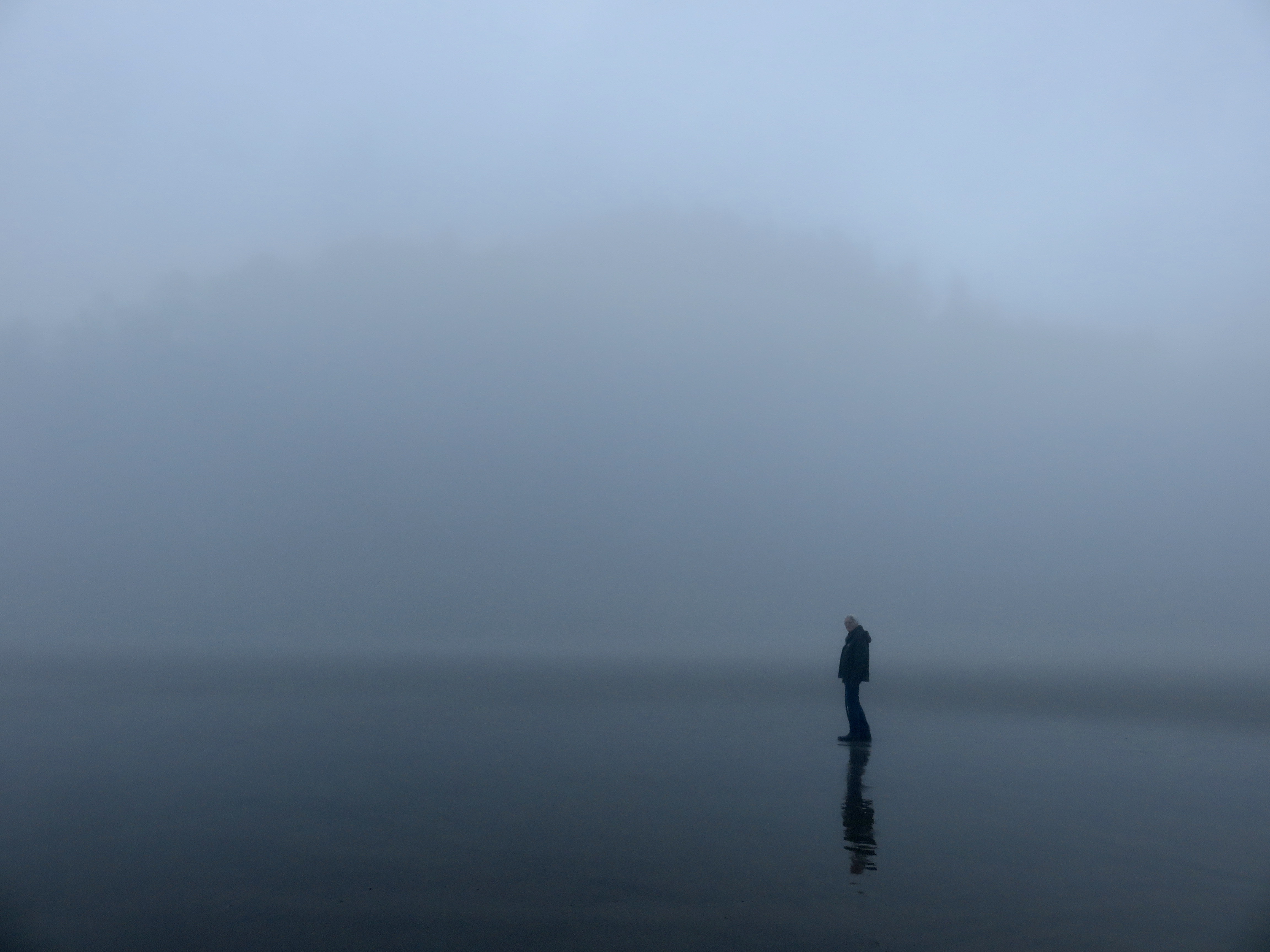
This is me standing well out on the sand before the “turnaround rock”—our one and a half mile marker. (It’s 12-15 feet tall.) Just around Hug Point is our two mile marker. On the highway I still note such mile and half mile markers leftover from my years as a runner. We were out for almost two hours this morning—a good walk.

fullsizeoutput_1391

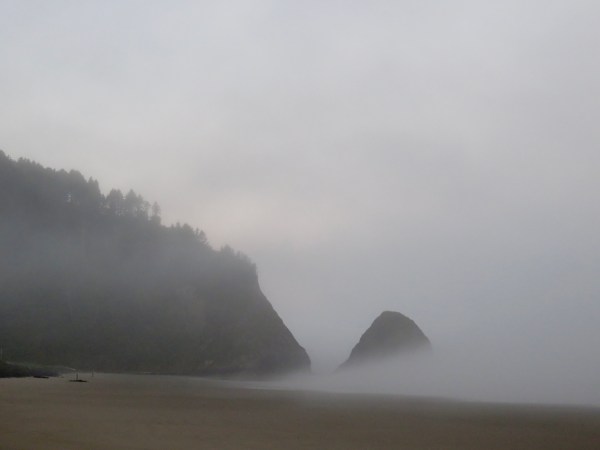
Arch Cape before 6am.

We are early risers, getting up with the sun and preferring to be out on our walk while the sand is empty of people. This morning we could look south toward the Cape and see fog as if it were moving onshore. There was little light in the sky and only the faintest hint of blue because while it was nearly six, the coast range cut off direct sunshine.


We sometimes go an entire summer without fog. This is not one of those summers. Especially when very hot weather is predicted for Portland, we see morning fog. Hot is not our preferred temperature. One thing we both enjoy about living at the coast is cool weather.

fullsizeoutput_1390

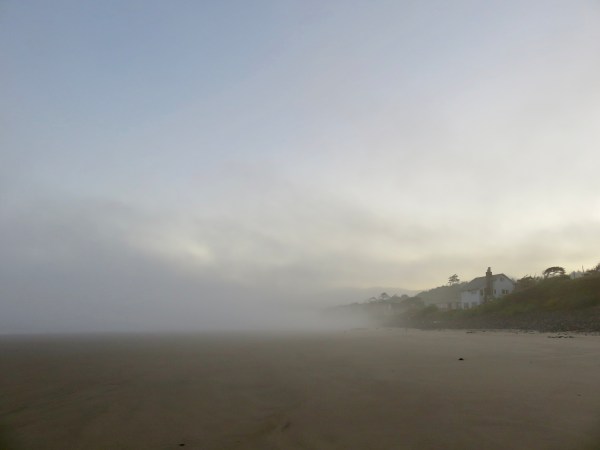
Looking north a moment later.

We turned north, which is our usual direction and for the next two miles, the fog thickened and we crossed and recrossed the tracks of a canid, likely a coyote. When Gary walked over to check out a “campsite” of logs and abandoned beach fire, the animal had already circled the same ground.


If I can look straight up into the sky and see faint azure, I know the whiteness will burn off and it might even become what we consider too warm by early afternoon. When the fog is very heavy, even on a day where sunshine will win out, it is possible to walk on the sand midway between surf and land and see neither wave nor house. The world becomes a mysterious and beautiful magic land of white.

fullsizeoutput_1393

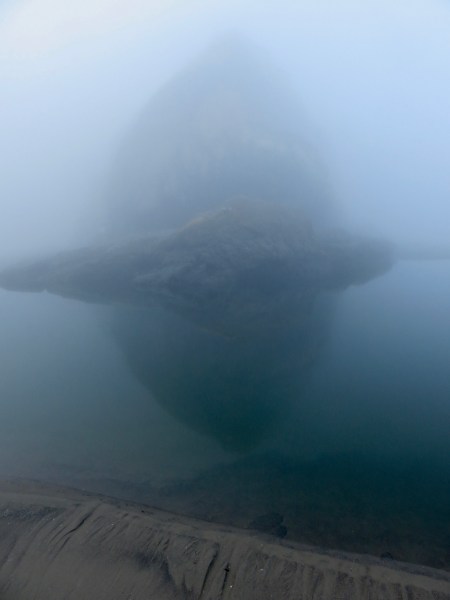
Hug Point beach seastack reflected in a tide pool.

Sometimes we could not see what was just before or beside us until a seastack would loom out of the mist. We might have no clear idea where we were at all until we came to a familiar creek or bluff.


We found a couple of shells, and we spotted a live crab, a rabbit, tiny shrimp. The oystercatcher did not even bother to feign injury in order to lure us away from her nest. The babies were safe in the fog.

We were able to walk on sand all the way around Hug Point, which is unusual, but by then it was going on toward seven and other people had the same idea about enjoying the still, foggy day. On our way home, as we turned inland around Asbury Creek, we met a family of four, they stood aside for us, keeping distance. Then we stood aside so that they could pass us. Good morning! Good morning! We never got closer than ten or fifteen feet, but it was a cheerful and respectful passing.

We wished one another a good day.

And it was.

IMG_6503

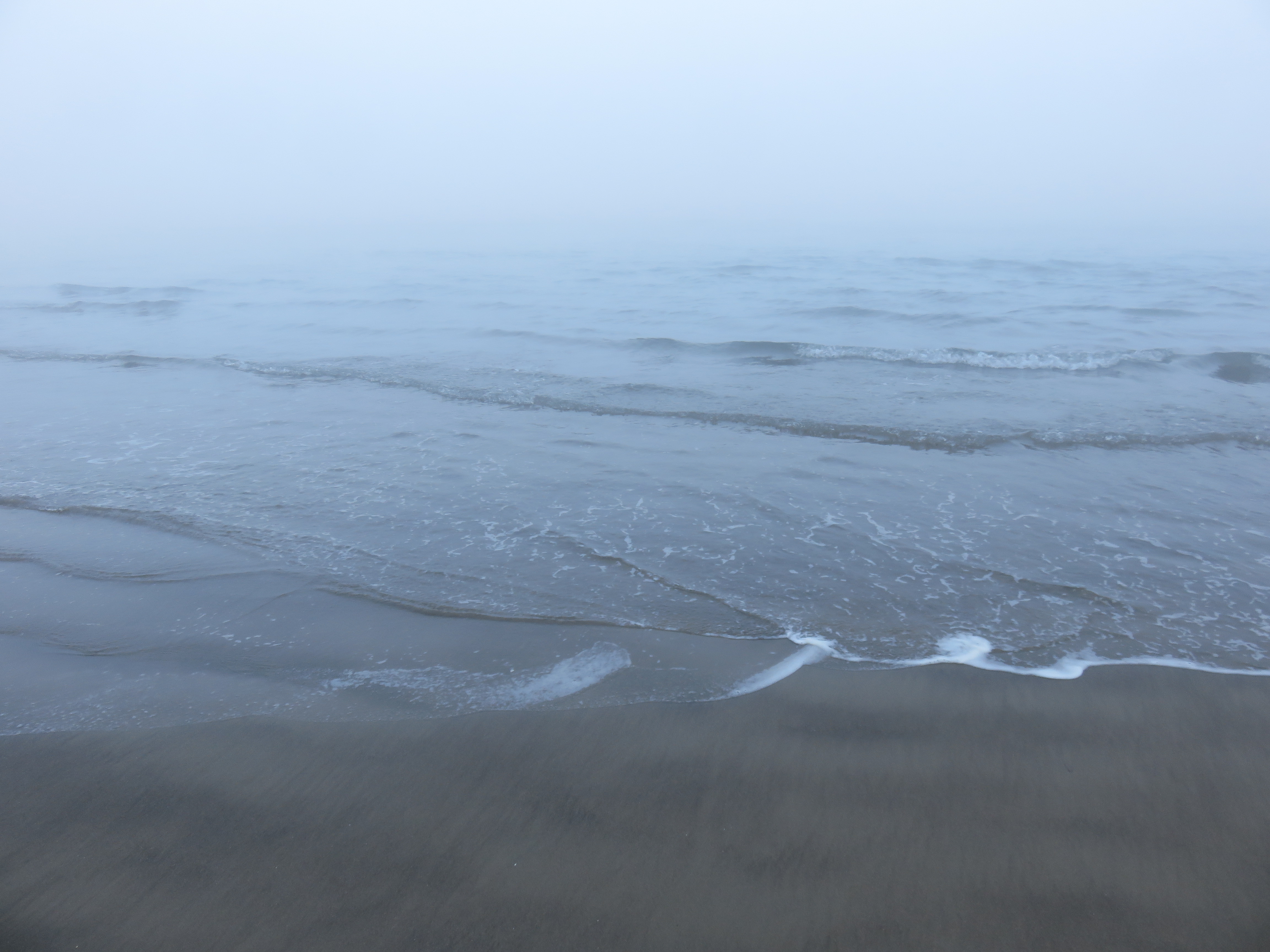
The border between sea and sky is often blurred on the horizon. This morning that boundary disappeared entirely just a few feet offshore. And walking a few feet further inshore, this line of waves vanished.

fullsizeoutput_138c

Looking east it is possible to see the silhouette of the headland high up where the fog thins.


BIRDS BIRDS BIRDS

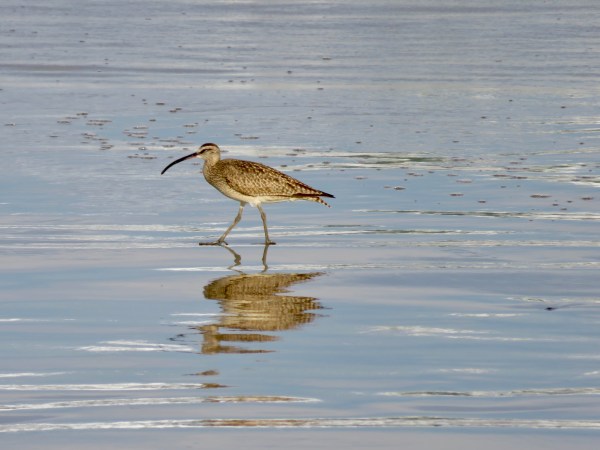
fullsizeoutput_1208By the time my watch alarm went off at 6:30, we were already on the beach. Not much luck with glass today, but two dozen whimbrels. (Gary counted fifty-one gathered the evening before in front of our house.) They moved out of our way as if we were just another harmless animal. And that is what we are. Gary will tease seagulls by calling “Kitty kitty kitty” but we are both careful not to disturb the whimbrels. They were not here when we first moved to the coast in 1979. They had been here, of course, but many of the birds we treasure each day had mostly vanished and have begun reappearing in the decades we have walked the shore.
fullsizeoutput_11f9

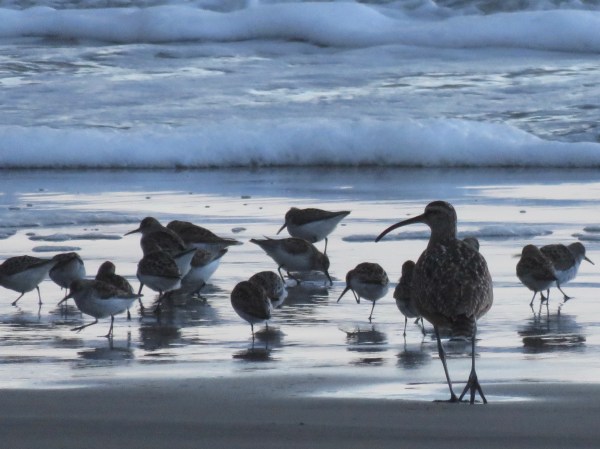
one whimbrel and part of the large flock of very fat sandpipers.

Yesterday we saw a large flock of Western sandpipers and were hailed on twice during our morning walk! When I was a runner, I was always too hot and I enjoyed cool, damp days. But even then I drew a line at hail. Yesterday we came home soaked but the little hailstones did us no harm. The sun burned off all the clouds before we’d fully warmed back up in the house.

The rest of the day was all blue skies and tourists. Today there are high clouds but no sign so far of rain. If the beach remains empty, we might even get our second walk.

fullsizeoutput_1204

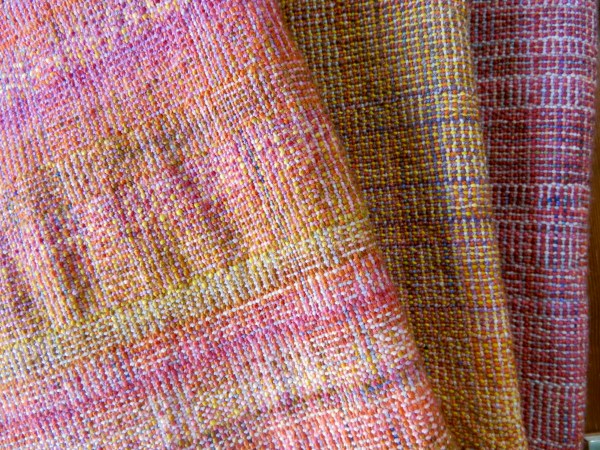
Three “Marigold” shawls

I also finished the “Marigold” warp yesterday, washed and hung the three shawls to dry. This morning I folded them and put them in the cedar chest. Each one has gorgeous hand-painted handspun yarn in the weft, which I should steam press to flatten, but I tolerate a bit of ripple. I meant to make a mostly black-and-white Indian black print quilt next, but what I really want to do is put the next warp on. I have yarn for green or brown, but I am waiting for more Koigu. I might try for another peacock warp.

fullsizeoutput_1205

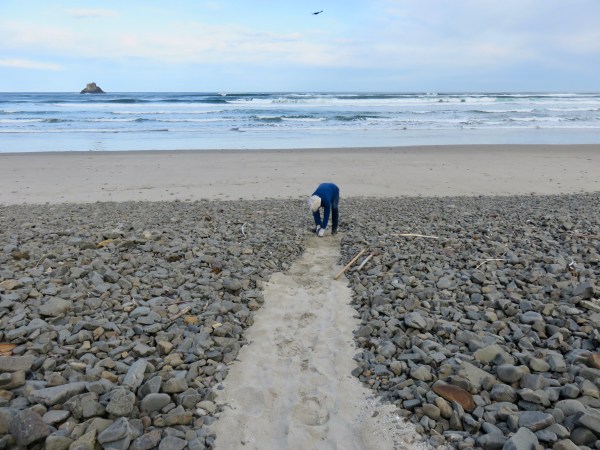
Gary rebuilding the bottom ten feet of our path, washed out last night.

The high tide wiped out the bottom ten feet of our path, but Gary has already rebuilt it. We (or really I) used to build the path the end of March each year. Sometimes it would wash out entirely and I’d have to start over. This one is wide and softened with sand Gary hauled from the beach.

“IF IT BEEN A SNAKE . . .

IMG_3723

Gary wearing all his hats at once. He posed.

. . . it woulda’ bit’cha.”

When there was a break in the weather, we walked north, our usual direction. There was sand, but on our way out we were mostly in the rocks at the eastern edge, picking up trash. I found the hilt of a plastic knife and then the sheath. Gary found a stainless steel serving spoon. Other than that we bagged the typical mix of plastic rope trimmings, broken food container lids, candy bar wrappers, bottle caps, valves and fireworks debris, squashed polystyrene foam, shattered straws, and mysterious thick nylon chunks probably once part of shipping containers. Colorless, white, purple, faded red, blue, green, and yellow bits and pieces.

Two pieces of Mt. St. Helen’s pumice. A handful of agates. An ugly-clam shell (which is beautiful). No glass.

Tammy waved from her solitary walk in the opposite direction.

Just before I got to the creek, Charlie ran right to me and allowed I should scratch his back and ears. Then he greeted Gary. This was a rare treat for me, since Gary greets all dogs with, “Hello, pup!” and they generally go to him first. We stood, five locals—counting the dog, because the dog does count—on the sand and chatted. We made a tentative coffee date after New Year’s with his people.

We walked home on the sand. A chaise lounge has been stuck at the tideline for a week now. I think it blew off a deck and wonder if the owners haven’t been here, failed to notice it was missing, or believe it has been stolen. Gary is beginning to wonder if it washed onshore. If it’s still there next year, he says he’s going to use it to haul home a piece of driftwood he’s been eyeing.

Last week our tenant told us that our neighbor John was taken to the hospital. By the time we heard about it the next day, he’d had a pacemaker installed, and the morning we were talking about walking over to see him—Would he feel well enough to come to the door? Would he even hear the bell?—he showed up here. We had a gift ready for him and the three of us sat in the living room with the fire in the stove and talked for a long time. Just like last year. Except John has a tiny device on his upper left chest that prevents his heart from taking a break. He told us all about that.

Inevitably, Gary retrieved a bit of plastic I didn’t notice this morning, though I nearly trod on it. A few days ago, I picked up a bit of bottle green sea glass right beside where Gary had put his foot. Right in front of our house. We cross the same ground but see different things.

Isn’t that how it is for everyone? Even side by side, we see something different. We see a storm bigger than anything, but we are safe indoors and no pet is cowering under the bed, which means it’s a different experience from Eva and Marsha’s. We watched the high waves roar up our path, almost to the garden gate, but that is nothing like being drenched to the waist, hanging on for dear life because we were on the beach. We watched safely from indoors.

Sometimes reality is too much to bear.

Two children died in the past week while in ICE custody. Children. That is no joke. Even Fox News is upset. Felipe and Jakelin had families who loved them. The U.S. has about 15,000 migrant children in custody, often removed from their parents’ custody after crossing the border with Mexico. “The average length of stay for a child detained ranges from 100 to 240 days, and these children are often held far from family members and without legal representation.” They are being kept, often without proper identification necessary to reunite them with family later, and almost never without proper housing and other childcare available.

The two little children who died were both fleeing potentially lethal threats in their home country. Guatemala is a nation with a brutal recent history, a history the U.S. has a part in. They had traveled, mostly on foot, over a thousand miles to gain safety. They did not find it.

My great grandmother Rosa came here to marry and then had to support her children when her husband was imprisoned. My grandfather came from England to make a new life. One of Gary’s ancestors fled Sweden to Finland, and from there to America. Some of our relatives have been here during the past couple of centuries. Some came more recently to make better lives and to escape political persecution.

I am reading novelist Kent Haruf and he reminds me that life is often harder than we might wish, that some good people are ground up and cast away.

Homeless men always came up to Gary on First Avenue when we were visiting pawn shops to look at guitars. That was a very long time ago when we were young, in college, and on our way toward a better life. The homeless were generally much older and had harder lives than we could imagine. Most people walked right past them without looking, but Gary gave them his full attention. Gary always had a few coins for them, but more important, he listened to their stories. These men were often displaced, often veterans, sometimes from the war our fathers fought in, sometimes from the war he did not. They always thanked Gary for listening to their stories, for asking questions. They nodded to me, and went on their way. There was no harm in them, but often harm had been done to them.

Everything that matters is not about money or about winning and losing. And what costs little kindness? Who wins . . .

My husband and I have been blessed this holiday to have health and family and friends and neighbors. We have peace in our country and food and a comfortable home. There is suffering all around us in the world, and we recognize we have done little to deserve our good fortune. We don’t deserve it, however grateful we are to have it.

A step to either side, an accident of birth, an error of judgement, might have made our lives quite different.

When I was young, the new idea was that human beings, as animals, were all about competition, about being the strongest, about beating out those competing for limited resources. A few decades later, I read a careful study by an evolutionary biologist who details the evidence that altruism—self sacrifice—is likely an inherited trait. “The Selfless Gene” by Olivia Judson (of Stanford and Oxford) talks back to that earlier popular understanding of human nature. Far from being selfish and brutal animals, we have survived because we are willing to do for others. Sailers give their seats in lifeboats to passengers. A philosopher dies rescuing a drowning child she is not even related to. It is not merely heroic, but in our nature. And this is true not only for human beings, but for other life forms too, from amebae to baboons. We survive because it is instinctive to care for others.

It is possible to see life merely as a battle ground, but when we have the choice, we are better than that. I prefer to see my life as something better, as an opportunity. And lucky. I am grateful for my luck. I am grateful for a life of hard work and attention.