COLLEGE ADMISSIONS

fullsizeoutput_ed6

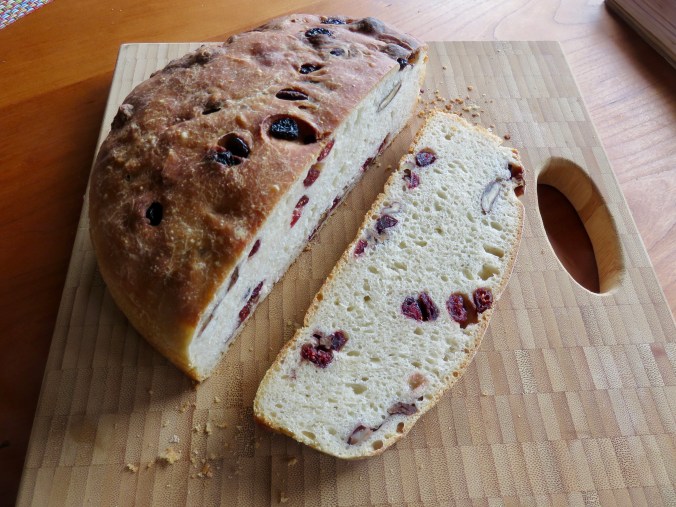
Sourdough cranberry and pecan bread. We ate half the loaf for lunch.

Soon after I entered the University of Washington in the 70s, my mother returned to work. She was an admissions officer at the UW through the 80s. Foreign students were a significant and invaluable presence when I was there. That diverse presence ended soon after I graduated because the State insisted on favoring local students. I was alarmed to hear someone blaming foreign students for the difficulty of getting into college. I learned as much about the world from Nigerian and Haitian students as from my professors.

After graduation I taught for three years in a private prep school—ALL my students got into their first-pick colleges. This year I retired after teaching in a small, rural, and poor school district for 40 years. Over those years I was teaching high school English, I wrote recommendations for students who went on to graduate from high-prestige schools. Sometimes, the school they chose was predictable reflection of their families’ social standing and privilege, but not always. A doctor’s son went to the state school (not even the Honor college) and the daughter of a teaching assistant went to Brandeis. Some students of modest means went to Duke and Reed.

One student confessed that during his adolescence he feared he would not be allowed to attend college. His impression was that playing sports was necessary to enter college. By his senior year, he knew better and laughed at his previous naiveté. But he was not alone. A girl who would go one to earn a Masters of Fine Art in writing was bullied by her parents into playing sports—they did not think she would be accepted without extra-curricular sports on her résumé. A boy believed that winning on the football field would make up for Cs in English—maybe for a handful of students each year, but not for him. My community emphasizes sport at the expense of nearly everything. Extracurriculars can help a student gain admission to college, but almost never when the tradeoff is academics.

First generation students—those whose parents never entered college—have the hardest time. There is rarely anyone in their family who can encourage or guide them. An educator who has written on this explains that there is no reality for such students. Teacher may be the only people these students talk to who have a college education, and teachers are not models for their futures. Their siblings play sports, but sport is not the model they need.

The recent scandal concerning parents paying to get their students into college is nothing new. When I was at the UW, there were separate admissions requirements for athletes. That policy has changed and today many colleges require football players and wrestlers to meet the same standard as the PolySci or Econ major. That’s not true everywhere.

The excuse for spending millions on basketball and football and golf teams is that these sports bring money into the educational institutions. That is often true. The flip side is that nearly all of these programs cost more than they earn. College sports programs cost a great deal of money for facilities, coaches, travel, educational support, and so forth. I went looking for an article I’d read a few years ago about how seldom colleges actually benefit from their pre-pro athletic programs. I Googled: “how many universities profit from athletics?” 170,000,000 results. Suffice it to say: Not many.

The NCAA reported a couple of years ago: “Only 24 FBS schools generated more revenue than they spent in 2014, according to the NCAA Revenues and Expenses of Division I Intercollegiate Athletics Programs Report. That figure jumped from 20 schools in 2013, but it has remained relatively consistent through the past decade.”

Athletic teams are a prestige thing, a show-off thing, and largely divorced from any overall monetary benefit to the colleges and universities that maintain them. Hundreds of millions, sometimes billions are spent on glorified entertainment, and only a tiny minority of these game programs even break even. The vast majority lose. They are often partially financed through mandatory student fees, and often through the general fund at the expense of academic programs.

They also often fail to benefit the athletes themselves. These players may graduate with a weak academic record and provide a pool of potential professional athletes. Few will be fished out of that pool. They played for four years and then they were done. If they counted on a life in sport, too often they are disappointed.

I attended a fine program for writers at Pacific University, earning an MFA in 2007. When Pacific surveyed alums about opinions about beginning a new football program, I said no. My education was not a game, and I did not attend in order to watch others play. I knew the odds were that my alma mater would spend far more than it gained from a football team and I resented that. I have not sent them a dime since. Let the football alums help them with this.

One of my students searched colleges and universities across the entire nation before attending Bard, chosen specifically because it had no athletic program.

It was never easy for “ordinary” people to get into “top” schools when I was young, it is still not easy, and that is unlikely to change any time soon. But some of my students worked hard, had impressive resumes, and great stories to aid their admission. And luck. All had luck, all had persistence and support. I know three who went on to become professional athletes. One of those was in rodeo. Another played handball. I am more proud of the doctors and lawyers, the nurses and teachers, the personal trainers and parents and shopkeepers and bartenders and hairdressers and biologists.

THIS IS HOW OLD I AM

BpOq7_MIQAA57sC

The original logo.

I remember when there was only one Starbucks across the street from the Public Market and it also sold chocolate from Belgium and spices in little baggies as if cumin were something that could get you high and maybe it did.

I remember when Nordstrom only sold shoes.

I remember when the Smith Tower was enormous, instead of a dwarfish little icon fading from Seattle’s skyline.

I remember when it was free to visit the Woodland Park Zoo and the Seattle Art Museum was on Capital Hill and a walk along the waterfront smelled cold and thick with creosote and import stores sold seamen’s chests and incense cedar screens carved with a thousand gods.

I remember before we went to war with Vietnam and it was still Viet Nam before the American War.

I remember Jack Kennedy’s funeral and the balcony where the Reverend Martin Luther King, Junior was shot.

I remember long, slow evenings in suburbia.

I remember my father’s gold wedding band, thick around his finger, and holding his index finger as we walked, stretching my stride to match his. 

I remember the small chest in the living room with two shallow drawers at the top holding broken tools and orange index cards, a fountain pen needing ink, dental floss and model airplane glue, keys to doors and boxes the family no longer owned, ticket stubs, a pocket knife, and a miniature chess set in a folding wooden case. 

I remember my mother’s hands crimping piecrust and mashing potaoes in a white glass bowl, meatloaf and tomato soup with toasted cheese sandwiches and tuna noodle casseroles and green peas barely warmed from the freezer. 

I remember the gingham dog and calico cat salt and pepper shakers on the kitchen window sill, the clock that creaked as it marked the passing seconds, bread kept in a drawer, the junk drawer with mucilage and four brown pennies and a bent spoon, a red capped shaker with cinnamon, and the toaster that always burned the toast. 

I remember rain on the roof and the softball through the front window in an exploding star. 

I remember my brother’s cap pistols and the bright smell of burnt powder, roadway scars in the back garden for Matchbox trucks and sedans, and the juniper bush six feet across, a spiral of prickly green. 

I remember our dog Roo circling and circling to carve her space on the carpet and my mother’s slip-covered chair in the living room revealing a warm depression when we came home from the store. 

I remember the reading lamp over my bed with butterfly wings embedded in the fiberglass shade, and a bright line of light under my door and hushed voices in the living room, the blush of dawn sunlight above the neighbor’s house, condensation on the glass, and the clutter of school papers and lists of horse names marking a landscape on my desk. 

I remember scum in the corner of the bathtub, mold on the wall of my closet, the sound of the furnace coming on at night in winter because it was especially cold, the plastic cups we used for KoolAide in the summer, and the crisp pale fungus that grew between the boards of the picnic table. 

I remember cracks in the driveway. 

I remember the hollow creak of the mailbox door, splitting open an orange with my thumb, sunflower seeds in their shells, card games, bare oak floors, the World War Two surplus search lights scraping across the sky in the summer, and moths beating against porch lights all up and down the block.

I remember.

I remember how it was. The Bad Word scratched into the stop sign post. Women fired for failing to wear stockings even in the back room. The man on the block who stripped his kids’ shirts and beat them with a strap. The bullies up the street who made it dangerous to walk that way. The open gutters and frost throwing the soil up into sparkling shards. Empty lots gone to tall grass. Cows grazing in a field. Climbing trees. The shack in the woods mouldering back into the past. Tree stumps broad as foreign cars. Foreign cars so rare their drivers stop to compare notes.

I remember laughing with my brother and my children as infants. I remember what youth was like. I remember songs from their first notes and cranberry sauce from cans and the color of my mother’s eyes.

It was everything and it’s every bit gone, and if someone told me I could start over and have all that back again, I would not stop crying.

How old does that make me? If I think I could not bear to have it all again? If I can barely contain all that has happened since?

If that is how old I am, I do not want to start again.


Abdul Aziz

Abdul Aziz doesn’t think he is a hero. Allah had not chosen that time for him to die, and he believes he did what anyone would have done in that situation. May he be blessed for his courage and honor grace his steps.

These have been days it has been difficult to stay off social media.

Men with guns, men who talk and talk about manliness and who are afraid to be without weapons have always struck me as particularly fearful, cowardly, and weak. The actions of this father of four sons make me cry for pride.

“Three-year-old Mucad Ibrahim is the youngest victim of the mass shooting in Christchurch, New Zealand.

“Mucad Ibrahim was wearing little white socks, the type with grippy stripes on the bottom so that toddlers don’t slip, when he was carried out of the al-Noor mosque in Christchurch.

“His shoes were still at the entrance, where he’d left them when he arrived for Friday prayers with his father and older brother. His big brown eyes, usually alight with laughter, were closed as he was rushed to the ambulance.

“That was the last time his family saw him.”—The Washington Post

QUOTE

Screenwriter, television producer, television director, comedian, and comic book writer, John Rogers:

“There are two novels that can change a bookish fourteen-year old’s life: The Lord of the Rings and Atlas Shrugged. One is a childish fantasy that often engenders a lifelong obsession with its unbelievable heroes, leading to an emotionally stunted, socially crippled adulthood, unable to deal with the real world. The other, of course, involves orcs. “

WHAT I KNOW ABOUT GUNS

On NPR, a high school senior talked about how his “support for the 2nd amendment” had not changed after the death of his sister at the hands of a gunman a year before. I wondered about that capacity for changing my mind. My personal experience suggests that people are foolish to place faith in guns to protect themselves. But even I have changed my mind about some aspects of gun ownership.

My father fought in the Second World War. He never bragged about his experiences in France and Germany. He did not, as a rule, talk about them at all. At a Father-Daughter Banquet when I was in high school, the father of a friend was bragging about what a great time he’d had selling on the black market in San Diego during the war. Other fathers compared their wartime experiences. I saw the pulse beating in my father’s temple but he said nothing until we had left the building. “Men who talk about war that way—they did not experience the war I experienced.” [He is not alone in this observation. The pretty, glamorous, and heroic version of soldiering shorts the reality.]  

There were at least four guns in my house while I was growing up: two handguns and a target pistol and a rifle. They were kept unloaded and partially disassembled and in a locked storeroom. I held each one under the supervision of my father, knew enough to determine whether it was loaded and to load and unload, and I was taught absolutely and positively never to point any sort of weapon, not even a toy, at another person. My brother and I were seriously dressed down for playing games with my brother’s toy cap pistols. “Aim at the ground. Never at a person,” he told us, the blood pulsing in his temple. 

In high school I had classmates, wealthy classmates, who hunted all over the world, bringing home trophy heads. The way they talked about their kills was all brags and ugly.   

My brother, aged fifteen and angry that a neighbor’s dog kept wandering into our back yard and sometimes chased our cats, threatened to shoot the dog if it trespassed again. He had our father’s target pistol in his hands. He pointed it. The police arrived, but my brother was not arrested. 

(He was arrested years later for an assault on his wife requiring medical attention, but even though his mental illness and anger issues are pretty well documented, he claims to have a permit to carry a concealed weapon. He says “carrying” makes him feel safer.)

My high school Chemistry teacher separated from his wife and walked to the edge of Interstate Highway 5 and shot himself fatally in the head. 

My brother’s high school Spanish teacher held up a bank. 

While I was in college, two young men barely in their twenties and in entirely unrelated accidents became paraplegics. In each case, Scott and Dan had attended a party out of town—and in small towns only a few miles apart in SW Washington—where someone else found a hidden gun and it went off in their hands. The guns were pointed down, the bullets passed through the second story floor, and into the spines of Scott and Dan. These young men never knew one another. 

A few years after that, a woman I knew was traveling alone and camping in northern California. She had a handgun for safety, and one night waved it around after having had a too much to drink. Nearby campers were alarmed and called for help. An officer arrived, Ingrid’s gun went off, and the officer shot her through the spine. Another paraplegic. 

More recently, a convicted violent felon was unable to purchase a gun legally in Oregon so his friend bought one and gave it to him. He got drunk one night and attempted to kill his former girlfriend’s mother. (He thought the mother was the reason his girlfriend broke up with him.) He shot at the mom through her kitchen window. No one was injured but Tim went back to prison. 

A friend walked her three-year-old across the street for a playdate, and that other toddler walked out of the garage with a pistol dangling from his hands. He was barely able to hold it, but he managed. 


When I moved to a rural community and taught students who filled their freezers with a buck or bull elk each year, I changed my mind about what I had considered the evils of hunting. These hunters are not hunting just for sport, they are also feeding their families. I respect that. 

I did not change my mind about arming school teachers. I liked my colleagues, but there isn’t one I would trust with a gun. Even highly trained police officers most often miss their target during a violent incident. And because the likelihood that they would find a rational use for it before some kid found it. And because my brother was a teacher for fifteen years. And because most of us at one time or another exercise bad judgement. 

I do not know anyone who avoided being murdered in their bed by drug-crazed home invaders. I hear that story—usually about their neighbor’s uncle’s friend—but I do not know anyone personally to whom it has happened. Statistically it is not reflective of the reality that the person most likely to be injured by a gun is the owner, and my personal experience suggest that the statistics about gun injuries and death are trustworthy. I know paraplegics, convicted felons, and dead people. I am tired of people misquoting the Bill of Rights. Nothing in the Constitution guarantees the right to own what my neighbor has in his closet. 

The Second Amendment to the Constitution states: “A well regulated Militia, being necessary to the security of a free State, the right of the people to keep and bear Arms, shall not be infringed.” It was written at a time when the United States had no standing army, when “arms” included swords and bows and arrows and muzzle-loaders, and citizens were expected to stand with their neighbors to protect our nation. For most of U.S. history the Second Amendment was not interpreted as protecting individuals from bad government, but as a way to support their country. The emphasis was on “well regulated” as much as “keep and bear Arms.” 

Like most Americans I do not want all guns “taken away” but regulated. I do not want my neighbor to have a Howitzer or a military-style weapon—few people would. I believe that this American obsession with “gun rights” has become dangerous and even foolish. Scary/ People who do not know another word from our Constitution can quote just those dozen words about their right to bear Arms. Quick! Recite the First Amendment, the one the founders put first

I’ve read a great deal about gun violence during my life. I know that forty thousand Americans die from gunshots each year, mostly as suicides. I know people who keep an entire arsenal in their attics—these are not the people who butcher a deer each year. I know that every week a toddler finds a gun and shoots someone by accident. Toddlers shoot more people than terrorists in the United States (truth). Sometimes a toddler kills someone else, a sibling or parent. Most often the toddler shoots him or herself, and about half the time that precious child dies.

How I would live with that if my child found my gun and shot himself and died? 

I feel bad for Scott and Ingrid and Dan and their families and friends, not to mention my old Chemistry teacher and the neighbor whose dog was threatened. But I also feel bad for the two people who picked up weapons not knowing they were loaded. I feel for the officer who crippled a woman in the course of doing his duty. How must he feel about that incident for the rest of his life? I feel for people forced to participate in entirely unnecessary violence. We forget sometimes that, as most soldiers who have seen action will tell you, it is not easy to kill someone, not because the death is hard to achieve but because it is not easy to live with having done it. 

This is what I know. Everyone’s experience is different. Mine tells me that a lot of entirely untrustworthy people have way too many guns, that hiding a gun in a place no one will ever find it is a doomed fantasy, and that expecting even good people to consistently handle weapons with care and accuracy is a pipe dream. 

I need a license to drive a car. There’s nothing in the Constitution guaranteeing my right to do that. Our founders did not anticipate cars, and they did not anticipate a weapon capable of firing a dozen rounds in seconds. (Buying a gun in the United States is easier than almost anywhere in the world.)

Near the end of his life, my father changed his opinion about gun registration. “I think they should be regulated.” We had debated this for a decade—debated many things all my life—and this was the first time he changed his mind. 

The rest of the country is mostly on board. According to The New York Times editorial: “Gun makers will face a jury. But it’s the play-soldier subculture they’ve promoted that’s being judged.” Like the rest of us, the gun industry is about to be held responsible for its products and for the way it has promoted them.

It is time.

Abortion is not a dirty word and Planned Parenthood isn’t a McDonald’s and the GOP can go F**K itself

From my favorite opinionated “Margaret and Helen”: via Abortion is not a dirty word and Planned Parenthood isn’t a McDonald’s and the GOP can go F**K itself

PIE DAY

fullsizeoutput_ed3

She said she’d gotten into the program because she was from a Brahmin family and had gone to Scripps. “He’s sorry now,” she told me. “I’m not what he expected, and now he won’t even talk to me.” The young woman had relocated thousands of miles from home for the program, but realized all too soon that she was a disappointment to her thesis advisor. Only one of the graduate students was allowed to call their department chair by his first name. This young woman felt like a failure at twenty-two.

I worked with a woman at the University Book Store who had made a mistake too. Florence had a job during the war as an engineer, and then the war ended and so did her job, her parents were ill, and she spent most of the rest of her life caring for them. By the time I met Flo, she was in her 60s or 70s, her hair still dyed red, working close to minimum wage because she’s lost most of the middle of her life. I met two sisters, in the 80s in Iowa. They too had cared for ailing parents, had never worked, and were too proud to accept pubic assistance. Those three women had led good lives and were aging into desperate poverty.

Just now, a great many students who struggled to achieve their educational goals are reevaluating everything they have been taught about hard work and persistence and earning their way. Richer parents bought their children admission to college.

The world is not fair. We hear that all the time. Yet many well-off people cannot seem to overcome the belief (a Puritan belief) that financial life success indicates human merit.

We do not live in a meritocracy where each person earns their place. Most Americans build on what is handed to them. The Horatio Alger story of rags-to-riches is a myth. Almost not one does that. People born rich become richer. People who claim they were born “middle class” went to private schools and do better, sometimes than their parents. Most often in American today, being born poor predicts a life of poverty. Merit has almost nothing to do with it. Good people who are kind to small animals and children, attend regular religious services, do favors without even being asked, and pay their taxes, are poor in the United States.

I figured this out a long time ago. We cannot be whatever we want to be—not all of it and not all at once. It’s another of the great lies that if we tried we could have anything we want.

In our lives we will make hard choices about family or career, risky job or safe choice, more money or more interesting co-workers? Sometimes we might even make the wrong choice, but more often there will be the details of accident that make all the difference. Our parents’ marriage or divorce or choice to have neither; the randomness of who interviewed just before us turning the mood in the room sour; the moment we paused and turned right instead of left. And that is not all.

Unless we have the money for the private education—forget charter schools, we are competing with schools demanding the tuition of a private university—and test prep and parents who can afford to bride their way in, not to mention the legacies who gain them a few extra points on that entrance calculation—there is no level playing field.

“And if you’re a high school senior lucky enough to have won this genetic and demographic lottery yourself and thus improved your admissions odds some, keep this in mind: You may have earned the grades and the scores to put you in the running, but you are also the beneficiary of enormous, unearned economic privilege.”—TNYT

Over the years, I have written recommendations for students who went on to graduate from high-prestige schools such as Yale, Brandeis, Brown, Reed, Stanford, Duke, University of Chicago, and Pepperdine, not to mention the Naval Academy and Quantico. They are painters and doctors, nurses, engineers, college professors, “drug pushers” for Merck, private pilots for famous New York Senators, and Department Heads for major city governments. They have died of cancer in their 30s and in car accidents and by suicide, and some survived those catastrophes. They have married both badly and well. Some of them came from families below the poverty line, and some others from considerably above it. Three were Gates Millennial Scholars, several won Ford Fellowships, and perhaps a few graduated without any college debt at all. Some of them are so widely admired for their general goodness that no one would question their right to good lives. And some have lied snd cheated right along and still found happiness.

Nothing in life, and certainly not in American society, is certain.

The students from well-off families have an easier time. I know we are supposed to pretend that everyone has problems. Even Cheryl Strayed warns not to assume other people’s lives are easier than our own. How about the other way around?

Truly, if that student’s parents are addicted to drugs, he is from a single-parent family struggling to get by on a minimum wage job, or a parent or sibling dies while she was in high school? There is suicide or rape or life-changing illness? I think it’s only right to assume that student had a harder time than I did.

I went without dental care for some of my childhood. We had powered milk and Kool-Aide and margarine, only rarely real milk, and never soda or butter growing up. Sometimes my parents borrowed a couple of hundred dollars from my grandmother to get by through an emergency, sometimes my mom hid from the paper boy because she did not have the few dollars she owed him that week. I never had a steady allowance as a child, never took lessons after school like most of my friends, and never took the Ski Bus because there was no money for things like that.

My family was not poor. After all, I had a grandmother who could load us $200, but we were close enough to poverty that I could guess about it, and my husband comes from generational poverty. Most of my life with Gary and working with students has been an education in inequity.

It is a splendid splinter of optimism to tell a child they “can be anything you want.” The back side of that promise is the bleeding when it’s plucked—the sense of failure when they do not measure up to “anything they want.” Many of my students have lived lives that warned them about dreaming too high.

But while I argue that “anything” is unrealistic, most of my students underestimate their power. They can be more, have more, achieve more.

We are a country, a society eager to punish failure. We are less happy to help correct mistakes than we are to see them penalized.

Just every now and again—compassion, empathy, understanding. Being rich might mean a great deal of hard work, earned success. But poverty is not personal failure. It might just be a misstep, a life devoted to care. It might want no more than not judging. Success is more than affluence. A meaningful life is not judged by paychecks and net worth.

And then Swedish Greta Thunberg has been nominated for her activism regarding climate change, a 16 year old with Aspergers. She might do anything.

Next month there will be rhubarb, but I think I have berries in the freezer. It’s Pi Day, 3/14. I’m going to bake a pie. [It’s blackberry, not cast in stone, and we each want our slice.]

fullsizeoutput_ed4

What we are mostly looking for during our beach walks is sea glass (see top) and what we mostly find is trash. But today, Gary found a wedge of stone “like a piece of pie. And it’s Pi Day!”

“REVERSE RACISM”

fullsizeoutput_ed1

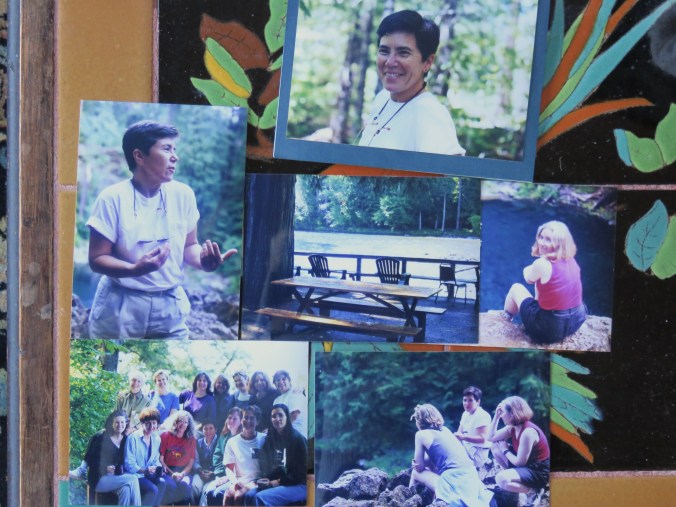
Photos from 1997 at The Flight of the Mind—a poetry class taught by Janice Gould (top and upper left). I put it here because The Flight of the Mind was a writing retreat for women, and it made me a writer, and because I did not understand until I attended the first time how important it was to be a woman and a writer, to hear only women’s voices for a week.

When white people complain about “reverse racism”, it’s generally because they have been badly treated by a person of color.

“I’m not arguing that racism doesn’t exist, it’s more obvious than ever now. My statement is regarding reverse racism, which some people argue doesn’t exist.”—on Facebook

I would agree with those “some people.” Set aside bigotry and bad manners. This theory of “racism” is that it exists only where it benefits one group over another. In America, even if someone is rude to me because I am white (because of my race) I might feel rotten, and the mean person might feel triumphant, but that mean behavior gains them absolutely no material advantage. On the other hand, the only time I have been followed by security at Nordstrom was when I took in a tote big enough to hold a car with merchandise to return. It doesn’t work that way for people of color in the US. Send a black child into Nordstrom on any errand and they are likely to be tailed.

White people make more money, white men make more than that, attractive white men fare best of all. But just because a guy is white, male, and good looking doesn’t mean everyone is nice to him.

There are enough mean people in the world, people who are not normally mean but are having a bad day and people who are easily triggered that we experience unpleasant interactions now and again. The white woman I know had such an experience and claimed she was the victim of reverse racism.

I understand. And I was hoping to explain another perspective, another point of view, and the reason some say “reverse racism” does not exist, can not exist. Racism might merely be prejudice. I say mere, not because prejudice or rude behavior is a small thing, but because racism is a powerful thing—beyond bias or preference and unreasonable dislike, racism is the power to cause damage.

Racism, then, is the advantaging of one group at the expense of another.

The term “racist” applies specifically to those who do benefit under the system that promotes and supports it. That’s true for white people in the U.S. today. Doing absolutely nothing to earn or maintain their privilege, white people have advantage in our society. This is not to say that a white person has no problems. Any American may suffer from poverty or other disadvantage, but on top of that, a person of color (most colors in the U.S.) also suffers from their race, a disadvantage that, unlike education or language or even sexual orientation, cannot be escaped or denied.

Is it possible for a person of color to arbitrarily and unfairly dislike a white person? Sure. It’s unkind and wrong and bigoted. However, by definition, this still isn’t “racism” because that person of color does not benefit from their bigotry. He or she already suffers in a racist system and has no personal power to overcome it. The term “reverse racism” is thus itself considered racist, representing only a white perspective. It perpetuates an us vs. them mindset, which I don’t think most of us want.

The very word is loaded. Using the term “racist” is so loaded with anger and resentment on all sides it is difficult to talk about. But here I am trying.

Winter Term, 1971, I was singing “Amazing Grace” just after 7am while waiting for the beginning of my second Drawing course. I was just eighteen and the vast studio space made my voice sound better than it was. Two black women walked through the room, complaining loud enough for me to hear about white people taking their songs. It was unjust since the author, a white Scot, belonged as much to me as them, but I stopped singing. I knew that. But I also heard them. I heard.

They did not say that to hurt me, and it was not reverse racism. They were protecting their own narrow space in the world.

When white people complain about reverse racism, it’s generally because they have been badly treated by a person of color who calls out their race as the reason, or who merely notes their race in passing.

When a person of color talks about racism it’s generally because our entire social structure is biased against them.

Peggy McIntosh first explained to me what “white privilege” means in her 1990 essay. (If you don’t know the essay, click the link to the pdf. It’s pretty mind-blowing.)

I don’t do anything to earn or maintain my privilege as a white person. It is just there, and too often I take it for granted. As an old woman now I recognize how much else I have taken for granted because English is my first language, because when I was young I was pretty, because I was intelligent and well educated, and because my parents taught me to value information and a solid argument.

Racism only counts when the general culture is there to back it up.

There really is a difference here. Years ago, my son’s orthodontist told me, “Well, you know it’s our sons who suffer from all this talk.” A well-respected professional in those days, he went on to complain about his son not getting into dental school, how that was all the fault of “reverse discrimination” and completely unfair. I politely disagreed until, as I was walking out of his office I sent my teenaged son ahead and went back to less politely disagree.

[Our fair-haired sons had plenty of advantages and were perfectly capable of finding their way without whining about a tiny boost given to other kids. I already knew that one likely reason his son did not get into dental school was a drug conviction. What I did not know until much later was that this “orthodontist” was unqualified for his position, and would eventually be forced out of his practice for incompetence.]

We all hit bumps in our road through life. In high school I heartily resented the after-school jobs of friends who pushed papers and swept floors of their fathers’ offices for double the pay I received working at Taco Bell. I worked minimum in college too while my brother gained a workstudy job at the University that also paid double what I earned in the music department of the University Book Store. He was the second child in college, and even though our parents didn’t contribute a dime toward either of our educations, he was judged the more needy. And then again, maybe it was because he was a boy.

So I say this now, all these years later, though I never did at the time, and the upshot is that I would not have wanted my brother’s job. I learned a lot about music selling records. A graduate student played “Syrinx” by Debussy just for me before going off to study with Rampal. That happened because I asked what was in his case, because I begged to see his flute, because I begged him to play. Because he chose one of my favorite pieces, standing there on the other side of the counter in the music department of the University Book Store.

Over the years, I overcame bad teeth, poverty, social awkwardness, and gender. On top of all that, I did not experience racism. It was purely my luck. I did nothing to earn it. I was a member of the dominant race in my country. When people described me, they did not bother to say I was a white girl. That was taken for granted.

Only those two painters commented on my race. It had never happened to me before. All these years later I have wondered if one of those women remembers me from that day. Many years later she became a friend when we both attended a writing workshop together. I have sometimes thought of asking if she remembers. But no. It is enough to know her for herself.

A little humility. Gratitude. Acceptance. It is enough.


SLEEPING IN THE DARK


According to a 2018 map from Wikipedia, the blue shows DST in the northern hemisphere, and orange DST in the southern. Most of the rest of the world, the gray areas, ignore it. The dark gray indicates nations that once used DST, but gave it up.

People are arguing again about DSL. They are talking about it in Congress.

We went to bed late on Sunday night, hoping to trick our bodies into more quickly accepting the time shift to Daylight Saving Time. I had set my watch forward before going to bed on Saturday and Gary was still correcting the clocks the next morning. The clock in the kitchen resets itself, which results in it going a little crazy twice a year. The hands spin around the hours a couple of times, maybe wind backwards and eventually settle on what the nation insists is the correct time.

I feel a little bit like that clock myself.

The last two nights I woke once in the night and then again in the too-early morning, On Sunday I tried to convince myself that 5:33 was really the time I might normally wake. It felt like 4:33. The sun would not be up for another three hours. With my laptop in bed, I waited for light and considered that for the next week before Spring Break I will not be getting up in the dark and leaving for school in the dark and arriving at school… in the dark. That’s only because I fully retired the other day.

DST doesn’t give me more daylight. The best it can do is give me more daylight at the end of my day while stealing it from my mornings. Maybe that works for some people. They go for hikes or something after work. I used to run before going to school and DST messed that up. At the end of a nine or ten hour workday I never feel like going out for that run or otherwise enjoying daylight recreation. The best I might manage at the end of a long day is a few minutes at my loom or a glass of wine on the deck. I’d like the sun to be setting about then, along with my energy.

In 1895, a New Zealander who collected insects in his spare time, wanted to shift his work schedule so that he would have more daylight hours after work to collect his bugs. Eventually, beginning at the outbreak of WW1, most of the world would adopt the plan (the blue and orange areas on the map above), and while many countries have more recently abandoned the practice (the dark gray areas), still more than half the world’s population shifts their clocks forward in the spring and back in the fall.

When America first adopted the policy in 1918, it was so unpopular that it went away 7 months later, after the war. But “War Time” was reinstituted in 1942 by FDR. Nixon signed the Emergency Daylight Saving Time Energy Conservation Act of 1973 and even then it wasn’t consistent throughout the U.S. DST was extended in 2005 under the second Bush’s watch, beginning a week earlier in the spring and ending later in the fall, which is out of sync with most of the rest of the world. Not everyone is happy about all of this. Some U.S. states still refuse to shift their clocks forward and back.

The stated goal for DST is to save fuel and thus money, but with modern heating and cooling and the use of electric lighting and so forth, the practice probably does not save a dime, and several studies have shown that DST actually costs the U.S. as much as billions of dollars each year. Worse, its affect on sleeping patterns may be damaging our health and safety.

Ask anyone with small children what it’s like to turn those clocks forward in the spring. The following week is a mess for children who did lose an hour of sleep and often must wait for busses in the dark. Among high school students I see only negative results. They are driving to school in the dark, which can’t be a good thing. Though teenagers often fail to get the sleep they need and have erratic sleep patterns, they respond badly to the shift to DST and we teachers gear up for short tempers and impatience among our students, not to mention ourselves. We are all adjusting to one hour of lost sleep.

This adjustment to change in our internal clock can take only a few days for up to a week and some scientists blame the difficulty of this shift for a national increase in accidents, heart attacks, and suicides during the week following the spring shift to DST. This surge in deaths and near-deaths doesn’t happen in the fall. Apparently getting an extra hour of sleep doesn’t do anyone much harm.

They are arguing in Washington DC again about DSL. There are proposals to make Daylight Saving Time permanent or to eliminate it altogether. Though their interests were often cited when I was a girl, farmers generally don’t like losing morning light. Some business interests such as “the golf industry and the barbecue industry have been big promoters” of DST because there might be profit at stake. The PTA is more worried about children’s disrupted sleep and the danger of darkness on their way to school. I automatically side with children over profit.

By 7:30 on this morning, I felt like getting up. There was, finally, light in the sky, light I was used to seeing an hour earlier, according to the clock. I am normally an early riser—the result of living most of my life with a husband who is a morning person. I like to tease about how I “trained him” but the truth is he’s trained me too. I like the morning and I like having daylight to start my day.

I don’t like getting up in the dark. I don’t need time after work to collect bugs or golf. If, like me, you’re feeling a little tired or out of sorts this week, blame Daylight Saving Time.

This is one problem with a clear cause and a clearly negative effect. Unless you are selling barbecues.

I don’t know. Turn on the porch light and have your BBQ burgers anyway?

DESIRE & PANIC

2260552.jpg

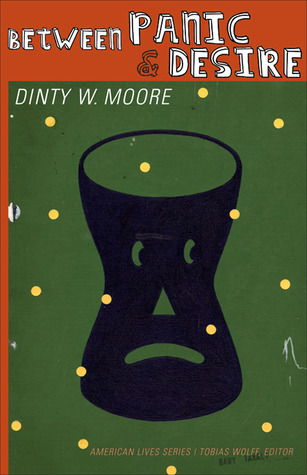
The author had my attention from the hilarious introduction to his memoir, Between Panic and Desire. I recognize the world he describes. Unlike his parents, my father never left; it was my grandparents who all divorced, some remarrying, some not. But while he was not yet 6 years old during the Bay of Pigs, I was already 8. I remember. My parents were fierce supporters of JFK, and Boeing Field was just down the road. However, living on the West coast, in the suburbs of Seattle, my life was never at risk during those tense days. The bombs could not reach so far. The eventual fallout, WW3, escalating tensions? I recognized those risks even as a child.

Fifty years ago, shortly before midnight on 16 April 1961, a group of some 1,500 Cuban exiles trained and financed by the CIA launched an ill-fated invasion of Cuba from the sea in the Bay of Pigs.—BBC

Dinty W. Moore recalls the period of our shared youth and I recall all the events he does—the international crises and threats, Squeaky Fromme, the assassinations, the same presidents, the same falling Towers. All the events that haunt his childhood memories. He yearns for his absent father, and goes looking everywhere for a replacement.

Moore was about 12 when Fromme joined the Manson “family”; I was not quite 15. I had to look that up because I never found her the least bit interesting. I remember Martin Luther King Jr.’s death as vividly as JFK’s. The balcony. The black horse, my mother explained, was “spirited because our president was spirited.” I never considered any of the presidents to be father figures, and I got over southern accents with LBJ. Happily, I met the person I would marry (whom I also mistakenly assumed on first sight was otherwise connected) at the age of 16, so I was spared Dinty Moore’s years of lonely drug abuse. My husband was not a user. However, Dinty Moore and I did not experience the 60s in the same way. My memory has a great deal more music and fewer cars. Many of my friends died. Peace marches. Feminism. Later, the AIDs epidemic. Identification as a visual artist. A long period of yearning for a country life. Moore had other concerns. I still do not consider that our failure to develop a strategic response to terrorism might have been a serious oversight. I wanted then to address the cause: ongoing imperialism. The corroding root.

When Dinty W. Moore lost his father, I was worrying about the world population explosion. By junior high school, my best friend was African American. Perhaps this is because I lived on the other side of the continent. I still do. I met the Dinty Moore in 2002, while attending a novel writing workshop with Bret Lott in Milledgeville, Georgia. He and Bret sat on a wide porch smoking cigars in the dark. (Perhaps only Brett smoked—I could be wrong about that.) Dinty will not remember me. I was the one typing on my laptop about twenty feet away, the Mac logo glowing.

While I was in Georgia that week, my mother drove the few blocks to her local Post Office and found she could not get out of the car. She drove home, crawled into her house, and called for help. My husband called me in Georgia on a landline and had to leave a message. I borrowed a phone to call him back. I wanted to fly home immediately, but this was the start of Memorial Day weekend and there were no flights available. The workshop organizers made no effort to help. Still, I got home on Monday, in time to sit in the waiting room while Mom had back surgery. Her surgeon promised immediate improvement. There was none.

This did not go well, I realize now, because she’d already been taking Fosamax for years and that bone-building medication actually interferes with the healing of bone. There was research suggesting that even then, but no one considered it for my mother. She was eventually placed on a deadly combination of opioids and benzodiazepines, failed to drink enough water, and was mostly housebound or hospitalized for the remaining five years of her life. Many, many trips to the ER. Broken bones. Slow healing. Pain. There is probably a way to make this a funny story, but I do not have the gift Moore does.

I have quit teaching, but the third essay in this collection, “Double Vision”, has a masterful structure, and I immediately and inevitably considered how I would use it as a model for student essays. There is no self-pity but considerable humor concerning his diplopia. He nails the short form. Well, what would I expect?

The award-winning memoir is elegant in structure and voice. These are very funny stories, a masterful and unique memoir of absent fathers, drug abuse, and eventual insight. Now I shall have to find a copy of The Accidental Buddhist.