#2 of TEN SENTENCE EXERCISES

Writing Good Nonfiction Sentences… one exercise each Friday.

First the necessary introduction. NOTE: several of these exercises are inspired by How to Write a Sentence: And How to Read One by Stanley Fish, Steering the Craft by Ursula K. Le Guin, and other sources.

A good essay has a goal—to convince, delight, enlighten, instruct, warn, or to review and question. Part of becoming an accomplished writer involves understanding the work that every word must accomplish. 

Each sentence has specific work to do. In a very real sense, sentences are the basic building blocks of writing. Lay down one word after another until you have created a logical idea in the mind of the reader and that is a sentence. Do it with grace and style and that’s good writing. But in order to write a good sentence (or to read and appreciate a good one), it helps to understand the various ways a sentence can function in the essay. Forget about content (for the moment) and try pushing the envelope with these exercises about sentences. 

THE EXERCISES: These brief exercises require you to write a nonfiction sentence. Sometimes they require that you write several. Look at the examples and follow the directions after “assignment.” AND Whether this is specified or not in the instructions, on the same page you should also explain the sentence in detail. Don’t be surprised if the explanation takes up a lot more space and time than the sentence. What does the sentence you wrote accomplish? What did you learn by writing it and thinking about it? How might you have learned a skill you can transfer to other writing? 

That said, this assignment is pushes sentence-length to create a single “monster sentence.” There is a model and explanation following. My students loved this assignment.

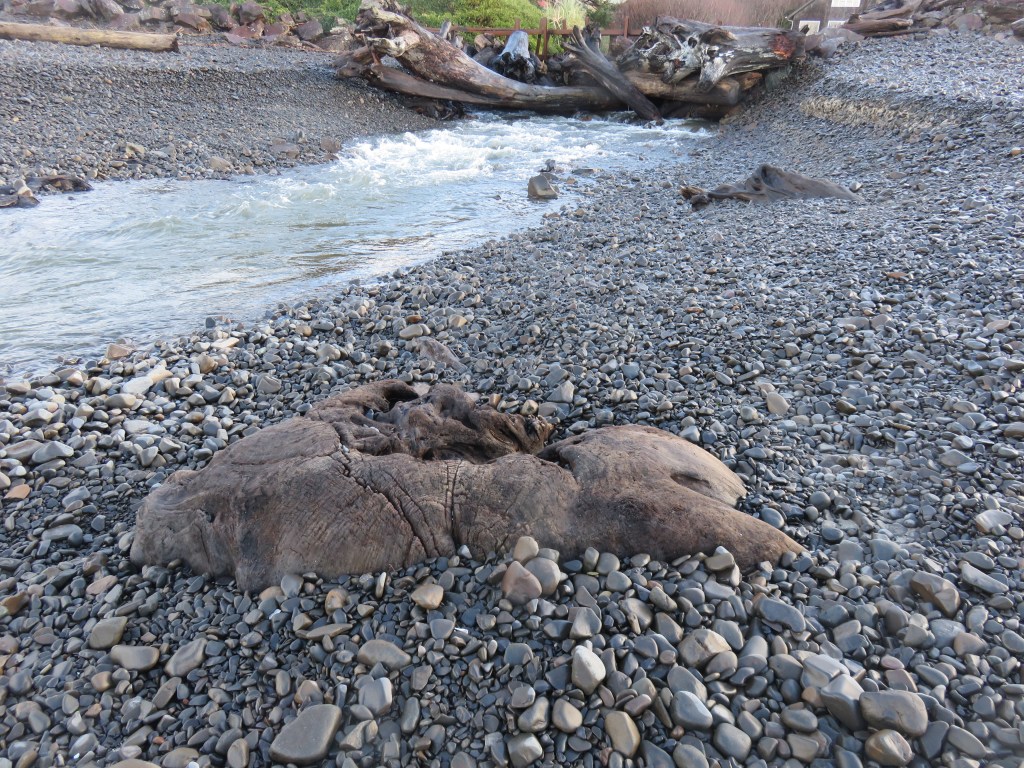
Gary is standing beside the larger stump revealed by the shifted coastline—note that I wasn’t exaggerating about it being four feet across.
Continue reading

GO FOR WALK?

I start this post sitting on the sofa just before 8am. It’s wet out but no longer dark. A reminder: If we were on DST all year around, it would be dark here until almost 9am. Apparently golf courses would make a bundle from after-work greens fees and candy companies are certain that a longer afternoon helps their sales during Halloween—they are the two biggest lobbyists wanting high noon to happen at 11 in the morning.

Anyway.

Mount Hood was white and brilliant in sunrise as we ate breakfast. I had made a frittata with the last of the eggs, thawed sweet bell peppers that needed to be used today, and the remainder of a wedge of really great Rogue River Creamery blue cheese. I am trying to empty the fridge before we go back to the beach tomorrow. (Tricky because we thought we would have company last weekend and bought fresh veg accordingly. I still have a bit of spinach and a big bag of mixed greens that need to be consumed, immediately.)

The dawn. It was one of the requirements when we looked for a condo: sky. There had to be sky.
Continue reading

#1 EXERCISE: DEBRIEF

REFLECTION: My nonsense rewriting of Lewis Carroll was tricky only because auto-correct kept fixing my words to make them sensible. I left all the ordinary words—articles and prepositions—while doing my best to watch Carroll’s verbs, nouns, and adjectives. The sensible version was much harder. I went to RhymeZone.com to hunt for my last word. The site offers many options for rhyming 1-, 2-, and multi-syllabic rhymes. I replaced a conjunction “and” with a preposition “with” and that felt like cheating. My use of “still” doesn’t quite work—the entire last line doesn’t work. And this is because I wrote it backwards—I found the words first instead of the meaning. What was I thinking? I hope you didn’t do that.

Reflection, metacognition, thinking about thinking. Thinking about writing. What works, what might work next time.

Perhaps I should call these “exercises” instead of “assignments” since I think many people have issues concerning assignments?

This is a creek that carries water from what used to be two creeks (Shark and Asbury) on my old map. There is a huge iron barricade to prevent (usually) drift logs from being carried upstream. That’s what you can see at the top of the image. In the foreground is the stump of an ancient tree, perhaps four feet across (not around, but across!) that Gary and I had never seen uncovered before. There are other “ghost trees” along the coast. Perhaps, as was suggested by visitors, these are remains from the tsunami resulting from the earthquake that occurred along the Cascadia subduction zone on January 26, 1700 with an estimated magnitude of 8.7–9.2. …Or not.
Continue reading

#1 of TEN SENTENCE EXERCISES

Writing Good Nonfiction Sentences… one assignment each Friday.

NOTE: several of these exercises are inspired by How to Write a Sentence: And How to Read One by Stanley Fish, Steering the Craft by Ursula K. Le Guin, and other sources.

A good essay has a goal—to convince, delight, enlighten, instruct, warn, or to review and question. Part of becoming an accomplished writer involves understanding the work that every word must accomplish. 

Each sentence has specific work to do. In a very real sense, sentences are the basic building blocks of writing. Lay down one word after another until you have created a logical idea in the mind of the reader and that is a sentence. Do it with grace and style and that’s good writing. But in order to write a good sentence (or to read and appreciate a good one), it helps to understand the various ways a sentence can function in the essay. Forget about content (for the moment) and try pushing the envelope with these exercises about sentences. 

THE ASSIGNMENTS: These assignments require you to write a nonfiction sentence. Sometimes they require that you write several. Look at the examples and follow the directions after “assignment.” AND Whether this is specified or not in the instructions, on the same page you should also explain the sentence in detail. Don’t be surprised if the explanation takes up a lot more space and time than the sentence. What does the sentence you wrote accomplish? What did you learn by writing it and thinking about it? How might you have learned a skill you can transfer to other writing? 

That said, this first assignment is mostly for fun.

1. Sounding sensible. Syntax is how we arrange words to make sense. The ordering of nouns, verbs, adjectives is familiar in ways that surprise us. We know quite a lot about our own language, even when it’s nonsense. Have a look at a nonsense sentence from Lewis Carroll’s “Jabberwocky.” You probably know, don't you, that "toves" is a plural noun, that "gimble" is a verb—you do, don't you?:

‘Twas brillig, and the slithy toves
Did gyre and gimble in the wabe;
All wimsy were the borogroves,
And the mome raths outgrabe.

Don’t bother trying to figure out what this verse means. It doesn’t. Instead, try something fun: Replace each nonsense word, matching with another of the same part of speech (e.g. noun for noun, adjective for adjective), using other words that have no meaning. “ ‘Twas” is an archaic contraction meaning “It was,” so you need not bother with that one, if you want to keep it. Replace: brillig, slithy, toves, gyre (this one is a real word, though I suspect Carroll wants us to mispronounce it), gimble, wabe, wimsy, borogroves, mome, raths, and outgrabe. You should also create a second verse that makes perfect sense—two four-line stanzas, one version that is insensible and one that makes sense. Match syllables, accents, and use rhyme (though not necessarily the same sounds) while you’re at it. Rhythm works in an essay in the same way it does in fiction, and while this is poetry, it’s still a powerful device to have in your toolbox.

ASSIGNMENT: Rewrite Carroll’s verse, twice, creating two versions by maintaining the original structure,  rhythm, placement of rhyme, linebreaks and so forth, by replacing words with others of the same function (verb for verb, etc.), one with nonsense words, another version with real words. Then explain what you did, why, and what you’ve created as a result. This assignment doesn’t seem like it could be nonfiction, but do it anyway. Consider it a warm-up and have fun.

Paste your assignment into a comment below. On Monday, I will share what I wrote, debrief, and suggest where to take this next.

———————————————————————
But first, I will share part of yesterday's Letters from an American by Heather Cox Richardson:

Just before sunrise on a November day in 1861, Massachusetts abolitionist Julia Ward Howe woke up in the Willard Hotel in Washington, D.C. She got out of bed, found a pen, and began to write about the struggle in which the country was engaged: could any nation “conceived in liberty and dedicated to the proposition that all men are created equal” survive, or would such a nation inevitably descend into hierarchies and minority rule?

Howe had faith in America. “Mine eyes have seen the glory of the coming of the Lord,” she wrote in the gray dawn. “He is trampling out the vintage where the grapes of wrath are stored; He hath loosed the fateful lightning of His terrible swift sword; His truth is marching on.”

She thought of the young soldiers she had seen the day before, huddled around fires in the raw winter weather, ringing the city to protect it from the soldiers of the Confederacy who were fighting to create a nation that rejected the idea that all men were created equal: “I have seen Him in the watch-fires of a hundred circling camps; They have builded Him an altar in the evening dews and damps; I can read His righteous sentence by the dim and flaring lamps, His day is marching on.”

Howe’s Battle Hymn of the Republic became inspiration for the soldiers protecting the United States government. And in a four-year war that took hundreds of thousands of lives, they prevailed. Despite the threats to Washington, D.C., and the terrible toll the war took, they made sure the Confederate flag never flew in the U.S. Capitol.

That changed a year ago today.

HOME TURF

Many years ago a famous author commented about the sloppy appearance of women in Washington State, where I went to public schools, Kindergarten through three undergrad degrees. She also talked about Puget Sound, using terminology appropriate to the East coast. Both comments irritated me, but non-locals talking about my corner of the natural world is particularly irksome. She spoke with authority and got details all wrong. I mean to write about two things today. First, a peevish rant about people misunderstanding my home.

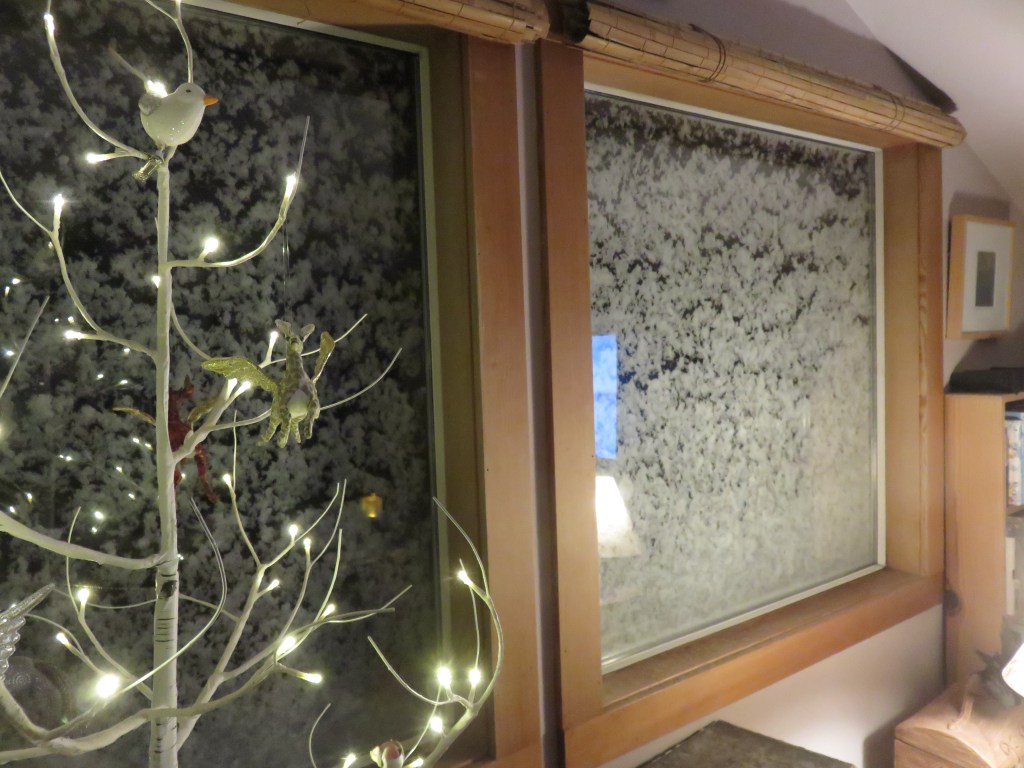
I should have shared this photo before now. Christmas snow with a west wind. Most winters we have not seen snow. Some winters we have not even experienced a major frost on the coast—the impact of the largest body of water in the world right outside our door.

A mediocre mystery/romance novel set on “the Puget Sound” referred to it as “ocean,” which it isn’t. Look at a map for goodness sake. And no one born here includes that article “the” before Puget. As in: We took the ferry across Puget Sound to Orcas Island.

Continue reading

PLANNING ATTENTION

Attention is the beginning of devotion.

—Mary Oliver
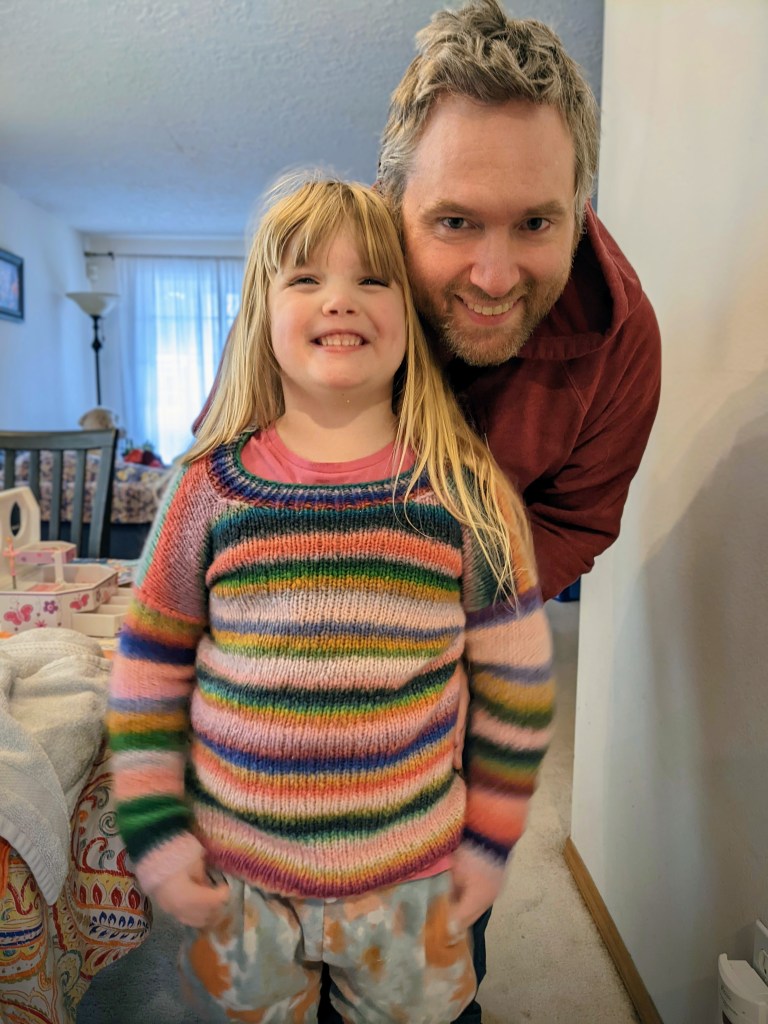
Our son Alan and his daughter E.V. wearing the sweater I knit her for Christmas.

I had to think hard about what happened in 2021. It was not a terrible year, not even a bad one. “Inconvenient”, as a friend suggested in 2020, a year that felt much worse. So goodbye to two years of pandemic and hello to a third. I have plans.

Continue reading

STILL, SHE CLIMBED

I have a photographic negative showing my grandmother, Fay Fletcher Jackson (before she married Gordon Keays Smith), standing on a Mount Hood glacier that mostly isn’t there anymore. This would be in the early years of the 20th century. She carries a small backpack because she is a very small person and wears heavy boots, thick leggings (no skirt), and a broad grin. She set no records, made no history, but she climbed.

That thing we do… remembering

The crow that hung out with gulls all summer.
Continue reading

BEAUTY IS TRUTH

I was writing a card to Bette and realized that most things do not matter… the passage of time, the work I still miss doing, the “accomplishments” I would like to detail—none of that really matters. What matters is beauty and people. People and beauty.

So here is beauty that I have seen in the past year.

January
February
March
April
May
June
July
August
September
October
November
December, Portland in sunrise

I could have chosen photos of eagles or of highways or flowers. I could have chosen photos entirely of the people I love. I could have chosen other landscapes or birds. These images were chosen because they are what I have looked at early in the morning and thought: beautiful!

Thank you, John Keats. We only remember this stuff because it matters.

Ode on a Grecian Urn  (1809)
by John Keats

Thou still unravish'd bride of quietness,
       Thou foster-child of silence and slow time,
Sylvan historian, who canst thus express
       A flowery tale more sweetly than our rhyme:
What leaf-fring'd legend haunts about thy shape
       Of deities or mortals, or of both,
               In Tempe or the dales of Arcady?
       What men or gods are these? What maidens loth?
What mad pursuit? What struggle to escape?
               What pipes and timbrels? What wild ecstasy?

Heard melodies are sweet, but those unheard
       Are sweeter; therefore, ye soft pipes, play on;
Not to the sensual ear, but, more endear'd,
       Pipe to the spirit ditties of no tone:
Fair youth, beneath the trees, thou canst not leave
       Thy song, nor ever can those trees be bare;
               Bold Lover, never, never canst thou kiss,
Though winning near the goal yet, do not grieve;
       She cannot fade, though thou hast not thy bliss,
               For ever wilt thou love, and she be fair!

Ah, happy, happy boughs! that cannot shed
         Your leaves, nor ever bid the Spring adieu;
And, happy melodist, unwearied,
         For ever piping songs for ever new;
More happy love! more happy, happy love!
         For ever warm and still to be enjoy'd,
                For ever panting, and for ever young;
All breathing human passion far above,
         That leaves a heart high-sorrowful and cloy'd,
                A burning forehead, and a parching tongue.

Who are these coming to the sacrifice?
         To what green altar, O mysterious priest,
Lead'st thou that heifer lowing at the skies,
         And all her silken flanks with garlands drest?
What little town by river or sea shore,
         Or mountain-built with peaceful citadel,
                Is emptied of this folk, this pious morn?
And, little town, thy streets for evermore
         Will silent be; and not a soul to tell
                Why thou art desolate, can e'er return.

O Attic shape! Fair attitude! with brede
         Of marble men and maidens overwrought,
With forest branches and the trodden weed;
         Thou, silent form, dost tease us out of thought
As doth eternity: Cold Pastoral!
         When old age shall this generation waste,
                Thou shalt remain, in midst of other woe
Than ours, a friend to man, to whom thou say'st,
         "Beauty is truth, truth beauty,—that is all
                Ye know on earth, and all ye need to know."

The truth isn’t always beauty, but the hunger for it is.

—Nadine Gordimer

I don’t know if any of this is true—that beauty is truth or that an urn can speak to any truth—but it is beautiful. And we do hunger for both beauty and truth.

May your day be beautiful… a blessing on your house.

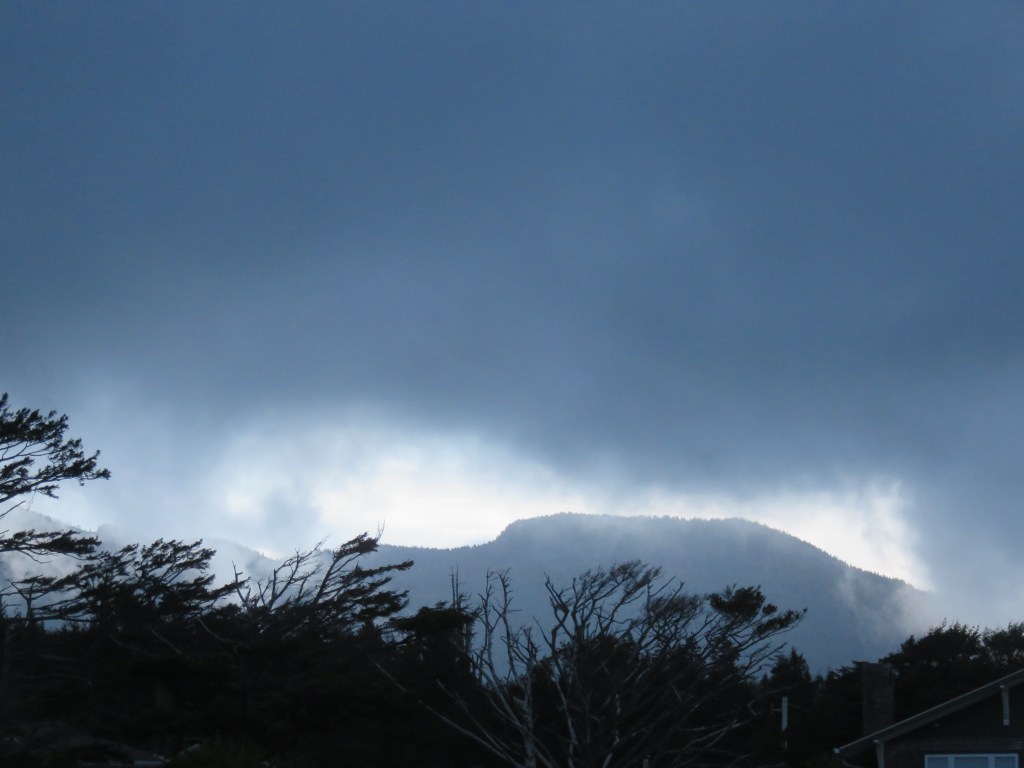
West back to the beach—snow all the way except for this brief clearing in the sky.

IN & OUT of line

Yesterday, which was meant to be our day of rest before the drive to Portland, the Christmas tree leaked.

Here is the tree hung from the ceiling on fishing line, inside a plastic bucket with water, which is inside the huge Chinese jardiniere that came from my Aunt Marcie. We have put up our tree this way for years.

Unbeknownst to us the bucket developed a 1″ crack. Water leaked into the huge clay pot, which would have held it, but someone in a previous generation drilled holes in the bottom to use it as a planter. I had plugged the holes and for a decade it was home to a goldfish, eventually killed by toxic Chinese fish food. Gary had removed the plugs. Hence: water all over the floor while we were out walking. Thank goodness we had not gotten around to decorating the tree.
Continue reading

UNANNOUNCED VEGAN

I was reading an article from The Guardian on how to deal with Christmas get-together challenges. The author led with “the turkey doesn’t fit in the oven.” [I love that turkey is the English Christmas dinner centerpiece, even though what they serve is a “New World” food, not actually indigenous to Europe. So are tomatoes, potatoes, what we call corn, and many squash and chilis. Often an “ancient” European, middle eastern, or Asian recipe includes an ingredient that simply was not available more than a hundred or a couple of hundred years ago—hardly ancient. When Shakespeare mentions “corn,” he does not mean the New World maize but another grain, probably barley.]

The article about the holiday dinner was funny and also spot on.

Continue reading