An imperturbable demeanor comes from perfect patience. Quiet minds cannot be perplexed or frightened, but go on in fortune and misfortune at their own private pace like a clock during a thunderstorm.—Robert Louis Stevenson
Our 52nd anniversary is coming up in twelve days. We’re going out for an early dinner that night because I have to be home for a Zoom meeting of a nonprofit. That’s okay. We are nearly always together. He’ll probably go for a walk during my Board meeting, and return in time to watch a show and the next day we’ll drive back to the beach. We figured out long ago that no one else will make time special, that’s on us. We tried for a “special” vacation for our 50th, and when we discovered our favorite restaurant had closed and our favorite hotel had new owners, we laughed and drove home. We spent at least three anniversaries in the ER with my mom. Those special days are unreliable, I’d say. It’s my husband I rely on.
Every time.
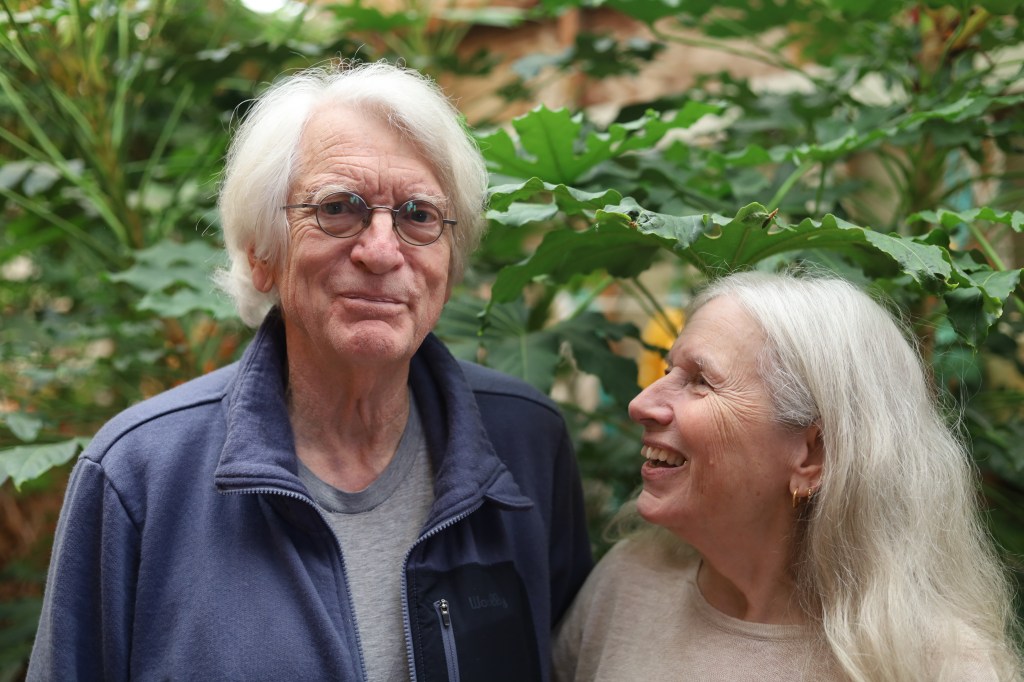
Two old people who still love one another. Gary’s straining not to pull another face, and look! Our hair is the same color. I tease him because when his hair was as long as mine in the early 1970s, women used to cross the street to pet it. He needs a haircut.Continue reading →
After I wrote the first four novels, after I’d committed to this one, after the years of writing and revising, authenticity edits and developmental edits, after proofreading and proofreading again. After I finally decide it’s perfect [it isn’t], there is the next step. Next I submit to agents or small presses who will look at unagented novels. That does not go well for my book.
The world might be better once we’re mostly gone.
Suppose I decide to self-publish? It was always an option. The publishers who would do so much of the work in design and promotion were well out of my budget. Eventually I found a printer who works with small presses and decided to trust them. Books are out and in the mail, with 50 of 100 gone. The process took a while. Will I do it again? Maybe not.
We don’t know for certain who composed The Odyssey, which is generally and perhaps inaccurately ascribed to a single bard, Homer in the 8th century BCE. Most modern experts, including Emily Wilson in her otherwise excellent introduction to her recent translation, routinely comment that one person could not possibly have memorized the entire epic poem. Most assume one person could not have written those two book-length epic poems much less remember them. They suggest that both The Iliad and The Odyssey were composed over a period of time with adjustment and additions by several or many people.
Not necessarily so. The human capacity for memorization is astounding.
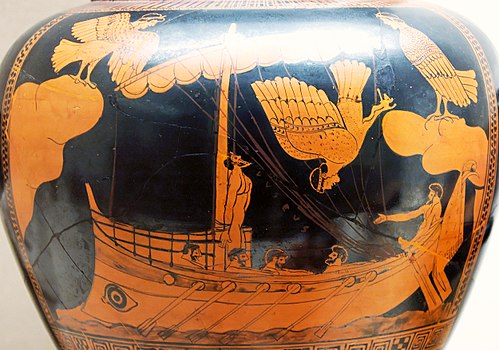
This vase from the British Museum (c. 480–470 BCE) was decorated during Athen’s classic age three centuries after the story of Odysseus was known and eight centuries after at least some of the events described may have occurred in ancient times.
Just now I’m seeing lots of reels on Facebook complaining about idiotic teacher’s in-service activities. Forms groups with people you don’t usually talk to. Markers and butcher paper. Guest speakers who haven’t taught in decades because presenting pays better and they don’t have to interact with kids. Entire sarcastic reels about wasting time. I hear them. Forming groups? Warm-up actives? Don’t I have work to do? But I learned to get it done at home on my own time. In the working time I was allowed, I made photocopies, labeled folders, and moved tables and chairs in place.
Tomorrow is the day I usually post. I probably will have something going out tomorrow. But for now…
I have grievances. Old grievances. Being told I was stupid to do all the assignments I assigned my students, and then being in-serviced a few years later about how I should be doing all the quizzes, tests, and other work I assigned my students. By the same person.
But the reels I’ve been seeing about in-services don’t question the need for continuing education. They question what and by whom. One reel focused on the poor quality of presentations teachers are required to sit through especially about something they’ve already been in-serviced on a half times, each time using a new acronym. Were they ever useful? I noted that I’d received useful information about autism (from the social-worker mother of an autistic student) and poverty (from someone who grew up in generational poverty and now had a PhD), but also a horrible in-service about poverty (from someone who wanted to sell books and advocated teaching poor kids to be more selfish).
Although I have done more than a dozen presentations for organizations such as the National Council of Teachers of English and Social Studies and numerous school districts about incorporating writing and teaching writing, no one ever asked me to present at my school. A Social Studies teacher complained that I should be teaching APA form instead of MLA because “all college writing is in APA. I started with MLA in the Junior year because I was an English teacher and because all undergrad programs in our state at that time were supposed to use MLA. [As a Math major at the University of Washington and later in Computer Science, my older son assured me he’d always been required to use MLA until grad school.] I warned students to read college syllabi and always ask about using MLA if a paper was due in week six.
When I was teaching WR121, I assumed my students knew MLA taught APA. I had overviews for both and for Chicago style (used by the UofO) and urged students to use whatever style was comfortable. I offered to send those teacher materials to the Social Studies teacher so they could teach APA to their students, but they never bothered because they only wanted me to do that work. They had no intention of scoring any writing multiple choice. Only one teacher in that department looked at paragraphs.
[It’s only fair to emphasize that all of my essay-writing skills in high school came from my Social Studies classes, from handwritten 5-page position papers to typed research papers of over a dozen pages. Only outside the English departmentt in the school where I taught assigned essays. Many teachers would not have been able to do that because they didn’t possess the necessary writing skills.]
An imported Administrator told us about her skiing vacations. A former Spanish teacher wasted more than an hour teaching us a sentence about a Spanish painting. We brought in a speaker to talk to students who emphasizes that sex in high school forever ruins their lives because God said so—caught that one in time to stifle the message somewhat. A student who had advocated for that speaker later chewed me out for judging prostitution since they had a friend who was a sex workers and they only told their kids what was “age-appropriate.”
At a conference a famous writer told English teachers to identify the “bankable students” and let the rest go. “I know you want to teach them all, but you can’t.” I followed them out the door, got in past their handlers and told them they didn’t know who was bankable, that even with 20 years experience neither did I, and we had no right to assume we could make that determination.
I am judgmental. I know this about myself. I struggle to let things go.
Every year, I was required by the State of Oregon to complete 13 training videos, a number that eventually grew to 17 or 20 (!). I was supposed to watch these online informational videos and to pass the mostly true-false tests at the end with a minimum 70% score. (I could retake that test multiple times if I failed. I did fail the legal ramifications of handling toxic substances.)
One of the questions about online harassment wanted the wrong answer. I stubbornly answered it correctly year after year, and I messaged the state several times that their source was seven years, then ten years, and then twelve years out of date. Eventually they recognized that YES online harassment was a serious problem. They added it as another test.
Well, of course they did.
All this to say that education for educators is important. We need to keep improving, to stay abreast of current research and strategies. I loved the in-service on the brain, but my peers didn’t find it useful—maybe they needed that last step spelled out about applying information to their interactions with students? Two parents prepared a powerful presentation about at-risk LGBTQS+ students. The danger the presenters emphasized was the suicide rates and failure in school among these students, that this alone suggested some compassion on teachers’ part. Without making a judgement, they urged us to consider the potential impact on academic success of these teenagers. An administrator with a religious bias advocated for compassion, but their presentation was met with vocal resentment and hostility. One teacher complained they didn’t have time to insist students not use bigoted language in their class. Another complained that students had told them I refused to allow such language in my classes.
The presenters came for free to our school. One had known for a long time of their child’s sexual orientation, and the other had learned only when their college-age child came out to them. They were very clear that they were not asking anyone to change their private moral opinions, only to consider the risk to the lives and education of non-cis students when they allowed hostility to hurt them. This was my own policy: you will not swear or use pejoratives when referring to other people. We were in the 1990s a largely white school with some very wealthy families and many more who worked for those families. Horrible things were said to kids in classrooms and during sport practice. [A person gripe was the football coach calling his players “girls” as a means of demeaning them.]
I’m not asking you to change your core beliefs; I’m insisting you be polite in my class.
I was mentor for a senior project that took the temperature of the student body about LGBTQ+ and the results were so cruel that admin sequestered and vanished the results—everyone claimed never to have seen the tallies. This was some time ago and there’s been plenty of research backing up the presentation those mothers shared [also here, here, here, here, and here]. I would like to believe attitudes have changed somewhat since that in-service. I’d like to think teachers are no longer annoyed to be in-serviced about keeping their students safe.
I’d like to believe that.
Don’t worry, this black oystercatcher has another leg. Sometimes what we choose to see is not all there is.
They used to say, Nice guys finish last. Right about now, we need more than neutrality. The world could use a dose of niceness.
My brother said our mother was the epitome of “nice,” and that is true. Mom always tried to be nice and sometimes she went above and beyond to be kind to other people just because. She once followed a car that had dangerously cut her off and ended by holding the poor driver while they sobbed out their entire life tragedies on Mom’s shoulder. My husband Gary is like that too. Saturdays in the 1970s we walked through every pawn shop on First Avenue in Seattle looking at guitars. Homeless men would tell him their life story and he would hand them change and sometimes they cried too because someone cared enough to hear them out.
That is my model for decent behavior. Treat others as you wish to be treated. Where have I heard that before?
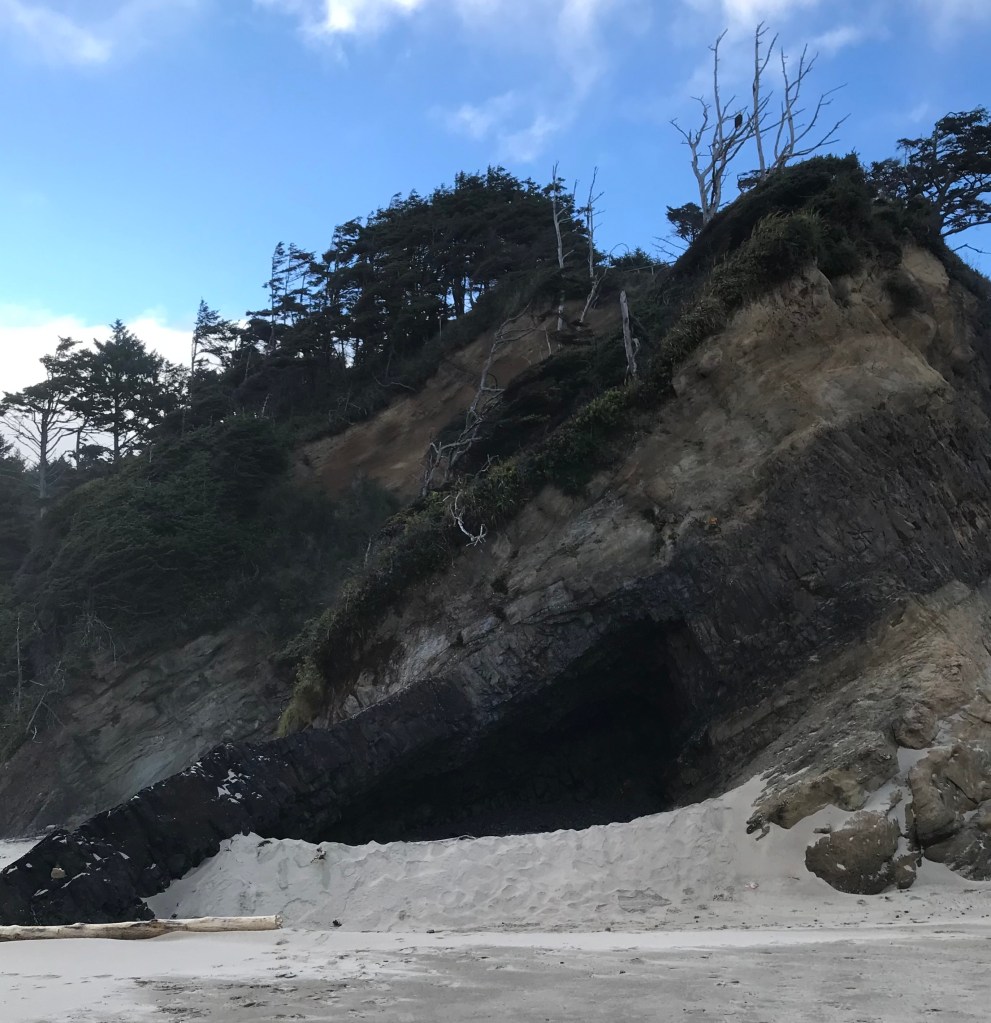
There’s a bald eagle in the snag near the top of this photo, but she’s often there in the higher branches. We suspect her favorite perch is rotting and that’s why she’s taken the lower branch. Anyway, that’s not the reason for this photo. At the bottom, this photo shows the drift of sand in front of a shallow cave we pass most every morning on our beach walks. It looks like kids piled that sand up more than three feet high, doesn’t it? But this is what the tide did a few days ago. There are four sandbars running along our shore, five if I count the one that came up this spring nearly to the green line—more sand than we have seen in 40 years or so. The dune grass that was introduced to Gearharrt a few lifetime ago, was also introduced here but has not thrived the way Siberian blackberries, montbrecia, and English ivy have.Continue reading →
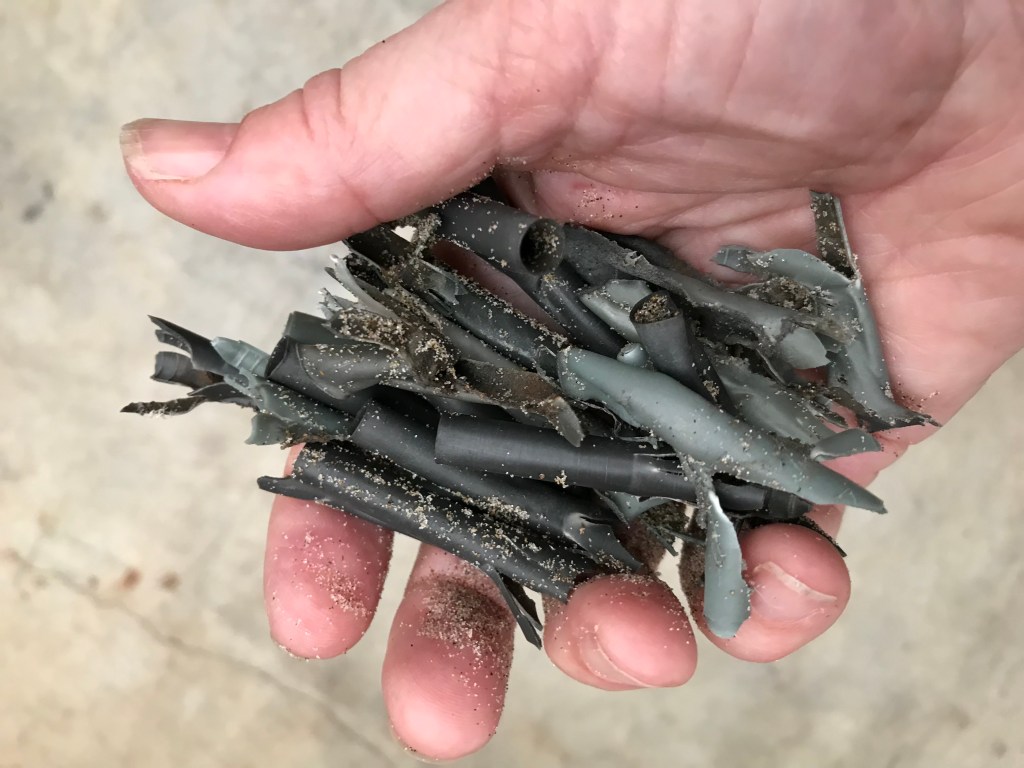
Yeti, our last dog’s favorite treat was a Greenie, a green starchy chewable bone-shaped object she could chew into bits and swallow in a minute of two. Green meanies are something else and they hurt my hand to hold, as I am in this photo. I wish people would pick them up so I didn’t have to.
I call them “green meanies” because I stepped on one once barefoot. Though I didn’t bleed, it was painful. They are the remains of fireworks of some kind and difficult to spot amongst bits of seaweed on the tideline. I search for them every day, plucked a couple dozen from the sand this morning, and I will still be finding them in January.Continue reading →
My birthday is two months from next Friday. I will be 74, the age my grandmother and also her elder daughter died. When my mom turned 80, I teased her that she hadn’t expected to live that long. She laughed and said it was true.
Gary and I walked four miles this morning, meandering to Hug Point beach. That parking lot is still closed, which means the beach there has been pretty clean for most of the last year. What you see in my hand are shards of hard plastic from illegal fireworks last week. Yes, the pieces are every bit as sharp as they look. Had I trod on one in the sand, I’d have cut my foot. We mostly ignore the cardboard debris, but we pick up and dispose of the plastic remains and the nasty plugs of spent explosives. We have to be home for the 4th of July to ensure someone doesn’t burn our house down. This year was not the worst, but aerial explosions were right in front of our home and one tourist accidentally sent his rockets not up but across the sand. Fortunately, the tide was well out and nothing hit us, but do we enjoy the toxic and illegal display? Not so much.Continue reading →
cover yourself I’ve got you covered that’s a great cover you’ll need cover
June was an eventful month, and I have a few photos to prove it. My MFA residency happened in Forest Grove and I went by a few times. We both caught a cold (tested) which caused us to miss our dental appointments, but we were healthy for our yearly medical. I am eating better. So is Gary. Both of us lost a couple pounds.
It was hot in Portland, mid-90s while we were there. It was also unusually hot at the beach for a couple days, high 80s. The heat at the beach is troubling. We’ve lived here since 1979, and hitting 80° used to be an extraordinary event. We prefer the cooler temperature. This past week makes me feel things how are changing.
An elk ate apples in the garden across the street and then I ran past it twice yesterday on the beach, a rabbit grazed the yard, and the raven couple have a youngster big as them.
That’s a young bull elk. He probably weighs over 800 pounds. His antlers will continue to grow for two or three months.Continue reading →
It is widely reported that given the theoretical choice of meeting a man or a bear in the dark, most women will choose the bear.
Men are justly offended by this report. Women take a breath and nod.
White marble with inlaid semi-precious stone. The romance of the Taj Mahal was ruined for me when I learned that the adored wife it was built to commemorate died in childbirth with her 14th pregnancy. I’ve been pregnant twice, the second unmedicated, and cannot imagine surviving thirteen unmedicated childbirths. Image by Muhammad Mahdi Karim, Stitching assisted by Benh
Last Friday morning, Juneteenth, Ron Charles (former WaPo book editor) wrote about the exploitive relationship of Thomas Jefferson with Sally Hemings, who was 16 years old in Paris and younger than his daughters when he got her pregnant. Yeah. Awful. There is no evidence, no signed contract or other document, that she chose to begin her relationship with the much older Jefferson, but that is the story. [DNA testing of her descendants proves the relationship.] As a free woman, why would anyone have chosen such a relationship?
June is ridiculously busy, which is not something I can say about most months. Most months my busy is entirely self-inflicted. I read, sew, knit, run, post online. Scrub floors. Gary and I drive to Portland and home from Portland, we walk across the city or walk five miles north on the beach. [We did this recently. Once. Ten miles round trip. Probably not again.]
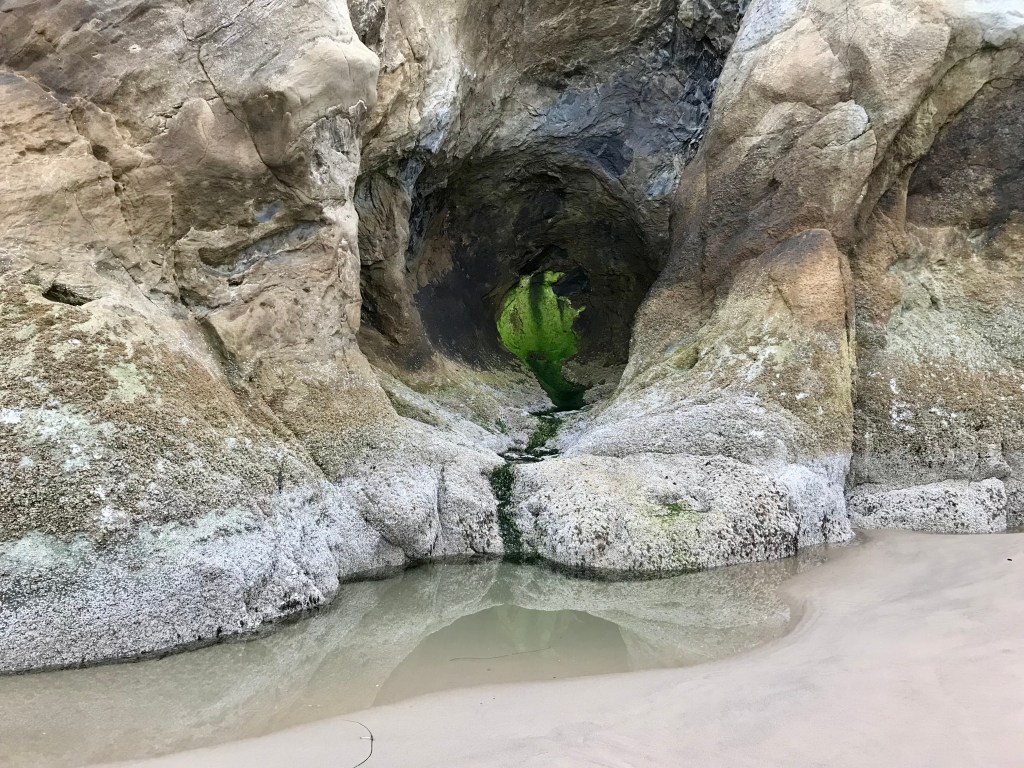
This is the hollow in sandstone facing the ocean that I call “The Little Altar.” Usually by this time of year there is a circle of green algae on the back. This year, there are three green penguins. Can you see them? Two looking south, a youngster flapping and pointed north? (And yes, there is a Big Altar a few feet north. No penguins.)Continue reading →