TRIGGER

“Trigger” does not refer to the horse “Trigger” but the warning, though I am only talking about my own triggers, especially cigarettes. So this isn’t exactly a warning, but more about writing, and you can probably read this essay without needing to be warned.

When I first began teaching the essay, the concept of creative nonfiction was still relatively new. A student contacted me about his college elective choices and asked: What is creative nonfiction? The definitions I found were not entirely clear, but I assigned creative nonfiction even so. My students were to search back in their lives for a genuinely peaceful place, a idyllic place where they were comfortable and happy, and then describe it using all their senses. It could be a single recent experience they describe, or one they experienced many times, or someplace they went in young childhood. If they did it well enough, the essay they wrote was profoundly satisfying to write. Their ability to recreate their peaceful place on the page would remain with them as a calm place forever. At least one student got into a private college by revising this for her application essay—the acceptance letter told her as much. I have probably written here about this assignment before, but if I go look I will lose my main point which is about another essay assignment. The persuasive essay.

Continue reading

GOOD CRY

My mouth fell open the first time someone asked if my newborn was a “good baby.” How do I answer that? Of course he was good, but people really weren’t asking about goodness. On any scale of goodness, all babies are good.

What they really wanted to know was whether my baby cried or slept. I got the same question when my second baby was born. By then I knew to answer simply: Oh, yes!

My mentor during the final term of my MFA program warned that he didn’t much care for crying in stories. No tears, please.

I have generally been what people call a “good student” because I will almost always do what is asked. So I cut tears from my stories in 2007. I literally went through my fiction and delete, delete, delete.

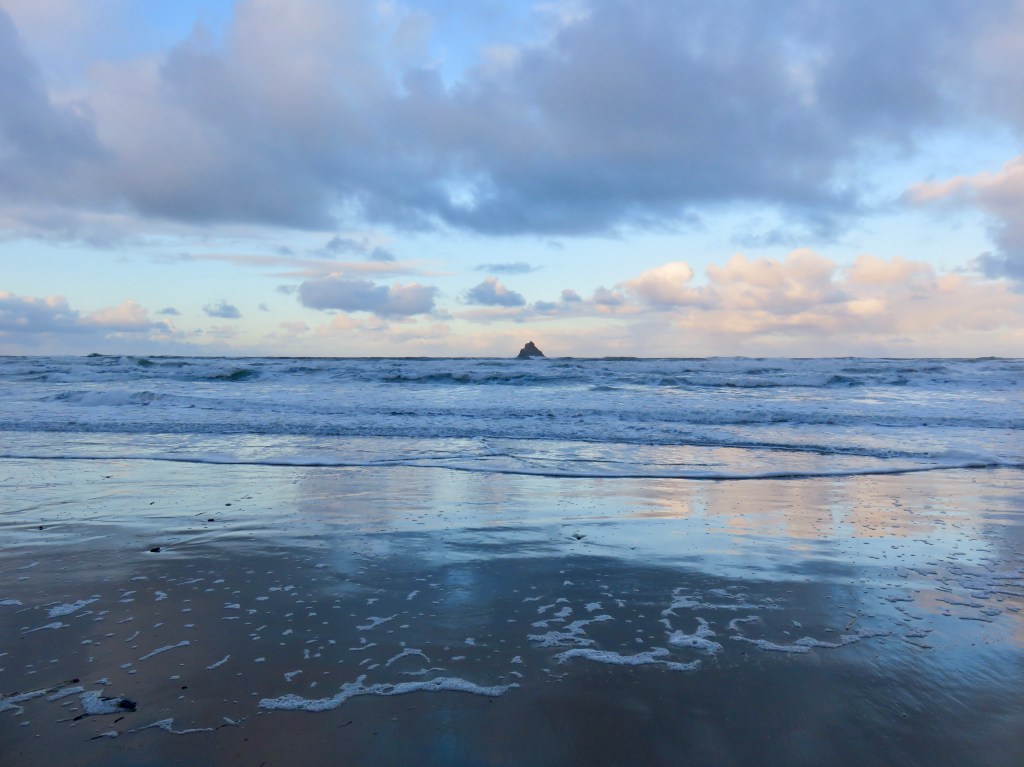
The way I like my blues. Reflected back from the sky.
Continue reading

LOSS

Blue skies and pouring rain have alternated all day today so we did not get our walk. We were too busy yesterday and needed a break that not involve wind-driven rain. It was meant to be a peaceful day. Driving rain and sunshine pouring past my window at the same time. And then… the news.

Dr. Paul Farmer, the subject of Pulitzer-Prize winning author Tracy Kidder’s most famous book Mountains Beyond Mountains, has died. I taught that book for years, linking it to the Pacifica Projects that all students at my high school were required to complete for graduation. Service and research were significant aspects of that project.

Dr. Paul Farmer grew up in poverty with a huge family and bullying father. Nevertheless, he attended and graduated from top universities, slept on a cot until he married, became a world renowned disease specialist, and devoted his life to serving the “least of these.” He was a good man.
Continue reading

#3 DEBRIEF

Yes, I am writing this part of my Monday post early so that by the time you read it I will be someplace else and doing something other than writing. There, see how I did that? Present tense and future in a single sentence?

I ran two miles, only some of it uphill, on Friday morning. I earned my Kouign Amann pastry from the bakery. I do not, sadly, think they will hire me. The “Hiring” sign is still in the window and the back-of-the-shop manager I talked to was encouraging, but the two men I talked to the first time looked at me as if I were stale bread. I know that look.

This is not one of my new weavings but an image I found filed away. My December warp is greens and the one I just finished for January is blues and violets, some smokey and some near peacock-bright. February will be corals and copper reds with pale lavenders. Maybe. One warp a month—I’ll see where I am with my huge stash at the end of the year.
Continue reading

#2 EXERCISE: DEBRIEF

2. The monster sentence. Begin with a simple short sentence—“I baked bread”—subject verb object—and then turn it into a “monster sentence” of at least 100 words. This exercise is straight out of Stanley Fish's playbook. Use every trick you know to ensure that the sentence is grammatically correct and not a run-on, use long dashes (em-dashes), semicolons, lists. Then explain what you’ve created, reviewing what you’ve written, phrase by phrase. NOTE: The explanation should be longer than the original sentence. Write nonfiction, then explain your work.

My assignment grew long, I mean reeeeealy long. I only needed 100 words and I have considerably more words… and that’s after I edited and carved it back a little. Then I revised and cut it back into shorter (but still with monster) sentences. And that’s when I found the point of it all.

In Seattle, especially while I was a student at the UW, people would ask, “Is the mountain out?” They meant, could you see Mount Rainier? Locally, it’s Castle Rock, 0.6 nautical miles offshore, that sometimes disappears behind a cloud bank or fog.
Continue reading

#2 of TEN SENTENCE EXERCISES

Writing Good Nonfiction Sentences… one exercise each Friday.

First the necessary introduction. NOTE: several of these exercises are inspired by How to Write a Sentence: And How to Read One by Stanley Fish, Steering the Craft by Ursula K. Le Guin, and other sources.

A good essay has a goal—to convince, delight, enlighten, instruct, warn, or to review and question. Part of becoming an accomplished writer involves understanding the work that every word must accomplish. 

Each sentence has specific work to do. In a very real sense, sentences are the basic building blocks of writing. Lay down one word after another until you have created a logical idea in the mind of the reader and that is a sentence. Do it with grace and style and that’s good writing. But in order to write a good sentence (or to read and appreciate a good one), it helps to understand the various ways a sentence can function in the essay. Forget about content (for the moment) and try pushing the envelope with these exercises about sentences. 

THE EXERCISES: These brief exercises require you to write a nonfiction sentence. Sometimes they require that you write several. Look at the examples and follow the directions after “assignment.” AND Whether this is specified or not in the instructions, on the same page you should also explain the sentence in detail. Don’t be surprised if the explanation takes up a lot more space and time than the sentence. What does the sentence you wrote accomplish? What did you learn by writing it and thinking about it? How might you have learned a skill you can transfer to other writing? 

That said, this assignment is pushes sentence-length to create a single “monster sentence.” There is a model and explanation following. My students loved this assignment.

Gary is standing beside the larger stump revealed by the shifted coastline—note that I wasn’t exaggerating about it being four feet across.
Continue reading

HOME TURF

Many years ago a famous author commented about the sloppy appearance of women in Washington State, where I went to public schools, Kindergarten through three undergrad degrees. She also talked about Puget Sound, using terminology appropriate to the East coast. Both comments irritated me, but non-locals talking about my corner of the natural world is particularly irksome. She spoke with authority and got details all wrong. I mean to write about two things today. First, a peevish rant about people misunderstanding my home.

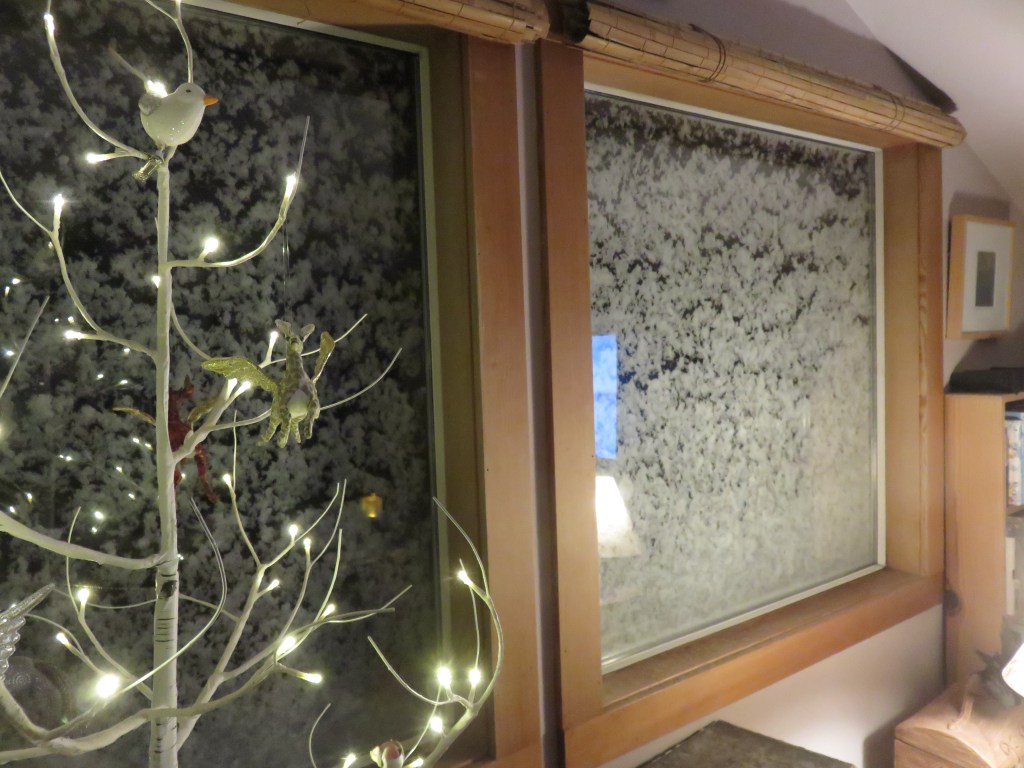
I should have shared this photo before now. Christmas snow with a west wind. Most winters we have not seen snow. Some winters we have not even experienced a major frost on the coast—the impact of the largest body of water in the world right outside our door.

A mediocre mystery/romance novel set on “the Puget Sound” referred to it as “ocean,” which it isn’t. Look at a map for goodness sake. And no one born here includes that article “the” before Puget. As in: We took the ferry across Puget Sound to Orcas Island.

Continue reading

PLANNING ATTENTION

Attention is the beginning of devotion.

—Mary Oliver
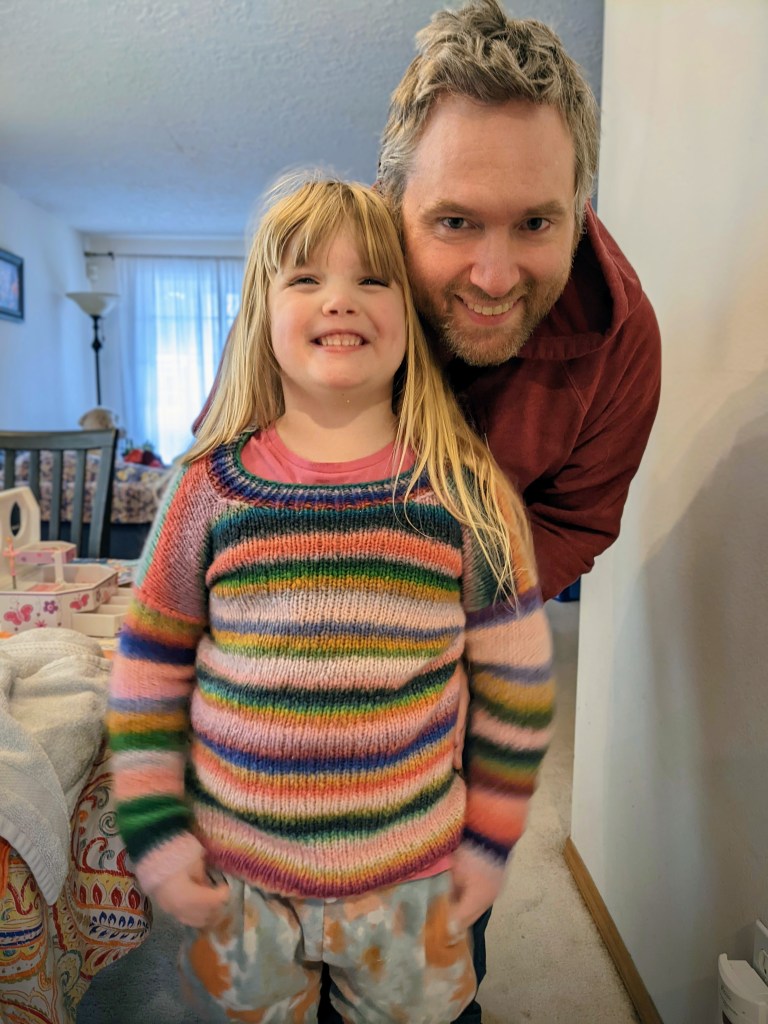
Our son Alan and his daughter E.V. wearing the sweater I knit her for Christmas.

I had to think hard about what happened in 2021. It was not a terrible year, not even a bad one. “Inconvenient”, as a friend suggested in 2020, a year that felt much worse. So goodbye to two years of pandemic and hello to a third. I have plans.

Continue reading

ALL GOOD THINGS

As I type this post on the morning of the last day of November, I have over 61k written for National Novel Writing Month. The official goal is 50k of a novel. In case you wonder, a typical novel is around 75-80k, but sixty thousand words is regarded by many as the absolute minimum length for a novel. By this evening, I might have over 70k once I add these new words to the one already written. Fingers crossed for me.

I won all the NaNo badges, every one. I wrote daily for a month and completed over 50k of a novel, and while I did not get the sixty thousand words to add to my existing 21k (pared down to 19k), I am optimistic in this moment. I would have liked eighty thousand words, but I think seventy-five thousand is realistic over the next months. Revision will both shave and add words. There is some hope I will get it done, that it will astonish me and make me proud.
Continue reading

AT THE KITCHEN TABLE

Perhaps the World Ends Here

by Joy Harjo (1951- )

The world begins at a kitchen table. No matter what, we must eat to live.

The gifts of earth are brought and prepared, set on the table. So it has been since creation, and it will go on.

Continue reading