I knew about coronavirus only because of vaccinating my dogs back in the day. It often struck with parvovirus, another danger for dogs, and together they could be fatal in the early days. I knew people who lost entire litters. Soon after they appeared (in the 1970s), both canine coronavirus and parvo were added to the vaccinations I administered to my puppies. Continue reading
CURRENT EVENTS
AFRAID
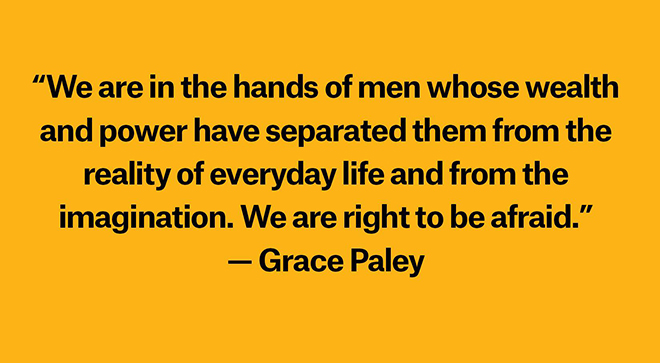
Look her up if you do not know of Grace Paley. She was brilliant.
GOOD DOG
And then the pit bull jumped up and hit me hard in the cheekbone.
and MORE
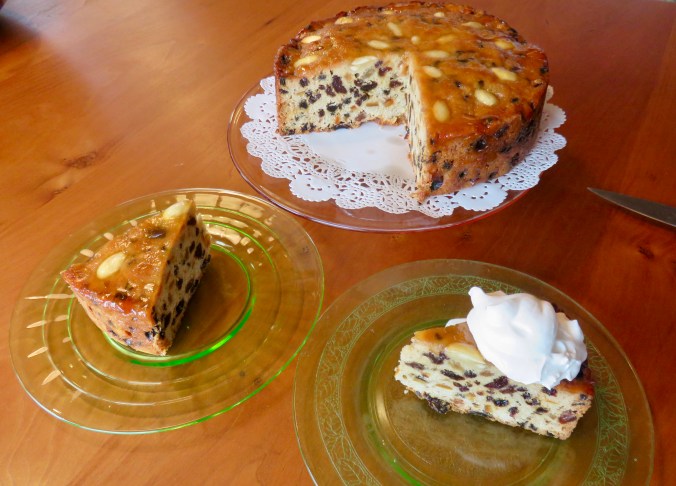
Gary loves fruitcake, even the awful gumdrop sort which I would not even use as a doorstop. I like the real thing. I made a traditional wedding cake for our wedding in 1974, a dark, aged cake from a nineteenth century recipe. This is what our family regarded as a wedding cake: fruitcake with white sugar frosting. That one was made with candied fruit from the Seattle Public Market, raisin and half orange peel punched from giant glass jars. It was a rich and aged cake, darkened with cocoa and brushed weekly with rum, but this is his favorite of all time. The Dundee cake is also made with “real” dried fruit, and a lovely golden color. Good luck aging it more than a few hours. I always use all organic ingredients.
Dundee cake
heartbroken?
Look, I have this firm belief that if America hasn’t broken your heart, you don’t love her enough.—Sen. Cory Booker
READINGS
I used to require my college writing students to attend:
MFA in Writing Residency Brings Top Writers to Seaside for Nightly Readings in January
 The Pacific University Master of Fine Arts in Writing program hosts readings by top contemporary writers during its 10-day residency in Seaside. The series offers a rare opportunity to hear these writers read on successive evenings. Free and open to the public, the evening readings begin at 7:30 p.m. and take place from Friday, January 10 through Friday, January 17 at the Best Western Ocean View Resort, located at 414 N. Prom in Seaside, Oregon.
This year’s lineup includes Kwame Dawes, recipient of the Windham-Campbell Prize and Pete Fromm, five-time winner of the Pacific Northwest Booksellers Literary Award.
7:30 p.m. at Best Western Ocean View Resort in Seaside, OR
Jan. 10 — Marvin Bell, Claire Dederer, Pete Fromm
Jan. 11 — Ellen Bass, Jack Driscoll, Debra Gwartney
Jan. 12 — Frank Gaspar, Scott Korb, Mahtem Shiferraw
Jan. 13 — Chris Abani, Mike Magnuson, Mary Helen Stefaniak
Jan. 14 — Claire Davis, Valerie Laken, Joseph Millar
Jan. 15 — Sanjiv Bhattacharya, Shara McCallum, Kellie Wells
Jan. 16 — Kwame Dawes, Cate Kennedy
Jan. 17 — Molly Gloss, Shelley Washburn
The authors who are reading also teach in Pacific’s low-residency MFA in Writing program. For more information about the writers or the MFA in Writing program, contact Shelley Washburn, MFA in Writing director, at 503-352-1531.
WOUND
The sky is raining down hard, we expect a “king” tide flood at the time I am supposed to be driving north, and I should be asleep as I type this. I am thinking backward and forward. I will not get back to sleep.
I think about war and how it is wound and stain. I wish I could explain myself better.
During WW2, my father served in France and Germany. He earned a Purple Heart and insisted he would probably have lost his leg if not for penicillin. My mother’s sister served in San Francisco, working with military personnel returning from and leaving for the Pacific theater. My father- and mother-in-law both served in the Southwest. They would marry in Roswell, where some people believe beings from outer space landed. People will believe such tales.
During the second Gulf war, we believed in weapons of mass destruction, even though UN investigators on the ground were quite certain that they did not exist. They didn’t.
During the first Gulf war, we were told babies were being tossed out of incubators in the maternity ward of a hospital in Kuwait. That lie was invented by an American PR firm and testified before Congress by a person with ties to people who had a financial and political interest in leading us to war.
It is always like this. War is great for business. War unites us. War solidifies national pride. It distracts us from what matters most. It gives us an enemy. Korea. WW2. The Great War. Spanish American War. Remember the Main. Rallying cries built on lies.
Some men such as Teddy Roosevelt believe war is ennobling, many believe that a uniform conveys automatic heroism. Such an adrenaline rush! Powerful men are eager to send others off to war because they will profit. Some advance their political futures with the blood of other people’s children. Some look forward with religious zeal to the coming Rapture. (A reminder that these last call themselves Christian.)
“May the best man win.”
The best man win? He won’t. He almost never does. I have heard that line spouted all my life, but it’s true only in the narrowest sense. Fastest on the day in a race (unless he’s using drugs, unless, unless unless), perhaps, but fighting is an irrational determiner of righteousness. War does not determine the “best” of anything, merely the biggest, best armed, luckier.
The allies did not win WW2 because they were righteous, because they were better. They won because of superior firepower. It might have gone the other way. If Hitler had won, would that have made him “best”?
I knew someone who got all the way to Vietnam and realized he was a pacifist, successfully claimed CO status, and got home again without killing anyone. The great poet William Stafford was a CO in WW2. The actions of these men required tremendous courage. Instead of the knee-jerk reaction to praise soldiers, perhaps honor those who refuse to kill on command.
I know, I can hear the “but-what-abouts” hustling up in all our minds. The Nazi war machine was an abomination. But it is not so simple. Life is not about our team versus their team, a sporting event with clear winners. In war everyone loses, except those powerful men making money in the back room. And everyone, weak or strong, win or lose, everyone sins. The Allies also committed atrocities. Warriors always do. Brutality, murder, rape, theft, torture—always in war. War makes us mad. War makes us ruthless. War makes us cruel. We commit unspeakable acts in order to win. We always do. We should admit that. Instead, we make excuses, we praise and hand out medals. We hide truth. We should acknowledge what war means to other people’s children. And to our own.
You cannot trust battle to reward the “best” of anything. War hurts everyone it touches. Those defending their homeland will go beyond what seems possible in acts of sacrifice. Those with bigger bombs will kill them anyway. Superior firepower is not determined by who is better, but it determines who wins. And both winner and loser suffer destruction.
Allow me to say it again: War destroys good people. War is a violent crime. Fighting in any war is damaging. Monstrosity does not happen to everyone, but those who fight are invariably injured even if they come home walking because we ask them to do something deeply immoral: kill other human beings. We struggle afterward to justify killing, to tidy away the inconsistencies, to hide our horror at our actions, to deny our trespasses, to minimize awareness of lingering destruction. (My student’s father came home whole-bodied but forever lost in his mind.) The uniform does not convey heroism to those safe playing music in Utah, recruiting in Seattle, training pilots in Arizona. They are free to pump themselves up for their service. They are safe. No one escapes battle unwounded.
We are all supposed to admire those who “sacrifice” to keep our country safe. But now, late in my life, I want a greater sacrifice. I want us to abandon this ridiculous notion that battle serves justice. I want an end to the pretense that all members of our military are automatically heroes. The lives of those who fight are ruined. I want that ruin recognized, that lasting ruin of those who survive. I want an end to the destruction of people’s children.
DO AS I SAY, not as I do?
Why is it that I do not feel better when my country is doing it instead of some other country doing it? Isn’t that what we are all supposed to have learned in Kindergarten?
“ ‘A nation that willfully destroys another country’s heritage would be no better than the criminals who have destroyed irreplaceable sites in Syria, Afghanistan, Iraq and elsewhere in recent years,’ Sara C. Bronin, a lawyer and specialist in historic preservation, wrote in an op-ed for the Los Angeles Times in response to Trump’s threats to target cultural sites in Iran.
“ ‘Targeting civilians and cultural sites is what terrorists do. It’s a war crime,’ tweeted Sen. Chris Murphy (D-Conn.), a member of the Senate Foreign Relations Committee.

“In Britain, a spokesman for Prime Minister Boris Johnson cautioned that ‘there are international conventions in place which prevent the destruction of cultural heritage.’ ”
“According to the 1954 Hague Convention for the Protection of Cultural Property in the Event of Armed Conflict, warring parties should take all possible steps “to protect cultural property,” which includes “monuments of architecture, art or history, whether religious or secular,” among other examples.”
These standards of ordinary decency have been confirmed throughout the civilized world from the Geneva Convention (1949 and 1977) to the recently International Criminal Tribunal for the former Yugoslavia (1992) and Mali (2012). NPR has a lot to say about this including direct quotes from U.S.Military law.
Trump has threatened to destroy cultural sites in Iran—his way of countering potential repercussions. Despite the fact that we have consistently supported respecting such sites. Leaders as diverse as Germany’s Merkel and Russia’s Putin have vowed to do whatever they can to prevent this outrage. Consider the last time significant civilian and heritage structures were targeted. Yes, consider 9/11. Imagine if the Statue of Liberty and Golden Gate Bridge, Bunker Hill and the Grand Canyon were— threatened because one of our leaders were killed in a foreign country. No, wait: Imagine we assassinated military leaders of two countries in a country we occupied for going-on twenty years. No, wait . . .
SNEAKER WAVE
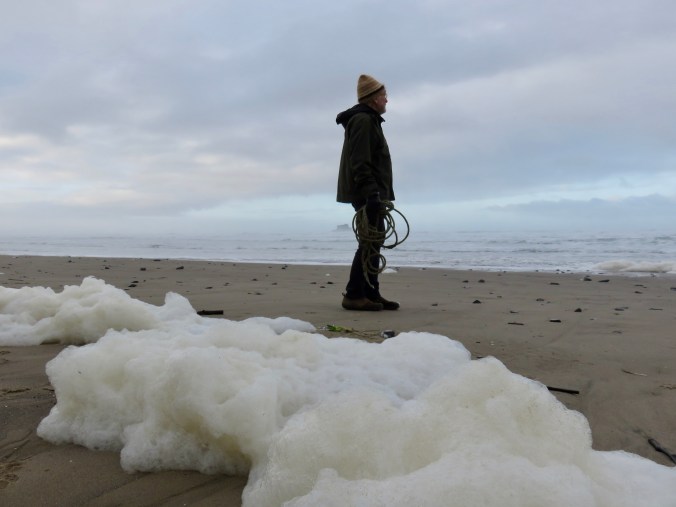
During heavy surf, the ocean pounds up sea foam. “Sea foam, ocean foam, beach foam, or spume is a type of foam created by the agitation of seawater, particularly when it contains higher concentrations of dissolved organic matter derived from sources such as the offshore breakdown of algal blooms.”
During our walk yesterday, a wave swept up a hundred yards over the sand and another ten yards into the rocks. This was nothing unusual. We pay attention, so we knew to move higher onshore and are rarely caught. We are particularly careful where there is no place to escape should a wave sweep all the way up to the green line. We work our way along searching for trash and treasures, but always with one eye on the surf line. Continue reading
A SENSE OF HUMOR
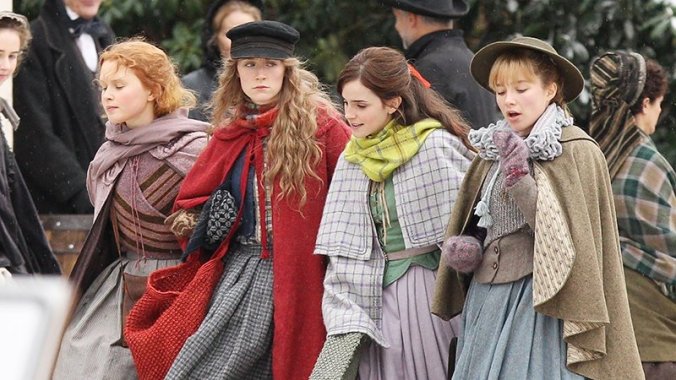
Monica Hesse in the Washington Post has a tongue-in-cheek article about men she’s talked to who are afraid to see Little Women alone: “The Little Women Men feel slightly nervous about going to see the movie without a female chaperone, for the same reason that some men have told me they are nervous about attending a yoga class solo, or assisting a lost toddler in the supermarket: because our society still — still! — gets confused by men displaying traits of nurturing or sentimentality, and these kindly men don’t want to creep anyone out.” I laughed. Continue reading
 &PRIDE Press