An imperturbable demeanor comes from perfect patience. Quiet minds cannot be perplexed or frightened, but go on in fortune and misfortune at their own private pace like a clock during a thunderstorm.—Robert Louis Stevenson
On May 25, 1911, a catastrophic event changed public opinion forever. A factory building in Manhattan caught fire but all exits, including firedoors and stairs had been locked or chained shut. Workers (mostly women) could not escape the building. In desperation, 62 people died when they fell or jumped from windows to escape the flames and smoke that killed others. In total, the infamous Triangle Shirtwaist Factory fire killed 146 people and injured another 78. The deaths were almost entirely preventable. Americans were outraged and as a result laws were enacted to protect workers and laws that had been ignored were enforced.
Some things are preventable, but we resist. Most of us use seatbelts, as required by law, and fewer people die in accidents as a result. Drunk driving went from a social convention to an affront against decency thanks to Mothers Against Drunk Driving (MADD). Today, most people call an Uber. But I just read an essay wherein the author bragged she’d driven only a few miles rather to a friend’s home rather than fifty minutes to her own home while drunk. People smoke despite knowing throughout their entire lives that tobacco products are poisonous. Some insist they need guns for protection despite statistics proving gun ownership make our lives less safe. We take unnecessary risks that are life-threatening not just for ourselves but for others. Isn’t it time for a little healthy anger?
The best advice my mother ever gave, and these were words she said to me hundreds of times: Think how the other person feels.
She meant to help me be a kind person. As a child I went to Unitarian Sunday school. Later I attended worship at many churches and temples and houses of worship. Though not religious, I wanted to be a good person. I wanted a clean conscience and self respect. I think that’s what my mother hoped for. Mom meant for me to consider the struggles, trials, and pain of other people and how that influences their actions toward me. She did not mean that I should consider myself last, but thinking how others feel has helped me consider motivations and sometimes allowed me to be kinder to myself. It certainly has forced me, sometimes, to behave better.
I thought I was done posting. I hid my posts in April, then opened them again a month later. And now I try to post. Gary says it’s good that I post. This past week has been especially…. hard? painful? heartbreaking? Is there a word strong enough to explain? Lately, as I walk Portland streets and see someone smoking, I have said out loud: You have known your whole life that cigarettes are poison. These are times when saying anything to a stranger might result in being shot in the face. Safer to post here.
Throughout my life, I have been prone to periods of profound sadness. This is one of those times. I think it is a rational response to the situations just now.
The greatest advantage to living long is knowing things will be better, that I will feel better after a while. I know this, though I do not feel it. I know it’s true.
I will feel better. Maybe nothing will improve, but I will manage.
There are people in the world who built a cellphone large enough for a horse. They taught horses to use it to text messages. (There’s a video showing all this on the website.) The horses might not see the point, but horses play. I suspect most animals have a sense of humor.
We did not walk to the Portland Rose Garden today, as we often do, but I saw a huge cascading rose outside a flower shop. Flushed with tiny white single blossoms, it grew twelve or more feet up and arched over the door of the shop and the sidewalk. The owner of the shop had no idea what variety it was. “It’s a volunteer that’s come up through a crack in the pavement.” She says it sets hips, tiny and red. I will return to collect seeds.
Below, a poem.
BOTANY LAB
by Jan Priddy
A generation ago in my Botany lab,
my partner bends over specimens, scalpel
poised like a paintbrush. He slices flowers
perfectly in half; my turn to peer
through the microscope. I count stamens
and ova. As I draw diagrams, search
for proper names in the text,
I do not notice silence
until it’s broken. Someone,
also hunched over high black counters
and flower parts, asks the air, What sets
human beings apart from the lower animals?Tools comes an answer from across
the room. Aren’t we the only species
which makes and uses tools? We decide
not, since Goodall documented chimpanzees
fishing for termites. Playing, I hear my partner
assert. Man is the only animal that plays.
I look up from the sexual organs of plants
and smile. I think he’s wrong, though I am
not the first to say it. My dog plays with me,
says another Botany student. But my partner
argues with pets. They are domestic animals,
tainted by association. Fawns, we offer,
adolescent lions. Juveniles, he shakes his head.
Adult otters swim purely for fun, we counter.
Porpoises leap in the wakes of ships, squirrels
play tag in trees, foxes pounce on dandelions.
His forehead puckers, scalpel painting the air.
Really?
Under my microscope, a five part flower,
many stamens, fleshy calyx-tube.
Family Rosaceae,
genus Rosa,
species multiflora,
precisely like
the illustration in my text—
a local flower I see each day.
“Botany Lab” was first published in StringTown, 2001
“Trigger” does not refer to the horse “Trigger” but the warning, though I am only talking about my own triggers, especially cigarettes. So this isn’t exactly a warning, but more about writing, and you can probably read this essay without needing to be warned.
When I first began teaching the essay, the concept of creative nonfiction was still relatively new. A student contacted me about his college elective choices and asked: What is creative nonfiction? The definitions I found were not entirely clear, but I assigned creative nonfiction even so. My students were to search back in their lives for a genuinely peaceful place, a idyllic place where they were comfortable and happy, and then describe it using all their senses. It could be a single recent experience they describe, or one they experienced many times, or someplace they went in young childhood. If they did it well enough, the essay they wrote was profoundly satisfying to write. Their ability to recreate their peaceful place on the page would remain with them as a calm place forever. At least one student got into a private college by revising this for her application essay—the acceptance letter told her as much. I have probably written here about this assignment before, but if I go look I will lose my main point which is about another essay assignment. The persuasive essay.
Since I began weaving in earnest, I’ve been rewatching television online, shows I’ve already seen, or tried to see, when they first aired. Monk. Psych.
Just now, it’s Grey’s Anatomy.
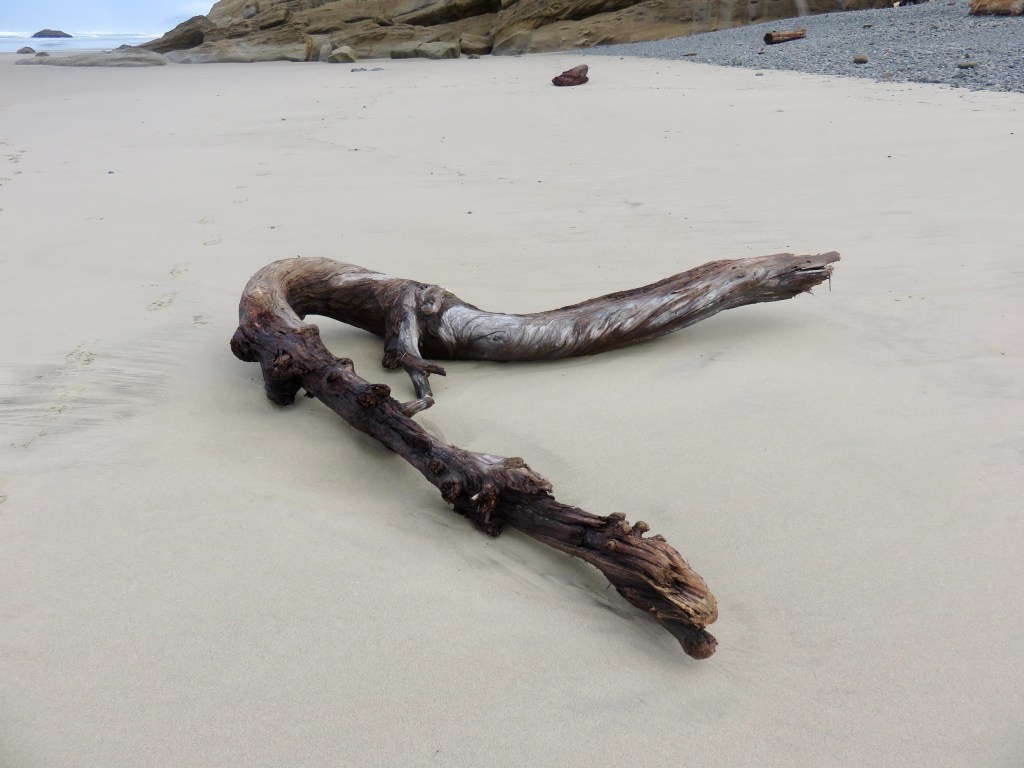
How this tree had grown. Sometimes a log drifts onshore and is just too incredible to ignore.
But I’m not really all that interested in these shows or even in telling about the weaving I am getting done, though that will surely be part of my post today. I’m interested to see what else…
“The arc of the moral universe is long, but it bends towards justice.”
—Dr. Martin Luther King.
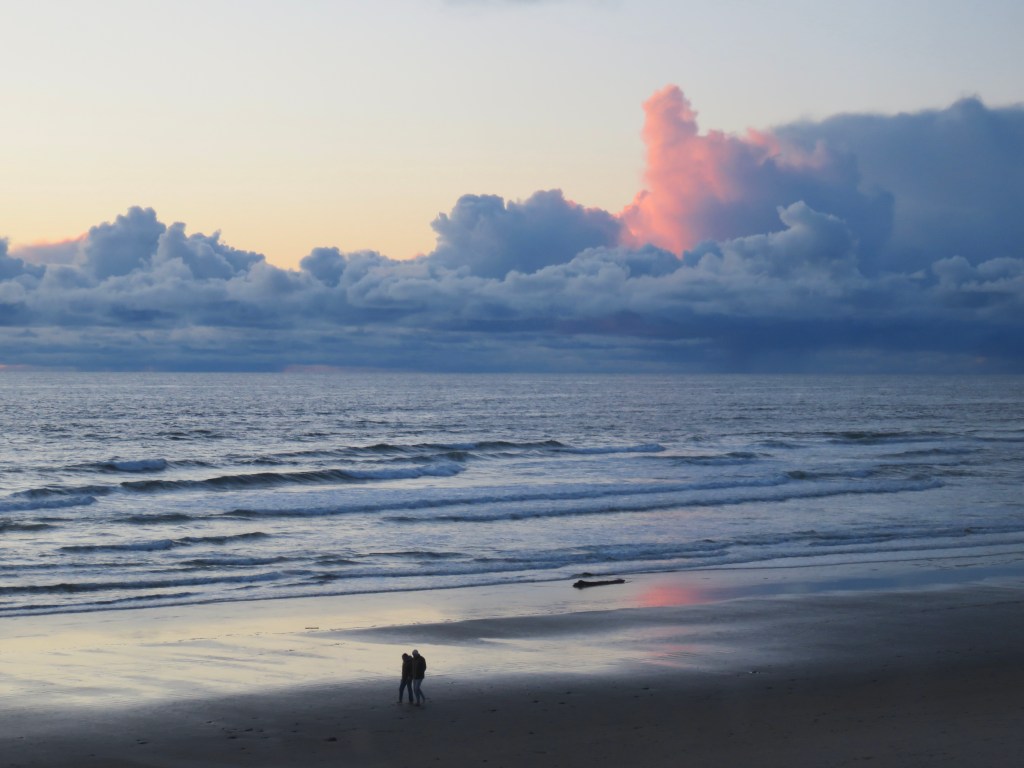
It’s raining. I made chili for our lunch. We ate chocolate chip cookies from the freezer. I got the April warp through the reed while watching the ninth season of Grey’s Anatomy, which means I haven’t seen any of these episodes. The mist over the ocean has turned the world evenly pale.
I think of March 9th as the start of the pandemic because 9 March 2020 was the day I stopped seeing people, the day I began taking precautions. Gary or the news might tell me we started on another day, in my head it was the 9th. I had shopped in Portland, played Scrabble with a friend, entered stores unmasked. And I stopped doing those things. I stopped hugging. We did not see our family for almost a year.
Two shawls from the same warp.
I know people who considered the pandemic restrictions mere inconvenience. They continued to hold family parties, go on cruises, fly for work and vacations. My husband and I didn’t do most of those things. We invited our sons and their families to visit once we were all vaccinated and boosted and tested. At other times we wore our masks indoors except at home unless we could keep yards away from anyone. We have eaten at an indoor restaurant four times in two years, and while I can’t say I regret taking that risk, and am very, very grateful to be healthy. I won’t be doing it again.
I am retired. I have more choices than most.
This winter I began putting monthly warps on my loom. Above is February. March is below. At twenty skeins each, I hope weaving monthly warps will work through my stash. (But you know I still order yarn, so… )
It is useful work and also avoidance, because I do not want to think too much about avoiding disease or missing people.
I was often the smallest person in any group, often the youngest too. That age difference changed decades ago, but I am still surprised to discover I am the oldest in a group. I am still often the smallest (my friend Madora is smaller than me, but she’s the only one).
I have fantasized about living in a smaller space at least since our sons became teenagers. Our home requires work and money to remain healthy. Retirement and not having pets has allowed us the time and money to do that upkeep, but it requires more attention than I will be able to spare. I could copy and paste the list of all the upkeep expenses coming for our beach house, but I’m pretty sure that’s a bad idea. Suffice to say that as I watched my father die of cancer and my mother age, I considered how best to handle my own aging.
Blue skies and pouring rain have alternated all day today so we did not get our walk. We were too busy yesterday and needed a break that not involve wind-driven rain. It was meant to be a peaceful day. Driving rain and sunshine pouring past my window at the same time. And then… the news.
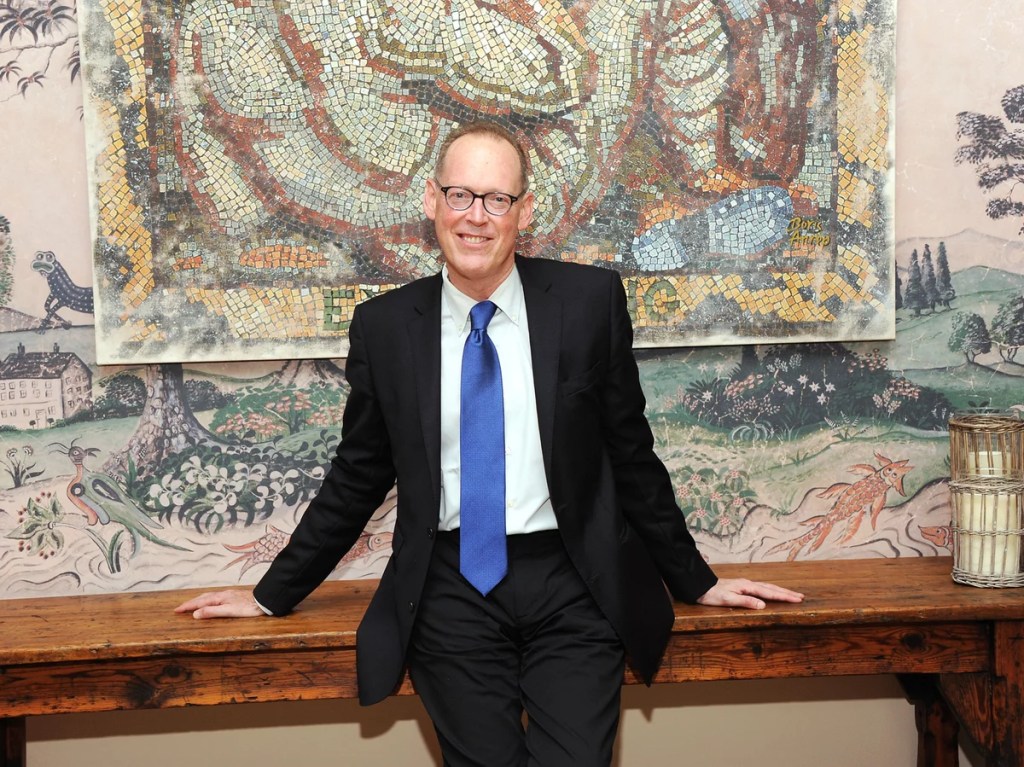
Dr. Paul Farmer, the subject of Pulitzer-Prize winning author Tracy Kidder’s most famous book Mountains Beyond Mountains, has died. I taught that book for years, linking it to the Pacifica Projects that all students at my high school were required to complete for graduation. Service and research were significant aspects of that project.
Dr. Paul Farmer grew up in poverty with a huge family and bullying father. Nevertheless, he attended and graduated from top universities, slept on a cot until he married, became a world renowned disease specialist, and devoted his life to serving the “least of these.” He was a good man.Continue reading →
Hardly anyone will recognize the letters I used to title my thoughts today. “Any Solid Color Other than Black” is a class in AKC shows for American Cocker Spaniels (ASCOB is pronounced ass’ cob). For the record, I have never owned or shown American Cocker Spaniels of any color, though I do have a scar on my upper lip from being bitten by one when I was a small child.
This is not a post about bites or even dogs. There are no assignments or exercises. A few crows. Trees. Our condo news.
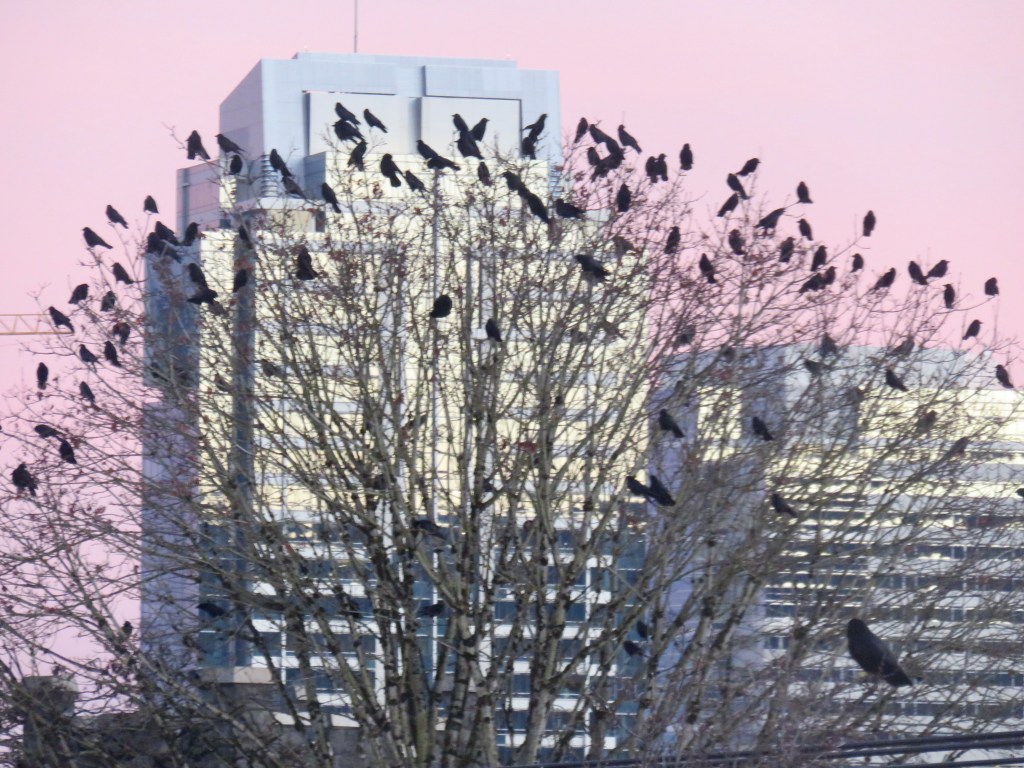
We like crows. Above is a tree with over a hundred crows, but there might have been a thousand nearby when I took this photo. (HINT: this was not the only tree, and most of the birds were flying.) There are “local” birds, but they gather as a massive flock (“murder” seems unkind), usually in late afternoon but on their own schedule. Continue reading →


 &PRIDE Press