The AUDIENCE IS LISTENING

img_3828

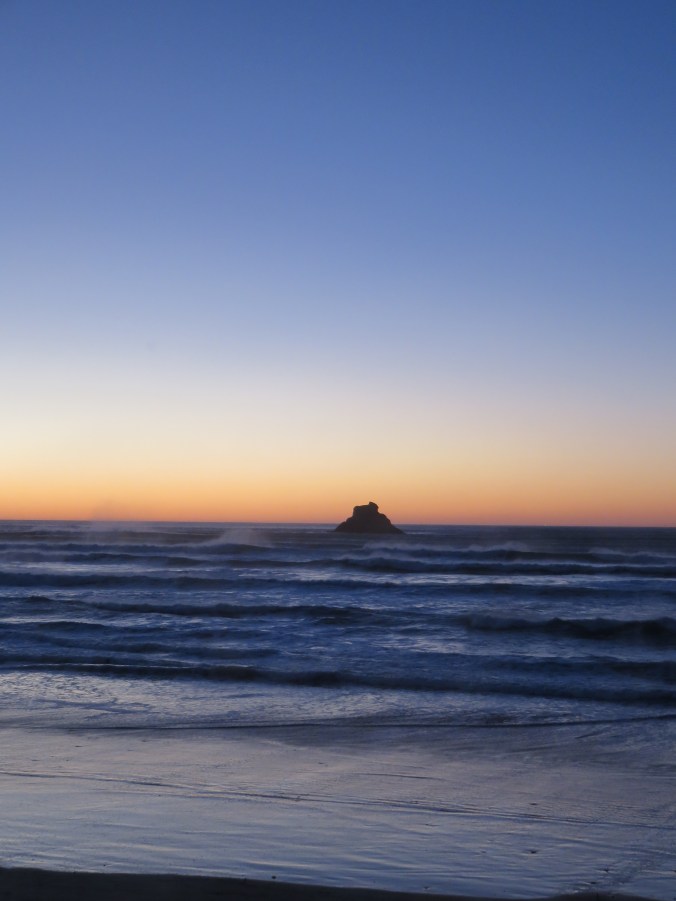
I am fascinated by the way a sunset transitions from orange though gold and directly to blue without passing through green.

If writers have a responsibility for how they narrate the world, certainly readers have a responsibility for what they consume and from whom.—Roxane Gay 

It is noteworthy to me that Gay takes the writer’s responsibility for granted. I am interested in the writer reading his or her own work and the responsibility that carries when conducting a public reading.

A long time ago I was accepted to The Flight of the Mind, a writing retreat for women. Among the many wonderful things that happened to me during that first week spent writing and reading and listening along the McKenzie River fifty miles east of Eugene, Oregon, was a blooming awareness of audience.

As a writer, I am eager for audience. I want my words to be appreciated, admired. I want to be understood and my stories, fiction or nonfiction, to be heard. I want to have my say.

Audience is all the people who might read my words or hear me read. When I taught The Bluest Eye, I warned students about the challenging scenes they would find in Toni Morrison’s first novel. They could choose not to read the book. They were encouraged to set down the book if it became too painful. It is a particularly appropriate warning for a young reader. It is a choice we all have when we read on the page.

A public reading is somewhat different.

All those years ago, Director Ruth Gundle had a great deal to teach me about who might be listening at a public reading or even at a reading before 80 other committed women writers. Anyone could sign up to read. She established guidelines for choosing work to read which was focused on quality and length, and she demonstrated great skill in arranging readings with a dozen or eighteen or more readers. Was anyone planning to read something distressing? Such pieces were placed within the lineup first—not first to read, but placed first before the rest of the readers and bookended with care. Her goal was to be fair to each reader, but also to lead the audience on a meaningful journey.

The reading should not be too long and never beyond the scheduled time. The reading should be work that has been thoughtfully revised. The audience should be entertained and challenged without finding themselves torn by barbed wire if they have been promised a flower garden. They should not be expected to transfer directly from horror and tears to lyric and laughter. Such emotional transitions must be thoughtfully choreographed.

Audience is the people in the room during a reading. The writer can only rarely predict her audience. She cannot know who recently experienced the violent loss of a family member, who has been assaulted, who feels deep and overwhelming regret or anger or fear or despair. She cannot know what her audience brings to the room.

The writer’s obligation is to bring worthy work to the room.

Long before anyone began writing articles about trigger warnings, Ruth Gundle urged us to ensure our audience felt safe and respected. The audience should not be assaulted, not entrapped or bludgeoned or accosted during a reading. Potentially painful or distressing material need not be avoided, but the audience led gently into and out of such fraught territory. Particularly painful work should be followed by work that manages a gradual release of tension.

The reading is not supposed to be a mind game serving the selfish interests of the writer. The reading is in service of the audience. Surprise, disagreement, even shock all may result from a reading, but these emotional responses should serve the audience, not the hubris of the writer.

Only an egotist tells a story merely to get a rise out of his audience. The responsible writer must put audience before personal ego. Yet some writers are too wrapped up in their power to do that.

On the other hand, if the only way a writer can capture an audience is by crossing lines . . . well, that says something too, doesn’t it?

If you attend enough readings, you will likely have your own stories to tell of inconsiderate writers.

I was trapped in the middle of a long row during a reading so boring (and nearly an hour overtime) that I began reading a book. It was so very boring that the person behind me began reading over my shoulder. Both of us were too polite to simply stand, work our way to the aisle, and leave. The reader was less polite.

Twice, a scheduled reader invited his friend to read after he was done. The friend read the first draft of a bad detective story or a squirm-worthy sex scene. The scheduled readers and friends probably felt quite pleased. The audience was not.

Reading in voices, badly in voices. Intimate scenes may be powerful in context of the novel, but repulsive in isolation because the audience has not been given the opportunity to invest in story or character.

And then readers who were perfectly aware of their audience, who deliberately manipulate and assault the listener. Some writers use drama and prejudices, stereotypes and bias to exploit their audience’s reaction. Powerful writers can do this easily, but like many choices we have in life, the ability to do something hardly provides the justification to do it. It is exploitative. It is bullying, and I think we are all weary of bullies. Aren’t we?

Each Winter term, I require my Writing 121 to attend a local reading. They have an exceptional opportunity in January, and sometimes they are deeply moved. I warn them about readers who might be crude, but they are young and the writers are “famous” and they do not wish to seem immature or naive. When the rest of the audience laughs, they want to laugh as well. They have never complained about what is read.

This year was different.

A public reading is not merely about stroking the ego of the writer or scoring points for writers’ freedom. Long ago, Ruth Gundle helped me and dozens of others to understand that the purpose of a reading is to give something of value to the audience.

Respect to the writer; respect to the listener too.



unAMERICAN

60b587cf-b5f5-4c1b-8d37-7173c7b1cc69.png

We have been enjoying the BBC production of Victoria. At the same time, I am mystified by Americans’ obsession with royalty.

The radical Chartist Movement is featured in the current Victoria series. It is well to appreciate that what these people asked for should not sound radical to Americans. They were asking for what seems perfectly rational and reasonable today. They asked for rights we should take for granted. That anyone would dispute these demands sounds about as outdated and absurd as arguing whether women have souls. (Yes, this happened repeatedly, and even in America.)

The Chartists’ six main demands were:
• votes for all men;
• equal electoral districts;
• abolition of the requirement that Members of Parliament be property owners;
• payment for M.P.s;
• annual general elections; and.
• the secret ballot.

It’s all taken for granted today. (Payment for M.P.s would have allowed ordinary working men to run for office without starving. Wealthy men who then held these positions could afford to attend Parliament because they had no job; they were rich.) At that time, rich men had complete control beyond the Crown. This was considered right and proper because they believed a person’s position in society was ordained by God. If you were born a tenant farmer, God meant for you to work hard all your life and to do as you were told. If you were born to an aristrocratic family, you were supposed to be respected, bowed to, and to be the ones doing the telling.

This is not an American value. We’re not supposed to believe that some people matter more than others at birth. The Declaration’s insistence that “all men are created equal” was a radical departure from Old World God-ordained dogma. Americans are not supposed to believe that some people are born inherently more important or privileged  than the rest of us.

And yet, according to a recent headline, America’s favorite redhead is a British prince?

Why do we care?

It is unAmerican.

Is it a harmless fantasy? I refuse to believe that such assumption of inherited entitlement is “harmless.” Indeed this belief undermines the very ideals of every modern democratic society. Yet we cling to this pretty story, especially for girls, this notion that the story of a pretty princess, born to power matters.

The princess stories, even the more empowered princess stories are unAmerican. Why feed this propaganda to our daughters? The “princess” is a woman who, by accident of birth alone, matters more, is valued more, who possesses greater power and influence and personal importance.

Did you miss it?

That’s unAmerican.

Americans are not supposed to stand for such nonsense. We’re not supposed to believe that some people are born to rank and privilege. Our nation is founded on the belief that we are all equal at birth. Our destiny is not infinite, but neither is it defined by our birth. Someone, please, inform Disney.

True, our founders, most of them, even the ones who wrote the words, believed some people mattered more than others, and those founders had been born to superior rank and actively perpetuated their own privilege. But still . . . in theory, they recognized a better world. They recognized ideals beyond their current existence.

And in that better world they imagined, a Queen is merely a wealthy woman, poorly educated, and participating in an archaic system of privilege and posturing. Princes are mere men who have done nothing personally noteworthy other than being born.

And the “princesses” in those stories? However decorated and enlightened, however brave or capable, however dressed or redressed, whatever their race or ethnicity—they are mere girls, never even women, just pretty female children born to rank.

It is a subtle indoctrination. It is propaganda.

And that, my dears, is unAmerican.

It is fundamentally wrong.

BE WHAT WE EXPECT

50064337_815356815478205_5354791712269008896_n.jpg
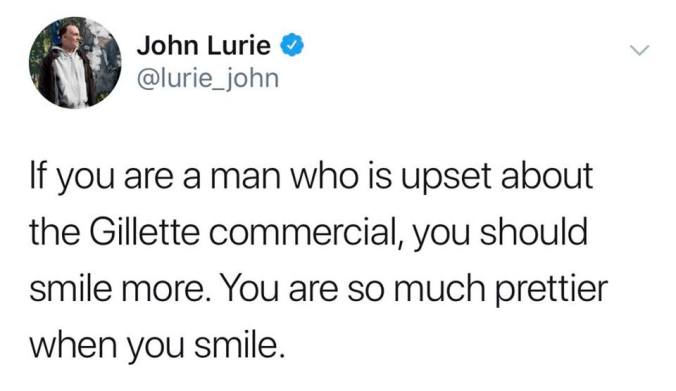
The Gillette commercial announces the company’s revised motto: Instead of “The best a man can get” they urge men to be the best they can be. The response from a narrow group of men has been nearly hysterical. They accuse the commercial of everything from unrealistic to emasculating. Most people I know, including men, including men actively hostile to feminism, find the commercial empowering.

One man tweeted in response to a furious “let men be men Let boys be boys” pundit: “It’s about balance. No one is suggesting men can’t be men. It’s about being a good person as a man. Historical behavior is no longer in tune with todays equality. You can be a tough guy, a manly man but still a man with values and appropriate behavior to help guide your kids.”

What we demand from ourselves is dependent on a lot of things, including what we are told about ourselves as men and women.

Girls have been outperforming boys in school for a long time, but this somehow magically swaps around . . . not in gradeschool or high school. Not even in college where women are still doing better. But somehow, in interviews and promotions, despite decades of women outperforming men, men abruptly do better. There are plenty of explanations for this. Nature or nurture? Natural aptitude? Inherent differences? Self-confidence?

I read a historical review that insists women have always outperformed men in school going back over a hundred years. (Anecdotal evidence from my life and my family supports that.) I think we only began to worry about this in the past 30 years because of popular books like John Gray’s Men Are from Mars and Women Are from Venus and Susan Faludi’s work. The assumption from some studies is that women were not actually smarter but simply socialized to be “nicer” in school, which is not so different from the claim in this article.

My psychiatrist friend says it’s hormones.

The New York Times report points to something simpler. “The study adds to a growing body of research suggesting that boys’ underperformance is not because of anything innate to boys. Instead, it seems, it’s largely because of something external: their school environments and peer influences.”

“Girls are encouraged to be diligent, cooperative and ambitious — all things that serve them well in school. Boys are more sensitive than girls to environmental influences, according to a variety of research, and they feel pressure to be strong, tough and athletic. They get the message that doing well in school is not masculine, social scientists say. Even in peer groups that prize good grades, it’s considered uncool to seem to try hard to earn them.”

The gender gap, with girls performing ahead of their male peers, historically reverses as the children age. After more than a decade of encouraging girls to be perfect students, we discourage girls from being smart. My brother used to talk about the gender gap in math in the US and how in Japan at the time the gap was reversed. It was assumed in the US that girls were “not good at Math” and they fulfilled that expectation. In Japan, Math was assumed to be mechanical and repetitive and exactly what girls were good at, and so the girls did well in Maths. In the 80s I would sub for the Math department and there would be no girls taking higher math classes at all at SHS. It was shocking. The head of the department in those days assured me that girls were naturally weak in abstract thinking. I assured him I had been in the 99%tile when I was tested.

Despite beginning Pre-Algebra when I was 10 and Algebra the following year, no one blinked when I stopped taking math my Sophomore year of high school. I often think how differently my life might have gone if everyone had not assumed I would eventually marry and be supported by a husband.

In my experience, I see how boys and girls receive vastly different treatment and expectations. A colleague with twins treated them differently from the instant they were born, and I was shocked he failed to even notice. The girl, despite being pounds heavier at birth than her brother was handed around like a fragile jewel. The boy, despite being underweight and subjectively fragile was passed about like a sack of flour. This is about more than pink and blue blankets.

We train them young to be what we expect and want them to be. Both boys and girls do their best to satisfy our expectations.

This may be changing.

Personal relationships are indeed personal, but our existence as people, as members of human society, should guarantee a certain level of respect and absolute justice. Not everyone benefits or suffers in identical and visible ways from sexism, but I would hope we all value the right of each individual, regardless of demographics, to life and liberty and the pursuit of happiness. At least one study of relationships between men and women over the past 50 years suggests that our expectations are changing. The assumption used to be that the man in a heterosexual marriage must have a superior education, but a “key finding is that the relative stability of marriages between educational equals has increased. These results are consistent with a shift away from rigid gender specialization toward more flexible, egalitarian partnerships and provide an important counterpoint to claims that progress toward gender equality in heterosexual relationships has stalled.”

That should mean that we are allowed to find out our personal interests, strengths, and weaknesses instead of having them arbitrarily defined for us.

KIDS TODAY

fullsizeoutput_e9f

I am ill. Sick. Not sick as in vomiting, which is what that word means in England. This is not England. I have a cold. I have not been this sick in almost five years.

The last time I had my morning walk was a week ago. I have been outside the house once since last Thursday, that was to visit the Walk-In Clinic in Seaside. My lungs and ears and sinuses are clear. I have a bad cold, a fever, major congestion, and until I took the NP’s prescribed Cherratussin (generic Robutissin) Sunday night, I had not slept more than an hour or two at a time for several days. The NP told me to go home, stay home, and get some rest. She capped it. REST.

Yes, I am become an old person talking about health.

My country is not so very healthy either, but there are hopeful signs. Gillette announced their new slogan is not about the best a man can get, but the best a man can be. See it for yourself. If you judged the content of the PSA by the outraged, even hysterical responses posted by a tiny but highly vocal minority of men, you would think it was an emasculating horror. Instead, even a former student who declares himself “a harsh critic of feminism” finds it perfectly reasonable. So do I. As another man I do not even know tweeted: “It’s about balance. No one is suggesting men can’t be men. It’s about being a good person as a man. Historical behavior is no longer in tune with today’s equality. You can be a tough guy, a manly man but still a man with values and appropriate behavior to help guide your kids.”

A friend posted: “I think some object to the idea that there is even a problem that needs to be addressed, and if that isn’t privilege, I don’t know what is.”

The first really powerful statement I read of the need for men to be the change was written by a man.

Times change. I am frequently asked how students have changed since I began teaching. I suppose I most object to the assumption that teenagers have changed. Teenagers are people, just like everyone. They come from a variety of backgrounds, have suffered a variety traumas, are blessed with a variety of natural gifts and of earned ones. They are teenagers—pinched between childhood and adulthood. It is still a terrible time where individuals enjoy little power, suffer screaming hormones, and possess no clear sense of what is coming. I was not a particularly happy teenager, and like students even today, I was assured this was the best time of my life and I should be enjoying it! Dear heavens, you mean it’s all down hill from here? I knew it for a lie, and I frequently assure my students that this is probably not the best time of their life. They look relieved when I say that. They are not so different. There are few changes. They are people. Sometimes they are dense as bricks and sometimes they are scared.

They have cell phones.

At my school, the economic advantages of some are not more marked than they were 40 years ago when I first subbed for my own former Junior High School Science teacher. Perhaps the bigotry of some is more openly condemned? Perhaps they are more aware of injustice? Perhaps they are less likely to avoid coming to school because of bullying?

Perhaps not? But perhaps.

As I say, I am ill today, my ramblings are not reliable. My personal list of grievances and gripes is long, but I will not rant. We all have our disappointments.

So here is what I think about my students. My students are not snowflakes. They are not fragile flowers. They need to be more curious. They need more skepticism and less cynicism. They need critical thinking skills. Someone should convince them that not all parents or teachers or politicians are right or even their enemies. Something should matter to them more than games and sport. They should read enough news to understand it. They should have moral goals and beautiful dreams and they should work hard to see those dreams bloom.

It’s a lot to ask, but they are strong. They need the confidence that genuine accomplishment can give. They are young to have that.


WILLINGLY FOOLED

img_3787

My son had a cat living in his house who knew that he possessed the Secret of the Red Light.

Alan had an infrared pen which he shined on the floor and that cat chased from room to room, in circles and mad dashes across the house. Once she he ran the light under the door of of one his housemates’ rooms and she waited faithfully for hours for the light to come back out.

He laughed and insisted she knew he was the one who has the light. She would come to him and meow and meow until he played with her. The ultimate suspension of disbelief.

I told him this is why some of our dogs, the smarter ones, were not good lure coursers.* They had speed and agility and endurance. Certainly they were enthusiastic. Speed, Agility, Endurance, and Enthusiasm were four of the five scoring categories. But the fifth scoring category was Follow. They watched, they responded to each twist and turn of the lure on the ground. They chased the lure enthusiastically, but eventually—often too soon—some part of them simply refused to play along.

“Wait a minute, enough already! That thing is only a shredded plastic garbage bag dragged by a line. Go over there where the line is—it’s bound to get there eventually.”

They began cutting, shaving off corners, in order to get to where the lure was going rather than following behind. They understood the game they were playing, that the lure was not moving freely, but along a predetermined path. They knew it was not alive. They did not pretend it had a choice of where to run, but they did. They couldn’t, or chose not to, suspend disbelief to play this game for us. They wanted to win, I suppose. The hunt was more vital than simply the chase. They wanted success at the end.

Where is the sweet spot between being right, being first, being a winner, and being entertained?

It seems such a human thing in some ways, or perhaps it is very animal and at least some of the hounds who were fooled and continue to be fooled know they are playing and are as willing to play as are we throughout so much, perhaps too much, of our lives.


*The American Sighthound Field Association developed from a Borzoi and Saluki fancier, Lyle Gillette’s determination to find a year-round activity that allowed sighthounds to practice their skills. Lyle was a sweet man, very active and successful in showing his dogs. He had hunted wild hares in Open Field Coursing but that is a seasonal activity, and the dogs love it. Lure coursing was mostly his invention while he was still living in California.

In the late 70s, my husband and I were active in establishing ASFA (later AKC) field trials for sighthounds in the Pacific NW. For years we traveled all over running our dogs. I was a licensed ASFA judge, but began judging because of my involvement with Heather and Jeff Loube in BC. I traveled with the Loube in 1975, I think, to Denver to the inaugural Grand National. There were over a hundred sighthounds from all over the nation competing. The Loubes came home determined to establish the sport in Canada, which they did with the support of other sighthound owners, some with Open Field experience.

IMG_2870

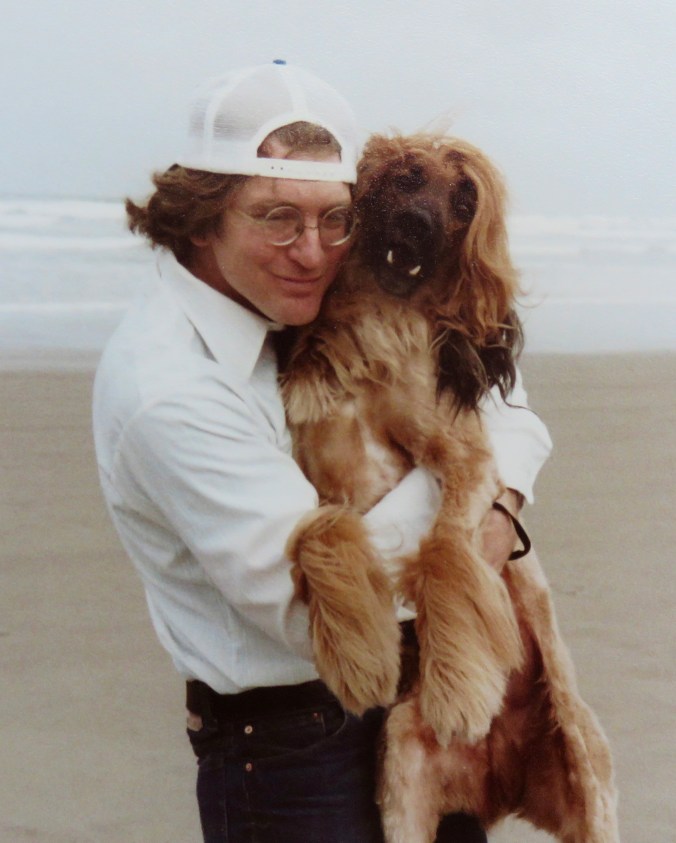
Gary with his dog, Volant O Solitary Man, American and Canadian Field Champion, in the 80s. “Manny” was not fooled, but he loved to run. (He’s in “pony clip” for ease of grooming.)


TO A BETTER YEAR!

IMG_3785

People think they can burn plastic into nothing. No, it turns into lumps I pick up later.

And all those illegal fireworks? I am still collecting the refuse from the last blast.

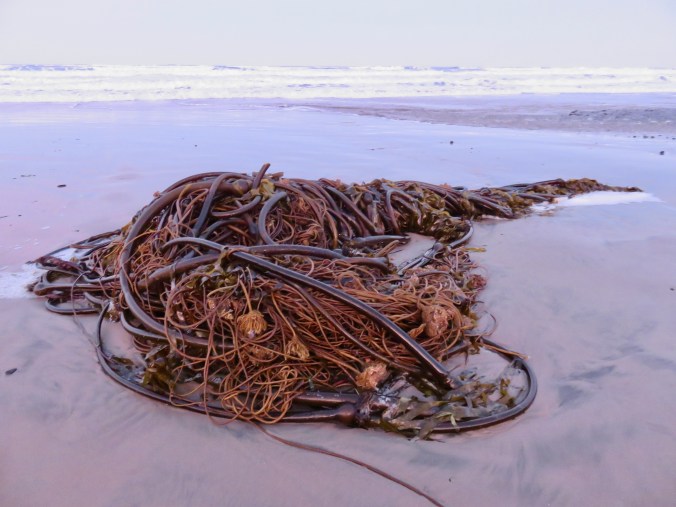
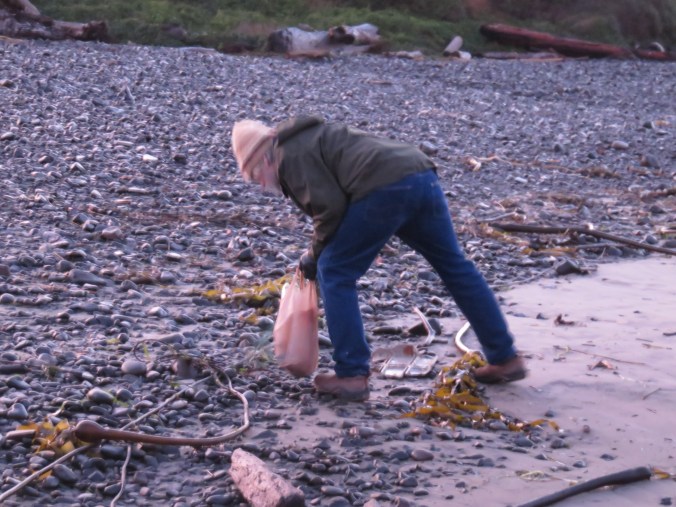
However, most of the refuse Gary and I pick up is from ships at sea. I know this because it’s plastic and nylon rope and containers no one brings to a beach picnic.

Just so you know.

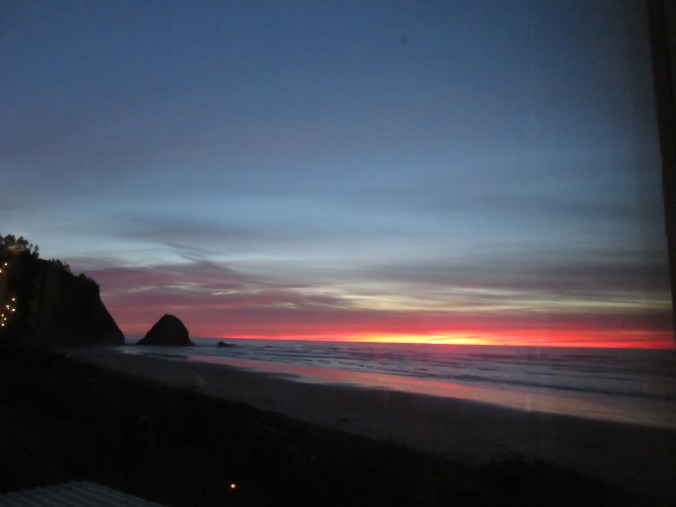
The sky just after sunset was not the color you see in the photo below. It was purely red and midnight blue, but my camera has a better eye than we do, so it captures the golden highlights of the set sun that we did not see at all. What we saw was a band of lipstick red. That’s what the human eye could perceive. I wish you had been here to see it too. Still, my camera has a pretty view. (The little yellow dot at the bottom left of center was a brief beach fire on the sand.)

May 2019 bring you joy and contentment, a deep sigh of pleasure, a dog or cat to pet, good meals, quiet walks, many good books, a brand new view of something genuinely marvelous. I just watched a video of a solitary narwhale traveling with a pod of beluga whales. We all need friends. He’s picked up their bubble-blowing habit and swims close. Have a look at the footage.

IMG_3788

LEAVE THE DEER ALONE

fullsizeoutput_e6a

There was a doe on the beach in front of our house. It is not the first time we’ve seen a deer on the beach, but this one was distressed, maybe shocky. She stood hunched, ears drooping, head low, and perfectly still for a long time, wet from having been in the ocean, but no sign of actual injury. Our neighbors from Washington came over and asked Gary who to call. They both called Oregon Fish and Game.

The truth is that wild animals do best when they are left alone. Approach from a human being is stressful, and thus almost inevitably counterproductive. I will never recover from being present while a baby seal was chased into the surf by an unleashed dog. I tried but could not stop the dog.

Visitors want to “rescue” baby seals left onshore while their mothers fish. They want to “rescue” the elephant seals that are naturally molting. These wild animals do not need us to rescue them.

During our near-forty years here, we have picked up storm-battered birds and hidden them in the hedge from dogs and other predators. Sometimes they live—the rhinoceros auklet lived, a grebe, a crow, a couple of seagulls, several hummers. Each was unfledged or stunned and incapable of moving. We moved them to safety and left them. But it is really best if we don’t touch them at all. Regardless of our feelings, they are wild animals and human beings are their natural enemies. Sometimes they die. As sad as it might be for a human witness, it’s not our place to interfere. It is very rarely helpful. It is generally harmful when we try.

We watched the doe from the house for a long time, and then I thought she might be okay after all. She relaxed her stance, brought her ears up. She flapped her ears and shook her body from one end t0 another. Water flew from her coat. She lifted her head, turned and looked around as if seeking.

Maybe the deer would be okay, I thought. People were holding their dogs a quarter of a mile off, taking photos no closer than from 300 yards. Maybe she will find her way back to forest.

Then a couple approached the deer. One well-intentioned person with a long stick she used to poke at and drive the deer south . . . to where exactly? She was driving the deer south, further away from the place she entered the beach. Honestly, the deer is a wild animal, not a dog!

I went out and yelled as I came down to leave the deer alone. The couple had already moved the deer a hundred yards.

The woman walked toward me. She wasn’t pushing the deer, the woman insisted, she was rubbing the deer’s neck.  I did not argue with her.

“It’s not a dog, it’s a wild animal,” I said.

Apparently I was “not nice” when I told her to leave the deer alone. “I know it’s not a dog. You should be nicer,” she said. “I am not an moron.”

Could have fooled me.

I softened my tone to what I would use for a frightened child. The woman looked like a frightened and wounded child, but this was not about her. It was about a deer. “Leave the deer alone, please. You can’t help her. Just let her be. Please,” I said again.

Turning, I walked back to the house. The woman went away, too, and the deer lapsed into the previous hunched-up stance, and then Fish and Game arrived. They sat in their huge vehicle for a while, drove in a wide circle around her, and then they drove away.

It’s best to leave them be. Sometimes they live.

A dozen more people approached the doe. Two people threw lettuce and bread to her. She did not touch it. They said they understood what I was trying to say about standing off, but they didn’t leave until the rain came. On my way back to the house, a longtime neighbor met me. He had been on his way out to tell them what I told them: They are making this worse.

Then two more tourists who did not stay long, and then eight people stood in a circle around her. They clapped at her. This group, like other people, kept moving her south. She was shivering this last time I went out to ask well-meaning fools to step away. “She’s been in the surf,” they tell me. “I know.” I watched people push her further and further toward the water. It was what they were doing themselves. Before I got close enough to them to ask them to please step back, the deer herself had kicked at one of the eight people surrounding her. They utterly failed to respect that.

I was polite and apologetic, and I acknowledged that they meant well, “but every minute you stand close to this deer you shorten her life. You are her natural enemy. It’s what her mother would have taught her and she believes her mother.”

The group mostly dispersed after I talked to them, but then there was another group of five. Yes, deer are beautiful. It is very sad. Go home and eat your hamburgers.

If they’d let her be, she might have had a chance. She probably will die soon, and at best in their arrogance and foolishness all these people have caused her distress. They will go back to their city homes so very sad and sorry for the poor deer, without understanding the part they played.

I won’t watch any more.

Sometimes they live. Not this one.


BLAME THE CHILI VERDE

IMG_0001

This is not chili verde, but half-eaten pot of Sunday Soup, made differently each week from vegetable stock and veggies + some combination of legumes, rice, or potatoes. recipes below

Early on, in the ’90s, when I said I didn’t eat meat, people would offer me chicken, and I would have to point out, Isn’t chicken meat? What about duck? they would ask. Turkey? Rabbit? I started calling myself a “vegetarian” because trying to explain what I ate led to a lot of confusion. And a lot of questions. And then more questions. Why? But why? And eventual irritation on both sides.

Let’s Cook It Right and cookbooks. I read a great many books on nutrition when I was in college. Some of my friends were vegan for religious reasons, and we all cooked. I came to terms with butter (I’d been raised on margarine) and sugars and avoided pseudo-foods. I cooked a many bad meals and followed any number of recipes, and Gary gamely ate most everything I set before him. He claims today that he became a vegetarian because I stopped feeding him meat.

We eat wild seafood sometimes and dairy and eggs. We are not vegan. I am not ready to give up dairy and honey and eggs. I have been told I am “Full of s–t” for claiming I am vegetarian. Most vegetarians agree. Today, I can call myself a pescatarian and people know what I mean, but in 1990 that was expecting too much. The term was not then in common use. None of these terms were familiar 30 years ago. Properly speaking, we are ovo-lacto-pescatarians. Even today, using that term in most company, non-vegetarian company, stirs up trouble.

Instead, I labeled myself vegetarian, and mostly for moral reasons. I had always loved eating meat, but after close exposure to feed lots and the flavor difference between grass fed and feed lot beef; way too many horror stories about slaughterhouses and animal diseases from a friend working in the vet school in Fort Collins, Colorado; recognition of the damage done all over the world to habitat, global warming, indigenous populations, and so forth by raising mammals for Americans to eat; ; more stories about how we raise farm animals in this country, the genuinely horrific conditions in which pigs and chickens are often raised; and a family that is painfully sentimental about animals and horrified by cruelty to animals; I decided it was wrong to eat what I would not kill. Why cry over the injured animal in a film and then eat a hamburger? I could not do both. I loved eating lamb, roast beef and stew, and pork shoulder in my chili verde, but I stopped by choice because I believed it was wrong for me to do.

These days, I still eat fish and shellfish on occasion because I would be willing to kill them in order to put them on my table. This is not to say that I did not cry when I caught a bullhead as a child, my dad clubbed it, and then threw it back in the water. I did not cry for the trout on another occasion. But also, I was not the one that killed either fish. And I eat eggs and dairy. I can be particular about sourcing both, but dairy, in particular, disturbs me. I need to give up cheese. I know this. Butter too. The dairy industry . . .

In the 70s, didn’t I give up on table grapes for years because of the farmworkers’ strike? Haven’t I given up other foods for health and moral reasons?

Processed meats is unhealthy. I loved bacon, but gave it up even thought I love that salty goodness. Ham was the easier pork product to abandon. I do not understand why people want pot bellied pigs as pets and get weepy reading Charlotte’s Web but will eat pork. Isn’t there an inconsistency there? If describing beef as “dead animal flesh” is offensive, it is also accurate.

There is the reality that meat from a supermarket is not what my grandmother would have been eating from off the farm, and a long ways from what my ancestors a hundred, much less a few thousand years ago were eating. The meat we eat is genetically different from what our ancestors ate, and it is born, fed, and raised differently. The flesh found in a supermarket packet is chemically, nutritionally quite different.

It is this sort of thinking that made me determined, more than 30 years ago, to stop.

It was the chili verde that held me up the longest. I needed several years to figure out how to feed my family and myself food that was delicious and also contained nothing with a face. My chili verde had to be as wonderful even without meat. I use no recipe, but an approximation exists in my personal cookbook:

chili verde

1970s • makes two or more quarts • serves 6-12

I used to make this according to the recipe from the Denver Ladies Society which called for pork shoulder browned first in oil and then the rest of the ingredients (no onions or beans!). I learned how after visiting Colorado for the first time in the mid 70s. I tried beef and finally accepted that it was best made with pork shoulder (bone in and then removed from the pot and the meat picked off and returned to the other ingredients. This chili was so good, it had the final hold on me as an eater of meat. The recipe here is almost nothing like the original in terms of ingredients, though I promise it’s as delicious as the original version from years ago.

1 large onion, chopped

1 T. garlic, crushed

2-3 lbs. roasted or fresh cut up tomatoes or 2 large cans tomatoes 

1/4 t. cinnamon

1 T. ground cumin

1 T. ground chili or more to taste (ground chipotle is best)

1 t. salt, or more (the recipe called for 1 T., but  I use smoked salt)

1 lb. fire roasted, seeded, and chopped poblano or 2 large cans diced green chilies

3 c. cooked black beans

chopped red or green bell pepper

Sauté onions in 1 T. of oil till transparent. Add garlic for a minute longer. 

Add remaining ingredients and simmer altogether for at least 45-60 minutes. May simmer for hours and additional ingredients such as zucchini or bell pepper may be added later; it is better the next day.

*optional: usually I begin by cooking 1 c. of dried black beans in water or stock to cover or add 2 or 3 drained cans of black beans and a grain such as corn or rice. You may substitute fresh tomatoes, add chopped cilantro, chopped zucchini, green onions, fresh chili peppers, etc. For a heartier meal (and a complete protein) add a pound of frozen or fresh corn kernels right at the end, or 1/2 c. raw rice and simmer 45 minutes or longer before the end of cooking. NOTE: beans do not cook well in an acidic liquid, so if you want to cook the beans with the rest of the ingredients (which I do from time to time), add the tomatoes and chilis only after the beans are tender. 

Serve hot with cilantro on top, nonfat sour cream or a stick of cheese stuck into the middle, and hot rice or chips on the side. Or serve with or over the rice or spooned over crushed tortilla chips for tortilla soup with cheddar cheese grated on top.

green chili dip: add equal parts grated cheddar cheese to completed chili and heat gently. I made this once for a party and three quarts were gone in the time it took me to greet more people at the door. This also makes a wonderful, if rich, meal.

The Sunday Soup, such as shown at top, is easier and more variable. Begin with onions and garlic, add stock and rice or lentils or potatoes and other root vegetables. I add fresh herbs such as thyme or dried such as a curry powder mix or chili, simmer 20 minutes (or start brown or wild rice sooner to cook). Then add whatever other vegetables I have—zucchini, fennel, fresh beans or tomatoes, mushrooms, etc. Cook just till tender, then serve with something fresh on top: cilantro, parsley, basil, a grating of cheese.

All vegetable trimmings go into a freezer container, which becomes stock for the soup the next week. I made this every Sunday for years when I was working 60-70 hours a week, because it fed us for three or more days and other than chopping the vegetables, it was easy to make while I scored papers.

“IF IT BEEN A SNAKE . . .

IMG_3723

Gary wearing all his hats at once. He posed.

. . . it woulda’ bit’cha.”

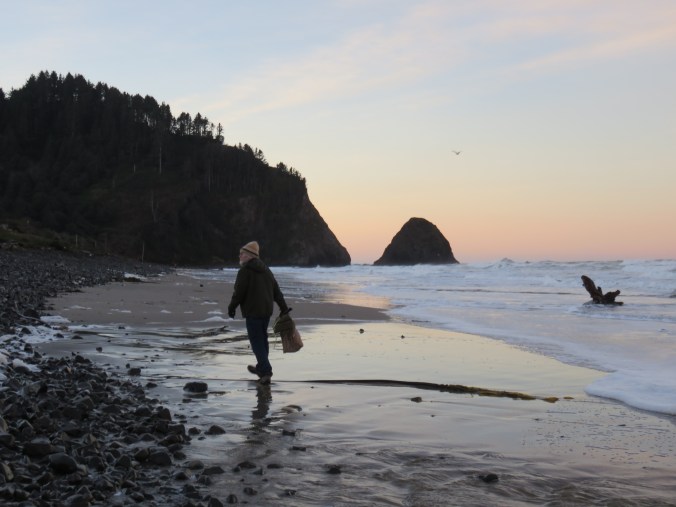
When there was a break in the weather, we walked north, our usual direction. There was sand, but on our way out we were mostly in the rocks at the eastern edge, picking up trash. I found the hilt of a plastic knife and then the sheath. Gary found a stainless steel serving spoon. Other than that we bagged the typical mix of plastic rope trimmings, broken food container lids, candy bar wrappers, bottle caps, valves and fireworks debris, squashed polystyrene foam, shattered straws, and mysterious thick nylon chunks probably once part of shipping containers. Colorless, white, purple, faded red, blue, green, and yellow bits and pieces.

Two pieces of Mt. St. Helen’s pumice. A handful of agates. An ugly-clam shell (which is beautiful). No glass.

Tammy waved from her solitary walk in the opposite direction.

Just before I got to the creek, Charlie ran right to me and allowed I should scratch his back and ears. Then he greeted Gary. This was a rare treat for me, since Gary greets all dogs with, “Hello, pup!” and they generally go to him first. We stood, five locals—counting the dog, because the dog does count—on the sand and chatted. We made a tentative coffee date after New Year’s with his people.

We walked home on the sand. A chaise lounge has been stuck at the tideline for a week now. I think it blew off a deck and wonder if the owners haven’t been here, failed to notice it was missing, or believe it has been stolen. Gary is beginning to wonder if it washed onshore. If it’s still there next year, he says he’s going to use it to haul home a piece of driftwood he’s been eyeing.

Last week our tenant told us that our neighbor John was taken to the hospital. By the time we heard about it the next day, he’d had a pacemaker installed, and the morning we were talking about walking over to see him—Would he feel well enough to come to the door? Would he even hear the bell?—he showed up here. We had a gift ready for him and the three of us sat in the living room with the fire in the stove and talked for a long time. Just like last year. Except John has a tiny device on his upper left chest that prevents his heart from taking a break. He told us all about that.

Inevitably, Gary retrieved a bit of plastic I didn’t notice this morning, though I nearly trod on it. A few days ago, I picked up a bit of bottle green sea glass right beside where Gary had put his foot. Right in front of our house. We cross the same ground but see different things.

Isn’t that how it is for everyone? Even side by side, we see something different. We see a storm bigger than anything, but we are safe indoors and no pet is cowering under the bed, which means it’s a different experience from Eva and Marsha’s. We watched the high waves roar up our path, almost to the garden gate, but that is nothing like being drenched to the waist, hanging on for dear life because we were on the beach. We watched safely from indoors.

Sometimes reality is too much to bear.

Two children died in the past week while in ICE custody. Children. That is no joke. Even Fox News is upset. Felipe and Jakelin had families who loved them. The U.S. has about 15,000 migrant children in custody, often removed from their parents’ custody after crossing the border with Mexico. “The average length of stay for a child detained ranges from 100 to 240 days, and these children are often held far from family members and without legal representation.” They are being kept, often without proper identification necessary to reunite them with family later, and almost never without proper housing and other childcare available.

The two little children who died were both fleeing potentially lethal threats in their home country. Guatemala is a nation with a brutal recent history, a history the U.S. has a part in. They had traveled, mostly on foot, over a thousand miles to gain safety. They did not find it.

My great grandmother Rosa came here to marry and then had to support her children when her husband was imprisoned. My grandfather came from England to make a new life. One of Gary’s ancestors fled Sweden to Finland, and from there to America. Some of our relatives have been here during the past couple of centuries. Some came more recently to make better lives and to escape political persecution.

I am reading novelist Kent Haruf and he reminds me that life is often harder than we might wish, that some good people are ground up and cast away.

Homeless men always came up to Gary on First Avenue when we were visiting pawn shops to look at guitars. That was a very long time ago when we were young, in college, and on our way toward a better life. The homeless were generally much older and had harder lives than we could imagine. Most people walked right past them without looking, but Gary gave them his full attention. Gary always had a few coins for them, but more important, he listened to their stories. These men were often displaced, often veterans, sometimes from the war our fathers fought in, sometimes from the war he did not. They always thanked Gary for listening to their stories, for asking questions. They nodded to me, and went on their way. There was no harm in them, but often harm had been done to them.

Everything that matters is not about money or about winning and losing. And what costs little kindness? Who wins . . .

My husband and I have been blessed this holiday to have health and family and friends and neighbors. We have peace in our country and food and a comfortable home. There is suffering all around us in the world, and we recognize we have done little to deserve our good fortune. We don’t deserve it, however grateful we are to have it.

A step to either side, an accident of birth, an error of judgement, might have made our lives quite different.

When I was young, the new idea was that human beings, as animals, were all about competition, about being the strongest, about beating out those competing for limited resources. A few decades later, I read a careful study by an evolutionary biologist who details the evidence that altruism—self sacrifice—is likely an inherited trait. “The Selfless Gene” by Olivia Judson (of Stanford and Oxford) talks back to that earlier popular understanding of human nature. Far from being selfish and brutal animals, we have survived because we are willing to do for others. Sailers give their seats in lifeboats to passengers. A philosopher dies rescuing a drowning child she is not even related to. It is not merely heroic, but in our nature. And this is true not only for human beings, but for other life forms too, from amebae to baboons. We survive because it is instinctive to care for others.

It is possible to see life merely as a battle ground, but when we have the choice, we are better than that. I prefer to see my life as something better, as an opportunity. And lucky. I am grateful for my luck. I am grateful for a life of hard work and attention.


GULLS & OYSTERCATCHERS

Version 2

We socialized a lot this holiday season. So far, a party, visitors, driving to Portland to see our sons and their families, and their extended families. The weekend after next, we will have a full house here for Twelfth Night. Gary wants Dundee cake, and we will have salmon and mushrooms and grains and salads. Our grandson Logan will get his waffles for breakfast, and weather permitting, we will walk the beaches.

Our travels have been lucky so far. No snow or ice. Just now the sky is a tender aqua over the ocean. It hailed a moment ago, but all that has cleared off the windows. There is almost enough sand for a walk.

I am supposed to be completing a final draft of a novel, but I have not gotten to it yet. I think maybe I will have to beg off. I think I want to do that. A kind reader in London surely has other things to do, and I would like to do something smaller. I wrote a story for Ruby some time ago, “Louise DeFleur Makes Magic Shoes.” There is a sequel about the alligator (or crocodile?) that lives under her bed and the beginning of a third story about the trolls in the basement. I want to work on those three stories and put them in a little book for my grandchildren. A Twelfth Night present. Illustrated, maybe. Maybe.

Or maybe I will nap and watch movies on television, or maybe I will lie back on the sofa and finally read The Tie that Binds by Kent Haruf. It’s been on my to-read list for a long time and I read the first 14 pages, which are really good. I have an early Le Guin story collection I have never read start-to-finish, and Gary gave me The Best American Short Stories of 2018 edited by Roxane Gay. And I have been reading aloud from Patrick O’Brian whenever I could get Gary to sit still. Reading is definitely on the program.

The silk and mohair scarf has four of five bands done, and I don’t like having yarn for a new project till it’s done. I really want to order yarn for a pullover. The sale ends today.

Perhaps I am doing too much—my mother’s voice is still in my head warning me to not overdo.

So for a little while, at least until the sun goes down, I will watch the ocean sending waves onshore, while really going out.