JUNE ROSES

IMG_4360

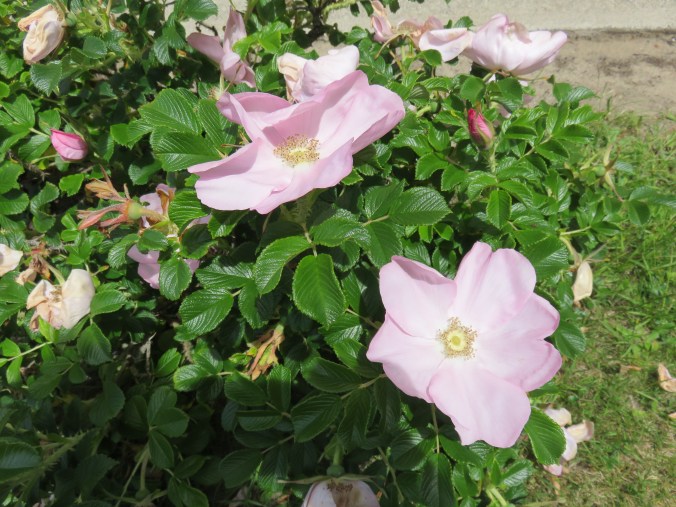
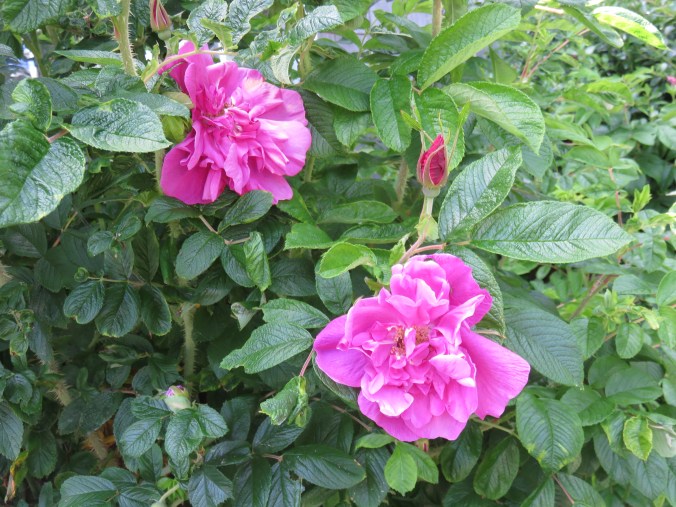
The semi-double Hansa is a rugosa rose. This one is planted on the east side of our property. I took it as a volunteer from my mother’s garden. The rose it sprang from is no longer there, and ours has to be cut down from over seven feet high here, where it is also sending out plants to fill the bed.

Oregon is home to the City of Roses, Portland, where there is an official test garden and several beautiful public rose garden parks. My grandmother had roses planted along her driveway, mostly memorably Oklahoma, a deep dark red.

Here on the coast, however, salt and wind and cloudy days are a bit of a challenge for hybrid teas and the other well-known roses. What does well here, aside from the wild roses that we fight from taking over, are mostly the rugosas, which require no special care, are disease resistant, and shade tolerant. I counted ten varieties of rose in our garden. The raccoons takes the best hips, and our tenant eats the hips from Hansa.

IMG_4358

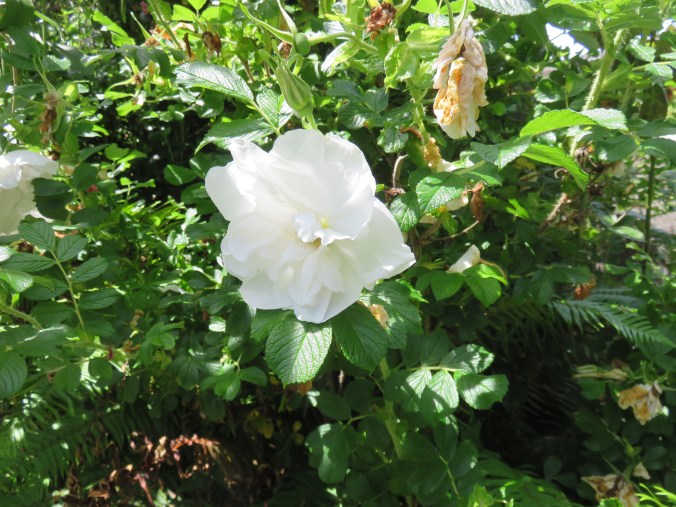
Double De Coubert is another rugosa, marvelously scented. It has long been my favorite. We also have a rapacious single white that would happily take over the world.

IMG_4352

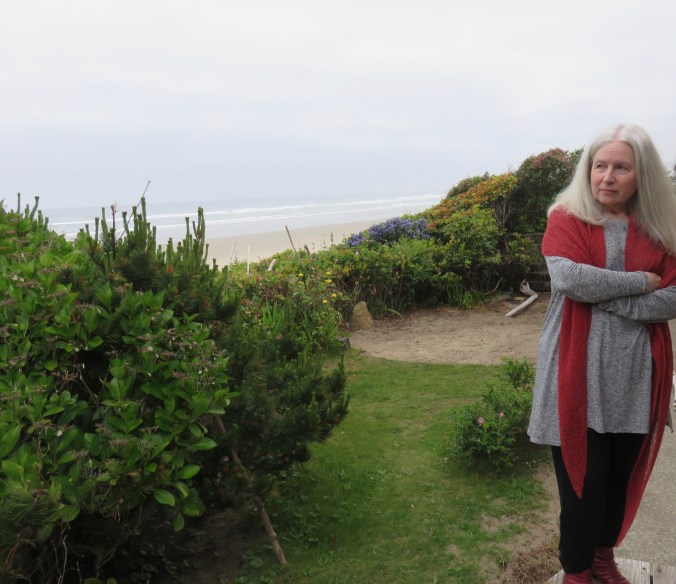
We think most years that this low-growing rugosa in our front (ocean-side) yard has died. It is the last to leaf out, but then blooms for a long time. The flowers don’t look impressive in a photo, but they are five inches across, their spicy scent fills the yard, and the hips are spectacular. They are little small red apples and a chipmunk gets them every year.

IMG_4357

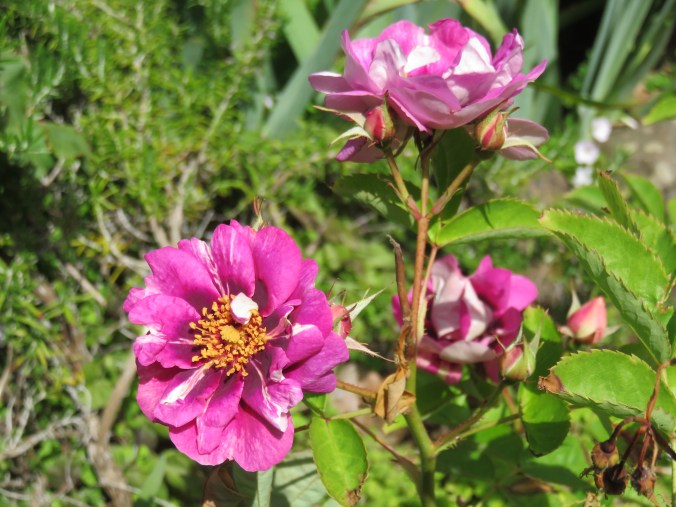
This little beauty was a risk this early spring. It is not a rugosa, but I could not resist the photograph showing the dark burgundy eye and bright stamens. Then it bloomed!

fullsizeoutput_f70

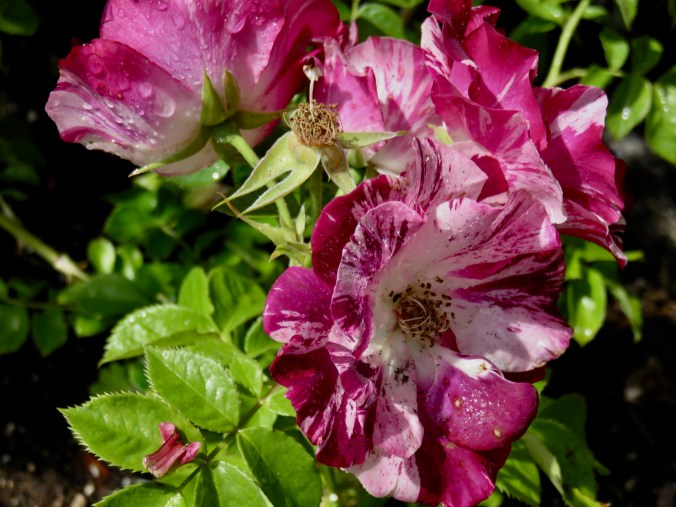
This rambler has medium-sized flower, good scent, and it is striped. I adore stripy flowers, and the colors are just right. The last striped rose did not survive, but this disease-resistant, shade tolerant variety seems determined. We will build it an arbor if it does. The tag says it reaches 12-14 feet.

It is June and the garden is lush: “Everyone looks like a great gardener in June.” I can’t remember who said that, but it’s true. We look brilliant.

HABITS OF PLEASURE

IMG_4277.jpg

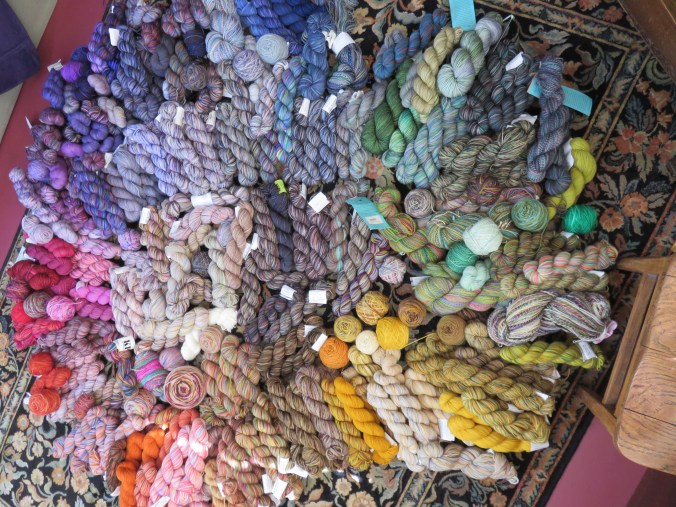
There are too many blues. I am not actually a blue person—I do not now have more than one garment in my closet with a pale blue pattern. What I have in my Made Things drawer is all from the other side of the spectrum. As a result, I have many blues, but mostly tipping toward green and especially purple. Not enough red. The red/pink bin is only a quarter full.

We all have our habits. My husband and I both love books and tend to fill shelves. Beyond that we have other things, too much of other things.

When I spread all my Koigu yarn and a handful of handspun skeins out in order to get them sorted back into bins by hue, he took a look and announced: “I am cutting you off.”

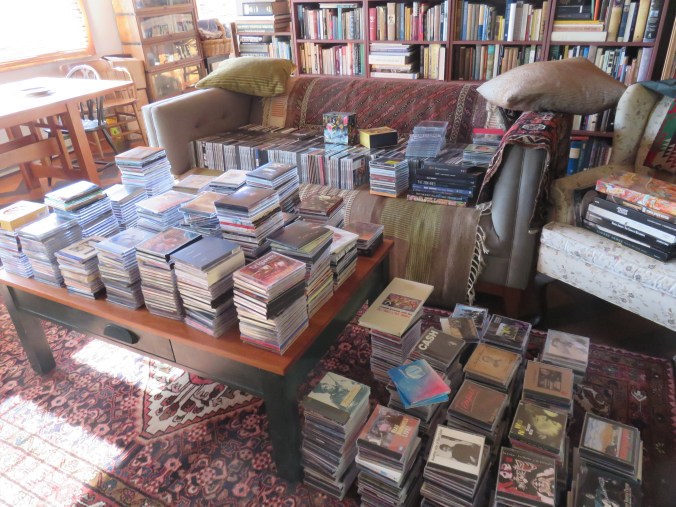
Then, the other day, he took all his CDs out of his bookcases. They filled the sofa and two chairs and made stacks a foot and more high covering the coffee table and the carpet. I tried to get a photo but could not get all the CDs in one shot. He did not count them. Suffice it to say he is cut off. He is humbled and sorry. “I am serious. You have to cut me off.”

IMG_4342.jpg

This is most of Gary’s CD collection, removed from shelves Monday. I think he meant to eliminate a few, but in the end, he spent an entire day (the day before yesterday) putting them all back. Every one. They are organized by artist and tradition or period. (Those are his books in the back too. Also organized by topic.)

Gary says, “It’s not a habit, it’s a sickness. Somebody please stop me.” He would like to blame Cervantes for some recent acquisitions because Don Quixote alerted him to even more music without diminishing his interest in Sami and middle Eastern, not to mention classic rock and roll. (No one should try to tell Gary about classic rock and roll.)  We will not go into musical instruments since he has friends with four times as many.

On the other hand, I felt free to order seven more skeins the other day. His pile is bigger than mine, more costly. And after all, I eventually wear or mostly give away my yarn when it has become something.

And when we spread them out, Gary might feel guilt, but all I can think of is how to put the colors together in order to make something, how that might be a shawl or blanket, those skeins might make a striped sweater. And then he plays a CD and his imagination soars, just like mine. Not “harmless” habits but beautiful.

Both of us know what sparks joy.

FIRST RESPONDERS

jon-stewart-dc3-ht-usatoday-ml-190611_hpEmbed_7x6_992.jpg

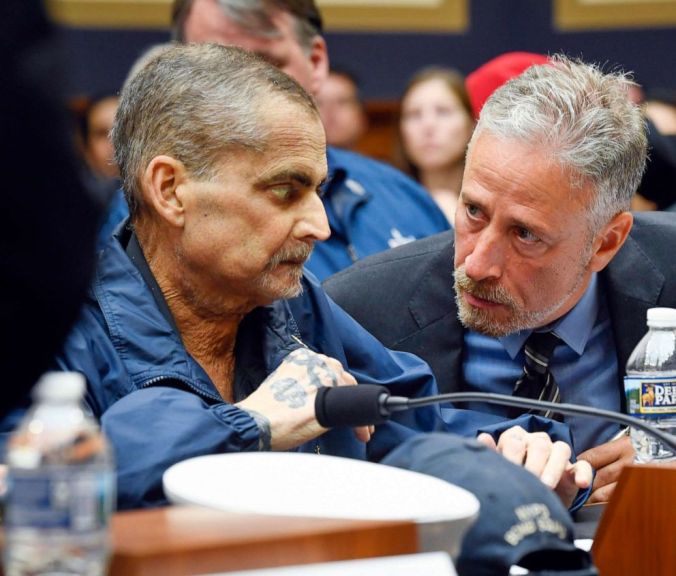
“Behind me, a filled room of 9/11 first responders, and in front of me, a nearly empty Congress,” Stewart said.

John Stewart spoke to many empty seats in a House Committee about the needs of first responders. All these years later and the men and women who responded “in five seconds” to a disaster: “I’m awfully tired of hearing that it’s a 9/11 New York issue. Al-Qaeda didn’t shout death to Tribeca. They attacked America, and these men and women … brought our country back,” and are still having to beg for relief.

“I’m sorry if I sound angry and undiplomatic, but I’m angry, and you should be, too, and they’re all angry as well and they have every justification to be that way.”

Watch the PBS News Hour video: https://www.youtube.com/watch?time_continue=10&v=HT5FTrIZN-E

Stewart alludes to a Senator who has held up funding as a political tool? That’s Mitch McConnell.

Truth to power.

CLOSING

fullsizeoutput_f6a

I discovered yesterday that Tin House is closing after this month’s issue. I already knew about Glimmer Train, Shimmer, and the end of Apex except as a publisher of books. These were all excellent publications. The New York Times is only writing about Tin House, because the founding editors are in New York?

Sometimes I really do wish there were a newspaper on this coast I could subscribe to.

Penguin has reissued No-No Boy by John Okada. It’s an important novel that I read for a graduate class on Asian-American literature taught by a San Francisco University professor in a class at Portland State. Despite the fact that the novel was already reissued (the copy I read with an introduction by Lawson Inada), Penguin has chosen to completely ignore previous copyright and to claim the novel is in the public domain.

Sometimes I wish New York(City)ers were not such “a bunch of hustling people all squeezed up together being ‘Eastern!’ “—Lorraine Hansberry’s character Walter Lee Younger in A Raisin in the Sun.

A New York editor reportedly complained about a West Coast novel because it “has all these trees.” City people.

Reading the editor’s description of their literary journal, I found two women’s names in the list of authors they were proud to have published. Both names were misspelled. Ursula K. Le Guin. (She always included the K. and Le Guin is two words, not one.) The first woman to publish science fiction under her own name was Clare, without the I, Clare Winger Harris, not Claire.

And don’t get me started on the lay/lie issue in print publications—everybody has trouble getting that right, it seems, but some of us take the trouble to doublecheck this obvious trip.

Yes, peevish today, on a minor note, and despite the fact that my own line-editing is never perfect.

I am rereading Wild Life by Molly Gloss.


Middlemarch by George Eliot

fullsizeoutput_f58

“But the effect of her being on those around her was incalculably diffusive: for the growing good of the world is partly dependent on unhistoric acts; and that things are not so ill with you and me as they might have been is half owing to the number who lived faithfully a hidden life, and rest in unvisited tombs.”

SHIFTING GEARS

fullsizeoutput_f54

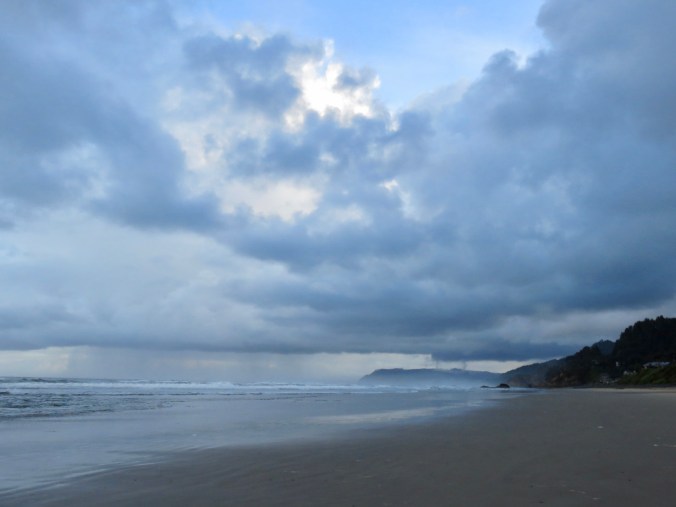
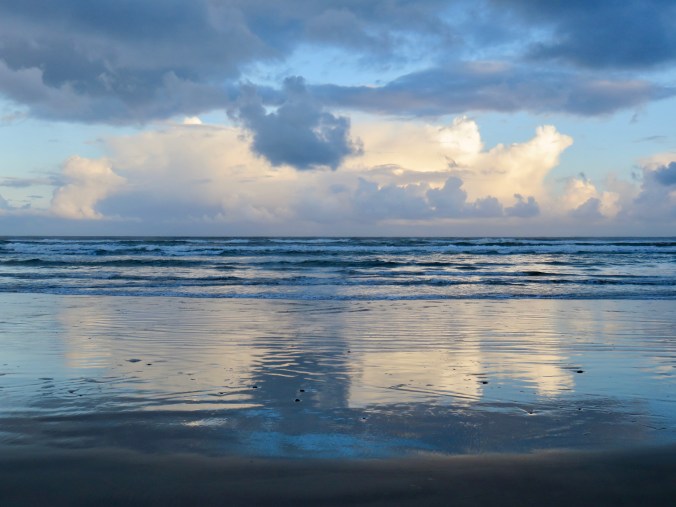
The ocean yesterday morning. We had several insane bursts of rain later on, as if someone was playing a firehose on the house. No exaggeration!

Last month I determined to complete several projects, mostly knitting. I knit a narrow scarf, a huge shawl, a cardigan sweater for my granddaughter, and a washcloth—that last from a horrible but gorgeous cotton linen blend. I would make another washcloth if the yarn were not so stiff and rough that it hurt my hands to knit with it.

There were small writing projects I worked on and larger ones I skirted. I have ideas for two quilts and a couple of warps. Plenty of work is waiting for me. But instead of any of these, I am planning another knitting project.

fullsizeoutput_f56

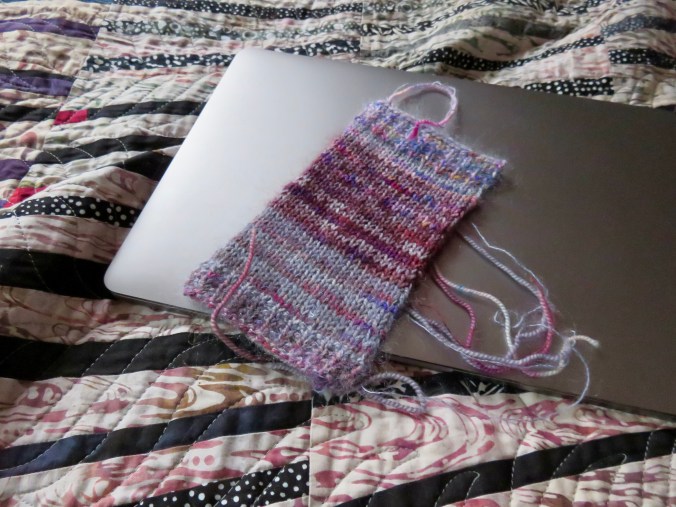
This little 4″ x 7″ swatch uses two yarns, a 2-ply Canadian merino in three colors and kid mohair/silk blends from Japan and Canada in two colors. There’s a sweater in this swatch—I just have to figure it out. In the mean time, I am writing out a pattern for my other granddaughter.

I knit a swatch and have been carrying it around for three days. Yesterday, in the coffee shop where I was meeting a friend to play Scrabble, and there was a woman knitting. I walked over and identified the yarn right down to the color: brand Malabrigo, yarn Rio, color Anniversario. Then I had to confess that no, I had not made my sweater.

That needs to change. Doesn’t it?


A PBS special about where we get our food claimed that human beings were nomadic for thousands of years until we began farming so we “didn’t have to move anymore.” The writer got that wrong. When we began farming, we could not move around anymore because we always had to be there to look after our crops. Farming did not allow us to remain in one place, it forced us to stop moving. There is evidence that this shift, rather than relieving us of a burdensome life of mobility, actually oppressed us, forcing our workdays to become longer, our labor more backbreaking. There is every possibility that this assumption that stability is preferable is mere bias. True, human beings developed architecture of stone once forced to remain in one spot, but we were already creating on a smaller scale.

Whether we traveled each day, or closed the door to a house every night, we created what scientists like to call artifacts. We call them garments, useful objects, pendants, and toys. We made art, we sang, and we told stories. These are human activities. Making stuff beautiful. This is what we do.


IMG_4321

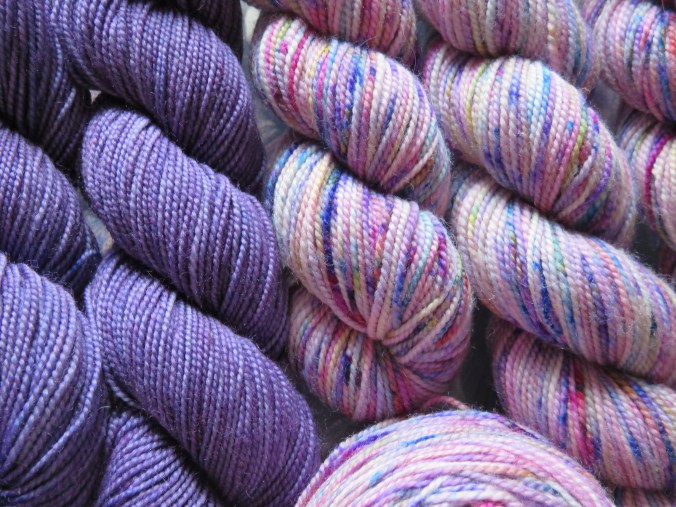
My older granddaughter told me the other day that she wanted purples and pinks, and here’s the start after combining and recombining many other colors. The mohair/silk blend will likely be burgundy, and that whisper-weight thread will tip these colors darker and redder. I still need to make a swatch. If I don’t like it. I reorder my colors until I get them right.

READING

IMG_4281

These days, Ruby objects strongly to having her photo taken.

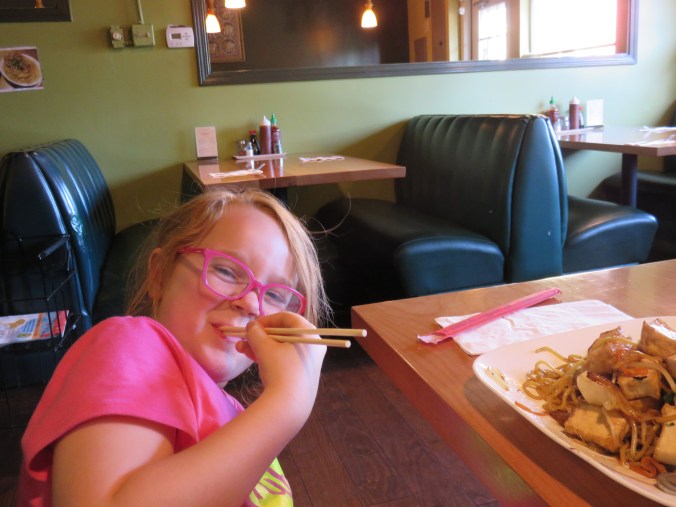
We took our granddaughter to her first literary reading on Monday. However, our adventure began with dinner. It had been a long time since we took her for Thai. She barely remembered—maybe she did not remember at all. She chose yakisoba from the menu because she knew the word from a report she did on Japan. She was efficient with chopsticks, eating all the tofu, the broccoli, and most of the noodles.

From there, we headed for the Powell’s Book Store on Hawthorne.

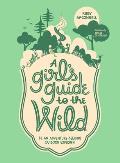
A Girl’s Guide to the Wild: Be an Adventure-Seeking Outdoor Explorer! A Girl's Guide to the Wild

Ruby McConnell’s A Girl’s Guide to the Wild: Be an Adventure-Seeking Outdoor Explorer! (Little Bigfoot) is the definitive guide to getting outside – for girls ages 9-12! In addition to basic outdoor skills, McConnell’s entertaining guidebook includes easy camping recipes, outdoor projects including science experiments and crafts, fun activity suggestions, and inspiring stories of diverse historical and contemporary outdoorswomen. The goal is to improve the quality of girls’ outdoor time by increasing participation and independence, making them feel comfortable and safe, and giving them essential skills and knowledge. Charming and approachable, A Girl’s Guide to the Wild will encourage both reluctant campers and budding naturalists to go wild and embrace the outdoors.

I admit that one of the reasons this reading had caught my eye was the author’s first name. This Ruby was a wonderful presenter with obvious experience as a presenter to middle school and other audiences. She had herself been a camp counselor with a summer camp name and I recognized the songs she sang from my sons’ time at camp. I recognized her energy and enthusiasm for family camping trips, the sincerity of her promotion of the outdoors. I have lived with that.

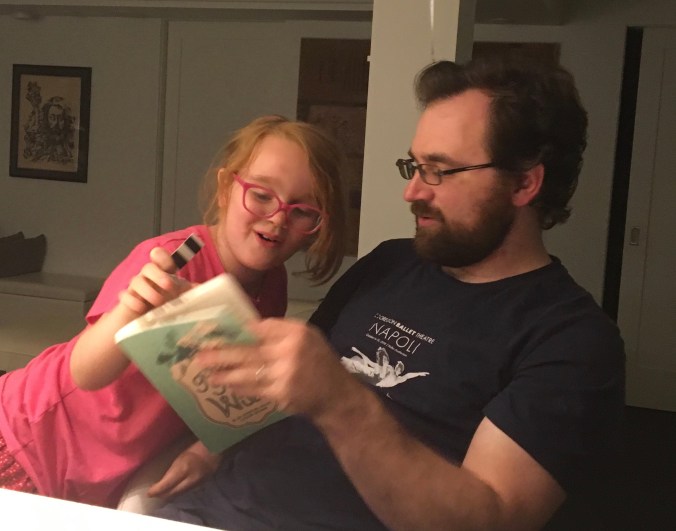
Ruby McConnell wants girls to overcome fear, find their courage and their community. She said it again and again, that bravery. She was also very funny and our Ruby giggled and laughed and people smiled to hear it. The Rubys got on well, and our Ruby was assured that people with her name were special, but she would not stand for a photo with the author, much as she enjoyed the evening. When she got home she read several pages to her dad. Her other grandmother sent the photo, taken while Ruby was having too much fun to notice. In her right hand might be the little bookmark made by our neighbor Tammy.

fullsizeoutput_f50


LUCKY ESCAPE

fullsizeoutput_f45

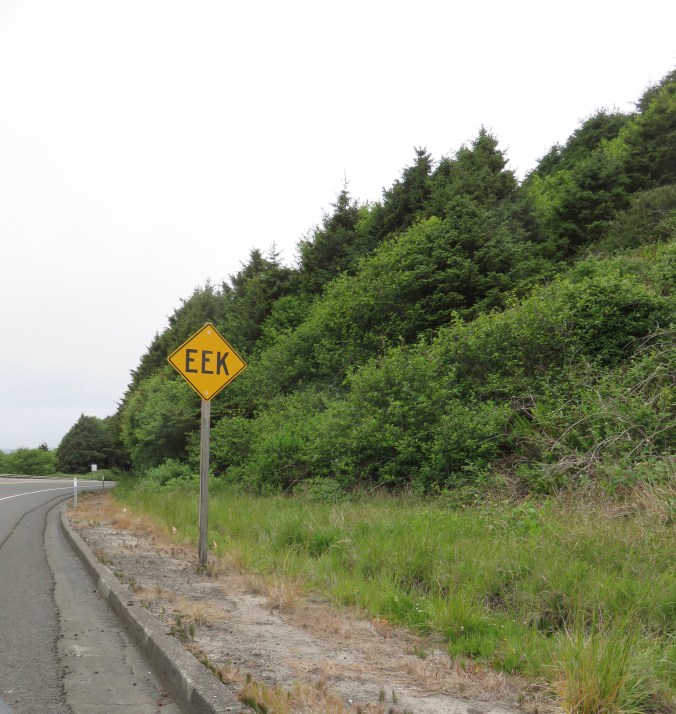
Last week, a sign on the highway at Silver Point said “EEK” instead of warning of “Elk” crossing.

If the weather had been better 75 years ago, yesterday would have been the anniversary of D-Day. [The D stands for “day.”] Instead, it was the Golden Anniversary of my husband flunking his draft physical. He did nothing to deserve this, but each year he celebrates his fortune in being spared Vietnam.

This is not about to become a blasting of veterans. Many of my favorite people—my father, Aunt Marcie, Jim Fukano—are veterans. Jim even served in that war that Gary escaped and remains in touch with the men he served with. Most of his older relatives spent WW2 in concentration camps right here in the U.S. Like my father he died not talk much about his wartime experiences. Despite humorous tales of K-rations and long marches, I know my father saw horrible things. My mother said the war, as it inevitably does for any soldier seeing combat, damaged him. My father, if he was within hearing when she said such things, would say he would never have found his wife, married, had the life he enjoyed if not for the war. There would be a moment of standoff. “Art—” my mother would begin.

Gary says “there is a certain amount of [both] happiness and guilt associated with my celebration.” Neither of us heard glamorous stories about the war, but our parents met as result of service to their country. That generation was irrevocably changed by the experiences growing up in the Great Depression and living through the war.

We have Ernie Pyle’s books recording the war in the house. My father, like many servicemen, admired Pyle who reported from Europe and then from Japan. The New York Times has a feature today about the war reporter who, according the Truman, “told the story of the American fighting man as American fighting men wanted it told.”

“Until D-Day, war had largely been an exhilarating experience for Pyle, terrible but often uplifting. Ten days after the landings, the awfulness of all the death he was witnessing in the ‘thousands of little skirmishes’ in the hedgerow country of Normandy was carving away at his mental state. He reported having knots in his stomach from ‘constant tenseness and lack of sleep.’ In a letter back home, he confided that he had to ‘continually fight an inner depression over the ghastliness of it all.’ ‘Sometimes,’ he wrote to Miller on June 29, ‘I get so obsessed with the tragedy and horror of seeing dead men that I can hardly stand it. But I guess there’s nothing to do but keep going.’ “

We found glass on the shore yesterday morning, then hung house-letters to distinguish each of our tenants’ front door as well as our own doorbell. Someday I will address the awkwardness of entering our house through the garage to the atrium and then to the front door. Some day.

We had friends, Becky and Mark, over for dinner, a late dinner for us because they are both working and could not get here till going on seven. Clams and huckleberry cake were the highlights in food, but the talk nourished, our shared hopes and dreams. Food for the heart.

Then this morning, an email overview of top stories in TNYT, “Their Fathers Never Spoke of the War, Their Children Want to Know Why”:

“Less than 3 percent of the 16 million American veterans of the [Second World War] are still alive, and all are in their 90s or beyond. Now their relatives are often turning to experts to help them decipher billions of pages of military records to piece those stories together.

” ‘Sometimes they start to cry on the phone about how much they loved their dad, and how he had horrible nightmares, but would never talk about it,’ one researcher said.”

Ernie Pyle cph.3b08817.jpg

Ernie Pyle. My father looked a little like this. So did my father-in-law. Most of those who served in his war had that serious, lean look. America came out of the Depression during the war. Pyle did not survive but was struck in the head and killed by enemy fire in Japan.

My father would be 94 this November. That seems remarkably old, but members of his family mostly did live into their nineties. If lung cancer had not taken him in his sixties, he might well be alive today.

I meant this post to be cheerful, but the truth is that contemplating war always brings tears. I write with the morning chorus of birds outside my window, a celebration of another key. I cry for the waste, the suffering and misguided determination that does not end, for the 20,000 attacks on Yemen by Saudi Arabia in the last few years  (mostly using planes and bombs from the U.S. and Britain), for anger that pushes us from principle to spite, for determined vengeance and retribution, and for pursuit of power that so often perverts and perpetuates this monstrous suffering.

I wonder when we might learn to settle differences some other way that does not give nightmares.

TEAM SPORTS

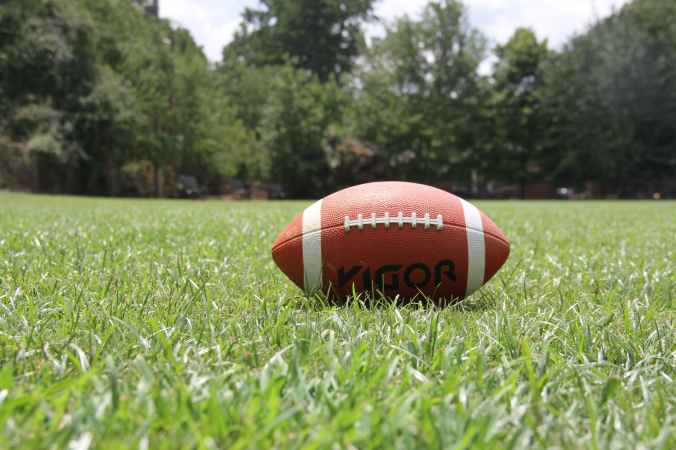
kigoa football on green grass during daytime

Photo by Pixabay on Pexels.com

The young man was doing summer landscape maintenance at a local public playing field. That is, he was mowing a huge patch of grass. He shut off his machine before coming over and say hello. I was taking a summer course in a nearby building. I was charmed that he remembered his English teacher from a few years before.

He talked about how a fall sports injury kept him out of play most of his senior year, how hard that was to be sidelined, and how he had tried to talk to his coach about helping him with post-high school plans. And then abruptly, he looked down, was silent, and seemed almost to shiver. “Coach didn’t have time for me. He didn’t care about me except as a player.” He looked at me. “I just realized that . . . and it . . . it makes me so angry.”

A review of literature has led a physician to declare that playing team sports may protect players from future depression. She found: “Among those with ACEs [physical and sexual abuse, emotional neglect, parental alcohol misuse, parental incarceration, and living with a single parent], team sports participation during adolescence was significantly associated with lower odds of receiving a diagnosis of depression (unadjusted rate, 16.8% vs 22.0%).” Dr. Eaasterlin describes one barrier to participation as the monetary cost of playing, another not considered might be inconvenience. Easterlin assumes that playing team sports teaches teamwork and that this is the reason adults who have played sports are less depressed in their 20s. There are a few leaps in her reasoning, but perhaps she is right. She further argues that pay-to-play (the costs associated with school team sports) interferes with the potential positive outcomes of team sports. It is well to recall that team sports require more than money. They also require traveling and a great deal of time.

Is teamwork really the key and is that key derived only from sport? Her study didn’t find a benefit from other activities. Can we assume that money keeps kids out of sport or that money is not itself an key issue? Despite measures taken to ensure a balance, can we assume that these self-reported measures are representative or even accurate? What else is at play here: privilege, money, family support, time free from family obligations and work, social status in the school, coach and teacher bias? Time?

When I was teaching, I saw my students for no more than five or six hours a week. Coaches of some sports, such as football, worked with players for up to twenty. Students were always excused from academic subjects to attend sporting events, even as spectators. While students were required to be teaching at least most of their classes to play, teachers were routinely called upon to rearrange academic obligations to permit extracurricular involvement. Administrators will always say that academics come first, but in practice this is almost never the case. Involvement is emphasized even over studying from the time students enter high school. Teachers and classroom aides are hired because they can coach, and coaches were ferociously protective of their access to players.

As an example: Football players in my yearbook class were forbidden to miss practice in order to attend a mid-week day-long yearbook conference and workshop. One boy said, “Don’t worry, I’ll go.” But hadn’t his coach refused to play him on Friday if he missed a mid-week practice? The senior smiled. “Coach will play me, he has to play me.” That strong varsity player was right. What lesson did he learn?

Many studies on the impact of childhood participation in team sports suggest the impact of youth sports programs is not entirely positive. Participation in team sports do not lead to healthier adult behavior, according to a broad study by UC Berkeley. Only individual sports such as running, tennis, and swimming predict physically active adult behavior. For some players, team sports lead to disastrous experiences of bullying and and even physical injury—I well recall, in the small rural high school, the summer when four boys had broken bones from three weeks of pre-season play. Every year I had students who required surgery to repair sports injuries. There is also a well-documented pattern of abusive domestic behavior on the part of varsity high school and college athletes (especially football and basketball), and an unfortunate assumption of privilege on the part of some players.

As to team work. Maybe. But that notion of team sports building teamwork was used to marginalize women’s participation in many professions and careers in the days before Title IX. Imagine our surprise when objective studies found that woman overall tend to be better at teamwork regardless of sport experiences. Creating a mixed-gender engineering team, for example, led to stronger overall performance because women on the team advocated for collaboration and cooperation and, you might say, team work. This had nothing to do with sport.

Choir, drama, orchestra, gaming, and yearbook and newspaper classes—all these can teach teamwork, too. Over the years, many enthusiastic teen athletes have tried to prove that their sport was necessary to success in life in their research papers. It’s not true. Choir, drama, orchestra, gaming, and yearbook and newspaper classes are not necessary either, but like athletics, sometimes they help. Participants want very much to believe that their great experience is necessary and necessarily good.

Sports teach competition. They teach about winning and losing. For many young people, they provide much-needed incentive to be physically active and cooperative. They often provide access to coaches providing a stable and supportive adult influence. But they are not an unmixed blessing. For all the good they do, they also provide opportunities for distraction from education, injury, and both bullying and elitism.

This doctor found what she wanted to find. She may not be wrong about the impact of sports, but my own forty-year experience in education and a great many studies suggest she may not be entirely right.
TAKE A WALK

IMG_4176

Walking is healthy exercise. Taking time out from your busy life is mentally healthy too.

A website recommends planning a 30-minute walk this weekend because “here in the age of binge watching and sedentary smartphones, that we all could stand to move around a bit more.” They aren’t wrong about that.

They have three pieces of advice: wear walking shoes, plug into your device—”Podcast, audiobook, or music, walking is the perfect time to get lost in something out of the ordinary. If walking isn’t particularly appealing to you, listening can also make the time go by faster”—and “bring a buddy.”

Plugging in and conversing with a “buddy” at the same time? Maybe choose? There might be conflict between the second and third bits of advice. There might be conflict between the second bit of advice and that desire to escape our ordinary plugged in existence.

Aside from the advantage for women of being obviously plugged in as a way of “tactfully” ignoring street harassment, being plugged in means we are less available to our surroundings, less attentive to both beauty and potential hazards.

Walking someplace, anyplace, that is green or wild or beautiful, or perhaps has traffic, might suggest that listening to surroundings would be better advice. Listening to a device just means a walker continues to carry ordinary life around like baggage. The point of going for a walk isn’t merely to escape the home, it’s to escape to someplace. Be here now. Listen to the wildlife. Listen to the air moving. Listen to our own thoughts. Seriously, if listening to our own thoughts is unbearable and we need electronics “to make the time go faster” maybe the most important reason to go for a walk is to slow time back to a human pace.

My husband and I walk at least each morning for 45 minutes or longer. Sometimes we walk side-by-side, sometimes we separate while Gary searches one stretch of beach and I search another. We go out early to avoid most other walkers—the visitors are generally plugged in with necks bent and their eyes focused on their phones. They walk the Pacific shoreline and are oblivious to their surroundings.

Local walkers all walk early. We see Tammy and Larry and John, who go out alone. We see other locals who come out to walk together, mostly with their dogs. We stop and chat sometimes. Other days we merely lift an arm in greeting and carry on.

Our walks are the most important time of our day. We hear the surf and the birds.

My advice for taking a walk this weekend:

  • Wear good walking shoes
  • and pay attention.