FINDING TIME

Photo by Steve Larson

People ask me all the time, even now as I climb the stiff ascent to seventy: Where do you find the time? 

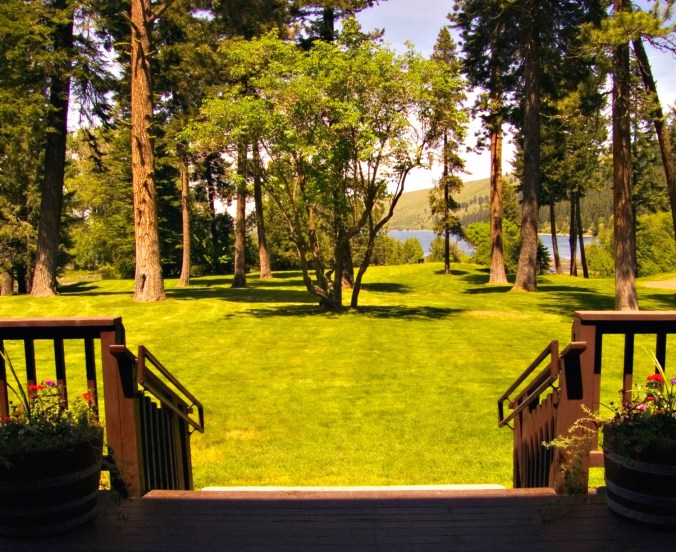
This morning, my husband and I were up and dressed and out the door by five to listen to the dawn chorus from the deck of the lodge. We are in Wallowa Lake for Fishtrap, a writers’ gathering. (The photo above is borrowed. The grass is greener and there is a tent for outdoor events. At right you can see the leaning tree. Yes, it is still there, Ann.)
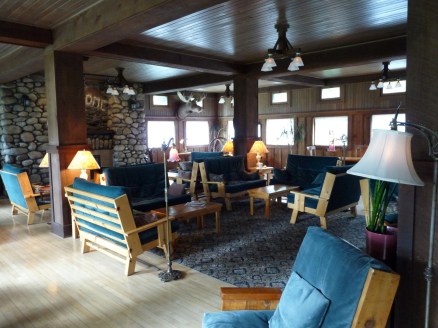
8519949156_34edb2f18a_o.jpgSo far I have seen people I recognize, but no one I actually know. Yesterday we sat in the beautiful great room of Wallowa Lake Lodge (opened in 1923). We walked across the street for dinner. We walked through Canada goose poo to admire the river pouring into the lake. I watched clouds pass over head, the nearer moving east, those higher up shifting more slowly south. We have seen an unfamiliar species of ground squirrel and several deer since we arrived yesterday, and I had a pleasant talk with a local woman who was also knitting while her husband and daughter participate. Time passes slowly. I varnished the dining and kitchen floors before we left the house. Being here while “paint dries” is only an excuse. We plan to read and relax and hope to visit with friends.

Even in my twenties I was writing and publishing articles in magazines. In those early post-college years I judged field trials all over the west and learned to cook and had Afghan Hounds. 

In my early thirties, when I had two preschoolers at home, I canned peaches and read books and made quilts and worked part time. In my forties I went back to my work teaching, began taking writing classes, wrote stories and read and knit sweaters, and began running. 

In my fifties I began writing novels and attended workshops and read and made only jam in the summer. I spent a lot of time writing curriculum and grading papers and baking and cooking and making quilts and knitting and weaving and reading a few dozen books each year and writing thousands of words. Marilyn Chin once told me I was the most driven person she knows—this from a writer with six books in print. Molly Gloss sighs that she doesn’t understand why I have not had more success. But these women are sympathetic friends. There is accomplishment and accomplishment. 

Recently I went off Facebook. I do not text. I do not post on Instagram. I have a Pinterest account and it was useful to wean me off magazines, but I spend only minutes there each week. I subscribe to two major newspapers and read through them both plus at least one other international newspaper. I rarely watch the news. Did I mention that my cell phone is not smart? No time spent there. 

I get up early and tend to go to bed early, but like Daylight Saving Time, that only shifts my day around from most people. Early to bed and early to rise does not magically give me more hours in a day. It saves nothing. 

Now in my late sixties I no longer run and have retired from work, and my time is still filled with things to do—both pleasant and onerous tasks I have ignored for decades and now choose. We have always had and enjoyed watching television, but this month we are ending our broadcast and cable subscription. We read the news and go for walks each morning. Even so, I might well wonder how I found the time in my earlier years to get so much done. 

Perhaps it was not so hard. My husband took on his share of housework and childcare. Some things did not get done, usually cleaning and upkeep we neglected in favor of more urgent demands from children or our interests. I learned to be efficient about many things, especially the necessary tasks I do not enjoy, but also the interesting things I do. 

My habits are productive but not notable. I do not have books in print. I do not see family as much as I would like. Vacations were nonexistent for years, and even now are rare. We do not often feel the need to get away. (We live in paradise, after all.) I make many things without selling anything on Etsy. Perhaps, now that I am retired and accomplishing less, people will no longer ask me where I find the time. 

It is there, has been there all along. When I had children running about, I did tasks I could carry about with me, put down when I needed to chase a child, scrubbed the kitchen floor at least once a week, bathed and groomed dogs during the Sunday mornings my husband was always home. There were things I did not do—dressing up and going out to dinner, for example, because it did not matter and I spent my money elsewhere. I have always volunteered but we do not attend charity events. Even now, I think sometimes I should spend a few minutes a day meditating. If it genuinely mattered to me, I think I would find the time. 

What we should find time for is only what matters to us enough that we make the time happen. No magic, no great skill. If we would rather have time for a walk than read Facebook, we can choose to do that. If we would rather read or write a letter or have tea with a friend after work, that is a choice anyone might make. 

I choose how to spend my time, and if I do not, time spends itself.
“A YEAR AGO” or more

IMG_4465

So far this month. I have made little progress on Camp NaNo, but I withdrew six poetry submissions yesterday. A story has been out for a year, six months short-listed—I think they are only teasing me. Yesterday the last of the base trim went down in the dining room and kitchen; it’s only been thirty-some years to get it completed. This morning I have a few hundred square feet of floor to varnish plus that newly installed base. Rain is nearly always welcome, post-fireworks especially, but the damp will slow drying, so that is not so good.

I am worried about a former student and driving and writing and the world too. Not in that order.

Sleep did not find me last night, and I am already tired before a very hectic morning. The next busy-busy days, and I figured out, finally, what to do about a quilt I have wanted to construct. Good? I gave up reading Romola, which is too smart for my mood just now. And I was wrong about a connection to the painter Artemesia Gentileschi. Does anyone enjoy being wrong? I should be up walking the beach, but finally I feel sleepy when it is too late in the morning already for sleep.

Finally, the national newspapers seem to care about abuses against women, or at least when it makes a good story. One local Florida reporter would not let the Epstein story go. Julie K. Brown of The Miami Herald just kept digging and pushing. It took a while to regain traction—more than a decade for the boys to pay attention to this legal travesty—but her name has already disappeared from reporting on the rapes and other abuses committed by a very rich man despite her efforts to drag them into the [lime]light. New York’s Southern District, Geoffrey Berman, noted, “The defendant, a registered sex offender, is not reformed, he is not chastened, he is not repentant.” Well, when you are famous they let you do anything. (Who said that?) Money does not talk, it fairly shrieks until it has its way.

Why is that allowed in the land of the free and the home of the brave?

Oh, right, money.

EMPTY/FULL

fullsizeoutput_fe2

“Spot” is a mostly-wild rabbit. The truly wild rabbits do not have a white spot on their heads and would never have come into the yard to eat montbrecia in the middle of the day.

fullsizeoutput_fe0

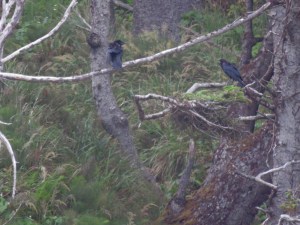
Two of the ravens. Two more are out of the hot in a snag, one was on the sand.

We saw five ravens during our walk the other day. The raven pair have been as successful raising their brood as the eagles. We are less confident about our bats. Two were living under the eaves and we waited before going out early one morning until the sky brightened enough to send them home. Since then, fireworks. Every night. Mostly we love summer as much as everyone, but fireworks. However, the out-of-state party that was blowing sparks right over our head the other night, might have left. We hope they are gone. We hope so, but we are resigned to one more night of explosions keeping us awake past 10.

We need our sleep.

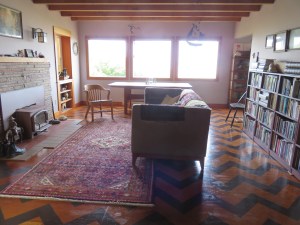
IMG_4548We moved furniture back into the living room and for a few days, it was lovely on the newly varnished floor. Clear space, less furniture. But we are not done varnishing floors. Almost immediately, we started shifting to prepare for the next step. The coffee maker is on top of the dryer. The microwave is around the corner. We just now finished moving everything else out of the kitchen and dining room except the fridge (we’re saving that for tomorrow).
I store pantry items in glass jars. Coconut and dried garbanzos and five organic cooking oils—all of that. Most of those nine shelves are lined up on the floor of a bedroom. We managed to slide the huge bookcase that housed the pantry into the hall. The round dining table, pie safe, and a bookcase are in the living room. So is the Kitchen Queen and what was kept in those pieces of furniture now on tables and in cartons. A drawer of candles on the sofa.

It has only just occurred to me that since I am retired, I will never again need the serving pieces for chocolate pots de creme and sparkling cider served to my students. I do not need to save them or store them and, along with a great many other things, including my grandmothers’ crystal, I will be letting them go.

In the mean time, Gary is scrubbing the floor and I cannot find the paint to finish painting into the corner I could not quite cut into when all the furniture was in place. There are still too many books. Too much of everything. We will never burn all these candles. Chaos.

So what else is new?


Communal

fullsizeoutput_fdd

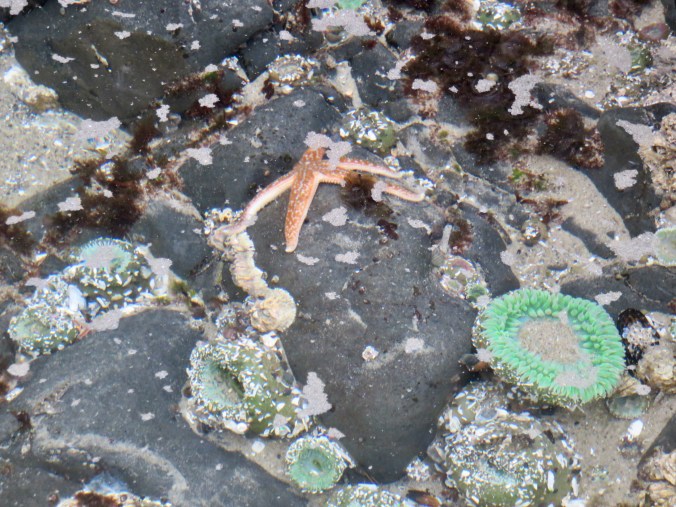
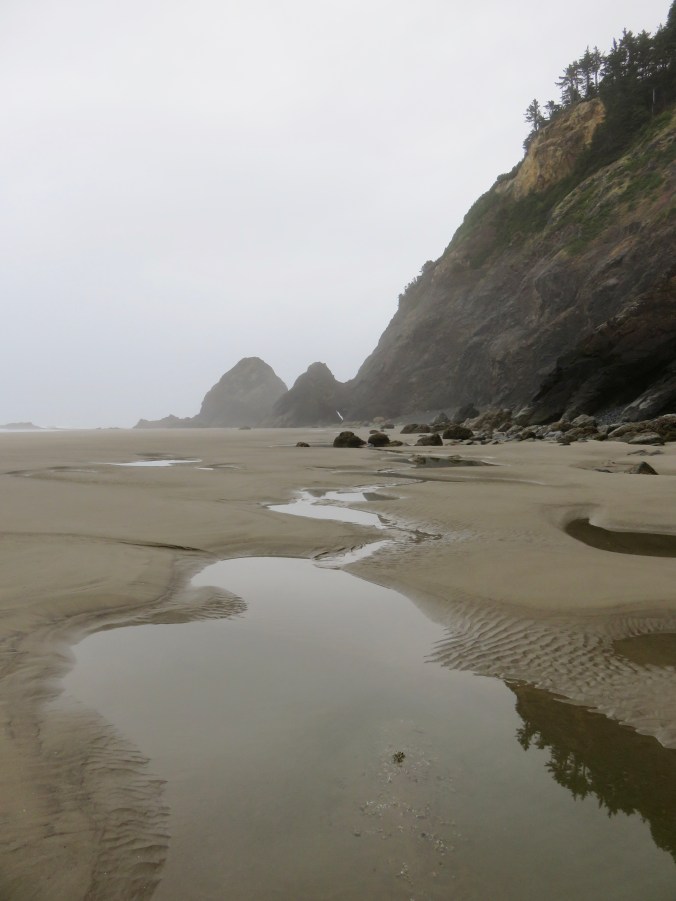
Tide pool photo taken from south of the Cape. A sliver of the arch is visible.

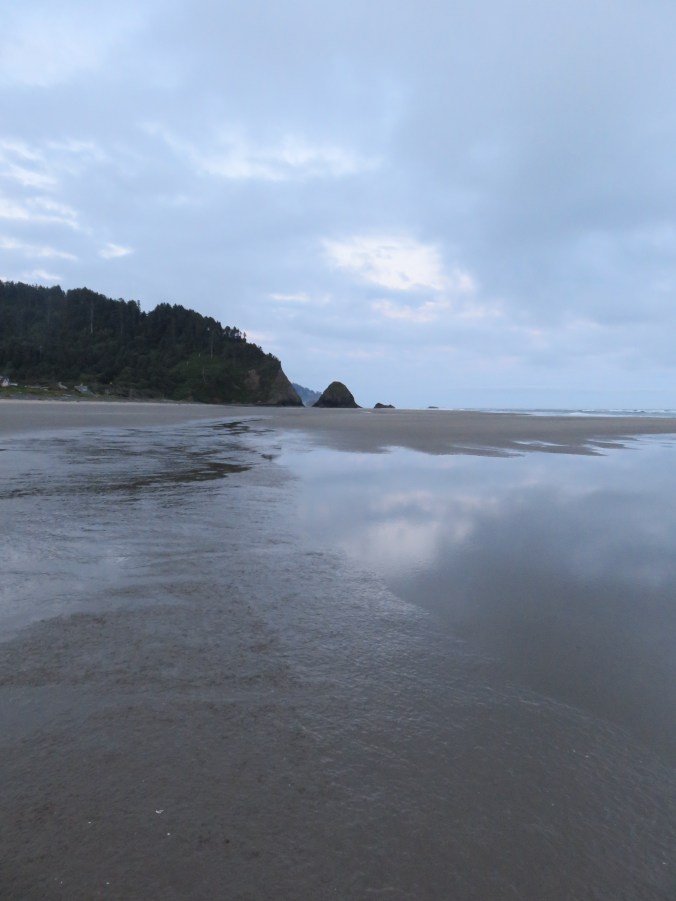
Last evening we were upstairs when we saw a couple sitting at our beach fire. (It was dying but we were keeping an eye on it, and suddenly it was back in flames.) We joined them on the sand and shared a lovely time. They were astounded by the fireworks—in Colorado, it would never be allowed. Several times they expressed amazement at how uncrowded the beach was, while we were alarmed because there was such a mass of beach fires and people. This morning, it is clear most took away their things, leaving the beach bare again. There will be firework litter, but there is always firework litter.

It was pleasant having people to talk to yesterday. Sometimes I think we are too isolated. We often go days without a lengthy face-to-face conversation with anyone but one another. (And I will always miss teaching.)

Jessica and Craig told us how they met, how they came to live in Denver. Craig talked about a poet-friend, so I went looking later and found his friend’s poetry. Here is one from Young Ravens Literary Review. I post it here without permission.

by Matthew Burns

The Sharp Air


The river I don’t know

rumples over its rocks

and carries anything

that falls in—silt and brush,

a tumbleweed blown

from ten miles away.


The river, clear and silent.

When I crouch at its trembling lip

or pitch the rare flat stone across its skin,

I am looking for something

to carry me, not away but up.


Like the chickadee’s call to its mate

that goes bay-bee and bay-bee 

until she calls back with same

and they go on beside the river

so the water carries this, too, away;

so that it unwinds and eddies,

like the silt of missing,

into the air; the sharp air,

carrying everything it can hold.

Matthew Burns teaches writing and literature in upstate New York and is currently a poetry editor at Heron Tree. His poem “Rhubarb” won a James Hearst Poetry Prize from North American Review; other poems have received Pushcart and Best of the Net nominations and have appeared or are forthcoming in Posit, ellipsis…, The Raleigh Review, Camas, Spoon River Poetry Review, anderbo, Quiddity, Heron Tree, LimeHawk, and others.

It was an astonishing point of connection in retrospect. I had a poem in North American Review a few years ago. Look up “Rhubarb.” Brilliant. Though I pull the stalks and never cut them.

4th of JULY

JUMP

fullsizeoutput_fd8

Dozens of pelicans have moved on and offshore lately. They are a grand sight.

Friday evening we drove south to the Farmers Market. We found it in a new venue, a much larger space than where it used to crowd out a small parking lot and spill into the street. We were somewhat dismayed to learn that this is their third year in the “new” location. How did we miss that? Our favorite stop was the falafel truck, and we stopped going when they retired and Fridays began to seem like a better time to stay home.

The coast is booming, though not [yet] literally.

On Saturday we braved traffic again to head in the opposite direction for the memorial of a man I did not know well at all. I know his wife, a woman who always did her best for students and was kind and patient with me too. Both were generous in their lives, their hearts and actions, personally and in the world. I liked singing and the stories. We attended mostly for the wife’s sake, but it was clear from words spoken, the kindness and humor, that missing the friendship of this man was our loss.

Sunday we again drove south to celebrate another passage. One of our favorite book stores is passing into new hands, allowing new possibilities for the store’s founder. She seems excited, and we wished her well.

I made my fifth batch of jam for the year—funny, since I almost never use it myself—and I bottled 48 ounces of strawberry shrub, which I like well watered down with sparkling soda. It’s a new pleasure for me.

My novel about recovery from grief begins with terrible loss, made stunning because of guilt and self-recrimination, lost opportunities to make wiser choices, to share, express love, and admit failure. My central character manages to move on, though she recognizes that healing is a myth. She finds a new life, just as everyone around her suggests she should.

My mother died a dozen years ago today. I miss her still.

Human attention is drawn to the new, but we feel safety in stability.

Nevermind. Change shifts the ground under our feet, rescues us from safety and complacency. Sometimes when we move on, we have no choice. We stumble, we fall, we wail and resist. Love, passion, need, opportunity. Here it is under our feet.

Jump.


Fireworks are illegal on Oregon beaches. That has not stopped anyone up to now. When we first moved to my family home forty years ago, we saw only little stuff, legal fireworks. Then in the 80s a neighbor (a trained fireworks person who worked on the Vancouver WA display—then the largest in the nation) would put on a display the night before or after the 4th, and this drew such a large crowd that after a few years he quit. He believed the crowds made his display unsafe. Unfortunately, people had a taste for it, and lately people buy loads of illegal fireworks. Some years it is completely insane, smoke like a war zone, thousands of dollars exploding all up and down the beach. The floating lanterns are the scariest because there is not telling where they will land. Fireworks cause distress to pets and people (especially veterans who served in combat), wild life, and sleep. They leave a nasty litter of chemicals and plastic onshore.

However, so far, this year seems pretty tame. I’ve heard some small firecrackers, the handful of booms the other day, and that’s been it. I hope people are more aware of the fire danger. A couple of acres burned up on the cape a couple of weeks ago. It was likely campers. I’d like to believe that fireworks are losing some of their appeal for many people, and then fire danger is very real. We have had horrific fires in Oregon over the past few years. And California.

fullsizeoutput_fdb

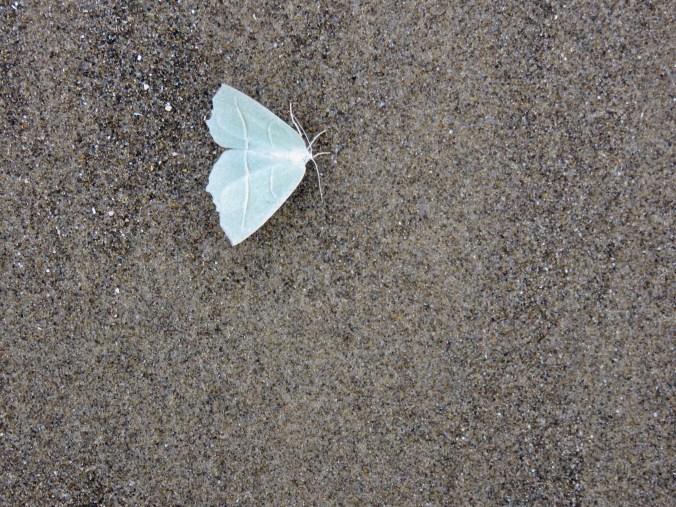
We found a stranded starfish drying on the sand. Since it was still alive, we carried it back to a shady tide pool. It immediately clamped on—as immediate as a starfish can be.

The weather is perfect, a hundred yards of sand out in front of our house and low tide at 8:30 for the night of the 4th. If the big guns come out, at least there is plenty of room for them to set things off well away from trees and homes.

LESS HARM THAN GOOD

Susanna and the Elders, 1610, the first known work by Artemisia Gentileschi – Web Gallery of Art:   Public Domain

It might seem a modest ambition: to make less harm than good. Some will find it wholly inadequate. How can accomplishment come from merely doing less harm than good? I wonder myself sometimes. Progress is inadequately counted by dollars. Accomplishment is so often measured in influence, in having our way, in strength over others. Humility is not much appreciated these days. Assertiveness is attractive, and I have been assertive in my day, goodness knows. Goodness used to be measured in other ways, yet some days I aspire to modesty of effect. The desire to leave light prints upon the earth, to dance away without selfish pride, rest without sloth, find joy without avarice, change without harm, accomplishment without making losers of others. Not quite the deadly sins or heavenly virtues, but closer there. Closer to virtue.


This month is Camp NaNo and my commitment is to the modest goal of writing 31 hours in 31 days. Of three possible possible projects—summarize the novel, complete the post-apocalyptic story, write the textbook on teaching writing—the textbook seems to be my focus.

There is a story that George Eliot wrote Silas Marner while avoiding work on the much longer novel Romola. Romola was hailed in her day as a masterpiece, though few read it today. It is based, I believe, on the life of the painter Artemesia Gentileschi. I have read three books about her. I have read Silas Marner three times. I have not yet managed to complete Romola. Wikipedia claims the novel “was based on the life of the Italian priest Girolamo Savonarola.” Perhaps.

According to Wikipedia: “Contemporary and modern critics have questioned the likelihood of the level of scholarship attributed to women such as Romola in Renaissance Italy,” but Gentileschi became an accomplished and celebrated painter at a time when women were not allowed to paint, in the seventeenth century.  She was “an Italian Baroque painter, today considered one of the most accomplished painters in the generation following that of Caravaggio. In an era when female painters were not easily accepted by the artistic community or patrons, she was the first woman to become a member of the Accademia di Arte del Disegno in Florence and had international clientele.” Though I personally admire her life more than any paintings from that period, I am always surprised and annoyed to read the painter discussed as if her life and not her painting mattered most.

Eliot lived in Italy, would have seen Gentileschi’s work, perhaps have heard the dramatic story of her rape and revenge through painting religious subjects, placing her violator’s head under Judith’s dagger. She asserted herself in a period when women were expected to remain in the background. She was educated. She was strong.

The connection between Eliot’s fictional character and this historical woman seems to me irrefutable, though I have not completed the research to know if I am correct, to argue my thesis as I should. There was a time when I considered pursuing a PhD. This would certainly have been my thesis topic.

In another life, I might have done that.  Does anyone in their late 60s pursue a degree in order to prove a point? Pause. Remind myself of humility. [And, as I now understand from reading Romola, I would be incorrect.]