MISSING THE WINDOW

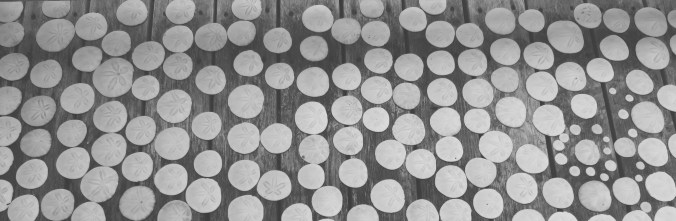
IMG_3522

I am not the sweep of sand or the sky overhead. I am not the cape thrusting out toward the ocean. No, not even the seastack standing off the cape. I am the tiny bump, barely visible beyond.

The Director of a writing event responded the other day to my application for a Fellowship. I thought I was a good fit when I sent it off. Connection to the West was essential, a writer without major accomplishments, no book out nor a book deal in the making. I have been writing for decades now and still no book. I am not new to writing, and so the Director wonders if “perhaps your depth of experience and accomplishments may make you overqualified for the … program.” He is kind, he offered options, he urges me to make my case. The response is well-intentioned—actually generous. This begs the troubling question: So why don’t I have a book already?

I ask myself that question too often already. 

Have I missed the window for growth, improvement, a book publication? Am I under-skilled? Overqualified? Most always I am overqualified, to be fair to myself. I taught in a public high school while trailing an academic history of multiple degrees from the University of Washington, cum laude and Phi Beta Kappa, and an MFA in writing from Pacific University.

Writing is hard. I have worked many relatively “easy” jobs that were not easy at all in retail, fast food, a bakery, and direct mail. I sold tacos and quilting fabric and fancy pastries I made myself. I designed logos and promotional materials and packaging as a freelance graphic designer. My work was exhibited in galleries and juried into museum shows. I designed and drew plans for entire houses, and for a time I worked for an architect. For 3 years I taught art in a girls prep school, and for 25 years I taught English and Illustration and yearbook in a small rural high school. I was overqualified for most of those jobs, perhaps all of them. And none of this was easy; none helps just now. 

Being overqualified has mostly meant that I was determined and inventive in doing the job. Or perhaps that is just my way of approaching work, meaning always doing the best I can.

And here, again, the fear that my best will never be enough. I set that aside, that little confidence-killer. Where I am is the result of doing what so many writers must do for years and years: maintain a life and a family and work that pays the bills, and writing at four o’clock in the morning before I get up out of bed to do those other things that I must do. 

I don’t like thinking I have missed my window. Eight publications and 114 rejections this year, 56 of those rejections from agents. Lack of a book contract is not from lack of trying. 

Next year, I will not reapply for that Fellowship, no, of course I will not. I appreciate the Director’s kindness in contacting me and explaining his position, as well as his willingness to reconsider. But I completely understand his point. Moving on now . . .

Nevertheless.

My writing life does not carry an expiration date. I am certain I will face many rejections again next year, far more rejections than acceptances, but that I am qualified to claim my prize as an experienced writer who usually knows her mind, and who will not stop writing in the face of rejection. I will whine and squiggle and hide under the bed when they arrive, but then I will come back out and write some more. There is still so much I want. I want acceptance. I want readers. I want more stories and essays and words on the page.

I still want that book contract.
ASPIRATION

IMG_3588

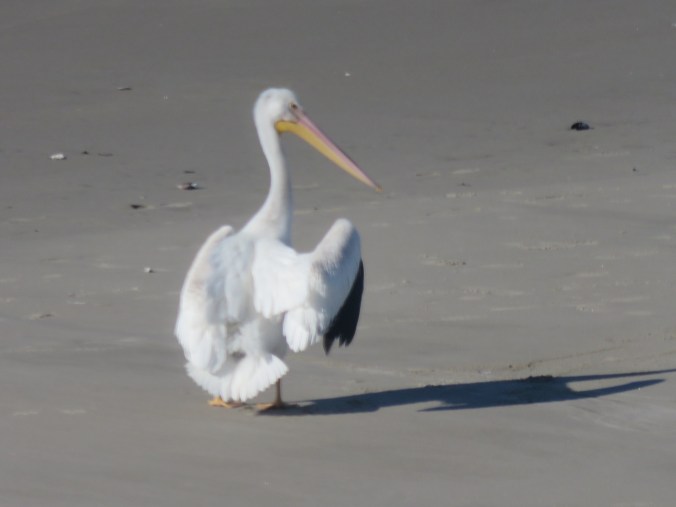
This is not one of “our” pelicans. Our pelicans are Brown Pelicans. This is an American White Pelican, snowy white with black flight feathers. Handsome, but this species does not belong on our beach except in passing. The Browns sometimes stay from spring until late fall. 

NaNoWriMo offered me a very specific goal for three years: 50k words in 30 days. I wrote over 70k. During April, National Poetry Month, I wrote the draft of a poem each day + posted poetry prompts for several years running. Here I am blogging. One of my longterm goals was to be published in Brevity Magazine and that happened three months ago. I have also set goals for reading—fifty-two books this year, and I was done by October.

Now what?

I like a challenge, and though I never take dares from others, I like making them for myself. I like challenging myself to do something hard, something within my ability, but a little beyond my comfort zone. Maybe a lot outside my comfort zone.

For next year, I am thinking about committing to a regular post of a very specific type for 2019. What got me thinking about this was the story I wrote for my grand children about an angry rabbit. And then I wrote a downright creepy story about a space traveler trying to leave Earth, titled “The Tatooed Girl.” This story is my contribution to a class effort they don’t know about yet. We are all writing stories triggered by The Mysteries of Harris Burdick, and next week I will create a little booklet of them. It is my Writing 121 warm-up assignment, and I generally write whatever my students write. My story started with the knife in the illustration with the pumpkin. My story was uncharacteristically violent.

Then this morning I wrote another weird little story about a boy reaching out to grab a little girl, and his hand disappears. Where are these coming from? Maybe this is the result of spending all of my NaNo month working on “Impossible Stories”? Maybe it’s because I am reading slowly through Ghostographs: An Album by Marian Romasco Moore. Very weird, very wonderful, and highly recommended—I want it to last!

My brief stories for class are about 500 words, which is what I assigned for my students, and therefore what I wrote myself. I went over that length and had to carve back again and again, and I still think the “The Tattooed Girl” story wants to be a lot longer. That’s something I can address later.

In the mean time: could that pelican above be a changeling? Is that too easy? No princes or princesses in my stories, so how about a genetic mutation, a Very Smart Bird? Maybe that bird is entirely self aware and a philosopher?

So now I am thinking: Could I do this on schedule? Could I post a story a week, or something, and have fifty-two weird little stories by the end of the year?

Would anyone read:

  • a weird little story every week?
  • a fairytale?
  • a fable?
  • a horror story?
  • All of the above?
  • None?

Anyone have an opinion?

CHOOSING FAMILY

fullsizeoutput_e4a

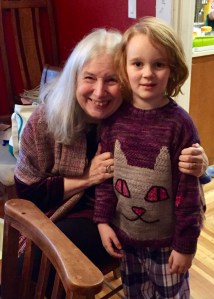
with my first-born grandchild.

“Marriage still ain’t equal, y’all. It ain’t equal. I tell women that whole ‘you can have it all’ — mmm, nope. Not at the same time. That’s a lie. It’s not always enough to lean in, because that s— doesn’t work.”
— Michelle Obama

Some would consider me a second-wave feminist. This is because I was born in 1952 and have always insisted men and women are the same species, generally need the same things in life (food, air, purpose), and that women should have the same opportunities, rights, and respect accorded to men.

Crazy me.

The day my high school announced that girls were allowed to wear pants to school, I was already wearing jeans. I expected to attend college on my own steam. I expected to work. I expected to make my own choices. I chose to be a “Ms” as soon as that option came to my attention. Neither my husband nor I changed our names when we married nearly 45 years ago. I have opinions. I speak up.

But back to that line above about having it all, all at once. I never believed that.

Raising children is an enormous job. In the past, families, extended families were available to help with child rearing, and that was how parents managed is the days when everything everything about getting by was harder. Laundry took days and reddened hands, cooking required lighting a fire first, and getting to work was either right outside, a long walk, or saddling a horse. Letters written on paper. That’s where we were a hundred years ago. We had to clean the chimney’s of lamps once a week. Everyone worked harder to do things we now complain about when we have to stuff dirty clothing into a machine, pull a frozen meal out of the fridge, drive, compute. But people pitched in and most Americans had lower expectations.

I don’t remember horse-drawn vehicles, but my childhood included party telephone lines and black-and-white television and typing. Dinner on the table ever late afternoon. Mothers at home. Things are easier now, most daily chores anyway. Raising children is still an enormous responsibility. A person needs help.

My husband and I discussed who would stay home with our children. I wanted them in my twenties because physically that seemed the best time. I was working and so was Gary, but he had insurance, and that was why we decided I would stay home with the children. It’s almost an impossible option for most parents today. Even then, it was hard and money was very tight. We scrambled to pay bills and did not expend much on entertainment, but we managed. Children in my twenties, back to work in my thirties, graduate school in my early forties. That was my plan.

I thought, in my twenties, that once my children were grown I would return to school and earn a Masters of Fine Arts in the visual arts, probably in enameling, thus continuing my undergraduate trajectory.

Things turned out differently. I earned an MFA in writing fiction in 2007.  I mostly retired in my sixties though at one time I hoped to teach into my seventies. In 2015, I could no longer manage the long hours as a full time English teacher. I was tired and had been sick for weeks the previous winter. I was unwilling to spend less time working full time, and part-time was not an option. Now I teach two classes a year. I set goals for writing and other creative work.

Beginning as a girl, I have always set goals for myself. I wanted to raise children (usually), live in a beautiful countryside, raise horses, keep a garden, love. Most of those early goals came about differently than I expected when I was a teenager. I raised Afghan Hounds until I had children, our garden is mostly wild, and the countryside is right out in front of me every day. And I love. I never expected to have everything I wanted at once, but I have always kept my eyes on the heart of my life goals.

Marriage is not equal from the outside.

(Not yet, but someday. I am not among those cynics who excuse inaction by complaining that this or that will never happen. Wonderful things happen all the time.)

Women are still paid less than men by every sort of measure (as are many other marginalized peoples). I am sorry that white men find discussion of their advantage offensive. They do not necessarily have anything easy, but all other things being equal, they have things easier. The rest of us work at a disadvantage. We are accorded less respect outside our homes, and too often inside our homes. As one example, I saw this working with occasional contractors who simply could not talk to women as people. Their work was primarily with other men, and they assumed that their advantage is “natural” and fair, that their opinions should always have precedence, unquestioned by women. They were irritated by a woman saying most anything, particularly if they were expected to take directions from a woman. I always feel sorry for their wives, assuming they are still married, and so often they are not. It is pathetic that the only way some men manage is by pretending they are superior to others, including to women they promised to love and cherish.

Yes, I know there are bad women in the world, selfish people of every stripe. But I speak from my own experience. Here I want to speak of marriage as a bonding of equals.

My own marriage is built that way. It is solid. My husband and I care for one another, take care of one another. We hear one another.

I am most fortunate about that. A friend posted a meme listing the qualities of a good and lasting marriage. Love was strangely missing from the list, but a lot of other things were there—respect, kindness, sharing, compromise. It is the determination of two people to make things work, because being alone os not the way people are supposed to live. It is not in our DNA to be solitary in life. Most of our existence today is solitary and alone, but human beings need connection with other people. Maybe these relationships are with spouses, or siblings or cousins or offspring or friends or some combination of people we treasure as family.

Michelle Obama is correct that women are not playing on a level field, that we cannot have everything all at once, but neither can men. We need to prioritize. We need to plan a life we can be proud of. We need to make the best of what comes. We need to treasure relationships.

We need family, all those people we are given by chance or by choice.


TELLING

IMG_1117

My husband said to me this morning, “You are always in teacher-mode.”

As a result I posted a warning and got my ears boxed. Actually several times, and I deserved it at least once.

I have been irritating people I like and love with posts on Facebook. Here’s the one I defend:

The death and funeral of George H.W. Bush. I did not him like as President, and I find little reason to like him better as a public figure now that he is gone. People who were not even born when he was president, or who were not old enough yet to enter school, object to articles I offered to provide “a little balance.” I was reminded of the glittering idealism of his administration I found in a The Washington Post opinion piece:

“Abraham Lincoln’s ‘better angels of our nature’ and George H.W. Bush’s ‘thousand points of light’ are companion verses in America’s national hymn, for Lincoln and Bush both called on us to choose the right over the convenient, to hope rather than to fear, and to heed not our worst impulses but our best instincts,” Meacham said.

The title of the article, not the excerpt I posted, drew fire. The man is dead. There has been extensive coverage elsewhere in the press dealing exclusively with what a wonderful person Bush was and about the details of his career and of his funeral. Television stations and national newspapers streamed the entire event without comment and also posted his son’s speech with explanation of the events he referred to (all very respectful), etc.

Years ago the local weekly newspaper carried a story about the death of a former student. The author managed to make the poor girl appear in a bad light, taking comments out of context from another teacher, editorializing on the passing of a teenager. I was heartbroken to read it. She was only a girl and allowed to make mistakes. No one chose her to be the leader of the free world. Her life should have been her own.

Though my impulse is to admit my failings, often in public—and they are legion, usually the result of losing my temper—I would hope to escape anyone noting them after I die. Though I worked for most of my life as a teacher, the job is not political. I have surely made mistake and caused harm, but I did not lead my country to war. I did not neglect public health. I have not been accused of molesting anyone.

When a neighbor died recently, my husband spoke at her memorial. We’d had our differences over the year. We both irritated one another at time. We had our complaints. But we also had a friendship of over 30 years. We kept an eye on one another’s homes. We called one another when the whales were passing. We chatted most every day. I would not more have dragged out petty disagreements than my underwear. We had a personal relationship not a public record between us.

Presidents are different, after all. They deliberately choose a public life. Their public words and actions are subject to public scrutiny and that brings a level of judgement most of the rest of us are spared. It was a public event of national importance, not a private funeral. Days of news have lauded him. I understand that some people are incapable of hearing a bad word about anything relating to a dead person. I have felt that way myself when a local paper offered unkind comments about a former student. But this is also about my country and my country’s leaders. I detested Bush in life as a president, but it’s clear he was much loved as family member and friend. His son’s speech and others were touching. I can respect the private man without pretending to admire what he did as President or after as a public figure. Here are a few of my grievances concerning the man’s public life:

Clarence Thomas (nominated) and Kavanaugh (campaigned for)

AIDS

the Middle East

the Kurds encouraged to rebel and then offered no support when they did

So much damage still filtering down on where I and others live.

He was Presidential, granted. He was, by all reports a kindly and generous man in his private life. I might even have shed a tear watching his funeral. I can see he was loved and that people sorrow at his passing. Does this mean I must appreciate him as a former president?

If the current president outlives me—it is possible since he has far better health care than I will ever be able to afford—will I be expected to say only nice things about his time in office? Are there nice things I could say? Perhaps. Perhaps his family and friends will laud him as a courageous leader making American great again.

Though I am only an ordinary private citizen, I beg to disagree.

REMEMBERING

fullsizeoutput_ba4

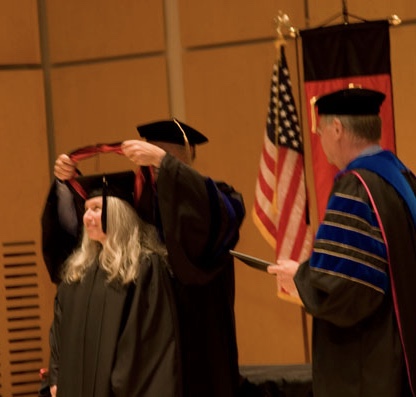
It was a Saturday in June. My husband has been talking about that day 11 years ago when I was completing my last MLA residency and my mother was dying. I did not know this about my mother, and he says now how he remembers how happy I looked when I gave my speech. I had been chosen as class speaker. Claire Davis spoke that day too. There was a bagpiper. A friend sent champagne, which I forgot in the dormroom refrigerator after he told me, he was in such a hurry to drive home.

This evening, I went looking for the speech, not sure my new computer would open that old file, and here it is. It makes me cry to read it over. Gary says he “had a little cloud” over him when he heard it that same time. He enjoyed it more just now.

Here is what I told my graduating class:

ART SAVES LIVES by Jan Priddy

Good afternoon.  On behalf of the class of 2007, including those tethered to their lives far away, I welcome students, faculty, honored guests, friends and family, the interns, Amber, and Shelley—oh, Shelley—who is a writer and sparks this magic that happens to us.  We are grateful to one another for the help along the way, for reassurance and emails, Art Barns, phone calls, and other metaphoric hand-holding.  We thank you all.

I used to have a bumper sticker on the back of my car that said:  Art Saves Lives.  I was sorrier to lose that slogan than I was, eventually, to lose the car.  Because here we are saving our lives.  Here.  All together.  And we are a part, all of us here, together we join a long line of readers and writers, of people who value language and who need to write.  We add our words to those who came before.  We claim them:  Sappho and Shakespeare, Emily Dickinson and Mark Twain, William Stafford and Ursula K. Le Guin.  All part of us now.   

Last year Peter stacked books on this podium solidifying the reason we are here.  Art on the page.  We all want to transport our readers with words, carry them across time and space to meet people and feelings and ideas.  We should be humbled, but our goals are not humble.  We want to change the world with our imaginations, one word at a time. 

We are writers.  Crafty people.  For two years we learned our craft from those before us.  Words are our tools, and I know from studying with David that each word matters.  Valerie taught me to shape my imagination.  We know dialogue is important, Pete, and that we share the world with other people, Marvin.

We’ve savored Dorianne’s smoky Juliet, followed Claire’s frog down the throat of a child, and reconsidered John’s take on Job.  A hawk ruptures Sandra’s window and Pattiann hands us sex on a cloud.  Jack plunges us under the ice and Craig mourns a child.  Judy’s natural disaster drives us to community and Ellen soaks us in honey and pins us to the wall.  Joe’s porcelain throne gleams in imagination.  So do our fellow students. 

But I am a story teller and most of my ideas come attached to stories. 

Here is a story:

In 1836, a recently widowed visionary, remarried.  With his second wife he fathered seven children, preached, taught, found academic employment, and wrote in his study while a large household revolved cautiously about him.  Quiet.  Don’t disturb Papa, he’s working. 

Most of us scramble and bargain for writing time, often finding it only in slivers and odd hours, between the detritus of day-to-day responsibilities and paying work, wedged between the insistence of people who rely on us to put their demands first behind our human need for rest.  How lovely to sit behind a door, working until we are ready to stop, parishioners anxious and waiting, our loved ones tip-toeing past the door—Quiet, don’t disturb the Writer. 

But we are not writing sermons that come crashing into the world with authority and an eager audience, we are not Calvin Stowe, that mystic composing in his study, and most of us have never even heard of him. 

It is his wife we know—the wife who bore the seven children and ran the house and did not, in her day, enjoy legal recourse to law, the right to vote, or a paying occupation.  The woman who provided Stowe with a room of his own, didn’t have one herself.  Harriet Beecher Stowe.  It is her writerly story that more closely resembles ours.  Harriet Beecher Stowe, nearing forty years of age and with a newborn seventh baby, began writing Uncle Tom’s Cabin at the kitchen table while running her household. 

The little lady who started the Civil War, Lincoln called her. 

Harriet Beecher Stowe lived to see slaves freed in America and granted citizenship.  She saw her own 85th year, but no other writing of hers had the impact that Uncle Tom’s Cabin had upon the world, but then again, neither has the novel of any American since. 

I wonder:  Was she scared?  Did she wonder if her words would run out?  Did she call herself a fraud and suffer writer’s block?  Was it possible for her to have imagined, with a household bustling, interrupting, and tugging at her, that the words she struggled to pen would change the world? 

Maybe we are writing our own transformational books at our kitchen tables and we don’t even know it. 

Few of us have sheltered space or devoted congregations.  We are not Emily Dickinson or even Calvin Stowe.  We are poets scribbling lines while we wait for laundry to spin, composing in our head on a run; we are novelists running sentences across the ceiling before sleep or rehearsing stories in the hour, the rare hour, children are preoccupied; we are memoirists and essayists getting up to make the coffee and losing ourselves in words when we have so much to do.  We hear voices.  We stare into space and forget where we are and what we’re supposed to be doing.  Hopefully this doesn’t happen while we’re driving to the grocery store. 

We cannot know the influence our words might have on that still-imaginary audience.  We only know we want to do it—this writing.

With so little outside our need, without free time or a room of our own, the leisure and space that all human beings deserve and crave whether they are writers or not—what have we? 

We have words.  We have each other.  We have imagination.  I’ve been using that word a lot.  We can’t know what we cannot first imagine.  Time, curiosity, stolen moments, and imagination.  We’ve had two years of community and permission.  We have only just begun to find voice on the page.  We look up from our table and out at the world, and, bending to our page agin we’ll write what we understand of it, or admire, or deplore, dream, fear, hope.   

We can read and think, write and reason, feel and sing, and always question, and do this honorably and diligently and during every moment we breathe.

People have been asking us all week what we’re going to do now that we’re graduating.  The only answer that matters is:  Keep writing.  We’re not done with our work at the kitchen table.  Whether we transform the whole wide world, or our own private corner, Art saves lives.  I know it’s true.  I think it’s why we’re here.  We’re saving ourselves. 

CHARITY BEGINS

Southern Poverty Law Center tracks hate crimes from racist and the political right and left. They make a difference.

More than forty years ago, our friend Bunny told me that she donated $100 each month to charity. Her food budget was less than half that. I was stunned that she was able to afford this. And then I realized I could too.

As a result, I began donating to organizations I could see working in the world while still in college and self-supporting. I gave monthly to PBS because we watched their programs, and then I gave to the American Civil Liberties Union (ACLU) because I knew what they were doing to fight for legal principles here in the United States. I continue to give clothing and other household discards to Goodwill and local charities. Gary gave them his last car a few years ago. I gave my beloved VW to OPB.

One year my brother gave a farm animal in our names to Heifer International. The next year, I gave goats in the names of family members as Christmas presents. Then I discovered that another organization did the same thing with lower overhead, so I gave bees and farm equipment through OxFam.

Charity Navigator is one watchdog of charities that helps people find where to direct their donations in order that the money will do the good work they hope to see done here or abroad. I read about charitable organizations, Google for news about them. Talk to people and search for pros and cons and other organizations that do similar work. I check their ratings for how they spend the money they receive. There are many worthwhile local charities.

For many years after I began teaching art, I gave to the University of Washington School of Art, in gratitude for scholarships that allowed me to work my way through college without debt. (It helped that I was willing to live in poverty during those years.) I refuse to give to my grad school alma mater because they surveyed me for what I thought about them starting a football team. I responded that it was an enormous waste of money. Like nearly every college and university in America, they will lose money on their football team. They will have to find other donors who are football fans. That is what I tell them when they call. [For a small college that turned away from sports to emphasize academics, read about Paul Quinn College. To understand why football creates issues for others, consider what people will do in order to win. Consider Baylor.]

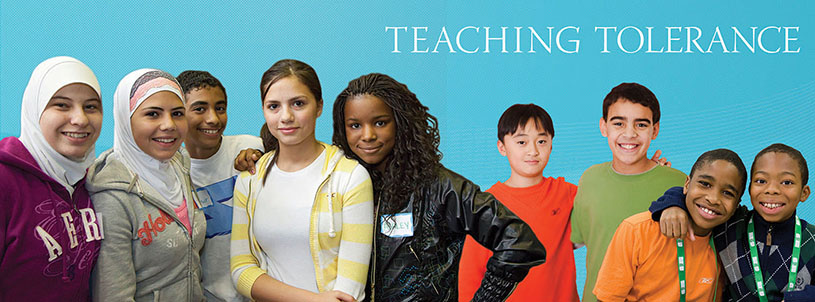
For nearly all of my adult life, I have given to organizations I learned about through specific worthy projects. Toni used to write letters for Amnesty, and I have supported Amnesty International since 1974 because they oppose torture and other political abuses of power. I give Wikipedia Foundation a donation periodically because I use their site often and because I applaud their work in making information readily available for free. I give to Partners In Health because of Kidder’s book Mountains Beyond Mountains. I give to Southern Poverty Law Center because they track hate crimes, take abusers to court, and offer support to communities through many programs including Teaching Tolerance, a free magazine I used as a teacher.

Sometimes I give to other organizations such as the free nonfiction website Brevity or to projects devised by my students. We gave to the campaign of Hillary Rodham Clinton. Twice.

For most of his working life, my husband worked in grocery stores. I was mostly a public high school teacher. We can afford to live in a beautiful home on the coast because it’s been in my family since 1911. We have never, as my mother would say, “had money” in my family but my mother began donating to animal charities late in life. We still get those mailings, but we choose to give elsewhere.

Throughout our childhoods, our families worried about paying bills. We struggled to pay for food and tuition while self-supporting in college. During the years our children were young, we barely kept our heads above water. And then there was tuition again—our sons’ undergraduate and my graduate studies. I used my inheritance from my mother to pay off our sons’ college debts. (My friends have pretty consistently judged that a mistake, but so far, we are not sorry.) We managed. Our frugal habits and careful planning seem now to have paid off.

We are both retired, but we are not poor, and other than books, his music, and my yarn our tastes tend to be modest. We can afford to pay our bills. We can afford to drink wine on occasion and to stay overnight at mid-priced hotels. We still send money, usually $100 to several of the charities I have mentioned but sometimes more, and in leaner times I have given $20 or less. Just now, we are planning our giving. The Visa bill is paid and despite unexpected home repairs, we will share what we have.

It is a good habit and I am a fortunate person. I can afford to support charities.

Maybe you can too.